Hansard Official Report

Sitting of: 27 March 2026

Source: Edited-Transcript-2026-03-27.pdf.pdf

STATES OF JERSEY OFFICIAL REPORT FRIDAY, 27th MARCH

No contributions recorded for this item.

PUBLIC BUSINESS - resumption

No contributions recorded for this item.

1.Use of Cash in Jersey (P.48/2026) - resumption

View debate

No contributions recorded for this item.

1.1Deputy M.R. Ferey of St. Saviour:

Photo of Malcolm Ferey

When I read through this proposition, I could not help but draw on my past when I was Chief Executive of Citizens Advice. One of the roles that I used to undertake doing that work was to visit the prison. There were 2 things that every inmate was keen to tell us, and obviously the purpose of our visit was to establish relationships so that when people are released from prison they knew where to seek help with different issues. Of the 2 things that the inmates were always keen to tell us, one was their earliest release day, which for understandable reasons was imprinted on their minds, and the other item they were always keen to tell us about was why they were in there in the first place.

Of course that was not why we were there. We were not there to judge; we were there to offer support and help. But one of the offences that concerned me the most was when people have been convicted of crimes of fraud because what would invariably happen is upon their release they would try to integrate back into society to discover that their bank account had been closed. They would then endeavour to seek employment, and there are very few employers that would want to pay them in cash because that is not what good employers do, is the way that it is viewed. So those people would quickly come to us, and we would work with them to try and find a way that they could get into the banking system or back into the banking system. Without giving obviously anyone’s details away, there was a particular case that concerned me where a client of ours was presented with a cheque for a handsome sum of money and had no way of spending it, no way of cashing it, because no bank would accept his business. We did work with that person and were able to re-establish an account for them, but it took a lot of work, and it took a lot of coaxing. The other group of people who we would regularly assist with access to banking was people whose finances had collapsed and perhaps were going through a system of en désastre or remise de bien meubles [bankruptcy or handing over of property]. Likewise, very often those people were excluded from the banking system. So, when we brought in debt remission orders, it could help in limited circumstances and hopefully preserve access to banking. But we were left with offering people the services of Community Savings Limited.

I have heard it described as Community Savings Bank. It is not a bank. It is an organisation that offers banking-type facilities. That has improved vastly over the recent years from when it first started up. But it still is not a bank. It does great work for its clients, and it has ancillary services that it can refer people to. But another piece of work that we were looking at, and I am looking here particularly on part (b) of the proposition, is the cost of doing banking; the cost of banking itself.

Now, we know that some banks are reluctant to take cash over the sum of £20,000 for individual businesses. If you go over that limit, they reserve the right to not accept any more cash. That is a concern for people who do want to continue to deal in cash. The other group of people who we regularly used to have contact with, if we group that people, we call them the unbanked - people who do not have access to the banking system - was people who had a gambling addiction, or people whose finances had collapsed. The only way they could get out of where they were was to cut up their credit cards, because an addiction is an addiction. If people are online gambling, for some people the only way to stop that is to sever the method that they are actually spending that money.

Part of the advice that we would give people who were in that situation was when they have got cash in front of them, it is very often easier for people to budget. They can put pots of money for different items, and they know when that money is gone; there is no more and there is no credit facility to be had. I think, finally, another piece of work that we were involved in was access to basic bank accounts. Now, in the U.K. (United Kingdom), banks are required to offer bank accounts even to people that do not have a fixed abode. That same requirement does not apply in Jersey. This is a bigger piece of work than just cash. I think it is a really useful conversation that we are having here, but it is so much bigger than just the use of cash. I think it also links to access to the banking system, the types of basic bank accounts that are offered in Jersey, and how to get people back into the banking system when they have been excluded. Because going back to those prisoners who have been released, it always felt to me that they were serving their sentence twice. Firstly, when they were incarcerated, and secondly, when they were back in society, in a prison without bars, because they still could not do anything, and they had to rely on friends or family or partners, and that itself was fraught with danger. I will be supporting certainly part (b) of this proposition because I think it is a whole piece of work here that needs to be done and examined.

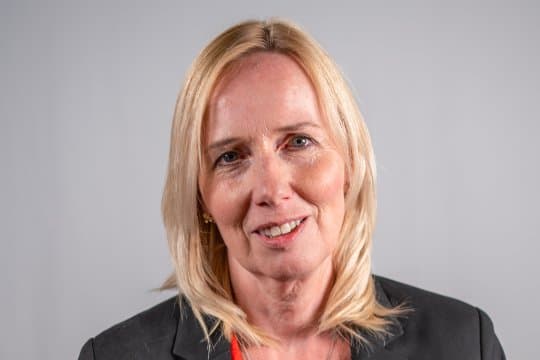
1.1.1Deputy R.S. Kovacs of St. Saviour:

Photo of Raluca Kovacs

I rise in support of this proposal as a whole, and not because I resist progress but because I believe progress must include and consider everyone. This is not about stopping digital payments, it is about protecting choice; like real choice. We are told this will burden businesses. I say this, as someone who co-owns a family business in hospitality, we proudly accept cash; not reluctantly, proudly.

Because every customer matters and yes, sometimes, that customer only has cash. Should we turn them away in a cost-of-living crisis? Really? We hear about efficiency, about speed, about cost, which we have seen occurs on both sides, cash or card usage; sometimes even more on card transactions. So do not scare people unnecessarily about costs. Even those charges can also be regulated if found unfair, so there are ways. We hear about convenience. Convenient for whom?

Certainly not for the elderly person who cannot use a smartphone or cannot see the buttons of a P.O.S.

(point of sale). Not for someone with a disability. Not for a victim of domestic and financial abuse.

Not for the child learning the value of money for the first time. Cash is not just a payment. It is inclusion. It is independence. It is dignity. Ministers say access to cash is fine, do not worry; but access means nothing if you cannot use it. A note in your pocket, it is useless if the shop refuses it.

Look at where Sweden got on this. Not knowing now how to reverse, as many vulnerable residents cannot pay with cash for essential products or services. Is that where we want to get, to act only when it is too late?

[9:45] Or instead to look at the solutions highlighted by Deputy Tadier in his report that France and the European Central Bank are putting in place, making cash generally legal tender and not allowing it to be rejected. They say costs will rise, but are we seriously saying that the solution to rising costs is to refuse customers? That we will solve economic pressure by turning away trade? Let us talk about tourism. Visitors still come here with cash. They expect to use it. Are we really going to tell them, sorry, not welcome unless you have the right app or the right card? As even some cards are refused.

We are very proud of our unique Jersey cow. It is part of our heritage. No other currency in the world has our Jersey cow on it, which, if nothing else, is a great conversation starter. It might even help sell a bit more Jersey butter or Jersey ice cream, and that must count for something as well, right? Whenever I travel, if I have any Jersey pound notes on me, everyone wants it as a souvenir for being so unique. So let us be proud to use our Jersey pounds here in Jersey, not quietly let them disappear. We are also told banks charge more for handling cash. Of course they do, because the system is being pushed in that direction. But that is precisely why we must act. We cannot allow commercial incentives to quietly remove a basic freedom. Let us not forget resilience. Systems fail, whether due to wars, hackers, or many other reasons. Cards stop working, accounts get frozen, networks go down. It happens, and we have seen it happen. When it does, cash is not old-fashioned, it is essential. Ask yourself honestly, on that day would you want to have cash on you and for cash to be accepted? This proposition is balanced, it recognises reality, it allows exemptions where there are very valid reasons for just accepting cards, but that should be the exemption not the other way around. Therefore, let us not overcomplicate this. If a business can take your money, it should definitely take your money, however you choose to pay it. Simple, fair, inclusive. I believe this is about the kind of society we want to be. One that is efficient not just for some, but one that works for everyone. I ask you all to please support the proposition, protect choice, protect inclusion, protect cash, and let us keep Jersey open for business, open for all.

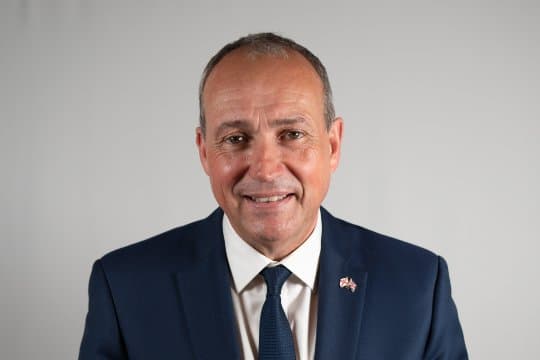
1.1.2Connétable M.K. Jackson of St. Brelade:

Photo of Mike Jackson

I run a business which, for over 50 years, has taken payment in most forms over that period. I have seen the rapid evolution from cheque payments to card and bank transfer payments. We rarely see a cheque these days, and that has been a rapid change in the past few years. The business has always been happy to receive cash if proffered, provided the sums involved do not exceed money laundering controls, which are in place and put in place by the Financial Services Commission; quite rightly so too. Card providers insist that you cannot put a de minimis figure on a card payment. But I can assure Members that payment by card with its associated costs for an 82p local stamp does grate. I have also had the experience of dealing with change, the changed bank landscape and, like all businesses, have had to adapt to different routines. The bookkeeping and routine behind taking cash is more onerous and depends a lot on point-of-sale software used in the business. The additional need to bank the cash and charges made is an additional business cost. There is always the issue of risk from casual theft and the security surrounding it. It is probably easier to make errors with cash than cards in terms of bookkeeping, but it does sharpen the mental arithmetic capabilities of staff having to deal with it. There is a perception by some that it is advantageous to pay cash, as it was perceived to be a quick form of sure payment. How many times have I heard the term: “How much for cash?” This has become less attractive to business with the advent of card systems. There is no recourse to insurance with a cash payment, as is the case with most card providers, who will charge back the business if disputes arise. I have never been in what I might call over-the-counter hospitality types of business, and I defer to Deputy Warr and Deputy Kovacs on that, but it seems to me that there are hygiene issues to consider when simultaneously handling cash and food. There is also, as has been mentioned by others, the visitor economy, where visitors come to the Island armed with sterling and cash as their spending money. The converse being that when we travel, we like a bit of cash in our pockets to cover incidental expenses and tips. My business operates a foreign exchange facility, and that is certainly the case and I witness that regularly. In terms of other countries, I have noted that in Brussels recently, businesses no longer take copper coins. This is not the case in France, but it is an area that I think we need to keep an eye on to prevent unnecessary inflation. Card payments also have the risks to the trader in the guise of power or machinery failure, and I can say there was a power cut on Sunday morning for about 20 minutes in St. Brelade, as a result of a high voltage cable failure. I am grateful for the J.E.C. (Jersey Electricity Company) teams for reinstating that supply so quickly, but it did affect several businesses. Fortunately, on a Sunday, not so many were open as might have been the case in the week. So, these disruptions do happen and businesses need to be able to take cash or simply close. End-of-day card reconciliations are quicker with the cards than with cash as there is no counting involved, and I would say the bookkeeping is probably easier. Cards do permit their holders to overspend, with the risk of attracting excessive interest rates if balances are not paid by certain time. Those that have difficulty in managing their affairs are better advised to stick to cash. I think there is a really important point, certainly for younger people who perhaps have not got the experience of life and is best to avoid getting into debt at an early stage. I think interest rates of sometimes 30 per cent can be considered onerous. A decision not to take cash by any business will be informed by their business model, and if they choose not to take cash there will be competitors who will. I suggest that any charity that does not arm itself with a SumUp machine these days is missing a trick. I have even succumbed to paying my weekly contribution in church online. There is a QR (Quick Response) code to enable this behind every pew. Previous speakers mentioned utility payments. I can say that, as a business with a post office within the Jersey Post, through its main and sub-post offices, will take bill payments by cash, cheque or card as part of their agency arrangements. Retailing today faces enormous competition from online providers, and I really do believe that Government interference into the methods of payments may be ideological but impractical and unpoliceable.

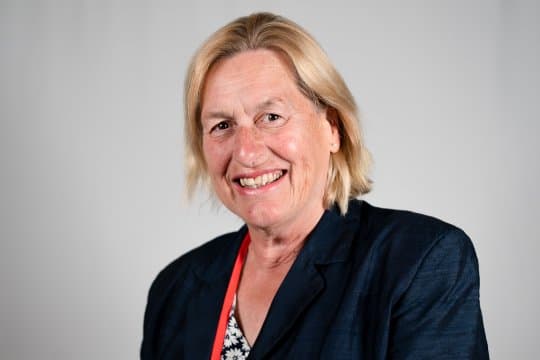
1.1.3Deputy K.M. Wilson of St. Clement:

Photo of Karen Wilson

I am pleased to follow the Connétable of St. Brelade. Many of us will have heard the phrase “cash is king”. More than a phrase, it is a principle that reflects the power, the flexibility, and security that physical money gives people in their everyday lives. In Jersey, this principle is not just about economics. As we have heard, it is about choice, it is about independence and social cohesion. As we have heard from other speakers, cash gives people control. It allows them to budget, pay for essentials, and make decisions without reliance on technology or third parties. To take away cash is to take away freedom, the ability for people to decide how they live their lives. When cash diminishes, the result is social isolation, exclusion and a weakening of community life. In a small island like ours, these effects are felt quickly and deeply. I was a member of the panel conducting the cash review and I have to admit it was a moving experience being in the company of Islanders when we were talking to them about this. Deputy Ferey is right to recognise that there is a wider sociological issue here. We met people during the review literally holding on to their cash, and I remember one gentleman counting out his purse in front of us, how much he had to pay his bills and the amount of money he was going to spend on his daily trip to the shop. He held it so tightly he almost had a grip on the money, so to speak, as though it could have been taken away from him at any moment. That might sound nothing here in this Assembly, but I can assure you it was quite a moment. He told me that apart from the lunch that he had at the Good Companions Club, his only outing each week was to the supermarket near where he lived. He liked going there, he said, because he said you can have a chat to someone and: “I like to see what I am buying and pay good money for it.” He also went on to tell me how he has pots of money at home for the grandchildren that he fills with spare change and talked about the lovely interaction he had had with his grandson about why the pot needed to be full before they could have access to it. The reason I am recounting the story is because cash for many is not just a financial currency. It is a currency that builds social interaction and exchange for human connection. It carries more than monetary value for some people. It carries a deeper worth. A feeling of doing good when coin or notes are dropped into a charitable basket or handed over on a one-to-one basis to a person in need. It becomes a symbol of rescue as much as a symbol of wealth. Deputy Tadier’s proposition recognises that protecting cash is more than banking, it is about people, it is about fairness and it is about community well-being. It ensures that as we move toward a more digital economy, no one in Jersey, no resident, no family, no vulnerable group is left behind. Cash remains king because it generates and guarantees choice, resilience and inclusion.

The problem that we have got at the moment is that denying access to cash is happening by chance.

I think we need to take seriously the removal of choice if Islanders are being denied access. We believe this is being denied by stealth. Banks are closing, there are places where you can only use a card. Gradually people are having those choices restricted. If I recall, one of the issues raised during the review was the actual cost of banking, and I know the Connétable has just made reference to it, but if there is any policy work that needs to be done to support and protect consumers and businesses, then banks need to be considering what costs they are putting on businesses to handle cash in the Island. The Minister for Sustainable Economic Development talked about being dictatorial, but in my view, banks are dictating to people how and in what way to use their money. You have heard from Deputy Ferey examples of where people have had banking facilities ... no banking facilities are available to them and the hardship that follows. We should not be placing people in that sort of a situation. There is a lot of research out there on cash use, and this is conducted by reputable institutions around the world. Recent policy research from the Organisation for Economic Co- operation and Development, the O.E.C.D., makes a clear point. While digital payments have expanded rapidly, this trend also presents risks for consumers who cannot, or prefer not, to transact digitally. The O.E.C.D. highlights that safeguarding consumers’ access to cash is a necessary policy consideration in the digital economy. The European Central Bank has also analysed payment behaviour across Europe and found that cash continues to play a significant role in people’s financial lives even as digitalisation increases. The E.C.B.’s (European Central Bank) data shows that many individuals across age groups still use cash regularly, including younger adults holding cash for precautionary reasons and older adults who use cash more frequently in everyday transactions. This research directly challenges assumptions that cash will disappear simply because digital options are available. In the U.K., regulators have collected data showing how access to cash infrastructure has changed in recent years. The Financial Conduct Authority monitors the physical network of cash access points, A.T.M.s (automatic teller machines), bank branches, post office services, and provides baseline coverage data to track how networks support consumer access. These measures are important because they highlight how quickly infrastructure can shrink if left unprotected, with implications for those who rely on cash for everyday spending. Independent research, including the Access to Cash Review that was taking place in the U.K., has repeatedly warned that a significant number of people, millions in fact, across the U.K., would struggle in a cashless society.

[10:00] Though the U.K. context differs from Jersey’s, the lesson is clear. Digital payments alone do not yet work for everyone, and many rely on cash as a practical necessity. Beyond access and usage, research literature on cash and digital payments make several broader socioeconomic points that are directly relevant to our debate. Cash continues to be used not just as a payment but as a precautionary store of value and a buffer in times of uncertainty. A shift away from cash has the potential to create a digital divide in payments, where people with limited access to digital tools or skills are excluded from full participation in the economy. Connétable Lewis referenced the reduction in banks in his Parish yesterday and talked about the impact on loneliness and social inclusion for his parishioners, but he is not unique or alone in that. This is something that we heard right the way across the review, and it does ask us whether or not we are joining up the dots on the policy framework that we are advocating at the moment. The elephant in the room is whether or not we are going to have legislation. It remains a relevant and persistent payment method across demographics, not just among the most vulnerable, as I have said. Deputy Tadier’s proposition aligns with the body of evidence.

It recognises that cash is not merely a payment preference, but a socioeconomic reality that affects inclusion, choice and equality. Preserving cash is a public policy commitment to ensuring that no one is left behind as Jersey evolves its financial ecosystem. Yes, and I agree with the Connétable of St. Brelade, cash handling does have operational issues associated but I would ask him to consider this: what price do we put on inclusion, autonomy and access to essential goods? The small expense of accepting cash is outweighed by the benefits, serving all customers, maintaining community trust and ensuring no resident is left behind. I believe that with smart, supportive measures, businesses can continue to accept cash without undue burden, while Jersey can safeguard fairness and choice for Islanders.

1.1.4Deputy J. Renouf of St. Brelade:

Photo of Jonathan Renouf

No one seems to have a problem here with part (b), so I am going to concentrate on part (a) in my comments and see if I can persuade Members who may be wavering to take the leap and support the whole proposition. I must say I am disappointed in the Council of Ministers’ comments, particularly the first comments paper, which I think is more than a little tone-deaf. I say the first comments paper because there is something a bit strange going on. There are 2 different Government comments papers. One which reads a bit hard line, the other more, I would say, even-handed. Maybe it is because the Government is split on this issue and the 2 papers were written by two different Ministers or Ministerial teams. I guess that is agreed to differ in action. The Government’s position in the first comments paper is that cash is still widely used, so there is no evidence of a need to take action. It argues that mandating cash will impose unnecessary costs on business to no clear benefit. Those are all valid debating points, certainly important to be considered. But it would have been good if they had at least acknowledged the very widespread public concern about the decline of cash and the potential for social and economic exclusion for those who rely on cash. In other words, the issues that motivated this proposition. Perhaps Ministers need to get out more. Deputy Tadier’s work on this has touched a nerve. I would note that some Ministers have actually been more conciliatory in their speeches, but the first comments paper is stark. Its remarks are framed almost entirely in terms of the impact on business. But Deputy Tadier brought this proposition because it is a matter of considerable public concern. I noted just one reference in that paper to the potential inflationary impact which the proposition might bring, which qualifies as an impact on the public. Otherwise, the notion that there might be legitimate public concern is not even mentioned. None of the potential risks that Deputy Tadier discusses are addressed in that first comments paper. Not one. This proposition engages a big question. Is there a point at which Government will need to step in and challenge the direction of travel that is being driven by big tech or intervene to protect against negative outcomes? The issues I think are similar to the issues we face around social media. They are to do with the protections that we might choose to put in place, given that very large corporations are driving society in a certain direction based on the inevitability of a certain vision of technological progress. I am exceptionally pro-technology. I am a techno-optimist, and I want Jersey to be a highly digital island. But I am also exceptionally mindful of the dangers of social exclusion. A little digression perhaps, but I think it is relevant. It is worth a little look at history to see the weight of the forces that are at work here. One of the most consequential decisions of any President of the United States was in 1996 when President Clinton responded to lobbying by digital companies to sign a law known as Section 230. It addressed an issue that had arisen as the internet began to grow.

Were digital platforms publishers in the same way as newspapers were publishers? Which meant that they were responsible for the content they contained or were they more like digital notice boards where people could post what they wanted and therefore the company had no responsibility for the content. Section 230 freed the digital companies, removed the legal liability for what was published on their platforms. They were notice boards not publishers, and that was the basis of the unequal battle between traditional media, particularly newspapers for example, and those digital planners’ platforms. One had legal responsibilities, the other did not. Now, of course, the situation is different.

Digital platforms cannot argue anymore that they are passive notice boards. Social media companies use algorithms to actively promote and recommend content, which is a form of editorial content judgment. So, we have come back full circle. Only a few days ago came the most significant row back on the freedom that was established by Section 230 so far. Social media companies have been held responsible for the death of a young woman who committed suicide. They were ruled to be negligent in the design and operation of their platforms. So, society, through the courts, is now pushing back against the idea that big tech is absolved of legal responsibility for what happens on their platforms, and we are in the midst of that debate in Jersey to work out how much freedom we give tech companies and the dangers of social media algorithms. I hope Members can see the relationship to the question of cash. This too is driven by big tech. Cashless payments are delivering huge benefits to society in terms of convenience and efficiency. But there are also wider social issues that come with the adoption of digital payments, which are being driven very hard. It is not a passive process. It is being driven very hard by the digital payment companies. But of course, there are many people who depend heavily on cash, and they are usually less well-off or otherwise vulnerable.

I am grateful to Deputy Miles and Deputy Ferey for highlighting those issues with great eloquence.

Even those who are comfortable with digital payments may see the need for maintaining cash as a strong relevant system. Privacy, resilience, personal freedom, over-reliance on a small number of remote companies, all these are relevant considerations. But I want to briefly touch on one particular way in which the reduction in cash might be magnified as a problem in the near future. Members may have heard about one of the new frontiers in digital payments, which is called agentic commerce.

This is where an A.I. (artificial intelligence) agent does your shopping for you. Instead of you searching for the cheapest price, for example, for an item on the internet, you tell the A.I. agent what you want, you set some parameters, size, let us say, of clothing or whatever it is, and ask it to find the cheapest price, let us say. But of course, agentic commerce is predicated on stored payment credentials, established financial identities. It relies on algorithms. But marginalised individuals may not be able to gain access to these services. Without credit histories, histories of online payments, they may be unable to take advantage of agentic commerce, widening social exclusion.

They may then turn to less secure online alternatives, exposing them to predatory lenders or scams.

In this situation, I think retaining a strong cash economy is incredibly vital. I think the key point here is that at some point, just as with social media, we will approach the need to do the hard thing and stand in the way of what big tech wants to do and say. We have a view about this on the basis of what society needs to do. One of the things we might do is to do with cash. So, the question we have to answer is, first, does this proposition mark the moment to start swinging into action? Second, is this the right action? Take the second part first. I do not support compelling all businesses to accept cash, but neither does Deputy Tadier. His chosen method is by a list of exemptions. It sounds a little bureaucratic and resource heavy, but there is a lot of discretion here. A light touch could be deployed.

It would be trivially easy for a future Council of Ministers to say that the bus service was exempt, for example. Or to say everything was exempt except groceries and pharmacies, as in the example that was given yesterday from Sweden, I think. Any half-decent civil servant tasked with the brief of making this a light-touch implementation would be able to do so. Which brings me to Deputy Morel’s argument. Deputy Morel said part (b) should come before part (a), policy first, then the action. That is an argument, but it is not the only way of looking at things. You could equally argue that part (a) is an important holding measure while you sort out your long-term policy. A precautionary move.

Then once you have completed part (b), part (a) could fall away or be changed or adapted or whatever.

I think we should be clear here that in the international context, Deputy Tadier’s proposition is exceedingly moderate. He is not suggesting that all businesses be mandated to accept cash because he is accepting there should be exemptions, and he is giving the Government wide discretion over that. Perhaps Members think we are going out on a bit of a limb but no, we would not at all. Let us take France. All traders are obliged to accept cash, with fines for refusal. Spain mandates that businesses must accept cash for transactions up to 1,000 euros. Norway prohibits companies from refusing cash payments for amounts up to, equivalent in pounds, about £1,500. So, Jersey would not be swimming against the tide if we accept part (a) of this proposition. We would be traveling with the current. In fact, we would be taking a very Jersey approach, not going the whole European hog of total bans, but a general presumption in favour of cash with sensible exemptions, which leaves, I guess, the question of timing. Is this the moment to put that hand up and say this is something we have to deal with? Is this the moment for Government action? Is this when we say we have seen the direction of travel; we know where this could go? We know there are powerful forces at work. But you know what, you are not sure this really puts people first. I think it is a pretty reasonable case to say the time is now. In effect, part (a) says put down a marker. It can be interpreted fairly loosely.

It is not really the detail that is important in this proposition. That will be decided by the next Government. It can be implemented in many different ways. It is the decision to act to show that we care, we understand the issues, we understand what the public are talking about, and we want to take our stand. Let us act now.

1.1.5Deputy M.R. Scott of St. Brelade:

Photo of Moz Scott

My apologies, I am not in the States Assembly because I have a cough. I did not find the previous speaker’s speech regarding part (a) of the proposition persuasive enough to support that part of the proposition, but I do believe that we should all accept the fears in our older community that they are no longer regarded as relevant in today’s society. This proposition plays on the fears of the older members.

[10:15] The Deputy in his speech suggested there are businesses saying ... I am sorry Deputy Tadier, the proposer, in his speech suggested that there are businesses saying: “We do not want your sort here.” I hope this speech will explain why those fears are unfounded. Not only are those members of this community relevant, the way in which they wish to do business will mean that there will always be businesses who accept their cash. On the other hand, a rule that requires all businesses to accept cash is a route that can deprive the community of valuable services, and it could also assist illicit businesses more than the elderly and the sight-impaired that it aims to assist. Part (a) of the proposition promotes a presumption that all businesses should accept cash, subject to reasonable exemptions. How can this be workable and fair? Businesses do not survive without customers.

Businesses are customer-based services. Businesses have different types of service and different types of business model. Some are internet businesses. The cost of handling money does not fit their business model. Deputy Renouf has mentioned the competitive edge provided by big tech companies in some retail markets. We cannot change that through this proposition. Many Islanders here use global internet businesses. Their scale and focus on card-based transactions support their operations and often cheaper prices. Why do Islanders use them? Because they want those cheaper prices.

They can manage their budgets better that way. It can be more convenient for them. Do we want to deprive them of that option? Because if we want to help Islanders to manage the cost of living, part (a) of this proposition is not going to help them. It is suggesting that we force companies like Amazon to accept cash from us unless we accept them. That is absurd. How would we even police the global internet? How can we consult with them as stakeholders? In the meantime, the help from friends and family remains the way for those who cannot or do not wish to use cards to order online. Or are we going to say those operations outside the Island can run in the way they do, but no business can do so here? This proposition could deter anyone in the Island from setting up an internet business.

If we had a company like Amazon operating here, the whole Island would be richer. We could provide more in the way of pensions and community support in the form of taxes. It often is discussed how young people leave this Island because of the cost of living and perhaps the cost of setting up a business and operating it too. This proposition could encourage younger people who are tech savvy and entrepreneurial, who could offer a valuable contribution this Island’s future economy to leave the Island. Let us look to the businesses who serve our local community more directly. Those who accept cash from their customers, we should not take these businesses for granted. Business owners do not have to establish businesses. Many do it out of love of the service of others. Businesses rely on custom, and that includes the senior citizen who comes into their shop and uses cash. It may be an additional cost to that business, but they factor that into their own type of service. Recently, in my own constituency, one parishioner, an elderly one who does use the internet, praised the owner of a local farm shop for offering to drive him somewhere when he had missed his bus. Why should we be forcing shopkeepers who depend on customers’ goodwill to exercise such goodwill? Because goodwill is a valuable asset to a business. When they are bought and sold, a price is assigned to it.

Businesses are nothing without their customer base. And it varies. So do our choice of businesses.

I have to buy produce from farm stores with cash. I use cards in a local sandwich shop, whose card payment system does not allow me to tip the serving staff. So, I sometimes pay in cash just to provide me with a change to pay them tips. That is a different business model. When it comes to local businesses, why did Deputy Tadier not bring a proposition telling local businesses to be kind to older and blind customers? Because this is what this is telling them to do. Do local businesses need to be told that? As other Members have mentioned, there is a cost to accepting cash. I would prefer businesses to use discretion in serving their customers, rather than to be forced into accepting cash from people who may be less inconvenienced by it, who even could be petty money laundering.

Often for businesses, the problem is not having to deposit cash but having to find change when they are short of it. There are ways around this when services work together. For example, I have a relative who owns a coin-operated laundrette in a small shopping centre, who frequently supplies change to other shops. It reduces her need to take change to the banks, and more often than not, charged to exchange notes for change. The Deputy has built a case based on fear, and the concern caused by a sports centre, which is a government facility rather than a business, not accepting cash, that situation was resolved by the Minister for Infrastructure almost immediately. Part (a) would be workable if it looked to formulate a specific list of businesses who we wish to force to accept cash, perhaps, but that is not what part (a) says. This problem is that the States Assembly and the political party of which the Deputy is a member or even the Deputy, has been accused of not doing enough for old people. We could always do more. However, part (a) could be regarded as an ill-judged electioneering measure. Many older people are wise people too. If you want to help the older generation, do not take measures that are anti-business and which could harm economic growth.

Support the businesses that support them instead. This proposition accordingly, at least part (a) of it, is not supported by the Council of Ministers. Paragraph (a) presents difficulties in both drafting an application because it requires all businesses first to be required to accept cash and then to work out categories to exclude them. With respect to part (b), there could be a need to see how businesses might be supported in accepting cash and providing change if needed. I will therefore just be supporting part (b) of the proposition, if the Deputy is willing to take the proposition in parts.**

Photo of Inna Gardiner

Before my speech, can I ask your views or some clarifications to questions based on Deputy Renouf’s speech, which was very helpful? My first question, does it mean that part (a), even if it is saying “must”, that the policy development can bring any exemption when it will be presented, brought back?

Photo of Robert MacRae
Robert MacRae

Yes, as I read part (a), the “unless” part of it, so the “unless they are exempt” qualifies the first part.

So, the exemptions will apply across the board.

Photo of Inna Gardiner

The second question, does this proposition require to the policy when it will be developed, including exemption, to come back to the Assembly, or it will be signed by the Minister in charge?

Photo of Robert MacRae
Robert MacRae

As I read it, there is no requirement for it to be brought back. It is to be developed by the Council.

And I have ruled that is the Council of Ministers, not the States Assembly.

1.1.6Deputy I. Gardiner:

Photo of Inna Gardiner

I will speak as I go, and I apologise in advance if it is not a fully organised speech, because I have changed my mind I am not sure how many times during this debate. From yesterday, when I heard Deputy Miles, and I felt we must adopt 2 parts. When I have heard Deputy Morel, I felt no, only part (b). When I have heard Deputy Stephenson, I changed my mind again. I am still not entirely sure how I am going to vote on part (a). I will share my way of thinking. Because I completely, completely, completely support the principle. As Deputy Wilson said this morning, it is the freedom.

It is not the preference, it is necessity. I completely, 200 per cent, agree with it. We talk about older residents who are not comfortable with digital payments. We talk about people with disabilities that require. We talk about children that do not know how to manage money, and victim of domestic abuse or financial abuse. The people who cash is a lifeline, the people who can handle cash. So, my principles, my values, are completely with this. I am not worried about the businesses, by the way, paying more or less. As people know, when I was elected, I had 2 businesses; one retail business, and I still have a travel business that I am running. Both businesses could accept cash. To be honest, to charge 50p on a card cost probably more than to accept 50p. I think that the whole balance about businesses paying more, and it is more difficult to handle, it is complex. Sometimes we did not have change, but it is something that businesses need to manage. Where I am finding myself now, it is do we debate the necessity of cash, if this proposition is about necessity of cash in our life; I am not sure.

But this proposition is clearly saying that businesses must accept cash. Exemptions will be defined later. I think that I always have a problem with the word “must”, generally, because “must” is the blunt for me. It is right that Deputy Tadier rightly put exemptions, but we do not have examples of exemptions. I completely can see that all food outlets, when ... so where is the limit? Where is the threshold? Why I am asking about the threshold, as a business, if somebody comes to you with £200, is it reasonable? £500, is it reasonable? Or £1,000 or £2,000? This is where I started to struggle when the businesses start to ask clients where the money is coming from. I can see us as a pathway bringing this cash to the bank, the business that accepted this cash would start to be asked questions.

Its practicalities can be sorted, but this practical question remains unanswered. I am finishing my speech in literally a minute, and I will listen to further speakers and also Deputy Tadier, because from one side I completely agree. We must protect access to cash. We must protect people who are allowing it. No residents should be left behind. Buses, which I believe we should not charge more for cash than not, to be honest. This is my belief. Because we are not defining exemptions now, it can be anything and something that I might agree completely and I might disagree completely. I think it to be too much included or too less included. Because it has been confirmed, it does not need to come back to the Assembly, it really depends on the Minister who will be in charge of developing this policy. As we know, individuality comes really strongly into this space.

Photo of Robert MacRae
Robert MacRae

Deputy Gardiner, do you give way?

Photo of Montfort Tadier

It is just to say that I would envisage that it would actually have to come back to this Assembly because any exemptions would probably need to have some kind of legal law change. It may be a change to the Consumer Protection Law, and therefore for it to have effect I think it would need to come to the Assembly and then future Members would have a say. I do not know if that is helpful.

Photo of Robert MacRae
Robert MacRae

My ruling was in in relation to part (a) of the proposition and the way it was worded. Anyway, that is ...

[10:30]

Photo of Inna Gardiner

I will finish the speech. So, it would be really helpful, if we have Attorney General online, to clarify ...

Photo of Robert MacRae
Robert MacRae

It is not a matter for the Attorney General.

Photo of Inna Gardiner

It is not a matter. So, it would be helpful to clarify whether it must come back to the Assembly or not. I think this is one of the things that is important. It is sitting on my mind, clearly. The question is how do we build smart evidence-based policy that works for everyone and everyone can be included without creating new problems in the process. So, basically, how are we protecting people without burdening and creating other complexities. I will continue to listen to the debate, and I am really grateful for everyone raising different points, thank you.

1.1.7Deputy H.L. Jeune of St. John, St. Lawrence and Trinity:

Photo of Hilary Jeune

I will be brief because I think we have talked about this a lot, and Deputy Gardiner has raised all the issues of why I will be supporting part (a) and (b), but it was something that Deputy Gardiner said about she has been going between supporting (a) for or against, and one of the areas she said was because she had listened to Deputy Morel, who obviously is the Minister for Sustainable Economic Development and, as we heard yesterday, lobbies on behalf of the Jersey businesses in the Island. It piqued my interest, because this is not the first time we have talked about cash in society. Obviously, Deputy Stephenson brought a proposition a few years ago on this very topic but maybe related to sports clubs and for the Government to be accepting cash. I just wanted to quote Deputy Morel, and this is from Hansard, that I think it was important because, of course, then he was still the Minister for Sustainable Economic Development: “But I do agree that a review is not necessary and quite simply I think a better proposition, rather than the one before us, would be one to make it effectively a law that cash has to be accepted by places, because I do believe we are talking about human rights here.” Then further on in the debate, the Minister for Sustainable Economic Development said: “...

whether we need a proposition to enshrine the kind of right to cash transactions in Jersey because what I have heard from the Minister for Treasury and Resources is that there is a slippery slope, that basically the desire by Treasury and others to not have to put up with cash, to be cheaper, to be quicker, to be more efficient, will rob us as a result of a fundamental human right and that is the right to privacy, freedom and autonomy”, and I think the Minister then was quite right.

1.1.8Deputy R.J. Ward of St. Helier Central:

Photo of Robert Ward

I think the second part of this proposition we do not need to talk about; it is going to be agreed. In terms of the first part, I have been through a bit of a process with this because I have listened to everything. There are some groups that I really do have concerns for if we remove cash entirely. I think we have got ourselves into a bit of absolutism here, it has to be people are going to pay thousands of pounds in cash or they are going to go entirely online. I do not think that reflects our society at all. I have my emergency £10 note; I will just check it is still there, it is, in my phone with my driving licence. I probably could travel the world if I had my passport with me nowadays, because I do not use a lot of cash. However, I would not like the idea of not being able to use cash at all.

There are a number of reasons why. I think the removal of cash from our society disproportionately affects those on low incomes. One of the most difficult challenges that people face in the working world, those who work jobs day-to-day, is if they are moved from weekly pay to monthly pay. I know a number of people who, when they went through those processes ... and I dealt with this both when I worked in the joint trade union group and, as a Deputy, it is a real struggle to move from that weekly pay when you are not getting excess income in your lives. You work from week to week.

We must remember in this Assembly that there are people and families who go from week to week, month to month. They do not have excessive amounts of money put away where they can say: “Oh, do not worry about it, we have overspent a little bit this month.” Those are the families, who when they have an unexpected cost, such as a car may need fixing because they use their car to go out at 6 o’clock in the morning or 5 o’clock in the morning to their first job, that actually have to pay for it there and then, and they struggle. Now, what we have is people using food banks when that happens.

That is a reflection of our society, and we need to keep track of that. But there are people in our society who rely on cash because that is the way they can budget. So, I look back to my dad, who is not around anymore. Some time ago now, he was very much a working-class man who knew about money, and he would not have survived in our modern world now with cards, et cetera. He would have really struggled. In his later years, he did struggle. We had to go through a process. I smile, because they are quite nice memories in one way, but they were not nice in other ways because he was very much a cash is king person. People still live in that way. So, I am inclined to support the first part for those sections of our society. Also, we have heard about elderly people, but it is not just elderly people, as I am trying to say, but that is important. They should have the right to use cash where they can. I think that those businesses that have gone mainly to online use or card use, they do have clientele who are ready to do that. I do not think they are going to en masse change their behaviour simply because we are going to say you can use cash. It is something you get into. So, I would also put a little shout-out for the buskers on our Island who provide music in the street, that putting a pound or so in a hat on the way past is not a bad thing to do. But if we do not have cash in our society, it would be different. Not all of them will want to have a SumUp machine that they have to pay for. There are those who do lack the technological knowledge to participate in the ways that we want to. I pay mostly now on my phone, because it is safer, because it is easier than cards. But I think there are many who will not and cannot do that. So, we need to protect them. There is the issue of privacy. Some people may want to pay cash, because they simply want privacy in their transactions. I think there is nothing sinister in that, I think that is fair enough. We need to protect people’s privacy. Just on a final note, I can remember when my kids were little, we used to give them ... Jersey pound notes are great if you are a parent, because we used to give them a pound, and it looked like such a lot of money. It is a great way of cutting down the amount of money. It still is, indeed. So, you can give a couple of pounds to your children and they save up. I can remember my kids saving up their money. In fact, I have to say this. I had a terrible memory this morning, because my son - I hope he is not listening to this, he is going to be so embarrassed - he saved up for weeks and weeks and weeks for this toy. I can remember this, and we went to buy it, and it was a huge disappointment for him and he was so upset. When I was thinking about this debate, I thought about that. I thought about that for one simple reason, is that children need to know what money is, the reality of what money is. It is a physical thing for them as well. This is worth this amount of money.

We do need to educate them about online use of money. Again, move away from this absolutism.

We need to do both. Yes, you have a card, you may have money paying into your bank account. We need to educate them. In fact, we have just launched the information for children about the tax project that is going on through the Tax Office and Education. So, of course, we need to do that. But that physical reality of what money is, I think is also very important. To put it simply, my children, when they open the cards from their aunts and uncles and their grandparents that had £10 or £20 in it ...

Photo of Robert MacRae
Robert MacRae

Just a moment, Deputy, I am wondering whether we are quorate.

Photo of Robert Ward

That is punishment if I have to start all over again. There are a few online.

Photo of Robert MacRae
Robert MacRae

We are just quorate. I invite Members to come back in.

Photo of Robert Ward

I will be finished in a moment so they can all come back. It reminds me of the time I busked; I did not make a lot of money. But I have done it, there we go, with my 5 chords and the truth. I have lost track of where I was. But, anyway, I just want to say I am minded to support the first bit for all of those reasons. I really do urge Members to remember there is a section of our society who does live week to week, month to month. We must never forget that in what we do, and I think cash for those people and for people, elderly and young people, is important still. So, I will be supporting the first part of this.

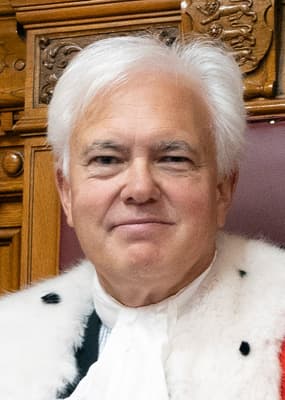
1.1.9Deputy Sir P.M. Bailhache of St. Clement:

Photo of Sir Philip Bailhache

I just want to draw attention to some practicalities. I am sure that every Member of the Assembly agrees that paragraph (b) of the proposition should be adopted for all the reasons given by Deputy Ferey and indeed others. But paragraph (a) seems to me to be otiose. What the proposition asks us to do is to request the Council of Ministers - request the Council of Ministers - to take the necessary steps to ensure that from January 2028 businesses selling in-person goods and services must accept cash. Now, it is true that the question of what are reasonable exemptions is to be developed by the Council of Ministers, but the obligation upon businesses to accept cash can only be imposed by law.

We will need to have primary legislation in order to impose an obligation upon businesses to accept cash. Primary legislation instructions will have to be drawn up for the legislative drafter. In order to draw up instructions for the legislative drafter, a policy will have to be established. People will have to know what they want to do, what the exemptions are going to be. All those details of whether little cafés, which at the moment operate very successfully without accepting cash are going to be required in future to do so, and that will need to be settled before the instructions can be drawn up.

So, what is the Council of Ministers going to do? Are they going to say: “We will issue some broad instructions to the law drafter to draw up some law” and Deputy Renouf says we do not really need to think about this beforehand because we do not need to know what the policy is because we know what the answer is already. But I am not sure that we do know what the answer is. Anyway, even if some people do think they know the answer, the instructions for the legislative drafter are going to be extremely difficult to draw up without the Council of Ministers settling first of all what their policy is, in other words producing a policy paper which is going to be debated by the States as well. So, I am not sure that paragraph (a) serves any useful purpose. I think it will cause some difficulty for officials because they will have to consider whether or not they should be acting in accordance with a mandate of the States or whether they should do the sensible thing and wait until the Council of Ministers has settled its policy.

1.1.10Deputy I.J. Gorst of St. Mary, St. Ouen and St. Peter:

Photo of Ian Gorst

It is obviously slightly strange that this debate has turned into a process debate rather than the principle point, which I think the mover was wanting us to think about. There has been universal agreement on the importance of cash for those marginalised in our community and for delivering inclusion. There has also been commentary made that cash can provide privacy. Well, of course, that is only to a certain extent, because cash has to be taken from somewhere and we know that the banking sector is highly, highly regulated. So, it comes really down to the question then of process.

I know that the mover of the proposition has done a lot of work.

[10:45] His Scrutiny Panel has done consultation, and it has had a number of members of the public reporting to it. It has had a number of Ministers being grilled before it. The Deputy has now brought this proposal to the Assembly, really arising out of his Scrutiny work. The Council of Ministers stands by its second set of comments. Of course it does; they were superseded. Other Members have focused their commentary on the first set of comments. That is that we are, as a Western society, at many tipping and turning points. The use of technology is one of those. At least one Member talked about the changes in payment systems. We are only just seeing the start of that, the technology that some banks are already using. If we think about the challenger banks, which we do not yet have in Jersey, but we would like to, the way that their customers, to a very large extent, do not access cash at all. It is purely an online process. The world is changing and it is appropriate for the Government, post the Scrutiny review, to do the policy work that we have just heard Deputy Bailhache refer to.

For my part, it is the wrong way around to agree to legislate in advance of that policy work, because I agree that legislation will be required. I do not think it is appropriate for us as an Assembly to say we are agreeing now to legislate, and then we are going to do the policy work and do all the consultation. Because I know that the Deputy says in part (a) that that legislation should be brought forward in consultation with stakeholders. Part (b) says, do all of the policy work and do the policy.

It absolutely has to be right that we do the policy work first, and then we agree the legislation.

Because as Deputy Ferey said, there are many issues to consider. Jersey’s banks do not have a legal requirement to provide basic bank accounts, but they all do provide basic bank accounts. What they do is contribute towards the Community Savings Bank for those people who fall through the net.

Now, for my part, the service that they get at Community Savings Bank, and I am responsible for representing banks in this Assembly, the service those individuals get at Community Savings Bank is far better and helps those individuals who are excluded for all the reasons that the Deputy said.

Banks actually find it very difficult to comply with their regulatory approaches and deal with people who are coming out of prison. Therefore, there is a quite broad piece of policy work that needs to be undertaken. Someone else mentioned anti-money laundering requirements. There is a limit to the amount of cash that both individuals and banks can take. So, these are important issues that need to be considered in this policy work, and I think that is what the Deputy actually wants in the policy work. But I think we are all agreed that we must do what is necessary to ensure that cash remains in our community for all of the reasons that we said. Some Members have criticised the Mini ster for Sustainable Economic Development. For my part, that is extremely unfair. Of course, he has a role in this Assembly to represent business and represent the voice of business. Let us be clear, out there in the high street, that is hard work. Because we are mostly choosing to not spend money in the high street but to spend money online. That also is part of what we will need to consider, because there are some retailers that for their own reasons take only card payments. Difficult for me to understand, because I am of the school that if you are going to pay for the product, then a customer that is paying is always right, and if they want to pay by cash then they should be jolly well allowed to pay by cash.

But for those organisations, institutions and retailers that currently do not, there will be a cost implication if, when we bring forward the legislation, we say that they are legally required to provide cash. That that might be the infrastructure in the shop, it might be the overnight holding of cash. If we are going to deliver what we want, which is a wide use of cash, which we already have, we already have a wide access to banking facilities. If you take 100,000 people and put 100,000 people in a large country, we have better access to cash than lots of other large places. But if we want to maintain that, and we want to maintain that through a legal framework, then we must do the policy work and we must do the consultation in advance. Because we all know that often, rightly or wrongly, we are accused of not listening. We are accused that our mind has already been made up, you have already decided that this is what you are going to do in advance of consulting with whatever sector. If we agree (a) today, as well as (b), it would be strange to agree (a) and not (b), then I believe that that will be a charge that can be rightly made against us. We have already decided what the outcome will be prior to even doing the policy work. So I do not think it is appropriate to accept (a), my preferen ce, the preference of the Council of Ministers, and the commentary in the Council of Ministers’ comment is we will do the policy work and then we will be able to deliver a framework which will, of course, have to consider how that framework is implemented once that policy work has been done.

1.1.11Deputy S.Y. Mézec of St. Helier South:

Photo of Sam Mézec

It has been a really interesting debate. I have enjoyed hearing the different perspectives on it, and I thank Deputy Tadier for bringing the proposition and the work that he has done around this, including with his Scrutiny Panel. There is not a whole amount more that I can add to the debate on the points that others have made. I think there were just 2 arguments that I wanted to put a counter view towards, or in the first instance to correct something a Member said yesterday, and it is perhaps against my better judgment that I rise to do this, but this Member I think has made this incorrect point more than once so I have to. That was what Deputy Stephenson said in her speech yesterday about a previous proposition saying that a Minister had called her proposition on cash use boring. I believe that was a reference to me and it is not accurate, because if she goes back to that debate she will actually find I was calling the Government amendment to that proposition boring, and I maintain that because it was. I did not call her proposition boring, and it is very disappointing that she repeats that when she could have checked that. But I think moving on to what will hopefully be a more constructive point, is that Deputy Gorst, as a skilled parliamentary debater as I called him earlier this week, did make what I think many will regard as a good argument for getting things the right way around, and others have made a similar point on that. Everybody seems to be perfectly happy with part (b) to this proposition but are wondering if part (a) might be putting the cart before the horse. I want to make the case for why I do not think that is right and why I think that often our political indecisiveness and our often instinct to kick things down the road actually leads to us wasting spectacular amounts of time and money in Government and causing disillusionment. I think it is far better than to go into a consultation with the public acting as if you have a complete open mind on all of the issues, when in actual fact you do not have an open mind on some of those. I think it makes part of that consultation just not worth having. If you already know what outcome you want, consulting on it as if you have an open mind is a waste of time and I think the public see right through that. There are 2 examples recently where that has been the case. There was the consultation on the proposed Residential Tenancy Law that happened before my time in office, that was largely a waste of time because it came from a political perspective of not having any settled views on what ought to happen in the end.

So, the feedback that was obtained through it was not particularly useful. But more relevant to this sitting was the consultation on the removal of interest tax relief from buy-to-let mortgages where I said at several points during that process that it did not matter what that consultation said because people would already have a fixed political view on it anyway. Lo and behold, that is exactly what the comments to that have shown. I think it actually is a much better idea to resolve on part (a) of this proposition today based on principle of whether you agree with what part (a) is asking for or not, not to dismiss it for the reasons that Deputy Gorst suggests, which is that it is putting the cart before the horse. No, vote on it based on whether you think it is the right thing to do or not and set out right from the start that when the work is done for part (b), the public will know in advance what the direction of travel is and can provide more useful contributions to that about the how, not the if. Too often we go to the public without having settled the if and end up not doing the work on the how, and that ends up elongating these processes for delivering change, and it is one of the core areas I think where Government is extremely inefficient and wastes huge amounts of money. So I would say that if you agree in principle with what part (a) is asking for then vote in favour of it, do not vote against it because you would prefer to see the outcome of part (b) first, because I do not think that would be a satisfactory way of proceeding and will end up elongating this process more than it needs to be.

For what it is worth, I will vote in favour of all parts of the proposition.

Photo of Robert MacRae
Robert MacRae

Does any other Member wish to speak on the proposition? If no other Member wishes to speak, then I close the debate and I call upon Deputy Tadier to reply.

1.1.12Deputy M. Tadier:

Photo of Montfort Tadier

Can I first of all thank all Members who have spoken? I think we have had quite a number of speakers, and it has been a fairly wide-ranging and I think generally constructive debate. Let us talk about process. I think Deputy Gorst is correct that the reason this is now focusing on process is effectively because nobody has got a good enough argument to vote against either part (a) or part (b).

I am taking that as read, that apart from maybe one or 2 voices in the Assembly that we have heard - one remotely, I think - is that part (a) is actually a good thing to do, that actually businesses in Jersey should be accepting cash, that is the general rule, and that there would be reasonable exemptions. I also draw Members’ attention to the preamble to this proposition, because nobody has really picked up on that. Before part (a) and part (b), after it says: “The States are asked to decide whether they are of opinion”, I always put the definite article in there, it does not have it “that people in Jersey should have a right and expectation to be able to pay for in-person purchases of goods and services using cash, and to request the Council of Ministers to do the following.” That is very much the preamble. So, the starting point for us here is, if we are voting for either part (a) or part (b), is that people in Jersey should have a right and an expectation to be able to pay for things, so goods and services, that they make in person. We are not talking about Amazon. I think there was a big red herring that came from Deputy Scott there, saying that online businesses would not be able to set up in Jersey. It is a nonsense, because when you are online it is not an in-person good or service that you are purchasing, not within the scope of either part (a) or (b). So that is the starting point that we are agreeing on. Actually part (a) and (b) are separate. They are modular, if you like. They can be taken completely separately. You could have (a) standing on its own without part (b). You could have part (b) on its own without part (a). The reason, in fact, I put part (b) in is actually because when I was talking to people, and when we got feedback both on a personal level but also at a panel level, we did get the feedback from businesses that one of the reasons they felt they were being pushed towards preferring card payments rather than cash is because banks were putting onerous costs on them or that they are likely to increase costs on them that did not exist before. So, part (b) is really there primarily to say that if we are doing (b) already then it is only fair to also look at things like the fees that banks charge. So really part (b) is predicated on part (a) in many ways for me; that is the whole logic of it. I could have put part (a) on its own, I think that would have had a more focused debate, and I dare say it would have focused the Council of Ministers to try and take a political position, goodness forbid that they would need to do that, rather than actually come out with the lowest common denominator, saying: “Yes, we will do something just like we did something on empty property taxes” or on any other number of things like maybe the F.O.I. (Freedom of Information) Law.

[11:00] I was talking to Deputy Labey, the Deputy of Grouville, in fact about that before. You make an in- principle decision and the risk is if we only put part (b) forward, that we just get to 2030 and we will be in exactly the same situation, and the Government says: “Yes, we have not done anything of this because, of course, there was no States decision that was taken on this. We do not know what the direction of travel is, we were only asked to come up with a policy paper” and of course the policy paper was probably going to be directed by the same people who are currently in office who do not agree with forcing businesses to take cash. That is the evidence they have already given us. So, I think by only adopting part (b), not part (a), we are actually hamstringing - if that is the right word - the future Government to not make a decision, whereas part (a) gives clear direction of travel about what this Assembly, this outgoing Assembly, would like the future Council of Ministers to do. Let us take a look at that wording again. It has been deliberately worded in that way, so after the preamble, take the necessary steps because we have made a majority decision in here that we think it is right that businesses should accept cash, but we also accept that there might be reasonable exemptions because we do not know whether we want to go down the French, the Norway model, the increasingly European model where all businesses are supposed to take cash, or whether we go for a more nuanced Australian model. Sweden have not actually developed their model yet, but they are moving back away from the race towards a cashless society, and they are looking at things like groceries, pharmacies, possibly cafés and some government services that must accept cash. So that is definitely the direction of travel. I am interested actually in Deputy Morel’s comments because usually Deputy Morel is somebody who does not want to blindly follow what the U.K. is doing. In this particular policy area, the U.K. is the outlier. Europe and many other parts of the world, many U.S (United States) states in fact, are legislating, and legislating is not a dirty word. We do it all the time. We have been doing it for the last week, and we did it in the last sitting. When we talk about new primary legislation that might be required here, what we are actually talking about is an amendment to a pre-existing law. There is more than one way to do it, it could be done through the Discrimination Law but more likely I would be asking Ministers to look very closely at the consumer protection laws, and it could be simply another Article in the Consumer Protection Law which says about unfair practices. It would be considered an unfair practice or an undesirable practice to refuse somebody’s right to pay cash unless you have good reasons for not accepting that, and the exemptions would not necessarily just be on the basis of the type of business, to answer Deputy Gardiner’s point, it would also include limits. Of course, if somebody goes into a shop with £10,000 and wants to buy a new car, well that is already covered under the anti-money laundering reporting. If they want to go into, I do not know, a CD (Compact Disc) shop if they still exist, or a bookshop and buy a whole load of books which is going to cost £900 in cash, I think there are going to be limits of what is discretionarily allowed, but the presumption is that you should not reasonably refuse cash if that is what somebody wants to pay in. These things will be developed, and that is the whole point of part (a). That is a consultation in its own right so that is why part (a) talks about in consultation with stakeholders to do this by January 2028. In order to do that by January 2028 you will have needed to have lodged something by then anyway; probably 6 months ideally in advance. You will have consulted and that there will be something tangible. So, this policy for cash inclusion in Jersey will be in place by January 2028. Would that slip? It may well slip. I am realistic, it might be that we do not get that policy until January 2029, but that is what we are signing up to as an Assembly. This is a decisive action, and I do want to make the case as to why we should be doing that in summing up. Deputy Jeune, I think, eagle-eyed as ever, focused on the comments that I put of the current Minister for Sustainable Economic Development, who, making personal comments, I think, unequivocally was saying that he thinks businesses in Jersey should be accepting cash and that we need a proposition, is what he said. We need a proposition, not a review, in front of us that would require businesses to accept cash. Well, we have that proposition in front of us, Deputy Morel, as you desired, and where is Deputy Morel now and how will he vote on that, either as a Minister or as a representative for St. Lawrence, St. John and Trinity? I would certainly like his vote on both parts.

When we spoke to Deputy Morel as Minister during our review, because he had already mentioned this idea of a slippery slope and I have put this in my report: “Are we sleepwalking to a point of no return?” So, the idea of a slippery slope that Deputy Morel referred to in that debate is mirrored elsewhere in wider debates about whether some countries are sleepwalking into a cashless society.

The chair of the U.K. Select Committee that I referred to in my opening speech, with their review, Dame Meg Hillier, who I know some Members of the Assembly will know, who was the chair of the U.K. Parliamentary Treasury Select Committee, they looked at that and they came up with this comment. They said: “As a society we must avoid sleepwalking into a situation where cash is no longer widely accepted. The Government needs to take this seriously.” I think those comments are equally valid in the Jersey context. Jersey, as a small society, as a small community, must avoid sleepwalking into a situation where cash is no longer widely accepted and the Government needs to take this seriously. This is an excerpt from one of our hearings where we had Deputy Morel in as the Minister for Sustainable Economic Development. The question I put to him: “Is there a valid argument, Minister, that says actually Government needs to intervene to stop that critical point passing where there is no choice left for customers?” The response was: “At the moment I think we are in a place where enough businesses are currently accepting cash for it not to be a problem and not to need to regulate, but there may come a point where if we are heading towards 100 per cent of businesses only accepting electronic payments then we might want to say, because we know there are people in this society who want to use cash, who prefer using cash for very good reasons, that they need to be protected in that way.” So what Deputy Morel is saying is that if we get to a point where it looks like 100 per cent of businesses are not accepting cash, that is probably the point at which we might need to take action as a Government. My question, perhaps quite obviously: “Is there not a risk about Government intervening too late in that process? Because if you intervene when 90 per cent of businesses have gone cashless, that is presumably much more disruptive in order to implement that.” The response: “You are absolutely right.” So, the point there is that the Minister, and I think Ministers - all Ministers if they search their hearts - will know that there is a window of opportunity here. We have a scenario, when I got my £10 note out earlier, where that £10 note still does have the currency in St. Helier but it is increasingly reducing. If I want to spend that tenner, I have to think now about which coffee shops I can go to and which ones I cannot go to. I already know that there are 3 I cannot go to, I am not welcome to spend my cash in those shops. But there are others that I am not sure about. In fact, some I go to and actually that I find that they have just changed the policy. So, at what point do we intervene, and I say this is a window of opportunity now to do that. I do not think I am going to go through all of the arguments that have been made, although I have made notes for all of the speakers. I can though if anyone feels left out. But I want to maybe single out a couple of speeches that really stuck out to me. The first one is Deputy Miles. She speaks so well often, and she is always well prepared. I was asked for a copy of my opening speech this morning by a journalist, and I said I do not have one because I do not tend to write them but look on the video (do some work). I did not say that but if he is listening, he will be listening to that now.

The great quote that I have not heard before, and I may plagiarise it in the future, is that Deputy Miles said that diversity is being invited to the party, but inclusion is being asked to dance. I think that is what we are talking about. Diversity in this context is saying: “Yes, you can take cash out of the bank by all means, the Government is saying we are not going to take your cash away but inclusion is saying that you can use that cash and Government will protect your right to dance, i.e. to use that cash widely, and we will make an intervention.” It is tough because if you are an ideological politician who does not want to intervene in the market at any costs that is going to be a difficult thing for one to do, but you have to balance that, as I have said, previously with the harms. I am not ideological in that sense, I think that the free market is great, but the free market cannot resolve all problems. What I also thought of, following on from Deputy Miles’s comment, is that we are really talking about access here, are we not? If we are not talking about cash but we were talking about a physical building, we know that access, inclusion and diversity have come a long way even in the last decades let alone in the last 50 years ... in the last few years and in the last decades. We are talking about a historic building, which has got steps to go into. We know that the simple thing you do for buildings is that you have steps and you have a slope and, for good measure, you have a handrail. That means that that building is at least on a basic level accessible to so many more people, people who struggle with steps for so many reasons. They do not have to be in a wheelchair; they might just not be able to lift their feet up. Having the rail going up the slope, that is going to help so many more people access that. This is all we are saying here. We are saying electronic is great if that suits you, the bit of plastic, if that suits you. Have you noticed we are also being pushed away from using plastic, because of course, when you get your phone out to tap, you never get asked for your P.I.N. (Personal Identification Number), I do not think. I think it is really difficult to, so we are being pushed in a direction, but we are saying whatever your method of payment, that is great. So, when my tenner is in the bank, the way I look at that is that the bank do not own my £10 note, they are looking after it for me, and if I want to access that £10, I can do it in 3 ways. I can do it by taking the money physically from the bank, I will have that tenner in my hand, or I can take the money out at the point of purchase with the card or with the phone. But ultimately, it is about giving choice to people in this. I do have to address Deputy Scott’s points. It might be the last opportunity to cross swords with her in a debate. She accused me of playing on the fears of older people, and I completely refute that. Actually, what I am trying to do here is listen to the concerns, not just of older people, actually, because as we have established previously being old does not mean that you are digitally illiterate, but it does mean that perhaps you are more likely to succumb to other conditions and there will be co-morbidities in the future. But younger people will need to access and use cash, as Deputy Miles reminded us, for a whole host of reasons. The whole argument about Amazon is just not correct. But her argument seemed to be basically that the free market will save us. The free market will resolve all these issues. But I am afraid the free market is not doing that. If people are being pushed on the one hand by banks to not accept cash because cash is expensive and it is a hassle, then I am afraid that there is a need for intervention. We would not say to a company that we did not need to legislate for guide dogs or for wheelchairs. We could say to a company, if we were being purist, that they should not need to accept people in a wheelchair because there is an extra cost. You might only be able to get 3 wheelchairs into your small café when you can get maybe 6 or 9 other paying customers. Why should that be an imposition on businesses? You might have to put that handrail or that slope up to get into your restaurant or to your shop. That is just a normal thing that businesses do to be inclusive. Accepting cash is a normal thing that businesses should do to be inclusive. I am not going to go through all these comments. I think all the comments have been made. I do ask Members to be courageous in this. I think we are here to make strong and decisive decisions, and I will simply reiterate the point that Deputy Miles eloquently said, that diversity is to invite people to the party, inclusion is to invite them to dance. Let us invite all our people in Jersey, including the tourists who come to Jersey, to use cash, to take part in our party, to enjoy their time in Jersey, to be able to dance by using cash and proudly use it in all of our businesses. I make the proposition and because, of course, part (b) without part (a) would be, I think, meaningless, I am moving this en bloc.


Photo of Robert MacRae
Robert MacRae

Do you call for the appel, Deputy?

Photo of Robert MacRae
Robert MacRae

The appel is called. I ask Members to return to their seats. Deputy Howell, you have your light on.

[11:15]

Photo of Andy Howell

I just wonder, Sir, are we allowed to ask for it in parts?

Photo of Robert MacRae
Robert MacRae

No. If all Members have had the opportunity of returning to their seats, I ask the Greffier to open the voting.

POUR: 31 CONTRE: 8ABSTAINED: 2 Connétable of St. Lawrence Connétable of St. Helier Deputy K.F. Morel Connétable of St. Martin Connétable of St. Brelade Deputy A. Howell Connétable of St. John Connétable of Trinity Connétable of St. Clement Deputy S.G. Luce Connétable of Grouville Deputy I.J. Gorst Connétable of St. Ouen Deputy Sir P.M. Bailhache Connétable of St. Mary Deputy D.J. Warr Connétable of St. Saviour Deputy M.R. Scott Deputy G.P. Southern Deputy C.F. Labey Deputy M. Tadier Deputy M.R. Le Hegarat Deputy S.M. Ahier Deputy R.J. Ward Deputy C.S. Alves Deputy I. Gardiner Deputy L.J. Farnham Deputy S.Y. Mézec Deputy T.A. Coles Deputy B.B. de S.V.M. Porée Deputy H.M. Miles Deputy J. Renouf Deputy C.D. Curtis Deputy H.L. Jeune Deputy M.R. Ferey Deputy R.S. Kovacs Deputy A.F. Curtis Deputy B. Ward Deputy K.M. Wilson Deputy L.K.F. Stephenson Deputy M.B. Andrews

2.Draft Companies (Jersey) Amendment No. 2 Law 202- (P.49/2026)

View debate

No contributions recorded for this item.

2.1Deputy I.J. Gorst of St. Mary, St. Ouen and St. Peter (The Minister for External Relations):

Photo of Ian Gorst
Ian Gorst(Ian Gorst)

The Draft Companies (Jersey) Amendment No. 2 Law proposes the introduction of an administration procedure in order to provide an alternative option for a Jersey company which is facing insolvency, where there is a reasonable likelihood that the company can be rescued in whole or in part or that there could be a more advantageous realisation of the company’s assets than would be achieved in a winding up. An application can be made to the Royal Court for an administration order and the appointment of an administrator. This gives the company a window of opportunity to try and sort out its difficulties with the assistance of a professional court-appointed administrator. As the law currently stands, we do not have a true rescue procedure in our armoury. The provisions relating to désastre or winding up all lead to the termination of the company. Sometimes with some breathing space and professional input, termination can be avoided. Even where it cannot, an administration may mean there is a more orderly process in place so that there are higher returns for creditors and a better outcome generally, including for any employees. Similar schemes exist in other jurisdictions, such as in Guernsey and in England and Wales, and have been seen to work well with other remedies to offer a comprehensive regime striking an appropriate balance between creditor and debtor. As with previous amendments to the law in this area, this builds on existing principles and by following established concepts and tried-and-tested procedures will be familiar to practitioners and intermediaries within the Island and from further afield. As well as benefiting the many Jersey companies owned by local residents operating within the Island, the proposals respect the position of Jersey as an international finance centre which recognises and protects the interests of creditors. The rights of secured creditors in particular are preserved, including as to enforcement, thereby ensuring that the Island’s reputation as a creditor-friendly jurisdiction, while also providing appropriate protections for the debtor company, is unaffected. In brief, the process is that an application is made to the Royal Court. Notice must be given to various parties who can make representations to the court at the hearing. The amendment will be supported by an accompanying order which will confirm that notice of the application must be given also to secured creditors who will have the opportunity to make representations to the court as to, for example, the making of the order and the appointment of the administrator. This is being done by order so as to enable minor adjustments to the definition of a secured creditor to be made swiftly, if necessary, once it is seen how it works in practice. The proposals have been subject to the public consultation. Officers have worked with the Viscount, the Judicial Greffier, the Jersey Financial Services Commission and a working group comprising representatives from various law firms and the Association of Restructuring and Insolvency Experts to ensure that the amendments are appropriate. As in the case with all changes to financial services legislation, I must, of course, record my thanks to all those in industry and across Government and the other stakeholders who have expended considerable time and effort to develop and refine these proposals. I would also like to extend my sincere thanks to the Economy and International Affairs Scrutiny Panel for their diligent scrutiny of this legislation and thoughtful reflections of the amendments. I propose the principles.

Photo of Robert MacRae
Robert MacRae

Are the principles seconded? [Seconded] Does any Member wish to speak on the principles?

2.1.1Deputy K.M. Wilson of St. Clement:

Photo of Karen Wilson

Deputy Tadier is not here but I rise just to say that as a Panel we did review this law, and just to summarise that that was informed by briefings from Government officers. It was explained that there were several older regimes currently in place, but they will all operate as termination procedures, which is what the reason for the change was. We looked at the administration processes. We asked whether there were any circumstances in which a company would not be placed into administration, and we heard about the process that the Court would have in relation to the discretion that they would have around that process. We also talked about the administrators. We raised a matter of the management of potential conflicts of interest, but we had assurances the administrator must follow their professional code of conduct, and it was further highlighted that the approved list of practitioners would have oversight from the Viscount. There was not anything else that we were particularly concerned about other than whether there would be any financial support available to a company.

The officer explained that the administrator would determine the most appropriate course of action in that regard. We were also advised the draft law had been discussed by the Companies Law Working Group, which the Minister just referred to, and that included representatives from local law firms, the Association of Restructuring and Insolvency Experts, the Jersey Financial Services Commission and the Viscount. The Panel was advised that there was broad support for the proposals.

On that basis, we are satisfied that the draft law is consistent with the approach taken in comparable jurisdictions and that the proposed administration procedure would provide an alternative mechanism to support distressed companies rather than requiring them to wind up. We support the proposition.

Photo of Robert MacRae
Robert MacRae

Does any other Member wish to speak on the principles? If no other Member wishes to speak, then I close the debate and I call upon the Minister to reply.

2.1.2Deputy I.J. Gorst:

Photo of Ian Gorst

I am grateful to the vice-chair of the Panel standing in when her chair has gone out to spend his £10.

[Laughter] I maintain the amendment in principle and call for the appel.

Photo of Robert MacRae
Robert MacRae

You call for the appel. I invite Members to return to their seats. If Members have had the opportunity of returning to their seats, then I ask the Greffier to open the voting.

POUR: 35 CONTRE: 0ABSTAINED: 0 Connétable of St. Helier Connétable of St. Lawrence Connétable of St. Brelade Connétable of Trinity Connétable of St. Martin Connétable of St. John Connétable of St. Clement Connétable of Grouville Connétable of St. Mary Connétable of St. Saviour Deputy G.P. Southern Deputy C.F. Labey Deputy M.R. Le Hegarat Deputy S.M. Ahier Deputy C.S. Alves Deputy I. Gardiner Deputy I.J. Gorst Deputy L.J. Farnham Deputy S.Y. Mézec Deputy T.A. Coles Deputy D.J. Warr Deputy H.M. Miles Deputy M.R. Scott Deputy J. Renouf Deputy C.D. Curtis Deputy L.V. Feltham Deputy R.E. Binet Deputy H.L. Jeune Deputy M.R. Ferey Deputy R.S. Kovacs Deputy A.F. Curtis Deputy B. Ward Deputy K.M. Wilson Deputy L.K.F. Stephenson Deputy M.B. Andrews

Photo of Robert MacRae
Robert MacRae

Deputy Wilson, does the Scrutiny Panel wish to scrutinise this matter?

Photo of Robert MacRae
Robert MacRae

Minister, how do you wish to propose the Articles in Second Reading?

2.2Deputy I.J. Gorst:

Photo of Ian Gorst

I realise it is reasonably lengthy, but I propose them en bloc and I will endeavour to answer any questions that Members may have.

Photo of Robert MacRae
Robert MacRae

Does any Member wish to speak in Second Reading? If no Member wishes to speak then I close the debate. Minister, do you wish to say anything? Would those Members of adopting the Articles in Second Reading kindly show. Those against? The articles are adopted in Second Reading. Minister, do you wish to propose the amendment law in Third Reading?

2.3Deputy I.J. Gorst:

Photo of Robert MacRae
Robert MacRae

Does any Member wish to speak in Third Reading? If no Member wishes to speak in Third Reading, then I call upon the Minister to reply.

Photo of Ian Gorst

I am not sure if we quite seconded that, but I am sure the Chief Minister did.

Photo of Robert MacRae
Robert MacRae

Grateful to have that seconded, Chief Minister. Thank you.

Photo of Robert MacRae
Robert MacRae

You call for the appel. If Members have returned to their seats, I ask the Greffier to open the voting.

POUR: 40 CONTRE: 0ABSTAINED: 0 Connétable of St. Helier Connétable of St. Lawrence Connétable of St. Brelade Connétable of Trinity Connétable of St. Martin Connétable of St. John Connétable of St. Clement Connétable of Grouville Connétable of St. Mary Connétable of St. Saviour Deputy G.P. Southern Deputy C.F. Labey Deputy M. Tadier Deputy K.F. Morel Deputy M.R. Le Hegarat Deputy S.M. Ahier Deputy R.J. Ward Deputy C.S. Alves Deputy I. Gardiner Deputy I.J. Gorst Deputy L.J. Farnham Deputy S.Y. Mézec Deputy T.A. Coles Deputy B.B. de S.V.M. Porée Deputy D.J. Warr Deputy H.M. Miles Deputy M.R. Scott Deputy J. Renouf Deputy C.D. Curtis Deputy L.V. Feltham Deputy R.E. Binet Deputy H.L. Jeune Deputy A. Howell Deputy M.R. Ferey Deputy R.S. Kovacs Deputy A.F. Curtis Deputy B. Ward Deputy K.M. Wilson Deputy L.K.F. Stephenson Deputy M.B. Andrews

3.Removal of interest tax relief for Buy-To-Let mortgages (P.51/2026)

View debate

No contributions recorded for this item.

3.1Deputy C.D. Curtis of St. Helier Central:

Photo of Catherine Curtis

Members may recall that in the Budget debate last year, Deputy Warr brought an amendment to reintroduce mortgage interest tax relief for homeowners, and when considering that mortgage interest tax relief is no longer available for homeowners, in his report Deputy Warr stated: “It is an anomaly that those with mortgages on second homes are still entitled to tax relief on their mortgage.” I agree.

It is just plain wrong that landlords with a mortgage get mortgage interest tax relief when owners with just one property do not.

[11:30] Unfortunately, the majority of States Members voted against reintroducing mortgage interest tax relief for homeowners during last year’s debate. I had brought an amendment to that amendment to remove the mortgage interest tax relief from buy-to-let homes, and that narrowly missed being voted through, 19 votes pour and 21 contre. At the time, the Minister for Treasury and Resources said that any vote on this matter should wait until a consultation had concluded. We now have the results of that consultation, so Members have the opportunity to vote on this matter while considering the long- awaited consultation. Just a few words about the consultation process. It was made in response to Deputy Mézec’s amendment brought in 2023. That original proposition required the use of the Fiscal Policy Panel’s Housing Market Review as the basis for determining next steps. That has not been done. Instead, the work was done by the Economics Unit. This protracted consultation resulted in a response by just 18 respondents, 11 of whom stated that they are or were landlords. No one can reasonably say that it is representative and therefore it is not worth using as a base for decision- making. I was disappointed to read the comments attributed to the economic adviser, not because I disagree. Of course, he is right in what he says. I am disappointed that the matter has been taken out of context and considered in a reductionist way. The Minister for Treasury and Resources completely ignores the bigger picture that housing has become too expensive and therefore we should not be encouraging it as an investment above the needs of homeowners. If this is how Government assesses policy and makes decisions, then no wonder we are in such a mess with too expensive housing and a high cost of living. The conclusion in the Minister for Treasury and Resources’ comments paper is ironic that this proposition should be rejected to avoid damaging unintended consequences when you consider where the business-as-usual policy has got us to now. The appended report describes mortgage interest tax relief on buy-to-let mortgages as an expense as being incurred in the course of business. But, of course, renting out a property is not just a business, it is the acquisition of a valuable asset. More importantly, it provides housing to nearly half our population. Housing is an integral part of our society both for health, well-being and the economy. Over the years it has got dangerously out of kilter. Promoting housing as an investment rather than prioritising it as homes has got us in a mess. I state again that housing investment and provision cannot only be considered solely as a business. It has a huge impact on our Island and regarding it solely in business terms is wholly irresponsible. Removing mortgage interest tax relief from buy-to-let mortgages is estimated to raise £2 million per year. At a time when Jersey needs to increase its revenue base, it is obvious that this is a clear way to bring an extra £2 million into the Government funds or to be spent on Islanders more generally. I have often heard the phrase “nice to have” and that Jersey needs to cut its public spending starting with nice to haves. Well mortgage interest relief on buy-to-lets is very much just a nice to have. If it stopped, the world would carry on. There will still be rentals. The 80 per cent of rental properties which are held mortgage free will be entirely unaffected. The remainder of rental properties which do have a mortgage will continue to be a valuable asset in their own right with tax free capital gains. If some of the minority of landlords sell up, their property will be bought as a home to live in or by another landlord. Government policy so far has favoured property as an investment but look where that has got us: some of the most expensive housing in the world, young people leaving because they cannot afford to live here with the resulting ageing society. We are no longer in the 1980s. It is well past the time when Government should have acknowledged that promoting homes as an investment vehicle, while it has benefited some individuals, has overall damaged the Island. This proposition allows a move towards some correction. To sum up, firstly, allowing mortgage interest tax relief on buy-to-let homes but not owner-occupied homes is inequitable. It is wrong. Secondly, there is a strong economic argument against it. Housing has become too expensive, pricing families out of living here, meaning our economy based on taxing working people is becoming less sustainable, and therefore we should not currently be favouring housing as an investment above the needs of homeowners. Thirdly, if this change goes ahead, rentals will continue. A great majority of landlords do not have a mortgage, and I ask States Members to consider this matter in context and to support the proposition.

Photo of Robert MacRae
Robert MacRae

Is the proposition seconded? [Seconded] Does any Member wish to speak on the proposition?

3.1.1Deputy B. Ward of St. Clement:

Photo of Barbara Ward

I will not be supporting this proposition at this time, and my reasons for that decision are as follows.

The proposed changes, I feel, are poorly timed following the other recent changes made in the rental market and the impact they will make on it where further investment needs to be made to comply with these regulations. This proposal will affect other businesses, especially the lifeline of some of our small businesses we have on the Island who invest in business property mortgages. The removal of interest tax relief for some smaller landlords may be just the last straw to push them into negative equity or even withdraw from the open market, especially with mortgage rates creeping up again.

This will impact on our local economy and might reduce taxes earned because less properties means less rent means less tax. The removal of tax relief will only result in increased rents to cover the costs of that loss of tax relief, which will only result in the consumer being asked to pay more, whether that be in the private domestic rental area or on the high street. Interest tax relief on borrowings is a legitimate business deduction which is able to be used by all businesses in Jersey. Landlords are no different because they are all small businesses. Landlords are not the same as a homeowner.

Landlords get rent from their properties, which is taxed for everyone’s benefit. Homeowners do not get rent. Comparing the 2 is not comparing apples with apples. Removing interest tax relief violates, I believe, a foundational principle of business taxation. It is profits, not revenue, which should be taxed. We have been advised recently that Jersey must promote a positive position to the wider business community to attract global investment stating: “We are open to businesses to come to Jersey and invest.” These new businesses will look at Jersey’s economic environment and the removal of tax relief incentives on landlord borrowings. Imposing the removal of the tax relief could well, in my view, deter new businesses from making new investments as it is contrary to the normal business practice. Due to the volatility of world events that we are seeing today, this proposition will make things worse for the cost of borrowing now that mortgage interest rates are increasing again.

Businesses will be very cautious of investing if normal business practices are affected by the removal of a business-related buy-to-let tax relief. If I may relate to Members from the recent comment from our Chief Economist on 23rd March, which echoes my concerns, and he states a warning, and I quote: “Removing interest deductions will leave landlords with mortgages with a higher tax bill and lower profits. All else being equal, such landlords can be expected to increase rents to offset the reduction in profit. Alternatively, a landlord might well sell their properties.” We, as an Assembly, need to take heed of our highly respected senior advisers on such matters as we should be doing our best to protect and help grow our economy, not bringing changes that could negatively affect the situation.

Members, I believe this proposal is short-sighted at this present time. Jersey will be out of step in the world of business by this proposal. I urge Members to reject this proposition, and I thank you, Sir, and Members, for listening.

3.1.2Deputy T.A. Coles of St. Helier South:

Photo of Tom Coles

I rise thanks to Deputy Ward’s speech there, because she talks quite frequently throughout her speech about property landlords as being a business. Of course, she is right in the sense that there are business loans that businesses can take out and the interest paid on those loans is still tax deductible, and that will remain the case, but my issue when we talk about property ownership in this context is it is not the same as any other business. We talk about some equipment that businesses have and need to provide. Just for example - I am sorry because he is normally in my line of sight - is brewery equipment, shall we say. If a brewer wants to install a new vat, a new still to make his product, he would be able to get a loan for that, pay that interest off and he has the product at the end that makes his product that he sells because that is equipment that is used specifically for that business. When we look at housing people and making sure that people are well-homed and have a roof over their head, this should be a basic human right and not considered a business interest. That is where I think some of this gets a little bit difficult, because we are choosing to treat homeownership in different contexts. As the proposer of this proposition said in her opening speech, that there was a try by Deputy Warr to bring equality back to mortgages by allowing mortgage interest relief for homeowners to balance the rights of people who are owning a home to be well protected and well looked after. Whereas myself as a person with a mortgage, I do not benefit from that interest relief after this year. Into next year it completely disappears. Why should somebody else, who is able to make money out of putting a roof over someone’s head, which should be considered a base human right, be able to reduce their tax because of this? But also, the fact that when we talk about competition, should we really be encouraging competition to house people, because that seems a really strange thing. People should be able to be strongly and well supported. I also consider, when we talk about this fearmongering that landlords will put their rents up, the Residential Tenancy Law will be enacted by this point because it comes as the Minister has already given the order for it to start in April. That means landlords will not be able to increase their rents beyond R.P.I. (retail price index). This notion that they would put up their rents to combat the lack of this interest relief fails at that point but also fails in the fact that if they put their rents up, they still have to pay more tax anyway.

It is a base 20 per cent tax on all rent that comes in. That is fact. I am supporting Deputy Curtis with her proposition here because I think it is right if we are going to lose the mortgage interest relief on someone who is owning just one home, why should we allow somebody to have it who is going to own multiple homes?

Photo of Robert MacRae
Robert MacRae

Thank you, Deputy Coles. Does any other Member wish to speak on the proposition? If no other Member wishes to speak then I ... Deputy Mézec.

[11:45]

3.1.3Deputy S.Y. Mézec of St. Helier South:

Photo of Sam Mézec

I cannot believe I lost chicken so badly there, [Laughter] but I was desperate to hear from the person who I believed was going to be acting as the main respondent to this. There we go. Lesson learnt. I am very grateful for Deputy Catherine Curtis for bringing this proposition and for her persistence as well because, of course, she brought an amendment to the previous Budget as well. I agree with every part of the argument that she makes and I think this is the right thing to do. There is a central point as to why this is different to ordinary business expenses acquiring assets where you may have to pay interest on loans that would otherwise be deductible, and it is vital that people understand this difference. The difference is that when somebody is buying a home to acquire as an asset to then make money out of it, they are competing against people who are not businesspeople for that same asset because the asset of a home is just a home. You do not have homes that are constructed as business assets and those that are constructed as homes for owner occupiers. The bricks and mortar are the same. It is the same product, the same asset, but through our tax system we currently provide an indirect subsidy through that tax relief to people who are buying those assets as investments to make money out of them, when just over 10 years ago we made a decision to abolish that indirect subsidy for people who are buying those homes to live in. I remember those days, just over 10 years ago, when that decision was made. They were dark days because we had public finances in a very difficult position at the time and the then Government, in response to that, proposed a damaging austerity package to save money that included lots of very regressive measures in it. Deputy Southern, Deputy Tadier and I remember the fight against that very well, where there were proposed cuts to support for people with disabilities, for pensioners, for single parent households, et cetera.

But that also included the decision to phase out mortgage interest relief for people who were buying their homes to live in. You can make an argument for doing that because, as an indirect subsidy, it was an inefficient way of helping people into home ownership. I would argue that the most efficient mechanisms that we have found recently have been those through Andium’s Homebuy scheme and the First Steps scheme. Those are very good ways of helping people into home ownership where there is a fair, economic argument to say that indirect subsidies through the tax system are not as efficient. Some people will take issue with that and find that difficult to comprehend because many people did benefit from mortgage interest tax relief to buy their homes. There are different perspectives on it, but I can understand the argument that was made 10 years ago, even though I was not very happy about it and found that it came in a very dark context. But to have applied a double standard to it, which is what it is to say: “If you are buying a home to live in you do not get this indirect subsidy anymore, but if you are buying it to rent it out for a profit you do get that indirect subsidy”, makes little sense. In the speech from Deputy Barbara Ward before, she did not address at all - and I suspect those who are against this proposition will also not address this point - the key one that was made by Deputy Catherine Curtis, which is that housing has got too expensive in Jersey, and that has happened over a period of time where there has been completely unsustainable growth in house prices, and that has happened because of bad decisions here. When the previous iterations of rent stabilisation and rent control tribunal were abolished, guess what, rent started going up by more than inflation, and the stats from Jersey Statistics show that. In the years subsequent to the austerity budget, house prices went up at completely unsustainable rates. Often, they were going up by more than the entire average salary in a year meaning young people were literally seeing the prospect of owning a home getting further and further away from them, and that being exacerbated for some of those people by the abolition of some tax relief that they had benefited from until that point. But if you were going to buy that same commodity, that asset, to then not live in it, but to make money from it, that indirect subsidy was preserved all while housing was becoming too unaffordable and expensive. That was a bad decision, and it is about time that we corrected that. There is, I think, a clear economic argument in favour of doing so, because providing an indirect subsidy exclusively to those kinds of purchases increases their purchasing power compared to somebody trying to buy a home to live in. Is that what we consider to be right, that Government through its tax system should provide an indirect subsidy to people so they can increase their purchasing power against prospective homeowners? Is that our priority? I would say I would hope it is not, and I would think that the majority of the public would feel that way too. We ought to be supporting Jersey families to buy their own homes to live in and make their lives in, and we should not be providing indirect subsidies so others can essentially outbid them and help push house prices up further. This proposition enables us to do so and, frankly, we should have done it much earlier. As Deputy Catherine Curtis pointed out, there was a consultation on this which is of very little use to us because of the little engagement it had. It came about because of that debate in the Budget at the end of 2023 where the Assembly did what it so often does, which is that it had the opportunity to make a choice and instead of making that choice it kicks the can down the road and says: “We could not possibly do something without a consultation.” I said all throughout that time that the consultation would be a waste of time because it would not change people’s political views on it. If the consultation came back and said: “What a brilliant idea”, those who started off thinking it was a bad idea would not have their minds changed by that and, of course, vice versa. Lo and behold, that is exactly what has happened and we have protracted this out far longer than it needed to be. For those central reasons, I strongly support this proposition. I think it corrects a historic injustice. I think it does make economic sense because it seeks to not subsidise the purchasing power of investors for an asset that is a unique type of asset. It is not a piece of business equipment. It is not even a shop floor. It is a home and homes look and feel identical, irrespective of who is buying them. So, they are not like other business assets where you could clearly make that intellectual case for why there ought to be interest relief on loans to buy those things. I am very pleased that Deputy Catherine Curtis gives the Assembly an opportunity to vote to correct all of that and I certainly will be.

3.1.4Deputy I.J. Gorst:

Photo of Ian Gorst

Before the Minister for Treasury and Resources left to go to Paris, she handed me a bundle of speeches, which I think the idea was I was supposed to deliver. [Laughter] One of them I avoided delivering because the debate was going the way the Government wanted it to go. We have not got to any of the others up until this point. Depending on where we end the sitting today, there is one in here that I might be diametrically opposed to, so I will not be giving that one [Laughter], but let us see where we get to on the agenda. Here we are with this one where she was due to be the main responder. Members will be pleased to know that I am not going to take advantage of the fact that I now have the floor. So far, some contributions have been quite wide-ranging going back over a number of years, but I do think some of those issues need and should be addressed. I think the first point I would like to make is I have not yet heard any economic argument despite the term “economic argument” being used. I have not heard an economic argument yet, and that is important because the mover of the proposition was disparaging about the economic advice from the economist and that, of course, is a political point ...

Photo of Robert MacRae
Robert MacRae

It is not a point of order.

Photo of Robert MacRae
Robert MacRae

Do you ask for the Deputy to give way?

Photo of Robert MacRae
Robert MacRae

A point of clarification.

Photo of Robert MacRae
Robert MacRae

That is not a point of clarification.

Photo of Ian Gorst

If the Deputy would like to just remind us what she said about the economic advice, of course, I may reconsider.

Photo of Catherine Curtis

I said that I thought the advice was ... I completely agreed with it, and it was right, but it was being seen in a reductionist way and not taking in the context of the bigger picture.

Photo of Ian Gorst

Perhaps I am misunderstanding ... I cannot remember the word I used now, disparaging, minimalizing, saying that she agreed with it but then did not think it was relevant. I am not sure.

Anyway, I do not wish to argue so if it is offending the Deputy then, of course, I will withdraw it.

Photo of Robert MacRae
Robert MacRae

She has a right of reply anyway.

Photo of Ian Gorst

If it is offending, I do not wish to offend anyone, but we have not heard an economic argument. There was, perhaps, some criticism of the Treasury Department and the review that it did. Of course, it did take longer than might have been. I understand from the department that some of the reason that it was delayed was to allow other work, not least of which was the Residential Tenancy Law, to move forward. We have heard about fairness, and I think it is worth just considering that for a moment.

What is the difference between what happened 10 years ago with the removal of mortgage interest tax relief, which was consulted upon for over 6 months and removed in a staged process? The economic advice at that point in that consultation was that in the residential sector, that mortgage interest tax relief led to being added to the value of the house. It is not correct to say that the removal of mortgage interest tax relief led to increasing in housing prices. The economic advice is that if anything, removing it acts as a drag. It just was not a sufficient drag because houses continued to increase in price. But what does the consultation, which again I will not use a word, but the mover said only had 18 responses. It only had 18 responses, but not all responses were, of course, from individuals, nor is it correct to suggest that the views gathered were only representative of landlords.

Responses were also received from local representative bodies and tax and accountancy firms which expressed concern about disallowing interest as a business expense. That is where we have the difference. One is as a business. As a business means that interest expense can be an allowable deduction. That is important because that does directly feed into rents. Not the capital value of the house but into rents. We could make an argument around fairness, but I am not sure if it is the argument that we have heard because removing this - this is what the economic adviser tells us, it is what the consultation tells us - will have a detrimental effect upon rents. We know that the data suggests that there would be around 20 per cent of Jersey’s rental properties affected. That is nearly 2,000 properties.

[12:00] That means that 2,000 Islanders could see their rents increased as a result of this change. That was different from the removal of mortgage interest tax relief, where that would have had - but not sufficiently, I accept that point - downward pressure on capital values. So that is why the Minister for Treasury and Resources - and far be it from me to disagree with her - rejects this proposal for the reasons outlined. If we listen to the economic advice, we listen to those who were consulted, the fairness is, by removing this today, we are leaving ourselves open that 2,000 Islanders in those 2,000 properties could see their rents increased as a result of this change. I ask Members if that is what they want to do by supporting the Deputy. Rather than - as she indicated and other Members have indicated - it is all about a matter of fairness between the 2 when they are different.

3.1.5Deputy M.R. Scott of St. Brelade:

Photo of Moz Scott

When I first looked at this, I was thinking that this could be about symmetry. I note that Deputy Mézec has mentioned fairness and an element of consistency. I think we need to look at a logical level on this. I am a homeowner, I am not a landlord. I have been a tenant, I have been a landlord in the past as well. As such, I provide myself with my own home. At the same time, we do have social housing provided by Andium. Andium, when it is calculating profits, it can deduct its expenses. Me, I cannot deduct my expenses as a homeowner. I do not have an income, I do not pay tax. Basically, I have to provide that home at my expense. Then you compare somebody who is a landlord and, like Andium, is providing homes to other people. They are actually providing a service.

Andium, as I have said, deducts its expenses in working out its income. It is net income and that might well turn into dividends to the Treasury. Rather ironically, it is not subject to Jersey income tax at all, unlike your private landlords. So, I cannot really see how this can really be argued in the way that it is being argued in terms of an unfairness when it comes to thinking about the landlord service. The Chief Economic Adviser is a paid government official. His view is a valid view. I am a bit concerned when you get a point where States Members are potentially saying: “Well, let us ignore him then, because there a few ...” He is a specialist in this area. The argument has been that he has been looking at things in a reductive way and not looking at the big picture, but I would suggest the actual opposite that he has been looking at the big picture. The big picture is one of how we serve Islanders and this concern about housing cost and what would happen if you remove this relief that is reducing rents and should reduce rents. If the argument is something to do with landlords are charging unfair rents, why should they have more in the way of profit? I would bring this back to the fact that the Residential Tenancy Law, which was implemented with consideration of more holistic advice by the Chief Economic Adviser, bearing in mind cost and things like stamp duty and these sorts of things ... sorry, I have lost my thread. At the end of the day, this advice remains perfectly on point, and it is looking at the big picture. My position - of course, as one might expect - is not to support this proposition.

3.1.6Deputy J. Renouf of St. Brelade:

Photo of Jonathan Renouf

Ultimately, I think this is a question where sides have to be taken. I will start my comments by thinking about what is our overall goal as a society. It would be reasonable to say that our goal should be that every person in Jersey should have access to an affordable home. I also think that is achievable. We have levers within our hands in terms of Andium and so on. I think that should be our explicit goal. However we define affordable - I know there are different definitions and so on - but the principle is clear. So, everything we do should be to try and deliver on that objective. House prices in Jersey are still too high relative to incomes. That gap has widened significantly over the last 15 years. Very significantly. If you look at the graph, the 2 things are increasing roughly the same until about 15 years ago. Then the gap increases dramatically with a small correction over the last few years, but a correction that does not close the gap back to where it was. At the same time, over the last few years, the size of the private rental sector has grown substantially. It grew by 40 per cent in just 10 years between 2011 and 2021 according to the census. I think it is reasonable to argue that those 2 things are linked. The other point I would make is ... I have a few battle scars in this issue. We hear frequent warnings that all these steps will lead to a retrenchment in the private rental market. The landlords will flee the market. That it is becoming impossible to be a successful private landlord and so on. I was told when I brought in the licensing of rented dwellings that it would lead to an exodus of landlords for market. Deputy Mézec was told the same thing when he brought in the Residential Tenancy Law. It has not happened. In fact, the rental sector - as far as we can tell - continues to grow. In the 2011 census, there were approximately 10,500 private rental properties. In 2021 census, 14,000 are now under the licensing of rented dwellings. We have an even more complete picture with 18,715 licences in issue when the last figures I saw were produced at the beginning of this year. So, despite the supposed headwinds facing the sector that we have heaped on the rental sector, it continues to grow. I think there has been a lot of cry wolf, to be frank.

The question to be asked here is around what the actual effect of this measure would be. Deputy Barbara Ward says we will be out of step if we take this measure. My wife and I still own our old home in London. We lost mortgage tax relief on the mortgage for that a long time ago. That was phased out by a notably conservative Conservative Chancellor, let us remember George Osborne.

My final comments on this relate to the economic adviser’s point because I do think that it is worth reminding ourselves what the economic adviser’s report actually says because it is far more nuanced - as you would expect from a senior civil servant - far more nuanced than the single quotes that have been picked out suggest. The bit that has been quoted is: “Economic analysis suggests that affected landlords may respond to a change in policy by increasing rents where possible or selling the property.” This may “slow the recovery of the housing market”. But that is not all he says. “Changes to interest deductions will reduce the attractiveness of housing as an investment opportunity and potential landlords may be deterred from becoming landlords.” That is an important point: “Deterred from becoming.” “The change is likely to dampen demand from private landlords for new buy-to- let properties and slow down the recovery in the housing market. This might be to the benefit of owner-occupiers if the number of houses for sale is increased, and as the reduced demand from landlords means prices rise by less than they would otherwise.” In other words, the very effect that we are trying to achieve. I said it was about choices. We do want the market to rise less than it currently is because of the risk that it might widen the gap too much between house prices and incomes. He concludes that paragraph by saying - this might be to the benefit to owner-occupiers, and as the reduced demand from landlords means prices rise by less than they would otherwise - “However the overall effect on the economy is uncertain”. Just uncertain. Not negative. Uncertain.

Accepting that there is not a straight line here between abolishing mortgage tax relief on buy-to-let and negative effects. So, the effect that the chief economist identified is it may slow the recovery of the housing market. As I say, given that we have not closed the gap between income and house prices, I do not mind if we slow the recovery. It is still a recovery. So, the question for me is will this proposition, will this levelling of the playing field help or hinder affordability? I think it will help. The Minister wants an economic argument. Well, the economic argument is there from the Chief Economist. It will take some demand out of the market by reducing the ability of potential landlords to outbid private buyers, who will no longer be able to use their access to cheaper money to drive the price up. I am in favour.

3.1.7Deputy Sir P.M. Bailhache of St. Clement:

Photo of Sir Philip Bailhache

One of the economic laws that Reform Jersey constantly ignores is the law of supply and demand.

Deputy Mézec made a superficially attractive argument that tax relief adds to pressure on house prices. But he - as Deputy Gorst said - provided no economic evidence to support that contention.

House prices rise, it seems to me, because of the impact of the law to buy houses than there are houses available the prices go up. That is an inexorable law. The economists say there are no tax policy reasons for removing the relief and that there may be unintended consequences. It might encourage landlords to leave the market. Deputy Renouf quite rightly points out that the other possible aspect is the effect upon the ability of owner-occupiers to buy, so there is a possible impact there, but what it seems to me is absolutely certain is that it is not a good idea to reduce the number of elements of rented property.

[12:15] Deputy Mézec, I do not think, minds about that because he does not like the rental market for ideological reasons, but the interests of tenants lie in not increasing demand for rental properties while potentially reducing the supply because the inexorable consequence of that is that rents will go up. That is not my idea; that is the idea of the Island’s Chief Economist, which has been made absolutely clear. Although there are arguments for Deputy Curtis’s proposition, it seems to me that they are outweighed by the economic arguments that go against it.

3.1.8Deputy M. Tadier:

Photo of Montfort Tadier

Very quickly, to get back to the point of fairness here, I think there were 2 points here. There is a cost to the taxpayer for the subsidy that is being given to private landlords. This is what we are dealing with, so by giving tax relief that is tax that we are forgoing at a time when Government are saying that we need to have money to spend on public services. Only last night I know there was the Cost-of-Living Crisis Panel with Deputy Binet and Deputy Farnham, when they made it quite clear that there were only some options. You either increase taxation or you grow the pie or you make efficiency savings or you make savings generally. They do not necessarily have to be efficiency savings, of course. What we are doing here is refusing money that we could be getting into Treasury to pay for those vital services. They could be paying for services at the hospital, they could be paying for services for all sorts of things in schools, roads, the essentials, before we even get to the nice to haves. There has to be a really good reason to give this tax break, this subsidy, to a particular section of the community, and we are giving that subsidy to people who probably in most cases own their own home already and have at least one other property, but it could be a whole string of properties here that they need a buy-to-let mortgage for that somebody else is paying their mortgage on. Let us face it, who is paying the mortgage of a buy-to-let landlord? It is not them; it is their tenant and by giving tax relief on that we are saying as a Government: “We do not want that tax that you are getting as income.” I think this is quite perverse. The second point I would make is that what is the state of play for residential mortgage interest relief? It was abolished by previous Governments. Was it this Government? The previous Governments abolished it and so you have got this inherent unfairness that if you live in a property which you are buying as a homeowner, but you are still paying off the mortgage you can no longer claim that tax relief. So, it seems to me that if we want to be talking about equity it would be really difficult for any future Government and Assembly to justify keeping the status quo but not reintroducing mortgage interest relief for your sole residents. That is going to come at a cost as well because there are many more homeowners in Jersey than there are, I would suggest, buy-to-let landlords here. For me this is quite straightforward, even though I will be disadvantaged by this from a personal point of view because it affects my household, we resolve the conflict in the public interest and the way to resolve that, for me, is to support my colleague, Deputy Curtis, in what she is bringing here and vote for this proposition. Because it is about equity, it is about a good use of government subsidies, and this is not an area that we should be subsidising presumably relatively well-off individuals in the community, one of whom is my wife of course, and I had better be careful what I say because I do need to still go back home after this [Laughter], but it is not about our interests. This is about equity, fairness and a good use of public money. It is not something that I can vote against on that basis.

Photo of Robert MacRae
Robert MacRae

Does any other Member wish to speak on the proposition? If no other Member wishes to speak, I close the debate and I call upon Deputy Catherine Curtis to reply.

3.1.9Deputy C.D. Curtis:

Photo of Catherine Curtis

I thank Members for their contributions, and I will just make a few comments about those contributions. Deputy Barbara Ward talked about this being a business. Of course, as I have already explained, they are not just a business; they do not even need a business licence so people renting out properties are not a normal business. As for timing, the thought that this might not be good timing, I do suspect there would never be a good time in this Assembly, so I hope I am wrong in that thought.

I thank Deputy Coles and Deputy Mézec for their speeches. As for Deputy Gorst, I have to say I was surprised about that comment about me making disparaging comments, which was of course not accurate in any way whatsoever. I always strive to be fair when I speak in the Assembly and I really do not like it when I hear comments like that, and also from Deputy Scott’s remark, which is people having said: “Let us ignore the economic adviser.” I do not think any speeches said: “Let us ignore the economic adviser”. I do not think we need to sink to that sort of level to have a debate really. As for Deputy Gorst’s comments about how some speeches have been wide ranging, going over a number of years, well, that is right because there has been strong support in this Chamber for a long, long time in support of housing as an investment vehicle and not enough support for homeowners over many years, and I have to say the consultation remains inadequate; 18 respondents is not sufficient as a basis for any sort of policy. I do ask that Members read the section in the report that is attributed to the economic adviser. Of course I agree with his comments, which focus on the effects on buy-to-let landlords, and I still think it does not take into account enough the bigger picture.

Although I have to say Deputy Renouf did look at that, and I thank Deputy Renouf because he explained the comments of the economic adviser better than I did. So as also Deputy Renouf said, the growth of the private rental sector over the years has had an impact on the increasing cost of housing. I think it is probably clear, I do not think we need an adviser to tell us that. Deputy Bailhache talked about the laws of supply and demand. Well, that has not worked well for us, has it? OK, unless some Members think the current situation is OK. Deputy Tadier reminded us about the cost to the taxpayer in giving mortgage interest tax relief for buy-to-let landlords. That £2 million per year could be put to much better use. So, I hope that Members think about Jersey’s overall situation with housing and the well-being of our people when they come to vote, and I ask for the appel.

Photo of Robert MacRae
Robert MacRae

The appel has been called for. I ask Members to return to their seats. If Members have now returned to their seats, I ask the Greffier to open the voting.

POUR: 18 CONTRE: 21 ABSTAINED: 3 Connétable of St. Helier Connétable of Trinity Connétable of St. Clement Connétable of St. Lawrence Connétable of Grouville Deputy K.F. Morel Connétable of St. Brelade Connétable of St. Ouen Deputy D.J. Warr Connétable of St. John Connétable of St. Mary Deputy G.P. Southern Connétable of St. Saviour Deputy M. Tadier Deputy C.F. Labey Deputy R.J. Ward Deputy S.G. Luce Deputy C.S. Alves Deputy M.R. Le Hegarat Deputy S.Y. Mézec Deputy S.M. Ahier Deputy T.A. Coles Deputy I.J. Gorst Deputy B.B. de S.V.M. Porée Deputy L.J. Farnham Deputy H.M. Miles Deputy Sir P.M. Bailhache Deputy J. Renouf Deputy M.R. Scott Deputy C.D. Curtis Deputy R.E. Binet Deputy L.V. Feltham Deputy A. Howell Deputy H.L. Jeune Deputy T.J.A. Binet Deputy R.S. Kovacs Deputy M.R. Ferey Deputy M.B. Andrews Deputy A.F. Curtis Deputy B. Ward Deputy K.M. Wilson Deputy L.K.F. Stephenson

Photo of Alex Curtis

Sir, before we move on, it is just a natural break. I have mentioned it to a couple of Members. I wondered if I could make a proposition that given we will not finish Public Business today but it looks quite likely that with a good run we will finish it on Monday that we adjourn at 5.30 p.m. today, given that it has been a long week and Members may wish to have a little more break. I just thought, having checked the Order Paper and sensed the mood with a few Members, that 5.30 p.m. might be an appropriate time and this gives Members time to plan.

Photo of Robert MacRae
Robert MacRae

Is the proposition seconded? [Seconded] Does any Member wish to speak on the proposition?

Photo of Steve Luce

Sir, I cannot see from the Order Paper that it is guaranteed we would finish on Monday and on the basis that we might get to late Monday afternoon and regret stopping early today, I would like to continue as we proposed.

Photo of Robert MacRae
Robert MacRae

Does any other Member wish to speak on the proposition? Is the appel called for? The appel is called for. I will just wait for the Greffier to load. So, a vote pour is to adjourn at 5.30 p.m. and a vote contre is to carry on until 6.00 p.m. So, if all Members are ready, I ask the Greffier to open the voting.

POUR: 33 CONTRE: 8ABSTAINED: 1 Connétable of St. Peter Connétable of St. Helier Deputy S.Y. Mézec Connétable of St. Brelade Connétable of St. John Connétable of Trinity Connétable of St. Clement Connétable of Grouville Connétable of St. Mary Connétable of St. Ouen Deputy S.G. Luce Connétable of St. Saviour Deputy I.J. Gorst Deputy G.P. Southern Deputy J. Renouf Deputy C.F. Labey Deputy K.M. Wilson Deputy M. Tadier Deputy K.F. Morel Deputy M.R. Le Hegarat Deputy S.M. Ahier Deputy R.J. Ward Deputy C.S. Alves Deputy L.J. Farnham Deputy Sir P.M. Bailhache Deputy T.A. Coles Deputy B.B.de S.V.M. Porée Deputy D.J. Warr Deputy H.M. Miles Deputy M.R. Scott Deputy C.D. Curtis Deputy L.V. Feltham Deputy R.E. Binet Deputy H.L. Jeune Deputy A. Howell Deputy T.J.A. Binet Deputy M.R. Ferey Deputy R.S. Kovacs Deputy A.F. Curtis Deputy B. Ward Deputy L.K.F. Stephenson Deputy M.B. Andrews

4.Prosecution of Illegal Taxi Services (P.52/2026) - as amended (P.52/2026 Amd.)

View debate

No contributions recorded for this item.

4.1Deputy C.D. Curtis:

Photo of Catherine Curtis

During my time as chair of the Children, Education and Home Affairs Scrutiny Panel I have become aware of the dangers of a rapidly growing illegal taxi service. The main concern is that there could be an accident which is not covered by insurance or an assault on a member of the public. Often members of the public using this service may be young and especially vulnerable following a night out. In fact, this may have already happened with people feeling unable to come forward. I will just comment quickly to say that I had a conversation with the Connétable of St. Ouen about insurance yesterday. He was very knowledgeable about insurance, and he informed me that no insurance will assist in any way when an injured person was aware that the driver was not adequately insured, and I hope that is correct. This is the back-up organisation as well, will not help. The illegal operation of offering lifts by unregulated, uninsured drivers in Jersey has grown to become a threat to the regulated taxi service and a potential risk to passengers and drivers, as well as a loss in revenue through untaxed earnings. I have received a few comments to say that taxis are too expensive. Well, this is an expensive Island with high costs to run a business, and regulated taxi drivers must adhere to strict standards which are not cheap to implement. There is nothing to stop any States Member bringing in measures which aim to make the service less expensive. More competition might help, but that will not happen while an alternative illegal service is permitted to flourish. There are also comments that we should encourage car sharing. A car sharing group was set up a few years ago with the aim of checking the drivers and it being a genuine service. There was an app for it.

Unfortunately, it had to close down for various reasons, including a lack of public support. This proposition does not aim to limit car sharing. It is just trying to stop the growth of an illegal business.

What we now have is a tightly regulated taxi service and an entirely unregulated illegal paid service.

One of the most popular current services is known as Jersey Lifts. This advertises a service on Facebook groups that is unregulated and requires no D.B.S. (Disclosure and Barring Service) checks for drivers. One group has approximately 14,000 members and another has approximately 28,000 members. That is from the last time I checked. Clearly it is not just a group of friends giving each other lifts or sharing the costs. There are regular drivers advising their availability, occasionally stating their charges, which are most often arranged through Facebook Messenger or in the car. For example, a lift from town to First Tower £15. This black-market economy is expanding into other services now, for example with one driver now offering a collection and dumping service. Of course, it is not possible to get full data on an illegal operation, but it has to be assumed from the evidence that we do have that there are people earning their living by operating as illegal taxi drivers and not paying any tax or social security on their earnings. If anyone thinks this is OK I would like them to consider whether they would be happy to have someone else set up a business similar to theirs or in similar employment and not have to pay tax on their profits or earnings and not having to take account of any health and safety regulations. Perhaps we could have a dual service of cafés and shops that are not taxed with no safety requirements because they might be cheaper. That is the reasoning behind supporting the illegal lift service. During the last few months I have met with the Jersey Taxi Drivers Association and other Island taxi companies and held discussions with the Chief of Police, an advocate with special knowledge in this area, and with the Law Officers’ Department. How to resolve this matter is complex, which is one reason why it has taken months for me to bring it to the Assembly and why even then it needed an amendment to make it more practical. I had thought the best way forward was to make amendments to the Motor Traffic (Jersey) Law 1935, however I am grateful for the opportunity to have had a meeting with all interested parties including the police, the head of D.V.S. (Driver and Vehicle Standards), the taxi service, and policy officers, which occurred around the lodging date of my proposition. There was a good discussion considering the best way forward to tackle this problem, the main point being that we all recognised it as a serious problem that needs to be addressed. So that is my own aim in this matter, that however we do it we need to curtail what has grown into a full-time job for some with no safeguards that puts members of the public at risk. I am grateful to the Minister for his assistance and for bringing this amendment. As stated in my report, it is the fundamental responsibility of any Government to protect citizens from harm and it is, by extension, the responsibility of this States Assembly to put the matter right. Leaving this to drift will only allow the problem to grow, and I hope Members will be supportive of the proposition.

Photo of Robert MacRae
Robert MacRae

Is the proposition seconded? [Seconded] Does any Member wish to speak on the proposition?

4.1.1The Connétable of St. John:

Photo of Andy Jehan
Andy Jehan(Andy Jehan)

I would like to open my remarks by expressing my gratitude to Deputy Curtis for bringing this proposition and for her constructive approach in considering the amendment. I am very pleased that we were able to arrive at a position of agreement, which I hope will support a positive debate today.

This is unquestionably a very important topic. It is important because it is about the respect for the rule of law, it is about proper regulation, and it is about public safety. As the Minister for Infrastructure, my responsibility is for the regulated taxi service. This is an industry which, as I have said to my report to my amendment, is attracting new, younger drivers and is seeing modest growth.

In the past 2 years we have seen a net increase of 13 drivers, in most cases individuals who are seeking to supplement their main income. We have welcomed 32 new drivers in the last 12 months, including 14 since January, and I can confirm that we have a further 30 people in different stages of the process who have not sat their tests yet. It is an industry that offers a career for anyone who wishes to take it up properly, either as a main or a supplementary income, and I have spent 2 years working with the taxi drivers to support their industry, improve customer service, and ensure we listen to public feedback with market research, including mystery shoppers. I should put on record that the overwhelming majority of drivers and companies represent themselves and the Island well and provide a good service. Technology is now widely adopted in the industry. A new code of conduct is being introduced, as well as Q.R. (Quick Response) codes being installed in all vehicles so that people can rate their drivers just as people do around the world. We want more people who will do a good job for their customers and be ambassadors for Jersey. We may be able to issue more plates, but we cannot do that until we regulate everybody. We could have plates that allow people to operate just on a Friday and Saturday evening if the demand is there. We can be clear that people who operate through Jersey Lifts are doing so wholly out of choice and in the knowledge that they are acting outside of a regulated industry and in contravention to the law. I am reliably informed that the growth of Jersey Lifts roughly coincides with the emergence of Facebook as a mass social media platform, which is now roughly 20 years, so this is not a new challenge. As Minister for Infrastructure, what I am not responsible for is the investigation of illegal activity and Jersey Lifts clearly is an illegal activity contravening Articles 5 and 6 of the Motor Traffic (Jersey) Law.

Combatting this illegal activity is a job for the police, which is one reason why I brought my amendment. If we are to address the problems posed by Jersey Lifts then this is not something that can be done by the Minister for Infrastructure alone. A collective approach is required. I do not need to remind Members of the dangers of getting into an unregulated or unlicensed vehicle driven by a stranger who does not have insurance for the purpose of your journey, yet many tens, probably hundreds of Islanders are doing exactly that every weekend. That is why I have asked several times, since I became Minister for Infrastructure, whether there was anything I could do to improve the law to help us combat Jersey Lifts. I ask this particularly in view of the most recent failed prosecution.

Proposals for legislative change were never immediately forthcoming. It was not a case of yes or no but simply that it is a complicated area of law and that investigations and prosecutions in this area are not simple. Consequentially it should be expected that any law changes will not be straightforward and will require thought, but this proposition offers us an opportunity to take this out of the too difficult box and to try to make real progress. I think it should be recognised that there are views in some quarters that the Government and the police are quite happy with Jersey Lifts. The argument goes that it helps clear the town of an evening, saving long queues of people lining up at the Weighbridge, and it helps clear people from events once they have ended. For my part, I am not happy with people who wilfully act outside of a regulated industry. We do not know anything about the background of these people. They are not properly insured and, as Deputy Curtis says, they are not paying tax or social security on their earnings. I do not believe the police are happy with it either.

They recognise the issues of public safety. They have investigated Jersey Lifts, and they have worked with the Attorney General to bring prosecutions. This proposition has indeed given rise to some of the challenges we face in combatting illegal lifts. Since it was lodged, I have received advice we could indeed tighten up the Motor Traffic (Jersey) Law although we may well need a separate piece of legislation, hence the aspect of my amendment. I said earlier, though, that the proposition gives us an opportunity. The proposition means we can come together: Infrastructure, the police, the prosecutor and the industry, to identify how we can improve our support for the investigation of these illegal services and increase the potential for successful prosecutions, and it provides a realistic timeframe for doing so. I ask Members to support the amended proposition.

4.1.2Deputy D.J. Warr of St. Helier South:

Photo of David Warr

I am pleased to follow the Minister for Infrastructure on this point. The problem is this has been an issue for over a decade. Islanders have been telling us that our taxi system is not working as it should.

We have seen from report after report that the roots of the problem lie not with the drivers nor with the travelling public but with an outdated and fragmented regulatory framework, much of it still grounded in the law first passed in 1935. The Policy Centre Jersey’s most recent policy brief on the regulation of taxis makes this point plainly. The regulatory system is outdated, opaque and not fit for modern transport environment, particularly when shaped by smartphone apps and on-demand services. The brief notes that our taxi service continues to be governed by a 1935 law with layers of amendments and unpublished conditions added over time, creating a system that is neither transparent nor easily understood by the public or even by operators themselves. At the same time we face the growing reality of informal lift services, such as Jersey Lifts, operating through Facebook groups and now numbering tens of thousands of users. The Policy Centre makes clear that this service is widely used, unregulated and, crucially, not illegal under current law.

[12:45] This is not simply a legal blind spot. It is evidence of a system struggling to meet public demand.

Whether we personally agree with these informal services or not, their popularity is telling us something. People want quicker, cheaper, more flexible, more accessible transport options than the current system provides. James Lewis writing for the Policy Centre describes the situation bluntly: “Jersey has allowed the taxi industry to fall behind norms in the rest of the world by failing to update a regulatory structure that dates back nearly a century.” We must also consider the views of Islanders themselves. Recent research published by the Policy Centre shows that when asked to rate their taxi experience Islanders gave scores of 3.6 out of 10 for cost and 4 out of 10 for availability. These numbers reflect a public that is not being well served, especially at peak times, at busy locations or when public transport is unavailable. The answer to these challenges is not to abandon regulation.

The answer is better regulation: modern, proportionate, transparent and aligned with how people use transport in 2026. The best approach to updating taxi regulation in Jersey must therefore follow a coherent set of principles informed by the evidence. First, we need a full modernisation of the legal framework. The 1935 law cannot simply be patched for ever. A new taxi service law should set out clear definitions, modern obligations and fair regulatory powers. As the Policy Centre states, the current system lacks transparency and clarity with requirements scattered across multiple, unpublished conditions. Secondly, we must address restrictive market structures, particularly the cap on vehicle licences. Jersey remains an outlier among comparable jurisdictions in artificially limiting taxi numbers. The Policy Centre highlights that this cap sits officially at 310, yet in practice the number is lower due to the difficulty of meeting licensing conditions. These constraints act as a brake on availability and create an incentive for informal alternatives. Third, we must reduce unnecessary barriers to entry. The requirement for drivers to be full-time, to affiliate to specific booking services and to complete 18 months with a recognised company before obtaining a vehicle licence all add red tape without corresponding public benefit. These obstacles suppress competition, limit flexibility and impede the natural evolution of the market. Fourth, we must embrace modern technology. The introduction of Ryde is a welcome development, but it is constrained by the outdated regulatory system around it. Islanders have made clear their desire for transparent pricing, app-based tracking, digital payment and real-time availability, all features that consumers in most other places now take for granted. We must bring informal lift services into the regulatory framework, not by banning genuine cost sharing but by preventing unlicensed commercial activity. The current legal position is unclear, unenforceable and unsafe. As the Policy Centre observes, Jersey Lifts operates at large scale and in a legal grey zone. It is our responsibility to close that gap both to protect the public and to provide fairness to licensed operators. Finally, we must align transport regulation with our climate commitments. With ambitious carbon reduction targets the taxi fleet has a role to play in reducing emissions, transitioning to cleaner vehicles and supporting active transport where appropriate. This is not an afterthought; it is a central part of modern regulation. Members, the choice before us is not between taxis and lift shares nor between regulation and the free market. The choice is between keeping a failing, outdated system or building a modern, safe, consumer-focused transport framework that works for the public, for drivers, for tourism and for the Island’s future. The evidence before us is clear. The public demand is clear. The policy requirements are clear. Updating taxi regulations is not only sensible, it is overdue. I urge Members to support this direction of reform to modernise our law and to bring Jersey’s taxi services into line with the needs, expectations and realities of the 21st century. I will therefore be supporting the amended proposition.

4.1.3Deputy T.A. Coles of St. Helier South:

Photo of Tom Coles

Deputy Warr confused me with the tone of his speech. I thought he was going the other way until he said it at the end there, so it was quite nice to hear the slight change of point. I think the point that has to be made is that these informal lifts are still breaking the law because it is a legal requirement to have insurance, and if you are driving a vehicle that is being used for an illegal taxi service it is because you are not insured for that journey. Also, you need other licences and you need other conditions, and if you do not have those that is what makes that lift illegal. There is just a big thing about the risk to individuals, especially when we are at our most vulnerable and we all make poor decisions once we have had a couple of beverages of a Friday evening. That is why taxis are a really important part of our Island. Although I do agree that we need probably some form of reform to our taxi structure because one of the things that I agree with, in some aspects, is the fact that I like to know what I am paying before I get into the car. If more of our taxis were able to do a pre-agreed pricing structure that would probably be the way forward for our taxi industry, but of course this proposition is not about our taxi industry. It is about people who are operating services illegally. I just want to make a couple of points again, because I think there is another group other than the Policy Centre, who would probably be quite linked with some of their membership that are now maybe a political movement, I do not know, but in their survey that they put out to Islanders they obviously make a recommendation to make our taxi services easier by listing certain mobile phone app companies that you can then require a driver and they will come to pick you up. So I thought let us have a look at their criteria. What do they need from you to join and be part of that service in the U.K.? You obviously have got to have a driver’s licence, over 21, so that probably would limit a lot of these people who are offering illegal lifts because they are normally 17-year-olds and not hitting 21. They need somebody that is based in the U.K. called a private hire licence, although they call it P.H.V. (Private Hire Vehicle) Licence, whereas in Jersey you need a P.S.V. (Public Service Vehicle) Licence. So, no real difference so far. A knowledge test, again that is something that you need to become a taxi driver in Jersey as well as a driver for one of these mobile phone apps. D.V.L.A.

(Driver and Vehicle Licensing Agency) check, that will be a D.B.S. check. The only thing that Jersey does not require that this company does is the M.O.T. (Ministry of Transport) check. That is the only way that Jersey’s taxi drivers are falling behind these online apps, in the U.K. anyway. It is just on the methodology by which you can request one of these drivers to come pick you up, and that is the only convenience that these illegal lift services offer that our Jersey taxi drivers do not. So, I will be absolutely supporting this because we need to think of people’s safety, and especially once you have had a couple of drinks. I would be staggered, as has been mentioned, if somebody has not had an adverse interaction with the driver, one of these people. I would be surprised, but people are obviously normally quite scared and the risk of prosecution anyway of coming forward is quite challenging for a lot of these people. This is about people’s safety and that is why we should support it.

4.1.4Connétable K.C. Lewis of St. Saviour:

Photo of Kevin Lewis

I am not sure where people are going with this one, asking for more regulation to make it illegal for these unlicensed cabs. It already is illegal. It is the enforcement and the powers to enforce that we really need. Our daughter now is grown up and has a family of her own, but when she was young she would often travel across Island to meet friends for a party. But would you let your young daughter leave the house at 9.00 p.m. to get into a complete stranger’s car who may not even have a driving licence, who you do not know? You do not know if they are on drugs, you do not know if they have been drinking. We all need insurance companies - they do a wonderful job - but unless in restricted conditions they will not pay out. So, heaven forbid if a car should hit a tree and somebody ends up in a wheelchair or worse, then there will be no insurance whatsoever because the insurance company would not pay up because the driver would not be insured for driving for hire and reward, a completely separate insurance. As Deputy Warr was saying regarding deregulation of the taxi service, either we have a well-regulated taxi service or we do not. Of course there is always room for improvement. It is difficult now. As Members know, if you look at the internet now there are lots of people who choose to be anonymous, a little pair of binoculars comes up so you do not know who the person is. So, tracking down through the internet is going to be a challenge. If a car is stopped by a police officer, either States or Honorary, for some reason or other: “What are you doing?” “Oh, I am just giving my friend a lift somewhere.” Proving it is going to be very difficult, that they are doing it for reward. I think the police and the Minister for Infrastructure, and all the various departments need all the help they can get to finally put this one to bed because it is long overdue for being put to sleep permanently.

Photo of Robert MacRae
Robert MacRae

The next Member to speak is Deputy Scott but I am conscious that ...

LUNCHEON ADJOURNMENT PROPOSED

Photo of Robert MacRae
Robert MacRae

The adjournment is proposed. [Laughter] Are Members content to adjourn? The States stands adjourned until 2.00 p.m.

[12:57] LUNCHEON ADJOURNMENT [14:00]

Photo of Robert MacRae
Robert MacRae

We are currently inquorate, so I invite Members to return to the Chamber.

Photo of Inna Gardiner

Sir, I would like to give notice that I have a medical appointment this afternoon and I will be joining after online.

Photo of Robert MacRae
Robert MacRae

Thank you. So we resume the debate on P.52, the Prosecution of Illegal Taxi Services and, Deputy Scott, you had indicated a wish to speak.

LUNCHEON ADJOURNMENT PROPOSED

No contributions recorded for this item.

LUNCHEON ADJOURNMENT

No contributions recorded for this item.

4.1.5Deputy M.R. Scott of St. Brelade:

Photo of Moz Scott

I am aligned with the intention of this proposition in addressing unlicensed taxi services. I acknowledge the risks ...

Photo of Robert MacRae
Robert MacRae

Sorry, Deputy, we are having trouble hearing you. I wonder if you could move a little closer to the microphone or ...

Photo of Robert MacRae
Robert MacRae

Yes, I think so.

Photo of Moz Scott

OK. I am aligned with the intention of this proposition of addressing unlicensed taxi services. I acknowledge the risks and also the point that Deputy Warr has raised regarding the desirability of looking into why Islanders are using such services, given the risks, and I sympathise with his views that review of the licensing regime is desirable, only maybe it is the number of reviews over the years with the same subject that have come to nothing that needs to be investigated. Where I do not feel entirely aligned is with the proposed solution to the problem identified by Deputy Curtis. Its focus is on making offenders accountable, which may be seeking more Government resourcing than is necessary. A different approach could be cheaper and more effective, and I will explain why. Other Members, including the Council of Ministers, have made the point that unlicensed taxi services already are illegal. It is not the ability to prosecute that is the problem; rather it is the difficulty with enforcing the law. The proposition has been amended to refer to further support of the investigation of illegal taxis by the Jersey Police. I do not have a particular problem with that part. The amendment that uses the words: “... that this will be with the aim of increasing the potential of successful prosecutions for unlawfully driving passengers for reward.” The picture that I have in my mind is of the extra resourcing that may be needed for the police to trawl through online platforms to find the offenders. That may be time consuming and difficult, and we know that there is huge demand on police resourcing already.

Photo of Robert MacRae
Robert MacRae

We are struggling to hear you. Could Members please be a bit quieter? Thank you. Please continue, Deputy Scott.

Photo of Moz Scott

Thank you. The picture I have in my mind is of the extra resourcing needed for the police to trawl through online platforms to find the offenders. That may be time consuming and difficult and we have great demands on police resourcing already. It has already been raised in this debate that some internet users have false identities. I have been working on an online harms law. Its intent is to require information that is illegal under our domestic laws to be removed from the internet, so I wonder if that might not be a cheaper and more effective solution. I would be grateful if the proposer would speak to this point in her summing up.

4.1.6Connétable M. Labey of Grouville:

Photo of Mark Labey

I will be supporting this proposition but with a caveat. I believe in the safeguarding of young people getting lifts home or to a venue. I believe very strongly in their safeguarding and their safety but I am still of the belief that it is going to be very frustrating to try to administer this law and indeed prosecute for obvious reasons. But my overriding thoughts on this is: I have 2 daughters and the very thought of them coming home in an illegal lift late at night appals me, so I will most certainly be supporting this.

4.1.7Connétable M.K. Jackson of St. Brelade:

Photo of Mike Jackson

Like my colleagues, the Constable of St. Saviour and the Constable of St. John, I have a bit of experience of dealing with our colleague taxi drivers and fully support the proposition. I would say if it stimulates, shall we say, modernisation of the existing taxi service it will not be a bad thing. I think we have seen Uber services in other countries that have not come over here, but I think our taxi companies or rank taxis need to emulate what they do. People want to know how much it is going to cost. They want to know when their taxi is going to arrive, and that is the way of the modern world. I think I gleaned from what the present Minister says that that is happening and I look forward to it, so I will be supporting the proposition.

4.1.8Deputy M. Tadier of St. Brelade:

Photo of Montfort Tadier

Probably the shortest speech I might make. [Laughter] [Approbation] Thank you. The reason I support this is because I can see exactly what it is trying to do, especially now that the amendment has helpfully been adopted. I think it can be summarised like this. We do not want to criminalise young people, who are not doing anything wrong, and indeed it may not just be young people, but we do not want to condone anything that might be illegal. I think that is exactly what we are trying to do here, so it means that if youngsters or anyone are giving lifts for free or just getting a bit of petrol money and it is voluntary and they say: “Look, I will give you a lift to St. Ouen” and: “There is some money for the petrol” that is fine, it does not need to be declared, I do not think. But if you are effectively operating a taxi service and you do not have all the safeguards, the regulation, health and safety, the registrations, that a legal taxi driver would, that is not acceptable for a whole host of reasons, which has already been outlined so absolutely I would be happy to support this.

4.1.9Deputy M.R. Le Hegarat of St. Helier North:

Photo of Mary Le Hegarat

This is my contribution but also on behalf of Infrastructure as well. It is quite clear that for a significant period of time work has been done with the taxi industry in order to achieve some things that people may raise concerns about, and in relation to they have obviously introduced SumUp machines and app comms in place despite a slow start to that particular thing. There are obviously new people coming in, there are new ranks. Customer service is also the focus and mystery shopper and focus groups are used to measure customer service. There are 417 active licensed drivers and it is a long time since any complaints have been made. What I would like to say, I appreciate that some Members may think that there are challenges in relation to the prosecution of some of these offences, but I think the thing is that we want to try to stop the offences in the first place rather than try to prosecute. It has always got to be about putting things in place that are going to do that. When people say: “Oh, well, what about young people giving lifts to friends?” I am not so young now, but as a 17 or 18 year-old that was commonplace. Today I would pick up the boys up the road and tomorrow they would pick me up, so it was always that and that is how the dynamic of it was. One person did not drink and over a course of a weekend you would all swap, and we did not exchange money really because we all took a turn and those that did not drive would then have given some money. So I think this is very different. I have concerns about people getting home late at night and so I think this is a journey that we need to go on. We need to try to stop this from happening in the first place.

We need to encourage other younger people, maybe, who want to go into the industry that are more happy to work late at night, because as I have got older maybe I do not want to be working quite so late at night as I did before. I think it is a balance; we need to continue to work to ensure that we have good facilities that are reasonably priced for all people to get home late at night in order that we protect public safety, and I will be supporting this.

4.1.10Deputy K.F. Morel of St. John, St. Lawrence and Trinity:

Photo of Kirsten Morel

I will be supporting this proposition, but I just wanted to pick up really where Deputy Warr left off.

That was to say that I do think the proposition is only dealing with part of the issue, in the sense that it is a proposition which talks about the stick of enforcement and prohibition. It does not talk about the carrot, which in my mind would be looking at the regulatory system that we have and adapting it to the more modern world. The reason I say this is not specifically because of the age of the regulation or the law, it is because in my mind - and I think this is likely to be borne out if we were to go and speak to people who use Jersey Lifts - the primary reason Jersey Lifts exists is because of a market failure. This proposition does not deal with the market failure side of things at all. It just deals with enforcing the law against those who are breaking it. I understand that, and I do not complain about that side of it at all, but there is a market failure here. People have moved away from using regulated taxis because those taxis are not meeting their needs. Now, I am not going to talk to the price side of it because I think there is reality when you are regulated and you are bound by certain rules. You have a certain cost base that you have to cover, and obviously Jersey Lifts, therefore, are able on the market side to undercut because they are not bound by the same level of regulation so that they are able potentially, I assume, to have a price difference. But this is not about the price difference, it is about the need and the demand. There is demand for taxi services and I, like many people in this Assembly, have often found that it is difficult to get a taxi at certain times, that the taxis are not available in the way that we need them. I remember one particular night coming back to the airport.

It happened to be Battle of Flowers night. There was not a single taxi at the airport. There were hundreds of people getting off aircraft but not a single taxi. I think I remember taking a photo of the situation and sending it to the Minister for Infrastructure at the time. Obviously, when we did finally get a taxi and spoke to the taxi driver, he said: “Oh, but we cannot get through Town.” So the issue there is you know the Battle of Flowers is happening; you need to adjust things so that there are people on the right side of the tunnel able to get to the airport. There is a real piece of work to be done to address this market failure because, until that market failure is addressed, we will continue to have people using Jersey Lifts or using other similar services. I do not think we should sit here thinking that when we pass this proposition the whole situation is going to clear up and it will all be fine. I just fundamentally do not believe that is the case because the needs of the public will still not be being met. I just strongly implore the Infrastructure Department to work on the future of the Jersey taxi sector and how it needs to look. Because I think while there have been reforms over the last 8 to 10 years and we have heard about how many more active licences there are, it is still the case that many Islanders, when they need a taxi - which is often in the antisocial hours - are not able to get them. As long as that persists, there will be other ways of getting taxi-type services in the Island because enforcement alone will not solve this problem.

4.1.11Deputy J. Renouf of St. Brelade:

Photo of Jonathan Renouf

I move to rise to 100 per cent agree with Deputy Morel and Deputy Warr, because I do think that there is a very significant other lens to look at this through. I would urge the Minister likewise, or whoever follows, to engage in this with a view to solving the issue of how we get the taxi services and e-cab services on to the streets of Jersey that we want at the best price that is reasonable to achieve. The Deputy mentioned the story about travelling back from the airport on Battle of Flowers night.

[14:15] I tried to come back from a friend’s house in St. Ouen to Petit Port, which is a distance of about 4.5, 5 miles, and there was a wait of 2 hours and the fare was equivalent to a reasonably priced flight to London. So we do have issues. For the public, half the public are sitting around thinking why do we not have Uber or an equivalent? That is what they actually think, a lot of people. We should be responding to that and, as Deputy Morel so accurately said, we need to deliver a service that works for people. Otherwise, there will always be ways found around it. I am reminded of what happened when digital music first came along. Some people old enough will remember things like Napster and LimeWire. They were hugely successful because the industry failed to provide a service that the consumer wanted and ways were continually found around them. The music industry kept trying to squash them, kept trying to squash them, ways were found round it over and over again, until they finally got the message and put in place their own reasonably priced, very accessible, working systems. The reason we have this problem is because there is an unmet market need, and explicitly so in one case. I remember a letter to the Jersey Evening Post from a taxi driver that said: “If you think we are going to go to Watersplash at midnight on a weekend to pick up drunk teenagers, you have another thing coming.” There is a segment of the taxi market that abdicates, has removed itself from meeting a need. I would go on to place on record that every taxi driver I have ever interacted with in Jersey has been excellent, and I have also had some very good conversations along the lines that you always have good conversations with taxi drivers. So, I do want to put that counterbalance in, but the central point I would make is much more about carrots than about trying to demolish ...

trying to understand the reasons why people want something and what exactly it is they want should be the absolute focus.

4.1.12Deputy R.J. Ward of St. Helier North:

Photo of Robert Ward

It is interesting to follow the last 2 speakers. I do not want to bash taxi drivers. They are trying to do a job at all sorts of hours. There is regulation and they are here trying to do the job, and I understand. I do understand about the regulations. You may have what I could refer to as more than a corner of the truth there from the previous speakers, and I would agree with you. I too have been to the airport and there has been a long queue for taxis and there have not been any. I thought: “What on earth am I going to do?” Do you know what? I got on the bus because the bus was there. We have a good bus service, which segues me beautifully into perhaps some wider alternatives, which is in 2019 I brought to this Assembly a free bus service and it was rejected. I finally got the under-18 bus pass, which was accepted; to extend it to under-21 was a tied vote and therefore did not win. But we are extending the ages of people who can get bus services very, very cheaply. Perhaps we need to extend the bus service itself because the last bus should not get back ... the main bus 15 from Town at St. Brelade - because I looked it up - is at 11.30 at night. That is just after the pubs close but perhaps younger people, younger than me ... I have to go to bed early nowadays and get my beauty sleep, not that I need it, obviously. [Laughter] Thank you. You do not need to laugh at that one.

It may be a bit later. There was also an amendment to the Government Plan in 2023 to direct some of the money which is in subsidising electric cars into subsidising bus passes so that adults, everyone, could get a bus pass for £200 a year. That was rejected by this Assembly. So, we have tried other things, and they have all been rejected. Now we just talk about let us look at regulation and everything will sort itself out according to the free market, and it does seem to me what people are suggesting is what we need is perhaps the worst parts of the gig economy that has happened in the U.K., in order to solve a problem on this small Island. So we have to be very careful what we wish for. I was worried about the original proposition for a couple of reasons. I will be supporting this, just to put that before people start being unhappy with me, just simply because I was not entirely sure how it was going to be enforced. It does stay with me. We have heard a number of things from our police service, who are concerned about the policing of the V.A.W.G. (Violence Against Women and Girls) requirements. Certainly, in youth policing there are headlines about the cost of youth policing in the paper today, policing all sorts of things in our society, but this is another one that will need to be added to that particularly. So, we have to be realistic about what we are going to do here and whether or not it will be productive. I certainly do not want to criminalise young people. and it does seem that every time we talk about this we say people do not want to pick up drunk teenagers from St. Ouen. I do not think really it is as much the drunk teenagers that are the problem as drunk people in general, whose behaviour can be inappropriate. So, let us not demonise our children constantly and our young people. Let us not criminalise those young people who perhaps make a really sensible decision, where they go out in a group and one of them does not drink, and drives, takes their car so they can get about, and they give a bit of money towards petrol. It does say that in the proposition and I recognise that, but I want that on record that I really think we need to be careful that we do not do that for young people and they are aware that that is the case. If this stops dangerous habits, dangerous processes, then of course we must support it, but it is OK for us to say that in this Assembly and vote for that, but action needs to be taken in an appropriate way. I cannot see how that is going to happen yet, I must say. So, I am in a position of voting for something which I am concerned as to how it is going to happen, I must say, but I will also say again the other option is to extend our bus service on this small Island to later, to more people, make it absolutely affordable, because that is the way you get people about, particularly young people, safely, collectively, together and in a way which is not only regulated but is there all of the time so that we know how to get people home when they need to be.

4.1.13Connétable R. Honeycombe of St. Ouen:

Photo of Richard Honeycombe

I think what we really need with this is to actually look at the proposition. It says: “Prosecution of illegal taxi service.” We already know, according to the amendment, that it is already against the 1935 law. What we need to be looking at is how we are going to prosecute these people. The amendment that has been accepted by Deputy Curtis is most important because it widens and broadens the whole aspect. We need to be looking at a way that we can prosecute. Looking at problems with taxi services and bus services is not going to address what we are trying to discuss this afternoon.

4.1.14Deputy Sir P.M. Bailhache of St. Clement:

Photo of Sir Philip Bailhache

I want to follow Deputies Warr, Morel and Renouf. I think there has been a failure to bring not only the administrative structure up to date but also I think that a whole lot of deregulation would be of benefit. My problem, which draws me to my feet, is that I do not think that the amended proposition really addresses the principal problems. I am also uncomfortable with subscribing to a resolution which calls for, and I quote: “increasing potential of successful prosecutions.” I do not think that, as a legislature, it is our function to be concerned with the success or otherwise of prosecutions. It is not something that is our business. It is a matter for a different branch of government as to whether the evidence is sufficient to justify a conviction. So, while I agree that the legislation and administrative arrangements are in need of review, I do not agree that the purpose of that review is to bring young people to book. For that reason, I shall be abstaining when the time comes for a vote.

Photo of Robert MacRae
Robert MacRae

Does any other Member wish to speak on the proposition? If no other Member wishes to speak, then I close the debate and I call upon Deputy Catherine Curtis to reply.

4.1.15Deputy C.D. Curtis:

Photo of Catherine Curtis

I thank all Members for their contributions. There have been quite a lot of contributions, so I do not think I can really respond to each one. Deputy Scott asked me to address a point about the online position. I can assure Deputy Scott that the police are very keen to tackle this issue. They already have the Digital Forensics Unit and are well used to searching through technology. The other main point that has been mentioned by Deputy Warr, Deputy Morel and Deputy Renouf is around the current regulatory system. This proposition was intentionally kept narrow because it is a very complex matter. It has been something that has been in the background as a problem for quite a long time. If I try to bring too much into the proposition it would not work. So, we have to focus on one part at a time, and this is the most important part, the potential danger for people from not trying to limit what has grown into a very big business, which is full of risk. So, there are lots of other things that could potentially be done about regulations, and there is nothing stopping any States Member from working on that or nothing would have stopped them from doing so in the last few years. So, that is a little bit of a “what about” argument. The focus of this is to try and limit what is growing into a dangerous, risky position. So, I think that is all I have to say. I hope people support this.

Photo of Moz Scott

Could you please give way for a point of clarification?

Photo of Robert MacRae
Robert MacRae

Deputy, do you give way?

Photo of Moz Scott

Thank you. Just the point I was making to the Deputy, and I think we are aligned that we both want to reduce this practice, is that the online harm law that I am working on seeks to enable people in this Island to take down ... require the taking down of illegal content or content that is against the law.

On that basis ...

Photo of Montfort Tadier

Sir, point of order. I think this constitutes a second speech. It does not sound like a clarification.

Photo of Robert MacRae
Robert MacRae

Yes, can you get to the point of clarification, please, that you are asking?

Photo of Moz Scott

The Deputy did not answer my question whether this is the right way to go about it when the site itself could be taken down under laws that we are currently working on.

Photo of Robert MacRae
Robert MacRae

I think this is straying beyond a point of clarification, Deputy Scott, so I am going to ask ...

Photo of Robert MacRae
Robert MacRae

Yes. Please continue, Deputy Curtis.

Photo of Catherine Curtis

So just to say I do thank all Members for their contributions and hope that Members support the proposition. I ask for the appel.

Photo of Robert MacRae
Robert MacRae

The appel has been called for. I ask Members to return to their seats. If Members have had the chance to return to their seats, I ask the Greffier to open the voting.

POUR: 36 CONTRE: ABSTAIN: 4 Connétable of St. Brelade Deputy Sir P.M. Bailhache Connétable of Trinity Deputy M.R. Scott Connétable of St. Martin Deputy R.E. Binet Connétable of St. John Deputy A.F. Curtis Connétable of St. Clement Connétable of Grouville Connétable of St. Ouen Connétable of St. Mary Connétable of St. Saviour Deputy C.F. Labey Deputy M. Tadier Deputy S.G. Luce Deputy K.F. Morel Deputy M.R. Le Hegarat Deputy S.M. Ahier Deputy R.J. Ward Deputy C.S. Alves Deputy I. Gardiner Deputy I.J. Gorst Deputy S.Y. Mézec Deputy T.A. Coles Deputy B.B. de S.V.M. Porée Deputy D.J. Warr Deputy H.M. Miles Deputy J. Renouf Deputy C.D. Curtis Deputy L.V. Feltham Deputy H.L. Jeune Deputy A. Howell Deputy T.J.A. Binet Deputy M.R. Ferey Deputy R.S. Kovacs Deputy B. Ward Deputy K.M. Wilson Deputy L.K.F. Stephenson Deputy M.B. Andrews

Photo of Robert MacRae
Robert MacRae

Thank you. So, we move on ... Deputy Morel.

[14:30]

Photo of Kirsten Morel

Sorry to interrupt. I do apologise, Sir. I was wondering if I may make a proposition regarding P.54.

It is a proposition to the Assembly which is the Continuation of Rural and Marine Support. It was to ask if I could move that to the end of the Order Paper because ... well, that is the proposition I would like to put before the Assembly. Would you mind if I do that, first of all, Sir?

Photo of Robert MacRae
Robert MacRae

Could you just outline the grounds for why you wish to move it?

Photo of Kirsten Morel

Absolutely. I did not want to talk if I did not have to. So, there is an amendment from Deputy Millar as Minister for Treasury and Resources. Deputy Millar is not here to present that amendment and I think it is only right that she be here to have the opportunity. I believe we are going to go into Monday, and I know Deputy Millar will be here by Monday. So, that is the intention. Yes, the Assistant Minister theoretically could but I do not know that that is the ideal situation in this case.

So I would just ask the Assembly’s leave to move it to the end of the Order Paper.

Photo of Robert MacRae
Robert MacRae

Is the proposition seconded? [Seconded] [Laughter] Enthusiastically. Does any Member wish to speak on the proposition?

Photo of Robert MacRae
Robert MacRae

Yes, Deputy Porée.

Photo of Beatriz Porée

Thank you. I was hoping that my proposition would still come at the very end of our agenda, at the bottom of the list, but I wonder if Deputy Morel’s proposition will now come after mine, which is not ideal for me but just checking.

Photo of Robert MacRae
Robert MacRae

We have not decided this yet. Deputy Porée, your proposition, I do not currently have it at the end of the list.

Photo of Robert MacRae
Robert MacRae

I have your proposition listed after P.56, which is Statutory Duty to future generations. So unless you are making your proposition to move it down the list, yours currently does not appear at the end of the list.

Photo of Robert MacRae
Robert MacRae

We have not yet finished the debate on Deputy Morel’s proposition so ...

Photo of Kirsten Morel

If I may say, that would work very well in the sense of we deal with my proposition and then separately Deputy Porée’s proposition would come afterwards, after mine.

Photo of Robert MacRae
Robert MacRae

All right. Does any Member wish to speak on Deputy Morel’s proposition?

Photo of Steve Luce

I am happy to support that, but I have to say I am a little confused. I thought I was looking at the Consolidated Paper which had Deputy Morel’s proposition coming after ground solar, which is going to be our next one.

Photo of Robert MacRae
Robert MacRae

It does, yes, and he is asking for it to be moved from that position to the end of the list.

Photo of Steve Luce

Deputy Porée’s was not at the end of the list either because it was ...

Photo of Robert MacRae
Robert MacRae

No, I have just made that point. Does any Member wish to speak on Deputy Morel’s proposition?

Photo of Alex Curtis

I hope Members think it is fair that I briefly say that it is less than ideal to be alerted one proposition on about a change in the Order Paper. I am sure that the Minister will know that my own proposition is directly after, so for me it is a rather large impact on whether I was planning to speak when, on what, or the ones coming up. So, I would just say if Members have changes to make that they are duly informed well in time. That is a message for the next Assembly now because clearly it is the last one, but it is less than optimal. Deputy Millar’s calendar we have known for a while now and I just want to make that point, just from a point of courtesy that maybe these things can be considered in the round.

Photo of Robert MacRae
Robert MacRae

Very well. Does any other Member wish to speak on Deputy Morel’s proposition? If no Member wishes to speak, would those Members in favour of the proposition kindly show? Those Members against? The proposition is adopted. So, Deputy Porée, do you wish to make a proposition as regards the order of your proposition?

Photo of Robert MacRae
Robert MacRae

Very well. So, currently Deputy Morel’s proposition is at the end of the Order Paper. You could make a proposition to move your proposition to follow his.

Photo of Beatriz Porée

I cannot hear you, sorry. I am going to try and focus on you, Sir, sorry.

Photo of Robert MacRae
Robert MacRae

Yes. Currently, Deputy Morel’s proposition has just been moved to the end of the Order Paper. You could make a proposition to move your own proposition to follow after Deputy Morel’s, so Deputy Morel’s is the second last and then yours is the last, if you wish to do so. Do you wish to make that proposition?

Photo of Beatriz Porée

Yes, Sir, thank you. I would wish to make that proposition.

Photo of Robert MacRae
Robert MacRae

Would you like to outline just in brief why you wish to make that proposition?

Photo of Beatriz Porée

Because I was prepared to come towards the very end of the table and if Deputy Morel’s goes after me, then there will be a shift just as Deputy Alex Curtis has mentioned. So I would like to stick to where I was meant to be, because I was hoping that my proposition would be heard on Monday.

Moving any closer, further up, is not going to benefit me but I am happy to do so.

Photo of Robert MacRae
Robert MacRae

Is the proposition seconded? [Seconded] Does any Member wish to speak on the proposition?

Photo of Ian Gorst

I fully understand the Deputy’s rationale and it seems to me that providing both are taken on Monday as far as I am concerned, on behalf of the Minister for Treasury and Resources, it does not matter whether it is first or second as long as it is on Monday. I am quite happy to support the Deputy in her request.

Photo of Robert MacRae
Robert MacRae

Does any other Member wish to speak on the proposition? If no other Member wishes to speak, I close the debate. Would those Members in favour ... the appel has been called for. So, a vote pour is for a vote that Deputy Porée’s proposition is moved so that it appears last on the Order Paper immediately after Deputy Morel’s proposition. So, that is a vote pour. So I ask the Greffier to open the voting.

POUR: 35 CONTRE: 2ABSTAIN: 1 Connétable of St. Brelade Deputy S.M. Ahier Deputy M.R. Scott Connétable of Trinity Deputy A.F. Curtis Connétable of St. Martin Connétable of St. John Connétable of St. Clement Connétable of Grouville Connétable of St. Ouen Connétable of St. Saviour Deputy G.P. Southern Deputy C.F. Labey Deputy M. Tadier Deputy S.G. Luce Deputy K.F. Morel Deputy M.R. Le Hegarat Deputy R.J. Ward Deputy C.S. Alves Deputy I.J. Gorst Deputy S.Y. Mézec Deputy Sir P.M. Bailhache Deputy T.A. Coles Deputy B.B. de S.V.M. Porée Deputy D.J. Warr Deputy H.M. Miles Deputy J. Renouf Deputy C.D. Curtis Deputy R.E. Binet Deputy H.L. Jeune Deputy A. Howell Deputy T.J.A. Binet Deputy M.R. Ferey Deputy R.S. Kovacs Deputy B. Ward Deputy K.M. Wilson Deputy L.K.F. Stephenson Deputy M.B. Andrews

Photo of Robert MacRae
Robert MacRae

So, Deputy Porée, your proposition is last, Deputy Morel’s is second last, but both on Monday.

5.Restriction on solar ground mounts on agricultural land - Petition (P.53/2026) - as amended (P.53/2026 Amd.)

View debate

No contributions recorded for this item.

5.1Deputy M. Tadier:

Photo of Montfort Tadier

Although I was tempted to ask to move this to the end of the Order Paper as well, I thought that might be a bit too much shuffling of the cards, so I am going to keep this fairly simple. I do not want to oversimplify it, and there will no doubt be Members who will introduce complexity, if not complication, to this proposition, which has now been amended. I hope they do that constructively because I think there is perhaps more to it than meets the eye. Certainly, for my part, it is quite a straightforward proposition. The reason I have put in an amendment is that I did receive feedback from Members who attended the briefing that the petitioners put on for us, and also I took into account other Members who were having conversations with me saying: “Look, I agree with the spirit and the direction of travel you are going into but it is a little bit too inflexible at the moment. When it comes to solar panels on agricultural land, I generally agree that they should not be there but I think this prohibition is a bit too strong.” So, I really took that feedback and also, of course, the comments that were put forward by the Minister for the Environment. So I do not suggest that this amendment will resolve all of the objections that the Minister for the Environment has to this proposition, but I think it definitely goes some way to alleviating some of the concerns that were presented in that Order Paper. The first thing I want to do before I get into the body of the arguments is just to really acknowledge the work that the petitioners have put into this. It is no small feat to go round Jersey collecting physical signatures for a paper petition because they need to have multiple sheets, they need to get around the Island and get signatures, and there is an engagement process that happens, which is not the same as when we have an online petition. Online petitions I think are really useful.

I certainly would defend their use and continuation, but paper petitions give an opportunity really for a different kind of conversation, a different level of engagement to happen. There is a level of onerousness to that, so I do want to recognise that as well as the 801 official signatures that were put on the petition. There were some signatures I think that had to be discounted because they were not complete, the address may not have included a postcode, et cetera. So, that is the first thing to say, and that paper petitions are a useful tool. They do not necessarily happen that frequently, but it also allows for petitioners to engage with a States Member. That is what they have done. This is not something which is especially pertinent at the moment to St. Brelade. It is not a constituency issue, but it is very much an Island-wide matter. It has the potential, of course, to affect any Parish in any part of the Island in future, any part of the Island which may have agricultural land, so I think it is important for all of us. The argument really goes like this. Certainly, for my part I am not anti-solar.

I would love to see more renewable energy in Jersey. I hope that one day we finally get a wind farm off the ground if that is still economically viable and, essentially, if the project still works. I would want to see that work for the benefit of the Island, but I think the same arguments can be made for solar. There is a difference here, of course, because in the same way that we would not necessarily support an on-land wind farm in Jersey, and I think even the most pro wind farm people would not want to see the whole of the northern Parishes or large parts of St. Martin, St. Mary, St. Ouen filled with big wind turbines - I do not think anyone would - I think there is a comparison to be made with solar. When we start putting solar panels extensively on greenfields or brownfields, rather, which can be used to grow green products, there is a problem there because there is a tension between what else could be grown on those fields, whether it is potatoes, whether it is more diverse crops. Because there are other places where solar panels can be put and for my part, and certainly for the part of the petitioners and many people I speak to who have been decrying the fact that Jersey is so far behind, when they travel to other places, whether it is the north of England or round the world, they will see that solar is proliferating. In some cases, I admit, it is being put on fields, but they are often happening in countries which are much larger. I have made the point that Jersey is not China. We do not have vast deserts where we can roll out huge solar farms. But we do have the sun, of course, so we have to be very selective about where we put it. Old farmers knew about the potential of the hillsides for capturing the power of the sun. That is why the côtils were not covered with solar panels - they did not exist, of course - but they were covered with nature’s solar panels in terms of the plants, the potatoes that grew very well on the côtils to capture the early sun even in winter, before spring, so that the potatoes could get on to the market. I know arguments will be made about economies of scale, that it is cheaper to fill a field with solar panels than it is to put them on the roofs of buildings.

But ultimately I think there is less detriment to the environment if they are going in the built environment rather than on those greenfields, the brownfields, where the tension does not exist.

[14:45] So, that is essentially my argument, and I will look to others who are going to perhaps introduce kilowatt hour prices. There will no doubt be Members who are doing that. There might be a former Minister for the Environment who wants to speak as well as the current one on this issue. I will just add that I think there is a tension there which I have not put in the report about Jersey Electricity.

There is a double-edged sword with Jersey Electricity on the one hand because they are the monopoly provider of our electrical services. They bring electricity to the Island from France. We know that energy is already green; ostensibly it is green in the sense that it is low carbon. There are issues, of course, with nuclear, but it is low carbon energy. It is cheap energy already, but there is an issue in the sense that they have cornered the market. One of the advantages I see with renewables and the exciting area of renewables for me as a layperson, as a potential user in the future, is that they have a disruptive function. You can put micro-renewables on your own property. You can fill your roof, if it is suitable - and I think you can do it anyway, it is just that it is a question of efficiency - with solar panels. You can probably put a small wind turbine up. It can certainly heat your water and provide for a battery, and we know that battery capacities are getting bigger. So, there is a potential there. If you combine that with great insulation, because it is not an either/or ... and I was pleased earlier, I think in the last sitting, that during question time the Minister did refer to the fact that we need to insulate homes in Jersey. So, irrespective of whether one is using oil, electricity, gas to heat a property, the first thing to make sure is that you have insulation. That is, I think, a challenge for Government to make sure that insulation grants are either maintained or increased in the future because there are big win-wins there. If we can reduce the amount of energy that families in Jersey need to use in the first place, that is going to be good for the environment but it is actually great for their pockets in a cost-of-living crisis. So, I think those are the main arguments that I wanted to make. I will listen attentively. I do hope that with this amendment being in place ... the amendment, I remind Members, is that there is a presumption against solar ground mounts on agricultural land.

Where there can be a good case made for solar panels to go in fields and where it can be truly shown that the value of the agricultural land is very poor quality, I think then there will be cases made on a case-by-case basis. But I think there is at least some anecdotal evidence that there is not proper scrutiny and measurement in terms of what constitutes poor agricultural land and that there needs to be, I think, greater thought going into that rather than just a farmer who is going to get more money or the owner of the farmland saying: “This is really poor land and I happen to get maybe 3 or 4 times more rent for putting solar panels on it.” So, I do make the proposition, and I welcome comments from Members.

Photo of Robert MacRae
Robert MacRae

Is the proposition seconded? [Seconded] Deputy Coles, you indicated a wish to speak on the proposition.

5.1.1Deputy T.A. Coles of St. Helier South:

Photo of Tom Coles

I rise first off to congratulate Deputy Tadier on bringing this proposition because obviously this has come through a paper petition, and it is a very good way for members of the public to engage. It still does hold more weight than our online petition system, so I think more members of the public should absolutely be encouraged to engage with States Members in this method because here we are debating a proposition. So, well done to the Deputy for that. I would also like to point out this is another good way to represent a lobby group publicly, so I will stand on my theme from earlier. I know a lot of Members think that with us in Reform Jersey we are tied to having to vote all the same way, but this is another good example of where we are not, and we have free votes on things which are not within our manifesto. So, for me, I am struggling to support all parts of this proposition even as amended.

I will start with part (a) with a presumption against. Because agricultural land already exists within the green zone, which within the Island Plan has already got a presumption against development. So, I feel that adding an additional reason to presume against developing on a greenfield site tips the balance within the Island Plan because we know there are many, many policies within that plan, and every one of them has competing weight. As decision-makers within the Planning Committee, we have to sometimes look at these and try and balance whether it is right or wrong. I have seen 3 solar farms come to Planning Committee, the first one in St. Clement, the second one on Sorel and the third one was in St. Mary. I approved 2 out of the 3 but I turned down the one in Sorel because I thought it was very visually dominant, bringing a very heavily industrialised look into an area that was very untouched and also in the Coastal National Park. That one still did get permission from the Committee because 3 other members of that Committee did not agree with me, so that is how democracy works. I feel that this presumption against is already present and so does not actually need to be added. I also would not have agreed with it when it was prohibition because, as a representative of St. Helier South, I live in an area where we cannot survive on solar on our roofs.

We have a lot of highly dense buildings through flats and apartments. In fact, I do like going to consultations with the public on planning applications, especially when they are in the area and you have a resident who is very well-informed about solar energy. Because there was one development, she looked at the roofscape, she counted the number of panels, went to the architect and said: “So you are only powering the lights and the lift with this installation? Because we are going to have nothing else for anything else when you use the kilowatt hours that these produce.” The architect was staggered and went: “Yes, probably not even the lift, if we are honest. You might get a cleaner be able to hoover the stairs, but it will just be the lights and the common areas that we will be powering with the solar panels.” Because the amount of space that you need to provide significant energy through solar panels has to be quite long and broad. During the presentation that Deputy Tadier referred to by the bringers of the petition, they highlighted the limited amount of percentage of the Island’s energy these solar panels will generate. I always feel it is better to try and play your part in everything. The world is struggling with climate change and greenhouse gases. Everybody needs to contribute their part. We have said as an Island that we are pausing our wind power at the moment because the market is not right to develop it, but J.E.C. is quite comfortable knowing that if they can generate 5 per cent of our energy needs on Island that is absolutely a plus for us. I might be able to support part (b) because considering the strength of protections for the loss of agricultural land to solar ground mounts, I think there is something in that. I am not necessarily overly convinced because there is sometimes a lack of information provided by developers in all sorts of areas around demolition and rebuild and why it is required. But I feel when we get presented with solar panels we do not know about soil quality, or at least I do not. I have a couple of former farmers or people who have spent their lives in the countryside, and they talk about the soil around me and I say: “It looks brown.” They know what it can do. They say it is good agriculture; it is good for this, it is good for that. I do not know. But what I do know is that when you put something on a field for 40 years where a plough will not run through it, it will lock in carbon. All the grass that grows around it or the clover if they are doing it for the sheep farming or even just planting round the edges, when it is not ploughed it does not release carbon back into our atmosphere. So, 40 years of carbon sink also sounds good to me. So I am kind of on balance on that. When I even look at part (c) as originally presented, there was a feel-good news article with the Constable of St. John, with Chris Ambler from the J.E.C., as they have started work putting solar panels onto States of Jersey-owned buildings. That work is already under way, so why do we need to support something that is already under way? I am definitely against (a); (c) feels like it does not matter to me because it is under way. I probably could be convinced for (b), so that is the only part that I am really listening for.

5.1.2Connétable M.A. Labey of Grouville:

Photo of Mark Labey

Modern farming has changed quite a bit in the last 10 years, and the largest Jersey Royal producer in the Island has reduced their area quite considerably in the last few years. There are many reasons for that. One of them is they are more into rotating crops. They are producing other things from them, haylage, silage. They are grazing those fields to encourage many different things but mostly it is about rotation. Because if you monocrop for too many years something increases in the soil which will stop potato production altogether. That is P.C.N., potato cyst nematode, eelworm. My polytunnels were monocropped for about 20 years and I was told by a soil technician that my soil had more eelworm in it than soil, so I had to stop producing potatoes because they simply would not grow. So, what I am trying to say is, that I have also insisted that whenever we get a planning application through for a solar mount on a field that we see the P.C.N. analysis, because time will cure that problem. If you do not grow potatoes for about 10 years, the problem will lessen and, indeed, disappear eventually. The cysts that they go into are very tough. So, that is one thing to think about when it comes to agricultural land being used for solar farms. You do actually give them a break away from potato production. The next point I raised was when I asked a technician within that company who managed their fields, I said: “What about the côtils? Are they still profitable?” He said: “We are within about half a dozen years or so of those fields becoming too labour intensive and therefore losing their profitability.” All of those, as we all know, as the proposer has already said, face into the morning sun, into the sun. That is their point. When it comes to solar mounts, they would not need such an infrastructure because they are already facing in the right direction. But we are a little ways off from that point. I certainly would not want to see them at, let us say, for example, the Gorey côtils, they are far too public, but there are many côtils in the Island that are not visible and they are not seen from the road, so they could be used for this purpose. One thing I would like to encourage; brownfield sites for solar mounts. That is greenhouse sites that are all over the Island in small or large pockets. Those sites are usually open to the elements, open to the light, winter light certainly, and would be more suitable for solar-mounted applications because they will also have large electronic cables going to them for their boiler house and their heating system. So you will not have to bring those in. A lot of greenhouse sites around the Island are not suitable for domestic applications because you would have to bring all the services in for them, but they have already got the electrical cabling required for a solar mount. So, that is one thought I had the other day. I was also very pleased to be able to go to the prison at La Moye. Many new buildings have been built up there and not one of them had a solar panel on it, so I am very pleased that the new initiative from the Minister for Infrastructure and Chris Ambler from J.E.C. is looking at all the States buildings that we have around the Island, because we really do have some areas that could be used for this purpose. But I will be supporting this.

5.1.3Deputy S.G. Luce of Grouville and St. Martin (Minister for the Environment):

Photo of Steve Luce

It is clear that the development and location of energy-generating infrastructure is a matter of significant public interest, and I want to start by thanking the Deputy for his efforts to represent the petitioners - the very many petitioners - who are clearly concerned by this matter and for bringing the subject for debate in the Assembly today. However, while those intentions are entirely understandable, I would want to put the view that this approach, whether proposing an outright prohibition or now the presumption against any form of development, is not the right way to address this matter, particularly when it attempts to sit outside our established statutory plan-making framework. The way we review and adopt the Island Plan is set out in law, as we all know. That process exists for a good reason. It provides a transparent, democratic and evidence-based method for determining land use policy. If we start to predetermine parts of a future Island Plan before that process has even begun, we risk undermining the integrity of the whole system. Perhaps more significantly, we cannot bind a future Minister or, indeed, bind this Assembly itself through decisions made outside of the lawful plan-making framework. Alongside this, our existing planning system involving the submission of planning applications that can be assessed against the current Bridging Island Plan already enables us to consider individual proposals on their specific individual sites. This is an essential safeguard.

[15:00] It means that we can already properly consider the potential benefits that any proposal for solar may bring, weighing these against the agricultural value of the land, the site’s characteristics, the potential environmental effects, including the impacts on neighbours, and the arrangements proposed for long- term management, decommissioning and land restoration that Deputy Coles has mentioned, the balancing of policies and how you have to balance to reach a determination. The current Bridging Island Plan already provides a balanced and robust set of policies for assessing proposals for terrestrial solar developments. Policy U12, which deals with utilities infrastructure facilities, requires developers to show that where proposals fall outside of the built-up area no reasonable alternative sites are available. Countryside locations are only supported when genuinely necessary. Policy ME6 allows for large-scale renewable energy projects but only where the benefits clearly outweigh any environmental or agricultural harm. This policy also expresses a clear preference for the use of former greenhouse sites - that has already been mentioned - to accommodate solar arrays. It requires time-limited permissions and proper land restoration. These policies do not stand alone. They sit alongside others designed to protect our most productive agricultural land and to support appropriate rural diversification. I would refer Members to the framing of the existing policy that we already have in the current Bridging Island Plan to protect agricultural land. That policy, Policy ERE1, is called “Protection of Agricultural Land” and it states in its first line, and I quote: “The development or loss of agricultural land will not be supported unless in exceptional circumstances.” The policy then goes on to set out a series of strict tests against which proposals for alternative uses of agricultural land might be assessed. On this basis, I would suggest that there is already a presumption against the use of agricultural land for non-agricultural purposes, which would include the development of solar arrays. Taken together, all the relevant policies that already exist within the current Island Plan ensure that decisions are made only after all of the relevant considerations, including the effect of developments on agricultural land, and they are all properly considered before a balanced planning decision is reached. There is also a need for us to acknowledge the wider strategic picture here, I think. This Assembly has previously endorsed the Carbon Neutral Roadmap, which guides how we approach the Island’s current and future energy supply. The roadmap stresses the need to balance affordability, energy security and environmental sustainability, the so-called energy trilemma. Solar energy can absolutely make a positive contribution to that balance, and especially so at this time and given the challenges around energy prices in the last few weeks. It is clear that the vast uncertainty around the Iran war is pushing up energy prices around the world. Gas and oil are particularly affected, but electricity is not immune. Regardless of whether it comes from a nuclear source not far away, or La Rance barrage not 40 miles south of us, or the fact that a percentage of the purchase price has already been hedged, the price of electricity will be adversely affected if all other energy sources become more expensive. However, the cost of one source of power that will not be changed is locally-produced solar. Regardless of the fact that it would provide a reasonable percentage of security of supply, especially if combined with battery storage, it will provide electricity at a constant price, one unaffected by external pressures. We need to think hard about the trilemma. Solar is affordable. It provides energy security and it is sustainable. Yes, the aesthetics of looking at solar arrays in our countryside is not what we might wish for in certain areas, but there is always a balance to be struck. The work that we have committed to, producing an energy strategy by the end of this year, will focus on the energy trilemma and consider how we best strike that balance. If we pre-empt these various workstreams and restrict our options now by prohibiting or presuming against nuclear energy infrastructure on agricultural land, we risk constraining future energy planning and potentially higher energy prices in ways that may not serve the Island well. It is for these reasons that I do not consider it appropriate for this Assembly to ask the next Minister for the Environment to determine any planning policy framework, whether that be a blanket prohibition or now a presumption against solar arrays on agricultural land, in the next Island Plan. At this time, which in my view is not the right time, determining a position on this matter now would not be correct. We would be cutting across established processes designed specifically to weigh these questions in a fair, evidence-based and transparent way. Instead, I would suggest that Members should have confidence in the legal framework that we already have, one that allows both strategic policy and individual applications to be assessed rigorously and determined democratically. I would urge Members to reject this proposition and to allow future decisions to be made through the proper established processes, processes that safeguard both the integrity of our planning system and look after the best long-term interests of the Island.

Photo of Robert MacRae
Robert MacRae

Minister, do you give way?

Photo of Sir Philip Bailhache

I wonder if the Minister could elucidate what his policy is in relation to the application of the Agricultural Land (Control of Sales and Leases) Law in relation to solar panels.

Photo of Steve Luce

Could I ask the Deputy if he could elaborate a little bit further on that? I know I may answer inasmuch as any agreement with a developer to put solar on fields has to come with a full contract, which involves not only the lifetime of the lease but also the restoration of the agricultural land at the end of that lease, if that helps.

5.1.4Deputy A.F. Curtis of St. Clement:

Photo of Alex Curtis

I am speaking slightly earlier than I expected. As Members may guess, I am also preparing for my one that has come a little sooner than expected, but I will not shuffle it down the Order Paper for Members’ benefit. They can support me instead with a quick speech. On this topic I have been thinking long and hard about this. I will talk about the amendment that Deputy Tadier brought that I fear slightly might have come from some conversations I was party to as well. It is fair to say I do not instinctively like solar panels filling entire fields. I am getting some support already. It is a great start. I am a field owner on the same road as the St. Clement array and I do not like looking eastward as I go down Rue Laurens and I see the fields on Rue du Moulin à Vent covered with what is ultimately glass raised above the ground. I would say, however, a surprise to me when I was working in the field just a couple of weeks ago was to hear the sheep being farmed below it from my field. I am close enough that I could hear them bleating and baaing and the sound of the countryside; it was a joy to be there and to hear that. Those who know the land around where we have our fields, it has not often had farming of livestock, and it was quite a joy to hear. So, I say that as a moment of surprise from something I instinctively do not like looking at. I do not like looking at it because it just does not look nice, and I think that is a reasonable feeling. We all have an expectation as to what the countryside looks like. Turning to the proposition as now amended with 3 parts, I know I raised for a start that a prohibition is a rather draconian and absolutist way of approaching policy. I highlighted, albeit still to challenges by some in the briefing that I was party to, that there are clear reasons why I think solar on agricultural land may well be fine. Because what the proposition was not about was about filling entire fields. It was about solar on agricultural land. There are many farmers who may wish to boost their resilience by having solar on unproductive parts of small fields or down tracks that they cannot use. We may have vineyards on the Island who wish to use areas next to it to help with their cooling infrastructure, for example, all reasonable uses. Indeed, and I will talk about smallholders later, we may have those with market gardens who genuinely have a belief and would like to test or evidence that shaded crop growth may well be something suitable for them and would actually lower the costs of operation on their site. So, I think a prohibition was wrong, but I did mention that I think if one has discomfort and does not want a general favour for them that the wording may well be a presumption against. But I have been thinking about what a presumption against really means. It means that we assume that on balance something should not happen except really where the evidence significantly outweighs the cons. What are the benefits and what are the cons in the case of solar on fields? I think the current policy context was made clear by the Minister for the Environment. The clear one, it just does not look nice. As I say, people do not like the feeling of going down around our rural lanes and seeing planks of glass hovering above fields. The other one that has been made as a key case by some - and I suggest will be coming up by others later - is that it is competition to agriculture and that we are losing valuable field to agriculture in replacement of solar. The benefit on the other side we have heard may well be that should the numbers work out that this is a sufficient and valuable hedge against market volatility, that in particular in summer our resilience on our grid is greatly improved by having a significant amount of the peak load in double-digit percentages provided by solar, ultimately that it could be in the economic interests for money for J.E.C., either for their customers or for Infrastructure. That is the case we are being provided, notwithstanding the heads being shaken. But I do want to turn to the agriculture one to give a perspective, because some voices have said: “Well, these fields are being lost to the potato industry” and the Jersey Farmers Union - I am sure who are listening - will say that there is a varying quality set of fields and that the amount of land under potato cultivation has been decreasing year on year. The fact is there are many fields out there that are not being farmed for anything, fields that are not marginal and not suboptimal for farming, and our fallow land is increasing. The rigour in which we capture that data, which is the Agricultural Returns (Jersey) Law, I think 1947, is nowhere near complete at the moment. I know a lot of fields - I see the Minister for the Environment nodding - that we are missing the data to understand the current land use and agricultural cultivation with the powers we have. To those who say it should be used, the Connétable of Grouville has said: “Well, what for? Is potato the right crop for everywhere?” That comes down to the quality of the agricultural land and its suitability. That is where I have ... and I know for certain I will support part (b) of this amendment, which is about reframing the evidence space to lose agricultural land from certain uses. But to those who say that, for a start, sheep farming is not agriculture, whether we want it to be or not, it is defined in law as a form of agriculture under the 1974 law, and under I think maybe even the 1964 Protection of Agricultural Land (Jersey) Law.

There are plenty of laws that define what agriculture is, and grazing of livestock is one of them.

There are not many people to go out there and farm, so I would say to those who see a wish for an agricultural community and a resurgence in the Island, they have their parts to play. There are reasons why so many families left the agricultural industry on this Island, but for those who want to see a reverse, it is also their job and incumbent on them to support it, however that may be. For those who are keen, it may be to start a smallholding; for those with expertise in law, it could be donating time to farmers to ensure that they can be sustainable. It is not simple enough for those to say that they want to see farming exist on the Island and yet not play a part in the culture and the requirement to keep that going. So, agriculture is a complex one, the finances are a complex one and the looks are as well, but merely saying that there should be a presumption against is tricky, because we need to agree why. Is it because we are losing good land; is it because the risks to our countryside are too high? That is where part (b) is specific as to one reason to have a higher threshold. We really could have split this out as well and said the protection for the countryside character, currently largely done under Policy NE3, should be higher for harm to the countryside. In doing so, we would catch other harms to landscape character, such as developments that really damage the countryside, but many would say our policies are there to be judged by the decision-maker and are there already.

[15:15] Quickly turning to the economics, I followed up with the Jersey Electricity Company and spoke to them about this. What I would say - and I have great sympathy for the petitioners and I feel in the same place - is the economic case is not being made easy for Members to make an informed decision today on this. We are being told that this is a valuable hedge, that notwithstanding it would be 5 per cent in their case in their aspirational development, it is meaningful, but we are not being given the impact on the bottom line for consumers. The answer will be that the energy markets are incredibly volatile. There is no way to predict, but we can ask: “What does it look like today? Is the solar generated on-Island the same price as the solar imported?” Then we would be able to say: “Do we want to hedge against that baseline in a world of uncertainty?” I think most Islanders do want some level of hedging against an uncertain time, where energy could go up. The question is: are Members being given the information on that? So, I struggle with the first part, partly on the procedural lines that the Minister has said: we should follow the statutory process for reviewing the Island Plan. I absolutely support though giving him the steer to ensure that evidence base for good agricultural land assessment is there. I urge those who want to come forward with schemes like this to provide a far greater and compelling case to those - especially the decision-makers - like us in the Planning Committee to weigh up those pros and cons. It has to include the impact to consumers, the energy sovereignty and the power that has for the Island. I will be honest, while the Committee have approved 3 sites so far - regardless of this, we will have an extant plan nonetheless that will be followed - the quality of case being presented has to be higher and Members should be trusted with the information, in confidence where it needs to be, and as much as possible educating the public as well as to the trade-off. Maybe some would say: “I am willing to accept that trade.” So it is challenging. I would mention briefly, while I have got a chance, and it will probably be my last chance to mention it in this Assembly, on the Agricultural Land (Control of Sales and Leases) (Jersey) Law, that is by far a perfect law being operated at the moment. It is not the renting of land to those with the dual agricultural use for solar that is raised, it is the fact that it continues not to be enforced in other areas. The farmers who will be farming the land that the petitioners want are losing out on land, not to solar, but often to those buying land around their own domestic curtilage. I went to a meeting with smallholders to join them like for like, in essence, and I asked when I met: “How is it going with your purchase?” He was looking to buy a one vergée parcel of land and he said: “You would not believe it. After half a year of trying to buy this one, it got snapped up by the neighbour next to it for double I could offer.” That neighbour has no holding, that neighbour has no right to farm, they are not bona fide, they have not submitted the paperwork. So, when we ask what the presumption is, we have to ask: what is the presumption for in this Island? Is it for continued agriculture? Is it for the protection of the character of the area? I would urge Members caution. I will not say how they should vote on the first part, on part (a), but I think Members should all support a renewed support for new farmers and the protection of land, and so part (b) I think can be supported and part (c) I think sounds uncontentious. So, with that, I would finish and thank Members.

5.1.5Deputy Sir P.M. Bailhache:

Photo of Sir Philip Bailhache

I agree with Deputy Curtis, I must say, about the environmental aspects of solar farms, because I do not think that they are very attractive or enhance the countryside in any way. Having said that, it may be that there are pieces of land where solar farms could be introduced without any detriment to the environment. I am neutral on that, and in particular I think of derelict glasshouses, where the land has been unused for years, sometimes decades, where it might be possible for a sensible policy to allow for the construction of solar farms in those areas. But this is not just a planning matter, it is also an agricultural matter, and it concerns the use of agricultural land, which is protected under the Agricultural Land (Control of Sales and Leases) Law of 1974. The purpose of that law is to preserve agricultural land for agricultural use, in very broad terms, and it seems to me as clear as a bell that putting solar farms on agricultural land is not preserving the land for agricultural use. But I think it is worth looking at the law itself, because the law provides that: “No person shall enter a contract for the sale or transfer of any agricultural land without the consent of the Minister”, the Minister being the Minister for the Environment. Paragraph 2 of Article 2 goes on to say that ... it says 2 things: “The Minister may refuse consent or grant consent, either unconditionally or subject to conditions” and then, importantly, it says, “and in deciding whether or not grant to consent or otherwise, the Minister shall have particular regard to the desirability of reserving agricultural land for the use of bona fide inhabitants of Jersey engaged wholly, or mainly, in work of an agricultural or horticultural nature in Jersey.” Well, it seems to me that there is no argument that the Jersey Electricity Company is not such a person. The Jersey Electricity Company is not engaged wholly or mainly in work of an agricultural or horticultural nature, and so the presumption should be that consent should not be granted under that particular provision. But the second point that is made in Article 2(2) is that: “...

and the Minister shall have regard to the desirability of reserving” and so on, and the second thing: “... and ensuring that any lease of agricultural land is on terms that encourage the continued cultivation of land in accordance with the principles of good husbandry.” Now, that might give a slight chink for the farmer who wishes to let land to the J.E.C. to be able to escape the previous requirement, because if the owner of the land can set terms on the lease that encourage the continued cultivation of the land in accordance with the principles of good husbandry, he is home and dry. But I must confess that allowing sheep safely to graze under solar panels does not seem to me to be cultivation of the land in accordance with the principles of good husbandry. It just does not seem to ring true. Therefore, the 1974 law creates what is tantamount to an insuperable object to the lease of agricultural land to the J.E.C. for the use of solar panels. This is why I wanted the Minister to address his policy under the 1974 law. In a sense, I am sorry I did not press the matter because I rather lost the opportunity to do that, as the Minister has spoken, but it does seem to me - because I have heard no rationale for the granting of consent under the 1974 law - that it is difficult to put together reasons which would stand up in a court of law. If a neighbour or somebody else entitled to appeal against the grant of consent under the 1974 law were to bring an action for judicial review, it seems to me that there is at least a strong arguable case that the appellant would be able to succeed. Paragraph (a) seems to me to be able to be read in 2 respects. I understand the Minister’s point in relation to the Island Plan, and I think I would probably accept that, but it seems to me that paragraph (a) can be read in the context of the Minister’s duties under the 1974 law. “There should be a presumption against solar ground mounts on agricultural land” could equally be read as a mandate in relation to the exercise of discretion under the 1974 law. So far as paragraph (b) and (c) are concerned, it seems to me that those are merely requests to the Minister, and I do not see any reason why there should be a refusal to consider those things.

Photo of Robert MacRae
Robert MacRae

I think Deputy Alex Curtis indicated a question first.

Photo of Alex Curtis

May I ask a question of the Attorney General, just to clarify some elements of Deputy Bailhache’s speech, again just to inform Members? To the A.G. (Attorney General), Deputy Bailhache referenced the 1974 law and raised concerns that sheep grazing would not be considered good husbandry. I understand Article 1 of the Control of Sales and Leases Law 1974 defines: “Agricultural land means land, including land under glass, used or capable of being used for any purpose of agriculture or horticulture” and stops there, but the earlier law that is still in force regarding its protection, the Protection of Agricultural Land (Jersey) Law 1964, defines agriculture as: “including horticulture, fruit-growing, seed-growing, dairy farming, the breeding and keeping of livestock, the use of land as grazing land, meadowland, market gardens and nursery grounds, and references to agricultural land shall be construed accordingly.” My question is: in the absence of a definition in the Agricultural Land (Control of Sales and Leases) Law, would it be reasonable to consider the definition in Article 1 of the 1964 law as defining agriculture and agricultural land being construed accordingly?

Photo of Robert MacRae
Robert MacRae

Deputy Renouf, did you have a question as well or is the same question? No. Mr. Attorney, do you wish to have some time to consider that?

Photo of Matthew Jowitt KC

No. I am confident that agriculture includes the gamut of farming operations, which includes dairy farming and sheep farming. I do not take the word “cultivate” in Article 2 of the 1974 law to restrict the meaning for the purposes of that law to ploughing or cutting grass or growing trees. Agriculture plainly includes pastoral farming, so I do not see it limited in that way at all.

Photo of Montfort Tadier

I have a question, for the Attorney General, of course. The Attorney General was kind enough to answer a written question, Written Question 47, in February of this year. In the question, he stated that ... he quoted from the 1974 law. That says: “The Minister shall have particular regard to the desirability of reserving agricultural land for the use of bona fide inhabitants and for agricultural purposes.” That is the law, and he said that where the statute uses language like “shall have particular regard” it means that a factor is to be given importance and weight and it is not just a run-of-the-mill consideration. He said: “... thus underlining the inherent purpose of the 1974 law, which is to preserve a land bank available in Jersey for farmers and its cultivation.” Could the Attorney General state what kind of tests would be given if a judicial review were to arise around whether or not the Minister had given sufficient particular regard to that decision?

Photo of Matthew Jowitt KC

Well, I think the answer may lie in the last paragraph of the Written Answer that we gave, which was that the dual use of agricultural land following the installation of solar panels is not necessarily inconsistent or incompatible with the 1974 law, but will depend on the circumstances.

[15:30] If the nature of the solar installation is such that no use can be made of the land other than solar farm, then it would be very difficult in those circumstances to suggest that the Minister had made a decision to permit that in accordance with the requirements of Article 2 of the 1974 law. It might be far more nuanced than that if the design enables the land to be used not only for solar farming, but for traditional agriculture, grazing of animals, probably growing of plants. That would be a different situation, and a court, if that were judicially reviewed, would be asking itself whether a decision of that sort was lawful, within the meaning of the 1974 law, was reasonable and had been procedurally regularly made. I do not necessarily agree with Deputy Bailhache’s view that it would be, as it were, an open and shut case. I think it would be perfectly arguable that where both uses are possible on the land, the Minister might be on firmer ground if he were judicially reviewed.

Photo of Robert MacRae
Robert MacRae

Another question, Deputy Tadier.

Photo of Montfort Tadier

It relates to the part which says that fields should be used “wholly or mainly” for agricultural or horticultural nature in Jersey. Does the Attorney General agree that where a whole field is given over to a solar array that it is difficult for it then to be argued that the field is being used wholly or mainly for agricultural purposes of any kind, and that the main purpose of that is for electricity generation and that, at best, an ancillary use, not a whole or main one is for agriculture, if it is being used at all?

Photo of Matthew Jowitt KC

No, I do not agree with that. I think each case would turn on its own facts as to what was meant by “mainly” in the particular circumstances of the case. If a user, a dual user, permitted both substantial agricultural use and solar farming, there would be a perfectly respectable argument that that was mainly for agricultural use, but at the same time co-existing beside a different use. As I say, each case would turn on its own facts.

Photo of Ian Gorst

I wonder if the Attorney General could elaborate further. I accept each case would turn on its own facts. What does he think those facts might be that would turn it one way or the other? Would it be the income generated; the viability of the use?

Photo of Matthew Jowitt KC

No, the focus would be on the use of the land for agriculture and whether or not it was still capable of being used mainly for agriculture, notwithstanding that there was a coexisting use.

Photo of Montfort Tadier

This will probably be the last question, but could it be a deferred use? Could it be argued that where a field is not being used for any agricultural purposes - there are no sheep, for example, there are no mushrooms growing, certainly not being cultivated - that it is still being preserved because in 40 years’ time the field would still be able to be used for agricultural? Is that a stretch or is that a fact?

Photo of Matthew Jowitt KC

The word of the statute is: “The Minister shall have particular regard to desirability of reserving agricultural land for the use of bona fide inhabitants of Jersey.” I, thinking off the top of my head, would consider that reserving agricultural land means that in its present state it is reserved so that it is capable of having an agricultural use.

Photo of Robert MacRae
Robert MacRae

Deputy Rob Ward, you indicated you wish to speak.

Photo of Robert Ward

I have forgotten what I was going to say now. I have a quick question for the Attorney General before I start. [Laughter] It is peer pressure; peer pressure. The first part (a) says a presumption ...

Photo of Robert MacRae
Robert MacRae

Is this a legal question?

Photo of Robert Ward

I think so. I am not legally trained, so I am not entirely sure. The first part says, “presumption against solar ground mounts on agricultural land” and I ask the Attorney General ... you have had questions, it seems, on the amount of solar panels there are in terms of the judgment by the Minister. If the presumption is against solar ground mounts, does that mean any at all? Because I think this is a key point legally, i.e. if we presume against, you cannot put a single solar panel on that field for any use or is it a certain amount of solar panels?

Photo of Matthew Jowitt KC

I think that is for the proposer to say what the proposition means, not for me.

Deputy A.F. Curtis:

No contributions recorded for this item.

M. Jowitt K.C., H.M. Attorney General:

No contributions recorded for this item.

Deputy M. Tadier:

No contributions recorded for this item.

Deputy I.J. Gorst of St. Mary, St. Ouen and St. Peter:

No contributions recorded for this item.

Deputy M. Tadier:

No contributions recorded for this item.

Deputy R.J. Ward of St. Helier Central:

No contributions recorded for this item.

5.1.6Deputy R.J. Ward:

Photo of Robert Ward

I will do this in reverse order, like Eurovision. So, part (c) there is no problem with at all. Indeed, I will say there is a point to be made about part (c), which is more than just Jersey-owned buildings.

We have been talking - the Education Department with the Minister for Infrastructure and J.E.C. - to talk about the use of car parks at our schools. Le Rocquier, Grainville, Haute Vallée and Les Quennevais have huge spaces that are open to the sunlight every day. People park their cars there and in the summer they go back to a boiling hot car, fill their windows full of silvery things to keep them cool. If you go through Europe, you see solar panels in car parks everywhere. There is also infrastructure nearby in terms of electrical supply, which makes that absolutely possible. I personally would like to see that type of solar array, which I think is simple, effective and educationally very useful, because young people can see what is being generated; a very good teaching tool as well. I would like to see those areas used first. I think we could increase our solar arrays in those types of areas first before we use fields, so I think there is a lot of work to be done. This goes to the point made by the Constable of Grouville; very interesting. I have to say, I have found this a very interesting debate, not just the detailed points, and I was very pleased to follow Deputy Alex Curtis and Deputy Bailhache. I have not said that very often, but I am very pleased to have. I do like a bit of precision, and that precision about the 1974 law does seem to be very important in this, because it seems to me that part (a) may already exist, but I will come back to that at the end. But I think part (c) is important and I see no problem with it. Part (b): “To consider strengthening protections for loss of agricultural land to solar ground mounts”, I see no problem with that, because that is about considering that protection. If we get to a stage on this Island - and I think this does need to be considered - that farming becomes untenable because of the land itself, then you are going to need to use it for something else. I hope that does not happen, because I think we need food security as much as anything else. I know we will never have full food security, but growing on this Island is not only traditional and part of its culture, I think it is something that needs to be maintained, but we have to work on maintaining that type of land. So, I see no problem at all with part (b). I was very interested in the comments made by the Minister as well and Deputy Alex Curtis about hedging against uncertainty. I know there are some arguments to say: “Well, if we increase solar panels on buildings, the price of our electricity will go up because of ...” and there are arguments about that. I am not sure I agree with them myself, but I think that increasing of our renewables on this Island in order to try to increase that sort of certainty of price because we can provide our own, is a very important feature for the future of this Island. I think it is absolutely one way that we have to go. I was very interested in that point. I think the Minister and Deputy Alex Curtis have a very good point there. I will say that ... and perhaps I am an outlier on this, but sometimes you go to different places and you see large wind turbines and you see fields with solar panels. I look at them and think: “Wow, is that not great?

We are not burning fossil fuels. All of those things are working, using unique science and we are not burning fossil fuels and pumping stuff into the atmosphere” so they have an intrinsic beauty to them, which I think perhaps we need to re-evaluate, but perhaps that is just me. So, I will support (b) and (c) and not sure about (a), and I am not sure because I think fields can be protected if we get (b) and (c) right, if we get our priorities right in terms of using our buildings, using our spaces, as I have mentioned. I really would encourage the next Assembly, whoever is Minister for Infrastructure, Minister for Education, to continue those discussions with the J.E.C. about using those very large spaces for solar arrays, because there is a huge utility available there that is just simply not being used, and I think we should be using those first. But the presumption against solar ground mounts, I think we need to very careful. I would like the bringer of the proposition to suggest whether that means any solar mounts at all, because as was mentioned, if you want to put a couple of solar panels to help you with cooling or perhaps pumping of water - I do not know - or anything, watering itself, then I think we have to be careful as to what we agree here and the unintended consequences; so just some clarity on that would be very good. Other than that, (b) and (c) are fine, and (c), genuinely for once I am not entirely convinced. I am a bit, dare I say, sheepish about it.

5.1.7Deputy J. Renouf of St. Brelade:

Photo of Jonathan Renouf

I am going to make a speech mainly on the theme of resilience because to me that is the biggest issue raised by the proposition, but before that I want to address the amendment, and particularly part (a), which changes the proposition from a prohibition to a presumption against. I would argue ...

Photo of Robert MacRae
Robert MacRae

Sorry, Deputy. Can I just check that we are quorate? We are not quite currently quorate.

Photo of Robert MacRae
Robert MacRae

Very well. Please continue.

Photo of Jonathan Renouf

Yes, the presumption against. In my view, a planning presumption against is, to all intents and purposes, the same as a ban. It does not meaningfully change the original proposition, and I will explain why. The planning system is already providing significant headwinds. The Cabinet Office report on the St. Mary application raised such significant issues - correctly, in my view - that the application was withdrawn. Similarly, public opposition led to the withdrawal of the St. Martin site.

Now, Jersey Electricity have devoted considerable resource to planning applications that have not gone through, even with the current, you might say, relatively benign planning policy framework. If there is a presumption against ground-mounted solar, then I cannot see J.E. or any other potential operator will feel there is much point in putting in the time, money and energy into such a high-risk activity. This proposition, as amended, will kill the ground-mounted solar industry stone dead. That of course is the explicit intention of the proposition, which was built on a petition which had that intent, so neither the intent or the effect of the proposition has been changed by the amendment, albeit it is now worded in such a way that it sounds slightly less absolute. A moment to look at the bigger picture. I am sorry, I cannot help it; I am just built this way. As we speak today, we are being reminded once again of the critical risks in relying on hydrocarbons for our energy supply. The price of fuel and gas are going up. The world is going to kick its addiction to fossil fuels, and in particular Europe is going to kick its addiction somewhat sooner than much of the rest of the world, because it does not want to be dependent on Russian gas or Middle Eastern oil or even west Texas crude. That is why there is an energy transition, because in the case of Europe it wants its own resilient energy supply. This is at least as much to do with global geopolitics as it is to do with climate change, but happily, the geopolitical and climate and economic arguments all reinforce each other. So, where do you get energy independence? How is Europe going to get it? Solar and wind, with a massively integrated grid and back-up battery supplies, hopefully some nuclear as well, but that is expensive electricity compared to renewables. Wind is the leading renewable resource in Europe, but my word, solar is coming up fast. Installations are growing at an extraordinary rate. In Europe, install capacity is increasing at around 25 per cent a year, 65 gigawatts last year alone. To put that in perspective, Jersey’s potential wind farm would be 1 gigawatt. Why is this relevant? Because it is easy to miss that solar has become the biggest success story in renewable energy because it is so cheap. In round terms, new solar is half the price of new gas-generated electricity, for example, whereas in 2018 the costs were roughly comparable. That includes in northern Europe, by the way. Another striking statistic: the cost of solar generation has fallen 97 per cent since 2012. In my view, it is not unreasonable from that point of view that Jersey Electricity would like to take advantage of the extraordinary price move in favour of ground-mounted solar and that we might all benefit a little bit from that. It is cheap electricity.

[15:45] Installations in Jersey will not be quite as cheaply produced as larger solar farms in Europe, but the price of solar panels has collapsed so much that J.E. farms will indeed be producing cheap electricity.

A letter from Jersey Electricity that we received clearly lays out how this relates these wider points to Jersey. So I would say the primary case for J.E. building solar farms is indeed not tackling climate change, although I will say in parenthesis that while it is true to say that Jersey solar farms do not reduce our carbon emissions, they do reduce global carbon emissions. Every watt of renewable energy produced in Jersey means we import less from France and that surplus low-carbon French electricity will be exported elsewhere in Europe, where it will displace high-cost, high-carbon electricity. I want to emphasise that is not the reason why J.E. would be wanting to put solar panels on fields, but it is important to note. The primary reason for ground-mounted solar in Jersey is resilience. The point has been made that J.E.’s solar farms would only make a small contribution to J.E.’s overall supply. It is tempting to see resilience as something quite absolute, you are either resilient or you are not, but we know that, in reality, resilience is something you build brick by brick.

J.E.’s note explained the concept pretty clearly. They buy a certain amount of electricity from France each year. They are price-takers in that relationship and there is now pricing pressure. In this context, J.E. reducing their exposure to prices over which they have no control by putting in place domestic production at a fixed low price builds some resilience. It reduces the total cost of the electricity that J.E. buy over the course of a year. Same for those of us who have solar panels on our house. We have access to electricity at a fixed price, basically the capital cost of installing spread over 30 years.

We still depend on J.E. for most of our electricity, but however much J.E. increase their price, we have a partial hedge. The average cost of electricity is lowered by the wedge of electricity that we control ourselves. With ground-mounted solar, J.E. are able to do the same. I want to talk about the supposed loss of agricultural land. I am very grateful to the Attorney General for clarifying pretty clearly that the question of agricultural land, as defined in the law, is a red herring in terms of the arguments here. I would say that I do not think the current situation is entirely satisfactory. There is not enough transparent rigour around the choice of sites. Of course we should not, in general, be building solar farms on prime arable land, and I think one of the problems we have is that the planning system has not yet got its head around having access to independent advice, for example, on the quality of land/soil, but that is not a reason to throw the baby out with the bathwater. Deputy Tadier says in his report that his starting point is, and I quote: “Jersey fields should be kept for agriculture” and Deputy Bailhache made a similar point, but as we have seen unequivocally, the use of sheep farming underneath solar panels is farming; it is agriculture. It is called agrisolar and it is a growth area. It is an innovative new area. In my book, that feels like something that we might want to generally encourage in Jersey. Farming in Jersey is highly reliant on potatoes. There are lots of new, interesting innovations coming forward. Anyone who goes to Regen will be very aware of the amount of energy around that and agrisolar could play into that. I met the farmer involved in the St.

Clement farm, and he is selling mutton and lamb to local restaurants. That is great. Not only does that increase resilience, it is also diversifying our agriculture. It is also true that other options are available. Fruit trees have been mentioned, but there are other - as Deputy Alex Curtis said - things like some forms of market gardening and so on. So, we have food production and energy produced from the same land. That is the ultimate resilience play: energy and food from the same land, diversification and resilience. As has been mentioned, we also have to have in mind there are fewer fields in potato production. There has been a conscious aim to concentrate production on the most productive fields to reduce fertiliser and pesticide input to better align production with the markets so that we do not see dumping and to maintain prices. There is a considerable amount of farmland that is no longer required for potatoes and a considerable amount of farmland in Jersey that is not farmed currently. We would be mad to have a presumption against solar in a situation like this, where so many opportunities are presented. Remember, we are talking about a tiny proportion of farmland in total, even in the most ambitious version of J.E.’s plans. The argument about other types of solar, part (c) of the proposition; I have no problem with part (c). We should be using rooftop solar first. I do not see it as first, second, third or anything. I think we should be doing both simultaneously. I do not see a hierarchy. Rooftop solar is great where it can be done efficiently. It is not as efficient as ground mounted in general, except in some limited circumstances. Many roofs are not well-aligned or are partially shaded and so on, and that does reduce the cost competitiveness. I love the idea of school car parks being covered by solar panels, but not every car park could be. People have mentioned along Victoria Avenue. You put solar panels along there and you say goodbye to your Battle of Flowers or any other seating that goes in those car parks. Yes, we absolutely should focus on rooftop solar, but ground mounted is bigger scale and more efficient, and in my world those are good things. We should be doing both. It is not either/or. So, I do not think we should be building in a structural bias against grid solar on farmland, because that is building in a bias against resilience.

What on earth has it come to? As an Island, we react to increasing insecurity in the world by turning our back on by far the cheapest form of electricity generation, reducing the potential for diversification and, at the same time, ignoring the possibility of putting ourselves at the forefront of a niche new area of agricultural innovation. I am emphatically opposed to part (a). It is an effective ban. I am prepared to support part (c). I will probably vote against part (b) because I think it is not necessary and I do not particularly like the thought of that particular policy direction, but I would urge Members, whatever they are planning to vote on (b) and (c), please do not support part (a). It is not necessary. We have the potential to do something good. Let us keep our options open. The present system works, as the Minister has explained - I am very pleased to be back in alignment with the Minister - and he has explained quite clearly the tests that already apply. That is enough. It has worked, it has led to the withdrawal of some systems, but let us not tie our hands behind our back anymore.

5.1.8Deputy I.J. Gorst:

Photo of Ian Gorst

This is the place where I am not delivering the speech that the Minister may have wished for. I have handed it to the Chief Minister. I am not sure he is keen on delivering it either, [Laughter] but let us see. We are not there yet. If I were to deliver the Minister’s speech, she would be opposing the proposal for many of the reasons that other Members have said. Obviously, I currently enjoy representing St. Mary, St. Ouen and St. Peter, and Members will know that one of the proposed sites that J.E.C. were seeking to build solar around was in St. Mary. I am particularly pleased to follow the last speaker, because I think he put his finger on the real argument here, because the J.E.C., of which I am a great supporter, have done a fantastic job over the years in supplying. When other places have seen an increasing cost of energy and electricity, they have managed, through their foresight, through the connectivity to France, to provide energy at a competitive price to Islanders and largely carbon neutral. We remind ourselves that E.D.F.’s (Électricité de France) electrical supply is mostly supplied by nuclear. I think nuclear is 86.6 per cent, renewables are 12.4 per cent and fossil fuels is one per cent, so that is what E.D.F. supply. We, of course, have also some on- Island generation, so our total is not that high. There is some on-Island generation as well. The point being that the climate report which the Minister recently published said that generation and changing generation is not going to help us meet our net zero targets. So, this is not about meeting net zero. It has generally been the case that if someone has said: “Are you in favour of solar panels?”, most people would think that yes they were a general good and they are the right thing to do. But the reason we are seeing that happen all across Europe and elsewhere is because they currently do not have carbon neutral energy, but the J.E.C. have done a fantastic job in ensuring that we do. There have also been a number of comments in reference to price volatility arising out of the war in Iran, and so Members that may have listened to the comments of the chief executive of Centrica in the U.K. will know that different forms of energy have a different relationship to the international energy market and therefore in the U.K. they will see, as we are seeing, an increase in the price of fuel arising out of that volatility. But in the U.K., where a lot of heating is undertaken by gas, that is a separate energy market and they are not seeing, at this point, the same increase. So, I do have confidence in the J.E.C. that they will continue to negotiate ably with E.D.F. as they have done in the past. We come to the point really which Deputy Renouf made about resilience. Do these sites and the potential 5 per cent of generation over the year, does that add sufficient resilience to supply and resilience to help with price volatility? I think it is a difficult argument to make that it does because it is such a small percentage. The argument that Deputy Renouf was making is only an argument that works if they are not just going to do the current 3 or 4 sites but they are going to massively expand those sites in order to give proper energy resilience. My view is that if that is where the J.E.C. want to go, then we should properly have the debate and the consultation and understand what the implications are for the green and pleasant land. Maybe I should not use that phrase in relation to Jersey because it is better associated with other places, but the green and pleasant land that we have fought for in this Assembly and in planning committees. I cannot think any Member of this Assembly has ever not had to fight for a bit of green space in their own Parish in front of the Planning Committee, that is why I have every respect for those Members who put themselves forward to be on the Planning Committee. It is a job I do not think I would ever have the stomach for. We have fought to protect that land because resilience is not just about energy resilience, which I think J.E.C. provide for us and I do not think they should demure from that.

[16:00] But it is also about other elements of resilience, and that of course is food resilience. Our farming community are, through the good officers ... of obviously the individual farmers, because it is about individual businesses and people undertaking hard graft but, through the good officers of the Minister for Sustainable Economic Development, have felt a rejuvenation and hope for the future. Together, of course, with his colleague, the Minister for the Environment. But there is more to do because food resilience is the real answer to the resilience that we might face from global insecurity, and therefore, I do not think we should rush to say that the solar arrays are going to give us benefit. If we are really net zero zealots, and perhaps Members will not be unaware that I am sceptical because of the cost that I think it will place upon the most vulnerable in our community and it is most difficult for them to get to a net zero place, but if we really are of that view then the difficult issues around oil and transport and heating oil, they are the issues that need to be tackled. It is not me saying that, that is what the Climate Resilience Report recently published by the Minister says. So, the net zero argument is not an argument that is relevant to this. But as I say, it is in relation to resilience of energy. I have always been of the view that one of the issues that we have not properly addressed, because if we are to be energy resilient there are 2 elements to that. There is not just the Island position, but there is individual’s positions. It should absolutely be the case that resilience ...

individuals should be able to self-generate and be resilient as individuals, as families and as businesses and so this is, to my part, well drafted by the Deputy because it is talking about presumption on agricultural land. Not presumption against businesses on brownfield sites or at the side of their farm shed from doing the solar arrays. It is the agricultural land. So, we should be seeing more of that, not less of it. So that is where I think the resilience element comes in. But I do think every Member equally is open to that wider consultation, that wider debate with the J.E.C.

about what future resilience looks like and not just making an assumption about solar arrays. The reason I say that is I fully respect Deputy Rob Ward’s view that he enjoys seeing as he travels around, I think he said - which is interesting in itself - he enjoys seeing whether it is onshore wind farms or offshore wind farms or solar arrays, that of course is fine. But we do know from people who live next door to these pieces of kit, whether that is onshore wind farms, the difficulties that they encounter because they are bad neighbours. I think the same can be said, because I think Deputy Alex Curtis picked up on it, just about how they look. That argument is still to be had of, course, about the offshore wind farm because if we are going to deliver an offshore wind farm, and again, I am sceptical for all sorts of reasons, but not least of which is where are you going to sell it to, because the cost of building energy resilience on-Island from an offshore wind farm would be monumental. We would be talking about billions of pounds. But it is possible that you could use it to sell elsewhere, and that is the thing that I think we are looking at, that is the thing that the Minister for Sustainable Economic Development has looked at and he continues to look at and work with his colleague on. But again, we should not underestimate the cost of regulation of that thing because you do not just build it and it all nicely comes out of the ground. It is a very resource intensive process to regulate that. So, which is most unusual for me, I find myself not in alignment with my Ministerial colleagues, despite what some of them say to me during other debates during this session, and I am, for all of those reasons ... and I ask Members to think carefully about them, it is not a criticism of anybody, it is thinking about the actuality and the facts of where we find ourselves. I am going to be voting for certainly parts (a) and (b), and I understand that (c) is already happening because otherwise I would be quite cautious about (c) as well. But if it is happening, who am I to stop it?

Photo of Steve Luce

Sir, can I ask for a point of clarification?

Photo of Robert MacRae
Robert MacRae

Yes. Deputy Gorst, do you give way for a point of clarification?

Photo of Steve Luce

Of the energy that we import from France, one-third of that is sustainable. Could the Minister clarify was that what he said in his speech?

Photo of Robert MacRae
Robert MacRae

Minister, are you able to clarify?

Photo of Ian Gorst

Well, those are not the numbers I have got. So, if the Minister is saying something else, then I have other numbers and I could of course be wrong on it. I have been wrong before.

5.1.9Connétable P.B. Le Sueur of Trinity:

Photo of Philip Le Sueur

I am pleased to follow the last speaker, Deputy Gorst, and I would agree with him that being a member of the Planning Committee has not been a popularity contest, and I am in the fortunate position of not needing to win any votes so I will give you my view rather than that of a member of the Planning Committee. But I believe we live in a relatively small island where land is a valuable, finite resource. I think that committing so easily to locking up that land for 40 years, that is half of how long most people are going to live and hopefully half as long as I hope to live. But we are not seeing any real benefits from the agricultural use that is being this. OK, we are seeing a few sheep grazing underneath these solar panels, but is that really going to sustain us? When the tide turns and food security for us becomes even more critical, and we wake up and realise that we have for so long been getting cheap food from our farming industry and we really need to pay the true value. So, I think that a lot of these locations for these solar farms is driven not by the fact that the land is not much use for anything else, but its proximity to the grid so the J.E.C. can complete their work quite easily by hooking it up. I would be more than happy to support it going on brownfield sites, which are of absolutely no use for anything else, where the land has been ruined by activities in the past.

But I think we need to be sure we preserve as much of our good agricultural land as we can, and I think that there should be a strong presumption against solar farming in those locations. So, for all that, I am really in favour of keeping all our options open at the moment. I think that there are other renewable sources of energy and, before we lock up our land for 40 years, I think that those should all be thoroughly explored. So, I am afraid I will be unusually voting to support this proposition in all its parts.

5.1.10Deputy M.R. Le Hegarat:

Photo of Mary Le Hegarat

I could not agree more than with the Connétable of Trinity. I spent part of 2 terms on the Planning Committee, and, for the record, I voted against the one at St. Clement, and I voted against the one at Sorel because I do not like to see big, large swathes of solar panels across agricultural land. The other thing is that what a lot of people forget is the impact on the environment and the impact on the coastal parts of the countryside. If you look at the one at Sorel, it is impactive. That is my view and I stick with it. The thing that I find interesting, and most people in this Assembly will know of what has been going on in my personal life over the last 7 years which has come to recent conclusion. I was looking to buy a property which had agricultural land with it and so I, along with my husband, said: “Right, I need to apply for permission to buy the land that is with that property.” Because strangely enough, you cannot buy land unless you are an agriculturalist or horticulturalist and it has to be, I think from my memory, £40,000 of your income before you are allowed to buy it. I did question, and I would suggest that this is something that may need to be looked into, that I think people are buying land when they are actually, as the Deputy said, I am not convinced that it is not against the 1974 law, Sir.

5.1.11Connétable R.D. Johnson of St. Mary:

Photo of David Johnson

The application for the solar farm in St. Mary has already been mentioned and, as Constable of that Parish, I perhaps have a greater interest than most in the proposition. When the application was first submitted I received a deluge of enquiries as to what I was going to do about it and one question was: “What was the Parish view?” At that stage I said: “The Parish does not have a view.” It is not right for one member of the Comité des Constables to take it forward, but what you should do is to put your representations on the website and make public objections. In doing so I referred to the fact that it was not individual politicians that should sway the argument but the Planning Committee themselves who would look at the policies and take a view on that. Having been through a planning application they have the policies in front of them, they refer to them as their bible and make decisions. To a large extent I maintain that. I do not wish to fetter the discretion of the Planning Committee who are trained in these areas. There is a contest between competing policies, that is something that they have to face all the time and, generally speaking, I am content with that. That said, I note that the Minister for the Environment in his submissions said that there was no need for (a) because there already is a presumption against doing something on agricultural land other than husbandry. Part of me says, well, if that is the case and it is already there then clearly there should be no reason why we do not pass (a), because it does not make any difference and it does give impetus and emphasis on the fact of agriculture. On that agriculture use, I was interested to hear what Deputy Bailhache said some months, maybe a year ago now. I did take up the point about the 1974 law and whether reference to good husbandry was a separate decision-making avenue to go down, and I took it up with the Minister and the J.F.U. (Jersey Farmers Union) and the answer came back, as far as I was concerned, that the Environment Department have various people experienced in these areas and that an officer would take that into account and would determine accordingly. That takes me on to - I hesitate to mention it - but the role of the J.F.U. in this. I sense they are in an awkward position here. If determination on application depends on the quality of the land, I expect the J.F.U. is the first port of call. The J.F.U. of course is made up of members who are farmers, and they will want their maximum return from their land and I can see that they are put in a difficult position should a member want to sell land to an organisation which will give him a better return than allowing it be used for agriculture. I simply pose the question or ask that the Environment Department or Planning Department, whenever they do consider the value of agriculture, that they do look for an objective source to determine the value of that agriculture and not rely on people who have a vested interest. I am not quite sure what these would say in voting. I have obviously received representations to keep the fields green, and I have to say that the most curious of the competing policies is that it seems you are more likely to get planning permission if the solar panels are hidden from view. Can it be right that in an area which is noted for its tourism we have to hide fields which of themselves contribute to the value of the land? It is a curious situation.

[16:15] But I am minded at the moment to follow the views of one of my own Deputies in the sense that we must very much protect agriculture. If the policy is already in being, that they already do that in accordance with current policies, then part of me says that there is therefore no reason why I should not adopt paragraph (a) because it is not adding anything other than emphasising the problem.

5.1.12Deputy I. Gardiner of St. Helier North:

Photo of Inna Gardiner

As a St. Helier Deputy I find myself very aligned with what Deputy Gorst and the Connétable of Trinity and my fellow Deputy Mary Le Hegarat said. Why is that? When the time I saw solar panel field we had been invited as States Members and been told the story about cheaper. I said: “Oh, it is a great idea, it working.” But the next thing that I know, as we did have several fields allocated for the Education estate during the Bridging Island Plan, this field is still there and we did find difficult some of the soundings that we got from the land owners: “Oh, but maybe we do not need to develop them to Education estate and develop playing fields. Maybe we can put solar panels there.” Now, Deputy Gorst talked about wind farms. Correct. Also, the people around us raised if we do have a tidal, if we can have nuclear. There are so many options and Deputy Jeune’s proposition still needs to be developed. We still need to have energy strategy. That should be developed by the end of the year. The position that I decided to take now, I will support Deputy Tadier with his proposition on all 3 paragraphs until the full strategy for energy will be presented and the decision can be made.

5.1.13Deputy K.F. Morel of St. John, St. Lawrence and Trinity:

Photo of Kirsten Morel

I pick up from Deputy Gardiner. There is something that Deputy Gardiner ... she is well within her rights to support all 3 parts of course, entirely up to her. But it was an interesting thing she said: “I will support them until we get the energy strategy.” I am afraid I must advise Deputy Gardiner that it is not possible to support a position for a limited length of time. Once it is supported it is supported in perpetuity until another proposition comes in and changes that. That is really what I want to say.

Because one of the things I really struggle with in the Assembly, and I struggle with it in this proposition, I struggle with it in the cash proposition earlier, interestingly both from Deputy Tadier, it is the absolute nature of these propositions. It is the absolute ...

Photo of Robert MacRae
Robert MacRae

Sorry, Deputy Morel.

Photo of Robert MacRae
Robert MacRae

We are just checking on quorum. Just one moment. Can I invite Members to return to the Chamber?

Thank you. Deputy Morel, please continue.

Photo of Kirsten Morel

Yes, as I was saying, the thing I struggle with is the absolute nature of these propositions because what I see the States Assembly does time after time in many different ways is it concedes to these absolute propositions, which then ties the Island in knots because the Island basically runs out of options, and this is yet another proposition that stops the Island having options. That is a real problem for a tiny island in the sea, which does not have many options to start with, because we have only got so many resources and we have only got so much land and we have only got so many people. I am not a great fan of fields having solar on them, personally. But that does not mean I cannot see the value in some areas having solar power. I think the letter to us all from the Jersey Electricity Company gives some very good points as to why in some areas you may want to use solar. When I did visit the solar installation at St. Clement I did quiz the site foreman, the developer, a lot about the use of ... can it really be used for agriculture? Is this real? The answer is very much coming back that, yes, this is real. Again, I find it interesting the language people use. Oh, having a few sheep grazing. Well, when last time I looked in a field with livestock in it I saw a few cows grazing. It does not mean there is not a dairy industry in Jersey just because a few cows are grazing in a field.

So, this diminishing of things such as sheep grazing. There are sheep farmers in this Island. Sheep farmers need somewhere to graze their sheep. If they cannot graze their sheep, they can no longer be sheep farmers. It is really simple. So, it is not just some sheep grazing, it is something that is really important for sheep farmers. Equally you can grow crops under those solar mounts as well and you can have other livestock. So, yes, they can be used in agriculture and that agricultural use can be maintained. So really, the large issue is about the eyesore nature of these solar installations.

That is where I struggle a little bit. I do not think they look great. But I do know that the Jersey Electricity Company is doing a lot in terms of tree planting around these fields but obviously it takes a few years for trees to grow to the heights that they are meant to grow to. These hedges, and so it will be a few years before they are shielded by those hedgerows. Those hedgerows themselves will attract all sorts of wildlife into them, thereby creating a good resource. The Jersey Electricity Company talks about the hedging element of having solar power in Jersey, and it is a limited element but every little bit that we have which does not expose us to global markets, particularly at the moment, is a little bit less that we have to pay for our energy as Islanders. Yesterday I was at the Cost of Living Group, and naturally the cost of living was what was being discussed, and we are being told that the cost of living is the number one issue as you go into this matter. It was interesting because, again, solar came up in that discussion, and I corrected a gentleman who spoke about the matter who seemed to think that the cost of living would fall if we were all able to have solar panels on our houses. I had to correct him and say: “No, actually, you would find that energy prices rose if you were all to put solar panels on our houses.” Because that random nature of those of us who can afford to put solar panels on our houses versus those of us who cannot afford to put solar panels on our houses means that the J.E.C. still has to have 100 per cent of its electricity network in place. But only the wealthier people would be able to afford solar panels. Therefore, everyone else would be left on the grid and would be having to pay the full costs of the electricity company’s grid maintenance, et cetera, thereby they would have fewer people sharing a larger burden of cost. So you would see likely, in that situation, energy bills rise as a result of solar panels. To some extent that is one of the reasons why the J.E.C., I am sure, would not want to see us go to an enormous percentage of our electricity coming from solar, because it likely would put up the cost. There are balancing issues, massive technical issues around balancing. That is why batteries, as the Minister mentioned in his speech, would be needed. So there is a naturally self-limiting amount of energy that I believe the electricity company would ever want to gain from solar power because the benefit to the Island has a limit, quite simply, and it is unlikely I think that they would ... in fact in their letter they talk about 0.6 per cent of agricultural land is what they were intending to use. It must be said that 0.6 per cent of any amount is very small, and so we come back again to there is no threat to the Island’s agricultural land from that perspective. We are not going to see 20, 30, 40, 50 per cent of the Island being turned over to solar panels. We are talking about 0.6 per cent. So it does come back down again to the eyesore nature of the issue. So really the argument I make is that I agree that we should not be supporting part (a) and part (b) because they are so prescriptive and they cut off future Islanders from making choices. I do find it quite incredible that we have this ability in this Assembly to say that we want to stop future Islanders, usually younger than us, from making choices that may benefit them. Why? We have a whole planning system. My point really on this is that every case should be on its own merits. So, we have seen St. Clement and Sorel have been passed and they are being constructed, but we have also seen other areas being rejected by the planning system and another one as a result of that because of public pressure, et cetera, being taken off the table. That to me is the proper way to manage this. It is on that case-by-case and site-by-site basis rather than us today, in March of 2026 deciding that we will buy into the hands of future generations for evermore to not do something. I just think that is - may I say - slightly arrogant. Is that too much to say of us as an Assembly, not of any one person but of us as an Assembly, to think that we at this point in time know better than the future? I do not know, I just find it a bit too much. I do have to say that I am concerned in general, as Minister for Sustainable Economic Development, in the breakdown of agricultural land. By that I mean it being used ... I think Deputy Alex Curtis talked quite rightly about domestic curtilage creeping in. Somebody said to me there is a lot of equine use which does probably come under agriculture, I am not entirely sure. I will not ask the Attorney General. But what I will say about equine use - and there has been a huge growth in equine use - is that from a biodiversity perspective equine use is not great. Somebody told me a joke the other day that when you see horses in a field there are only ever 2, maybe maximum of 3 species in that field: there is the grass, there is the horse, and there is from time to time a human being. Outside of that there are not many other species in such fields because we know that where horses are you have to remove a lot of flora because it is dangerous to the horse. We have many other things that are taking our agricultural land away; solar photovoltaics. I think somebody did mention in their speeches agrisolar or agriphotovoltaic research, and I know there was a plan to have an agriphotovoltaic research centre in Jersey. That could have been quite an impressive addition to Jersey’s society and economy but that will not go ahead now because the site where that was being suggested has been withdrawn. We can see how Jersey again puts itself in a position where it really turns people away from the Island and it says: “No, we do not want things” because we are very, very good at saying no. In this case I just think we have to come back to the fact that Deputy Tadier’s proposition - coming from a petition, I accept - is very definitive: no. It is a big no. That is the no for future generations. Those future generations are just 4 or 5 years away potentially and I am not sure that is the best thing for the Island. I do trust the planning system. It is not just the Planning Committee, but I think the Planning Committee do good work and that they are very well placed to assess - having sat in it myself - every site on its own merits. I think obviously officers come before that and ultimately an independent planning inspector comes opposite. To me that is what we should do because otherwise we, as an Assembly, just close doors, and we love closing doors. That puts us in very difficult positions when it comes to the future. So I am at the moment, like others, of the view that (a) and (b) are areas that cannot really be supported. I think it is worth saying that (c), while I completely support, there are massive limitations to putting things on buildings. Buildings do not have the structural capabilities; it is more expensive so the price is much higher. Again, that is one reason why greenfields are preferred to be used, because that ultimately means a lower cost of electricity. I would like to say - and Deputy Bailhache did mention this area - I am also of the view that part (a) is quite interesting in that it does not specify that there should be a presumption against solar ground mounts and agricultural land in the planning process. It talks about there being a presumption against but it does not say in which law or which system, and I do find that to be difficult because, again, I do not know why the Minister for the Environment would naturally know that that then talks to the planning system or talks to the Land Leasing Law or talks to any other law.

[16:30] So I think there is a technical deficiency in (a) which also makes it difficult to support because it has enormous ambiguity. I leave it there, and I am sure people will be greatly relieved, but I needed to try to do Deputy Alex Curtis a bit of a favour, so I thought I would speak for 12 and a half minutes.

Photo of Robert MacRae
Robert MacRae

Deputy Morel, Deputy Gardiner has asked if you would accept a point of clarification?

Photo of Inna Gardiner

I would like if the Deputy could clarify when he interpreted it, whether he is suggesting that there will be no opportunity for the future Assembly to have an informal debate once all options for energy will be presented, because this is what I meant in my speech.

Photo of Kirsten Morel

I do not know if there will be a formal debate after that but what I do know is that debate would not necessarily change the terms of this proposition and it is unlikely to have any impact on this proposition.

5.1.14Connétable A.N. Jehan of St. John:

Photo of Andy Jehan

I have listened with interest to the debates. I am not sure if something is happening in the next few weeks, but it seems to me that might be the case. In St. John we went through lengthy discussions with the Jersey Electricity Company about whether or not to site solar panels on agricultural land.

We rejected a number of sites close to the village but we looked at the site at Sorel with great interest.

I have to say, in St. John we have a Comité Rurale de St. Jean who look at planning matters and they looked at this with great interest. I have to say, one of the members of that committee was a neighbour to the site and so he looked at it with extreme interest and did a lot of research. Another one is a photographer, so we have heard about the views, and that person expressed their view on the views.

When I am at Sorel I walk in, which is quite frequent, I am always looking across to Sark, Guernsey and Grève de Lecq, I am not looking where I have come from, and I dare say other people do similar.

I have to say, Jersey Electric worked really hard with us because we took a lot of convincing, but we were open minded and we were happy to be convinced if they could meet those arguments. We had not only several meetings with that Comité, elected by fellow parishioners, we also had drop-ins at the Parish Hall, and I can tell you there were some cynics that arrived and most of them went away happy with the arguments that were put. The environment features highly, and in the area at Sorel it is in the national park and we are also proud of the fact that the choughs are there. So one of the areas we asked the developers to go away to was to talk to Durrell and to ensure the choughs were not going to be impacted by this installation. I believe that the maintenance programme that is in place, we are going to see better husbandry of that land, and it has to be said that the land at Sorel where these are sited was not great land. There is a lot of stone there, not particularly good, but as Deputy Curtis wants to venture up to St. John in the future I am sure he will hear the sheep there, because we look forward to them arriving and not just being on the cliffs. I should say that the power that is going to be generated from this array could generate up to 40 per cent of the power required to power parishioners’ homes in St. John. Clearly that will be different at different times of the year and I am told by the chief executive of Jersey Electricity that the output of St. Clement has far exceeded their initial hopes, perhaps that is because we had a good summer last year, but they are very pleased with the output from there. I am not sure that I would have been as supportive of the St. Clement installation as I was of the one in St. John, because I think every case should be judged on its merits. We should not have a blanket ban and we should not open the door that they can go everywhere. Every case should be on its merits. We have high hedges and where there are not hedges that are established new hedges have been planted. In a previous life - I think it was about 12 years ago - I tried to get solar panels put on the roof of a building so that we could power our electric vans. As Deputy Morel has just said, not all roofs are suitable to sustain solar panels. I had 2 very large containers which contained batteries ready to come all the way from Guernsey to save the energy generated in the day so that we could charge the vehicles at night. Unfortunately that was not possible because of the strength of the roof. That is why it took us almost 2 years working with Jersey Electricity to come to an agreement, as Government, to have a framework agreement where we can put forward sites and they can put forward sites. But be under no illusions, not all of our structures are capable. Oakfield is a fantastic facility, it is a massive investment for us, but unfortunately we had to design the roof in such a way that it cannot take solar. We really wanted the sports facility there. I would have loved to have seen solar arrays on the roof but unfortunately when we did the value engineering we had to remove that capability. So we have got car park buildings, schools, a whole array of facilities that I look forward to seeing in the coming months and years with solar arrays, but I would not rule out putting solar on fields in the future if the field is suitable, if it is not going to impact on neighbours, if it is going to enhance the environment; I think we should have an open mind. I shall be opposing (a) and (b) but supporting (c).

5.1.15Deputy M.R. Scott of St. Brelade:

Photo of Moz Scott

I have been reading the petition that was set out in Deputy Tadier’s report and it is very complex compared to some of these online petitions. It is not very concise; a bit like my speeches. But what seems to be apparent is it is very much done in the context of some specific planning applications, which were considered by the Planning Committee. They are very different from the content of the proposition that is brought by Deputy Tadier, which is a lot more general. When I read those petitions I feel like there is an element of N.I.M.B.Y-ism (not in my back yard). It could well be justified. I am not saying that there was no reason for an objection in that case, but there is always a problem when planning policies allow certain development to occur that a lot of people say: “Well, I do not want that in my back yard.” When we come to Deputy Tadier’s proposition, the first 2 parts, (a) ...

and I believe Deputy Morel mentioned that it says there shall be a presumption against solar ground mounts. That presumably has to be a planning policy. Then: “(b) to request the Minister for the Environment to consider strengthening protections for the loss of agricultural land to solar ground mounts in the next Island Plan.” Again, that is planning policy. So I am not comfortable because I feel like the States Assembly is being asked to make decisions which really should be the subject of propositions brought at the time that planning policies are being reviewed. Maybe this forum is just being used as an opportunity for Members to show their views in that respect, in which case perhaps the Deputy might say whether this is just offering Members an opportunity to say that they object to these things. As I believe other speakers have said, this is quite nuanced. It does raise the whole question about energy policies and the quality of agricultural land, and indeed even the extent to which - as raised by the Constable of Grouville - the fact that solar mounts could perhaps be used as a way of improving agricultural land. Then we come to part (c) and the Minister for Infrastructure himself has already explained to the States Assembly just now the work that has been done between him and the Jersey Electricity Company to do exactly that; to look at buildings on which solar panels could be erected. So I do not really feel that this is a proposition that is producing anything of meaningful effect other than a kind of element of posturing. I do not really feel that it is appropriate to do that. If I was standing I could fill my election manifesto with such content, so I will not be supporting this proposition.

5.1.16Deputy H.L. Jeune of St. John, St. Lawrence and Trinity:

Photo of Hilary Jeune

I think most of the points have been made and I hope that most people have probably made up their mind, and I hope that my energy strategy will be coming soon so that we can really talk about energy resilience into the future. As we are in an energy crisis at this particular moment I think it is important to make sure that as we are making this decision we also step back and see where we are in the world at this moment. It will only get worse, and we have heard recently that there are some countries who will run out of oil within the coming month, and maybe start the countdown within the month. I think that is really important, to start thinking about this as an overall long-term issue when we have certain countries that can hold us all globally hostage to our energy.

Photo of Robert MacRae
Robert MacRae

You have made a speech, but thank you.

Photo of Hilary Jeune

I decided to do that but hopefully for Members it was very short and to the point.

5.1.17Deputy L.J. Farnham of St. Mary, St. Ouen and St. Peter:

Photo of Lyndon Farnham

I just want to say very quickly, there are I think strong arguments for and against. I wanted to point out that of course it has not been unheard of for this Assembly to make decisions for them to be ignored by future Governments, Ministers, or Assemblies, and some do not bring rescindment motions. Of course we can make a decision today, but it will be up to the next Assembly in the Island Plan debate whether they want to change direction based on new evidence. It would be up to a future Minister. This is a request to the Minister, as they all are, whether the next Minister would want to take a different policy approach, so I would just ask Members to bear that in mind. It is not very healthy to have these debates right at the end of a term, but I do not think we will be tying the hands of future Assemblies. I am really torn; looking after agricultural land for relevant reasons, because although this is only using up to 0.6 per cent we do have a limited supply. We are a small Island and our agricultural land is quite precious. But of course in the provision of solar energy we are looking at selective sites to be adjudicated on their merits or otherwise, so I am not sure that a blanket ban now would be the right thing, even though it could be largely irrelevant because the next Assembly as part of the Island Plan debate could take a completely different approach. Technology is improving all the time. I said once I am not a big fan of wind farms, but of course wind farms are big fans so I am not a big fan of wind farms. Probably our most reliable form of energy is tidal movement because we can time that to the nearest few inches and a few minutes of time, if we could harness that with the correct technology I think that is where the future of our renewable lies. But of course that is some way off.

[16:45] I am not sure which way I am going to vote, possibly I will not support (a), I have not decided yet, and support (b) and (c), but I just wanted to make clear that this talk about tying the hands of future generations, we are not. This Assembly retains the right to quite rightly change its mind, based on future information and future policy.

Photo of Robert MacRae
Robert MacRae

Does any other Member wish to speak on the proposition. If no other Member wishes to speak then I close the debate and I call upon Deputy Tadier to reply.

5.1.18Deputy M. Tadier:

Photo of Montfort Tadier

First of all, can I thank all Members who have spoken. I think this has been another engaging debate and it has engaged Members from across the Assembly, representing different constituents. It seems to me that some of the speeches that have been made have ignored the fact that I have amended this proposition, and I will allude to some of those because they seem to be talking about prohibition when that is no longer the case. We are talking still here - that is what the wording says - about a strong presumption against. What it does is it puts the onus on the applicant to make a case, and the owner, and the Minister in fact - because we know that there are many moving parts when it comes to making a decision about whether or not to allow a wind farm on land - has to judge it under the 1974 law but also the Planning Applications Panel potentially has to rule on that too. There has to be a case - which I do not think is happening at the moment - but the landowner should be proving that this is no longer viable agricultural land and they cannot find somebody else to currently farm it.

That is the point that is not happening. There are so many moving parts in this which I would say politely are suboptimal, that there is so much margin for error, and this is why we are seeing this proliferation of solar panels across our Island, which would not be happening, I suspect, if systems were more robust. There is a book that I have started reading, which I look forward to having a bit more time at some point to continue to read, the title of it is borderline unparliamentary, but it is not rude, I do not think. It is called Eat, Poop, Die by an author called Joe Roman, and it is about how animals make our world. Why do I refer to that? Because it starts off in the first chapter by something I did not know about, that something remarkable happened in 1963, and between 1963 and 1967 off the south coast of Iceland, so about 32 kilometres south to southwest off the coast of Iceland. There was a volcanic eruption and a small island gradually started to rise up from the bed of the ocean and it formed a completely new land mass, a new island. It is a bit like if the Constable of St. John were working in Sorel and when he was looking across the Paternosters to Sark and possibly Guernsey - and on a good day he might even see Alderney up there, it happens more often than we think - he would have gradually seen some smoke coming up from the sea bed and, hey presto, all of a sudden a new island would have appeared. Potentially a new Channel Island, although the French may have also wanted to lay claim to that, we will see. That is exactly what happened and it is called Surtsey; that could be the name of a Channel Island, could it not? Surtsey the missing Channel Island, but it is situated off Iceland. That island was of particular interest to scientists because it was really a laboratory. They had a completely new island which was pristine when it started and they could use it as a test bed for how life would gradually start evolving there, first of all plant life, followed by sea life in sea beds, and it has grown from that. Why do I mention that? It is because there is a saying which I think has already been made in this debate, if I look across to the Constable of Trinity I think he came close to saying it if he did not say it in these words, he said: “We are not making land anymore.” In Jersey we do not make land anymore, we sometimes reclaim it but that is an expensive, laborious process, and usually when we do it, it is on the south coast and it is for very much the built environment. Some people say that because we are quarrying in the north still and we are sometimes reclaiming in the south, Jersey is gradually moving more and more towards the south. That is a comment that I find very interesting. But the bottom line is, it is a fact that Jersey agricultural land, like all land, is at a premium. We need to make sure that if agricultural land is being given over to any other use other than agriculture, and it could be any kind of building, then we need to be absolutely sure that when we are giving up that ... and in these cases for solar panels it is not just a case of for a few years, it is actually going to be for 30 or 40 years more than likely, because that is where the leases are happening. This is for the future generations. When Deputy Morel stands up and says we need to be thinking about future generations; absolutely. I absolutely agree with him. I am not quite sure how he squares that with the proposition he is about to bring to support agriculture in Jersey when he is quite happy to plaster so many fields in Jersey with solar panels so that they cannot be used for any meaningful agriculture. There are other interpretations and there are other legal opinions that could be made, and I think Deputy Bailhache hit this on the head, were some of these applications to go to judicial review and were the people who were moving those applications to have their own legal representation, I think very quickly the Minister for the Environment would be on very thin ice in some of the decisions he has had to justify. He would be called upon to justify the decisions that he has been making in that regard. Let me go back to the wording of what I am proposing here. It is that there should be a presumption against solar ground mounts on agricultural land. I have deliberately taken out the wording that there should be a prohibition, so that is a much softer and more permissive proposition. It is one that still very much puts of course the onus on the applicants and those 3 that I mentioned at the beginning. The second part does go most of the way, if not all the way, to alleviating the fears of the Minister because we are not binding the hands o f a future Minister. We have already had this in previous debates today. What we are asking is we are requesting the Minister for the Environment to consider strengthening protections for the loss of agricultural land to solar ground mounts. What that does is, nonetheless, send a very clear message from this outgoing Assembly to the future Assembly - and to the future Minister, more to the point - that a decision has been made and one of the first jobs she or he might need to make as a Minister for the Environment is to consider strengthening protections for the loss of agricultural land to solar ground mounts. There is absolutely nothing wrong with that. If the future Minister finds that we have very good protections at the moment, that they only need a slight tweak, then she can proceed to do that. But if she finds that there needs to be some root and branch changes that need to be made, perhaps in the 1974 law, then she may very quickly, after consultation, move that. She may also look at the Island Plan to strengthen that. That is why the last part, part (c), which seems to be uncontroversial ... we have not really focused on that. This is the strange bit, we have not focused on (c) because I think it is highly uncontroversial, so there is a strong argument to say that we would like the Minister for Infrastructure - again this is likely to be a future Minister for Infrastructure - in consultation with the future Minister for the Environment to bring forward a policy framework to promote the installation of solar panels on all suitable States of Jersey-owned buildings. But we can read between the lines there because there have been very good comments made, starting off with Deputy Coles who said there are difficulties he thinks in St. Helier South that so many buildings are not appropriate for solar panels. Well, that may be the case to an extent but if I go on to what I think is a very helpful website from the Government of Jersey, which is called the Rooftop Solar Panel Suitability Map, I can see already lots of roofs - or rooves depending on which plural you want to choose - in St. Helier South but across St. Helier and across the Island that are entirely suitable. They are the ones that are the most dark red and there are quite a lot of them, not least around the harbour, not least around La Collette area. We have not talked about the industrial area of La Collette which I do not think many people would mind if there were some solar panels around there. Is it close to the J.E.C. by the way, La Collette? I have not checked recently. I think it might be quite close to some of the operations. I think that there are options definitely around there. The other point I would make is that reading between the lines this is not just about States’ buildings. What we should be doing is enabling homeowners and owners of properties to fit these on their properties. There should be loans being given out by Ministers because we cannot see everything through the lens of the J.E.C.

This is not just about the J.E.C.’s purchasing power and selling power; this has to also be seen as a social commodity. This has to be seen as disruptive technology where people can get their bills down. I think Deputy Renouf said in the same way that J.E.C. might want to hedge themselves, he and other potential users of solar would do it for exactly the same reasons. Deputy Ward made some very good comments about the fact that we should be putting these on schools; we should be putting them on car parks. I immediately think of B&Q where I presume the J.E.C. have got them exactly as he envisaged on car parks. On a sunny day you can drive up to Powerhouse, B&Q, park your car under those solar arrays. It is particularly helpful if you have got a dog in the car, you leave the windows down and the car is not going to get too hot, you can pop into B&Q for 5 minutes and you come out and your car is very cool. In the meantime, on top of that, energy is being generated. We can be putting them on our car parks because we can have solar panels that does not need to go and be fed back to the J.E.C., it can just be fed straight into the charge points for the cars there, if that is possible. There are other electricians and scientists who will be able to tell us about that, but that should not be beyond the whit of technology. I was also very interested in the Constable of Grouville, he told us extensively about his cyst problem, that he suffered from potato cysts, nematodes, but he did say that solar panels can be really useful for that. But what I would say is it does not take 40 years to clear a field of potato nematodes; ideally, we should not be getting to that point in the first place, and I know farmers in here will know about crop rotations. It is preferable to not get to that point rather than having to clear rather than having to clear the nematodes from your fields, and that can happen through good land management and good agricultural husbandry, which I know others will know more about than myself. So, I think it saying that we need solar panels to play a part there ... it might be the case if you could just have solar panels for 3 or 4 years, but that is not what the proposals are. This is not what we are seeing here. I was also interested to hear about the côtils that are not visible, so there are some less visible côtils in Jersey. The Minister for the Environment said that we are binding the hands of future Ministers in the Island Plan. I do not think we are doing that, I think we are giving a clear instruction here: “This is what we would like to see but it is over to you, Minister, it is over to the next Assembly.” I do not think that the current policy has necessarily been reflected properly in the permissions that we are seeing granted to J.E.C. in these applications. I also notice of course that when it comes to environmentalism generally ... and the interesting thing about this debate is that we are juxtaposing 2 forms of environmentalism intention. It is absolutely correct that solar is great, and I think if we had a big island, which was not inhabited, I would have no problem in probably covering a lot of the Island in solar panels. But we do not have an island which is 200 square miles, we have an island which is 45 square miles and land is at a premium. The old adage of reduce, reuse, recycle I think I would come back to the Minister, there has been a lot of focus on generating electricity, where has the focus been on reducing energy consumption in the first place? We do need to have an insulation programme. If I were being cynical, I would argue that there is no incentive for the J.E.C. to roll out insulation programmes. I think they do that anyway, I think they are generally a very good company and they do give advice on changing your boilers, but ultimately any company wants to sell more electricity I suspect. I think any shareholder in a company that sells electricity wants to get as much revenue as possible. We do come to this argument about the conflict of interest, which I do not think has been mentioned up to this point, where we have Ministers who I think have spoken often not from a point of view necessarily representing constituents and the countryside concerns, but acting more as salesmen for the J.E.C. I think that is a problem when we do not have an energy regulator in Jersey. That presumably falls to Government, but they are also the beneficiaries of the electricity that is sold to Islanders, so there are lots of problems here in this context.

[17:00] Deputy Curtis made a good point saying that they do not look nice, and I think that is probably the least of our problems. They may not look nice but they also cannot be used for meaningful agriculture. That is my main concern. So, this idea that they can have sheep on them; here is a revelation, you do not need to have solar panels on your field to put sheep in your field. In fact, it is probably much better for the sheep if there are not solar panels getting in the way, and if you want to have shelters for the sheep you can build shelters for the sheep and put a few solar panels on top of them and you can generate electricity. Let us not get into another form of greenwashing here, which is to say that these are great and you can do more, because actually you can do far less types of farming by covering your whole field in solar panels. That is just axiomatic. Domestic curtilage he said is also a threat, but here is an idea, maybe Government should be looking to secure fields. Maybe there should be an idea to set up a land bank. Because if what we are saying here is that J.E.C. are effectively acquiring fields or leasing them - I do not know if they are buying them - and they are putting solar panels on them, there is an argument that they are being kept for agricultural use in the future, but there is an opportunity cost that is not happening at the moment. Another question that arises from all of this has not been asked yet is should we be opening the grid to competition in the same way that we have opened up the telephone network to competition. We know that at one point in Jersey there was only one provider of telecommunication services. There was Jersey Telecom, the States owned the infrastructure, J.T. (Jersey Telecom) still own the infrastructure but they are required through J.C.R.A. (Jersey Competition Regulatory Authority) policy under law to allow others like Sure to access the services that they provide. Could it be that when it comes to solar J.E.C.

should not be the only company that negotiate with homeowners because, again, they have a monopoly status? Could we get to a point where ... because we want to innovate in Jersey, I am told, Jersey is open for business, should we put a message out to say - like the Chief Minister did yesterday saying to Lidl and Aldi that he would welcome them to Jersey - that we would welcome other solar panel providers to come to Jersey and to use the grid, and we will grant you access to grid so that there is competition in the electricity network? Could we do that, or should we simply be relying on J.E.C. to have their monopoly of fields, because there is a counterfactual there? Even if we think that putting solar panels on fields is a great thing, why should the J.E.C. have the monopoly to do that?

Deputy Bailhache was quite right to highlight the 1974 law. There is that question that is now in the public domain, a written question with the answer there, and I think there are different interpretations of that. It is up to the Minister to justify saying that a field needs to be used for non-agricultural purposes. Fields should not be used for non-agricultural purposes without the Minister’s permission, and where he has given those permissions he needs to justify it, and the future Minister will need to justify that. I do not see any of those justifications having sufficiently been made up until now.

Deputy Ward says that he looks at a field full of solar panels and says: “These are great” because he looks at them and says: “Great, they are generating clean electricity.” I look at them with a bit more of a problematic approach. I look at them and think: “What a shame, we already know that we do not have much in the way of food security and we are giving over these fields to profit because it is more profitable for the landowner; the landowner who may not be the same as the tenant farmer. It is an easier way for that person to make money.” I am thinking Jersey is slowly losing its way, that these solar panels could be put on roofs but instead they are taking up good agricultural land. That is what I think when I see solar panels on fields. I look at them and I think: “These could be allotments.” I have had an allotment in St. John for a little while and I have recently given it up because it is too onerous, and it is not great agricultural land. It is full of couch, if anyone knows what couch is. There are people who have got enough time to dedicate to that; I simply do not. But you do not have to have amazing quality of agricultural land to give it over to allotments. I would certainly prefer to see a field of medium quality being given over to the thousands of people in Jersey who do not have access to even a garden where they can sit to grow a few bits of veg for themselves, to grow carrots, peas, Jersey potatoes, and even grow fruit. I have seen what that can do for a small community like St. John, and I have seen what it can do for a community like Les Creux when it is a real lifeline and it creates a community for those to do it. I do not see any communities being built around these solar panel hubs in fields. The electricity goes in, it goes out, it gets sold back to people.

I do not see prices coming down for people in Jersey either. So I put those forward as a counterfactual for what these fields could be used. I do ask: where is Deputy Renouf, the champion for food security? Where is Deputy Renouf, the champion for supply chain resilience? Where is Deputy Renouf, the champion for buy local, grow local, for genuine Jersey? He seems to be saying that he is another one of those former Ministers who is a salesman for Jersey Electricity. That is OK, but I see things slightly differently. I am not going to go through every speech but I would like to make a particular point of the comments made by my colleague from the countryside alliance, our new party, Deputy Gorst. [Laughter] He is not listening. I think there was a party registered today in the Royal Court but maybe it should have been the countryside alliance. He said resilience is not just about energy, resilience is about food resilience. So, this conversation of food security has been completely absent from our considerations, but it was a question that we were asked by environmentalists in the 2022 elections, and it will be a question that comes up again in these hustings: “What are you doing as a potential States Member for food security?” “I will tell you what we are doing, we are putting solar panels on our fields.” It does nothing for food security. If there is an issue in terms of supply chain, the issue is not that we are worried about electricity somehow being cut off from France. We have 3 cables that run from Normandy to Jersey and they all have the potential to bring electricity to Jersey. We only have one boat that brings food to Jersey, and that does not always run. We have that one boat that brings freight into Jersey. We know that freight has become more expensive, the Co-op have told us as a result of the flat rate freight card. Food is becoming more expensive. You only need a few days of storm in the winter, or even in fact nowadays in the spring and summer, for the shelves to be empty when you go to the supermarkets. I will give way for a point of clarification.

The Connétable of St. John A point of clarification, Sir?

Photo of Robert MacRae
Robert MacRae

Yes.

The Connétable of St. John Will the Deputy agree with me that there are 2 boats most days that bring food to Jersey; one in the morning and one in the evening?

Photo of Montfort Tadier

Are they from the same company? They are from the same company, so that is exactly the point I am getting to. There is no competition in that and if that company is having problems, as we know they do, the shelves will be empty. The way to ensure that you do not have empty shelves is to make sure that more food is being grown in Jersey, that it does not need to go to the U.K. to be packed, et cetera. Let us wrap this up because I know Members are getting tired, we have had a long day. It is an important debate. The bottom line is that with this amendment it combines the flexibility ... if a case can be made by an applicant that they want to cover a field in solar panels, that is great, but we need to make sure there is that bar that is being met. This gives flexibility to the future Minister for the Environment to bring forward a sensible and joined-up policy and to bring amendments to the law if she or he needs to. Lastly, it does give the States an opportunity to lead by example by getting their own house in order, by using their own buildings, maximising that, and sending a clear message out to the wider community, if we want solar panels let us start by putting them on roofs, not on our greenfields. I do maintain the proposition.

Photo of Robert MacRae
Robert MacRae

Do you call for the appel?

Photo of Robert MacRae
Robert MacRae

Very well, 3 separate parts, (a), (b), and (c). The appel has been called for. I ask Members to return to their seats. If all Members have had the chance of returning to their seats I ask the Greffier to open the voting.

POUR: 23 CONTRE: 19 ABSTAIN: 0 Connétable of Trinity Connétable of St. Helier Connétable of St. Martin Connétable of St. Lawrence Connétable of Grouville Connétable of St. Brelade Connétable of St. Ouen Connétable of St. John Connétable of St. Mary Connétable of St. Clement Connétable of St. Saviour Deputy S.G. Luce Deputy G.P. Southern Deputy S.M. Ahier Deputy C.F. Labey Deputy R.J. Ward Deputy M. Tadier Deputy S.Y. Mézec Deputy M.R. Le Hegarat Deputy T.A. Coles Deputy C.S. Alves Deputy D.J. Warr Deputy I. Gardiner Deputy M.R. Scott Deputy I.J. Gorst Deputy J. Renouf Deputy L.J. Farnham Deputy L.V. Feltham Deputy Sir P.M. Bailhache Deputy H.L. Jeune Deputy B.B. de S.V.M. Porée Deputy T.J.A. Binet Deputy H.M. Miles Deputy M.R. Ferey Deputy C.D. Curtis Deputy A.F. Curtis Deputy R.E. Binet Deputy B. Ward Deputy A. Howell Deputy R.S. Kovacs Deputy K.M. Wilson Deputy L.K.F. Stephenson

Photo of Robert MacRae
Robert MacRae

We move on to the appel in relation to part (b). If the Greffier has had the opportunity of loading the appel I ask the Greffier to open the voting on part (b) of the proposition.

POUR: 37 CONTRE: 7ABSTAIN: 0 Connétable of St. Lawrence Connétable of St. Helier Connétable of Trinity Connétable of St. Brelade Connétable of St. Martin Connétable of St. John Connétable of St. Clement Deputy S.G. Luce Connétable of Grouville Deputy M.R. Scott Connétable of St. Ouen Deputy J. Renouf Connétable of St. Mary Deputy M.B. Andrews Connétable of St. Saviour Deputy G.P. Southern Deputy C.F. Labey Deputy M. Tadier Deputy K.F. Morel Deputy M.R. Le Hegarat Deputy S.M. Ahier Deputy R.J. Ward Deputy C.S. Alves Deputy I. Gardiner Deputy I.J. Gorst Deputy L.J. Farnham Deputy S.Y. Mézec Deputy Sir P.M. Bailhache Deputy T.A. Coles Deputy B.B. de S.V.M. Porée Deputy D.J. Warr Deputy H.M. Miles Deputy C.D. Curtis Deputy L.V. Feltham Deputy R.E. Binet Deputy H.L. Jeune Deputy A. Howell Deputy T.J.A. Binet Deputy M.R. Ferey Deputy R.S. Kovacs Deputy A.F. Curtis Deputy B. Ward Deputy K.M. Wilson Deputy L.K.F. Stephenson

Photo of Robert MacRae
Robert MacRae

We move on to part (c) of the proposition. If the Greffier has had the opportunity of reloading part (c), I ask the Greffier to open the voting.

POUR: 40 CONTRE: 4ABSTAIN: 0 Connétable of St. Helier Connétable of St. Mary Connétable of St. Lawrence Deputy M.R. Scott Connétable of St. Brelade Deputy T.J.A. Binet Connétable of Trinity Deputy M.B. Andrews Connétable of St. Martin Connétable of St. John Connétable of St. Clement Connétable of Grouville Connétable of St. Ouen Connétable of St. Saviour Deputy G.P. Southern Deputy C.F. Labey Deputy M. Tadier Deputy S.G. Luce Deputy K.F. Morel Deputy M.R. Le Hegarat Deputy S.M. Ahier Deputy R.J. Ward Deputy C.S. Alves Deputy I. Gardiner Deputy I.J. Gorst Deputy L.J. Farnham Deputy S.Y. Mézec Deputy Sir P.M. Bailhache Deputy T.A. Coles Deputy B.B. de S.V.M. Porée Deputy D.J. Warr Deputy H.M. Miles Deputy J. Renouf Deputy C.D. Curtis Deputy L.V. Feltham Deputy R.E. Binet Deputy H.L. Jeune Deputy A. Howell Deputy M.R. Ferey Deputy R.S. Kovacs Deputy A.F. Curtis Deputy B. Ward Deputy K.M. Wilson Deputy L.K.F. Stephenson

Photo of Robert MacRae
Robert MacRae

We move on to the next item of Public Business. The next item of Public Business will be P.55, which is First-time Buyer properties, which has been lodged by Deputy Alex ...

[17:15] The Connétable of St. John Sir, can I test the mood of the Assembly and propose the adjournment? We seem to have about 10 minutes and we are back on Monday regardless.

Photo of Robert MacRae
Robert MacRae

Is the proposition seconded? [Seconded] Are Members minded to adopt the proposition? The States stands adjourned until 9.30 a.m. on Monday.

ADJOURNMENT [17:16]

ADJOURNMENT

No contributions recorded for this item.