Narrative
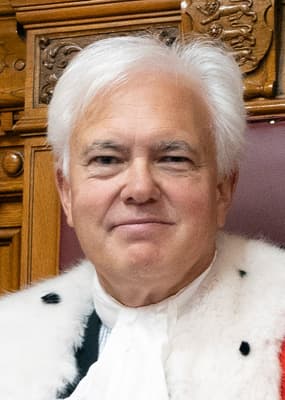
1.1 Welcome to His Excellency the Lieutenant Governor On behalf of Members I would like to welcome His Excellency to the Chamber this morning.
[Approbation] APPOINTMENT OF MINISTERS, COMMITTEES AND PANELS
No contributions recorded for this item.
No contributions recorded for this item.
1.1 Welcome to His Excellency the Lieutenant Governor On behalf of Members I would like to welcome His Excellency to the Chamber this morning.
[Approbation] APPOINTMENT OF MINISTERS, COMMITTEES AND PANELS
No contributions recorded for this item.
No contributions recorded for this item.

I would like to thank the Constable of St Peter for proposing me and for the outgoing chair of P.P.C.
(Privileges and Procedures Committee) for seconding my nomination for this position. It would be remiss of me not to thank the Constable of St Martin for her diligent work over the past 3 years [Approbation] and her perseverance in the face of considerable challenges, which she has borne with resolution and determination. We should all be grateful to her for her contribution and achievements in her role, which have been numerous. In putting my name forward for this position I am aware that it will be for a short period of tenure, with the next general election less than a year away. Yet I believe that I have the support and trust of Members to fulfil what can only be described as an interim role. Since the chair has stood down it means that the current committee falls away and will need to be reconstituted. This can be an arduous process but I believe that I will be able to organise the formation of the next committee in reasonably short order. It would be problematic to excessively alter the makeup of the P.P.C., especially when considering the subcommittees which have already encountered one upheaval after the vote of no confidence. It would be ill-advised to seek major change to them at this time. Therefore, if elected, I would propose to retain the current Membership of the subcommittees to maintain consistency and allow the workstreams to continue, which are doing marvellous work, without further interruption. A good deal of the work that P.P.C.
does revolves around the election process, and this is doubly so with the 2026 election fast approaching. Recently, the Policy Centre Jersey held an early morning meeting on the upcoming election, where the conversation revolved around the consistently low levels of turnout for elections in Jersey. It was highlighted that of those who do vote, 53 per cent of them are 65 years of age and over. I am sure Members do not need to be reminded that Jersey is bottom of the international league table for turnout. It seems as though our residents are indifferent to their democratic right to vote.
What I found most interesting was the sparsity of attendees.
[9:45] I have attended a number of the Policy Centre’s discussion mornings, and I cannot praise the organisation enough for their presentations. But on this occasion attendance was poor, which only exemplifies the mountain which we have to climb, especially with the advancement of the automatic voter registration, which will inevitably lead to a lower percentage of total voter turnout. We must try to encourage the youth of today to engage in the election process. This is being continually encouraged in the Youth Assembly and through our schools, but it also has to come from parents through conversations around the dinner table. That is if families actually have dinner tables these days. When I was a child, politics was regularly discussed at home and on the occasion of an Island- wide election my father would drive us around to the various polling stations to hear first-hand what the results were. This would commence in St. Mary’s and would then head east through the country Parishes ending in our then Parish Hall of St. Saviour. Trying to revive that sort of enthusiasm will be difficult to invoke in this modern age but starting the conversation by reaching out to as many people as possible in all walks of life is one of the primary functions of P.P.C. and hopefully we will gradually be able to push up our voting figures. We have just last month seen an election in Guernsey where they claimed a 72 per cent turnout. This needs some explanation because only 27,000 people registered to vote out of a population of 64,000. So the figure is deceptive and I am sure that we will be able to achieve similar numbers come next June. There are a number of workstreams that P.P.C.
are conducting at this time. The one which affects all Members and is most imminent is P.35, the revised Code of Conduct for the States Assembly. The purpose of the code is to assist Members in the discharge of their obligations to the States, their constituents and the public of Jersey. This is a result of consultation with Members and it is to be remembered that we should be voting to determine our own guidelines, which are published as an addendum. Some Members may believe that these guidelines are too onerous, and it is important that we have a constructive debate before we accept what all Members will need to conform to in the future. Where the Code of Conduct has been breached, sanctions may be brought against that Member. This is an unenviable task but one that I will use when it becomes necessary if serious breaches have been committed. Another area which needs to be addressed by the P.P.C. is the e-petition system, which has come in for considerable criticism in some parts of our community. It can easily be misinterpreted that when a substantial number of signatures are received for a petition, that this will lead to a vote in this Chamber on that issue. Of course, Members will be aware that this is not the case and that it only triggers the possibility of an in-committee debate without any formal decision being taken. The last petition to reach the 5,000 threshold was “Make States old-age pensions exempt from tax” and this was debated in November of last year. Many members of the public did not believe that their concerns were adequately addressed, and I personally had first-hand feedback from the community when I handed out leaflets at Charing Cross, along with the Constable of St. Martin and Deputy Coles, to try to get more feedback for our consultation into the e-petition system. Responses to our exercise were not overwhelmingly positive, with pensioners particularly aggrieved at what they perceived to be the States Assembly not taking their objections seriously. Therefore, I believe that a fundamental change needs to take place to ensure that the petition system remains relevant and that outcomes from successful petitions are suitably addressed to the satisfaction of those who took the time and effort to support them. Something which concerns many Members, and that needs to be addressed sooner rather than later, is the as-yet unresolved issue of P.63, Remote participation in States meetings, which was debated at length in December of last year. Due to what I can only describe as confusion, P.63 was referenced back, and it will be my unenviable task to ensure that when it does return for debate in this Assembly, we do not encounter such disputation. Since then, P.P.C. has conducted a survey of Members, which received a high level of responses, and we have taken on board Members’ views to try to ensure its smooth passage when it comes back to the Assembly. There are many other workstreams that P.P.C. has in the pipeline that are of equal importance, but I will leave my remarks there. It is common practice at this point to say that I look forward to Members’ questions, but I would rather finish by commenting that 20 minutes can be a long time in politics. [Laughter] [Approbation]

I thank the candidate for putting his name forward for this task. My question relates to the Commission of Standards, and I would just like to get the candidate’s view on how the relationship with the Commissioner for Standards is working.
I thank the Deputy for his question. Thus far I think the relationship between the P.P.C. and the commissioner has been very good. I understand that there are some concerns about the processes and this may be what the questioner is alluding to but, as far as I am concerned, the relationship is very good and I do not foresee any problems with it currently.
Does the candidate have any ideas of how the relationship could be improved?
As I said, there does not seem to be much to be addressed currently. There are some concerns about the appeals process, but that is for Members rather than the direct relationship with the commissioner.
I do not really believe that I can add too much. I think our relationship is very good. It has been conducted on a very good basis, and I have no reason to question it continuing into the future.

Given the Deputy’s known views on the Island-wide mandate, how enthusiastically will he be bringing forward the legislation to ensure it is in place for the next election?
I thank the Deputy for her question. Obviously, this is relating to the Senatorial election and she is right to state that it is well-known that I am opposed to the concept of having 3 different types of election on the same day. We spent nearly 70 years in total trying to change the electoral system and eventually, through concessions being made by many Members of the Assembly, we managed to bring in a type of election whereby we had the Deputies in districts and retaining all the Constables for the 2022 election, which was a great step forward. Unfortunately, as has been mentioned, I do disagree with the concept of bringing back 3 types of election on the same day. But having said that, of course we have had the debate, 25 Members of the Assembly determined that it was a sensible way to move forward, and I am absolutely one who upholds democracy. Obviously the Deputy may not have noticed but we had a meeting of P.P.C. yesterday where we went over the regulations, which have been drafted, and they have now been lodged. So we are obviously very pleased about that because obviously the timeline is very, very short; so that will be coming for debate in September. I will be presenting the law, which the law drafters have spent a good deal of time. There were some complications and I would like to mention to Members that be very careful if you are considering bringing amendments because the law itself is quite complicated and making changes to that law will be quite difficult.

May I just raise the défaut on Deputy Farnham, please?
Yes, the défaut is raised.
I would just like to thank the Deputy for his reassurances.

I just congratulate the Deputy in his new role. I was very pleased to hear him talk about the importance of, in particular, young people voting on the Island. I have mentioned before in this Assembly I would like to see a pre-poll for young people, offer facilities perhaps up at Highlands or in that area. Would the chair of P.P.C. be supportive of opening a pre-poll in the areas where young people are every single day up to the election in order to increase their motivation to vote?
I thank the Deputy for the question. That is an interesting question and it does raise the wider matter of polling stations in Jersey generally. This is something that P.P.C. is working hard to try to solve, along with Deputy Alves who has a close interest in this matter. Whether we could have a polling station close to young people, it does make some sense but there may be complications in it because obviously all the children will be coming from different Parishes. This brings us back to the problem of having that ability for all Islanders to walk into any polling station and being able to vote in that one place. But I am not against the concept that the Deputy proposes.
I was suggesting to the chair of P.P.C., the chair-elect - I do not know what phrase it is - that just as we run a pre-poll for all voters on the Island, it was at St. Paul’s before and it has been in Morier House, we could run a pre-poll nearer to the colleges and the schools where there will be many people voting, which takes away the problem of which Parish they are in but just acts as a pre-poll that anyone can access, but in particular young people to encourage them to vote.
Sorry for that slight misunderstanding. The pre-poll that we have in St. Paul’s did seem to be quite a success, but there are sparsity of voters. It is not a continual stream and there is a suggestion that we should widen that base to try to have 2 so that we have got one in St. Helier and maybe one out east. Now again, if we had an additional one, for example at Highlands or someplace like that, it would have to be manned for a long period of time and there may be complications. I am not against it in principle. If we had the helpers who were willing to do it that could be a good idea and, like you say, to get that engagement from the youth of the Island would be beneficial.

First of all, obviously congratulations to Deputy Ahier for his upcoming appointment. My question is around proactive approaches towards getting our young people to vote. I have emailed a lot of schools recently in connection with my “meanwhile use” proposition. Most of the schools came back and said: “I am sorry, we cannot fit you in because it is not does not fit into our curriculum. We are too busy with our curriculum.” One school, however, did say positively and got involved. However, when I went up to see these students, the students did not actually know what the Assembly did, had no idea. Now, my concern is that the Greffe are currently spending an awful lot of money engaging with schools trying to give this information, and I am just worried that it is not getting through. What alternative proactive approaches does the Deputy think need to be encouraged to make sure that our youth are more engaged in the political system?
I thank the Deputy for his question, and I also thank him for his engagement going out to the schools.
I know a number of other Members have done the same. There has been a request by the Greffe to ask Members to try to attend the different schools at different times and engage as many youngsters as possible. We already have the Youth Assembly, the Youth Parliament. There is lots of engagement with young people. How we can extend that, there is always the possibility of trying to extend it, but how much more we can do to bring back that engagement from the young people of today, I am not so sure how much extra we can do.

The chair-elect made it quite clear that he is not in favour of 3 categories of States Members, yet the States Assembly seems to be - this current one - in the majority. Is it a problem that the committee that he is proposing has a majority of those who voted against bringing back Senators?
[10:00]
Again, I would like to reassure, and especially I can see Deputy Millar sneering at me across the room. No, absolutely, it is not a problem at all. We at the P.P.C., and obviously the P.P.C. will be elected by this Assembly - I will not appoint the members myself - it will be up to the Assembly to decide who is on that committee. Currently we do not know how many will have voted for Deputy Millar’s proposition and who did not vote for Deputy Millar’s proposition. But I can assure the Deputy that this proposition will be put forward. I have no problem whatsoever bringing it forward, whether I voted for it previously or not.
The candidate-elect also said that he did not support 3 different types of election on the same day.
Does that mean he is open to some of those elections being on a different day?
Obviously, that is a personal opinion question. I do not mind answering it because no, I do not believe that they should be on different days. I think that if people are determined to have a vote for Senators as an Island-wide Senatorial vote, then it has to be on the same day. The argument could be made, as perhaps the Deputy is implying, that you should bring an amendment to have all the different votes on all different days, so you would have the Senatorial election first, maybe 2 or 3 weeks before the next election, which would be the Deputies’ election, so that those people who stood for Senator who did not get in could then stand for Deputy. Then you would have another 3-week break after the Deputy election and you would have the Constables’ elections to ensure that those who did not get in as Deputy could then stand for Constable. I do not think that would be a good idea. I do not think that would look well in the eyes of the public. So no, I would not support the concept of having it on a different day.

Would the candidate explain or say whether he believes that, in my words, tinkering with the electoral system is in any way helpful to encouraging more Islanders to vote?
No, unfortunately, I do not believe that it is beneficial. The campaign, as it were, for promotion of the election in 2026 has already started from the Greffe and we are still unsure as to what that system of voting will be. As I have said, obviously the proposition to bring back Senators has been lodged and will be debated. But that will not be debated until September and so it will not be determined for sure what the electoral system is going to be until October this year. Then obviously the Greffe and the P.P.C. as well will then have to go out and change all the materials and make various adjustments to the process of the election to accommodate that change. I do not think it is beneficial personally.
When I said “tinkering”, I did not just mean with the Senatorials, I also meant with automatic voter registration. Whether it is pre-polls or others, work of P.P.C. often, to my perspective, seems to be just trying to change various parts of our electoral process in order to encourage more people to vote.
But given that the candidate said he did not think that tinkering helped, could he explain to the Assembly what measures he does think P.P.C. could undertake, whether that is engagement with schools, whether that is encouraging Deputies and Constables to engage with Islanders more directly, what does he think will help encourage Islanders to vote more?
I think the one thing that would encourage Islanders to vote is making it easier to vote, making it easier for everyone to access a polling station, making it easier for people to turn up at those polling stations and being accepted quickly and not having too many complications about saying: “Well, which Parish are you in? Where are you voting?” I know that is an advancement that will not be in place for the next election but that sort of computerisation of the voting system, to make it much easier to count the votes as well of course so that the result would be published much quicker, that would be hugely beneficial. I think that would encourage more people if they knew that it was a simple process to turn out to vote.

Following on from Deputy Morel’s question, will the new chair accept that the reason why the public are disengaging in terms of the voting process is to do with a lack of trust that their vote will, as far as they are concerned, make no difference? Will he be considering ways in which the P.P.C. might actually generate more trust, whether it is in terms of making the Code of Conduct more user-friendly, making the P.P.C. more active in its enforcement, or even in terms of doing more so that States Members can be more co-ordinated and more active in responding to emails from the public?
Thank you for the Deputy’s question. Yes, the lack of trust. Well, I am not too sure if that is real or perceived. I know there have been some polls conducted which say there is a good deal of lack of trust in States Members, and of course that does lead on rather to the Code of Conduct and to behaviours of some which are not looked kindly on by members of the public. This all reverts back to the progression of the Code of Conduct, which I mentioned in my original speech, which will be brought to this Assembly. I am sure that the Deputy herself will have plenty to say and maybe will wish to bring amendments to the Code of Conduct, which is perfectly within her remit. Hopefully once the Code of Conduct has been published, we should be able to work on the possible lack of trust of some Members.
The Deputy did not quite ... I am just interested to know whether he has no faith in Stats Jersey in terms of a unit, in terms of producing stats regarding the lack of trust in the States Members in terms of government constitutions. But more than that, I have said that it has been identified that people think that their vote makes no difference, that people do not answer emails, that there is that lack of engagement. What might he be thinking about doing in that respect?
Yes, on the response to emails, this did actually come up in our P.P.C. meeting yesterday, and it was concerning the emails that we now receive that are addressed to all States Members. The lack of response, which I think the Deputy is referring, can be because Members believe that if an email is directed to a particular Minister and is sent to all Members of the States Assembly, it is not upon them to respond to it, rather it is upon the Minister to respond to it. Now, we could argue that it should be every single Member who should give a reply, but I would imagine that if that was the case, the reply would be: “Please refer your query to the Minister.” There is a complication with the way members of the public’s emails are not directed. If they were more targeted and directed to the right people, then I think that more responses and more accurate responses would be received by the members of the public.

I think it is a reasonable assumption to make that some of us in this Assembly today will not be here next July. Some of us will not be here because we will retire, and some of us will not be here because we fail at the ballot box, but those 2 categories will be treated in a different way financially by this Assembly. Those who choose to retire will receive no reward while those who fail at the ballot box will be paid a financial return. Does the candidate have a view on this?
I do understand where the Deputy is coming from because this has been raised, the Deputy has raised it previously. It is to do with the compensation and the years of service served when that person retires, steps down or is actually removed from the ballot box. Yes, this is a complex problem and it was obviously determined that there were strict guidelines that were arranged around it. I would be happy to re-look at this but obviously it is not directly within my remit because it has been taken out of my hands. But there is a concern that for a couple of Members who have long service histories, they will not receive as much compensation as they would have done if they would have retired a couple of Assemblies ago.

I would like to check with the candidate if he heard about Age Concern’s approach to the Greffe and ask if it is possible to arrange a pre-poll at Age Concern. They have 500 members, some of them are not able to get to the polling stations because they come to Age Concern for their daily visit. Would the candidate consider to engage with Age Concern or Good Companions and to explore what are the options for their members to easily get to the vote station?
You have got 10 seconds Deputy.
This is a very good question actually. We do need to encourage the elderly people to vote and to have the ability to get to the polling station or to postal ballot, which obviously makes it slightly easy for them. But unfortunately, as referred back to Deputy Ward’s question, there are a limited number of polling booths that we can actually set up.
Thank you, Deputy. That completes the period of questions. I can confirm that Deputy Ahier has been selected for appointment as chair of the Privileges and Procedures Committee. [Approbation] We now move to appointment of the members of the committee. If you are ready to proceed today, Deputy, which it appears from your speech that you are, in accordance with Standing Order 122, the Assembly is due to appoint members of the committee and in accordance with Standing Order 122(1).
I invite the new chair of P.P.C. to make from elected Members who are not Ministers or Assistant Ministers 3 nominations for membership of the P.P.C.
I apologise, Sir, that due to conversations with the P.P.C. and with the Greffe, would it be possible to defer this until after lunch?
Or indeed tomorrow.
Or tomorrow morning would be wonderful, thank you very much.
Tomorrow is absolutely fine.
QUESTIONS
No contributions recorded for this item.
No contributions recorded for this item.
Question Will the Minister state the number of individuals with HIV known to Health and Community Services in 2024 and 2025, and also advise the number of babies born in Jersey with HIV in each of the last five years?
Answer The number of individuals with HIV known to Health and Care Jersey Services Division in 2024 was 153.
st thBetween 1 January 2025 and 26 June 2025, fewer than 10 people have been diagnosed with HIV, and fewer than 10 people with HIV have either left the Island or died. It is not possible to provide a more precise figure for 2025 as it would risk disclosing information about this small number of people, especially given that this is a partial year.
The number of babies born with HIV in Jersey over the five-year period requested is fewer than five cases in total. Statistical disclosure control requirements mean that an annual breakdown is not possible due to the risk of identifying individuals.
This approach is necessary to protect patient confidentiality and privacy, to prevent potential identification of mothers and children, to maintain public trust in health service data collection and reporting and comply with data protection obligations. Given Jersey's small population size and the correspondingly low numbers of people living with HIV, this approach to data disclosure is particularly important.
Question In relation to outstanding monies owed to the Government recorded as debtors in the Government’s finance systems, will the Minister advise the following – (a) the total value of debt owed as at the most recent month-end for which figures are available, broken down by the age-of-debt bands detailed below (or by the nearest equivalent overdue categories if these differ) – (i) 0 - 30 days: Current but not yet overdue (ii) 31 - 60 days: 1 - 30 days overdue (iii) 61 - 90 days: 31 - 60 days overdue (iv) 91 - 180 days: 61 - 120 days overdue (v) 181 - 365 days: 121 -305 days overdue (vi) > 365 days: More than 12 months overdue (b) the total monetary gross value for each band and the number of individual debtor accounts represented for each band; and (c) the department which provided the service and/or the charge to the debtor?
Answer (a) and (b) The total value of trade debts owed and the number of individual debtor accounts as at the end of May 2025 were as follows: Aged Debt May-25 Number of debtors accounts* 1,155< 0 Days (not yet due) £3,620,261 1,3790 - 30 days £129,976 64031 - 60 days -£233,323** 62761 - 90 days £1,403,374 1,30291 - 180 days £2,104,931 1,528181-365 Days £1,417,321 1,7171+ Years £3,811,178 Total £12,253,718 * a debtor may have debtor accounts in multiple time categories ** credits processed, and part payments received for invoices raised in other periods produce a negative figure (c) All government departments raise invoices, and the trade debtors represent the full range of services invoiced by government departments. At the end of May 2025, the departmental debts overdue were as follows: De partme nt £ CYPES £1,436,881 ESSH £476,996 HCJ £4,623,725 I&E £3,138,271 JHA £180,516 SPPP £90,768 Non Mins £629,100 DFE £179,127 External Relations £7,682 Cabinet Office £1,313 T&E* £1,489,339 Total £12,253,718 * T&E figures include debt not yet due and part payments received not yet allocated
Question Will the Minister detail, for each of the last five years, the number of injuries sustained by prisoners at H.M.P.
La Moye, how many of those injuries were self-inflicted, and how many of those injured required hospital treatment?
Answer The following table outlines the number of injuries sustained by prisoners whilst in custody at H.M.P La Moye, for each of the last five years, as well as this year.
Hospital Self- Hospital admissions The same individual’s admissions forInjuries harm for injuries self-harm self-harm 2020 57 8 < 5 < 5 62% 2021 52 34 < 5 5 64% 2022 31 24 < 5 5 12.50% 2023 84 63 < 5 13 63% 2024 61 44 5 < 5 75% 2025 25 19 < 5 < 5 84%
Question Will the Chief Minister advise what work, if any, the Government has undertaken to develop a commissioning framework for charities, and the wider voluntary and community sector (the “Framework”); and will he detail – (a) the process and timeline that will be followed to develop and implement the Framework; (b) the level and nature of consultation with the sector to date, and what plans exist for future consultation; (c) how the Framework will promote consistency, transparency, and fairness in funding decisions and service-level agreements; (d) whether the Framework will include guidance or criteria for determining when grants, contracts, or service commissions are appropriate; and (e) the long-term outcomes and objectives of the Framework for Government departments and for the charitable and voluntary sector in Jersey?
Answer A draft Commissioning Framework was initially developed in 2023 and piloted during 2024, with early adoption by commissioners in Health and Care Jersey (HCJ) and Children, Young People, Education and Skills (CYPES). To assess its impact, evaluation surveys were conducted with Government of Jersey commissioners and service providers in both January 2024 and January 2025.
The results were encouraging - providers reported improved communication with commissioners, clearer understanding of the commissioning process, and greater alignment with the needs of Islanders. These findings demonstrate the value of the framework in supporting more effective and transparent commissioning.
(a) the process and timeline that will be followed to develop and implement the Framework; The framework is being revised in 2025 based on the feedback received and will form part of the wider Commissioning Strategy for Jersey, currently being developed by the Cross-Government Commissioning Group, with a view to completion by the end of 2025.
The planned process and timeline for finalising and implementing the framework are as follows: • End of June 2025 – Initial revised draft completed • By 14 July 2025 – Shared with the original development group and the Cross-Government Commissioning Group for feedback • By end of July 2025 – Circulated to other service commissioning organisations • By end of August 2025 – Shared more broadly with all organisations in the sector • September 2025 – A community-wide engagement event will be held for final feedback • End of October 2025 – Final draft completed and signed off by the Cross-Government Commissioning Group It is anticipated that the final version of the Framework will be launched at the Jersey Commissioning Conference on 14 November 2025, where it will be adopted as a key element of the Government’s governance framework.
In the event that the proposed Health and Care Partnership Board is established, the framework will be presented to them for comment and adoption.
(b) the level and nature of consultation with the sector to date, and what plans exist for future consultation. The development of the Commissioning Framework has involved close collaboration between multiple Government departments and four voluntary sector organisations. Throughout 2024, targeted consultation took place to ensure that a diverse range of voices informed the work.
Key engagement milestones included presentations to the Health and Care Partnership on 11 July 2024 and to the Association of Jersey Charities on 27 November 2024. In addition, a sector-wide workshop was held on 16 September 2024, which invited all community providers and relevant Government colleagues to review the draft Framework and provide structured feedback.
Further consultation is planned throughout 2025. This includes staged feedback opportunities with both those involved in the original development and the wider voluntary and community sector, culminating in a public engagement event in September 2025 to gather final input ahead of launch.
(c) how the Framework will promote consistency, transparency, and fairness in funding decisions and service-level agreements. The Framework is designed to promote consistency, transparency, and fairness in the commissioning and funding of services by introducing a standardised process that can be applied across all Government departments.
It will establish a common approach to commissioning, ensuring that funding decisions are made using clear, shared criteria. This will help reduce duplication, clarify expectations for both providers and commissioners, and enable more equitable allocation of resources.
The Framework will be supported by the forthcoming Commissioning Strategy for Jersey people services, which will set out the core principles that underpin effective commissioning. These principles will guide decisions to ensure they are evidence-based, needs-led, and outcome-focused reinforcing trust, accountability, and quality in all agreements.
(d) whether the Framework will include guidance or criteria for determining when grants, contracts, or service commissions are appropriate. The Framework will be accompanied by a dedicated user guide that will support its implementation. This guide will draw upon the Public Finances Manual and best practice outlined by Commercial Services, providing clear reference points for determining the appropriate use of grants, contracts, and other funding mechanisms.
Grants and contracts for services are established mechanisms through which commissioning is undertaken.
The Public Finances Manual already includes guidance on the circumstances in which each funding route is suitable, and this will be reflected in the Framework to ensure consistency and compliance with Government standards.
By embedding these references, the Framework aims to help commissioners choose the most appropriate and transparent route to funding based on the nature of the service, the level of control required, and the desired outcomes—promoting fairness and accountability in decision-making across the board.
(e) the long-term outcomes and objectives of the Framework for Government departments and for the charitable and voluntary sector in Jersey? The Commissioning Strategy and Framework is designed to support the long-term achievement of the Future Jersey Vision and the associated Island Outcomes, ensuring that services delivered across both Government and the charitable and voluntary sector are aligned with the needs and aspirations of Jersey’s community.
For Government departments, the Framework aims to embed a consistent and strategic approach to commissioning that improves transparency, strengthens accountability, and enhances the effectiveness of public spending. It will help departments focus resources on outcomes that matter most to Islanders, enabling more joined-up working and improved service integration.
For the charitable and voluntary sector, the Framework provides clarity and stability, creating a more predictable and collaborative commissioning environment. By establishing shared principles, expectations, and processes, the Framework will empower the sector to plan for the long term, build capacity, and deliver high-quality services in partnership with Government. Ultimately, the Framework aims to bring Government and community organisations together to deliver better public services and make life better for all Islanders.
The long-term outcomes and the objectives for the charitable sector, and its relationship with Government, are to improve collaborative working between charities and Government Departments and to continue the rich history that Jersey charities have provided services for, and the impact on all areas of Islanders’ lives.
It is the Government’s aim to support the sector with dedicated resources from the 2024 Lottery Proceedings, in partnership with the Association of Jersey Charities, to increase the sectors development and sustainability.
Furthermore, the Government is working with the Association of Jersey Charities to implement, where [1]appropriate, the helpful recommendations from the recent Power of Partnerships Report.
Jersey is fortunate to have a vibrant charitable sector, and we are committed to working with Jersey charities to improve outcomes for Islanders across the whole community.
[1] The Power of Partnerships March 2025) FINAL.pdf
Question Will H.M Attorney General detail, as far as is possible, the numbers of offences which were prosecuted in each decade going back to the 1940s for homosexual acts, which are no longer illegal, and will he state under which laws these prosecutions were made?
Answer Unfortunately, I am not able to answer the question posed in full.
[1] The Power of Partnerships March 2025) FINAL.pdf The Sexual Offences (Jersey) Law 1990 decriminalized homosexual acts in private between consenting adults, specifically addressing the crime of “sodomie”. As such, the relevant period for consideration falls prior to 1990.
The Jersey Legal Information Board (the “JLIB”) contains case reports from 1980. I have reviewed the reports available on JLIB from 1980 to1990 and can advise that there is no record of any prosecutions relating to the offence of “sodomie” during this decade.
Case records from the Royal Court prior to 1980 are located in the Poursuites Criminelles. There are significant challenges with identifying specific offences from these records because the indexes to the Poursuites Criminelles contain the names of individuals against whom criminal prosecutions were brought, but not the details of the offence. Case records from the Police Court, held by the Magistrate’s Court, also contain only the names of individuals and not the details of the offence.
To identify any cases of “sodomie” that were prosecuted between 1940-1979 in the Police Court or Royal Court would therefore involve accessing and reviewing each individual case record for both courts. Such a task would require significant resources and time and is undeliverable within the timescale. To serve as an example of the challenges with identifying specific offences from the records, I understand that the Magistrate’s Court has recently archived Police Court papers from 1 December 1973 to 31 December 1979.
This six-year period comprises approximately 40 archive boxes of documents and identification of specific offences would necessitate reading through every document within each box.
To assist further I direct you to the response provided by the Minister of Justice and Home Affairs to OQ.225/2024 where she addressed the quashing of criminal convictions for homosexuality. Of particular note the Minister commented: “The particular difficulty in Jersey is that the historic offence of sodomy applied to both consenting and non-consenting sexual activity between men as the old rape offence applied to women only. At this stage, it is simply not possible to establish the facts of each historic offence. Although a review carried out in 2016 could not find any convictions in Jersey of an offence relating to a consensual same-sex act with a person over the age of 16, that would be legal now.”
Question Further to the response to Written Question 257/2025, in which it was stated that there had been “a rise of more than 50% in the cost of running the public sector” since 2018, will the Chair provide – (a) the headcount of all Government employees, broken down by salary band, for each year since 2018; and (b) details of any actions under consideration to reduce staff numbers and costs?
Answer (a) The table below shows Government employees, broken down by Full Time Equivalent (FTE) and salary stband, at 1 January of each year since 2018.
Grade Band 2018 2019 2020 2021 2022 2023 2024 2025 CS1 - CS5 and Equivalent 819 818 826 916 881 899 883 930 CS6 - CS8 and Equivalent 1833 1823 1862 2002 2077 2207 2298 2367 CS9 - CS11 and Equivalent 2448 2436 2497 2658 2718 2897 3123 3310 CS12 - C14 and Equivalent 597 663 687 687 761 862 978 1032 CS15+ and Equivalent 333 344 361 368 406 399 426 440 Grand Total 6031 6084 6233 6631 6843 7264 7708 8079 (c) The Council of Ministers will continue to reprioritise and reduce spend.
The external recruitment freeze and restrictions on the use of consultancy will remain in place until at least March 2026. The results, so far, are as follows: • If we had not introduced a recruitment freeze in August last year and growth had continued as before, then it is likely that we would be about 325 FTE higher in May 2025 than we actually are.
Officials estimate that this is up to £23m per year avoided for now and future years.
• In the last six months, total roles have begun to stabilise with only a 43 FTE total rise, despite 76 FTE more posts in Health Care Jersey and Children, Young People, Education and Skills. Back- office departments are getting smaller.
• Consultancy and temporary staffing spend has dropped by £29m between 2023 and 2024 and that trend is expected to continue into 2025.
Question Will the Minister detail how many land and property transactions have been completed through the Royal Court in 2025 to date, and will she advise how many of these involved ‘cash buyers’ and how many were loan purchases?
Answer To date, there have been 653 land and property transactions completed through the Royal Court in 2025. This figure includes all sales and gifts involving any realty, lot, lease or proprietary rights.
Statistics Jersey conduct a ‘matching process’ to identify which property transactions are purchased involving a loan. This information is published annually in the Q4 House Price Index. Since the matching process is only completed at year-end, data for 2025 is not yet available and cannot be provided at this time.
Question Will the Minister – (a) state the Government’s fiscal surplus or deficit position, excluding investment returns, for each of the last five years; and (b) advise what actions, if any, she has taken with the Council of Ministers to address any deficit and whether any such actions will reduce the anticipated level of any future such deficit?
Answer The Annual Report and Accounts routinely reports on two types of surplus/deficit. It is assumed that this question refers to the Operating Surplus/Deficit, which relates to the difference between States income and revenue expenditure through the Consolidated Fund (e.g. departmental spending), including depreciation. The numbers reported in the Annual Report and Accounts for the last five years are as follows: Operating Surplus/(Deficit) 2024 (£63 million) 2023 £5 million 2022 £104 million 2021 £59 million 2020 (£113 million) The deficit in 2024 was partly anticipated in the Government Plan 2024 and includes the reintroduction of the States Grant to Social Security (£77 million).
The Budget 2025, approved by the States Assembly, showed the deficit reducing in 2025, before a return to surplus expected in 2026.
Balanced budgets are only one part of maintaining the sustainability of public finances. Budget 2026 will update forecasts based on the latest economic data and identify further actions required to achieve this.
Question Further to Oral Question 140/2025, regarding guidance on the application of the new domestic abuse offence of coercive control and controlling behaviour, will H.M. Attorney General commit to a review of the effectiveness of the guidance prior to 2028, and if not, why not, and if so, will he – (a) provide information on how data will be collected on the impact and effectiveness of the guidance; and (b) explain how he will ensure local stakeholders and experts are involved in that review?
Answer The Domestic Abuse (Jersey) Law 2022 (the “Law”) came into force on 21 June 2023. The Law created a new offence of domestic abuse which carries a penalty of up to 5 years’ imprisonment and an unlimited fine.
To assist members of the public to understand this new offence, which includes behaviour that is coercive or controlling, I have issued guidance, Domestic Abuse – Guidance on the Law (the “Guidance”). I recognise it is important that this Guidance is effective and serves its purpose. For that reason, I will commit to a review of the Guidance prior to 2028.
(a) provide information on how data will be collected on the impact and effectiveness of the guidance Full consideration will be given to the terms of reference of the review closer to the time but at this stage I would expect that a review may involve the following steps: i. An assessment of the available quantitative data from the criminal justice system on the number of prosecutions of coercive control and controlling behaviour under the Law.
ii. Consultations with complainants at the end of a prosecution on their awareness of the guidance before making a complaint and whether they found the guidance helpful.
iii. Data collection from a targeted group of stakeholders involved in delivering domestic abuse support and prevention services.
To support any future review, and to help raise awareness of the new Guidance, the LOD will consider liaising with the States of Jersey Police (the “SOJP”) and ask them to alert individuals to the Guidance in circumstances where they consider it is warranted.
(b) explain how he will ensure local stakeholders and experts are involved in that review?
The Guidance has been developed to assist the public in understanding what types of conduct may infringe the criminal law. To date the Guidance has had input from leading counsel in England and the Law Officers’ Department (the “LOD”) will continue to engage the expertise of leading criminal practitioners on what conduct may amount to domestic abuse. Criminal practitioners are well-placed to be abreast of developments in this area of offending and engagement with practitioners in this field will help ensure that the Guidance operates effectively from the perspective of the law.
I also recognise the value of engaging with local stakeholders as part of any review process and I would expect that any future evaluation of the Guidance would invite feedback from a wide range of interested stakeholders.
Full consideration will be given to the terms of reference of the review closer to the time but at this stage I would expect contributions may be sought from all or some of the following: • SOJP • The Minister for Justice and Home Affairs • Jersey Domestic & Sexual Abuse Support • Victims • Victims First • Safeguarding Partnership Board In the interim, I welcome feedback on the new Guidance from Members of the Assembly should they wish to give it.
Question Will the Chief Minister provide a list of all Government legislation currently being drafted and indicate – (a) any legislation expected to be completed by the end of the current political term, including the timelines for completion; and (b) any legislation to be delayed to the next political term, including why the decision to delay was made and when the anticipated lodging date will be?
Answer In Autumn 2024, the Council of Ministers reviewed its legislative requirements and undertook a prioritisation process to manage demand to capacity. This reduced the demand from an initial 129 items down to a more realistic figure of 59, which could be lodged before the election in 2026. The Government Legislative Programme 2025-2026 was agreed and included in a letter to Scrutiny on 18 November 2024. It also formed part of the Cabinet Office Business Plan, which was published in March 2025.
The Legislative Programme is always subject to change and responds to the demands of policy development and events. When items of legislation change in level of priority, they are usually retained and form part of the legislative Development Pool. This category allows policy officers and the Legislative Drafting Office to continue to progress the draft, with a view to being ready for the next Council of Ministers to consider lodging at a future date.
a) The information below provides an update on the legislation still remaining to be lodged and debated before the end of the political term. Given the complexities inherent in the policy development and drafting process, it is not possible to provide specific dates for lodging: • Adults Safeguarding Law – Adult Protection Orders • Agriculture (Loans & Guarantees) (Jersey) Law 1974 • Amendments to Criminal Procedure Law • Amendments to the Planning and Building (Jersey) Law • Amendments to the Regulation of Care (Jersey) Law 2014 • Animal Welfare (Jersey) Law 2004 • Assisted Dying legislation • Capacity and Mental Health • Common Reporting Standard and Foreign Account Tax Compliance Act Regulations • Common Reporting Standard – Version 2 • Companies (Jersey) Law 1991 • Competitions (Jersey) Law 2005 Amendments • Comptroller & Auditor General (Jersey) Law 2014 • Crypto-Asset Reporting Framework • Cultivations Regulations: Medical purposes • Cyber Security (Jersey) Law 202- • Draft Criminal Justice (Young Offenders in Secure Accommodation) Jersey Amendment Law • ECCU Legislation & Civil Asset Forfeiture Powers • Elections (Senators) (Jersey) Amendment Law 202- • Employment (Jersey) Law 2003 – improvements to include whistleblowing protection • Financial Intelligence Unit legislation • Finance (2026) (Jersey) Law – the Budget • Health Funding Reform • Heritage (Jersey) Law • Historical Tax Agreements • Intellectual Property Framework Reform (including Trademarks) • Legislation to improve access to information relating to energy resilience • Legislation to regulate the development of an offshore windfarm • Licensing Law 1978 Amendments • Long Term Care (Jersey) Law 2012 – legal framework to establish rates for domiciliary care • Matrimonial Causes (Jersey) 1949 and Civil Partnership (Jersey) Law 2012 reform • Medicines Manufacturing licensing regime Regulations • Multinational Taxation (Global Anti-base Erosion) (Jersey) Law – De Minimus • Multinational Taxation (Global Anti-base Erosion) (Jersey) Law – Interest • Police (Complaints and Conduct) (Jersey) Regulations • Professional Registration Law for Health and Social Care Professionals • Public Health Law • Refundable Tax Credits • Shipping (IMO Conventions and Codes) (Jersey) Amendment Law 202- • Social Security (Jersey) Law 1974 – review working age eligibility rules • Social Security (Jersey) Law 1974 & Social Security Bonus (Jersey) Law 2014 – review pensioner benefit eligibility rules • Termination of Pregnancy legislation • Update benefit legislation to support the major IT benefits project (Transform), including replacement of current Long Term Incapacity Allowance rules • Violence against women and girls – Emergency Barring Orders in the Domestic Abuse (Jersey) Law 2022 • Violence against women and girls – Non-fatal Strangulation and suffocation • Violence against women and girls – Online offences • Violence against women and girls – Sexual harassment in public • Violence against women and girls – Stalking Law b) The Council of Ministers received an update on the Legislative Programme at its meeting on 17 June 2025. It agreed that four items should be prioritised into the Legislative Programme and four should be moved to the Development Pool. As standard practice, the papers for that meeting have been shared with Scrutiny. For transparency, those items are listed below: Included in the Legislative Programme: • Amendments to Criminal Procedure Law • Cyber Security (Jersey) Law 202- • Elections (Senators) (Jersey) Amendment Law 202- • Shipping (IMO Conventions and Codes) (Jersey) Amendment Law 202- Moved to the Development Pool: • Amendments to the Public Finances (Jersey) Law 2019 – Regulations – role of Fiscal Policy Panel • Assistance in collection of UK Tax Debts • Exchange of Tax Information – Regulations • Powers of Attorney (Jersey) Law 1995
Question In relation to the bomb threat at the Airport in March 2025, and further to the response to Written Question 281/2025, will the Chief Minister advise – (a) when the Council of Ministers first became aware that the bomb threat had been received by Ports of Jersey on 4th March 2025 and to which Minister this notice was first given; (b) whether the evacuation to Strive Health Club was part of standard response procedures for the Airport that had been confirmed with the emergency services and, if not, why the Club was used; and (c) which Laws, if any, prevent the public disclosure of details of threats such as these?
Answer a) The Minister for Sustainable Economic Development met in person with members with the thHarbours and Airport Authority Committee (HAAC) at 09.30 on Wednesday 5 March 2025. At that meeting, the reasons for the airport’s evacuation were explained to the Minister and it was confirmed at the same meeting that the nature of the threat was by then known to be non- substantive. The Minister for Justice and Home Affairs was similarly briefed by the States of Jersey thPolice on the morning of the 5 March 2025.
b) Ports of Jersey’s emergency response procedures, and contingencies are not shared other than with those responsible for the planning and execution of those procedures. Powers and decision-making in these areas are delegated to the Harbours and Airports Committee, and relevant Ports Officers, where appropriate.
c) There are both legal and common-sense practices that govern information sharing. Commonly, any agency charged with safety and public protection does not brief, or otherwise detail, its emergency response procedures for the very simple reason that those plans become less effective if they are finely understood by those who might wish to do harm.
These imperatives are enshrined in Jersey Law. The Channel Islands Aviation Security Programme (CICASP) carries a ‘Confidential / Security Sensitive’ classification and must be held securely. It may only be shared with individuals with relevant security responsibilities within appropriate agencies, all of whom are subject to enhanced security vetting.
The primary UK legislation governing the non-disclosure of security-sensitive information is the Official Secrets Act 1989. This Act prohibits the unauthorised disclosure of sensitive information, particularly by current and former Crown servants, government contractors, and members of the security and intelligence services. This extends to the Aviation Security Act for the Crown Dependencies.
Question Further to Oral Question 153/2025 regarding the restructure of the Ports of Jersey, will the Minister – (a) state whether she had sight of the 2024 remuneration package for the Ports of Jersey Chief Executive Officer, including the £120,000 bonus, before it was awarded and, if so, whether she expressed a view on its appropriateness; (b) provide any criteria used to award such a bonus, and (c) clarify how recent actions, such as the Airport going into special attention in December 2024, impacted on the remuneration package?
Answer (a) Under the terms of the Memorandum of Understanding between the Minister for Treasury and Resources and Ports of Jersey, any increase in base salary or changes in the structure of bonus scheme of an Executive Director requires my approval. Consequently, I hold annual discussions with the Chair of the Ports’ Remuneration Committee regarding any changes to base salary and the Key Performance Indicators (“KPIs”) and objectives linked to performance related pay for the coming year. During the course of a year, I have robust discussions around remuneration generally with the Chairs of the wholly owned States-owned Entities boards.
While I approved the CEO’s base salary and structure of the 2024 bonus scheme, it is the Ports’ Remuneration Committee that is responsible, and best positioned, to assess an Executive’s performance against the approved KPIs and objectives, and for deciding on the awarding of bonuses.
I was notified of the proposed bonus.
This process is underpinned by a requirement that the overall remuneration package, including bonus potential, is periodically benchmarked, with the expectation that the package will not be market leading.
(b) The criteria for awarding bonuses include KPIs and objectives that are genuinely stretching in nature and are designed to reward superior performance, rather than merely meeting the minimum expectations of an Executive. These criteria are aligned with Ports’ five-year strategy, approved by Ministers, which delivers the Policy Framework for the Ports Sector issued by the Ports Policy Ministerial Group in January 2024. The framework sets ambitious policy goals to: • Further enhance Jersey’s connectivity by ensuring safe, secure and competitive services, responsive to the needs of business, tourism and consumers; • Ensure the resilience of Jersey’s life-line air and sea links, by investing in critical gateway infrastructure; • Maximise the contribution of the Ports Sector to Jersey’s economic development and development in accordance with the Future Economy Programme; and • Ensure actions are guided by our environmental objectives.
The bonus criteria cover several key themes including: Company financial performance: this is important because it underpins Ports’ ability to borrow- for future investment in the Harbour and Airport Masterplans without taxpayer support. The business case that led to Ports of Jersey’s incorporation identified a projected £300 million investment requirement. The company’s resilient financial performance has meant that neither Jersey Harbours nor Airports have requested taxpayer support, either during or since the Covid pandemic. This achievement is not to be understated, as to the best of my knowledge, they are the only major airport and port throughout Europe not to require any taxpayer support over the last five years.
Connectivity – this relates to air and sea passenger numbers, which support financial performance and- are vital to the resilience of the Island’s connectivity resilience.
Customer service/experience - in which encouraging progress continues to be made ranging from the- success of the Assisted Travel service (which has received positive feedback from Islanders needing extra support when they travel), to significant improvements in operational performance such that Jersey Airport is now amongst the best airports with 99% of passengers passing through Security in less than 15 minutes and 90% of bags delivered to the reclaim belts within 20 minutes Outreach – significant support has been provided for Government policy and initiatives.- Strategic objectives – this includes inter alia advancement of the Airport Masterplan and Harbour- Masterplan, the latter of which received planning approval, without any objections in November 2024 and is crucial to the future capacity of the harbour to cope with projected freight volumes, including during the construction phase of the Our Hospital Project; and various strategic initiatives in People and Digital transformation.
(c) The impact of the Airport’s entry into special attention in December 2024 will be considered as part of the 2025 performance of the Executive team.
Question In relation to the Emergency Department at the General Hospital, for each of the last 10 years, will the Minister state the total number of – (a) attendances at the Emergency Department; (b) self-harm related incidents; (c) patients attending with minor injuries or illness; (d) patients seen within 4 hours; (e) patients having to wait longer than 12 hours; and will he also state the average waiting time for triage and treatment?
Answer Accident and Emergency attendances and waiting times are systematically recorded and monitored. The data is analysed monthly.
Emergency Department attendances, and consequently wait times, fluctuate on a seasonal, and daily basis. As a result, during certain times, patients may experience longer waits. In the UK, there are no guidelines setting a maximum waiting time, as this will depend on several factors including how many patients are being seen and treated as well as the severity of their condition, and the availability of beds if the patient needs admission to the hospital. HCJ monitors its performance using ‘the Total time spent in ED’ against both a 4- and 12-hour waiting time standard for patients in ED. These are key metrics in place in the UK and therefore allows us to benchmark the performance of our services. HCJ currently benchmarks favourably against these. HCJ is currently achieving 76.9% compared with current NHS performance of 74.7% 4-hour target (% of patients seen, treated and discharged in 4 hours) and similarly regarding the 12-hour post decision to admit standard, HCJ delivered a monthly performance of 1.7% compared to May NHS performance of 7.8%.
All statistics produced by HCJ are dependent on accurate data entry by clinical and administrative staff.
Treating patients is prioritised over data entry and therefore HCJ is aware that the data may reflect a longer than actual wait to be triaged or seen, particularly at very busy times.
st stPlease find below, for the period 1 January 2015 to the 31 December 2024, Jersey General Hospital Emergency Department stats.
(a) Emergency Department Attendances by Year Year ED Attendances 2015 37,404 2016 39,135 2017 38,764 2018 39,481 2019 38,907 2020 26,373 2021 35,653 2022 40,549 2023 41,216 2024 44,416 On levels of current attendances YTD, we would expect 2025 attendances to surpass 2024.
(b) Emergency Department Attendances related to Self-Harm ED Attendances Related to Self- Year Harm 2015 160 2016 210 2017 198 2018 203 2019 144 2020 227 2021 244 2022 217 2023 223 2024 239 (c) Emergency Department Attendances with aTriage Category of ‘Minor’ Year ED Attendances Minor Injuries 2015 23654 2016 24233 2017 23807 2018 24903 2019 25301 2020 16683 2021 22495 2022 24812 2023 23618 2024 23845 (d) Emergency Department Attendances seen within 4Hours of arrival Year ED Attendances seen with 4Hours 2015 32717 2016 34242 2017 34294 2018 33923 2019 33923 2020 27845 2021 32250 2022 36211 2023 37744 2024 42209 (e) Emergency Department Attendances where total stay was greater than 12 hours ED Attendances with total stay >12 Year hours 2015 30 2016 53 2017 19 2018 76 2019 67 2020 48 2021 53 2022 108 2023 242 2024 848* *Two operational changes in 2024 impacted Emergency Department waiting times. The refurbishment of Bartlett ward reduced the available medical beds, whilst the conversion of the Acute Assessment Unit to single-sex accommodation improved patient safety and dignity, but reduced bed allocation flexibility. Both changes, though necessary, contributed to longer ED waits.
(f) Emergency Department Median Time to Triage and Seen (treatment). Median values are presented to align with NHS reporting standards. Median Time to Triage Median Time to Seen Year (mins) (mins) 2015 5 31 2016 6 33 2017 6 32 2018 7 37 2019 8 38 2020 7 25 2021 7 31 2022 10 42 2023 15 38 2024 17 36
Question Will the Minister advise what support, if any, is available for women who have had a baby but who have not reached the threshold of Social Security contributions stated in the criteria for Parental Allowance?
Answer The Social Security scheme provides two contributory benefits to parents - Parental Grant and Parental Allowance and protects a parent’s contribution record through Home Responsibility Protection (HRP) credits. In addition, support for parents is available through the family friendly measures provided in the Employment Law, and through the Income Support scheme. Each of these are described below.
The Parental Grant is a one-off lump sum payment (currently £849.01) aimed at providing financial support with the general costs associated with having a new baby or child – one grant is paid per baby or child. To receive the grant either parent needs to have been working and paid 3 months (one quarter) of social security contributions at some point in the past.
The Parental Allowance is a weekly payment (currently £283.01 per week) aimed at supporting working parents who are taking time off work to look after their new baby or child. There is a total of 32 weeks of the benefit available, shared between the parents. The contribution rules look at each parent’s social security record separately and require 3 months (one quarter) of contributions to have been made (or credited) in the quarter the year before the baby’s due (or adoption) date to receive a full allowance. A contribution record is provided for people claiming social security benefits such as STIA and for people in work. There are limited reasons why someone wouldn’t have a contribution record that would enable them to apply for parental allowance – this would include people who have recently arrived in Jersey, as well as people who don’t work or only have very limited part time work.
Well over 90% of new parents qualify for one or more of these benefits. Employment, Social Security and Housing officers follow up on any family where a baby has been born recently if the Department has not received any benefit application. This helps to ensure that all parents receive appropriate support.
If a parent stays at home to care for a young child and is not receiving parental allowance, they can still receive Home Responsibility Protection (HRP) credits. These credits maintain the pension record of the parent and can be applied for up to ten years in total.
In April 2025, the Minister for Social Security extended the scope of HRP credits. Parents who stay at home to care for a child under free nursery education age will now be able to use HRP credits to qualify for Parental 1Allowance for a future child.
Additional support for parents includes: Employment Law Rights Working parents receive the following rights under Employment law. (Note – these are minimum requirements under the law, actual arrangements will vary between employers).
• 52 weeks of parental leave – including 6 weeks of paid leave for each parent. Leave can be taken either in one block or a series of blocks over a two-year period.
1 Government expands Social Security support for parents and students • Time off work to attend ante-natal or pre-adoption appointments.
• Breastfeeding rights, both in terms of breaks and workplace facilities.
• The ability to request a variation in terms and conditions of employment to enable breastfeeding to take place.
Income support If parents on a lower income need financial help they may be able to claim Income Support.
A first child component of up to £103.60 per week is available, with up to an additional £87.29 provided for a second or subsequent child. Accommodation components also take account of the household size, including the number of children.
Healthy Start Scheme: Food Vouchers for Pregnant Women and young children The Healthy Start Pregnancy Scheme provides low-income pregnant women and parents with a young child with vouchers for fresh fruit and vegetables, to support access to good nutrition. This scheme is available for Income support families from when a woman is pregnant and has had their first midwife appointment and thcontinues until the child has their 4 birthday.
Question Will the Minister advise – (a) what he characterises as insecure housing; (b) how insecure housing data is captured; (c) what data has been collected on insecure housing since the publication of the Jersey Homelessness Strategy; and (d) what plans, if any, there are to develop more detailed data collection in this area?
Answer (a) I characterise ‘insecure housing’ as a form of homelessness that is experienced by people who are at risk of housing exclusion as a result of living situations such as an insecure tenancy, the threat of eviction, or the threat of violence, as well as people living temporarily with friends or family in accommodation that is not their permanent residence (referred to as “sofa-surfing”). These living situations are consistent with the definition of ‘insecure housing’ – as one of the four categories of 2homelessness – set out in the ‘Homelessness definition framework’ (October 2022).
2 Minister for Housing’s Homeless Definition Framework (b) As much data on insecure housing as is currently possible to be captured is provided by homelessness accommodation and service providers in accordance with the definition set out in paragraph (a). The providers are FREEDA, the Jersey Association of Youth and Friendship (JAYF), Sanctuary Trust, and the Shelter Trust, and the Housing Advice Service within government. This is captured alongside data on the other three categories of homelessness and other relevant information relating to homelessness in Jersey.
(c) Data on insecure housing is collected, anonymised and published quarterly (since the second quarter of 2024) in the ‘Homelessness in Jersey Report.’ As an example, the latest report for the fourth 3quarter of 2024 identified the following numbers of individuals living in insecure housing: Service Provider Reported ‘insecure housing’ homelessness Housing Advice Service 9 Homelessness accommodation providers 22 It is important to note that the report describes the circumstances that a person is experiencing over the quarter period. Many individuals would, therefore, be accommodated in temporary shelter accommodation during the quarter, and their living situation captured in the ‘houseless’ category under the homelessness definition.
The report also provides information on an individual’s pre-service living situation, providing an insight as to their circumstances before coming into contact with homelessness accommodation and service providers. The fourth quarter report for 2024 shows the most common pre-service living situation was ‘living with family or friends,’ which would reflect an insecure housing situation.
4(d) Action 2 of the ‘Jersey Homelessness Strategy’ (November 2020) is to evidence the scale and nature of homelessness, and, by working collaboratively with homelessness accommodation and service providers, I have achieved this action through the collection and publication of a regular standardised dataset on homelessness.
I am working closely with homelessness accommodation and service providers through the Homelessness Cluster to ensure that the data informs service provision and policy development. This provides the opportunity to refine and strengthen our data collection and reporting process over time.
Alongside the collection and publication of data on homelessness, I believe that we must continue to develop homelessness services through the provision of appropriate referral pathways, multi-agency support, and ongoing outreach and communication through the Housing Advice Service. This will ensure that people who are homeless, or who are threatened with homelessness, are able to seek the support they need to address their housing situation. This, in turn, will help to ensure that our data provides a comprehensive picture of the level and nature of homelessness in Jersey.
1 Jersey-Homelessness-Strategy_January-2022
3 Homelessness in Jersey Report Fourth Quarter 2024 4 Jersey-Homelessness-Strategy_January-2022 Question Will the Minister provide a breakdown of any capital project budgets from 2023 onwards that remain unspent and explain how those funds are either being reallocated or carried forward for 2026?
Answer The Annual Report and Accounts detail the capital project budgets that remained unspent in 2023 and 2024.
For ongoing projects, unspent 2023 balances were either reprofiled within the Capital Programme in Budget 2025-28 or transferred to project budgets in 2024 through MD-TR-2024-027 or MD-TR-2025-066.
Unspent balances from 2024 were either transferred to projects in 2025 or moved to the Central Reserve in 2025 through MD-TR-2024-230. Funds remaining in the Reserve will be allocated to project budgets later in 2025, reprofiled to future years through the Capital Programme in Budget 2026-29 or released to meet other financial requirements if they are no longer required.
Question Will the Minister provide a list of any schools that are currently awaiting major capital works or essential repairs, including the following details – (a) the estimated timeline and cost of completion in each case; (b) any changes in the prioritisation of these developments since 2023; and (c) any projects that have been identified for development since 2023 but which will not be taken forward in 2026?
Answer (a) Within the 2025-2028 Government Plan, there is reference to a replacement Mont a L’Abbe Secondary School. Estimated cost of completion is £41m with works commencing 2027 through to 2029. Feasibility and site enabling works will be carried out in 2026.
Under the current Service Level Agreement between Jersey Property Holdings and CYPES, essential repairs to the building fabric are the responsibility of the Infrastructure and Environment department, Jersey Property Holdings.
(b) Multiple projects have been reprofiled across the Government Capital Programme for 2025-2028. This is to ensure a more realistic phasing of delivery of projects in accordance with anticipated annual spend across the programme.
The 2023 Government Plan, categorised Capital works across two Heads of Expenditure; - New School & Educational Developments - Upgrades to CYPES Estate New School & Educational Developments detailed the projects below; Upgrades to CYPES Estate was detailed as follows; Changes to prioritisation included the relocation of La Passerelle Secondary School from the existing site at Greenfields Campus to the former D’Hautree House School building. This is to provide a sufficient, fit for purpose facility to accommodate the 60-70 students. The existing facility can only accommodate up to 30 pupils. The works and relocation will be completed Q4 this year at a cost of £3m funded from the ‘Upgrades to CYPES Estates – School Improvement’ head of expenditure.
(c) 23-26 Govt Plan – from the New School & Educational Developments: Town Primary Schools Phase 1 Town Primary Schools Phase 2 Victoria College Prep School Extension Le Rocquier Secondary School Sports Facilities 23-26 Govt Plan – from Upgrades to CYPES Estate: Les Landes Primary School Nursery La Moye Hall Extension & Additional Classrooms Victoria College New Classroom Block Victoria College Students Support Centre Grainville Secondary School Field Development 24-27 Govt Plan: East St Helier Primary School Le Rocquier Sports Hub First Tower Primary School – external play space/field Multiple projects from previous Government Plans have been reprofiled across the Government Capital Programme within the Budget 2025-2028. This is to ensure a more realistic phasing of delivery of projects in accordance with anticipated annual spend across the programme.
Question In relation to the implementation of a new public health law, and further to the response to a Freedom of Information request in February 2025, will the Minister advise whether such a law will be lodged for debate in 2025 and, if not, will he explain why not and provide an updated timeline?
Answer Law Drafting Instructions for a new public health law were issued on 27 February 2025, and drafting is now underway and progressing well.
It remains my intention to lodge the law by the end of 2025, and I am committed to doing what I can within my control to keep this work on track.
Question Will the Minister state the estimated average cost of – (a) building and fitting out a new public toilet block; (b) building and fitting out a new public toilet block with self-cleaning functionality; and (c) refurbishing a public toilet block; and will he also state the average annual cost of maintaining a public toilet block (including, but not limited to, general maintenance, repairs, cleaning and insurance)?
Answer (a) Construction of a new toilet block is difficult to estimate. Two key cost variables will be the land, (whether it is owned or needs to be acquired) and the availability of infrastructure and utilities.
Construction costs are roughly £4,500 per m2, but this will also depend on the level of specialist provision, and accessibility that will be required in the facility.
(b) We have not priced self-cleaning lavatories.
(c) The cost of refurbishing a toilet block is dependent on the level of works required. The latest works at West Park were required to meet accessibility requirements and were provided with fittings that were more vandal resistant. The cost of the West Park works was £316,000. The works at the toilets at Bel Royal were £270,000.
There is no average annual cost to the maintenance of toilets – this is heavily dependent on the level of vandalism that occurs. On average, if a toilet is required to be opened and closed and routinely cleaned daily, then that is in the order of £1200 per month. However, in the last 6 months more than £10, 000 has been spent at Green Island repairing vandalism, which is not an isolated situation. There are a number of other sites where anti-social behaviour is commonplace.
Question Will the Minister provide a breakdown of mortgage tax relief applied for each year from 2021 to date, broken down by income bands of claimants, number of claims, average amount of claim, and total value of claims?
Answer The attached spreadsheet provides the requested breakdown of mortgage tax relief claims for the years of assessment 2021 to 2023. Estimated figures for the 2024 year of assessment are also included, based on 2023 filings but adjusted to reflect the lower cap, as the filing deadline has not yet passed. Data is only provided for those with a positive tax liability in the year of assessment.
Mortgage interest tax relief is only available at the marginal tax rate and is therefore not accessible to those on the highest incomes.
The maximum mortgage interest relief caps for each relevant year are as follows: Cap Year (£) 2021 7,500 2022 6,000 2023 4,500 2024 3,000 2025 1,500
No contributions recorded for this item.

Further to the recent increases in education grants to distance-learning degree students, and in light of the possible increase in students choosing this option and the higher dropout rates associated with remote learning, will the Minister detail what in-person support, if any, is being considered for students?
I thank the Deputy for her question. I am pleased to confirm there will be local in-person support for distant learners for students studying by distance learning. Students can access in-person face-to- face support locally from Skills Jersey who offer a range of services to all local residents, including those studying remotely.
No contributions recorded for this item.
I thank the Minister for that answer. Has the Minister carried out research into how many students studying by distance learning will be dependent students or independent students?
No, that figure probably exists because of funding applications. There were 11 applications for distance learning this year, 12 last year, so the numbers slightly decreased. They are small numbers, so that should not be an issue in terms of that information.

Could the Minister outline the rationale for making changes to the grant system so that the maximum student grant for distance learning courses available is now nearly the same as the grant for in-person learning?
Yes, it is to increase access to education. Distance learning is a way in which people can access education that perhaps they could not before. They can spread it over a longer time. They may not have had the opportunity the first time. They may have commitments at home. They may not suit in-person learning.
[10:15] They may be able to access a high-quality course, which they could not before. So there are a myriad of reasons to level the playing field, so to speak.
Has there been any consultation with Highlands College to understand the impact on University College Jersey degrees of this change?
Yes, there is constant dialogue but we have to be realistic about what we are offering here. As I said, 11 people applied this year for distance learning. It is not huge numbers. I do not see it as a significant impact on Highlands College in their degrees. They are very different degrees; social work for example, and degrees are, if you like, tailored more to being in person. But what this does is it widens the access to higher education for many people on this Island. Those who want to learn by distance learning stay on the Island, and may well be more likely to stay on the Island to use their skills as well. I think that is an important advantage of this small change.

What extra support is provided or is being considered to be provided to students who may have additional needs and choose to pursue distance learning? Is that different to what is offered to those who go away to study?
There will be similarity in-support needed; guidance on course selection or if distance learning is the right fit for the student. It supplied mentoring support to help students structure their studies and stay on track, signposting to local services such as counselling and mental health support, careers advice, including connections with local employers to help students gain work experience and explore job opportunities are some of the things that are there. I have a bit more detail as well in terms of the requirements of the courses, but I think I might go on a little bit too long. I will leave that for a supplementary.
I was not clear if the Minister was saying that that is what is available to everybody ... support for everyone with distance learning because my question had been about those with additional needs who may choose to do distance learning because we may find that there are more who would want to do that because it is easier. The reason I ask is that some of these students with additional needs will go from having one-to-one support and a record of need at school to potentially having no extra support if they choose to go off-Island to university or potentially pursue distance learning. I would just like to know the Minister’s opinion on this. It certainly seems to me that there is scope for this to be looked at and potentially improved. Would he agree to take this away and look at it, please?
A record of need, I believe, goes up to the age of 18. Whether that should be extended up to the age of 25 across our society is a very good question, but that would go out of the Education remit and into some form of Social Security support. I will say that the eligible for distance learning grant, the qualification must be awarded by an institution regulated within the British Islands. I am going to read this, so I get this right: “This requirement ensures that students receive a high quality education that meets a regulatory standard set for higher education in the U.K. These standards place a clear obligation on providers to support students throughout their studies, helping them to succeed academically and reducing the risk of early withdrawal.” This includes, in practice, access to well- being services as counselling, personal tutoring, along with high quality learning resources like online libraries, virtual labs and robust digital platforms, all of which help providers meet their obligations.
Recently, we did have communication with the Open University to look at the way in which they support one-to-one, particularly those students with additional needs. The change in distance learning and how that happens has been significant in the last few years, and it is one of the reasons I am confident to say that supporting people with distance learning can actually happen now.
Does the Minister see this plan - the increase in distance learning maintenance grants - leading to fewer students going away to study?
It is very difficult to tell. We had an increase in distance learning during COVID, and I know the U.K. has seen a decrease in that recently, since COVID has sort of got into the background, although not disappeared entirely. I think that is one of the reasons we have had an increased dropout rate as well, which seems to be leavening up a little bit now. I do not think it is about whether more students will be taking the option. I want students to take the option that is right for them. If distance learning means that somebody can access a degree over a longer period of time while working, while supporting a family, then I think that is a really positive move forward. I do not think it will make a significant difference for those who perhaps stereotypically at the age of 18 want to go straight to do a degree, because distance learning is a particular type of learning that is usually fitting around people’s lifestyles. So I do not see a significant increase, but we will track that. As I say, this year there was a slight decrease in numbers, but we will see how that goes with the increased support.

Will the Minister detail any items of new expenditure that have been implemented since she became Minister, and any cost savings she has delivered within her areas of responsibility?

Since becoming Minister I have sought to maintain the value of existing benefits as well as implement new schemes to support and respond to the needs of Islanders and implement the decisions of this Assembly. These decisions are set within legislation and approved cash limits with press releases and official documents setting out the details. In particular, some actions have been in direct response to the Assembly decisions made in this Chamber. New areas of expenditure are: the provision of free leg wound dressings in the community, improved support for victims of domestic abuse, increased support for parents with newborn babies needing hospital care, as well as additional support for parents with very sick children of any age, and the registered employee support scheme. In terms of savings, the chief officer of the Employment, Social Security and Housing Department has fully delivered her cost savings as part of the approved Government Budget. In 2025 this is £678,000 of savings made up of staff savings, office savings and reductions in budgets allocated to previous growth areas. In 2024, the departmental savings were £258,000 as agreed in the Budget.
No contributions recorded for this item.
Does the Minister have a figure available for the new level of expenditure that she has delivered upon since she became the Minister?
As Minister for Social Security, I hold political responsibility for annual benefit spend of over £550 million. For me to detail such things would take far longer than I have available in my oral question.
I would refer the Deputy to the Government’s annual reports and also my departmental business plans. If he wishes to have more detail perhaps I suggest a written question.

Will the Minister provide an update on the progress of the new Heritage and Antiquities Law, including when he intends to bring it to the Assembly?
Economic Development) I thank the Deputy for his question. I am pleased to say that the Draft Heritage and Antiquities Law is nearing its final state and, subject to a couple of more conversations that I aim to have, we hope to be going out to public consultation before the end of the summer, ahead of lodging the law in Q4 this year.
No contributions recorded for this item.
Can the Minister provide a little more detail on the consultation that he proposes to be undertaking and is he confident that given that need for consultation, and the potential for Scrutiny to call the matter in, that it will be passed before the end of this term?
The aim is absolutely to have the legislation passed before the end of this term. Consultation has been ongoing for some time with key groups such as the Société Jersiaise or the National Trust of Jersey, as well as obviously Jersey Heritage, being consulted with and involved in different ways.
So the public consultation will be to that wider public base. Yes, we see that we should absolutely aim to get this over the line before the end of this term.

I just wonder if the Minister could just expand a little more on the requirements that have led to extended consultation on this law in particular.
If I could just refer back, what does the Deputy mean by requirements?
Yes, Deputy, can you clarify the question?
Yes, the Minister suggested that there was a great deal of consultation required to ensure the law was fit for purpose, and I am just understanding ultimately what led to a robust consultation process.
Whether it is complexities in the law or whatever.
I thank the Deputy for his clarification. I do not recall saying that we needed long and lengthy consultation, I just said we would be going to public at consultation. But this is a heritage law that Jersey does not have at the moment, and indeed we have been seeking, I believe, as a States Assembly and as the Government of Jersey, to bring in the heritage law for the last 20 or 30 years. Our existing approach relies heavily on customary law and unwritten conventions which do not provide sufficient clarity or protection, which perhaps is where the requirements the Deputy is referring to are. In recent years with the finding of the Le Câtillon II hoard and the lack of statutory framework to manage the find, there has been a desire, certainly on my part, to bring forward comprehensive legislation. When this is proposed, this law is intended to protect and preserve Jersey’s rich archaeological heritage and recognise the importance of archaeological objects not only as part of the Island’s collective memory, but also as valuable resources for historical and scientific research. The law, when it is brought in, if the Assembly chooses to adopt it, will make provision for the reporting, recording and preservation of archaeological objects significant to Jersey, as well as a clear process for the determination of objects as Jersey national treasure and the requirement for the Minister to issue a code of practice.
I thank the Minister for those clarifications. I wonder, he has talked about the fact that the consultation process with relevant stakeholders has been slightly protracted. Can he specify any changes that have been required as a result of that consultation process so far?
I am not able to bring any to mind as we go. The process has been ongoing. We have had many drafts of this law. I believe, off the top of my head, we have had something like 19 or 20 drafts of this law already. It has been a process, but as I said in my response to Deputy Curtis, we are taking something which is currently entirely written, or not written as the case may be, within customary law and trying to bring that into statute, and that is a complex process. There are Crown rights as well, which are important in this, and something which I feel need to be dealt with in the appropriate manner and understood and consulted with in the appropriate manner as well. We are bringing something which has not had a law about it in a statutory term for the first time, and it is complex.
If I may just quickly add, a lot of people will focus on things such as treasure and the idea of treasure.
But we are bringing forward the idea of objects which are of importance to Jersey’s national heritage, which are not necessarily treasure and valuable in themselves, but are just valuable ... sorry, as in valuable from a financial perspective in themselves, but have other value as well. That will be dealt with in this law as well.

Will the Minister advise what States-funded fee-paying schools and independent fee-paying schools are required to provide in respect of special educational needs support for primary and secondary school students?
I thank the Deputy for her question. States-funded fee-paying schools listed as provided schools in the Jersey Education Law must adhere to the Jersey Code of Practice for pupils with S.E.N. (Special Educational Needs). For those pupils who they offer a place, it is important to note that States-funded fee-paying schools manage their own emissions ... admissions. Emissions, that is carbon dioxide. It is recommended that grant-funded schools adhere to the guidance of the Jersey S.E.N. Code of Practice, but it is not a legal requirement. But however, they do have to go through a process of providing a service level agreement if they applied for exceptional action, which leads to a record of need. It is recommended that private schools adhere to the guidance of the S.E.N. Code of Practice, but there is no statutory requirement for them to do that as they are entirely private.
No contributions recorded for this item.
I thank the Minister for his answer. He mentioned the Jersey Code of Practice for pupils with S.E.N.
Are all schools adhering to this, and are they all given sufficient support to do so? [Interruption] [10:30]
Is that someone who is remotely present? Yes, Connétable of St. Clement, we can hear you talking about something to somebody else. Perhaps you can mute yourself. Yes, can you repeat your question; the last part of it anyway?
I will, Sir. The Minister mentioned the Jersey Code of Practice for pupils with S.E.N. Can the Minister confirm that he is assured that all schools are adhering to this that are required to, and indeed are all schools given enough support to do so?
I think the question around S.E.N. support and whether schools ever have enough is a very good question. As the Minister for Education and Lifelong Learning, I think it would be remiss of me to not always want more from my schools and for S.E.N. funding. As for the Code of Practice, it is clear to schools. I very much hope that they are adhering to the code of practice, if there are individual cases then of course they will be raised. Around the area of S.E.N. and the complexity, there will always be situations that are difficult and we always have to deal with those on a case-by-case basis, but all schools, I believe, strive to provide the best possible support that they can for their students.
As the Minister mentioned funding, would the Minister accept that when primary fee-paying schools receive only 23 per cent of funding for S.E.N. compared to the Government provided education, it does create a 2-tier system? Would the Minister agree that the funding should follow the child regardless which school the child attends?
I do not agree with that. The funding of schools in A.W.P.U. (Average Weighted Pupil Unit) get the percentage from the Government. The other funding that they receive from fees and other ways to raise money would also go towards funding the entire school, including S.E.N. provision. We cannot have a situation where because a child has special educational needs, the majority of the money raised for that school is not spent on that child. That is not the way to do that. If the funding model wants to change that is fine but we have to look very carefully at the number of factors that fund the school and so I think the 22 per cent figure in that way is just not accurate in terms of the way that the school funding model works.
Has the Minister assessed the long-term financial impact on the States if the parents of S.E.N. children will withdraw them from the fee-paying schools due to inadequate support and enough funding, so will increase demand and cost on the public schools?
Okay, a number of things on that, and I thank the Deputy. First of all, there should not be inadequate support in schools that are fee-paying. They receive a full fee and support from Government, so they have an income for their school. It is the decision of the headteacher and the management of that school on how they will spend that money. If they have children with S.E.N., then that would be part of the spending of that overall funding of the school and should be a significant part of it. I will remind the Deputy, I am sure she knows, but I will remind the Assembly, if a child has a record of need, which is a higher level of need and a very distinct need, all records of need are fully funded.
Now, of the, I think, 3 ... I cannot remember the figure off the top of my head, just forgive me one second, I had a figure. There are 588 records of need across all of our schools, there are 8 of those in fee-paying schools. So the need across our schools is significantly different. Each record of need will attract a minimum of around £10,000 - that is a minimum of £10,000. So for those 8 children with a record of need in fee-paying schools, there is significant funding available as well. The spending of that funding is a decision for the school itself. If the school wants help on how that is spent, then we are open as a department to assist with that.

The Minister has alluded a little bit to different areas in his last answers, but would the Minister set out specifically what his department is required to provide in terms of special education needs support to state-funded fee-paying and independent fee-paying schools?
Thank you. The A.W.P.U. is provided and then fees are raised on top of that which goes ... have been increased above inflation and within that then the special educational needs need to be addressed within that school. Again, if a record if an exceptional action is taken for, I think it is, a term and a half then we can move on to the record of need process, which is fully funded in a separate funding model. So there is funding within the schools to meet the needs of all children in private schools ...
not private schools in States-funded schools, who take fees, fee-paying schools ... sorry, so I always get these confused, in fee-paying schools. I believe what needs to happen is there needs to be a discussion with the school itself if it is not perceived that they are meeting the special need of a child, why that is the case. But if what we are going to say is we are going to have additional need for funding in some schools that are fee-paying schools and not others, then where are we going to take that money from? Is that going to come from the schools where there is the vast majority of special educational needs? We already have issues in terms of that level of funding and I would always want more funding for that, as the need increases. I think the funding model of the A.W.P.U. is the funding model of the A.W.P.U., and the schools are very aware of that funding model.
The Minister mentioned there that there was need, maybe, for discussions with the schools to make sure that the funding that is received from other means, but also from the department and his department, is spent on special educational needs specifically. Will the Minister agree that he and his department will look into this and talk to the schools to ensure that there is the right level of support?
The school review framework takes account of how special educational needs is being addressed in schools, so that would be happening through the school review framework as, if you like, a formal process. There is always an ongoing dialogue with schools as to what support they might need for their children with educational needs and also I think we have to be careful because the range of need within the identification, and I am careful with the wording there because it is not about labelling young people, it is about identification. You know the identification of special educational needs, there is a huge range and they can be from normally available provision with quality teaching, it may need one-to-one support, it may need group support, it may need a particular place for a child to be able to go to at break times. There is a myriad of need there, and that is what we will address. But in terms of the funding model, it is clear, it is a decision for the headteachers of the schools to say how they will meet the needs of those children. They are in charge of the admissions themselves, they are very aware of the needs of the children they have within those schools.
Does the Minister believe that S.E.N. students are being treated the same in fee-paying and independent fee-paying schools as they are in States schools and, if not, is that acceptable in his view?
I do not think that any child with educational needs will be treated the same. I think each case is individual. Each case for a child is about meeting their individual needs. I would suggest that the duty to meet the needs of a child with an identified need, whatever level that is, is the same for fee- paying schools and the same for our States schools. The funding models are different, but the funding models are different in other areas as well. Our States schools identify low prior attainment, Jersey Premium students, those with English as a second language, all of these things as well. So if we are going to change all of the schools into the same funding model, that is fine, but we need to look at the implications of the intake of those schools who have smaller numbers of children, which I believe could be manageable and should be manageable within the funding mechanism that they have. The decision on how that money is spent is for the school to take on board. If there are individual cases where you believe those needs are not being met, I would suggest parents contact their headteacher of that school and make clear what they think is wrong in terms of what is being met for those children.
I appreciate that every case is individual. The question I was really trying to get at was about standards and that children and families are entitled to be able to expect a certain level of standard regardless of which school they go to, and that is why it links to the law. Does the Minister believe that all schools are meeting that standard currently and families and the children with S.E.N. can expect a certain level of standard of care when they are at school?
Yes, let me be really clear. I believe that all schools should be providing that standard care. Yes, it should be. Whether they are or not, when we have a look at the funding that we have across our schools and the demand that is there, it would be naïve of me to say that every child’s need is being met perfectly in every single school, because we are always striving to improve that. We are changing the models of support, the identification of needs, there are changes in terms of what need actually means to different children. I am not going to say it is perfect. It would not be a good idea for me to say it is perfect because then when I am arguing for more money I would lose my own argument.
However, I think the commitment from every single school and the wish for every single school to support that need is there. If there are specific examples of where a parent or somebody believes that school is not doing that, please speak to the headteacher of that school. There is a procedure for complaints, if that is necessary. However, I will say it was also very important for the parents to work with schools and work with children so that we can provide the need the best we can. I will also say, from my experience of dealing with children from all types of backgrounds, sometimes it takes time for things to kick in and for things to be successful. I was not being flippant when I said every child is different. I meant that you have to recognise that every child’s needs might be met at a slightly different time. So let us not throw everything away and make absolutes about things not working at all.
Given that the Minister has expressed that there is a need for increased funding for pupils with S.E.N.
across States schools and fee-paying private schools, will the Minister be bidding for more funds to address this in the future Budget, and does he believe this will be supported by the Council of Ministers?
I am fortunate in the past, following, for example, the Mason Review that asked for, I think it was £10 million and got about £4 million, there is not a great record of that. I think there are a number of things that we need to do with special educational needs. As we look at the future of our schools, the structure of our education system, and the level of provision we can provide, I think we can better target where that need is. There is work ongoing, we are undertaking - is the word I am looking for - at the moment within the department to look at the way in which schools are supported in terms of their special needs in schools themselves. So one of the things I think we can do to improve is to get the help where it is needed, when it is needed and simplify the processes that we have. So that is one of the things. In terms of budget requirements, it is going to be a very challenging year because there are so many things I would like to do. The C.S.P. (Common Strategic Policy) requirements, for example, are the things that we need to get forward for next year. Yes, it will be a challenge, whether I would be successful in that, I cannot tell. It is as simple as that.
Will the Minister state whether the recent number of injuries incurred by prisoners at H.M.P. (His Majesty’s Prison) La Moye has been identified as a concern to be addressed; and will she state what action, if any, she is taking to reduce the number of prisoner admissions to hospital?

I thank the Deputy for the question. Injuries sustained by prisoners have not been identified as an area of concern at H.M.P. La Moye. The injury data previously provided in response to the Deputy’s written question includes a broad range of incidents, from minor, such as scratches and abrasions to more serious injuries. These injuries result from various activities including sports, work-related tasks and incidents of self-harm. Upon reviewing the data, no specific trends or areas requiring immediate attention have been identified.
No contributions recorded for this item.
Were any weapons used by prisoners on themselves or on staff members and, if so, how were they obtained?
This specific information is not recorded in a way that is searchable. However, it would be recorded as part of the report of any relevant incident.
[10:45] Without conducting an extensive search of all records, I can advise that there was one case where injuries were inflicted with a weapon that required hospital treatment. This involved a broken plate and the assailant was prosecuted through the court system. While there may be further relevant incidents, I would stress that they are very rare. Use or possession of weapons within the prison is not a cause for concern.

According to the latest His Majesty’s Inspectorate of Prisons Inspection Report presented in February this year, the rate of prisoner-on-prisoner assaults has increased and the rate of assault on staff continues to be of concern. Does the Minister believe or is she aware of any intelligence on the matter that suggests one of the factors involved in this scenario is as a direct consequence of frustrations relating to delays in prisoner transfer to the U.K.?
In relation to the report, the view of the reporting body was that the prison had a good level of care within the prison. I appreciate that there will always be incidents of assault both on prisoners, against prisoners and prison staff. However, in relation to the point that the Deputy makes about transfers to U.K. prisons, I fully accept what she says, that there are delays. However, those delays are because the U.K. are in a position where their own prisons are very full and we are on a programme of being able to transfer a smaller amount of prisoners. We continue to work with the U.K. Government in relation to this matter alongside the other Crown Dependencies, but of course we can only transfer prisoners when we have the facility to do so.
Thank you to the Minister for her response. If delays in transfer continue to be a feature of conditions at La Moye, can the Minister tell us what steps she will take to ensure that staff are equipped to manage the risks identified in the report, particularly with regard to overuse of the C.S.U. (Care and Support Unit) and the increasing incidence of self-harm?
I think the prison has looked at all sorts of incidents in relation to dealing with prisoners, and what I would say is that we are putting policies and procedures in place in order that maybe minor matters that may have been dealt with more in relation to penalising a prisoner, we are looking at more working with them and providing prisoners with more, how can I put it ... we are rewarding; not rewarding as in financially rewarding but we are sort of positively dealing with people with full positive behaviour is what I am trying to say. What we are actually doing is working with what we have at the moment in order that we can make the experience more positive. We do continue to work with the U.K. and we will continue to do so. There is a lot of work going on in this space with all the Crown Dependencies because we are all in the same position, unfortunately.
In December of this year, a prisoner is going on trial at the Royal Court for attacking another inmate.
Can the Minister advise, is this the only prosecution to take place this year, and are there any others in the pipeline?
I am aware of that particular prisoner but off the top of my head I am not able to say whether there are some that are going to be coming up within this year. Obviously I am not aware of which prisoner that currently deals with but I am aware of one that will be dealt with by the courts. That will continue to occur if people are dealt with for assaults and other matters within the prison. I will ask the prison governor if they are able to provide me with a list in order that I can provide that information in relation to what the Deputy asks.
Point of order, should the Minister be talking about alleged assaults if they have not come to court yet rather than assaults, it might prejudice the case?
Well, I do not think she was alluding to a particular case. I think probably a slip of the tongue, was it not, I would have thought?
Will the Minister state what actions are underway to improve the diagnosis, treatment and management of endometriosis and whether he will be implementing any learnings or changes arising from his attendance at the “Below the Belt” film screening and discussion, organised by Endometriosis Jersey on 17th June 2025?

I wonder if the Deputy would be prepared to allow the Assistant Minister for Health, Deputy Howell, to answer that question as she heads that up.
Social Services -rapporteur) I thank the Deputy for her question. We would also like to thank the Endometriosis Jersey Group for arranging the screening of “Below the Belt” at the Arts Centre. I understand how debilitating endometriosis is for some women and girls and I sympathise with the challenges that some go through. If anyone does have severe period pain I encourage them please to visit their G.P.s (general practitioners) as they can often help. Currently women can be referred to a gynaecological clinic by their G.P. to receive further advice and treatment, including pain relief. There is now a plan to set up a dedicated endometriosis clinic in Jersey, offering a multidisciplinary approach to help women and girls most severely affected by endometriosis. The clinic will be linked to a specialist endometriosis centre in the U.K. We are also setting up an endometriosis group, working with individuals and G.P.s to improve education and help early diagnosis, and to work out a more streamlined pathway. This is part of our action plan to improve access to gynaecological services for women, coupled with education and knowledge about gynaecological conditions and where and how to seek help. I want to reassure women and girls that we are listening and we do not want anyone to suffer in silence.
No contributions recorded for this item.
I want to thank the Assistant Minister for her very considered response there as well, which does recognise the experience of many of those people with that condition. Could she give us an example of how a patient’s journey and experience will be different under the new clinic system, and is it going to require any additional funding to operate?

I believe it will just be a more streamlined service so that the referral from your G.P. will be direct into the clinic where we will have experts in that area working. What was the other thing you would like to know?
Will it require extra funding?
I do not believe it will require any extra funding.
If no new services are being offered as part of this clinic and no additional funding, can the Minister explain how Islanders will feel the benefit of this? What will actually be different to a woman who is suffering with endometriosis?
I believe that we are raising the awareness of endometriosis. The patient will be able to go to their G.P. and there will be a direct link to the endometriosis clinic. I think it is just, with all gynaecological things, very good to talk about them and for women and girls to understand that there is help available.
Is there capacity in the service? If the Minister is raising awareness, which I agree it is good to do, is there capacity to deal with potentially increased numbers of women knowing that they can access these services?
We have just recruited 3 new gynaecological consultants.
Will the department also commit to collecting more data on the prevalence of the condition within Jersey and the experience of those suffering with it in order to better inform policy decisions in future, including on the economic impact of the disease?
We will do our very best. It will depend on whether we get the additional funding for digital, because we need improved digital services to be able to collect all this data and to work with clinicians.
Will the Chief Minister state what gaps, if any, have been identified in service provision for deaf Islanders across Government departments, including signing provision and hearing loops; and, if none, will he commit to engaging with affected Islanders to ascertain how service provision might be improved?
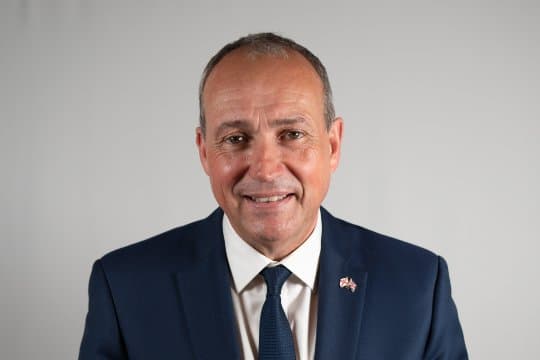
British Sign Language is operational across most government services using remote online third- party interpreter sign video. This includes at Union Street and across all services, emergency services currently also offer an emergency only text service. There are hearing loops in Union Street. The diversity and inclusion team maintain relationships with the Jersey Deaf Society, Earsay Jersey, and regularly attends deaf partnership meetings and monthly informal deaf club meetings. The Government also receives direct communications from Islanders via a dedicated deaf community engagement officer who works in the government building at Union Street as part of the Social Security Department. There are always opportunities to improve service provision for deaf Islanders, and we are actively working on this; in schools, through supporting engagement with British Sign Language, using parents, increasing capacity to deliver enhanced British Sign Language courses and training in Jersey. The hospital is working to improve the overall patient experience for deaf patients and this includes focus on communication, enhancing both the clarity of written communications and the range of communication methods available, and enhancing waiting areas and hearing loop maintenance. Yes, the Government will commit to continue engaging with affected Islanders to ascertain how we might further improve service provision.
No contributions recorded for this item.
I thank the Minister for his answer. I recently engaged with one deaf person in our community who said that she would get phone calls from the hospital about her appointments even though her notes clearly said that she was deaf and she could not answer the phone. On another occasion she was asked at the hospital, for example, where her appropriate adult was and she simply replied that she was an intelligent adult and did not need an appropriate adult, she was simply deaf. Does the Minister think that across departments more needs to be done to perhaps combat this, perhaps thoughtless or careless, prejudice that deaf people might face in our community?
While, of course, I cannot comment on individual cases, yes, I think more can be done. The hospital are working to improve the overall patient experience for deaf patients. As I said, we are committed to engaging with affected Islanders. I would urge Members who are contacted by any affected Islanders to get in contact with the Government if they are having difficulties, where we will be pleased to listen to the problems with a view to improving our services.
Will the Chief Minister explain why the main meeting room in the new Union Street building lacks hearing technology and commit to ensuring Islanders who are hard of hearing can fully participate in public meetings, like the Planning Committee hearings, in an accessible space?
I think when the building was originally designed it was not envisaged that public meetings would be held in that space, and I do agree that areas where there are public meetings need to contain the appropriate provision.
Yes, it was because I accompanied an Islander last week to the Planning Committee in the main meeting room and, as hard of hearing, she was unable to follow the proceedings even though she had a lot to say on the matter. Now, accepting that this is difficult to have public meetings at New Union Street, what will happen next, because there needs to be this accessibility for Islanders to participate, especially in things like the Planning Committee?
I think I need to liaise with the relevant teams at Union Street and following a brief Ministerial discussion, to just simply give an instruction for that part to be put right and make sure the provision is provided. I undertake to do that.
[11:00]
Would the Chief Minister advise if the public counters room is routinely tested for the hearing loops, and if any new recruited staff receive mandatory training by engaging with the deaf community?
I am sorry, I did not hear the full question, but I do not have the detail to hand as to exactly which members of staff are trained to liaise with hearing-impaired customers, but I can certainly find out.
In that case, a supplementary: would the Chief Minister advise which department chief officer or Minister has the responsibility of engagement with the deaf community?
If I may, I will provide that information to the Deputy in writing following the sitting.
Sir, would it be possible to provide it in the public domain because I think that it is important for the deaf community to know who is ultimately responsible for engagement with them?
I will publish the answer, yes.
Does the Chief Minister think that we are doing enough generally to make sure that Islanders with disabilities are being included?
I think we are doing more than we have done. There is a momentum going, but we can always do more. We recognise that, and we are committed to doing more, as I believe this Assembly is, but we cannot achieve it overnight. I believe that where there is a will, there is a way to get better and we are committed to doing that.
What more could we do? For example, is there anything baked into policy formation which requires sensitivity to protected characteristics such as disability?
I am just wondering, Sir, are we related to hearing now? Could the Deputy clarify?
The question was in relation to ...
Yes, in relation to hearing.
Yes, I outlined what we are doing in the opening answer, what we are working on improving and, of course, a commitment to continue engaging with affected Islanders to ascertain how we might further improve the service provision. We are committed to doing that and I think the important thing is we keep the momentum going. That is the message I want to put across to the Assembly.

On Sunday, I attended the Earsay, which is the deaf community, barbecue and met some fantastic people there, and was interpreted to. It appears that the community are quite poorly served, and they do not seem to have a dedicated social worker who actually uses B.S.L. (British Sign Language), which is incredibly important. I believe it was got rid of by a chief executive, 2 chief executives ago.
Can the Chief Minister commit to providing - because it is incredibly important - a social worker who can use British Sign Language. They are a deaf community. Could you look into that, please?
Yes, certainly. As I said, we receive direct communications, we liaise directly with the partially hearing-impaired community through our deaf community engagement officer who works at Union Street. I did meet with him briefly last week, but I undertake to follow that up to see what we can do to improve things in that area.
Because B.S.L. is a distinct language and culture, maybe we could include them in the International Cultural Centre. Would he think about that?
That is up to those people involved in the International Cultural Centre, but I certainly would not object to it.
Would the Chief Minister commit to giving us more information or conducting an audit about the numbers of staff across departments who are B.S.L. trained and under which circumstances B.S.L.
signing, interpreting, subtitling and so on would be provided automatically for governmental announcements and videos, et cetera.
If I may just briefly provide some further statistics according to the report by the Royal Association for Deaf Persons. There are approximately 13,000 adults who have some degree of hearing loss, there are between 6,000 and 7,000 active adult hearing aid users. There are 24 British Sign Language first language speakers, somewhere between 10 and 20 have profound hearing loss and communicate with mixed methods. There are 74 deaf children and young people who are supported by the Children, Young People, Education and Skills Department’s deaf support team. We are on top of the statistics and I can only reiterate the Government’s commitment to continue engaging with affected Islanders to ascertain how we might further improve service provision. So the answer to that is yes.
Will the Chief Minister advise what measures, if any, are being introduced in the coming months to reverse the continuing trend of more people leaving Jersey than moving to the Island, particularly in relation to 20 to 29 year-olds?
One of the greatest challenges facing our Island today is ensuring that young people not only see a future for themselves in Jersey but can afford to build that future here. The high cost of housing, both to buy and rent, is a serious concern that directly affects the choices young Islanders make about where they live, where they work and where they raise families. If we are to retain them we must take meaningful sustained action, and that is why this Government is delivering real practical measures and solutions to meet the challenge there. We are continuing to increase the supply of affordable family homes, releasing more land for development and redevelopment, and expanding schemes to help young Islanders take their first step on to the property ladder. We are also working to create a fairer rental market, one that offers better quality, a greater affordability and stronger security for tenants. Stronger security, and that is an important debate we are going to have during this sitting, but it is not just about housing. We must invest in opportunities in jobs, health, in education and leisure and in our community, and that is why we are beginning construction of the new hospital soon and transforming our health service, focusing on prevention, patient care and the modern digital infrastructure. We are investing in our schools, delivering a much-needed new youth facilities and extending nursery care to support young Islanders. We have accelerated the long overdue plans to redevelop Fort Regent, turning it once again into a vibrant community leisure destination. Members will know that these are not issues that will resolve overnight, but with the clear intent of the Government, with some long-term vision and strong collaboration in this Assembly, we can, we will and we absolutely must build an Island where young people not only are able but proud and pleased to stay.
No contributions recorded for this item.
Does the Chief Minister believe that those intentions will actually see a reversal in the trends that we have just outlined and when does he expect to see that come forward?
They are not intentions. They are not intentions, they are actions that are happening now long overdue. Long overdue. I would remind Members that the circumstances around our population have changed significantly over the last 3 to 4 years, where we were looking at ways to dampen down the growth in our population, to now a new set of circumstances where our biggest challenge is working age population, the falling birth rate, and that is what we are starting to address. We are at the early stages of that, I accept that, but it is a key priority, it is a key part of the Common Strategic Policy and it is the focus of the forthcoming States Members workshop that we are due to have, because it is one of the biggest issues and challenges we face.
The cost of living will be one of the biggest issues facing young Islanders. Housing and groceries, I believe, being the main 2 costs. What is the Government doing to address these?
Well, Members will also know that we have limited levers to pull when it comes to managing cost of living. Part of the Common Strategic Policy and part of our policy was to keep government charges, fees and duties as low as possible in relation to that. Deputy Morel, the Minister for Sustainable Economic Development, chairs the Inflation Strategy Groups that are working on a further policy that might bear down on that. I will make no bones about it, it is challenging and difficult but we are committed to doing everything we can to help with the pressure of the cost of living. However, we are quite often at the mercy of geopolitical situations. The biggest impact that we can make is on housing, both to buy and to rent, which is probably at the forefront of our priorities at the moment.
Another cost is childcare. If young people want to start families, childcare needs to be funded. Will the Minister address the current gap between paid parental leave and paid childcare? What can be done to fill that gap?
It does need further consideration. Of course, the falling birth rate is of great concern and housing, affordable family housing, and the cost of living, of course, have been cited as partial reasons for that. I am sorry, I have forgotten the actual question, if the Deputy could just confirm?
There currently exists a gap between funded parental leave and funded childcare, what will the Chief Minister do to address that gap?
I cannot answer that right off the top of my head but I will undertake to discuss that with the relevant Ministers just to be updated on their current plans on that.
The original question asks about the continuing trend of more people leaving Jersey than moving to the Island, particularly in relation to 29 year-olds. What data does the Government hold on this and how, therefore, will he judge the success of his Government’s policies in addressing this problem?
We have significant data provided by Statistics Jersey, which we review as an essential part of the information we need to develop our policies. Like I said, the focus of the forthcoming States Members workshop will focus on this where we will be sharing some of the statistics that we utilise.
But the Deputy is right in the question, the biggest areas of concern is in the 20 to 29 age group where we are seeing over 300 people a year leaving the Island in that bracket now, and we must work urgently and diligently to try and reverse that.
The other part of my question related to how the Minister will know whether he has been successful.
What targets, if any, is he setting? How will we be able to judge whether the measures he is introducing successfully solve the problem?
As we develop policy further, we have put in place a set of key performance indicators that will monitor and manage our success, and we work closely with Statistics Jersey to make sure we have regular updates so we can monitor hopefully how we are succeeding.
One Islander has confided in me that their 18 year-old has applied to 31 companies for a traineeship in the trades, and none have resulted in a role. These companies have given feedback to this family and they are citing that it is because of the new minimum wage introduction and getting rid of the trainee wage. What conversations has the Chief Minister had with businesses on this? How will he encourage companies to take on apprenticeships for that age group between 18 and 25?
We have heard a great deal of conversation, mostly in Government. I know that Jersey Business, Economic Development and some of the arm’s-length organisations are responsible for liaising very closely with businesses and that is why we have put the financial support scheme in. I have to be honest, I was disappointed that we removed a training rate but we had a very good and democratic discussion around the Council of Ministers’ table and the Council of Ministers were strongly supportive of the position that we find ourselves in now. What we do have is support for apprenticeships but the difference is now businesses will actually have to provide evidence that they are providing an apprenticeship with proper training, rather than taking on a junior person and giving them, if you like, an accredited training on the job, which can be valuable as well. That is the difference. There is support, and the conversations will continue through the Economy Department and Jersey Business, but we are mindful of the challenges businesses are facing now in the move to the living wage over the next 2 years.
[11:15]
What will the Chief Minister say to this 18 year-old who is very keen on starting a career in the trades and has been knocked back by at least 31 companies at this stage? What is the message to those youngsters to help them find a job?
It is difficult to comment on a single case, but it sounds extremely disappointing for the young person.
I would urge them to continue. We have, albeit a challenged economy, our economy is still strong and we have good levels of employment. However, this Assembly must also realise that it is challenging, especially for certain sectors of our economy. With the updated employment legislation that we have rightly brought in over the years, it is a much greater commitment for smaller firms to engage staff because of the commitments they have to make. Many of my peer group, my friends who work in construction, who, a number of years ago were employing 20, 30 people are now working on their own again because they find it difficult to meet those commitments. My message to all of the young people, please continue to push. I have strong confidence in the economy and I have confidence in them more than ever. We will do everything we can to help them moving forward.
Does the Chief Minister accept that the loss of working-age Islanders in this age group undermines the Island’s economic strategy and its stated ambitions for productivity, inclusion and growth? Will he commit to involving young people in any radical rethink of youth policy going forward?
Absolutely. The key to this is really pushing hard new policy through. The most important part of that process is engaging with young people so we know exactly what it is they need that will encourage them, that will give them the confidence to stay here, so it is a strong yes to that. We will engage young people with our policy-making. A small example of that is on the public consultation with Fort Regent where out of the 6,000, approximately 1,000 were young people who were engaged with directly in their schools and provided invaluable responses to that consultation.
Will the Minister advise whether he is considering any reform or clarification of the Bridging Island Plan Policy GD10, Percentage for Art, which requires developers to contribute approximately 1 per cent of construction costs of larger developments to public art?
I can say to the Assembly I do not currently have any intention to reform GD10. As Members will know, interim amendments to the Island Plan are not possible between Island Plan debate. As part of the next Government’s review though into the Island Plan, all policies, including GD10, will be evaluated based on performance and assessment of their effectiveness in achieving the intended policy outcomes. Until then the Bridging Island Plan remains the primary reference for planning decisions and GD10 will continue to guide the assessment of larger-scale developments in Jersey. I will just finish by saying that the Bridging Island Plan proposal 11 does recognise the need to update the current Supplementary Planning Guidance. While this work is not in the work programme, I do commit to looking at it to see what I might do in the short time I have left.
No contributions recorded for this item.
I thank the Minister for his answer. Is the Minister then satisfied the developers and Planning officers have adequate guidance to interpret the Percentage for Art requirement in innovative and site-specific ways?
As we have already discussed, GD10 is a policy. The preamble to the policy says, and I will just quote a small part of it: “Public art needs to be located in a position where it can be experienced by or is visible to the public on land forming part of the application. Where this option cannot be delivered, the applicant will be required to justify reasons and have the option to procure and implement the public art off-site within the vicinity of the development area on land which is accessible to the public and subject to the agreement with the relative land owner.” I do feel that currently there is enough guidance but, as I have said previously, I commit to looking at the S.P.G.
(Supplementary Planning Guidance) and see if there is something I can do.
Does the Minister agree that if there were a revision of policy GD10, one possible option could be to, rather than putting the onus on the developer to provide the public art and ultimately decide what and where it goes, that the 1 per cent could be monetised and it could be reduced? So we could have, let us say 0.5 per cent for art but which goes into a central pot, which is then administered by maybe an arts body that could consult about public art so that it could be used in locations other than just where the developments are going to be.
I do not disagree, that would be certainly something I would want to look at. It must be obvious that large schemes will not necessarily be easy for the public to look at and that the art on the site might be difficult for the public to view. There is some flexibility in this policy which allows for what the Deputy suggests. In some ways that makes it easier, in other ways it makes it more difficult, because subjectivity is always exactly what it says on the tin. I take the Deputy’s views on board and I think it would be a good idea to review that.
I thank the Minister for his answer. Would he then also maybe consult with the Public Sculpture Trust, or whatever remains of it, to see if they have any ideas about how this policy could evolve?
I am not aware of the Public Sculpture Trust but I will endeavour to find out about them.
What kind of message does the Minister believe the Government is sending out when it comes to the Percentage for Art policy when its own departments are seeking to have their developments exempted from it, like Oakfield?
As I just said, there is some flexibility in this policy, and I accept the point that the Deputy raises. I know that this particular issue was raised. If my recollection serves me correctly, I think the answer was that it was important to put as much money as possible into this public facility. This particular facility is specifically for sport and it may well be that other applications for things like affordable housing, for example, and large schemes which might attract Percentage for Art contribution would again be let off that - if that is the right phrase - inasmuch as it is important to make houses as affordable as they possibly can be. I cannot offer the Deputy much more than that. I know it was discussed and I think the answer was they wanted to spend as much money as they could on the sporting facilities and not spend money on art.
It does lead me nicely on to my follow-up question. Would the Minister be open in due course to perhaps looking at a way to repackage the policy, say a contribution to sport or play provisions in the local area of the development? It seems to me certainly that, while it may have been effective in its own way over the years, we have had a number of decades of this policy and perhaps it is a way to look at it in a different way now.
The answer is not dissimilar to the one I have just given to Deputy Tadier. I think when we look at this policy there are lots of things that we could consider and that may well be one. I know in the past I have tried to bring community levies to this Assembly and failed miserably. That, in a way, was another way of getting any developer to contribute to a percentage of the scheme to community infrastructure, very much like the Deputy has just mentioned, playgrounds and things like that. Yes, I think it is fair that there is scope to look at this policy and this guidance again. Very shortly I would imagine the next Government will be doing that before they debate the next Island Plan.
A question more about process. Is the Minister aware that it is apparently the case that a large number of Percentage for art proposals in planning applications go through one person? Is he concerned that this quasi monopoly might be reducing creativity in interpreting the Percentage for Art requirement?
I cannot say that I am specifically aware that very many of these applications run through one person but I think I may know where the Deputy is going. I think it is important that we consider all types of art. If it is a Percentage for Art, there could be very many avenues that we could be going down to provide that. I will commit to thinking about what the Deputy has suggested and make sure that we are giving a reasonable selection of people the opportunity to tender for Percentage for Art work.
Just to extend that a little further, will the Minister commit to clarifying with his own officers the potential for multiple people to be involved in putting in those applications for Percentage for Art schemes, they do not just have to use the person that has been used in the past?
Yes, I am happy to do that. It may well be that if it is a very large scheme which attracts a considerable amount of money for the 1 per cent, it may be possible to split that into a number of different subsections around it if it is a large site. There are very many different ways that we could look at this. I think the message I am getting from Members today is this guidance, and specifically this policy, is something which needs to be looked at, and we need to consider many options.
I thank the Minister for his answers and for his last one about the importance of looking at this. I follow up really, before I asked about whether he thinks that developers and Planning officers have adequate guidance. The Minister quoted from the policy which specifically says that one would feel something about a piece of sculpture or a permanent sculpture, it is something that has to be on site.
Yet, in the preamble to that policy within the Bridging Island Plan it says: “Public art encompasses a vast spectrum of art practices and forms from permanent sculptures to temporary art works, monuments, memorials, land art, specific work, street furniture, integrated architectural designs, socially-engaged practices and community-based projects.” I would like to ask the Minister if he could go back and look at the guidance as soon as possible to understand that developers and his Planning Department see this Percentage for art not just as a standing one-piece sculpture fed through by one particular consultant, that this encompasses a wide range of art practices and forms, including socially-engaged practices and local Jersey artists at the heart. Thank you.
There was lots in that question but I am very happy to commit to the Deputy to go away and have a good look at it. I would be very happy to consult with her further as to how we might change if we do change. I would finish by saying that there is no doubt in my mind that the Percentage for Art scheme has, in certain places, delivered some fantastic pieces of art which are permanent, which are very visible to the public. Most recently, one of the largest ones we have seen is a new piece of art down on the Waterfront near the Horizon building, which is a very, very spectacular piece of art. I encourage anybody who has not seen it to go and look at it. There are other pieces around St. Helier and I always find it amusing to looking at the dancer hanging from a wire on the building near the Esplanade and, more recently, a small sculpture on some buildings next door to the old Girls’ College site, which one will see very clearly if you drive past. There is no doubt in my mind that Percentage for Art has a lot to contribute, but I take the Deputy’s view and question on board, and that of other Members, and say that we will go away and have a look at this.
(OQ.171/2025) Following the announcement that O.E.C.D. (Organisation for Economic Co-operation and Development) Pillar Two taxes will not apply to United States’ companies, will the Minister advise the Assembly what steps, if any, the Government is taking in response and what the implications are for the Government’s Pillar Two revenue forecasts?

I am aware of the recent G7 announcement on a proposed carve-out for U.S. (United States) groups from Pillar Two. Negotiations on the way that Pillar Two will sit side by side with the U.S. tax regime are now underway at the O.E.C.D., and Jersey is involved in that process. Our income forecast is correctly based on the legislation that is currently in place. It is a deliberately prudent base case forecast and this rightful base case is reflected in the Budget. In common with all 147 jurisdictions in the O.E.C.D.-inclusive framework, Jersey continues to monitor global developments and ongoing O.E.C.D. discussions. It is of course too early to assess any definitive future impact on Jersey. Our approach remains focused on maintaining our competitive, proportionate and internationally-aligned tax framework.
[11:30]
No contributions recorded for this item.
No contributions recorded for this item.
I thank the Minister for his answer. At Scrutiny last week, the Minister referred to less fulsome tax revenues unplanned. What is his current take on how much less fulsome those revenues will be, given that he might have to put some figures into the Budget?
Of course, the Deputy would not expect me to give a number when the Budget has not been yet considered fully at the Council of Ministers’ table, but I did make that observation; he is correct. I think I further explained that that observation was a result of existing corporate income tax receipts and that it would flow through into that forecast. Because of course, what we do with Pillar Two is take those in-scope companies out of the existing corporate income tax regime and put them into the new Pillar Two regime, so that less fulsome forecast was arising out of that and not arising out of Pillar Two per se.
The Minister mentioned that Jersey has an involvement in a recent development. Would the Minister give a bit more detail about what type of involvement and who has involvement to adjust our position to the American changed position?
We have been very fortunate that over the years of the development of this particular regime that Jersey has had a seat at the steering group. The deputy director in Revenue Jersey attends that steering group. There is a working party, there is a steering group and then of course there is the full members of the O.E.C.D.-inclusive framework in the round. That steering group tries to thrash out some of the details and was involved in forming the overall proposal. As I said, the understanding between the U.S. and the G7 was a very high-level understanding and all of the detail has still got to be worked through.
Does the Minister think there is any risk that we can be losing completely our Pillar Two revenues?
Of course, without knowing what the detailed arrangements and changes may be, it is not possible at this stage to say one way or the other. The only thing we can say is that we currently, in line with many members of the O.E.C.D.-inclusive framework, have got legislation in place right now and companies in Jersey, as they are within those jurisdictions, have liabilities arising.
Will the Minister advise if there is any impact these recent changes will have on funding the delivery of the Sustainable Finance Action Plan and transition to a net-zero economy as outlined after my amendment was accepted in the Budget 2025?
This will deal with the receipt side of the equation, not the spend side of the equation.
Could the Minister advise what analysis has been undertaken to assess the potential on the Island’s international competitiveness and long-term economic strategy?
As the Deputy may or may not be aware, one of the streams of the long-term competitiveness strategy is bringing forward a tax strategy, all of which is intertwined with where the requested changes to Pillar Two from the U.S. might land.
Can the Minister give an indication as to whether he anticipates any risk of multinational firms relocating or restructuring as a consequence or in response to the announcement that has just been made by the U.S.?
The understanding was, as I said, a broad high-level understanding. One can only assume that the G7 thought it necessary to reach an understanding with the U.S. in order to have an article from the Big Beautiful Bill, the 899, removed. That has now been removed so the G7 has been successful in that policy aim. We now have to deal with the after-effect of that understanding, which is extremely detailed and complex. I can, however, affirm to the Deputy, as I said in my closing initial answer, that we remain focused on maintaining a competitive, proportionate, and internationally-aligned tax framework so the scenario that she outlines, the possibility does not happen.
I thank the Minister for his answers. The Budget includes plans to use Pillar Two revenues to help pay for the hospital; £277 million was set aside for this. The Budget included a fallback plan to borrow from the Strategic Reserve if Pillar Two revenues fall short. Does he think this prospect has increased in the light of recent events?
I cannot really say frequently enough, there is a lot of detail still to be considered. It is only in knowing what those detailed agreements might be that I am fully able to answer that question. As the Chief Minister has said, and I think as all Ministers have said, they remain completely committed to funding the hospital, whatever the result of those O.E.C.D. and U.S. negotiations might be.
Will the Minister state whether the use of the flat rate price per lane metre pricing model by DFDS has been assessed to result in fair, cost-effective outcomes without unjustified price increases for Islanders and local businesses?
Being just over 3 months into a 20-year contract, it is far too early to assess any of the outcomes of this 20-year operating agreement with DFDS. There is no question that the new flat rate card is intended to create a level playing field and provide transparency to promote competition. For the first time we have also included a robust mechanism to govern future price increases. This will create price stability that Islanders have not had and will ensure that we do not see a return to 19 per cent freight rate increases that were created by the previous incumbent.
No contributions recorded for this item.
I thank the Minister for his answer. With his answer, I assume the Minister still stands by the chief economist’s view that the lane metre pricing model would have minimal impact on prices and, as stated in the media, likely less than 0.5 per cent? Has any new evidence led to a reassessment so far?
I absolutely have faith in the chief economic adviser’s assessment. His assessment was that any increase in price would lead to a 0.4 per cent increase in a classic shopping basket. That is less than R.P.I. (retail price index) because R.P.I. includes services which are not involved in shopping. I did have, interestingly, a conversation with a freight provider in Jersey recently. They said that their own calculations, they believe, showed that any increase in that shopping basket would be more like 0.3 per cent rather than 0.4 per cent.
Is the Minister aware of any logistics operators who have not increased their prices under the new agreement? Have all logistics operators, to his knowledge, increased prices to consumers or have some kept the prices the same?
I have to say in response to that, I do not know, is the answer. One of the issues previously was we did not have sight of many of the prices. There is no requirement for any freight provider to report their pricing to me or any other Minister or States Member. I am afraid I just do not know.
I wonder if the Minister accepts that a consequence of the flat rate is that those who rely on the dominant freight operator are no longer able to take advantage of discounts, which means that it is a case of taking a small amount of pain now in order to have competition in the future.
There is no question in my mind, this change is a change that creates a transition. As with any change, there may be gainers and there may be those who gain less or even lose from that. We had no sight of discounted rates that the Deputy refers to, and that again was one of the issues. There was no clarity as to what was being charged to whom and by whom.
Does the Minister worry that the short-term costs adjustment, or whatever we want to call it, may be putting quite a high cost in some areas of the economy? For example, we had the recent closure of a food operator that cited increased freights costs.
I note the Deputy mentions a recent closure of a food operator. I think there are also other reasons that are not cited for such closures. It is always difficult because when any business closes it is easier from their perspective to point to certain factors beyond their control. I, in my view, do not ever hear the full stories around these matters. I always and genuinely constantly feel a great sense of responsibility and concern for the Island’s economy. I believe we have made the right decision for the long-term stability of freight to this Island. I stood and asked a previous Chief Minister to change the title from Minister for Economic Development, Tourism, Sport and Culture to Minister for Sustainable Economic Development precisely because I believe that when you are talking about economics and economic development, you should be looking at the long term as much as you have to at times look in the short term, and I stand by that. I do believe strongly that this is an excellent change which will bring, not just competition to the market, but also bring price stability to the market. It is also important for Members to understand that the J.C.R.A. (Jersey Competition Regulatory Authority) in its own report on freight, pointed to the fact that freight costs are only 7 per cent of the cost of goods on our shelves. Any increases need to be borne in mind that any effect should only be borne in that 7 per cent. This is a minimal element of any cost of the goods on our shelves.
Just in connection with data, I just want to say to the Minister, it would be helpful if his department just picked up the phone to us. I can share some immediate information with you, and that is that freight costs have gone up by 11.5 per cent in the last 12 months. I can just tell you that across the room now, and easily do that, so I do not understand where there is this issue of a lack of transparency with collecting information on that front.
I do not understand what the Deputy is referring to at all. It is not possible for my officers to phone round every business in Jersey to find out their thoughts. That is inconceivable as a concept. I think it is also important to understand, the Deputy referred to an 11 per cent increase over 12 months.
Well this has been in for 3 months. It is really important that all the tenders received - all the tenders received - increased freight prices, so there would have been freight price increases regardless. If the Deputy has seen an 11 per cent increase at his business, then it would be interesting to know exactly how that has been broken down. He, himself, should ask his freight provider how has that come about? What are the costs that the freight provider is taking into account when suggesting that 11 per cent increase because, as I point to, the cost of freight is only 7 per cent of the cost of goods on our shelves. I think the Deputy should be assured that as a businessman he will now have understandable sight and understanding of freight prices that his freight providers are being charged by the ferry company. He will understand in the future how much those freight prices are going to go up, so he will be able to challenge his freight companies when he believes there are excessive freight price increases. That is something that the Deputy is unable to do today but next year he will absolutely be able to challenge his freight companies because he will have transparency as a businessman as to exactly what that freight company is being charged by the ferry firm.
What the Deputy will not be able to do is negotiate a price with the ferry themselves because of the flat rate card; so much for free market. Does the Minister agree that when he says they had no sight of the reduced costs that had been negotiated between the old ferry provider and Ferryspeed, presumably, why should he have had sight of that? Why does he think that he should have had sight and knowledge of a contract between 2 private businesses?
[11:45]
I think the Deputy’s initial comment showed a lack of understanding of the way these things work, which I find fascinating. I would say in recent years we have seen the previous ferry firm increase their freight prices by 19 per cent, but we learned that through the freight forwarders, not directly from the ferry company. As Government, we have had no ability to see exactly what freight prices are being charged by the ferry firm. When freight prices go up, all the freight forwarders point to the ferry firm but we had no way of confirming whether the freight forwarders were being fair or were being unfair; we could not know. Now that we have that transparency, we will know exactly where the pricing is going up. To that first comment that the Deputy made, there is a huge amount of negotiation that is possible between the recipient, a customer company, and the freight forwarders because the cost of the ferry service is only one element of the cost of the freight forwarding. There are all the other elements of freight forwarding that ultimately end up in the price being charged to the end customer in Jersey, so there is still vast room for negotiation.
Does the Minister believe that he needs to work on his messaging because when he tells businesses, including one businessman in this Assembly that his figures are wrong and that it is 7 per cent, does he accept that businesses are the ones who know best, and that the message that the Minister seems to be putting out is that when the economy is going well and when things are going well in the economy, he will take credit for them, but when certain things do not go well, when firms go bust, it is nothing to do with him?
I reject entirely the Deputy’s assertions, which are quite childish, in my view. I did not say that the Deputy who spoke previously was incorrect in his data; that is not something that passed my lips. I did not contest the 11 per cent rise that he claimed he had had. I believe that; I have no reason to disbelieve that. What I said was that the J.C.R.A. study into the freight showed that the cost of freight in the price of the good on the shelf in the shop comes to only 7 per cent of the price of the good on the shelf. That is entirely different to the 11 per cent increase that the previous Deputy was speaking about.
We have heard from the Minister that he believes it is too early to make a full assessment of all the consequences of this model. He also has not heard or listened to stakeholders if there has been any impact or not. Does the Minister have plans to undertake assessments or further discussions with stakeholders about its impact in the coming months?
I constantly listen to businesses, I constantly speak to businesses. I constantly listen to representative organisations and speak with representative organisations. I will continue to do that. The previous Deputy, when speaking, said that I like to take credit when things are going well but not when they are going badly. That cannot be farther from the truth. I have sat down with hoteliers, who have sat there speaking to a question that we will have later today, and said: “Tell me about your problems. ” I absolutely take responsibility for decisions that I make. I absolutely feel strongly and care deeply about the impact on any decisions made here or elsewhere in the world about their impacts on our economy. I do not just take credit, I am always held to account.
Will the Minister advise whether proposals will be brought forward in the forthcoming Budget to improve access to contraception services?
I thank the Deputy for her question. The provision of contraception and also the communication of such provision is an active point of discussion in the Women’s Health Advisory Group of which I am a member. I can give the Deputy confidence that we can make improvements to our provisions without the need for a commitment specifically in this year’s Budget because we can make such commitment through the H.I.F. (Health Insurance Fund). With regard to prescribing, we are already creating foundations for such a service. I recently made a Ministerial Order which will enable pharmacists to prescribe costs to the H.I.F., and we are seeking to link pharmacy appropriately into patient records so that prescribers can issue prescriptions safely. I hope the Deputy understands that there are a number of moving parts that need to be aligned in order to make such changes and make further improvements to the provision.
No contributions recorded for this item.
Can the Minister advise the timeline for delivering these improvements, please?
As I said in my initial answer, I have just recently signed a Ministerial Order. Currently there is a lot of work to be done with pharmacies because pharmacies do not have access to patient information at the moment, so should not be commissioned to issue prescription-only medications. There is a piece of work ongoing at the moment which is a priority for the Employment, Social Security and Housing Department and Digital Services to achieve appropriate access to patient records. I am unable to give a timeline at the moment because that piece of work is integral to that.
Further to the “top up” funding that was provided to Visit Jersey in 2024, will the Minister provide his assessment of why there have been lower than anticipated visitor numbers so far this year and will he state what measures, if any, he is considering to address this and its impact on the local hospitality and retail industries?
As I just mentioned in previous answers, it is of concern to me that we have not seen growth in the tourism sector this year. Some of the reasons I think are understandable and will be because of the change and the late tender process for the ferry services, but others are less understandable and beyond the control of anyone in Jersey. It is important to put such figures into context. Between January and April, the Island saw a 7 per cent reduction in figures compared to 2024. We know that over two-thirds of our business comes from the U.K. and low levels of U.K. consumer confidence are affecting lots of jurisdictions dependent on this market. Take one example: Ireland. Ireland has reported a 14 per cent decline in visitors from the U.K. between January and April this year. Another significant decline has been seen in Iceland which also has large amounts of U.K. visitors. These things are beyond the control of this Island but that does not mean we do not try to work to ensure that the tourism industry can enjoy today and enjoy a prosperous future. With that, we are investing heavily in the hospitality sector. We have included £6.6 million in productivity support between 2025 and 2026, of which £2 million is ring-fenced for the visitor economy alone. I have also provided an extra £2 million to Visit Jersey this year and will provide another £2 million next year on top of their core grant funding. This has led to a 12 per cent increase in web traffic and visibility of the Island and a 23 per cent increase on onward referrals to local hotels. It is not just about marketing, we are also investing £2 million in new air routes over the next 2 years. That is to be aimed principally at Europe but also includes the U.K. As such, we are seeing an expansion of Jet2’s connections in 2026 which will drive a 50 per cent increase in available seats. Having seats available is one thing, we also need to make sure that those seats are filled, and that is where the conversation with the industry comes in. I have sat down on 3 occasions now with hoteliers and the industry and just sat in front of them and said: “Tell me the problems. Let us talk about solutions.” I will continue to do this but it is a dialogue. While the Government can invest in marketing the Island, we also need to make sure that the product is appropriate at this end. At the moment there is no question, we have a high-priced industry and the product is not always necessarily of the value that those prices determine. I am sitting with hoteliers and with hospitality providers to help them through that. That is where things such as the visitor economy part of the Better Business support scheme and the productivity elements are aimed to help them make the investments in their products that will help us attract people to make the bookings because the marketing is being seen but we need people to book on to those planes.
No contributions recorded for this item.
Thank you to the Minister for his comprehensive response there. As he has alluded to, there are structural vulnerabilities in the visitor economy. Does the Minister believe that the current strategy for improving tourism in the Island is perhaps maybe the wrong strategy, given the disappointing outturn? Even though he has talked to the industry, what sort of things does he think could change to improve the situation?
I do not think we have the wrong strategy, I think politics and anything to do with politics has always got the issue of a short-term change and a short-term issue versus the longer-term outcome. It is the longer-term outcome which is the strategic outcome that we are seeking. That is absolutely where we need to go, which is greater visitor numbers. At the end of the day, we are a high-priced Island so we need to be able to attract people who can afford those prices. I sat down just yesterday with a business person who is investing, not just in the hotel in the Island, but is investing in an attraction in the Island as well. We talked about the possibility of attracting American tourists to Jersey from France. We talked about the fact that they are already seeing more people coming in from countries in central and northern Europe. We talked about the fact that this person is happy to invest in the industry in Jersey because they do see opportunity. They do understand the strategy that we are working with the industry is one that shows them a future for Jersey. We do need, as I said, to work with the industry that is already here to ensure that product and prices are where they need to be and also to help them understand marketing. There is a greater need for packaging, so packaging hotel rooms with attraction discounts or packaging hotel rooms with discounts in the hotel, free meals, things like this. These are things that many hoteliers are not used to doing but that is how we have cut through. It was interesting that February has seen the greatest increase. We had an increase in visitors in February. That is ...
Minister, your answer has reached 90 seconds and your previous answer was longer than that.
So we can and that was done by packaging.
The Minister’s original answer spoke about the decline in visitor numbers as being part of a wider trend in decline of U.K. visitors. Will the Minister provide an assessment of whether he thinks that is entirely the reason for the fall in numbers or are there some home-grown reasons for the decline?
If the Deputy had been listening to my answer fully to Deputy Wilson’s first question, I said that there were also home-grown reasons. I said the lateness of the decision on the ferry tender absolutely has had an impact on sailings because it meant that tour groups were not able to book on ferries that had not been decided upon, so there was an impact there. To Deputy Tadier’s previous assertion that I do not hold my hands up when something is not quite working, I do, and I say that was because of the lateness of the ferry tender process. There has been an impact on southern route sailings, in particular, but that is something we are working with both DFDS and Visit Jersey to overcome. They are directly marketing into France and other places in Europe, as we speak, and investing their own money in that.
I apologise for not being clearer with my question. I wonder whether the Minister would state to what extent he feels that the home-grown product, if you like, is a factor in that decline as opposed to the other factors he has mentioned.
I believe hoteliers in Jersey work incredibly hard and they work hard to deliver the best product that they can. When you look at the product and the price, I think that is what is really important. Jersey is now a higher-priced jurisdiction because of elements such as ... particularly the cost of wages, but other matters as well, the cost of goods to buy into your hotel to sell on. We have to accept that we are a higher-priced jurisdiction and therefore we need to attract visitors who can pay those high er prices. I do believe that there is in some areas a difference between the standard of product being offered in this Island and the standard being expected. It is called “value” at the end of the day and I do not believe that we always hit that value point. That is where the Better Business support scheme and the Tourism Development Fund, the visitor economy part of that Better Business support scheme, are designed entirely to help businesses, and in terms of the visitor economy part, hoteliers and restauranteurs and retailers to invest in their product. Government is helping them in stimulating that. In the coming hours I think we will see some really interesting statistics coming out about the stimulation of investment in Jersey as a result of the Better Business support scheme.
It is pleasing to hear that there seems to be quite a lot going on to stimulate the tourism sector. One of the things that would be helpful, if the Minister could give some further detail about what ideas or what progress he is making with a view to attracting the high-value visitors he talks about.
[12:00] Is he focused on just volume or is he also encouraging the longer stay in the duration of visits to sustain the industry going forward?
Adapting to changing markets is a really important part. We see that we have, I think it is 4.3 days is the average stay of visitors nowadays. That is a global trend. That is changing, that is not something that Jersey can change on its own. What we need to do is adapt to that changing trend.
We are pushing into the ... not just the shoulder months, but the winter months. Jersey’s tourism industry is hamstrung by the fact that we have a 4-month season. We need to break out of that. To that extent we are, through the arts strategy and also the sports events strategy, bringing events that we hope will encourage people to visit here during the non-seasonal months. On top of that, we are seeing investment in hotels; I am really pleased that we are seeing at least 3 or 4. I signed, I believe, a business licence for one hotel recently; I know that there has been publicity about another prospective hotel development. I was speaking to one business person yesterday about their - not prospective - it is a hotel development that is going on. There is absolute desire to invest in Jersey’s tourism industry. That is where the Assembly should be seeking and saying: “We know we have got something to offer but we need to market things properly.” I have been asking Visit Jersey to have a more tactical approach to marketing as well as the bigger strategic Visit Jersey approach, but also market the marathon, market the super triathlon, market Jersey’s heritage, market our foody offering.
These are things which go really well to attracting those higher-value tourists that we are looking for.
Further to a statement made by the principal of Highlands College that the “College is not able to meet the demand of 14 to 16 year-olds from local schools” and that a new campus is essential, will the Minister outline any plans for a new campus for further and higher education?
I thank the Deputy for her question. While there are no current approved plans for a new campus at Highland College, I fully recognise the importance of the college growing Jersey’s economy and growing pressure on its estate. The need for a long-term strategic solution is thoroughly acknowledged by myself.
No contributions recorded for this item.
Does the Minister have plans to ensure full disabled access to the current building?
There are a number of essential works. I have a page of A4 that I think the Scrutiny Panel has because it was the first 2 pages of the letter sent to the Scrutiny Panel, which was a really positive interaction with Jersey Property Holdings and the college over the work that is going on over the next coming years for essential maintenance, part of which will include disability access, I am sure. I do not have the details on that specifically but there is an enormous amount going on to do repairs at the college so that we can look ahead over a number of pieces of maintenance and development that is going on in the college in the coming year or so.
The Minister fully acknowledged the demand for a new campus but did not say anything about what would transpire in response to that demand. Can he state whether a new campus separate from Highlands College is under consideration or whether renovation or rebuilding of Highlands is the preferred solution?
I do thank the Deputy for his question. I think we do need to look wider than where the college is at the moment and whether or not a new site with purpose-built facilities may be a solution to the long- term needs of the college and our training needs. I would be open to that; absolutely open to that. I think perhaps we need to look wider and say it does not necessarily need to be on the campus where it is. If there is a site that is clear and available, then work can start while the college continues, which would make that easier in the long term as well. I would certainly be open to that.
The Government has a long-term infrastructure plan at the moment which has achieved much discussion. Is Highlands’ renovation or rebuild, on a new site or otherwise, part of that infrastructure renewal programme?
I thank the Deputy again. In terms of its maintenance and continuation, that is the first 2 pages of the letter that was not quoted in the press giving absolute detail on some of the works going on there.
In terms of the long-term capital expenditure, Highlands College is not on that specific expenditure.
However, if there is any way in which we can find a site, find the right place and get that moving, I think we need to have flexibility in that. An example is the repurposing of d’Hautree House for a brand-new La Passerelle School which was desperately needed. That was reprioritised and that is going to happen and be ready in October. I think we need to be less tied down by those specifics and what can we get on with and what opportunities arise because we do not want to miss an opportunity when they arise for a new campus if we can possibly produce one.
Would the Minister advise if there is a working group working on plans and options for the new campus?
There are wide-ranging projects going on across government looking at all sorts of facilities, including Fort Regent, what opportunities that may raise, what opportunities there may be on other sites. What I would say to the Deputy is that if there is any opportunity for me to get a facility, a site to build a new college, I would certainly push for that, whether it is at the college site itself or another site becomes available and is suitable and would be successful in the long term. That is about as much as I can say on that at the moment.
Would the Minister agree that to meet 14 to 16 education needs, needs to have a clarity how the education would be delivered so the officers can find opportunities to the way that education would be delivered? Would the Minister advise: does he have a working group within his department that is looking at what will be needed and how education will be delivered that we can put buildings to their policy direction?
Yes, this is slightly off the question but I would be pleased to answer it. That is exactly what is happening since day one of my tenure. We have been looking at how education will be delivered, what needs to change. Some examples of what is happening is the secondment of 2 headteachers into the department to see how schools and the department can work better to support each other, understand the needs of children in schools, including 14 to 16 education. I am about to finish the very final school where I go and consult with young people about post-16 education at Mont â l’Alabbé next week. We have spoken to quite a few children across our schools in terms of what their provision for post-16 education is. I think that should be the priority in terms of our structure ongoing. We are also looking at the provision of early years and nursery care. We are looking at how that feeds into primary schools and improving the ability of children to access primary schools early on and then how that progresses long term into qualifications. There is an enormous amount of work going on, both with the Curriculum Council and across the department in terms of the delivery of 14 to 16 education and beyond. Let me reassure the Deputy that is happening.
The panel received details of repairs to the current building but I do not recall any about work enabling disabled access. How will the Minister be ensuring full disabled access to the building and when?
The works that are going on will go through Jersey Property Holdings and the college. I would have thought that, as those works go on, including the ability to get into the college, is part of that. If there are specific problems, then we can address those one at a time. I cannot give a specific time and what those individual problems are across a campus; that is really for Jersey Property Holdings. It is a very specific question for this time. We can look into it; I am sure we can give a response. I see the Minister for Infrastructure nodding at me, so we can certainly provide that.
Will the Minister state what officer advice he received, and from whom, regarding the grant of £1,580, and £750 as well, for Jersey Battle of Flowers ...
You said £1,000 ...
Did I get that wrong? [Laughter]
It is £158,750. Minister.
I have not quite finished. [Laughter]
Oh, right. Sorry, I thought you had.
Can we round it up to £160,000, just under £160,000, for the Battle of Flowers (Parades) Limited prior to issuing a letter of instruction on this matter?
I thank the Deputy for the question. My officers have been working very closely with the Jersey Battle of Flowers (Parades) Limited who are organising this year’s Battle of Flowers and have been supporting the team as they navigate the events process. In this instance, given the substantial grant to a brand-new entity, I have decided upon the advice of my officers to provide a formal letter of instruction to avoid any uncertainty around that grant. As with all grants, this is not a blank cheque, and key performance indicators have been set out. We do want to see them delivered and they will be assessed against them.
No contributions recorded for this item.
The letter of instruction, which is normally issued when officer advice has been refused and the Minister’s decision is contrary to officer advice, says that the Minister carefully considered pros and cons of issuing the grant funding. Could the Minister say what the cons were that he took into consideration before issuing this grant?
I do not think it is entirely correct to say “normally issued” because the Minister’s view is contrary to that of the officers. They are issued when there is any concern or ambiguity with regard to the Public Finances Manual as well. The advice on this case was very much because the entity is a brand- new entity. So we wanted to make sure, from an officer perspective, that they were able to feel comfortable under the Public Finances Manual that we would be providing a grant to a brand-new entity. I forget the rest of the question, to be honest, so I apologise.
Yes, the question was essentially what were the cons, what were the risks about granting this?
Those risks are principally around it being a brand-new entity, although the members of this entity are members of the Battle of Flowers Association. It was that element around the brand-new entity is the key risk here.
Can the Minister advise how this amount of funding compares to funding given to similar events in the Island, one, for example, Channel Islands Pride? Could the Minister include the amount that was granted to Channel Islands Pride in his response, please?
I am unable to do that.
This is a question about the grant to the Battle of Flowers, not about other grants.
I do agree, I believe that that is out of scope.
I disallow that question.
May I ask a different question?
Yes, you may.
What are the criteria used to determine the amount of grant funding for large events such as the Battle of Flowers and Channel Islands Pride?
Each event has its own criteria based on their business plan for that event. The business plan for the events will result in a request from the event organisers for a certain amount of money and then decisions are made according to that business plan.
Could the Minister please share that criteria with States Members? Also if there is a similar number of attendees and public benefit to large events, should a similar amount of funding not be allocated?
Such simplistic ways of thinking I do not think are appropriate for any events.
Can the Minister please just clarify whether all the money is going to the new organisation and not to pay off debts from the previous company involved and whether those books have been balanced?
The £160,000 that Deputy Tadier is referring to is entirely for the parade happening this year; it is entirely with regard to this new entity. I have to say that this has not been an amount that has been handed over in one go. To date, I provided a letter of assurance to the Chair of Jersey Battle of Flowers (Parades) Limited so that 80,000 stems could be ordered in time for this year’s event. That was for a value of £32,800.
[12:15] My officers have also recently released £17,569 for urgent payments for acts, marketing, glue, et cetera. The grant agreement between Jersey Battle of Flowers (Parades) Limited and the Government is yet to be signed by the department. This will not be signed and no further monies will be released until consent to host the event is received from the Bailiff’s panel. We are staging the amounts of money and giving them on an as-needed basis to minimise any potential loss and risk that Deputy Tadier has well referred to.
I thank the Minister for that clarification. He has partially answered my follow-up but I wonder if he could give some assurance around due diligence that might have been conducted, in particular in relation to a new organisation. What process and assurances did he receive that they would be a good recipient of States funds, given what has happened in previous years?
It is difficult in the sense from a process perspective, there is no set process on this. This is a matter of trust between Government and, as I have said before, trust in Islanders and Government is something that is really important. A low trust economy is a very expensive economy; and we have moved into a low trust economy, partly driven by the fact that Government is requiring constant sets of processes which make life much harder. That said, we are working very closely with the Battle of Flowers (Parades) Limited, to ensure that they are able to deliver what they said they would deliver.
This is a case of working together with them to make sure we have a really good battle parade taking place this year. If Members are eagle eyed and look around town with a keen eye they will start to see the beginnings of that parade taking shape already. It looks very exciting indeed.
There are still lots of questions to ask and I think it may be something we follow up from Scrutiny.
The ultimate question I think has not been answered so I will put it in my final supplementary; what was the advice that was given by the officer to the Minister and was that advice favourable ultimately to the grant being issued or was that advice coming down on the side that on balance this grant should not be issued at this time in this amount to this new entity?
My recollection is that the advice and concern was about this being a brand new entity. But I, and other Ministers as well, want to see a Battle parade going ahead this year and so we need to back somebody to put on that Battle parade. In this case it is that brand new entity, and the people involved in that entity are experienced Battle of Flowers co-ordinators, members and volunteers. So we are trusting them to make sure they deliver the parade they want, but we are doing that in a responsible way by limiting the payments to them on an as-needed basis. Like I said, from now we need them to get the Bailiff’s permission to go ahead with the event that they have planned and we hope that they will get that soon, and they will not receive further monies until that permission is granted.
There are only a few minutes left, and 3 questioners, so supplementaries only from the questioner in relation to the last 3 questions.
Will the Minister advise what steps have been taken by his department since his appointment to identify potential barriers to extending community access to school sporting facilities, set out any barriers that have been identified, and state what actions are being taken to overcome them?
I am working with the Minister for Infrastructure and his officers and my officers to assess the remaining availability for school sports facilities that could be used to further improve community use. I do share the ambition to maximise the use of these public facilities but it has to be achieved without impact on school use or safeguarding. I cannot equate safeguarding as a barrier; safeguarding is essential for our facilities in schools so it is not a barrier, it is just a reality of what we have to do in order to keep schools safe. I must also say, there is a huge use of the community in our school sports facilities. We recently had a joint meeting with the Minister and one of the heads ... a very, very positive meeting where the head was telling us that his facilities are so booked out he cannot find a space for a 5-a-side team. So they are used extensively across our estate, but of course it could always be better.
No contributions recorded for this item.
Could the Minister - I think he has given one example there of a meeting that has taken place - give some examples of what is happening to make this happen, and are there any examples of successes or improvements?
There are ongoing meetings between officers and ourselves. We have met I think 2 or 3 times, so some of things I have to receive from the schools, their timetable of when use is being needed by the school, to agree when those start times can happen. For example, finishing at 3.30 p.m. and starting something else at 3.30 p.m. is not practical because there is time after that, so we have to look very carefully at those times; they may be needed until 5.00 p.m. or 4.00 p.m., so that is happening. That has certainly happened across one of our schools; I have not got the details of which schools, I am afraid, but we can find out for the Deputy. Also, we are discussing the future. I have to say that if Gas Place School was finished by now, which it should have been, there is a 5G pitch on top of that, so there are new facilities that we are looking to plan with open community access for the communities as well. There is certainly work going on across a number of our facilities; I cannot remember the names of all of them but there is a lot of work going on with a group of Ministers.

Will the Minister provide details of the works being undertaken at the toilet block at West Park, including whether or not it will reopen as a toilet again and when the work is due to be completed?

I am pleased to report that the work at the West Park toilets is now complete. It is currently undergoing legionella testing before the facility is reopened, which I hope will be next week. The work on the toilets has been aimed at improving accessibility, making them more durable and vandal resistant.
No contributions recorded for this item.
Will the Minister advise what consideration, if any, has been given to sending notifications to patients electronically, including in respect of appointments and confirmations that referrals have been received?
I am pleased to confirm that a great deal of consideration has been given to these matters, and, if I may, I would like to address the question in parts. Taking the second question first, I am also pleased to say that work is currently underway to upgrade the hospital electronic patient record system, and this will include the ability to have a patient portal. Once deployed, this portal will allow patients to be notified for referrals and to make and amend outpatient bookings. Over time it will include t est and diagnostic results and the current work schedule should allow for this to be rolled out during September of this year. As for the first part of the question, I am afraid there are no direct electronic referrals between primary care, acute, and off-Island transfers, or discharges coming back to the Island. Currently this patient information is moved via email or, worse still, printed paper, which is both inefficient and prone to error. Sadly this situation has arisen due to a woeful lack of investment in digitising the wider health system over a number of years. With that in mind, we have recently developed a comprehensive but unfunded plan to address this, and a much broader range of critical digital health issues. I think Members probably know that very soon I intend to ask the Assembly to consider funding for this vital work to be undertaken, so that in 4 years’ time we do not end up in the embarrassing position of having a first class £700 million hospital playing host to a disconnected and fragmented health service. But that will be a decision for the Assembly later in the year.
No contributions recorded for this item.
Given that missed appointments cost the service lots of money and sending out paper notification also costs the department lots of money, will the Minister confirm that this will be an ongoing priority in any budgeting?
I think the best thing I can do is refer the Deputy back to the rather comprehensive offer that I gave in the first instance.

Can I ask the Minister, although all of this work sounds absolutely fantastic, but what does he advise that patients should do in the meantime? I am hearing from patients who go to their G.P. (general practitioner), their G.P. informs them that they have been referred to a department, and they hear nothing from the department to even say that the referral has been received, or whether they are on a waiting list. Sometimes some of these waiting lists for routine appointments are over a year. Can the Minister advise what he thinks patients should be doing in the meantime when there are no communications sent out?
I think I made it quite clear in my initial answer that we do have problems and that is why we need to address them. It is not something that can be done overnight. What I would advise patients to do in the meantime is to be as persistent as they can and make every effort they can to work their way through the system that we have got. There is no quick fix to this. I have noticed an awful lot of people in that situation choose to write either directly to me or to the Assistant Ministers because our inboxes are full of these issues. We try our best to direct people as best we can going forward. But, as I say, there is no quick fix to this other than investing the money to get the job done properly, and that is going to take time.
Is the Minister happy for patients to get in contact directly with the department to ensure that at the very least that they have some reassurance that those referrals have been received? I know that previously even myself personally, I have received letters just as a reassurance to say: “We have received your referral and you are on a waiting list” but that has not happened now for at least a couple of years.
I will make the point again that I am aware that there is a great deal wrong with the communications.
It is mentioned now very frequently. As I say, we are trying to address things on a sort of piecemeal basis as we go forward, but we do need the structural changes. I would advise patients to make whatever enquiries and phone calls that they can to wherever they can to make sure they get the best care possible. It is not an ideal situation - far from it - but we are looking to address it.
Sir, I was going to raise a point of order if the questions are finished.
The questions are finished.
It was just to ask for a ruling on a point of order under Standing Order 12, part 4, regarding part (a) of the answer to Written Question 298/2025. The question concerned when the Council of Ministers first became aware that the bomb threat had been received by Ports of Jersey on 4th March, and to which Ministers its notice was first given. The answer given states that Ministers became aware of the reasons for the evacuation on 5th March but it does not confirm whether Ministers were told at this point that the bomb scare had been received the day before, and if so which Minister. Therefore, I would like a ruling to see what your view is on that.
That is Written Question 298/2025. All right, thank you very much. We now move on to questions for the Minister for the Environment without notice.
No contributions recorded for this item.
In relation to the recent clearance of trees and vegetation at Fliquet, Cedar Valley, can the Minister confirm whether an ecological assessment, as required under the Wildlife (Jersey) Law 2021, was carried out prior to the works? If so, will the Minister make that assessment publicly available? If they did not conduct one, why not?
This site has been a site of public interest recently, mainly due to a video that was put up by the contracting party that did most of the work. The awareness of this was brought to the attention of my department on 12th June. Planning officers and compliance officers were not aware, however, until 3rd July. But we have conducted site visits, land resource management have been on site; planning officers and planning compliance officers have all been on site on 3rd and 4th July. It is clear to anybody who has seen the video that extensive woodland and shrub clearance has occurred.
But I would say to Members, the Environment Department have investigated specifically regarding the Wildlife Law and they have identified that very adequate prechecks were for wildlife were undertaken. We have concluded that sufficient precautions were undertaken to ensure the works did not result in harm to wildlife. The removed trees included trees felled during Storm Ciarán, and we must remember of course that this particular part of the Island was subject to a tornado. It was the last section of Jersey before the tornado left land and went out to sea. It is extensive damage. Also in the particular site, non-native sycamore and laurel trees were taken away, as well as tree stumps, which led of course to excavation work happening. No planning and building laws have been breached so far that we have been able to identify. I hope that is of use to the Deputy.
[12:30]
No contributions recorded for this item.
I thank the Minister for that comprehensive response and for the officers that went quickly to go and check what happened. In general, does the Minister believe that there needs to be more strengthening with enforcement and protections for trees, habitats and wildlife in Jersey and, if so, what steps will he take to make those enforcements and protections more robust?
We do have a tree strategy, we now have a Tree Advisory Board in place and I would just reference the members on that board: National Trust, Trees for Life, Farmers Union, representatives of the agricultural industry, with support from the Lieutenant Governor’s office. Recently we have added to that membership people from Samarès Manor, the Jersey Greening Foundation, officers from the Climate Emergency Fund, and the Construction Council. The reason we are putting this team together is we want to do a number of things, and I will get to the specifics of the Deputy’s question in a second but we want to look at special trees, we want to look at championing trees, we want to establish new woodlands, most importantly we want to plant the right tree in the right place. Finally, we want to look again at tree protection, and I know that is a subject which is close to very many people’s hearts, including my own. We do have a process in place at the moment, which I do not believe is quick enough and useful enough, but alternatively this Assembly has rejected some proposals in the not-too-distant past to protect a very large number of trees. We have to find a way to do better. I am very hopeful that this new Tree Advisory Board are going to help me with that decision and we will come up with a better way to protect trees quicker in the future.
After a successful Budget amendment to provide further resources for the west of Island planning framework nothing seems to have happened. Could the Minister please update me where we are with the west of Island planning framework?
This is a piece of work that we have committed to do. My officers at the moment are at full stretch but it is certainly on the list and it will be a priority over other pieces of S.P.G. work and planning work that needs to be done. But at the moment I cannot provide the Deputy with a specific timeline, other than to say, yes, we have had the debate, the importance of this area, the west of Island, it is important to have a proper planning framework for that and it will get done as soon as we can possibly get around to it.
I thank the Minister for the answer. Given that this would require quite a specialist resource, can the Minister tell us whether gaining that resource has been affected by, firstly, the recruitment freeze and, secondly, the restriction on the use of consultants?
I do not think it will come as a surprise to Members of the Assembly that the consultancy freeze has affected my department quite significantly. We had a number of very large projects on the go; all involved consultants at the time, but this Government is committed to try to reduce expenditure and the decision was taken that we would not continue with consultants. That then meant that officers within the department had to take over the responsibility for that work. That meant that other pieces of work that they may well have been doing at the time they had to cope with at the same time. So things have slowed down, there is no doubt about that. We are looking at every post, we are trying to save money, and we just have to accept the fact that when you do things like stop using consultants the amount of work you can get through in a specific amount of time is reduced, and in some cases significantly reduced.
Has the Minister been made aware - like I and St. Brelade colleagues have - of the number of concerns relating to Nude Dunes at La Pulente potentially breaching its use and being used for residential purposes? If so, is that something that the Minister’s department is looking into at an enforcement level?
This is another site of great interest to the public at the other end of the Island. I have recently made a decision on appeal on one application, the Planning Committee only last week refused another application and, as the Deputy says, there has been some discussion around the use of the site currently. All I can say is, following the Planning Committee decision last Thursday, officers are now actively engaged in looking at the site to see what, if any, is occurring.
Is the Minister hopeful that if a breach has occurred - because I understand a new structure, I have seen it myself, has been put down there which does not seem to have planning permission - can he assure the many members of the public, who have been commenting on many for a, that if there are breaches occurring here or elsewhere they will be dealt with appropriately and in a timely manner?
As with any case, if breaches are occurring officers will compile the data as they would do in any situation. They will put a case together and that case will be taken to the Attorney General’s office for his decision on whether to pursue it in the public interest.
The Minister has said he intends to remove tuna from protection under the Wildlife Law and to apply to use a portion of the U.K.’s tuna quota for commercial fishing. The U.K. quota is just 66 tonnes a year and Jersey’s portion of this will be tiny, maybe 3 or 4 fish a year. Therefore, given the tiny economic advantage for authorising commercial fishing in Jersey, what consideration did the Minister give to maintaining Jersey as a refuge for blue fin tuna with a greater focus on the economic benefits of becoming known as a beacon for conservation?
I am hopeful that in the fairly near future the Island will be signed up to I.C.C.A.T. (International Commission for the Conservation of Atlantic Tuna), which is a convention on the conservation of blue fin tuna. We are going to have a discussion around that at the Council of Ministers in the very near future. But I think it is important that we sign up to this convention. All our neighbouring European countries are signed up and it is a co-ordinated way of making sure that blue fin tuna are not exploited. But I want to be very clear that the North Atlantic blue fin tuna, on our side of the Atlantic the shoals that swim through not only Jersey’s waters but the waters of the south coast, the Irish Sea, further beyond and down into the Mediterranean at certain times of the year are not on an endangered list. There are many, many thousands of these fish that swim around and, as such, we should really treat them in the way we treat the other fish in our sea. They are not an endangered species and if they were they certainly would not be coming off the Wildlife Law or be treated in the way we intend. But the Deputy is quite right, if we are fortunate enough - and it is an “if” - to benefit from the small part of the U.K. quota next year in 2026 it will be a very small part. It may only result in a very small number of individual fish ever landing in Jersey. But I think it is an important piece of diversification for our fishing fleet, for our hoteliers, hospitality industry, and when we get there - if we get there - I will make the case and I will argue forcibly that it is somewhere that we need to go. But, as the Deputy says, it will be a very small number of fish that will be landed.
The Minister has answered a slightly different question I think, which is why he thinks we should have some fishing of blue fish tuna, so I return to my original question which is what consideration as Minister for the Environment did he give to the potential advantages of Jersey being a beacon of conversation, and rather than sacrificing that reputation for a tiny, tiny economic advantage. What consideration did he give?
It is my very clear view that if we are going to do a good job of conservation of marine species in our waters - which I very much want to do - it is most important that we have management in place, we have regulations in place and we have laws in place in order to manage that. I can say to the Deputy that if we do not put these things in place for blue fin tuna we will continue to have this fishery prosecuted illegally. Some small number of vessels are doing things in our waters with tuna that they should not be, and I think regulation is the only way forward. We saw this with bass. Ten years ago we had a very great shortage of bass in our waters, we brought in proper regulation and we put some limitations, some restrictions on, and we now see that the bass population is returning to where it might be. I am absolutely 100 per cent behind management as a way of making sure that we keep enough of these species in our water and I will always stand by that.
Does the Minister agree that there are parallels with the recent findings of the Complaints Board report regarding a complaint made by a neighbour of Northern Leaf, and the experience of the neighbours of the St. Peter’s Technical Park? If so, what directions has he given to his Chief Officer as a result of the criticisms of officials in the Complaints Board report?
The Deputy asked some questions about the Complaints Board findings and I have to say to Assembly Members that in my portfolio I have the Regulation Department, alongside many other departments.
That department administers and has to use at last count I think 39 different laws in order to regulate, and more often than not we are the ones that end up fielding complaints and having to deal with complaints. Statutory Nuisance Law 1999 is actively used in investigations with a focus on - and this goes all the way through the department - engagement, explaining, encouragement, before we get to the enforcement part. Any possible action my team may be taking with regard to open cases is confidential and I do not specifically want to talk about them individually. But recently the States Complaints Board indicated that the Statutory Nuisance Law was weak and not fit for purpose, and I would absolutely refute that. The law itself and the thresholds for what is considered statutory nuisance remain unchanged and we might conduct a review of this but those principles would continue to mirror what we see in other jurisdictions. Before I sit down, I just want to state it is important to acknowledge that statutory nuisance is a criminal level of nuisance, meaning that by its nature a particularly high evidential threshold is needed. What we do not have in Jersey is a common law equivalent where private individuals could take civil cases to the courts where they would not be required to find such a great level of nuisance. But in response to the Deputy, I would say we do deal with a number of these instances; statutory nuisance is something we have to prove and it is a very high bar and difficult to do so.
That brings the first period of questions to an end ...
Sir, the Deputy gave a very long answer there and I do believe it would be fair to receive a supplementary answer.
Yes, well I regret to say that the period for asking questions has come to an end for this Minister so I am afraid I cannot extend it under Standing Orders.
LUNCHEON ADJOURNMENT PROPOSED
Are Members content to adjourn? The States stands adjourned until 2.15 p.m.
[12:43] LUNCHEON ADJOURNMENT [14:15]
We now move to the second question period without notice, questions for the Minister for External Relations.
No contributions recorded for this item.
No contributions recorded for this item.
No contributions recorded for this item.
Further to Written Questions earlier about credit reference agencies, will the Minister provide an update as to the progress in delivering data to credit reference agencies in the U.K., including whether the one issue highlighted as outstanding regarding data sharing has now been solved?
Unfortunately it has not yet been solved. My officers continue to work with primarily 2 credit reference agencies, and the difficulty that we are trying to overcome is the use of the information once those credit reference agencies have got Jersey-based data, because the uses that they could put it to in the United Kingdom are subtly but importantly different from the uses that we in this Assembly have said that they could put it to, primarily around law enforcement. So there are 2 issues that we continue to work on, one is with the credit reference agencies and, secondly, it is the internal systems that we are working on as well.
No contributions recorded for this item.
Notwithstanding obviously there is a keen kind of negotiation position the Minister must hold, given the public interest in following the progress on this will the Minister commit to a communications plan, which would include sharing progress or the current status of the project - perhaps on a page on the Government website - so those who are interested in seeing it know the last update provided by the Minister in one easy to find place?
Yes, I am happy to do that. I am aware of Islanders who, like me, share a frustration that there are certain credit cards which are not accessible to them because of this issue. Those credit cards are quite valuable because of points that they buy you in all sorts of various schemes. Islanders who perhaps have more struggled with credit cards, there are new providers on-Island but I recognise that some of those really valuable cards are not yet available to Islanders. So I will provide such an update as the Deputy requests.
A question about open banking. The open banking standard has been widely adopted across the E.U.
(European Union) and U.K., so is the Minister considering mandating participation in the open banking framework for the benefit of Island consumers and businesses and for fostering innovation, as has happened across the E.U.?
No, we are not currently. Open banking was a project which was being undertaken by my department. We, like every other department, are rightly prioritising. That prioritisation is meaning that I can do some exciting and important things around competitiveness, but it does mean at this stage of this Government that we will not be making progress with the open banking piece of work.
Does the Minister have anything to say about the importance of open banking and whether he thinks it should become a priority in the very near future?
Well, it is difficult to answer that question because open banking is important and it can bring benefits, but within my department I have chosen to prioritise the competitiveness work and I needed the existing budget to do that. I suspect, ironically, that some of the work coming out of that competitiveness might say that we should in due course make sure we have got flexible regulations to allow open banking. One of the purposes of the competitiveness work is that we will have an action plan going into the elections next year, while we are taking action of course right now, but we will also have a more detailed strategic action plan which the next Government can pick up and run with. I would expect on balance that open banking may be included in that.
Are there any more questions for this Minister? You again, Deputy Renouf.
Yes, it is, and there is a very obvious follow up, which is could the Minister update us on the work underway with the competitiveness work, particularly as it relates to things like Pillar Two and the work that was being done to make use of those receipts to improve competitiveness. Could he provide an update on that work please?
Maybe if I just do a slightly shortened update really around workstream 3. He has just questioned me about why open banking was deprioritised; I said because it allowed me to use budget to undertake the competitiveness work. He will know workstream 1 is about committing to our international tax strategy and having tax neutrality at its heart. Workstream 2, where we have used local consultancies about the business and regulatory environment and getting rid of duplication. Workstream 3 is using an international consultancy body; that contract has just been signed. It was a thorough and robust process. It is one of the best consultancy firms on the international stage. That is important because we are an international finance centre and we compete with those centres across the globe. I can confirm to the Deputy that that is McKinsey. They came and helped us with a strategy 10 years ago; that was incredibly successful, it is why we see financial services still the foundation part of our economy and we hope that this work that they do will ensure that remains the case for the next 5, 10, 15 years.
Could the Minister clarify for me - and forgive me if I have got this wrong - is that work connected to the Pillar Two competitiveness work which was designed to provide benefits to corporate entities who would be paying the extra tax; not directly, but designed to use some of those funds to improve competitiveness of the industry. If that is not the case, could he update on that work?
Sorry, I do apologise, I totally got the wrong end of the stick of his question. The answer I have just given is about the in-year competitiveness work and the in-year budget. The question, as I understand it, the Deputy is now asking about is the allocation of monies to competitiveness work in 2026 and beyond. One of the areas that we were considering was thinking things around tax rebates, as we see other countries do. At the stage that we started thinking about that we were expecting other international finance centres to come forward with similar proposals. They have not yet come forward with those proposals so, bluntly, we are not able to look at them and take advantage of the work that others have done. Also of course, we know that there is still a lot of technical detail to be ironed out before that understanding around Pillar Two is certain. Therefore, we have got to focus on that before we focus on those other things.
Can the Minister confirm how the competitive programme’s emerging actions will specifically support Jersey’s Sustainable Finance Action Plan and the implementation of green and E.S.G.
(environmental, social and governance) aligned financial services?
It is too early to be able to do that. We hope that the internationally respected consultancy firm will be considering that. Right now they are out across our community and across global introducers with their network asking questions, and this of course is part of what those locally in Jersey and also internationally will be talking about. I think there is a good consensus in the industry in Jersey that the work that we have done on sustainable finance is proportionate and appropriate and we will continue to work on that.
Is the Minister envisaging publishing measurable outcomes showing how these competitiveness reforms will translate into sustainable growth and innovation in the financial services sector, especially in the E.S.G. aligned financial services sector?
There will certainly be a report published at the end of all of these 4 workstreams and that report, importantly, will be an action plan. Those actions of course need to be measurable otherwise they are not really actions.
The Minister may be aware Denmark is considering legal changes to copyright for faces and voices in the light of A.I. (artificial intelligence) training. Is the Minister aware of what protections exist under his laws, and his department evaluating copyright legislation in the light of how content is being used to train A.I.?
Thankfully this is an area which I am not sure if I have delegated or the Minister for Sustainable Economic Development has delegated, or we have both delegated to the Assistant Minister, Deputy Scott. I have got no doubt that this is well on her radar.
The Minister for External Relations will be aware that an arrest warrant has been issued by the United Nations for the Prime Minister of Israel, Benjamin Netanyahu. The charges are that he is allegedly responsible for war crimes of starvation as a method of warfare, and for intentionally directing an attack against a civilian population, and it goes on. Does the Minister and does Jersey’s Government recognise this arrest warrant?
I think the Deputy has asked that question before and I have been quite clear. The rulings of the International Court of Justice are recognised in the United Kingdom and, by extension, they are recognised in Jersey.
When we see the Israeli Prime Minister travelling internationally without impunity and without any of the mainstream media drawing attention to the fact that there is an arrest warrant for him to face these alleged war crimes, does the Jersey Government seek to raise concerns with its main ally, the U.K., asking what relationship the U.K. might have in terms with allies such as the United States in raising these issues? Because it seems to me of course that the U.K. could suggest that the U.S. hand Mr. Netanyahu over for arrest to answer for his alleged war crimes. Is this something which Jersey can have any voice in and, if so, how has the Minister or his colleagues been voicing those concerns?
It is my understanding that in the United States they do not recognise the international courts in the way that happens in the United Kingdom and, by extension, here. Therefore, they take a different view. Perhaps it is not what the Deputy would like me to say but I - as I think the United Kingdom would do - would support the work of the President of the United States to seek a ceasefire, to seek long term peace in a crisis that we all acknowledge is unacceptable and the sooner it can be stopped the better. If that requires President Trump to be firm, as he said he would be with the Prime Minister of Israel, then we would support him being firm.
Any further questions for the Minister in the time remaining?
Would the Minister confirm that as far as he is concerned the arrest warrant would be enforceable in Jersey were the individual ever to try and visit Jersey, for whatever reason?
[14:30]
That is my understanding of the situation. Of course arresting people does not fall within my political remit, even though the Deputy might wish it did.
That concludes the questions for that Minister. We move on to questions without notice to the Chief Minister and the first question is from Deputy Doublet.
No contributions recorded for this item.
Has the Chief Minister noted the U.K. plans to ban non-disclosure agreements, which are often used to silence women and other minorities who have been victims of sexual harassment and discrimination? Will Jersey follow suit?
I have noted them and no decision has been made as yet as to whether Jersey will follow suit.
No contributions recorded for this item.
Would the Chief Minister commit to collating numbers of N.D.A.s (non-disclosure agreement) that are used first of all in the public sector, and circulating that information to Members?
First of all, I would say Jersey does not always implement what the U.K. does. We are masters of our own destiny here and I want to make that clear. Just because something has been ratified in the U.K. it does not automatically apply here. I think we need to discuss it first before we commit to doing any work on it, but I would certainly want to do some in-depth research before considering extending something like that.
The Government’s Common Strategic Policy says we will introduce a new residential tenancy law.
On 1st April the Chief Minister said: “The majority of Ministers are in support. I expect the majority of Ministers will support it, with one or 2 exceptions.” Is the Chief Minister still confident that the majority of Ministers will support the Minister for Housing’s proposition, with just one or 2 exceptions? If not, will he indicate how big a rebellion he is expecting from his own Ministers?
First of all, I am not expecting a rebellion because we are more grown up around this Council of Ministers’ table. We have processes and procedures for dealing with bona fide disagreements where views are strongly held between Ministers, and it is called an agreement to differ, as I have explained to this Assembly before. I think the position has evolved slightly since my comments on, did you say, 1st April - yes, coincidence [Laughter] - and there is concern. We have agreement to differ on this important proposition and I understand there are a number of Ministers and Assistant Ministers that are considering not supporting the principles. That could be somewhere in the region of 8 or 9 Ministers and Assistant Ministers, it could be a couple more, it could be a couple less. But there is not a rebellion; it is a very grown -up and mature way of how we do our business around the Council of Ministers’ table. But there will be an agreement to differ and I expect some Ministers not to support the principles.
Agreement to differ seems to mean that Ministers can do whatever they want, so long as they strongly feel something. What does the Chief Minister think it says about his leadership that a significant part of his Common Strategic Policy may fall because he cannot persuade enough of his own Ministers to support it?
I think what it says is - in the absence of a formal, collective responsibility policy in this Assembly and around the Government table - we are an extremely pragmatic Council of Ministers, where we are able to disagree without it being disagreeable. We discussed this in detail around the Council of Ministers’ table and it was, I think, very good discussions. I hope all the Ministers are nodding, which is a good sign. I think in this small Island in our system of Government in this Assembly that is the right way of going about things. So I would like to think about my leadership it expresses some reality and some pragmatism and the ability for us to disagree without being disagreeable and without bringing matters to an unhealthy end. I hope we have a very constructive and productive debate on this and the Assembly will make the decision.
Does the Chief Minister support the Minister for the Environment’s decision to introduce a catch and release scheme and eventually commercial fishing for tuna?
I support the move to extend the convention. We have discussed it. Without a convention I think we are perhaps in danger of not having the protections that the convention brings. Personally I think the Deputy knows my views on marine conservation, so I am not particularly comfortable with it but I am somewhat satisfied by the protection the convention will provide. We have to of course understand what sort of quotas we will be looking at. I do not feel anywhere like as strongly about it as I do about the appalling, atrocious grindadrap that is happening in the Faroe Islands right now where thousands of dolphins and whales are being slaughtered for no reason at all.
I hope the Chief Minister is able to send a follow up letter, as the last Chief Minister did, in that regard of the Faroe Islands. But how closely is the Chief Minister working with the Minister for the Environment to align diplomatic regulatory and commercial efforts around establishing a tuna fishing industry?
That is a matter for the Minister for the Environment, who is aware of my views and feelings on it, but he has my full support in carrying out his work.
Could the Minister explain why he has not yet held the meeting he promised with the Health Department and the neighbours of the St. Peter’s Technical Park, and will he commit to doing so?
Deputy Moore, myself, Deputy Gorst and Deputy Stephenson are colleagues in this particular area, we have all had conversations with the particular immediate 2 residents at one property. I am sorry; I am trying to recall where we are with that. I cannot answer that without checking the records. I was not aware there was a meeting outstanding but if there is I will discuss it with my Deputorial colleagues in the districts, we will address it as soon as possible, and I will apologise if I have missed something.
The meeting was offered a long time ago, but with the Minister promising to deal with it now that he is in Government, and it was cancelled at very short notice. How does the Chief Minister, now that he is in Government, propose to resolve the situation, which the neighbours consider places the Government in breach of the human right to allowing people peaceful enjoyment of their possession?
I do not agree with the Deputy’s analogy of what has happened but I have not got time to go into all of it now. I have been working on this before I was Chief Minister as a Back-Bencher; I have had many, many meetings with those people and it has been confirmed by the Minister for Health and Social Services that a meeting is scheduled for next week.
As we approach the halfway point in the current C.S.P. cycle, does the Chief Minister plan to produce or publish a mid-term evaluation report, and if not, why not?
Yes, we have regular updates at the Council of Ministers. We are due one and once that has been presented to C.O.M. (Council of Ministers) I am happy to publish it.
Will the Chief Minister set out what work is underway to address Jersey’s falling birth rate, particularly in light of the latest figures which show one of the lowest on record for a long time, and claims that now we have got a birthrate that is among the lowest in the world.
I did refer to that in an earlier question, and that is policy under development. We have not completed a clear policy on how we address that, outside of, of course, the importance of the availability of more affordable family homes, the affordability of having children, cost-of-living pressures, which contribute to young families’ decision as to whether they have more children. Of course we are not entirely sure why the falling birth rate, which is not unique to Jersey; it is happening all over the world, particularly in the west. We are not exactly sure why that is happening but I would like to reassure Members it is a high priority and we will be working on a policy to go further into addressing that. I would remind Members that is going to be a part of the States Members’ workshop that I think is now scheduled for next week.
As part of the preparation for that policy under development, has any research been carried out into trying to work out what some of the drivers are for that? Have we asked Islanders for their views and experiences?
I am not sure we have asked Islanders yet and I cannot confirm what research has been carried out, but of course we will have to base our policy formulation on facts, figures and research. That will be an important part of the process to coming up with a policy that will help to address that challenge.
Last year the Budget froze fuel duty, but with the commitment that it would be reintroduced this year.
Will the Minister confirm that fuel duty escalator will be reintroduced this year?
We have not made a decision on that just yet, and I know the Minister for Treasury and Resources and the Minister for the Environment and I have a meeting scheduled to discuss but no decision on that as yet.
Would the Chief Minister confirm whether or not Assistant Ministers have an equal voice with Ministers around the Council of Ministers’ table?
Well, one of the changes we made with the new Government is that all Assistant Ministers were invited to attend Council of Ministers and the majority of them do regularly, and participate with an equal voice around the table. Of course Assistant Ministers do not have a vote, it is only the Ministers that have a vote, but I can say they do always make the most valuable and important contributions to the debate and I think that is helpful when it comes to making decisions.
I am partly reassured that they do not have a vote, not because I disrespect any of the Assistant Ministers but because they do not have a direct mandate from this Assembly to act for C.O.M. Does the Minister believe he has struck the right balance in terms of having the right numbers around a C.O.M. table, and is it perhaps overly onerous to have so many people potentially attending every meeting?
I think meetings can be onerous whether you have 3 people or 20 people. It depends on the subject and how everybody is feeling. I think it has worked well; you would have to ask other Ministers. I think the important thing, and I recall back to my time as an Assistant Minister at Home Affairs with the former Senator Ian Le Marquand. This is no criticism of the former Senator and Minister, but in the past I know Assistant Ministers have not always been kept in the loop or been properly briefed and I think it is important in their role as Assistant Minister in support to their Minister and vice versa that they are properly briefed. That is the main reason that they attend meetings, so they know exactly what is going on.
Could the Chief Minister tell us to what extent the C.S.P. objective around workforce has been achieved and how this is being measured and does he see any particular sectors where there are still issues arising?
Sorry, I am just looking on the list of the 13 priorities on the workforce and I think it was a more general commitment in the plan, not one of the ... but what we have done is we have stabilised the workforce at approximately 8,000 F.T.E.s (full time equivalent) now and we have done that by imposing a recruitment freeze both on staff and consultants but of course it is not a freeze as such. It means that every new consultant or new member of staff has to seek approval and make a proper case for doing that. We also took 1,000 vacancies out of the system this time last year. The increase in F.T.E.s this year has just been 42 but we have lost almost 80 staff in back office functions; 42 have been on front line services, mainly in Health and Education, I think nearly all in Health and Education so that does demonstrate we are starting to see a reduction in the centre where we had hoped to.
[14:45]
It was particularly in relation to the skilled workforce that I was interested, rather than reductions in numbers. Could the Chief Minister say, has he set any targets for the proportion of roles to be filled by local people or does he accept that more needs to be done on that front to match Islanders to available roles?
No contributions recorded for this item.
No contributions recorded for this item.
Today I present to Members and the public the Public Accounts Committee’s report on procurement by the Government of Jersey. Every year, the Government of Jersey spends nearly £445 million on goods, services, and infrastructure, everything from hospital equipment and IT systems to public transport and care services. How that money is spent matters deeply. We listened to suppliers, reviewed government data, and held public hearings with officials and business leaders. At its heart, this review asks a simple question: is public money being spent wisely, fairly, and in a way that benefits Islanders? Procurement in Jersey is built on a strong foundation. The Public Finances Manual and Procurement Best Practice Toolkit sets clear principles around transparency, value for money, and strategic alignment. However, what we found is that these principles are not always reflected in practice. The result is a report with 30 findings and 19 recommendations. Let me summarise the critical areas where we believe action is required. One message we heard clearly is that the system is not working as well as it should for smaller local businesses and charities. The process is often too complex and resource-heavy, putting local businesses and charities at a disadvantage. Some are simply giving up. That should concern us all and needs to change. There is real potential for Jersey to deliver more social and economic value, supporting local jobs and encouraging sustainable procurement if the system is made more accessible and consistent. We also believe that more information should be shared with the public. There is currently a Social Value Impact Report, but it is not in the most accessible format publicly. Islanders deserve to see how government spending is helping to meet community priorities, whether that is through job creation, environmental sustainability, or support for the voluntary sector. The committee recommends the creation of a single point of contact to help charities navigate procurement and commissioning across different departments. We also want to see local economic contributions, such as tax paid and jobs created, properly recognised when the Government decide which supplier to choose. More sustainable charities funding. Charities face multiple barriers, fragmented contracts across departments, short-term funding cycles and difficulty in navigating procurement systems. We are calling for a single point of contact to support charities in engaging with the Government and move forward 3-year funding cycles, providing stability and improving service planning. Procurement breaches have been identified as an area of concern for P.A.C. (Public Accounts Committee) with 142 recorded in 2024 alone. These breaches are often attributed to poor planning and there is a lack of clarity around how officials are held accountable when these occur. The P.A.C. calls for stronger enforcement of breach reporting, including investigation for breaches over £25,000 and integration of breach accountability into performance appraisals for accountable officers and officers responsible for procurement activity. These measures aim to foster a culture of responsibility and continuing improvement. We also identified major challenges in the Government’s approach to digital procurement. An overarching I.T. (information technology) strategy has been promised since 2022, we hope to be published shortly. Departments have been managing hundreds of separate projects without a shared roadmap, leading to duplication, inefficiencies, and unclear value for money.
Without stronger central co-ordination and performance tracking, Jersey risks falling behind in delivering effective and secure digital services for Islanders. A lesson learned exercise on the joint ferry tender. The recent joint ferry procurement exposed critical flaws in governance co-ordination and decision making. No shared evaluation process, no shared accountability and ultimately 2 different outcomes. We recommend a full review of what went wrong and the development of a robust joint procurement framework for any future bi-jurisdiction tenders. These are not abstract recommendations. These are designed to make the system fairer, simpler and more responsive so that businesses, charities, officers and the public can better engage with how the Government spend their money. Finally, I thank my fellow committee members, officers, businesses, charities, and members of the public who shared their experiences and evidence. We hope this report helps move the conversation forward and leads to more visible improvements. This report is available on the States Assembly website and it is a call for action. We look forward to the Government’s response and more importantly visible, measurable progress in the months ahead. Thank you.
Thank you, Deputy. Now under Standing Orders there are now up to 15 minutes of questions for the chair of P.A.C. and the first question is from Deputy Morel.
I thank the chair for her statement and for the report. I was wondering, at the beginning of her statement the chair referred to charities and small organisations and businesses in Jersey wishing for a more simplified or easier to understand procurement process, something which I do agree with but I imagine a governmental response would be that a lot of these complexities are there because the Comptroller and Auditor General has asked for them to be there. I was wondering if the chair would respond to that and whether she sees that many of the Comptroller and Auditor General’s recommendations as being one of the reasons why the Government of Jersey have become layered in bureaucracy.
It is a really good question and, as the Minister is aware, we are working with the Comptroller and Auditor General and our reviews are based on Comptroller and Auditor General reports. Working with the Comptroller and Auditor General, I can assure that it is an option and an option needs to be put in place when you are creating different frameworks that still can be fair and you can see that the U.K. separates between smaller contracts and bigger contracts. They have the Procurement Act 2023 where if you put the right frameworks in place it can be addressed. It is not about the Comptroller and Auditor General. The Comptroller and Auditor General wants to see fair and good governance in place and what we have found is we have good frameworks but in day-to-day work it does not come in the reality.
With regard to those smaller Jersey organisations, whether they are businesses, charities or other organisations, and forgive me because I have not read all the report, did the panel find that the Government of Jersey was sufficient in terms of its building in a preference for local businesses to be the suppliers as opposed to off-Island businesses to be the suppliers?
I would like to respond in 2 parts, if I may. First of all, if Members would look at Finding 3 where we calculated how many contracts, number of purchases and all the rest, so between £0 to £1,000 it was 105,000 purchase orders. If we are going between £1,000 to £25,000 it is 30,000 orders and if we are going above £105,000 it is 506. I think if we are thinking about Jersey and Jersey’s small and medium businesses economy, most of the purchases coming from the Government, if we are talking about the numbers, they are under £25,000. Under £25,000 officers do not need to ask for quotes.
They basically need to look at the suppliers on the register and make a telephone call. Where we do have a problem and this is our, for example, recommendation number 13, that the Commercial Services team should seek to regularise meetings with local business representative bodies and charities to discuss challenges and barriers, to discuss if they have a problem to access the system, which is a bit complex, and maybe once they have been trained properly it will be easy to access.
There are other options. The second thing we do recommend is to have a separate line in procurement strategy which assesses economic contribution of the local businesses. During the public hearings it was all about the social value and the social value is extremely important but we would like to see more clarity. When we asked about the economic contribution of the local businesses and would they receive extra points basically because they are paying taxes here, because they are employing people here, we have been told that it is coming in one pack. So we have suggested to have an extra line. When we have been challenged about international agreement that we could not disqualify off- Island ... just a minute, I will find it in the minutes, basically the U.K. do have the Procurement Act with a certain amount of contracts, some of them £140,000-plus, some of them £240,000 they can decide that they are going to the local suppliers. So the precedent exists and it is up to the Treasury team to work it out.
Could the chair outline the key findings of the review into how the Government of Jersey is leveraging strategic public procurement as a tool to advance sustainability goals, encourage innovation and maximise social value for the Island?
We have questioned during our review the connection to the Island Outcomes and the Future Jersey vision. What we have found out is, first, some of the strategies had 5 per cent weighting for the social value and some of them had 10 per cent, and I congratulate the Treasury team because the review was very long and during the review at the last public hearing they have confirmed now that every social value will be 10 per cent as a weighting, which is important. We also suggested that there need to be very clear K.P.I.s (key performance indicators), what we are expecting in the Island Outcomes and what is implicitly stated as a strategy and the procurement documents. It was very interesting to go through various procurement strategies and they have been provided in confidence to the Public Accounts Committee and I will not mention, but some of the procurement strategies and submissions were very detailed and were very clearly connected to the Island Outcomes. I can open Island Outcomes and see how that particular bidder contributes to Island Outcomes. Some of them it was mix and match and some of them had very wishy-washy suggestions about it, and this is why we had the recommendation that it will be very clearly set out in their submissions.
[15:00]
Thank you very much for that answer and it clearly shows that there has not been consistency through the different processes around using strategic public procurement. Going beyond the recommendations of P.A.C. is there anything specific in the recommendations of P.A.C. to really drill into that decision-making and the specific tender-by-tender process, and will that be reviewed once the P.A.C. recommendations have been put into place so that the consistency is thorough throughout the whole tendering process?
Absolutely and thank you for the question. First of all, we will wait for the Government report but if I again bring the attention to recommendation 6, bullet points 2 and 3. We asked to clarify the timescale for periodic reporting on the delivery of social value commitment. If this is not undertaken on a regular basis, then it should seek to mandate quarterly reporting from the departments on the delivery of the social value commitments. Another recommendation: “Make a version of the annual Social Value report publicly available to enhance transparency around how social value commitments are being met through the procurement process in the Annual Report and Accounts 2025.” So we did make a very clear recommendation obviously as the P.A.C. we would follow, and I assume that will go into our legacy report.
Thank you to the chair and the P.A.C. members for producing this important piece of work. Among the findings were that quite a large number of exemptions are being relied on and there were 142 procurement breaches in 2024. Unlike its report on complaints, the report does not identify the departments who perhaps seem to be particularly reliant on exemptions or the departments that seem to be responsible for breaches. I just wondered whether the chair would like to provide a bit of insight on that.
There is a lot of information provided on a confidential basis and because the numbers varied from year to year it was a conversation with the Government. It was important for us because it is going through different departments and different parts of the department, so it is something that is not consistent. What we did find strange is that it is not consistent lessons learned of what happened and how it will be changed. This is why we recommended that it will be included in the officers’ appraisal and performance management by the end of the year.
So the P.A.C. has recommended that there should be a requirement for any breaches on procurements above the £25,000 threshold to be investigated by the relevant accountable officer. Given that there have been 142 procurement breaches in 2022 and given the ethical considerations, why did the P.A.C.
suggest that it should only be breaches in excess of that amount that should be investigated?
Because the procurement under £25,000 you do not require a quote. Up to £25,000 an officer can choose from the list of the registered approved suppliers. The moment that it goes above £25,000 up to £100,000 they must have 3 quotes submitted and to make a formal decision who will be awarded the contract. This is why we believe that the moment that the decision should be made, who receives the contract according to the Public Finance Manual, they should be investigated.
The panel found I think that the third sector would prefer more than one-year financial settlements.
Of course the chair will know that the only way to be able to do that is for this Assembly to have multi-year budgets. She will recall I proposed a one-year and 3-year budget. I wonder if she now would be more susceptible to such a proposal in this Assembly?
I was supportive in the first place because I believe that we do need to have stability and when we had a previous conversation in my Ministerial role and I worked with the charities, and I worked with the charities that deliver statutory duties, I cannot see how we can ensure that we have the quality of the service, recruitment. Because if a charity knows that they have funding for a year they cannot recruit a social worker or a carer for 3 years, and this is for me, apart from other things that happened, so I do support long-term budgeting because it gives security. We always can review and we can always bring amendments but we need some strategic vision going forward for the Assembly funding and for the charities.
In fact Deputy Gorst has asked the very question I was going to ask because I am aware that charities have made submissions that it is extremely difficult for them to work on an annual basis. Just to supplement Deputy Gorst’s question, I wondered if the chair of P.A.C. would also acknowledge that the process of procurement takes charities very many hours, wastes their time and it could be a much better procurement process.
Absolutely, and this is why it was included, charities and small and medium businesses were included in the recommendations because charity needs to deliver charity work and not to go between different departments. When we ask officers from the Commercial Services, for example, we have a big charity and the charity delivers some services within Social Security, within Health or within Education if they need to agree 3 different contracts and apparently they do need to agree now 3 different contracts. So that charity needs to go to negotiate with 3 different officers rather than to have one single point of contact where they can agree all services that they would be delivering for Government and get on with the work instead of continually filling in endless forms for the same charity.
Now, the 15 minutes has expired. There is power under Standing Orders to extend for a further 15 minutes, if that is proposed.
I was going to propose an extension, Sir.
Yes. Is that seconded? Are Members content to extend the 15 minutes? [Seconded]. Yes, the period is extended for 15 minutes.
I was wondering if particularly in that £0 to £25,000 range but to be honest, across the board, if the Public Accounts Committee had thought about undertaking a quantitative analysis to see whether some firms seem to be getting preferred treatment or not, particularly as the chair has said under £25,000 officers can just pick from a list. Well, if officers are picking the same firms from a list there would likely be unfair treatment. I was wondering if such an analysis had been undertaken.
It is in the report but we decided not to make specific recommendation on that because for us it was connected to the whole process of the governance. One of the areas that was raised during the public hearing was how Commercial Services monitor when you have the same suppliers submitting multiple £24,999, and do they have anything in the system when the same supplier reached a certain level it will trigger and their contracts will be reviewed. I have been told currently the system does not allow that to trigger and they must do it manually and it is a lot of work. We are encouraging Commercial Services to look into this but it is something that needs to be explored more. When the Public Accounts Committee started to write this report we got around 30 recommendations and it has gone down to 19, because I also recognise that it is not the number of recommendations. The committee would rather do less recommendations but it is important that they will be delivered. The area that the Minister raised is valid and we have heard concerns from the Institute of Directors, the Chamber of Commerce and the Jersey Construction Council, and we believe the recommendation to have regular meetings and knowing what work is coming and engagement with the suppliers might open this to a different level.
In that same vein, would a recommendation for departments to list their suppliers, so that then the public could see where the particular companies are being preferred over other companies, and competitors could see whether they are losing out to always the same company, would not public lists of those sorts of small levels of procurement also be helpful?
I think it is a suggestion that can be discussed with the Minister for Treasury and Resources, and I can see the Minister for Treasury and Resources, at this suggestion that can be discussed. There is nothing stopping the Council of Ministers to work together and introduce this for more transparency.
In relation to the recommendation to have a single point of contact for charities, at the moment the set up is that any grant-funded charity has access to a commissioner in the various departments, and that serves a dual purpose of having a commissioner who has a deep understanding of that individual department and the wider corporate understanding of government. Does the Chair consider that having a single point of contact would weaken that deep understanding?
I believe that there are 2 areas. One area is that you need to sign the contract and fill out the documents and another area where you are working with the designated lead within the department to do delivery of the services. The lead in the department can communicate with one point to sign the papers. It is about the paperwork and the complexity of the system. It is about the time that is spent to fill in the documents. All other delivery is normal delivery. After you sign the contract you are working with the people that you are working with in the department and within the public.
Does the chair see this as the creation of a new role?
I believe that one of the leads of the department can take a lead or this is the conversation that needs to be held, and we have several recommendations about the role of Commercial Services.
The Chair has mentioned that Government supplied information that indicates departments that have a pattern of procurement breaches and a pattern in terms of the use of exemptions and that the identity of departments that perhaps are in breach more or use exemptions more have not been disclosed as a result of that request. Has the P.A.C. nevertheless got any assurance from Government that they will be looking into the pattern insofar as it does perhaps affect some departments more than others?
First of all, thank you for the question again. We will look for the Government’s response because we made very clear recommendations around the breaches, and I believe that the Deputy as the member of the Executive can receive this information within the Government. It needs to worry all of us and the Government have an option to act on it and look at where the breaches are and how it can be dealt with.
The chair of P.A.C. mentioned that digital procurement has been not good in many areas. Can she say why she thinks that is and what does she think about the green book approach?
What we found out, and this was during the public hearing, that we had 300-plus different projects going around the departments. The prioritisation that has been done is about 100 active projects but what was a big concern of the committee and we could not get a clear answer on, is how the prioritisation works between the departments. What is clear is that each department decides what is important for that department and they prioritise what will be number 1, number 2, number 3.
[15:15] When we questioned the chief information officer it became evident that for one of the departments their number one may be less critical than number 5 of other departments. How do you ensure that the prioritisation and budget is done on an overarching corporate risk level? We did not get these answers. This is why I am really looking forward to see ... I know the digital strategy is on the way and I would like to see the prioritisation done on corporate risk level and not siloed on a departmental level.
Would the chair of P.A.C. also say that it is important in Health that the clinicians have a really good say in what is going on?
I think it is important that the users will have input in any department because they are using this and they need to tell what are the categories and what needs to be included and what the outcome is they need to ensure that it works out. It is always the balance and for P.A.C. what is important is that the decision-making process on what is coming first and what is coming second on the overarching government levels needs to go through the farmwork and not siloed in each department separately.
Are there any more questions for the chair of the P.A.C.? In that case that concludes that period of questions to the chair of the Public Accounts Committee.
PUBLIC BUSINESS
No contributions recorded for this item.
No contributions recorded for this item.
Okay, thank you, Sir. There has been a slight delay in lodging this year’s Distribution of Proceeds proposition to allow for engagement with the Association of Jersey Charities, the Jersey Community Foundation and Jersey Sport as well as the Economic and International Affairs Scrutiny Panel to ensure that all relevant parties were in support of a new formula for distributing the proceeds of the charity. I am grateful for the Scrutiny Panel’s comments in consideration of this and hope that Members will agree that the new formula will allow for more effective grants to both sporting organisations and to charities supported by the Jersey Community Foundation. With respect to that I hope that Members will give their support to debating the proposition at this sitting before the summer recess because to do so will allow for proceeds to be distributed as soon as possible during the summer. Otherwise we will have to wait until September and that would quite simply mean charities not receiving funding during the summer. Thank you.
Is the proposition seconded? [Seconded] Does any Member wish to speak on the proposition?
Could we just clarify? Could the Minister clarify that it was not possible to lodge this any earlier and that it will not be the case that this distribution of funds is going to be ... he is going to ask for this every year, it is just this year is an exception? Could he just clarify again that it was absolutely necessary to do that and it is in the public interest? I think as a panel we are fairly relaxed that the proceeds do need to be distributed in a timely manner but simply it is the lodging period which we have that question about, which I think the Minister has partly addressed in his opening. Maybe he can just again clarify those extra points in his summing up.
Does anyone else wish to speak on the proposition? I call upon the Minister to reply.
I thank the chair of the Scrutiny Panel for his comments and his questions. Yes, I can clarify this is an exception to the norm. This is in no way meant to be the norm and I would ordinarily prefer to be bringing this proposition much earlier in the year because the sooner we can get funds to charities the better it is for those charities and the people and organisations that they support. So this is a one- off, I can assure the Assembly of that.
Those in favour of adopting the proposition kindly show?
Could we have the appel, please?
The appel has been called for. I invite Members to return to their seats. I ask the Greffier to open the voting. If all Members have had the opportunity of casting their votes, I ask the Greffier to close the voting. The proposition has been adopted: POUR: 41 CONTRE: 1ABSTAIN: 0 Connétable of St. Helier Deputy B. Ward Connétable of St. Brelade Connétable of Trinity Connétable of St. Martin Connétable of St. John Connétable of St. Clement Connétable of Grouville Connétable of St. Ouen Connétable of St. Mary Connétable of St. Saviour Deputy G.P. Southern Deputy C.F. Labey Deputy M. Tadier Deputy S.G. Luce Deputy L.M.C. Doublet Deputy K.F. Morel Deputy M.R. Le Hegarat Deputy S.M. Ahier Deputy R.J. Ward Deputy C.S. Alves Deputy I. Gardiner Deputy I.J. Gorst Deputy K.L. Moore Deputy S.Y. Mézec Deputy T.A. Coles Deputy B.B. de S.V.M. Porée Deputy D.J. Warr Deputy H.M. Miles Deputy M.R. Scott Deputy J. Renouf Deputy C.D. Curtis Deputy L.V. Feltham Deputy H.L. Jeune Deputy M.E. Millar Deputy A. Howell Deputy T.J.A. Binet Deputy M.R. Ferey Deputy A.F. Curtis Deputy K.M. Wilson Deputy L.K.F. Stephenson Deputy M.B. Andrews

The Member voting contre: Deputy Barbara Ward.

It is me. [Laughter] Sorry, Sir, I did press pour but I see it is on contre. So it is an error, Sir.
Well, I am afraid to say that the vote has been recorded as it has been recorded. There is also the amendment of the Council of Ministers to the proposition lodged by Deputy Gardiner entitled “Joined-up public infrastructure framework for an ageing population”, lodged on 4th July. In order for this matter to be debated, Standing Order 32 needs to be suspended so the amendment can be listed for debate at this meeting. The minimum lodging period needs to be reduced so it can be debated also. Chief Minister, do you make that proposition?
Yes, I do, Sir. Apologies, I had to step out of the Assembly just then. I think just because of the way the Council of Ministers’ meetings fell when we discussed forthcoming business with our Budget workshops meant we were short on time. I know the Connétable of St. John, the Minister for Infrastructure, and Deputy Luce, the Minister for the Environment, had discussions with Deputy Gardiner and agreed a form of words which was acceptable to the Council of Ministers. We spent 2 or 3 days just finalising the detail, which is why it was lodged later, for which I apologise and would be grateful if the Assembly would accept the amendment. Although it was lodged late, I understand Deputy Gardiner is planning to inform the Assembly she would like it accepted.
Is the proposition seconded? [Seconded] Does any Member wish to speak on the proposition?
Yes, I would like to speak. First of all, thank you for the Council of Ministers engaging with me.
We did have only 2 weeks between 2 States sittings and it did take time to finalise. I will be accepting the amendment if it is important for Members to know when they are making their decision.
Does any other Member wish to speak on the proposition? I call upon the Chief Minister to reply.
I thank Deputy Gardiner for confirming she is accepting it and may I have the appel, please?
The appel has been called for. Members are invited to return to their seats. I ask the Greffier to open the voting. If all Members have had the opportunity of casting their votes, I ask the Greffier to close the voting. This time the proposition is adopted unanimously: [Laughter] POUR: 43 CONTRE: 0ABSTAIN: 0 Connétable of St. Helier Connétable of St. Brelade Connétable of Trinity Connétable of St. Martin Connétable of St. John Connétable of St. Clement Connétable of Grouville Connétable of St. Ouen Connétable of St. Mary Connétable of St. Saviour Deputy G.P. Southern Deputy C.F. Labey Deputy M. Tadier Deputy S.G. Luce Deputy L.M.C. Doublet Deputy K.F. Morel Deputy M.R. Le Hegarat Deputy S.M. Ahier Deputy R.J. Ward Deputy C.S. Alves Deputy I. Gardiner Deputy I.J. Gorst Deputy L.J. Farnham Deputy K.L. Moore Deputy S.Y. Mézec Deputy T.A. Coles Deputy B.B. de S.V.M. Porée Deputy D.J. Warr Deputy H.M. Miles Deputy M.R. Scott Deputy J. Renouf Deputy C.D. Curtis Deputy L.V. Feltham Deputy H.L. Jeune Deputy M.E. Millar Deputy A. Howell Deputy T.J.A. Binet Deputy M.R. Ferey Deputy A.F. Curtis Deputy B. Ward Deputy K.M. Wilson Deputy L.K.F. Stephenson Deputy M.B. Andrews
No contributions recorded for this item.
I am pleased to be bringing forward this P.3, the Draft Harbours (Inshore Safety) (Jersey) Amendment Regulations. They follow the adoption of amendments to the Shipping (Jersey) Law 2002 by this Assembly in March of this year. Amendments to the Harbours (Inshore Safety) Regulations are proposed to complete this update of Jersey’s maritime legislation. I would also like to thank the Economic and International Affairs Panel for their comprehensive review of this proposition and subsequent recommendations, which have been warmly welcomed and are being considered. The objective of this proposition is to make Jersey’s territorial waters safer for all who use them, strengthening our maritime legal framework and increasing user accountability. The need for change is rooted in case law and was highlighted by a recent maritime incident which demonstrated a gap in our existing laws. This proposition includes new offences for dangerous and careless operation of a vessel, including where serious injury or death has occurred, and aggravated offences for when alcohol or drugs are involved. This will mean greater accountability for all sea users, establishing clearer duties and legal responsibilities for their actions. Currently, a vessel may be stopped if there is suspicion of reckless operation, but it is the case to date that a breath or blood sample which might prove intoxication is not mandatory and cannot be compelled. To address this, the proposition includes new powers for the police and harbourmaster to breathalyse individuals when there is reasonable suspicion of careless operation or serious harm. The threshold for carelessness is low, such as speeding or running a red light, which most people assume red lights are only found on roads but there are, as boaties always know, red lights and green lights at the entrance to the harbour. The majority of the offences included in this proposition mirror Jersey’s Road Traffic (Jersey) Law 1956, including the associated penalties, ensuring therefore consistency and proportionality across our legal frameworks. There is, however, one deviation from the Road Traffic Law, and that is the introduction of a bespoke careless operation while under the influence offence.
This allows for breath testing based on suspicion of careless behaviour without the evidence or suspicion of injury or fatality. Operating a vessel while over a prescribed limit in itself will not result in an offence. There must be a suspicion of carelessness. The aim for that is to avoid penalising those who operate their vessels responsibly. There is no evidence, and this is very important, of a consistent problem in Jersey of people dangerously operating vessels while under the influence, so this makes the bespoke offence a proportionate response to the current level of risk. The heightened risk of legal consequence should - and I believe and I hope the Assembly accepts - deter individuals from engaging in dangerous or irresponsible vessel operation, ultimately leading to safer waters for all. In my opinion, this is a measured approach. While our waters are not currently unsafe, these amendments will provide much needed clarity on acceptable and unacceptable conduct, helping to prevent incidents before they occur. This proposition represents a crucial step in strengthening our maritime law, ensuring it is fit for purpose in protecting all who enjoy our waters and ensuring proportionate charges can be levied against those who behave improperly in our waters. Just before I finish, I would just like to make one comment because in the Scrutiny Panel’s paper they did ask for me, as Minister, to provide during the debate draft regulations as to what ... sorry, before the debate of the draft regulations as to what will be contained within the enforcement policy statement.
I just wanted to say that the enforcement policy as issued by the Ports of Jersey’s Harbour Authority has been published since November 2024 and outlines its principles and approach to enforcing maritime legislation and maintaining safety within Jersey’s harbours and territorial waters. In addition to that, the Harbour Authority led by the harbourmaster and the States of Jersey Police are currently drafting and coming towards the end of drafting an M.O.U. (memorandum of understanding) that will ensure that responsibilities for policing these regulations, should they be passed, will be ... that kind of division of responsibilities. So the enforcement policy is published, and has been for a year or so, and the draft M.O.U. between the police and the Harbour Authority, the harbourmaster, is nearing completion. With that, I make the proposition.
Are the principles seconded? [Seconded] Does any Member wish to speak on the principles?
I do not have too much that concerns me in the principles. I am not trying to throw any last minute pieces into this shipping legislation or inshore legislation, but the Minister did mention in his opening remarks that the legislation in many ways mirrors our approach to the Road Traffic Law and highlighted just one context where it differed, which was the charge around drinking only carelessly.
But I hope the Minister perhaps could expand a little in his summing up on the principles as to what direction he feels these draft regulations take ... not with regards to any of the drinking elements but with regards to competency and relevant experience on the water.
[15:30]
Sir, may I ask for a point of clarification there?
Yes, point of clarification.
Of course, there is a slight element of humour. I believe the Deputy said that the regulations speak about drinking carelessly. I think he meant ... I just wondered if he could clarify did he mean operating a vessel carelessly as opposed to drinking carelessly.
I can happily clarify what I meant was the new charge or the new offence clause which would be operating a vehicle carelessly and having a measured sample of drug or alcohol. I hope that clarifies my shortage of good words today. No, I really want to highlight this because the difference compared to the Road Traffic Law and to how we work on the roads is that most vehicles on the road require a licence to use it. However, the current and - I raise this in the principles - I hope future position for our waters is that we do not license or have mandatory qualifications for mariners or personal yachtsmen and yachtswomen. The E. and I.A. (Economic and International Affairs) Panel have highlighted submissions from organisations such as the St. Helier Yacht Club, of which I am a member, highlighting that they would not support proposals that make qualifications mandatory. So this is something I would like the Minister to weigh up a little more in the summing up, whether he feels that the articles in the law shift the principle of qualifications and relevant experience in a way that we have not seen. I would say that, like organisations like the St. Helier Yacht Club and others, I recognise the value in gaining qualifications. I think it would be helpful to be reassured that for those operating a range of craft, from paddleboards all the way up to sailing boats and smaller motorboats, that knowledge and very valuable real world experience is passed often from seafarer to seafarer and not necessarily in courses, although those are also used for brushing up on the technical.
I say this particularly in the context of Article 9(1), which is the offence that judges competency, and 9(k), which introduces the principle of relevant experience in water activities such as water skiing.
If he could also perhaps touch on whether this topic was explicitly discussed during the law drafting phase, whether any feedback came out of that, that would be helpful. I only raise this, of course, because I think it is an area that if the Minister could provide his intent and perhaps some reassurance to those who understand the law in one way - and I know that the yachts organisations take this not to mean that qualifications are expected - that would help reassure people.

I must first of all declare a conflict, not because I drink but because I have been [Laughter] involved with the marine leisure industry for more years than I can care to remember. My experience is that if drinking takes place before people put to sea, the sea turns out to be a great leveller and they certainly regret their actions soon after the boat begins to roll. What happens after the voyage is another matter. But I think one of the points made by the Scrutiny Panel - and I was grateful to listen to their interview with the Minister and his officers and the Minister for Home Affairs - was over the methodology on which testing might take place. In truth, it can only be reactive. I do not think it can be proactive. People are setting off to sea in all different directions, whether it be surfboards, whether it be kayaks, bigger or smaller boats, and I think it would be quite impractical to police that in any confident way. With regard to competence at sea, I think we need to be aware that certainly on our adjacent French coast, French nationals are obliged to have what in practice is a helmsman’s certificate of competence. In fact, any Jersey yachtsman wishing to go to France ought to have one of those, and for the most part I think they will. I think it is difficult to compare what is going on at sea with what might go on on the road. When we come to testing and limits, the timing is, of course, a consequence. On the road it is almost easier in that a drunken driver might be picked up by the police on the side of the road, breath-tested and further tested at the police station, whereas in a seagoing experience, they might be tested after an incident but that may not be for some several hours later. I know there are methodologies with regard to countbacks, but it does strike me that it is not going to be a practical proposition. In regard to drugs testing, the Comité in its comments did refer to the use of medicinal cannabis, certainly in road use, and where the effect is pretty well unknown, but we have received comments from medical professionals that they are concerned about the level of medicinal cannabis use. I think that should apply in the same way to this proposed law. With regard to unreasonable fumes, I think there is a good point. I do not think it is necessarily a common occurrence with small vessels, unless there is a particular fault with an engine but that is soon fixed.
It might be a stuck turbocharger which has the effect of belching out black smoke. I would say the principal culprits with regard to fumes tend to be the larger ships, and one can only see our rather aged DFDS ferries running out of St. Helier belching significant fumes at the moment. So that is, I am sure, another matter for the Minister to consider in another sphere. So, truthfully, I think this, supplying the harbourmaster with a trigger to enact these regulations, is the right way forward and I am pleased to support it and feel that it will improve safety at sea for all those concerned and all those who use it.
As has been mentioned, the Scrutiny Panel has looked at this piece of legislation and the amendments that are coming forward to it quite comprehensively. However, we still have some concerns, which I will get round to in my comments. I think the first point to make is that we broadly welcome what has been performed here. We know that it comes as part of a package of P.4 that was passed earlier in the year, which really set out some definitions for vessels and saying what is constituted as a ship.
So there has been some change in terms of the names. I think the first thing to remind ourselves of here is that the current legislation or the proposed legislation is drafted quite broadly in the sense that a ship can mean anything from a large motor vessel, sailboat, but it can also mean a jet ski, paddleboard, kayak, surfboard. I think the list goes on. So there are all sorts of sea users that are captured in this potentially, so it is not just about big boats, although in some of that that is perhaps what we are immediately thinking of, especially when it comes to the risks associated with the sea and inshore safety. So I do need to declare an interest myself, and I think it is important that Members consider declaring an interest, but I think it is widely shared. I am both a boat owner and a member of St. Helier Yacht Club and also the Bonne Nuit Boat Owners’ Association. But I hope that I am independently minded in that as well, and I have not had any consultation directly and none of those groups speak for me necessarily in terms of what is being proposed here. I think where it becomes a bit more complicated is that I think the principles are, in a way, quite tightly linked to what is being proposed in the Articles. I think we get the point that a lot of this is about definitions. It is about giving more powers to the harbourmaster and other delegated harbourmasters, and it is also based on, as we have heard from a couple of incidents that have happened, very serious but could have been even more serious incidents where there was seen to be perhaps an absence of legislation or an absence of policing power to deal with those. I think what it fundamentally comes down to for me is that in passing this law and in particular when we get to the Articles, the first thing to remind ourselves of is that we are introducing new criminal offences here, so it is not something that we should do lightly. It is also introducing some aggravated offences, which of course mean that - I think I am right in saying - the prison sentences for those or the penalties for those are doubled as to what they might be if they were not aggravated. So it is quite serious when we are talking about criminality and potentially taking people’s liberties away from them. I think that is really important that we know exactly what the Government’s philosophy and direction of travel is when they are proposing this legislation. Something that I have had trouble getting my head round, and I think the panel also has struggled to get to the bottom of, is what the Government’s message is going to be on alcohol and sailing, alcohol and operating a ship. Because we are told on the one hand that at the moment, as things currently stand, the harbourmaster, the police, if you like, do not have the ability to test people, to breathalyse sailors to see if they have been drinking. Of course, the answer comes back: “Well, of course you cannot breathalyse them because it is not an offence.” You can be literally 3 sheets to the wind and get behind the sails or the wheel of a vessel, whether that is a motorboat or a large yacht. It does not matter if you have had one bottle of wine, 2 bottles of wine, a 4-pack of strong beer or whatever. You could be over the limit for what you would be to get into a car and it is currently legal and it will still be legal under this proposed legislation. So the question has to arise: testing for what? What is it that the Minister wants to give the harbourmaster power to test for if what he is testing for is not a de facto primary offence in itself? Then the answer comes back: “Well, it is because we want to introduce a new offence, an aggravated offence, which is careless operation of a ship or dangerous operation of a ship with consumption of alcohol, where you would be over the limit to get into a car”, but then we get into this loop of saying: “But it is not an offence, is it, to get into a boat and sail the boat when you are over the limit?” No, it is not. You have to have been suspected of dangerous or careless sailing, careless operation of that ship, before then the police can say: “We think you have been drinking; therefore, we also want to breathalyse you.” But the bottom line is that it is possible to sail carelessly without having consumed any alcohol, and presumably under the law it is also possible to consume lots of alcohol and not to sail dangerously or not to sail carelessly because the 2 are not linked. It only becomes an aggravated offence. I do not know if other Members can perhaps sense where I am going with this, is that it seems to be slightly confusing, especially when on the one hand we are told during Scrutiny sessions that we should not be comparing the sea to the road, which I fully get. The road and the seas are different. The roads are much more congested, many more car drivers and, of course, you have to have a licence to be on the road. You have to have insurance. You do not need to have a licence to be on the sea, and that covers lots of different vessels, as I said at the beginning. But the department seems to have chosen exactly the same limits for alcohol testing as they would apply on land, and that has not been quite clear to us why that would be the case either. If there is a lesser degree of risk at sea, you could argue that maybe you should be able to have twice as much alcohol before you get into a boat, but the point is there is no limit to get into a boat and sail it because you can drink as much as you want under what the Minister is currently proposing. So I think there is a concern about where this philosophy and where the political direction behind this legislation, even in the principles stage, is coming from.
That is before we get into the question of drug testing. Now, I know the Constables have raised some concerns directly with the Minister about drugs because they can be just as influential, if not more, than somebody getting into a vessel and steering that while they are under the influence and exactly how that will be policed in reality, because clearly there are not necessarily the same automatic tests that you would have for alcohol. So I think that is one area that if we were to look at this in any more detail, which ... at the moment I think we are minded to consider calling this in but would be happy to hear from other Members about whether they have concerns or whether they are quite happy with all of the regulations as they have been drafted. We would welcome hearing back from them. The Minister talked about 2 things. I think the first was the M.O.U., which is still yet to be drafted, between the police and the Harbour office. We received a late submission, I suppose we can call it.
It was not a formal submission but we had a meeting, certainly the vice-chair and myself, which we then shared with the wider panel, about an individual who has extensive experience both from a maritime background but also from an enforcement background, who gave us a scenario which is whereby somebody comes off, let us say, one of the beaches with their jet ski and they have been seen to be performing carelessly, driving carelessly on their jet ski, possibly dangerously, but they have already come on to the beach and they are about to hitch their jet ski to the trailer and take it back home.
[15:45] At which point, who is it then that has to enforce the law? Is it the harbourmaster, who has jurisdiction over the seas, or is it the police? Does the harbourmaster then have to call the police to come and enforce that? Does he have to say to that person: “By the way, I think I need to arrest you but I cannot do it because you are on land now, so do you mind holding on while I get my colleague in the police force to come and charge you?” At which point the individual may be long gone, may have been drinking, may not have been drinking, of course. So I think it is really important for us before we pass the Articles in the Second Reading that we know exactly what that M.O.U. looks like. I also just refer to the financial and manpower statement that is in the draft legislation. I will just bring that up. Because it is this point really at which the talk of a new enforcement policy comes up. So it was our understanding and it is what has been written there, it says that: “The resource implication will be underpinned by a new enforcement policy statement, which will clarify how Ports of Jersey Limited will discharge its enforcement responsibilities.” It goes on to say that: “As of November 2024, this policy statement is pending approval.” So there is some uncertainty from our point of view whether the pre-existing policy enforcement statement, which was on the website, is going to be superseded or updated at some point, and I think it would be helpful for us in the Assembly to be made aware of that. The Minister and I have had many discussions about this, so I think a lot of it is not coming as a surprise. I would welcome any responses from himself or from Members, particularly around where they feel the balance of harms sits. I will simply say again that I do not think any of the answers that we have received about the stance on alcohol have fully satisfied us.
Because I am sympathetic, I think, to where I think both the department and the harbourmaster’s office want to get to. I think that they want to put a clear message out to say that you should not drink and drive, if I can call it that, you should not drink and drive a boat, but there is a pre-existing culture perhaps where there have not been any restrictions on alcohol consumption and sailing. I would not go as far as to say the 2 go hand in hand but perhaps there definitely is not the same culture that has evolved when it comes to the expectations from the public in terms of road safety. So I think we are in a position now where when it comes to road safety it is not just illegal and, of course, easily enforceable that if you drink and drive you are quite likely to get caught, but it is actually socially unacceptable I think nowadays for anybody to get into a car when they have been drinking, arguably at all but certainly significantly to the point where they would probably be told by their friends and family: “I do not think you should be doing that.” Indeed, they may even get reported by a concerned friend for their safety and for others. I do not think we are at that point when it comes to sea safety, so I understand that part of this may be an attempt for a softly-softly approach so that enforcement can be put in. What I fundamentally again find problematic here is that we are introducing a new aggravated offence at a time when there is not even a primary offence. I think what happened when it came to road safety was very much the fact that you would have had drink driving became an offence. I think it used to be historically quite a high bar; you would have to drink quite a lot in order to be considered drunk in charge. Gradually, over time as we became more responsible and more aware of the effects of alcohol, we said that limit has to come right down. Then later on there was an aggravated offence introduced for careless driving or dangerous driving, which included alcohol, but it really was one came first and then the aggravated offence came second, I believe I am correct in saying but I stand to be corrected. That seems the logical way that things work. When we do not have a primary offence of drink sailing, if I can call it that, what do you do with a drunken sailor is the question that the Scrutiny Panel was really trying to get to the bottom of. What do you do with a drunken sailor? You do not do anything with a drunken sailor unless he is committing an aggravated offence of careless sailing or dangerous sailing, and then you can get him and breathalyse him on that pretext. This is the other point, is that if it is alcohol that we are concerned about and the harbourmaster wants to find a way to breathalyse people, then surely the Minister just needs to decide what is a safe level to sail at. If that level is either zero or a certain amount of milligrams in the blood or in the breath, then that is what it should be, but we have not been able to get that position out of the Minister. So I do make those comments. I accept that this has been a journey that the Minister has taken us on. There is a lot here in the principles that are commendable, but the Scrutiny Panel I think still has concerns about how this will be policed in reality. The last point I would make, talking about whether this is proactive or reactive, the reason I have maybe come to the conclusion that it could be a bit more proactive and that the Constable of St. Brelade says he thinks it has to be reactive, ultimately this comes down to the messaging that we want to send out. So there are 2 separate things.
Something can be difficult to police, of course, but that does not mean that we cannot fix ourselves on what the underlying political philosophy should be. So I give a very clear example. We tell our children from a young age that littering is wrong, that you should not litter. It is also against the law to litter, it is just never enforced. Does that mean that we should make littering ... take it away from being an offence? No, I think it just means that it is there if we need to and it is up to us to decide how vigorously we want to police these things. Of course, the Minister has also said that he does not want to overly police people who might have had a couple of drinks and then go out on a surfboard, on a kayak, where the possibility for harm to others is much reduced. But again we would, as a panel, bring that back to the point to say that it is the way that the law has been drafted to not be able to distinguish sufficiently between a motorboat, a large sailboat which can do lots of harm, and smaller vessels which perhaps it is the individual who is most at risk. I make those comments and I would be pleased to listen to any Members whether they think that we have completely misidentified the issues here and that nothing is wrong or if they share some of the concerns that myself and the panel have identified.
I also welcome the package of measures but I do want to pick up on Deputy Tadier’s points around alcohol and drugs. Because it does seem to me that the key decision here was not to make being drunk in charge of a boat an offence in itself. It only becomes an offence if there is an accident. The Minister has described this as proportionate. As I read it, that is essentially because the approach is that there is not evidence of accidents in Jersey waters having been caused by alcohol or drugs so it would be disproportionate to legislate further. This is a finely balanced issue, I think, and I do not want to be alarmist, but it does raise a few worries with me. Because one way of interpreting that is we are going to wait until something bad happens before we act. Because I think we can be very sure that if something bad does happen that is alcohol and drug-related, somebody will be coming back to this Assembly to propose tightening of these rules. So we are going to essentially wait and use the past as a guide to the future. That may be the best way forward. That may indeed be the best way ...
sorry.
Point of clarification?
I was just wondering if he could yield for a point of clarification.
Are you prepared to yield?
Are you going to ask me a point?
I was wondering if he could clarify in his speech that if there was a bad accident caused by someone in charge of a vessel with drink or drugs that this law would prosecute them and is quite capable of prosecuting them. I ask for clarification because in his speech it did not sound like he thought it did.
I do accept that and further on in my speech I shall explain why I think that we would be wanting to tighten those rules were an accident to happen, despite the fact that it would be prosecutable. There is a lot of vulnerability in the water and I suppose if I have an interest in this, it is as somebody who swims in the sea and bobs up and down, sometimes in quite close proximity to boats. Bays that used to be pretty empty are now often frequented by boats and there is often quite a lot of enjoyment going on, and that is great. It is impossible to tell from where you are on the water whether that involves alcohol and what the state of people is, but you are very aware of your vulnerability swimming around boats. I think that the risk here is that we are denying people who are in possession of information about, let us say, somebody being intoxicated, however they are intoxicated, from being able to do much about it. Because no offence is created simply by being intoxicated and in charge of a boat.
So you might know that somebody is getting into a boat under the influence, you could report it, but the response would be: “Well, at the moment there is nothing we can do about that.” That just seems a little bit risky to me. We can all find examples, although they may not have been accidents in Jersey’s waters, that can be attributed to alcohol and drugs. I do not think it would take very long on Google to find examples where it has happened in other waters. Of course, there may be specific circumstances there that do not apply here. But we are essentially saying that we have to wait until an accident before we decide there is an offence. I think the reason, to come to the Minister’s intervention, why I think this is relevant is that the point about having a law about simply being intoxicated is the deterrent effect that it brings. So at the moment your basic attitude, were you to be an irresponsible person in a boat, would be so long as I do not cause an accident I can get away with this so I am probably pretty well in the clear. Whereas if you have an offence that is simply not to be intoxicated and, therefore, your judgment impaired - because that is what intoxication means, your judgment is impaired - then that is a deterrent. That is a significant question mark you have to raise in your own mind about whether you really should be partaking of alcohol or drugs. That I think is important. It is particularly true I think because one of the effects of alcohol, so I am told, is to increase overconfidence and so to make judgment impaired in that way as well, to convince yourself that everything will be fine. That is, of course, where the risks get greater. I know that in other jurisdictions - for example, Australia - they have a much tougher drink and drug policy for boat owners. In fact, it does effectively mirror that for drinking and driving. Again, I am sure cases could be made for why that is unique to that jurisdiction. As I say, I do not want to make a huge point about this but I do think that the concerns Deputy Tadier raises are legitimate. I think his point about social pressure and so on I would call a cultural issue, a cultural shift. What I would like to see really is a cultural shift which says it is unacceptable to be intoxicated in charge of a vessel because your judgment is impaired. I do not think that we will drive that cultural shift very hard with the changes that we currently are proposing. I think changes that created an offence of drinking or being intoxicated while in charge of a vehicle would drive that cultural shift. They would send a clear signal about what is acceptable behaviour and what is not acceptable behaviour. I think that might change expectations significantly around drinking and sailing, and that I think is just worthy of a little more ... I appreciate the Minister will have given this a lot of thought and there will have been consultation. I have not been a party to that and I have not been a party to the Scrutiny Panel’s deliberations, so I raise this as having read the proposition and the associated documentation, and I just raise it as a series of issues that Members might want to consider, not to vote against this but certainly to consider whether it does need closer examination around the Articles.
Members will know that I have been chair of the St. Brelade’s Bay Association. They may not know that the association, as well as looking at planning matters, also has met with the harbourmaster in the past regarding concerns regarding the policing of leisure craft in St. Brelade’s Bay.
[16:00] What I think this is indicative of is a real difficulty when it comes to regulating the use of an area for pleasure by different types of users. Because there are those in our community who would ban jet skis from the area altogether. I remember having a conversation with the harbourmaster and we were comparing the sea to the roads and he was talking about there being a lot more space in the sea. I also said: “Yes, but you do not find people just lying on the road either, do you?” There is all manner of nuances that we have to deal with. In fact, I have found similar just enquiring into the possibility of changing rules about dogs and beaches. There are so many different people, different interests, with a view on how beaches should be enjoyed, how things should be enjoyed, that need to be taken account of. In addition to this, there is this idea, a culture change. There is this idea that as a States Assembly we have to be aware that when we start bringing in changes that we need to do so in a way that somewhat paces the community. I totally sympathise with those who say we should regulate before something bad happens. I get that in my constituency about speed limits, like we should reduce the speed limit on this road. While the road officers say there has never been an accident, I will have constituents saying: “Well, why are you waiting for one?” We have this difficulty when it comes to regulation. I think there is a lot more that one might consider. When we were looking at water safety, people were talking about the days when surfboards had to be insured. That is not required any more. Why have we done this? Why do we not have beach wardens? Why do we not have people doing ... so when it comes to the whole area of policing of these leisure areas, I think there are a lot more alternatives that one might be looking at in order to just say what is the best way forward. Should we even have speedboats? We had a horrific accident happen in St. Brelade’s Bay and it involved a boat that was described as driving erratically, trying to make things fun. You might say, well, maybe you should not have that sort of pleasure craft unless they are licensed operators altogether and you should not have jet skis unless they are for the coastguard. There is so much that we should be thinking of in terms of the policing of this area and then generally in terms of these waters. So we come back to this whole idea about culture change and it is something that I have also found in my Assistant Minister role when it comes to cybersecurity. In an ideal world, we would be saying: “Crickey, put in the best measures possible or else we get fined and then we can have a really super secure Island” but would we be taking the community with us? I would say no, so we have had to have a more stealthy approach and a more gradual approach in terms of just making certain consequences, getting people more informed, educating them more and just raising awareness. I believe that is what these regulations do. They are raising awareness. They are changing things so that you are moving from a careless operation of a ship and getting a standard fine to careless operation of a ship while under the influence of drink or drugs and then, boom, you have 2 years in prison potentially. So I would say that, if somebody has been on the water and they look like they have had a bit to drink, it is a: “Hold on, bud. Maybe you should not do that because the consequences are so much more serious now.” So I think that the regulations that we have are proportionate and, therefore, should be supported and mainly let us just get them on the statute now. If there is more work to do, let it be done in time, but let us please not delay these regulations when they could be making a difference to this area of our community. I will just follow up on one thing, and I do support the Scrutiny Panel in saying that it would be useful for more understanding of what is meant by “excessive fumes” with the DFDS boat. There have been comments on the black smoke. It is relatively offshore but we just need to have a bit more of an understanding just so that I can perhaps respond to those people commenting about it to me right now.
Thank you, Deputy. Does any other Member wish to speak on the principles of the Regulations? I call upon the Minister to reply.
I thank everyone for taking part in the discussion. To me, there is an element of freedom involved in this, and so I do get concerned when people do talk about effectively curtailing people’s freedom and I think, whenever we bring in laws, effectively we are doing that. I was very aware when it was first proposed to me because I have to admit I did not go into the elections with changing the shipping laws and the harbour laws as part of my manifesto. So when this was proposed to me by officers and they showed me where there were deficiencies in existing maritime law, it is true that I was concerned about how far do you go in wanting to curtail people’s freedoms? Part of that was - and I think Deputy Scott said it incredibly eloquently - because there are so many different communities of users who have different and historic ways of using the sea and, in my mind and in many people’s minds especially when you live on such a small island, the sea speaks to freedom. So I found this quote by a French writer Alain Gerbault who said: “I wanted freedom, open air and adventure. I found it on the sea.” I think that is how many sea users feel about the sea, that they do see it as a place of freedom, particularly when we are constrained on land by 5 miles. That though does not mean you should abuse that freedom and it is true that, as we stand here today, there is no ability to compel any maritime user, no matter how much you may suspect that they have drunk, to undertake a breath test.
They have the right to turn to the harbourmaster and say “No” and walk or even waddle away because they are under the influence. There is no ability to compel that breath test and so I did want to change that. When it came to the idea of should we say it is illegal to be in charge of a boat, I did stop and say: “I think that might be taking a step too far in the way of removing people’s freedoms.” One reason is if I were to get in my car today under the influence of alcohol and just sit in the passenger seat, particularly if I had the keys in my pocket, I believe I am committing an offence. Many people do go on their boats and sleep at night on their boats after having had a dinner and a drink. I do not believe that should be an offence. I do think that there are absolutely practical truths about the sea.
The sea is much less densely populated than the roads. Roads are a few metres wide. Users are travelling in both directions very close to each other all the time. They have bikes and they have pedestrians on those roads all within centimetres at times especially when Midvale Road was a 2- way road. Literally, I would walk down there, when I used to live at the top of Midvale Road, and the wing mirrors of cars would be within centimetres of clipping me at all times. Now, obviously, a drunken driver in that sort of situation becomes very, very dangerous. The seas are much wider and much less dense. The sea is also international. We have people coming here from different places.
You cannot know if someone who is leaving the U.K. to come to Jersey has been drinking on route here. The only way you would know is if they are operating that vessel carelessly when they enter Jersey’s waters and, under these regulations and these proposals, the harbourmaster would now have an ability to say: “You are operating that carelessly. I think that may be due to alcohol. I would like to compel a breath test.” Those are things that cannot be done today and I think it is much more important, as Deputy Scott said, that we get these offences on to the books as they are. If we then wish, and if the next Minister for Sustainable Economic Development wishes or is asked by the Assembly to bring forward further regulations that say: “Stop. We want to make being in charge of a boat under the influence of alcohol an offence”, then I would say that is absolutely fine. Bring that forward for debate then but I do think, when you are making a change to a community, you need to bring them with you and I also believe not just in the freedom of the sea but in the freedom of Jersey and Jersey not having a Government that is onerous and on people’s backs. It is difficult to police the sea. That is a reality. We do not have a standard police force out there on the sea day after day after day checking people’s speeds, checking people’s levels of alcohol or anything like this. We do not have that sort of maritime police force. That is not something we have and I do not think any jurisdiction really has that, so absolutely the whole drunk-in-charge offence would be incredibly difficult to enforce. Deputy Tadier did ask me: “So what is the Government’s message on alcohol with this proposition?” The Government’s message is really simple. Be responsible and that, I think, is what the Government should be asking of people across the board wherever it can rather than just criminalising people. Make them stop and think and ask them to take responsibility for themselves and be responsible themselves. If they are responsible, they will not drink to the point of intoxication and operate a boat, but if they do do that, then they stand a very good chance of being convicted of an offence under these rules. There is a cultural issue. People do have a drink on a boat. That is the truth. I do not think the States will be covering itself in glory with any part of the maritime community if they were to suddenly criminalise that. I think that, from the maritime community’s perspective, would have come out of nowhere. I think as well that you would then have people on paddleboards and people on surfboards convicted of such an offence and so on, and I think it would be very difficult. On top of that, we have no evidence of the problem, and while I agree you do not want to wait for evidence of the problem, I agree with Deputy Renouf when he said that, at the same time, you should always bring in laws that are proportionate. One of the problems with Jersey today is that we have become disproportionate in the level of our laws and we are therefore, in many areas, making it difficult to operate in this Island. When it comes to evidence here, we do not have evidence of a problem but we do know that, where someone is in charge of a boat and is dangerously in charge of a boat because they are intoxicated, we can now take action if we pass this law. If we do not pass this law, we will not and we will continue to be unable to take any action. I do hope that the Scrutiny Panel, although it is their right, do not call this in because they will then just be delaying having any ability to even breathalyse sailors or maritime users because it is not just boats, as somebody mentioned. We will be delaying that for longer and longer. In fact, you will be delaying it until after the summer. When do most people go on the water? They go on the water in the summer. So, again, I would fall back on if you do think, as a States Member, that this law does not go far enough that should not stop you, in my view, passing this law and these regulations. It would just be then incumbent on you to come back probably in the next term and say: “We would like to have this law extended further” but that should not stop you passing this law. I do think I have taken the right approach and taken a measured approach that enables the maritime community to come with us and to understand that we are asking them to act responsibly whenever they are on the water. I just think that is really important and, I believe, a much cleverer way of going about it. I am sorry, Deputy Renouf, but I have to say it. There is one example of a place where a Minister did not take the community affected with him and that was the tree protection law and what happened with the tree protection law is the entire law got wiped out as a result of the Minister not taking the community with him. What we then see, as we have just seen, is areas of the Island being completely denuded of woodland because we now have no tree protection law whatsoever. I do not want to end up in that place. I would much prefer us to take a step that allows the community that is affected to come with us on the journey. I personally do not think at the moment we need to go that step further, but if the States Assembly did in the future think that we need to go further, then they can very easily ask the next Minister to bring in a law that makes being drunk in charge of a vessel an offence.
[16:15] I believe we have gone to the right level on this law and I ask the Assembly to please do back this proposition and to back the regulations that follow it. I do ask the Scrutiny Panel not to call it in because they will just be delaying this draft until the summer and that will be one year without this law on the books again.
Do you seek a point of clarification?
I do, Sir, if the Minister will give way. Could the Minister clarify because I think he might have misled the Assembly or certainly the way I interpreted it? He said: “If people are drunk in charge of a boat, we will be able to take action.” Can he clarify that is not true and that if somebody is drunk and in charge of a boat, the harbourmaster or the police will not be able to do anything about it because that is not an offence?
I do not believe that is what I said. I believe that I said if they are drunk in charge of a boat and operate it dangerously. I believe that is what I said and I made it quite clear in my statement elsewhere this law does not make being drunk in charge of a boat an offence. I know it does not. It makes operating it carelessly an offence and I believe that is the right step forward.
Is the appel called for in relation to the principles? The appel has been called for. I invite Members to return to their seats. I ask the Greffier to open the voting. If all Members have had the opportunity of casting their votes, I ask the Greffier to close the voting. The principles have been adopted: POUR: 44 CONTRE: 0ABSTAIN: 2 Connétable of St. Helier Deputy M. Tadier Connétable of St. Lawrence Deputy K.M. Wilson Connétable of St. Brelade Connétable of Trinity Connétable of St. Peter Connétable of St. Martin Connétable of St. John Connétable of St. Clement Connétable of Grouville Connétable of St. Ouen Connétable of St. Mary Connétable of St. Saviour Deputy G.P. Southern Deputy C.F. Labey Deputy S.G. Luce Deputy L.M.C. Doublet Deputy K.F. Morel Deputy M.R. Le Hegarat Deputy S.M. Ahier Deputy R.J. Ward Deputy C.S. Alves Deputy I. Gardiner Deputy I.J. Gorst Deputy L.J. Farnham Deputy K.L. Moore Deputy S.Y. Mézec Deputy T.A. Coles Deputy B.B. de S.V.M. Porée Deputy D.J. Warr Deputy H.M. Miles Deputy M.R. Scott Deputy J. Renouf Deputy C.D. Curtis Deputy L.V. Feltham Deputy R.E. Binet Deputy H.L. Jeune Deputy M.E. Millar Deputy A. Howell Deputy T.J.A. Binet Deputy M.R. Ferey Deputy A.F. Curtis Deputy B. Ward Deputy L.K.F. Stephenson Deputy M.B. Andrews
Deputy Tadier, does the Economic and International Affairs Scrutiny Panel wish to scrutinise this matter?
Yes, Sir.
You do. We need to set a date at which the Second Reading will take place in no more 4 meeting’s time.
Sir, I believe there is a sitting on 21st October but that is not the 4th. It is the 3rd I think by my calculations and that is the one we would aim for.
COMMUNICATIONS BY THE PRESIDING OFFICER
No contributions recorded for this item.
11.1 Ruling on principle of draft law or draft regulations
Yes, so to resume on 21st October. Before we move on to the Draft Residential Tenancy (Jersey) Amendment Law, which is the next matter on the Order Paper, Members may have received an email containing my ruling on what constitutes the principles of a draft law or draft regulations but some Members may not have done so. So I now propose to read that ruling out. I have been asked to provide a ruling on what constitutes the principles of a draft law or draft regulations and what a vote on the principles of draft legislation means. There is no definition in Standing Orders of what constitutes the principles of draft legislation. However, a number of Standing Orders govern the progress of draft legislation as it is considered and debated by the Assembly. Standing Order 71 in particular governs the debate on the principles during the Second Reading of a draft law and draft Regulations. Paragraph 4 of Standing Order 71 states that: “In the debate on the principles, the Presiding Officer shall not allow any discussion of the detail of any provisions of the draft, although a Member of the States may refer in his or her speech to provisions of the draft in order to explain why he or she supports or opposes the principles of the draft.” Furthermore, paragraph 5 states that: “An amendment to the draft may not be proposed during the debate.” Paragraph 6 provides that: “If the States do not agree to the principles of the draft, the draft shall be taken to have been withdrawn.” From these provisions of Standing Order 71, it can be surmised what the principles are not. They are not, in themselves, the detail of the draft legislation and a vote on the principles of draft legislation does not therefore tie the Assembly or any individual Member to a decision on any particular detail contained in the individual Articles or regulations. Adoption of a principle does not equate to adoption of the draft legislation as further stages of the debate need to be completed if the principles are adopted. In essence, the adoption of the principles simply allows for the Assembly to confirm that it wishes to continue consideration of the draft law or draft regulations before it and to debate the details of that draft legislation including any amendments to those details that are being proposed.
The principles can perhaps be seen as the high level purpose of the draft legislation in question or the rationale underpinning the legislation. This can potentially be gleaned from different sources including the short title of legislation, the long title and the rationale provided by the proposer in either the accompanying report or their speeches. However, while these sources might help Members understand the legislation before them, none of them explicitly equate to the principles of that legislation. It is ultimately a matter of personal political judgment for Members as to whether they vote for or against the principles of a draft law or draft regulations. It is therefore for each Member individually to determine what they take into account when making that decision. What will be a matter of principle in forming the vote of one Member may not be a matter of principle for the next Member. My ruling is that, therefore, there is consequently no strict definition of what constitutes the principles of a draft law or draft regulation. The vote on the principles is a matter of personal choice for each Member. A vote on the principles is the decision on whether the Assembly’s consideration of the draft legislation should continue and whether the detail of that legislation should be debated.
PUBLIC BUSINESS -resumption
No contributions recorded for this item.
No contributions recorded for this item.
Today, the States Assembly has the opportunity to vote in favour of this draft amendment law and set the wheels in motion for delivering a fairer and more credible framework for renting in Jersey.
We have the opportunity to say to the 46 per cent of households who rent their homes in Jersey that we see you, we hear you and we stand with you that we believe that security and affordability are not luxuries. They are rights that every Islander should be able to count on while trying to live their lives, support their families and invest in their own future and we have the opportunity to say to the countless good landlords in Jersey that the days of having your reputation undermined by the minority who exploit legal loopholes are coming to an end. That is what the vote today is about, and I make no apologies for saying that our housing crisis poses an existential threat to our future prosperity and, as a proud Jerseyman, that prospect frightens me. Speak to most Islanders, your neighbours, your friends and your children, and they will tell you the cost of housing is the number one reason that so many people are losing faith in their future here. The statistics confirm it but more powerful are the conversations we all have. My experience will not be unfamiliar to everyone listening but I have lost many friends to emigration from this Island with them directly citing the cost of housing for their move.
[16:30] A few weeks ago, I went to J.C.G. (Jersey College for Girls), which is an absolutely amazing school, to speak to A-level students there and I asked them how many were planning to come back to Jersey after university and not one single hand went up. If we do not resolve this trend and lack of confidence, Jersey is in trouble. Businesses will struggle to find and keep the right workers. Public services will continue to see so many key workers barely last a few months here before returning because of the cost of housing and, on top of that, the social fabric of our community will fray when people with longstanding connections here leave because they feel that somewhere else offers them a better chance in life. We will all pay the price for these things, and you do not need me to tell you that, because you are hearing it enough from others. On the front page of the J.E.P. (Jersey Evening Post) yesterday, the Chamber of Commerce were rightly sounding the alarm at the potential effect of the falling birth-rate and bean drain will have making us a smaller and older island. Even the affluent and comfortable feel it as many of them worry about the prospects of their children leaving Jersey and their hearts breaking at the thought of not getting to be a part of their grandchildren’s lives. While key parts of resolving this will of course be to provide more and better access to home ownership and better public services for those facing emergency situations and homelessness, we must also give a fair deal for renters, which they currently do not have. Members must understand that our current legal framework is outdated, ineffective and fundamentally unjust and despite the contentions of some, it cannot be made to work through more education or guidance. When the foundations are broken, it does not matter how pretty you make the façade of what stands on top. It will crumble.
Our Residential Tenancy Law from 2011 enables injustice, and let us be clear about how it does so.
Revenge evictions are perfectly legal in Jersey because they are allowed under Article 6 of the current law; an Article which is our equivalent of section 21 of the Housing Act in the U.K. which is about to be abolished there. We have fixed term traps, which are commonplace because Jersey allows for a rigid fixed term tenancy contract system that can leave tenants stranded when life changes in a system, which is unheard of in many jurisdictions and, again, is about to be abolished in England very soon. Rent hikes are completely unregulated with no route to challenge them when they are wrong and unjustifiable, when fees are allowed, which can be made up later on down the line when a tenant is most desperate. None of these are things which are purely theoretical, they are real world problems which cause too many of our constituents real difficulties. Let me tell you about a constituent who I met last year, she is in her 60s and has lived in her current rental home in the countryside for 15 years or so on a periodic tenancy. She has cancer and her home is developing mould, which she believes is making her even more unwell. When she raised this with her landlord she was at first ignored and then eventually told by the landlord that they would just issue notice to them to leave if they carried on kicking up such a fuss about it. I told this tenant that under the Health and Safety (Rented Dwellings) Law there were legal minimum standards which must be upheld and that I could arrange for an inspection to take place, after which a report would be presented to the landlord to outline the remedial works that legally must be taken. That constituent point blank refused to let me do this for her because of that threat to issue notice. She knew that if the landlord even suspected that she had complained she could lose her home entirely and there would be nothing she could do about it. Even the Petty Debts Court would not have sided with her and overturned that notice no matter how unjustly it would have been served because it would still have been served perfectly legally under Article 6 of the current law. The law would have been on the side of a landlord behaving unjustly and refusing to maintain the habitability of her home, not on the side of the victim, even though she would have done nothing wrong and only sought to uphold her rights, which she has in other legislation, but those rights are rendered ineffective because of Article 6 of the current law.
It can work against the tenant in the exact opposite scenario when one wants to leave their home. I spoke recently to another constituent, a young professional woman who had found a place to live with her boyfriend. They signed up to a fixed-term tenancy and had no problems. A year later things were going all right, so they asked if they could renew and were granted it for another year; a perfectly common occurrence in our system. One month into it unfortunately the couple broke up and she was left in this home liable as a single person to pay rent that she had originally planned to cover on a dual income. She asked the landlord if there is a way that they could mutually agree to end the tenancy because of this. The landlord said: “Of course, so long as you pay this huge penalty fee and do all the work in finding a new tenant which, by the way, leaves me financially better off than if you had stayed, otherwise, no, you owe me 11 more months of paying rent.” There was nothing she could do about it and simply had to accept that she would face a huge financial setback that pushed her into hardship today and stole her security for tomorrow. Similarly, I remember a case of a constituent who wanted to assign her tenancy to someone else because she was a single mother and had grown to feel that the environment she was living in was not appropriate for her young daughter. She found a new tenant. She had it agreed in principle by the landlord to agree to an assignment and put a deposit down on a new home for her to move into. Then at the last minute got told that she would be charged an £800 fee to assign the tenancy, even though there was no reference to this at all in the contract. They would not agree to formally sign off on that assignment until it had been paid. This young single mother, having no choice but to hand over hundreds of pounds that she ought to have been prioritising for bringing up her daughter because she was desperate and trying to do what was right for her family. When it comes to rent increases I have seen all sorts. I have seen rents be put up every few months. I have seen rents go up with just days’ notice. I have seen rents go up by more than inflation from crude rounding up rather than considered analysis, squeezing and squeezing a tenant to the point of unbearability, rather than fairness and necessity. It is no wonder that these things can happen because the current law is completely silent on how rent increases must be managed. The only thing the current law says is that a contract must transparently state what the arrangement for a rent increase is. Of course if the contract is wrongly silent on that matter or the landlord wishes to breach it, there is still nothing the tenant can do about it because they can be faced with an Article 6 notice issued to them in a periodic tenancy or a renewal of a fixed-term tenancy denied for having the temerity to cause a fuss about it, thus rendering the one requirement there is in law about rent increases ineffective. This insecurity and lack of predictability on affordability is something that tenants are acutely aware of. It affects how people choose to live their lives. Do they bother investing in their home when they can be kicked out of it soon after? Do they dare start a family, not knowing if they will have a roof to raise them under? Do they turn down better housing options for themselves and their families because of the potential hidden fees to get out of their current home? I would ask the question, how many of us in this room are in the privileged position of not having to contend with these kinds of considerations in our lives? But here is the good news, we can fix all of this and we do not even have to do anything radical, just some basic common sense changes bespoke for Jersey but inspired by the success of other places to introduce a new framework that is fair to landlords and tenants alike, provide stronger safeguards against injustice and does so in the most light touch way possible. Here is how we do it, the draft law seeks to improve security of tenure by establishing a new tenancy type that will be periodic by default but does allow for one use of a fixed term when appropriate for managing expectations or granting the landlord the safety of a probation period with a new tenant. The effect of this is to abolish revenge evictions and, therefore, the threat of revenge evictions too. The draft law provides a crystal clear schedule of what grounds a landlord can use for issuing notice and what notice periods they come with. This list of course does not include illegitimate and exploitative reasons for giving notice. It will provide clarity and confidence to help both parties do the right thing and will make any potential dispute easier to resolve at the Petty Debts Court if it ever came to it. To be clear, it cuts both ways. The notice periods are more generous for tenants when their lives are being disrupted through no fault of their own but the landlord simply needs the property back for personal reasons, and they are less generous for when tenants are at fault, enabling landlords to safeguard their assets when they need to. The law also seeks to provide greater predictability and affordability for rents. It introduces a light touch rent stabilisation system that will say that rent increases should be limited to a maximum of once a year with a 2-month notice period and that ordinarily they should not be raised by more than either R.P.I.
or 5 per cent, whichever is lower that year. But when the landlord believes a greater increase is necessary because they have invested in the property or they have let the rents fall behind market rate, they remain completely free to propose something higher. It is just that the tenant at that point will have recourse to an independent panel, a Rent Tribunal, for their judgment on the matter if they think something is not right. Lastly, the law will require transparency on fees and charges upfront.
It does not set limits or caps, it just requires them to be clear at the outset of a tenancy so that they cannot be made up further on down the line when a tenant is at their most vulnerable. I am proud to have received support for this new law by some of those working hardest at the front line to help people affected by the housing crisis. Sanctuary Trust and Shelter Trust have both written to Scrutiny in support of this law, describing it as both necessary and long overdue to address persistent challenges in Jersey’s rental sector. Caritas appeared at the Scrutiny hearing to support the law, saying that they had supported Islanders resorting to food banks after facing rent increases of up to 30 per cent. Citizens Advice have even come out saying they are supportive, due to the large numbers of people they get coming to them seeking help when issued notice or served a high rent increase. I am grateful for all of them for that. But I am also grateful to the industry representative bodies, such as the Jersey Farmers Union, the Hospitality Association and Chamber of Commerce for their engagement along the way, which I understand they found very reassuring upon learning the actual details of this draft law, rather than the characterisations of it from some other quarters. Speaking of those other quarters, when it comes to our housing crisis no matter how moderate what you are proposing is or how inclusive and engaging you are in your attempts to build policy, there will always be some who will never see the wood for all the trees and those who reflexively oppose every reform, no matter how fair, how overdue or how needed because they do not personally experience injustice, cannot fathom that injustice might be experienced by others.
[16:45] Let me address the bogus arguments against this law that have been employed by some. We can call this section the myth-busting section. Myth number 1, the proposals will increase bureaucracy and red tape on landlords. This is nonsense. The law does not ask for anyone to fill in any extra forms.
It does not ask anyone to pay any extra fees. It does not ask anyone to ask permission from the state before doing what they want. Because what is proposed in this law is a passive and hands-off approach. In the first instance, landlords and tenants will be expected to just get on with things themselves without the involvement of the state. They can mutually agree between themselves as adults how they want to handle things. They will not need to proactively report to anyone and the transitional arrangements proposed in the law also do not even require the proactive updating of contracts until they naturally expire anyway. In fact, in some instances, there will be less red tape.
The transition to greater use of periodic tenancies will mean landlords and tenants no longer go through regular renewals which involves paperwork that can cost money and energy. In fact, at its worst, the only additional requirements for landlords will be to add an extra sentence into the letter when they issue notice to their tenants and to fill in an extra box on their rented dwellings licensing form; that is it. I would contend that if an extra sentence or an extra box on an online form constitutes so much red tape that it ruins your business model, you probably have bigger problems on your plate.
The only conceivable circumstances where more red tape will be introduced is when someone tries to break the rules on evicting a tenant or imposing an unjustifiable rent increase, in which case they will find the Petty Debts Court or Rent Tribunal will get in their way, and that is exactly as it should be. Myth number 2, the law will make it harder for landlords to get possession of their properties back. Not only is this not true, in some instances the exact opposite will be the case. The process for regaining possession of a property will be exactly as it is now. You formally issue notice to your tenant and await for their departure. The only slight difference is that you will want to cite a reason for issuing notice. The law provides a clear schedule of reasons for landlords to cite, a list that was carefully considered and we consulted with landlords on what to put in it. It contains every conceivable circumstance where a tenancy should be ended and some of those even come with shorter notice periods, so landlords can start the process quicker when things are going badly. If, as sometimes already happens under the current law, a tenant chooses to disregard or ignore notice and outstays it, the next step is identical for the landlord as it is now, which is that they issue eviction proceedings in the Petty Debts Court. But now, under this proposed draft law, we are introducing the concept of mandatory grounds for eviction, something which currently does not exist and will give the Petty Debts Court less discretion on when to order an eviction, meaning there will be less room for argument in court and, therefore, a quicker resolution. If the law is not passed landlords will not get to benefit from that. Myth number 3, fixed-term tenancies offer tenants more protection.
Firstly, one-off uses of fixed-term tenancies will remain under this law, despite an appallingly misleading advert in the J.E.P. from one stakeholder group in the run up to this debate. If a landlord wants to manage the expectations of prospective tenants by being clear at the outset that they are only intending to provide a home for a defined period of time, this will mean that they do not get people applying wrongly thinking that it could be their home for longer than that and that is a good thing.
But under the current system, fixed-term tenancies are no guarantee of long-term security. In fact they give tenants a regular moment in their calendar of extreme uncertainty, not knowing if they will get a renewal and it ties that to a specific moment in the calendar where if there just happens to be no suitable alternatives to a tenant it can be devastating. As it happens, right now I am currently seeing more and more one-sided break clauses included in fixed-term contracts that give the landlord the right to issue notice at any point but not the tenant, who is expected to be bound by the full term.
I cannot speak as to how widely that is practised but I can say that I am seeing it more and more often when constituents are showing me contracts. The new regime in the new Article 6 of this law will provide better security for both tenants and landlords. Myth number 4, there is no evidence of revenge evictions in Jersey. I hope that this is a myth that will not be raised too much in this debate, as it has already been debunked on the floor of the Chamber before. Yes, there are no full-ranging statistics of revenge evictions but it is for the very simple reason that they are not legally required to be reported. How could we have full and unquestionable statistics on it? Article 6 of the current law allows for the passive application of revenge evictions and there is no right of appeal from them.
Unsurprisingly, nobody bothers to attempt to repeal them. Instead they come to some of us as constituency representatives or organisations like Citizens Advice who can tell you that they most certainly do occur in Jersey. The absence of records at the Petty Debts Court is not evidence that they do not happen here. It is also the case that the mere threat of a revenge eviction, rather than it being carried out, is enough to dissuade tenants from seeking to uphold their rights and is deeply harmful. Myth number 5, rent control does not work. This is a lazy cliché representing an orthodoxy of the past on which a columnist’s views are far more nuanced these days. It most definitely is the case that some forms of rent control are well intentioned but devastating in reality. But it is also the case that some modest forms of it applied in the right circumstances and with the right flexibility can help bring greater affordability to a rental market without disincentivising the participation of landlords. The O.E.C.D. report, Brick by Brick, is a very good study on this, which says that it can work well alongside measures to increase supply, something which we are achieving in Jersey right now. What we are not doing is proposing some kind of top-down Soviet-style rent cap imposed by a Government bureaucrat with a clipboard. What we are proposing is practically fourth generation rent stabilisation where on a day-to-day basis landlords and tenants will just get on with it at their mutual agreement. But if a landlord pushes it too far they have to contend with the possibility that if they do not have a good reason for what they are doing they might have to answer to an independent panel. That prospect enough should act as a disincentive to be unreasonable and just make people ask that question in their head, is this really necessary before they go ahead and do it? You could not get more moderate and light touch than that. Myth number 6 and this is a direct quote: “The proposals are similar to laws in Scotland, which are a well-publicised mess.” This comment, which was made in a submission to Scrutiny, is a travesty because I specifically looked at Scotland as a model of how not to go about this. Their system is permissive and has an overall ceiling, irrespective of circumstances, whereas our proposed system is passive and has no overall ceiling. They are, therefore, not even vaguely similar. I really hope we do not hear that red herring. The final myth, and it is my favourite one, is that these measures are likely to drive some landlords out of the market and is my favourite because for some of us this is déjà vu because we have heard this one before. It is the same thing we heard when the deposit protection scheme was proposed. We went ahead anyway and the number of landlords in Jersey went through the roof at that time. It was the same thing we heard when the rented dwellings licensing scheme was proposed. We have since seen even more registrations for that scheme than we predicted we would. But my favourite part of this myth was the letter we received on Sunday from one lobby group which said that: “The rent stabilisation measures would force landlords out of the market.” Then they showed us a survey result, which showed that 100 per cent of their members had not increased their rents by above inflation which means none of them would have been affected by the rent stabilisation measures anyway that they say would be devastating to them; you could not make it up. The doomsday prediction is an empty threat. The fact of the matter is that these proposals will barely touch those good landlords in the system now because much of it reflects what they are already doing and is best practice. Those who are worried, when they have to contend with the reality of what this law means to them rather than what they are being told it means for them by the agitators, they will breathe a sigh of relief and wonder what all the fuss was about, just like what happened with the rented dwellings licensing scheme. They will find that there is not any new red tape or bureaucracy for them to comply with.
They will find that it will not be more difficult to regain possession of a property when they need it.
They will find they will have the leeway to raise rents when they need to. They will find that they have a level playing field that builds trust in the sector and does not have their reputations tarnished by the minority of bad players. The only people who have anything to fear from this law are those who want to intimidate their tenants into fearing they will lose their home, to force them into compliance and those who greedily squeeze every penny they can out of vulnerable tenants. These are not the people we should be standing up for. When those vested interests claim that they are standing up for good landlords in opposing this law, let us be clear that the only right that they are standing up for is the right of good landlords to transition into bad landlords when it is convenient for them. I think that is an appalling argument. We should be promoting legislation that promotes good practice across the board, something which 99.9 per cent will have no trouble complying with.
If the principles of this law are not passed, it is not the end of the road. I believe that what will happen is the same thing that happened under the previous Assembly when it voted down the rented dwellings licensing scheme, where it simply stoked up indignation from the public who grew to view that previous Assembly as out of touch and beholden to unpopular vested interests at the expense of ordinary Islanders. The next election results reflected that and the new Assembly passed the rented dwellings licensing scheme. I am personally not scared of that prospect. But would it not be better if, instead of stoking up political interest and engagement through backlash, we did it through positive politics for a change. Instead of through failure, through foresight, show the public that this Assembly and its processes can work for the benefit of the public first time round efficiently without resorting to bogus arguments and with the interests of the people at heart. That is what this draft law seeks to do, to create a rental market that works for landlords, for tenants and for the interests of all Islanders.
I commend the principles of this draft law to the Assembly.
Thank you, Deputy. Are the principles seconded? [Seconded] Does anyone wish to speak on the principles of the draft law?
I will be responding as chair of the Environment, Housing and Infrastructure Scrutiny Panel, which has been working hard on scrutinising these amendments to the law proposed by the Minister for Housing. As chair, I want to thank all those who have taken the time to share their experiences and views with the panel. This issue affects thousands of Islanders and touches on one of the most fundamental parts of life, the right to safe and secure housing. Today we are voting on the principles of the Minister’s proposed amendments to the Residential Tenancy Law only. This means, in broad terms, Members should vote on whether they agree with the intent to update and strengthen this key piece of legislation for tenants and landlords. These proposed changes after the legal rights and responsibilities of both landlords and tenants across Jersey. Supporting the principles today means we agree the law should be updated but not necessarily what it will ultimately look like.
[17:00] To be absolutely clear, today we are not passing the law in its final form, we are voting only on the broad intent, the principles of the Minister’s proposed amendments. In doing so we are not closing the door to improvements but opening the next stage of detailed scrutiny and refinement. The Council of Ministers proposed to the Assembly in May 2024 the Government’s common strategic priorities and most States Members supported these. It states that: “This Council of Ministers will provide more affordable homes for Islanders and more confidence for the rental sector.” Specifically going on to say and I quote: “Nearly half of households in Jersey live in rental accommodation and it is vital we ensure everyone has access to a safe, secure and affordable home that meets their needs.” It goes on to say that: “The rental market plays an important role in helping us to achieve this but it must be supported by a modern and fit-for-purpose legal framework that helps to protect both tenants and landlords. We will introduce a new Residential Tenancy Law that will improve tenancy arrangements for both tenants and landlords. Meeting this priority will provide the certainty and protection both renters and landlords need, tackle rent inflation and make the benefits of social housing accessible to more Islanders.” If this is a key part of the 13 common strategic priorities for the Council of Ministers and was already supported by nearly all States Members here, I cannot see, as a start, how any Member of the Government can vote against the principles that state there is recognition that something needs to be done to update the law. There has already been recognition by the Council of Ministers that something needs to be done and it should be done by amending or proposing a new Residential Tenancy Law. I would be genuinely perplexed how any Member in good faith who endorsed the common strategic priority that calls for a modern and protective tenancy framework will then reject the very principles and measures required to begin delivering that commitment. If we are to maintain the public’s trust, our strategic ambitions must be matched by the political will to act on them. But as I said before, these principles do not define the details of the law.
It is just saying that we are open to the next stage of detailed scrutiny and refinement in any form that we see fit as the States Members would vote for that when the time has come. Scrutiny’s role is to hold Ministers to account for their policies, decisions and spending in specific areas and to ensure that proposed laws by Ministers are effective, fair and workable in the real world. For this law, the Scrutiny Panel reviewed the Minister’s amendments to examine the drafting clarity, policy objectives, legal impact, comparison with other jurisdictions, financial impact and practical consequences for enforcement. We issued a public call for evidence and received submissions from tenants, landlords, letting agents, legal professionals and advocacy groups. All in all we received 248 submissions from tenants, 41 from landlords and 19 from organisations. We held public hearings with the Minister and key stakeholders, including Caritas Jersey, the Jersey Estate Agents Association and the Jersey Landlords Association. We hired an independent adviser, the Right Honourable Michael Tomlinson, who has issued us with a comprehensive report that will be published with our own Scrutiny report. He provided us with 34 recommendations to work on, which we are working through, and this will be reflected in our report. We examined the clarity and enforceability of the proposed amendments and whether they deliver the protections and standards Islanders expect. We have been working hard, as you can hear, but 12 weeks is simply not sufficient to fully explore legislative amendments of this scale. While we have made strong progress we believe a few more weeks will allow us to deliver the robust evidence-based scrutiny that the Assembly and the public deserve. Unfortunately, the summer recess has got in the way and is a little longer than we would have needed. But we do need a few more weeks to present to the Assembly our report, the adviser’s report and our proposed amendments. Today I would like to make clear that the Scrutiny supports the principles and now we can focus on refining the details and provide the Assembly with detailed information to aid a more detailed debate on the amendments proposed by the Minister and any other Members that were willing to bring amendments. This is why the Scrutiny Panel will be calling in this legislation, as we may need more time to examine it in detail, to develop and propose our amendments before it returns to the Assembly for our final debate, which we hope will be in September. But I wanted to tell Members before this amendment about what we have heard from stakeholders. As explained, we received 248 submissions from tenants, 41 from landlords and 19 from organisations. These can all be found on the web page in the website of the States Assembly.
The range and volume of evidence we received underlined that this law is not a hypothetical exercise.
It is a response to real stories, real risks and real gaps in the current system. Our report and adviser’s report will provide more detail on what stakeholders presented to us. But I wanted to give Members a flavour of, in general, the main themes that we heard. There has been a lot of misinformation and confusion about the law, making it harder for the public and stakeholders to engage with the real issues that matter. There is broad cross-sector support for more data collection on the rental market to inform future policy and provide clarity on housing conditions and rents. We have found that although most landlords are good landlords who treat their tenants reasonably, this is not always the case. Similarly, while most tenants are responsible and look after the homes they live in, landlords must at times deal with problems created by tenants who do not meet their contractual obligations.
Although many tenants have noted in their responses to the panel’s survey that they have a positive and constructive relationship with their landlord, it is clear that this is far from universal. There needs to be a balance between tenants’ protection and market stability. Landlords fear caps or rigid regulation that might risk reducing rental supply, while tenants are really seeking long-term security notice periods and long-term notice periods and clearer rules. There is need for fairness and clarity, longer stable tenancies benefit both parties, tenants gain security and landlords reduce voids and turnover. Clarity in agreements is seen as essential to avoid disputes and there seems to be agreement with these things from all stakeholders. There are some clear vulnerability gaps and power imbalances. Groups are pushing for stronger safeguards and reporting mechanisms for unfair and substandard housing. We heard examples of tenants in extremely precarious situations with no signed tenancy agreements, no notice periods and big jumps in rent. This is happening under this current law. It is also important for enforcement and practical implementation. All stakeholders stress that any new law must be supported by proper resourcing of enforcement bodies, clear communication and guidance for landlords and tenants and practical accessible tools to help comply with new rules. From this broad suite of evidence collected I hope Members will see that there is real merit in seeking improvements to the current law. It will then be up to Members to consider whether the Minister’s proposals go far enough or indeed too far and amend them accordingly. This legislation will touch the lives of thousands of Islanders, tenants, landlords and families and shape the reality of renting in Jersey for years to come. Getting this right is not just important, it is essential.
The stakes are too high for anything less than the law that is clear, fair and fit for purpose. Islanders deserve a full and open debate, not just on the principles but on the final details that would govern their homes, responsibilities and rights, and that is what Scrutiny is here to help deliver. This Assembly should be bold. We should not be afraid of complex reform. We should be brave enough to shape it, test it and improve it together. The Scrutiny Panel has worked tirelessly and diligently to examine these proposals, not just in theory but in terms of how they have affected the day-to-day reality of renting and letting. The business of being a landlord, the lived experience of tenants and the impact on the organisation that make up Jersey’s housing ecosystem, such as Caritas, homeless organisations, the police, Magistrate’s Court and the Viscount office. Public trust in housing fairness is low. This legislation is an opportunity to show that the States Assembly is listening and acting responsibly in the public interest. With all this in mind and, as I stated before, the Scrutiny Panel supports the principles of this draft law. As I said before, we need more time though in Scrutiny to be able to refine our amendments, to bring our report and our adviser report to the Assembly so that States Members can also review what we have done and to be able to review that against the amendments of the Minister for Housing, our Scrutiny Panel amendments and any amendments from any other Members. I urge Members to support these principles, to give Scrutiny the mandate to continue this work and to ensure that any final legislation is trusted, understood and, where necessary, amended. This is a once in a lifetime opportunity to modernise our tenancy law and I hope that we can do this together.
Sorry, Sir, if I may, just I was out of the Chamber when we did the declarations at the beginning, so it is just to declare and say on the record that I am a landlord.
I rise not in opposition to progress, nor in denial of the real challenges our Island faces in housing but in caution and in defence of balance, fairness and the principle of trust between individuals. This amendment law, however well-intentioned, risks tipping that balance too far, injecting rigidity where flexibility is most needed and entrenching bureaucracy that could chill the very market we rely on to house our people. Let me be clear, Jersey’s housing challenges are real, they deserve innovative solutions. But legislation of this scale must be proportionate, practical and effective. This proposed law in its current form does not meet that test. Firstly, let us address the principle of property rights.
While tenancy laws must safeguard tenants from abuse, we must also safeguard landlords from undue restriction. The introduction of mandatory grounds for eviction, particularly the 6-months’ notice period required for tenants of 5 years or more, substantially curtails the landlord’s autonomy over their own property. Many small, private landlords in Jersey are not absentee investors but local families who rely on rent to supplement their pensions or provide long-term financial stability. Are we to tell them that reclaiming their own property now requires justification, subject to tribunal scrutiny? This law implies that landlords are fundamentally suspect, requiring oversight to every turn, while assuming tenants are powerless, yet the reality is far more nuanced. Many landlords and tenants have constructive, longstanding, mutually respectful relationships. This law risks replacing that human trust with state oversight, disincentivising the very spirit of co-operation we should be encouraging. Secondly, I am deeply concerned about the proposed rent stabilisation regime. It introduces an artificial cap on rent increases pegged to the Jersey R.P.I. but capped at 5 per cent annually, except where property improvements would justify more. In doing so it disincentivises landlords from investing in their properties or even remaining in the rental sector altogether. The net effect, a shrinking pool of rental homes and potential increase in rents between tenancies to make up for statutory limits. Even with the proposed extensions, such an investment made to benefit tenants or rents that have fallen below market value, the burden of proof falls squarely on the landlord. Third, the restrictions placed on tenancy structures are unnecessarily prescriptive. The law abolishes the possibility of consecutive fixed terms, removing a mechanism that allows landlords and tenants to have a tenure suited to their circumstances. Under this law, once a fixed term ends a tenancy defaults to periodic and landlords must justify any attempt to end it. Why replace a system that fosters predictability and flexibility with one that restricts choice? For younger tenants who are mobile or international professionals on short-term contracts, fixed-term tenancies offer clarity and simplicity.
For landlords, especially those managing a small number of properties, they offer peace of mind. We should be preserving these options, not eliminating them. We must not underestimate the administrative load these new duties would place on small landlords, which risks overwhelming the goodwill of local landlords who have long contributed to our housing market.
[17:15] I must question whether these reforms will genuinely alleviate housing pressure. Restricting rent growth within tenancies may feel like action but if the supply of rental homes stagnates or declines as a result, the long-term impact will be regressive, not progressive. Let us not ignore that stakeholders remain divided. While tenancy advocacy groups have voiced support, many in the Jersey Landlords Association and beyond continue to express deep concern. Their voices must be heard, not dismissed as resistant to change but recognised as protectors of property rights and contributors to our housing ecosystem. Housing crises are not cured by even more regulation. They require partnerships between public and private sectors, between landlords and tenants, between Government and community and the provision of good advice, guidance and support for both parties.
The danger of this law is that it treats one side of that equation, the landlord’s side, as if it were purely an industry to regulate, rather than a group of individuals to support. I will be voting against the principles.
Thank you, Deputy. Deputy Ward, did you want to speak later on or have you got a point of clarification or something? Later on, okay.
Once again I have been pleased to welcome people from both sides of the argument at my weekly drop-in sessions. I was surprised to see some as they had told me if previous legislation were to be adopted then they and the majority of landlords would leave the market. I am sure that I and I am sure other Members have heard that claim again in recent weeks and days about these proposals.
While acknowledging that the vast majority of landlords are good landlords, and I see we are joined by many who would fall into that category here in the gallery today, I am aware of some landlords who have not increased their rents for many years, with many others also actively helping tenants through COVID, often seeing their tenants as part of their extended family. While we all know about the vast majority of landlords being good, sadly not all landlords are. Like Deputy Mézec, I have helped individuals get support when really a responsible landlord would have acted without any intervention. I have also helped landlords who have had issues with tenants. I am fully aware that this is not a one-sided coin. Deputy Ferey spoke about trust, I am sure he would not need any reminding about his previous roles where he would have seen many cases that would have concerned him. Although I do not have any financial involvement, as my declarations of interest show, I am the chair of the Greenwood Housing Association, so I should place that on record. As well as regularly speaking to tenants, I also get to speak to people who either would like to move to a right- sized property and, sadly, in some cases I do see distressed individuals and couples who have to move, occasionally with little notice. It was interesting to see the email last night from the chair of the Scrutiny Panel and listen to her excellent speech this afternoon, particularly the amount of tenants who have engaged in their consultation. Today we are being asked to support the principles. We are aware of the work underway from Scrutiny, and I do personally think the proposals can be improved with constructive amendments in a couple of areas. As Deputy Jeune said, we are not closing the door to improvements and I look forward to her panel’s report and recommendations. I would ask Members to be mindful of those in our community who are not able to own their own home; that could be due to their age, it could be due to their earnings or any other genuine reason. We continually hear of people not being able to stay on the Island due to the cost of living and, in particular, the cost of housing, described by the Minister as a housing crisis. As Deputy Wilson’s oral question 8 earlier in the sitting said: “What measures, if any, are being introduced in the coming months to reverse the continuing trend of more people leaving Jersey than moving to the Island, particularly in relation to the 20 to 29 year-olds?” By supporting the principles we all have an opportunity to show Islanders, and particularly our young Islanders, that we are taking these issues seriously. Like other Members, I have received a lot of correspondence on this matter from both sides of the debate. In correspondence received this morning from Caritas we were told that: “The changes being suggested are supported by many landlords, who see them as very sensible and not onerous in any way. Many have voiced to us that they are helpful to landlords, as well as tenants.” Indeed, I have personally spoken to landlords who do not have any issue with the proposed changes before us. In supporting these principles Members will give hope to existing Island families, parents and grandparents who are keen for their family to return, parents and grandparents who do not want their children to leave.
Members will also give hope to those who work in our health, education and other sectors who are fed up of seeing people come and go as if we have a revolving door. I encourage Members to support the principles.
I believe that the chair of the Scrutiny Panel spoke quite eloquently on this matter and why we should support the principles. I, like many, have got some discomfort with some of the detail of the law but, nevertheless, and indeed I believe what this comes down to is a definition of what is fair and what is proportionate. I have a legal background and as part of that I swore an oath to protect the vulnerable.
I also have a great respect for the ability of the courts to work out what is fair and what is proportionate. There already is a role of the court in this whole area of the tenure of tenancies and the ability to evict them. I have a concern that, as we go into the detail, perhaps there is an element of heavy-handedness in terms of intervening in terms of the court and the way in which it gets involved in evictions. I believe that the Minister for Housing, nevertheless, is right to say there is an element of this law that is designed to protect landlords to some extent because the whole process in terms of the way in which the court gets involved, it can be open-ended, it can continue for quite a while. There comes a point when you may say: when does this end as a landlord? I am concerned about a lack of joined-up thinking in terms of the bigger picture, in terms of the element to which we are seeing perhaps over-regulation, because I come back to this element that you have got a court, got the Petty Debts Court ,which will consider on a case by case what is equitable. Indeed, the law reintroduces a rent tribunal and, again, that can be expected to introduce elements on a case-by-case basis of what is equitable in terms of rent increases. Indeed, that is relevant in terms of ensuring that we have a fair market. But I do have some discomfort, again, in terms of the cap, notwithstanding that you might say it is a cap with quite a few holes in it because it allows quite a few exemptions.
But what that means in terms of long term, what that means in terms of the whole macroeconomic picture because the Minister for Housing himself said that when one is bringing rent control one has also got to consider housing supply. There has been an element to which I see some measures that have been supported by this Assembly, particularly in terms of stamp duty, have got this converse effect of reducing supply. Understanding more of the big picture, and perhaps the Minister for Housing might like to expand on the conversations he has had with the Minister for Sustainable Economic Development in terms of overall when we look at the big picture, when we combine this with the effect of the stamp duty. When we also combine this I can refer to a conversation I had on a bus. I met a constituent who told me that she had inherited a property and was considering whether to rent it out and she is not going to. Why? Because of her actual fear about the complexity of these laws. I do believe that a little bit more thought - and I am really looking forward to what the Scrutiny Panel comes up with in this respect - that this law could be simplified, still bring in elements of justice into the system. I also have the concern about fixed-term tenancies. There are different ways of cracking a nut. I do understand the concerns. We have heard these stories. We can hear many, many more stories about injustices, about unfairnesses that need to be addressed. I do not have any argument with that. But there are different ways of cracking a nut, whether saying you can only have one fixed term and you will not renew it is the solution, rather than looking to the Rent Tribunal in terms of the rents that might be increased, even if you have a renewal for a fixed term or assignment fees, having a role for the Rent Tribunal even there. There are some alternatives and I think that the actual work that is being done by Scrutiny, a bit more work there may not be amiss. How to address those unexpected events that may happen to somebody who has got a fixed-term tenancy, again, an awareness that maybe they do not pay the rent, maybe they do get subject to ... there is an element when the court can come in. Having tenants understand those rights, those rights to remain, those rights if the landlord tries to evict them to make their case in court is important here. The long and short of it, disinvestment is a reality. That people have chosen, at least in my constituency, have sold properties and are getting out of the rental market. Understanding the wider economic impact of that, again, in terms of the rental housing supply but also just in terms of the impact on inflation when more money leaves this Island and is not invested in Island but goes out to stocks and shares. I have been a tenant, I have been a landlord. I frankly do find it easier to not own a property that I rent out and to invest in the stock market. That is not helping our economy that much; I am sorry but it is a reality. But I do look forward to a time when we can have more and more investment in this Island, which of course is the role of Economic Development generally. I do urge Members of this Assembly to support the principles. We know it is going to be called in. We know that there are injustices that could be looked at. Then we can go on to debate this more as we see the amendments that come in and have a bigger and more informed debate I hope.
Thank you, Deputy. I note the time, is the adjournment proposed? Are Members content to adjourn?
The Assembly stands adjourned until 9.30 a.m. tomorrow morning.
ADJOURNMENT [17:29]
No contributions recorded for this item.