Narrative
1.1 Welcome to His Excellency the Lieutenant Governor On behalf of Members, I should like to welcome His Excellency to the Chamber this morning.
[Approbation]
Sitting of: 20 January 2026
No contributions recorded for this item.
No contributions recorded for this item.
1.1 Welcome to His Excellency the Lieutenant Governor On behalf of Members, I should like to welcome His Excellency to the Chamber this morning.
[Approbation]
1.2 Appointment of Mr. M. Jowitt K.C. as Attorney General Members are aware that as a result of Mark Temple K.C.’s (King’s Counsel) appointment to the role of Deputy Bailiff, a vacancy arose in the office of Attorney General. A process for filling that post was agreed with the Lord Chancellor and Secretary of State for Justice. That process involved an open advertisement of the vacancy, 2 written exercises and a formal interview following a series of consultations. The selection panel was chaired by myself, and the panel included Lieutenant Bailiff, Jurat Jane Ronge, Jersey Appointments Commissioner, Mr. Simon Nash, and Senior Judge of the Court of Appeal, Clare Montgomery, K.C. I am pleased to announce that the successful applicant was Matthew Jowitt, K.C. [Approbation], the present Solicitor General, and His Majesty has graciously accepted the recommendation he should be appointed the next Attorney General of Jersey.
He will take office on Monday, 2nd March.
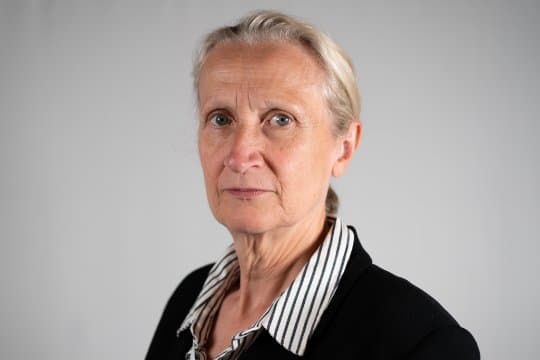
Could I please lift the défaut on Deputy Howell?
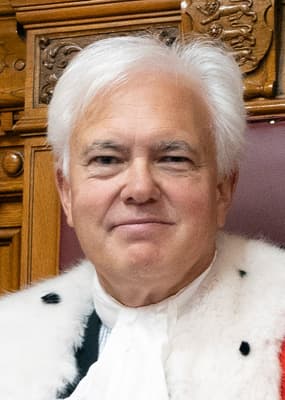
Are Members content to raise the défaut? The défaut is raised.
APPOINTMENT OF MINISTERS, COMMITTEES AND PANELS
No contributions recorded for this item.
No contributions recorded for this item.
Please could I nominate Deputy Labey of Grouville and St. Martin?
Is that seconded? [Seconded] [9:45]

May I nominate Deputy Ferey, Sir?
Is that seconded? [Seconded]

I nominate Deputy Kovacs please, Sir.
Is that seconded? [Seconded]

Yes, to nominate Deputy Scott, Sir.
Is that nomination seconded? [Seconded] I have 4 so far. We do not need 5, we can have an election if you like, but are there anymore nominations?

May I nominate Deputy Gardiner?
Is that nomination seconded? [Seconded] We now have 5 nominations. Are there any more nominations? Thank you very much. Accordingly, I can announce that Deputy Labey, Deputy Ferey, Deputy Kovacs, Deputy Scott and Deputy Gardiner have been elected members of that panel.
QUESTIONS
No contributions recorded for this item.
No contributions recorded for this item.
Question Will the Chair provide details of the current headcount of all Government employees, broken down by salary band, from 1 January 2025 to date?
Answer The below table shows headcount and FTE by each of our pay grades, sorted by Pay Group as of 30 November 2025. The table includes all Government employees on a Permanent, Fixed-Term or Variable contract. It excludes any staff on solely a zero-hour contract, non-states workers, agency and contingency workers and interns. Full pay grade values are available here: Public sector pay scales Pay Group Grade Headcount FTE Civil Servants CS02 <5 <5 Civil Servants CS03 5 5 Civil Servants CS04 23 19.09 Civil Servants CS05 193 169.73 Civil Servants CS06 495 434.89 Civil Servants CS07 467 438.58 Civil Servants CS08 394 372.23 Civil Servants CS09 559 529.47 Civil Servants CS10 572 543.79 Civil Servants CS11 410 383.45 Civil Servants CS12 371 362.79 Civil Servants CS13 218 213.6 Civil Servants CS14 104 101.91 Civil Servants CS15 80 78.98 Civil Servants REMUNERATE <5 <5 Civil Servants SPOTSALARY <5 <5 Civil Servants TIER 0 <5 <5 Civil Servants TIER 1 9 9 Civil Servants TIER 2 39 39 Civil Servants TIER 3 25 25 Civil Servants TIER RJ 3 5 5 Civil Servants TIER RJ 4 <5 <5 Civil Servants – Apprentices ACS06 <5 <5 Civil Servants – Apprentices ACS07 <5 <5 Civil Servants – Apprentices ACS08 5 5 Civil Servants – Apprentices ACS09 6 5.61 Civil Servants – Apprentices ACS10 <5 <5 Civil Servants – Judiciary JUD1 <5 <5 Civil Servants – Judiciary JUD2 <5 <5 Civil Servants – Judiciary JUD3 <5 <5 Civil Servants – Judiciary JUD4 <5 <5 Civil Servants – Judiciary JUD5 <5 <5 Civil Servants – Legal Advisers ALA1 <5 <5 Civil Servants – Legal Advisers ALA2 <5 <5 Civil Servants – Legal Advisers ALA3 <5 <5 Civil Servants – Legal Advisers ALA4 <5 <5 Civil Servants – Legal Advisers ALA5 11 10.28 Civil Servants – Legal Advisers LADV1 9 8.41 Civil Servants – Legal Advisers LADV2 25 23.27 Civil Servants – Legal Advisers LADV3 11 10.48 Civil Servants – Legal Advisers PLADV1 <5 <5 Civil Servants – Legal Advisers SLADV1 7 7 Civil Servants – Legislative Drafters ALD 7 6.8 Civil Servants – Legislative Drafters SALD <5 <5 Civil Servants – Legislative Drafters SLD <5 <5 Civil Servants – Paralegals / Conveyancers PL <5 <5 Crown States Legal Appointment CROWN <5 <5 Crown States Legal Appointment SPOTSALARY <5 <5 Crown States Legal Appointment TIER 3 <5 <5 Doctors and Consultants CFELNEW 33 32.95 Doctors and Consultants CONN 107 102.35 Doctors and Consultants FY1 20 20 Doctors and Consultants FY2 20 19.91 Doctors and Consultants SAS 20 19.05 Doctors and Consultants SGR 63 60.5 Doctors and Consultants ST1 5 5 Doctors and Consultants ST2 6 5.6 Fire & Rescue FRCC 10 10 Fire & Rescue FRFF 44 44 Fire & Rescue FRSC 7 7 Fire & Rescue FRWC 13 13 Fire & Rescue ROCC 5 5 Fire & Rescue ROFF 31 31 Fire & Rescue ROWC <5 <5 Fire & Rescue TIER 3 <5 <5 Heads & Deputies LEAD 86 85.4 Manual Workers ATM01 5 5 Manual Workers EW02 <5 <5 Manual Workers EW05 12 12 Manual Workers EW07 5 5 Manual Workers EW08 6 6 Manual Workers EW09 <5 <5 Manual Workers EW10 <5 <5 Manual Workers EW11 <5 <5 Manual Workers MW01 35 24.22 Manual Workers MW02 172 151.1 Manual Workers MW03 157 115.75 Manual Workers MW04 132 128.67 Manual Workers MW05 136 131.66 Manual Workers MW06 55 54.3 Manual Workers MW07 33 33 Manual Workers MW08 5 5 Manual Workers TECH08 44 44 Manual Workers TECH09 5 5 Manual Workers TECH10 18 18 Manual Workers TRM01 <5 <5 Nurses & Midwives NM01 256 246.56 Nurses & Midwives NM02 114 109.7 Nurses & Midwives NM03 22 21.2 Nurses & Midwives NM04 371 354.04 Nurses & Midwives NM05 193 179.25 Nurses & Midwives NM06 120 113.03 Nurses & Midwives NM07 56 55.67 Nurses & Midwives NM08 18 17.91 Nurses & Midwives NMC8 <5 <5 Nurses & Midwives NMD8 <5 <5 Nurses & Midwives NMP4 24 23.4 Nurses & Midwives NMP5 <5 <5 Police CINS <5 <5 Police INSR 13 13 Police PLCO 139 136.72 Police SGNT 35 34.95 Police SUPT <5 <5 Police TIER 2 <5 <5 Prison PRIS 51 50.77 Prison PROP 34 34 Prison PSM1 <5 <5 Prison PSO 13 13 Prison PSS2 11 11 Prison PSS3 <5 <5 Prison TIER 3 <5 <5 Prison UNIM <5 <5 Teachers & Lecturers AET <5 <5 Teachers & Lecturers TCH1 1,039 972.24 Teaching Assistants & Education Support ESSF03 19 <5 Staff Teaching Assistants & Education Support ESSF04 27 12.28 Staff Teaching Assistants & Education Support ESSF05 232 147.91 Staff Teaching Assistants & Education Support ESSF06 291 199.4 Staff Teaching Assistants & Education Support ESSF07 154 112.09 Staff Teaching Assistants & Education Support ESSF08 59 48.1 Staff Teaching Assistants & Education Support ESSF09 10 8.23 Staff Variable grade/Job VAR1 6 <5 Work Force Modernisation CS12 <5 <5 Work Force Modernisation WFMC 67 63.42 Work Force Modernisation WFMD 53 50.75 Work Force Modernisation WFME 37 36.67 Work Force Modernisation WFMF 14 14 Work Force Modernisation WFMG <5 <5 Work Force Modernisation WFMH <5 <5 Work Force Modernisation WFMI <5 <5
Question Will the Chair confirm the total number of consultants and agency staff (including medical staff) currently employed across each Government department?
Answer The Government periodically publishes details of all consultancy engagements and its use of contingent labour, which includes contractors, interims and agency staff.
The report for 2024 will be published later this month and the report for the first half of 2025 will be published in the first quarter of 2026.
Question Will the Minister state the total amount of expenditure approved by the States Assembly in the last five budgets and identify any Government underspends or overspends in each of the years?
Answer This information is available in the Annual Report and Accounts each year, within the Political Accountability section.
Departments (excluding the Central Reserve) £'000 2024 2023 2022 2021 2020 Net Revenue Expenditure - Near Cash 1,208,470 1,023,618 922,898 925,058 929,738 Budget Actual for the year 1,193,316 1,016,158 873,361 887,914 918,569 Underspend /(Overspend) 15,154 7,460 49,537 37,144 11,169 Capital and Other Projects (including New Healthcare Facilities) £'000 2024 2023 2022 2021 2020 Available Budget 179,517 205,737 251,368 215,002 188,434 Total Expenditure 117,015 136,351 131,845 134,496 104,131 Underspend /(Overspend) 62,502 69,386 119,523 80,506 84,303 The budgets shown are the Final Approved Budgets. A reconciliation between the Government Plan (approved by the States Assembly) and the Final Approved Budget is also provided in the Political Accountability section of the Annual Accounts and Report.
Question In relation to the record number of high value resident applications that have been approved so far this year, will the Minister provide details of the economic and social benefits that the 2(1)(E) regime has brought to the Island for each of the last 5 years?
Answer The 2(1)(e) regime continues to make a significant contribution to Jersey’s economy and wider community. High Value Residents must demonstrate sufficient annual taxable income to ensure substantial and ongoing personal tax contributions. As a result, over the past five years these individuals have collectively delivered many tens of millions of pounds in tax revenues that directly support essential public services. This economic impact has been particularly valuable during a period of global uncertainty, contributing to strong and resilient public finances.
Beyond their direct tax contribution, High Value Residents are required to demonstrate clear economic and social benefit to Jersey before approval is granted. In recent years this has translated into: Investment in job-creating sectors, including digital, hospitality, and commercial property• developments.
Support for entrepreneurship, including mentoring, and access to networks for start ups• working with Jersey Business and Digital Jersey.
Charitable contributions and philanthropy that strengthen Jersey’s voluntary and• community sectors, working with organisations such as the Jersey Community Foundation and the Association of Jersey Charities.
Enhancements to arts, culture and sport, helping local organisations expand• opportunities for islanders of all ages.
Broader community engagement, including skills-sharing, social value projects and• patronage of charities and major events.
Feedback from industry and the charitable sector confirms that High Value Residents are making measurable and positive contributions across these areas. While their activities are often personal and not all publicly visible, the overall value delivered to Jersey, both economically and socially, is widely recognised as significantly outweighing the relatively small number of approvals granted each year.
Taken together, the 2(1)(e) regime has helped diversify Jersey’s economy, stimulate investment, strengthen community initiatives, and increase funding for public services, providing substantial benefit to the island over the past five years.
Question Further to Oral Question 255/2025 regarding Equality Impact Evaluations, will the Chief Minister – (a) advise when, or if, he intends to address improvements to the Equality Impact Evaluation process, including ensuring it becomes more central to all Council of Ministers’ decision – making, and further information on the evaluation tool and process will be published; (b) outline what discussions, if any, have taken places with Ministerial colleagues and Officers, and what decisions, if any, have been made regarding the publication of the results of Equality Impact Evaluations when they are carried out on major policy or legislative proposals, for example the Budget; and (c) detail what training and accountability mechanisms are in place to ensure these assessments are being used effectively across departments?
Answer As explained in the Chief Minister’s response to Oral Question 255, the Government does not use separate Equality Impact Assessments. Instead, all policy officials across Government use the same ‘Policy Submission Template’, which includes a specific section on considering equality issues. The template encourages officials to refer to the Equality Impact Evaluation guidance document for more information or advice on how to complete that section. In relation to the specific questions: a) There are no current plans to further refine the Equality Impact Evaluation, Policy Submission or training. However, the Evaluation document is now published on the Government’s website and the Chief Officer of the Cabinet Office would welcome any specific drafting comments or suggestions for its improvement.
b) It is a positive development that equality considerations are included within the original policy advice to Ministers and balanced alongside economic, environmental and other community related issues. But it also means that it is not possible to separate out the equality considerations for publication. A Policy Submission document itself is generally recognised as exempt from publication (including in our Freedom of Information Law) on the grounds that Governments have a right to a protected space to develop and refine policies before they are made public.
c) The training on the use of the Policy Submission template and Equality Impact Evaluation is included in the Jersey Policy Profession training materials. These training materials are a mix of video, written and practical examples that are available to staff across the public service. In addition, evaluation of equality issues is a core component of the Jersey Policy Profession training, delivered by King’s College London. Nevertheless, there can always be improvements, so the Chief Officer of the Cabinet Office has been asked to use the policy profession network to remind all policy officers in the Government of the importance of conducting thorough and effective EIEs.
Question Following questions during the States sitting of 11th November 2025 regarding the impact of major roadworks on Island businesses, will the Minister advise what discussions he has had with the Minister for Infrastructure and with his own officials on progressing potential support for local businesses affected by major roadworks and infrastructure projects, including expected timelines?
Answer I have not yet had the opportunity to formally discuss potential support for local businesses with the Minister for Infrastructure but have discussed the matter informally. We will be meeting following this week’s Budget debate to consider potential options.
I understand that there is no legal provision for disruption payments for roadworks carried out, the I&E team do look to minimise disruption wherever possible. I am keen to identify how my Department can support these ongoing efforts to ensure that routine roadworks are carried out at with as little disruption as possible.
Question Further to Oral Question 262/2025, will the Minister provide the number of staff, or the total annual staff allocation in Full Time Equivalents, assigned to the Micro Arts Development Unit, or assigned to perform functions similar to those that were envisaged for that Unit?
Answer Current staffing levels are as follows: • one full-time Sector Lead (1.0 FTE), • one full-time Officer (1.0 FTE), • two part-time Officers—one working 2.5 days per week (0.5 FTE) and the other 3 days per week (0.6 FTE) The discharging of micro grants and managing of strategic partnerships accounts for around 20% of the workload for the above officers and is carried out in addition to their other functions as policy officers.
Question Will the Minister advise the total sum of money spent by Ports of Jersey and/or by the Government on route support, either for new air routes or to sustain existing routes, for each of the years 2015 to date?
Answer Ports of Jersey has not subsidised from its own funds any airline to fly to Jersey since its incorporation in 2015 but has acted as a conduit for Government grants noted below.
Ports of Jersey does have contractual agreements with its airline partners to deliver the resilient and sustainable connectivity on which the Island depends. In line with industry practice, Ports of Jersey may offer discounts on its published fees and charges to incentivise growth and encourage new routes to be developed.
Regarding the recent collapse of Blue Islands, at the request of the Government of Jersey, Ports of Jersey extended credit above the levels normally offered to airlines at Government’s request in order to ensure that the essential lifeline connectivity for the Island was maintained. At the time of its collapse, Blue Islands had an outstanding debtor balance of £3.2m.
The Government has provided the following route support grants since 2015: • Route Marketing Grant to support resumption of air connectivity following the pandemic: o 2021: £550,000 Route Marketing Grant o 2022: £400,000 Route Marketing Grant o 2023: £300,000 Route Marketing Grant A further breakdown of the above funds is not possible due to the commercial confidentiality of such agreements.
• Better Business Support Package: o 2025: £1,000,000 (contracts with airlines in place and payments in arrears) and £40,000 in the summer of 2025 from the Economy Department budget in support of an eight-week trial air route by Finistair followed by a two week extension.
Question Further to his comments during the debate of P.87/2025 in relation to the timetable for introducing marine protected areas (MPA), will the Minister detail the timeline for when he plans the MPAs to come into effect; and if a phased implementation is planned (beyond that which has already been identified), when will each of the MPA zones come into effect?
Answer My officers in Marine Resources published the detailed timeline for MPA implementation in August this year. The link can be found here: Jersey Marine Spatial Plan Timeline.pdf Currently the timeline is on track with Marine Resources ready to publish the Economic Impact Assessment and Marine Protected Area further research report in the remainder of 2025. These two documents are the final documents to be discussed with stakeholders on until law drafting is lodged in early 2026. This will be amending the Sea Fisheries (Trawling, Netting and Dredging) (Jersey) Regulations 2001.
The 1st September 2026 is still the designation date for the Marine Protected Areas.
Question Further to the resignation of the Pan-Island Commissioner for Standards from her role in Guernsey following a Guernsey States debate that did not uphold her recommendation, will the Chair confirm – a. the status of the Commissioner's role in Jersey; b. what plans, if any, he has for her role in Jersey to be reviewed; and c. whether this resignation will have any impact on costs for Jersey?
Answer Dr. McCullogh made the decision to resign as Guernsey's Commissioner for Standards, following the States decision not to apply sanctions in relation to Deputy Gavin St. Pier, following the publication of Reports by the Commissioner and then the Appeals Commissioner Martin Jelley (Commissioners for Standards - UK Parliament) recommending that he should be suspended for breaching Guernsey's Code of Conduct.
In her resignation statement Dr. McCullogh said that the decision not to sanction the Deputy , despite him having been found by two Commissioners to have breached the Code was a "signal to the public that the Assembly is unwilling to enforce consequences and ensure accountability, that Deputies are prioritising political considerations over standards and that the independent process has limited real- world effect. A Commissioner cannot uphold standards in a system where standards are not seen to be upheld. Equally, if after exhausting an independent appeals process and whilst awaiting the public debate on the sanction, a Deputy can campaign publicly and undermine the process and its findings in the media, and face no consequences for undermining the system, it sends a message that others can do the same. This greatly damages the standards system. In these circumstances, I cannot in good conscience continue to serve as Commissioner for Standards in Guernsey." a. Dr. McCullogh remains the Commissioner for Jersey and is also employed in that role in Alderney and Sark. She is contracted to work for each Island separately, is employed by Jersey under our Commissioner for Standards (Jersey) Law 2017 and the 'Pan-Island' title was solely for recruitment and website purposes, where we shared resources with Guernsey; b. there are no immediate plans for the Commissioner's role to be reviewed; and c. we shared the cost of the WorkPro system which the Commissioner uses with Guernsey, so there will be a small increase for us of approximately £17 a month to cover that cost completely. Discussions will take place with Alderney and Sark regarding any website costs which may arise, but these are expected to be minimal.
Question Will H.M. Attorney General confirm what powers, if any, Ports of Jersey has, either in law, under the conditions of use of Jersey Airport or otherwise, to require the owners of the planes leased to Blue Islands in Jersey to pay the outstanding airport fees owed by Blue Islands to Ports of Jersey; and further will he confirm whether paragraph 7 of the Jersey Airport Conditions of Use allows Jersey Airport to pursue the owners of the aircraft to enable full recovery of all monies owed in landing fees by Blue Islands to Ports of Jersey?
Answer This question is ultimately a private commercial law matter for the Ports of Jersey Limited (as an arms' length organisation) and its external legal advisers.
Proper analysis of the questions posed would be heavily fact-dependent, considering various factors which include: • how Jersey law would interact with the law of the applicable registry and/or of any mortgagee to uphold any commercial lien for unpaid fees; • the extent to which the condition that the Operator warrants in the conditions of use that the Operator is the agent for the aircraft owner and can bind the owner is a fair condition that would be upheld, and whether, even if it is fair, it survives the bankruptcy of the Operator to bind the owner or any mortgagee.
Question Will the Minister confirm – a. how many Blue Islands aircraft are currently grounded in Jersey; b. if there are any grounded aircraft, who is the registered owner; c. whether Ports of Jersey are pursuing those registered owners for all monies owed in landing fees by Blue Islands to Ports of Jersey; and d. if pursuing any such landing fees, what basis does Ports of Jersey have to pursue these debts, and if these debts are not being pursued why not?
Answer a. As of 5th December 2025, one Blue Islands aircraft remains at Jersey Airport; b. The aircraft is owned by a private individual; c. & (d) Ports of Jersey have been in confidential commercial negotiations to agree a settlement with the owner on the sums outstanding in respect of the aircraft. Negotiations are ongoing and, as such, the situation is commercially sensitive and it would therefore be inappropriate to provide further details.
Question Further to the Minister’s response to Written Question 142/2025, in which it was stated that a full review of the apprenticeship system would be completed in 2025 and that he would inform on future funding decisions, will the Minister (a) advise whether the apprenticeship review has been completed and, if so, provide the final report; (b) outline the key findings and recommendations of the review, including any proposed changes to grant levels, eligibility criteria, inflation protection and any move towards a demand-led model; (c) detail what actions are planned for implementation in 2026 and 2027, including any legislative or administrative changes; and (d) indicate where these outcomes are reflected in the Proposed Budget (Government Plan) 2026–2029, specifying the relevant sections, tables or expenditure lines that provide for additional apprenticeship funding or support?” Answer (a) Earlier this year consultation activity took place that explored current challenges and gathered stakeholder views on workable solutions. A report outlining the next steps will be published in early 2026 and policy development will follow during the year.
(b) Key Findings and Recommendations Variation in Training Fees Significant differences were identified in apprenticeship training fees across subjects. Any cap on fees must balance affordability for employers and apprentices with the need to avoid inflated costs.
Recommendation Determine a fair approach to setting future grant caps, guided by affordability and market benchmarks. This will include assessing the workability of a tiered approach as apprentices progress in technical skills.
Vocational Qualifications as Entry Routes Many apprentices complete vocational qualifications at the same level as their intended apprenticeship. This pathway helps apprentices gain experience and insight, supporting informed decisions and giving employers confidence in their commitment.
Recommendation Identify appropriate boundaries on prior attainment to prevent duplication of funding, while safeguarding pathways that support legitimate progression into apprenticeships.
Funding Differences Across Levels Funding is currently split between two schemes: the apprenticeship subsidy for Level 3 and below, and student finance for Level 4 and above. This has resulted in a significant gap in the amount of support available at different qualification levels.
Higher-level funding is based on an older model designed for academic study, not for employed apprentices.
Recommendation Develop a coherent funding approach tailored to apprenticeships, ensuring fairness and sustainability. This will include reviewing the role of means testing for higher levels and considering whether maintenance grants remain appropriate where apprentices have greater opportunities to earn.
(c) In 2026, the focus will be on shaping a new policy framework to address the issues identified in the review. Further input will be sought from stakeholders to evaluate any proposals to ensure they are realistic and fit for purpose. Key actions will include: Policy Development Drafting policy proposals that reflect the findings and potential solutions suggested by stakeholders.
Consultation and Refinement Engaging with stakeholders throughout the process to sense-check proposals and confirm they work in practice before final decisions are made.
Governance and Financial Framework Once policy principles are agreed, consideration will be given to the most appropriate governance arrangements. This may involve legislative changes to align apprenticeship support with other forms of financial assistance such as student finance for higher education. Work will also define how the financial framework should operate, ensuring available funding meets demand and includes provision for inflationary driven adjustments.
(d) As policy development is still underway, no extra funding has been requested for next year’s budget. Further work in 2026 will focus on incorporating stakeholder feedback into the new policy. This will allow time for financial modelling of the final scheme and, if needed, a request for additional funding in the budget for 2027 -2030.
Further to the response to Written Question 441/2025, will the Minister advise, for 2024 and for 2025 to date – (a) the total cost of delivering apprenticeship provision at Highlands College, broken down into staff and non-staff expenditure; (b) the average cost per apprentice for each year, based on these totals; (c) how these costs are met, specifying total income received from – (i) employers; (ii) the £1,600 States grant; and (iii) apprentices themselves?” Answer a. Total cost of delivery broken down by staff and non-staff expenditure 2025 %Split 2024 %Split Staffing Cost £1,261,560 82% £1,138,645 81% Non-staffing £276,928 18% £267,089 19% TOTAL £1,538,488 100% £1,405,734 100% b. Average cost per apprentice per year 2025 2024 Number of Apprentices 332 361 Average Cost £4,634 £3,894 c. How the costs are met by third parties and Government of Jersey (GoJ) 2025 %Split 2024 %Split (i) Employers £10,617 1% £43,787 3% (ii) States grant (Trackers - GoJ Skills) £443,200 29% £396,267 28% (iii) Apprentices £32,422 2% £41,871 3% (iv) Highlands Budget (GoJ) £1,052,249 68% £923,809 66% TOTAL £1,538,488 100% £1,405,734 100% Note 1. The full States Grant is currently £1,852 per student per annum not £1,600.
Note 2. The proportion of delivery costs met by Government was 97% in 2025 and 94% in 2024.
Question Will the Minister provide details of the standard adult consultation fee for surgery consultations, home consultations, and the cost of a repeat prescription (90 days charge) at each GP surgery, per month for each of the last 3 years, as per the current data published on Gov.je?
Answer There have been 44 changes to the data on gov.je over the last three years, and these are attached to the response to this question.
Question Further to ‘Supplementary Planning Guidance: Residential Space Standards: Review’ (R.170/2025) and the November 2025 revisions to the Standards, will the Minister advise – (a) how an increase in price of “around £50,000”, should 1-bedroom 1-person units be removed, was assessed and calculated; (b) which sites, if any, he visited as part of the review; (c) the range of policy options considered in his deliberations; and (d) in respect of the reduction of the minimum bedroom size of 1-bedroom 1-person units (i) the evidence presented to show that this was the appropriate size for a principal bedroom; 2(ii) the number of units with bedrooms of 8 m or less, if any, that he visited; 2(iii) the design assessments, if any, undertaken of bedroom layouts at 8 m ; and (iv) whether he, or any of his Officers, undertook any discussions with third parties regarding the reduction in size prior to publication of the review?” Answer a) The approximate increase in cost arising as a consequence of the removal of the one- bed/one-person unit specification from planning guidance was arrived at through advice obtained from the development industry.
Specific advice was provided which stated that ‘excluding costs such as land value, demolitions, professional fees, finance and POA requirements, the basic cost of constructing an apartment is around £4,600 per sqm. A 41 sqm 1 person apartment would, therefore, cost around £188,600 to build, whereas a 52sqm 2-person apartment would cost around £239,200 - £50,600 more. Whether for rent or purchase, the difference between the two must be funded by somebody, usually the tenant or purchaser’.
b) The Minister for the Environment visited the following sites as part of his review of this matter: i. 1875, Wesley Street (1b/2p) ii. Apt 05, La Fregoniere, Wellington Road (1b/2p) iii. Apt 108, Westview (1b/2p) iv. Apt 315, Westview (1b/1p) v. 3 Maison Les Arches (studio/1p) vi. 9 Maison Les Arches (1b/1p) vii. 14 Maison Les Arches (1b/2p) viii. 67 Le Clos Couriard (1b/1p) ix. 60 Le Clos Couriard (1b/1p) x. 103 Clos du Samares (studio/1p) xi. 104 Clos du Samares (1b/1p) c) As part of his review, the Minister considered a range of options including: i. removing the one-bed/one-person minimum standard ii. increasing the one-bed/one-person minimum standard gross internal area iii. changing various parameters of the one-bed/one-person specification including: a. reducing the minimum bedroom size b. increasing the ceiling height; and iv. introducing a threshold for the proportion of one-bed/one-person homes d) (i) The minimum specification of eight square metres floorspace for a single bedroom, established by the revision of residential space standards in 2023, represents an increase in size compared to this standard in previous guidance.
Earlier guidance (A Minimum Specification for New Housing Developments (January 2009)), required that the floor area of single bedrooms should be no less than 6.5 sqm; and that the minimum size of a single bedroom in a two-bedroom three-person dwelling should be no smaller than 7.4 sqm.
This guidance noted that ‘It will be preferable in family dwellings that the single bedroom is larger to allow for study and inclusion of a desk, chair and bookcase.’ The minimum floorspace standard for a single bedroom in Jersey exceeds the UK’s Technical housing standards – nationally described space standard which requires that ‘in order to provide one bedspace, a single bedroom has a floor area of at least 7.5 sqm’.
Jersey’s standard of eight sqm reflects the standard that was identified in the London Housing Design Guide (interim edition). The minimum areas for the space provided in rooms set out in this interim guidance had been established by considering the activity and furniture requirements of the Homes and Communities Agency’s legacy HQI standards...and the Lifetime Homes requirement for basic circulation space for wheelchair users within bedrooms’.
(ii) The Minister did not inspect any units containing bedrooms of eight square metres or smaller as none of the flats visited had bedrooms of this size. It is evident that a minimum standard requires rooms to be no less than this threshold: the Minister’s guidance explicitly encourages the exceedance of minimum standards. Establishing the minimum bedroom size for a single-person household at 8.0 sqm might, however, help to discourage the creation of rooms that could accommodate more than one occupant, thereby reducing the risk of overcrowding, which was part of the concern expressed in the proposition which requested that the guidance be reviewed.
Lowering the minimum bedroom size for single-person households, compared with the previously adopted standard, offers developers and designers greater flexibility in allocating space. This allows them to provide additional room for activities such as home-working - whether by enlarging the living area or the bedroom - based on their assessment of preferences and market demand.
(iii) See (i) above.
(iv) As stated in the response to c) above, the reduction in the minimum specification for a one-bed/one-person household was one of the options considered by the Minister and this was the subject of consideration with some development stakeholders prior to the Minister determining the revision to guidance.
Question Will the Chief Minister advise what the Chief Executive Officer (CEO) has delivered since his appointment, including any cost savings achieved, and will he further advise what issues, if any, the CEO has identified for the Council of Ministers and how these are being overcome?
Answer The Chief Executive Officer (CEO) has responsibility for the administration and management of the public service and the implementation of corporate and strategic policies.
In delivering on these responsibilities and advising the Council of Ministers, the CEO has consistently stressed the importance of prioritising government expenditure and activity; the need to reduce bureaucracy, streamline departmental structures and to address risk; and the importance of sustainable public finances and a competitive economy.
This has assisted the Council of Ministers in the development and delivery of the Common Strategic Policy and the annual Budgets, which curb public sector growth while prioritising capital investment and frontline services. This includes: • Increased savings – rising from £10m in 2023 to £20m in 2026.
• Revenue growth that is reduced and focused on frontline services – growth as a percentage of base budget has reduced from 5.1% in 2023 to 2.7% in 2026, while ensuring that our health, education and children’s services, receive the necessary investment.
• Reduced consultancy expenditure (£29m lower) and a recruitment freeze (avoiding £23m of staffing costs, equivalent to 325 staff).
The CEO has also been commissioned by the Chief Minister to provide analysis on how proposals achieve a smaller and more cost-effective public service. This work is being considered by the Council of Ministers and will be discussed in a States Members Workshop in February 2026.
Question Will the Minister advise what work, if any, has been undertaken in relation to the implementation of a Jersey Ethical Care Charter, as adopted in P.48/2017 (as amended), and if no work has been undertaken, will he explain why not?
Answer No work has been undertaken in relation to the development and implementation of a Jersey Ethical Care Charter since I became Minister for Health and Social Services due to other priorities.
Matters related to recruitment and retention of health and care workforce, including within the domiciliary care sector which is the focus of the proposed Jersey Ethical Care Charter, will be a matter for future discussion and consideration by the Health and Care Jersey Partnership Board. I look forward to receiving their recommendations on workforce matters.
No contributions recorded for this item.

Will the Minister advise what action, if any, is being taken to address the funding situation of the Jersey Employment Trust to ensure that the vocational training service provided to Islanders with disabilities and long-term health conditions can continue?

I can confirm that, following positive discussions with the Jersey Employment Trust, I have offered some stabilisation funding to the Trust in addition to its core funding, so it will receive the same funding in 2026 as it did in 2025, while we continue the work that we had started in 2025 to work collaboratively to develop a business case for a sustainable future funding model for the organisation.
There are no anticipated changes to the provision of the vocational training service.
No contributions recorded for this item.
The recent media coverage reflects a genuine lack of confidence in the Minister’s handling of this situation. Does the Minister regret her decision and will she apologise to those affected for causing genuine distress?
I think it is important to note that I would consider the petition that was circulated to be factually incorrect. The petition was asking me to not undertake an action that I had not taken. At each point in the discussions with the J.E.T. (Jersey Employment Trust) I have sought to be truthful and honest with them about public finances and the ongoing financial situation that we face. At every opportunity, I have given the Trust more money where I could and been open about the collaborative work that we would need to do in order to put together a business case for any additional, secure, ongoing funding in the future. I have also been open with them that I think it is better that we have sustainable funding models for organisations such as the Trust that would lead potentially, in my view, to multi-year funding agreements so that we do not end up in this situation on a year-by-year basis. It was not my decision to go to the media. We were still in ongoing discussions, and my position was that we had come to an arrangement with the Trust just before Christmas. I had offered them some additional money at that time so that we could avoid them getting into a position where they were putting their staff at risk of redundancy. I think it is regrettable that all staff were put at risk of redundancy.
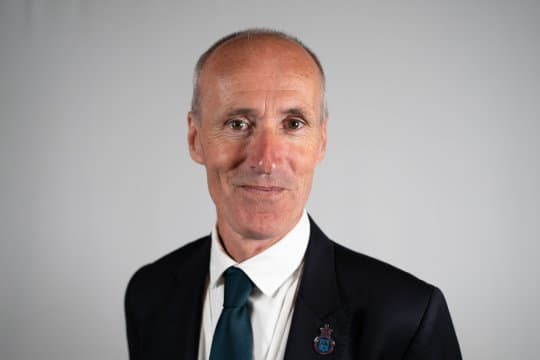
The Minister initially, when this became a newspaper story, accused the Jersey Employment Trust of overspending. She then said she had a duty to look after taxpayers’ funding, presumably because the Jersey Employment Trust were not in some way. Then she blamed them for failing to provide data. It sounds like she wants now credit for finding the top-up funding after all, but it is a bit like planting a bomb and then expecting credit for defusing it. Can she explain why she spent 3 days defending the indefensible?
I think when it comes to expenditure of public money, it is important that we use consistent language across the piece. I was very clear and open with the Jersey Employment Trust about what the budgeted funds were, both in last year’s budget and this year’s budget. The Trust came to me towards the end of 2024 and said that it would not be able to work within that budget. So we did agree a planned overspend on that budget. That is exactly the same language that we use when we refer to overspends in Health, for example, which are also providing essential services. In exactly the same way as what we have done with the Health budget this year, I used an underspend that I had within my budget to ensure that J.E.T. could continue its services. I have done exactly the same thing this year. I think it is important that when we are talking about services that are wholly funded by Government, we maintain consistent language around that so that we know exactly what we are talking about.
The fact remains that the Minister spent 3 days trying to defend the position she has arrived at, she initially staked out, and then finally has come to a different view. As my first question stands, why did it take so long when the answer appeared so obvious to so many people?
Had the Deputy undertook to have any form of conversation with me, he would know that I have been entirely consistent with my views and my conversations with the Trust for the past 2 years. It is my view that we need to work collaboratively with the Trust. It is my ambition that we work with them to ensure that services are co-ordinated across government departments and with the Trust on a person-centred basis. That is how we should be delivering disability and inclusion services, and I am committed to that. I maintain my commitment to that, collaboratively working with the Trust.
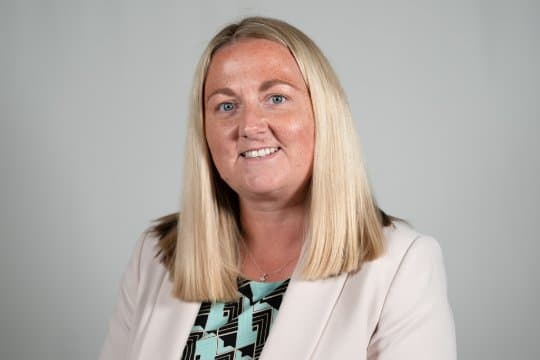
It is obviously important that funding has been found for the immediate term but there is a long-term issue here that is a very important one. Will the Minister summarise the differences between the proposed new agreement her department was seeking to sign with J.E.T. and the existing one, and explain what happens to that contract now? Is she still expecting that contract to be signed?
We have had very productive conversations with the Trust over the past few days. We will shortly be issuing a joint media statement with the Trust. I do not believe in sticking plaster politics, and that is exactly why I undertook to have the conversations with the Trust over the past few years that I have been doing. That is exactly why I have been providing stabilisation funding to the Trust, so that we could come to a position where we have got a clear business case about any gap in funding need so that that could be put forward and we can make sure that we are acting with absolute responsibility over public funds, we are being accountable, we are being fair. The Trust is not the only organisation that comes to Ministers with requests for additional funding, and it is really important that we treat all organisations fairly and that we have clear processes in place for that.
What assessment has been undertaken of the future demand for J.E.T., for example, by looking at current school cohorts? What reassurance can the Minister provide for these future potential clients that support will be available to them?
Working collaboratively with J.E.T. has been first and foremost in what we are doing. Also working collaboratively across Government, so we have been working with our colleagues in the Health Department and our colleagues in C.Y.P.E.S. (Children, Young People, Education and Skills) on this.
This has been a truly collaborative approach. It is obviously going to take longer now than what I had anticipated at the beginning of last year, and I would hope that by mid this year we will be in a much better place and that we will have resolved some of the data-sharing issues. Again, I will reiterate, it is really important that we take a person-centred approach and make sure that individuals have co-ordinated services that they need.

I was going to ask a question about the data sharing, but I noticed that that has been mentioned, so I will withdraw the question.
While some former Ministers seem to wish to use this as a political football, which I think is particularly distasteful, could I ask the Minister whether in future she thinks that there is scope for more cross-governmental funding? She has mentioned cross-governmental working, but the work that J.E.T. does in partnership with Government is highly valuable, not just for her department but for Economic Development, for Health, as she has mentioned, and has educational benefits too. Is it possible that future Governments need to work on a more realistic sum, as she said, so that top-up grants are not needed, but that each department, which ultimately is benefiting and should be supporting this, is actually contributing its fair share too?
Yes, collaborative working across Government is absolutely key to making sure that we are providing the most efficient, effective and the right services to people. I have been working collaboratively with the Minister for Education and Lifelong Learning and the Minister for Health and Social Services. I would more than welcome more Ministers being part of that conversation, including the Minister for Sustainable Economic Development. But I would hope that colleagues know that I do put collaborative working front and centre. I think that is the only way that we are going to achieve the most efficient and effective Government and, at the end of the day, the best services for people.
My understanding is that one of the difficulties faced by the Minister was an inability to obtain important information from the Trust. Will the Minister, in seeking to arrive at some final solution with the Trust, ensure that this information is obtained?
Yes, I think it is important to approach sharing of data sensitively, and I will do that. I think what is important to remember in the cases that we are talking about in relation to the Jersey Employment Trust is that appropriate data sharing may be different for different people. We will endeavour to work with the Trust to ensure that we, as I said, are taking a person-centred approach to ensure that people have the right services that they need, and that we are providing that in a sensitive manner. I do recognise that some of the people that use the services of the Trust may not wish to go through government services but, by the same token, what I also want to ensure is that our own government services are as inclusive as possible and people are not being bounced from service to service. I will indeed be making sure that that is not happening.
I thank the Minister for her answers. This situation highlights the difficulty with a Minister having responsibility for policy around disability and inclusion and equally acting as the gatekeeper of funding. Does the Minister agree that policy should transfer to another Ministry so that organisations delivering services for Government are not held to ransom?
I have not and never would hold any organisation to ransom. [Approbation] That is simply not the way that I operate, it is not the way that I work, and I am quite disappointed to think that the Deputy would consider that I would act in such a way.
Further to the Ministerial Response to the Scrutiny Review: “What protection do children in Jersey have from online harms?”, will the Minister advise whether Ministers have met local telecoms providers and detail the next steps to be taken?

I will answer this on the Minister’s behalf. I thank the Deputy for the question and for agreeing that I take this answer. I chaired a group of relevant Ministers who met with the telecommunication providers on 18th December.
[10:00] The focus of the discussion was understanding what steps each of the providers were taking to support parents to protect their children from online harms. The wider global factors that represent challenges were also considered, and it was acknowledged the different responses from different jurisdictions to these threats. The meeting was viewed as positive and helpful, with a commitment to ensure regular contact is maintained between Government and the telecommunication providers going forward.
No contributions recorded for this item.
I am pleased to hear there is progress on this matter but internet service providers told the panel that they had no legal basis to block or filter dangerous content as there is in other jurisdictions because Jersey has no law similar to the Digital Economy Act 2017. Can the Deputy say whether there is a plan to bring in such a legal requirement?
I thank the Deputy for that follow-up question. The telecom providers told us of the practical steps that parents can take, everything from having certain smartphones that can have restrictions placed on them to home routers that can be filtered to remove harmful content before it gets into the home.
But of course these things have to be done by the individual and training has to be given to show parents or guardians how to do that for a phone that they are giving to a third party. The question of course is one of legislation and, as the Deputy will know, we have agreed to do a gap analysis on the relevant legislation to see where legislation can be improved and enhanced in this area.

I thank the Assistant Minister for his response. As legislation will take a long time, and from the answer I understood that responsibility is put back on the parents, which is important, would the Assistant Minister advise if telecom providers made any formal commitments what they would do to increase the safety?
I thank the Deputy for that question. Yes, the telecom providers told us that at point of sale what they endeavour to do is to engage with anyone who is buying a phone, particularly for a third party, and offer training in this area, and highlight what the issues are, highlight the online harms. Of course, this extends to vulnerable people as well as children. There is lots of good work which is being done by the individual telecom providers, because they recognise that this is an issue. Of course, they recognise that this is part of their industry and something that they have control over at point of sale. Yes, they do undertake good training and they do highlight the issues.
Would the Minister also advise would any clear action plan be published or prepared, where it will be a clear responsibility divided what Government would do and what providers would need to do going forward before legislation coming into place?
I think that this will be part of the ongoing work that the Ministerial group will be looking into to see where the delineation lies, what Government can do and what the providers can do.
The Minister referenced a gap analysis and a Ministerial group that is going to trundle into action.
Could he say when the gap analysis will be complete and what will be delivered in this term of Government?
We are not trundling into action. We are steaming forth very fast into action. This Ministerial group has been set up, it has got a terms of reference, and of course that is something that will be considered as we move forward. We accept that there are only months and weeks left, but we will start to lay a solid pathway for the next Administration to continue the work that we have started.
Could the Minister confirm that he does not expect any substantive actions to take place during this course, the term of this Government?
Not at all. We are doing work around the area of the data protection framework to increase individuals’ rights to have harmful content removed, so there will be some final pieces of legislation put into place hopefully before the end of this term, but there will also be a clear pathway for new legislation that needs to be put into action.
I note there is different legislation coming from various Ministers tackling online harms. I wanted to understand how this is going to be applied in schools, given the children who are below the age of criminal responsibility. Will the telecoms measures be enough, or do we need to change the culture in our schools and not be over-reliant on technology?
Yes, I think this is a multi-pronged approach. Part of it is technological solutions, part of it is an education piece, and part of it is where the responsibilities lie. There is no one single answer to this threat to children and young people and vulnerable people. It is something that we do have to take seriously and use all the resources that we can to counteract the threats.
I think the use of technology in schools, some of it is completely necessary, some of it is because teachers are, I think, overworked. Would the Minister agree as part of this work to look at that in the whole and look at all of the cultural factors around it as well so that we are getting to the root of the problem, and that teachers have sufficient time and planning time and are able to teach and not have to fall back on technology?
I cannot disagree with those sentiments.

I think the Assistant Minister is very much on the right track with this. In the short term there are various apps that can be used, such as Net Nanny and other things, which do screen out harmful content. Maybe it is possible for most schools to send out a letter to parents: “Would you agree to your son or daughter have this app applied” and maybe somebody from the Tech Department could visit schools and apply these apps in the short term until the full policy is developed. Does the Minister not agree?
I explained earlier that there are lots of technological solutions that are being sought at the moment.
Many of them are at our disposal now. All they need to be is downloaded on to those phones. Of course we need to make sure that when something like a Net Nanny is put on the phone it is not circumvented by the young person, so proper controls need to be put in place and monitored as well.
Ministers did not agree with the panel’s recommendation to have a strategy on online harms and I expect there will be a long period of time before the gap analysis is complete. Is the Deputy concerned that Jersey is becoming an outlier compared to other jurisdictions when it comes to protection of children, and what does this say for our reputation?
I do not think we are an outlier. I think this is a problem that lots of jurisdictions have woken up to, but we are doing all the work that we can to make sure that we move in the right direction. I do not think I can say much more than that.

In her capacity as shareholder representative, and in view of the outcome of MacLeod v The Channel Islands Co-operative Society Limited in December 2025, will the Minister advise whether consideration has been, or will be, given to the appropriateness of the current chair of the Jersey Development Company remaining in post?
Resources) I feel some discomfort that this is a matter of public debate in this way. But in the first instance, the board of the States of Jersey Development Company is best placed to assess the appropriateness of its current chair remaining in post. However, since the judgment itself is subject to appeal, we should allow the legal process to take its course before reaching any final decision.
No contributions recorded for this item.
Does the Minister agree with me that it would be appropriate for the chair to step down until the appeal has concluded?

No I do not. As I say, it is a matter for the board. I have had preliminary discussions with the board in asking for their view; they are best placed to make that decision. Again, the legal process has to take its course.
Will the Chief Minister provide an update on the Government’s plans regarding a Jersey Public Services Ombudsperson, or alternative independent complaints process, including a timetable for implementation?
Deputy Scott was commissioned to lead this work and will publish her findings shortly recommending a roadmap for establishing a Jersey Public Service Ombudsperson with a broad remit.
Before this can be implemented, some further work is required to refine the ombudsperson’s remit and potential costs to ensure it provides the appropriate service for Jersey and the maximum impact and value for money. I understand Deputy Scott will be recommending setting up an ombudsman with a broad scope covering a wide range of public services, including coverage of relevant arm’s length bodies.
No contributions recorded for this item.
I think the conclusion of that was that an ombudsperson will be set up and a roadmap for establishing it will be set out. Is the Chief Minister able to answer the second part of the first question, which was a timetable for implementation? Will those proposals be brought to this States Assembly before the election, and when does he expect the ombudsperson to be in place?
The Deputy will remember the Budget debate, where we set aside some money for funding the work that is going on now. The short answer is the legislation will not be delivered in time to be considered by this Assembly, but I anticipate that a lot of the work will be done to pass on to the new Assembly.
It is interesting that this work will not be completed before the election. Is it not the case that this is because his Government is rather split; in fact, hopelessly split on this? The Minister for Treasury and Resources: made a statement in the Budget debate regarding the establishment of an ombudsperson along the lines of “over my dead body”. The Government is split on this. Has the Chief Minister held any meetings to get around the apparently irreconcilable positions within his Government?
I do not recall anybody using the phrase “over my dead body”, but the Government is not hopelessly split. I know the Deputy has improved his rhetorical delivery considerably over this term. No, we do not all support it for various reasons, but we are doing the work as outlined in the answer to my question. We have made progress on this and ultimately, when the legislation is brought to the Assembly, it will be for the Assembly to decide.
When I made the point about “over my dead body”, I think I saw the Minister for Treasury and Resource nodding assent, so it was not too far wide of the mark. Will the Chief Minister accept my congratulations for having played this one in such a way as to make sure that he has kept kicking it into the long grass until such time as it can be timed out and not be something in which has to be dealt with during this term of Government and which would have indeed exposed the splits within his Government?
Sorry, I will not accept the Minister’s congratulations on this occasion.
I am not sure that question complies with Standing Orders because the question should not be framed primarily so as to convey information rather than seek it or convey a particular point of view. It was a rhetorical question, was it not, effectively? You were not asking for information. You were saying: “Well, this is what I think is happening.”
I was asking whether the Chief Minister would accept my congratulations.
Agree with your opinion.
I would be happy to accept his congratulations on many other issues, but not on this one.
This matter has been raised in public in quarterly hearings of the Corporate Services Panel. We had hoped to have received the report by the end of ... well, certainly during November. In one of his replies, the Chief Minister did say that the report would cover cost analysis.
[10:15] Could he therefore please confirm that the report will indeed go into that, and while accepting that cost is an important factor, that the overriding factor in deciding whether the ombudsman should proceed or not is the administration of justice, which appears not to be in play at the moment by the Complaints Panel?
A cost-benefit analysis has assessed the projected costs of the policy options. The preferred ombudsperson model needs to be refined to ensure resources are used wisely and costs are contained, so I do not think there is a lot of challenge about the principle of an ombudsperson, although there is some disagreement in the Assembly. It was by no means a unanimous position this Assembly took.
I want to reiterate, in this time where we are having to look at the costs of all arm’s-length organisation, this Government has been running with the policy of not establishing a new one unless there is a solid case for doing so, and that is the work we are doing now. But, as I said, we are heading in a direction that does establish an ombudsperson, and legislation will be produced once the intermediate work is complete.
I no longer need to ask the question.
I would be interested to know if the Chief Minister is one of those who supports it or not, but that is not my actual question here. What assessment of the risks of not taking timely action, and the key word there is “timely”, despite every single piece of work on this topic certainly that I have seen so far all concluding the same thing: that a Public Services Ombudsperson is the way to go and could actually save money in the long run? What assessment of those risks has been undertaken and how does the Chief Minister justify ignoring those risks and effectively kicking this into the long grass once again?
I am not sure if the Deputy actually has listened to anything I have said over the last few minutes but is intent in using this expression of “kicking into the long grass”. This has not been kicked into the long grass. We have taken it forward into a position that will seek to produce legislation. I do support the principle of an ombudsperson but not at any cost. We have not done any risk assessments because we did not need to. We have a complaints programme at the moment, a Complaints Panel, that manages things adequately at the moment. Now that can be improved upon and that is the work we are doing now.
Can I ask a point of clarification, Sir?
No, but if your question has not been answered you could make an observation and I could rule it out.
I was just going to ask if the risks were assessed as part of Deputy Scott’s piece of work that looked into this.
Was that part of your original question or not? [Aside] Not quite good enough.
Will the Minister advise what involvement, if any, he has in decisions made by Andium Homes to offer existing housing stock for sale; and what consultation, if any, takes place between Andium Homes and local political representatives, particularly where such sales would result in a reduction in the social housing stock within the representatives’ Parish or constituency?

Answering the second part of the question first, is that I am not sure that there is any particular engagement that happens at the level that the Deputy has suggested, but thanks to the feedback that he has provided, not just by asking this question, but separately in an email, I can confirm to him that Andium has undertaken that they will look at this to see if that can be updated. Going back to the first part of the question, the sales policy is dealt with in Andium’s business plans. They will try to look ahead and deliver a mix of sales for first-time buyers, including from existing sites and new ones. There has been a bit of a pivot recently towards using newer sites rather than older ones, but what I understand tends to happen is when a decision is made to sell homes on a particular site that that does not get delivered instantly because it takes a very long time for the tenancies in those homes to naturally end. So once that starts it takes years and years for that to eventually be delivered. I am not sure there is a review of that as it is going on and not one that includes the Minister certainly.
No contributions recorded for this item.
There is a context to this question. As the Minister will know, St. Brelade, and in particular Les Quennevais, was designated to be Jersey’s second town or de facto second town, and we also have a limited supply of social housing without any new sites being identified for either building or acquisition by Andium or other providers. Therefore any properties that are sold off, albeit for lucky homeowners in the future, may contribute to the dwindling stock in St. Brelade. Does the Minister agree that while it is possible and probably right for Andium to be politically agnostic or neutral, that as Minister for Housing he does not need to be? Could he say whether there is scope for some kind of political steering of what happens in our local communities in terms of the eventual housing stock from his point of view?
Deputy S.Y. Mézec I know that I have philosophical alignment with the Deputy on this. I think that social housing is an extremely important part of our whole Island community and the communities locally that make up that, and it is important that people across the Island, not just St. Helier, have access to decent social housing. Because we have a Government-owned provider that can develop that, that absolutely ought to be part of our ambition to make that a wide offer to as many people as possible across the whole Island and not just in St. Helier. I hope that though the opportunity was not included in the Bridging Island Plan for specifications for more social housing in St. Brelade, just because it was not proposed as part of that plan, there will be future opportunities where that can be considered in future Island Plans. Potentially this could be something that could be looked into the West of Island Framework as well. But I absolutely agree with the Deputy. As Minister for Housing, I promote the provision of social housing across the whole Island.
In his first answer, the Minister spoke about Andium making these decisions. Can he state whether there is a policy document of any kind that Andium have - either private or public - that sets out the decision-making framework they use in order to decide how many properties to sell, where to sell them and what mix to do so?
Deputy S.Y. Mézec Generally speaking, there is their business plan, and that will include their targets. I would have to double check. I think it might have some reference to specific sites in there as well. When it comes to the provision of new homes that they are developing, where there will be a split on those sites of some for social housing and some for purchase, I believe it was in the Island Plan that specified how that tenure would be set, and the Minister for Housing is consulted in that and then that goes through the planning process.
I am curious to know whether the Minister has ongoing discussions about this with Andium, or is it something that is essentially he sees as a business matter, and therefore not subject to his control or influence?
Deputy S.Y. Mézec I would not necessarily take it upon me, the initiative, to go to Andium and dictate exactly how every single one of their sites ought to be managed and what tenure they should be providing on it. I would want to receive advice the other way around from them, because they are the ones who are managing the data every day about what demands there is for their homes, because that does fluctuate.
Collaboratively with them we have occasionally pivoted on little parts of that strategy as and when has been needed to, when we have seen demand spike in some areas or reduce in others. Just for example, at the moment there has not been too much heavy demand for 2-bedroom social rental homes but there is quite a significant amount for first-time buyer 2-bedroom homes, for example.
They would discuss with me if there was a case for maybe pivoting in particular areas to satisfy demand as and when there is it. But I would not necessarily provoke that initiative. I would take advice from Andium on it because they are the ones day-to-day with access to the data and able to advise me on that.
Just in relation to what Deputy Tadier said about Les Quennevais being designated as a second town and also the area in the Bridging Island Plan, which suggests that there will be a West of Island Planning Framework, and that is something that, as a result of propositions that we have brought, the Minister for the Environment has agreed to conduct. Does therefore the Minister for Housing consider it sensible for Andium to wait until that West of Island Planning Framework has been completed before any more decisions are taken about either renewal or disposal of stock in that particular area of the Island?
Deputy S.Y. Mézec I am not aware that such a decision has been made in that context because, as I have mentioned in an earlier answer, when decisions have been made to designate a site for sale that is not something that is enacted immediately because there will be people in those homes living their lives with tenancies that have to be honoured. That only changes at the natural end of a tenancy. It may well be that when homes recently have been sold in St. Brelade, that may actually originate from a decision that comes years ago potentially because it takes a long time for that to be enacted. I am not aware of a specific decision relating to St. Brelade being made since we were provided with that context of the work being done for West of Island Framework.
I am not sure that gets to what I was really asking because tenants of social housing in St. Brelade have been written to by Andium and asked whether they would like to purchase their homes. So my question is: should that policy cease until all the work has been done around the West of Island Planning Framework?
Deputy S.Y. Mézec Frankly, I do not know what is most desirable in what the Deputy is suggesting to me, but I am happy to think about it and have a conversation with her. As I said, it is possible that the decision to do this may have arisen some time ago, but I can take that up with the Deputy to find out what the most appropriate way forward is.
First of all, can I thank the Minister for his helpful response and engagement and ask whether he understands the basic principle that if we are going to sell off housing stock in any of our constituencies or districts or areas, that it is important that we make sure in advance that there are plans to replenish that stock, especially when we still have an overall shortage and demand for social housing?
Deputy S.Y. Mézec Absolutely. We can learn from the failures of other jurisdictions where that has not been part of their approach. I often have visions of the Thatcherite right-to-buy policy in the U.K. (United Kingdom), which has been a complete disaster because it has not featured the kind of thinking that Deputy Tadier has referred to. I would say that there is a difference with Andium’s Homebuy product because that does have greater safeguards in it. They are in the process of delivering hundreds of new homes both for social rent and for first-time buyers. That is in the context of the Island Plan projections but there are places in the Island that are left out in that. So when it comes to future planning designations, then I definitely think what the Deputy has suggested ought to be a significant consideration in all of that.

Committee regarding amending Standing Orders to make it arequirement for Members to include membership of the Freemasons (or other secular fraternities) in their declaration of interest (OQ.6/2026) Will the chair advise what plans, if any, exist to amend Standing Orders to make it a requirement for Members to include membership of the Freemasons (or other secular fraternities) in their declaration of interest; and if no such plans exist, will he explain why not?
The Deputy is aware that the Assembly will debate an amended Code of Conduct at the next meeting on 3rd February. Rule 13 of the revised code will require Members to declare any relevant interest that might reasonably be thought to influence their approach to a matter under consideration, including, and I quote: “membership of certain organisations such as private societies and clubs that have specific terms and agreements, including membership by selection or invitation only.” [10:30] As the guide to the code states, declaring the membership of such organisations means Members can address any perception of fraternity, loyalty or being beholden to an organisation. The Freemasons are not mentioned specifically, but the introduction of rule 13 in the terms I have quoted addresses the Deputy’s question.
No contributions recorded for this item.
Does the chair of P.P.C. recognise the membership of any organisation that is hierarchical, has confidential membership, and requires members to support and protect each other should be recorded as it affects the public’s perception of impartiality and trust in our political system? Does he agree with that sentiment?
I certainly agree that the approach that has been put forward by P.P.C. in regard to the Code of Conduct is the right way forward. We would not like to specifically choose to mention solely the Freemasons, but put it in more wider context. I think that has been appropriately displayed in the format of P.102, which we are bringing to the next meeting. I hope also that Members, if they wish to engage on this matter, can come to the briefing that we are putting on next Monday at 3.30. If there are still any concerns, we can thresh those out at that briefing.
Would the chair be able to confirm whether the declaration that he has referenced in his answers so far that Members will be expected to make in the future would go as far as to include groups which are political in their nature and in the outcomes in which they wish to achieve but fall short of being political parties?
Under rule 13, no, that is not the intention. I understand that obviously Deputy Warr has brought a proposition which will cover some of the questions that the Deputy is asking. But that is not incorporated with the body of this work, no.

Can I just ask the chair of P.P.C. whether - and I thank him for the answer to his question because it was a very clear answer to the question, which is nice to see - part 13, and he may respond and say go to the briefing, which is fair enough, but whether it would cover interest through spouses or any relatives as well because there are grey areas there as to what that influence extends to.
Rule 13 does not specify spouses or other family members, no; it is particularly for that individual.
If the Deputy believes that that should be incorporated within rule 30, then obviously the only approach now would be to bring an amendment to the proposition and then it could be debated by the whole Assembly to be included.
Final supplementary, Deputy Warr.
No, thank you, Sir.
Question 7 was one to be posed by the Connétable of St. Martin, so we will move on to question 8 that Deputy Doublet will put to the Chief Minister.
Will the Chief Minister advise whether the Council of Ministers has changed its policy towards the provision of Government funds to charities and, if so, how this will impact the provision of public services as a consequence?
It is the Government’s policy to support charities as much as we possibly can, recognising the significant value they provide to the community. The taxpayer provides approximately £40 million annually to support Jersey-registered charities. The policies have not changed. Funding is allocated from the Budget Sponsoring Department following an assessment of need for a particular service or services. In addition, work is underway on commissioning a framework to ensure we have a consistent approach to dealing with requests from an organisation that find themselves in unexpected difficulty. Accountable officers are expected to review grants periodically, usually annually, to ensure they still achieve the agreed outcomes, which may mean that the individual agreement for varied or discontinued or renewed and the financial context is examined in case of service need changes. In short, we have not changed our policy. It is our policy to continue to support charities as much as we can.
No contributions recorded for this item.
I thank the Chief Minister for his answer. I have noticed a pattern across not just the charity that has been the subject of questions this morning but other charities not getting funding that they were getting. This does not tally up with the increased needs that I think we are seeing across the Island.
If there is not a plan, is the Chief Minister working on a cohesive plan, perhaps a needs analysis, across all of the charitable services to ensure that they are properly supported where they need funding to help Islanders?
That is part of the practice now; it is ongoing work right across Government through all the departments where we work closely with charities. There is an ongoing assessment of need. We have very good relationships with charities in a number of instances. I have not got a breakdown of the whole list of all the organisations and many of them that receive a share of that money to ensure that money is well distributed. I would just remind Members of course that accounting officers have to work in line with the Public Finances Manual, which sets out the rules, if you like, of how we engage and how we ensure taxpayers’ money is being best used.
One of the issues raised by the case of the Jersey Employment Trust was the question of funding having been frozen, in other words no inflation-linked increases for a considerable period of time and that being a factor in the need for top-up funding. Does the Chief Minister agree that since most Government services are operated in line with inflation that a similar policy should not apply in relation to services that the Government has contracted out to organisations such as charities?
Could I just ask the Deputy just to repeat the last part of the question? I am not sure I ...
Yes, Deputy.
Does the Chief Minister agree that the funding for services that the Government contracts out to other organisations, such as charities, should in general rise in line with inflation, much as it does in terms of Government funding for its own services that are provided through government departments?
While the budgeting process accounts for inflation in certain areas, it is by no means automatic across Government budgets. There were robust discussions about departmental funding around the Council of Ministers’ table and, ultimately, in this Assembly. In relation to all of the grants we give, not just to charities but to other third party, third sector, arm’s length organisations, as the Public Finance Manual describes, those are reviewed on a regular basis to ensure money is being well spent. There are quite a lot of instances where we have significantly increased grants to charities, where they are increasing the services they deliver. I, for one, support that. I think the more the third sector can do and the less the Government can do in certain areas is good. We should be looking to the third sector and the private sector to deliver services where they can do it better than Government. I hope that answers the Deputy’s question.
I think there does just appear to be a contradiction here but I think it would be useful to hear the Chief Minister’s views on, which is that he has said that he thinks that in general it is good that services are contracted out to other organisations and that provides good value for money. Yet he is also saying that these funds have to be carefully managed, and indeed we have just seen with the Jersey Employment Trust an attempt to bring back in-house services that were going to be provided by the Jersey Employment Trust. How does he square this contradiction? Where does the centre of gravity lie?
There is no contradiction. We have not thought to bring back services. What we want to do is ensure services are not duplicated, and that is at the heart of the discussions we have been having with the Jersey Employment Trust. I am pleased to say, following a meeting yesterday afternoon with myself and Deputy Feltham and officials and the board of the Jersey Employment Trust, a joint statement has been issued that I am sure Members will see this morning, which removes all risk of redundancy for staff. But, importantly, it makes sure we have the time and the commitment from both sides that we look to revise contract for services that reflects Islanders’ needs and avoids duplication. There are instances in charities where Islanders are receiving duplication, the same services from different charities and from the Government. That is not necessarily in the best interests of Islanders or the charities themselves. We have agreed that on an agreement on data sharing that enables us to move forward positively together so we can assess that and avoid duplication to ensure that money is being well spent. That might end up in some services being brought back into Government. It could mean that we give more services to a charity but we need to discuss it and understand the data to put that forward. A business plan for J.E.T. services that meets a requirement of the Public Finances Manual and ensures that Government and J.E.T. services are complimentary to each other. I think we are all agreed that we want to ensure that J.E.T. can continue to deliver this for many years to come.
Could the Chief Minister confirm whether it is necessary for charities which receive certain grants from Government to reveal information about their reserves?
I think that is important. I think we have open-book policy with all the charities we support. I am sure the Public Finances Manual ... and Deputy Feltham knows that probably better than I do. I am not sure whether she is a poacher turned gamekeeper or gamekeeper turned poacher; I am not sure how that works. But it is important we have open-book policy with all of our charities and all of the organisations that receive public funds. While organisations keeping reserves is important, it is important that those reserves are not too large or irrelevant.
The reason I ask the question is clearly charities provide such important work in Jersey but not all charities are created equally. I am wondering if, for example, a particular charity were to receive a large bequest and up until that point they had been relying on a certain amount of Government funding, at what point does the grant and relationship and S.L.A. (service level agreement) and delivery all get taken into consideration? To what extent is it Government’s job to get itself tied up in those areas to make sure Government’s money is spent effectively and that the charities also remain efficient?
It is difficult to answer that without the context or the detail of a specific case. But in general I refer to my previous answer, that it will depend entirely on the circumstances and entirely upon the services we are contracted with the charity to deliver. But I think the principle is the same, we have to ensure there is open-book policy and the finances that are provided to the charities are relevant and sufficient for them to do their jobs. We must take into account that they are not over-funded and not carrying too many reserves.
As the Chief Minister mentioned in his answer, the commissioning framework that has been developed by the Government, will the Chief Minister confirm that the new commissioning framework has been developed and is in place and this will take forward commissioning services through the charities or it is still under development? If it is still under development, when will the updated commissioning framework be finalised?
Work is underway on a commissioning framework to ensure we have a consistent approach. I cannot give an exact timeline on that but I will find out and get back to the Deputy.
Absolutely, thank you. I would welcome follow up in the public domain when the commissioning framework will be in place, so that all of the charitable sector will know. Would the Chief Minister advise if long-term funding that has been suggested by the Public Accounts Committee, Comptroller and Auditor General and the charity themselves that long-term funding, for example, 3-years’ funding, would be part of this commissioning framework to ensure the charity can plan their work and deliver the services that they are required to?
[10:45]
What we support in the principle of longer-term funding, and we are looking at that now with the budget, the Dormant Bank Account Fund is a case in point. Deputy Gorst, I think it was last year, extended funding from that on to a 3-year cycle. It is important that when we are dealing with charities we give as much certainty as we possibly can. Of course all that is caveated by an annual budget. We have to agree the budget and use the funds that the States agree. We have to reconcile those positions but, in principle, I would be more comfortable in certain instances if we could provide a longer-term cycle for some of these organisations.
I agree with the Chief Minister that often the third sector can deliver the best service and this is backed up, is it not, by the J.O.L.S. (Jersey Opinions and Lifestyle Survey) data that shows charities have the highest trust from the public? There is a balance to be struck, again, around the governance of public funds. Given all of this information, can the Chief Minister inform the Assembly whether a decision or a policy has been made either centrally by himself or by any of his Ministers to deliver more services in-house through Government departments? If so, who took that decision, when and why?
No, as far as I know there is no policy about that. The policy is to deliver the best value for Islanders at all times and that is what we continue to adhere to.
Will the Minister provide an update on the implementation timetable for Jersey’s Pillar Two tax rules, as well as any anticipated revenue in light of the recent announcement that U.S. (United States) companies will, effectively, be exempt from Pillar Two global tax rules?

The implementation of timetable remains on schedule. Details can be found on the Revenue Jersey Pillar Two webpage. 2026 will be the first year in which groups in scope will comply with this tax.
Regarding anticipated revenue from Pillar Two, we have always taken a prudent approach to our revenue forecast. Jersey has a wide range of groups in our Pillar Two taxpayer base. The majority of these groups will remain within the scope of Pillar Two, following the latest O.E.C.D.
(Organisation for Economic Co-operation and Development) guidance. The O.E.C.D. side-by-side proposals are not expected to impact the Pillar Two base case revenues identified in the budget.
No contributions recorded for this item.
I think the Minister has just confirmed that the base case funds of £50 million a year roughly, that the budget relied upon, are still regarded as secure. But can he say, is there still any upside potential in the Pillar Two revenues, which was going to be used to fund various things as stability, Stabilisation Fund and so on or has that disappeared completely?
The updated guidance from the O.E.C.D., as the Deputy will know, was lengthy and technical. We have our undertaking, as we have been continually doing throughout the development of Pillar Two, to engage with potential taxpayers who have got structures or firms in Jersey, and we will continue to do that. We remind ourselves of course that the liability was for starting years 2025. These changes will only come into effect in 2026. We would still expect to see an upside in 2025. We will have the first payments on account in May 2026, so we will have a better understanding of what that upside is. But we remind ourselves that this side-by-side agreement means that, as we had always predicted, they will be, potentially, very short term. But we are working through that and we will have more information about whether there will be any unintended consequences around business activity as we move through the next weeks and months.
Does the Minister consider Jersey’s current approach to Pillar Two to be sufficiently flexible to adopt a further international divergence or reform? What arrangements are in place to reassess the Island’s position if the framework materially changes and with whom?
We know that the side-by-side agreement means that there is a difference in approach, even though it is accepted as standing side by side for the U.S. and non-U.S. companies. We are focused first and foremost on the competitiveness of the financial services sector and the remaining competitiveness of those Pillar Two groups. As I have said, we are engaging with U.S. groups to understand better the impact that side by side will have on them. We will remain agile and flexible, depending on the outcome of these discussions. We did not approach this as a revenue-raising exercise. We approached it as part of an international agenda; that is how we continue to approach it. But we, equally, approach it from wanting to maintain Jersey as a competitive jurisdiction.
Would the Minister identify one concrete risk to Jersey arising from the Pillar Two development that he is actively managing at the moment and one specific action that he has taken in the last 6 months to mitigate that risk?
I have personally engaged with taxpayers stateside to mitigate risks. My officials have been party to the conversations at the O.E.C.D. to mitigate that risk. We have been in touch with U.S. Treasury to mitigate that risk. We are doing, I think, a very good job in regard to mitigating that risk. But we remind ourselves that we live in a very highly competitive world. We have America which is putting America first. We have some really important U.S. businesses in Jersey and we want those businesses to remain in Jersey. We, from a departmental perspective, are committed to working with those businesses to ensure that they remain in Jersey.
Can the Minister confirm, therefore, from what I think I understand from his answers, that there will be no tax income expected beyond that which came last year from U.S.-based companies arising from Pillar Two? Can he further state whether there are any actions that the Government is planning or plans to take to try and improve Jersey’s position with regard to Pillar Two?
As the Deputy knows, our whole approach was one based upon taking the international standard and shaping it to Jersey’s advantage; that is why we have got the domestic covered tax rather than the Q.D.M.T.T. (Qualified Domestic Minimum Top-up Tax). That is the approach that we continue to take. Just we need to be careful, I did not say there would be no future income beyond 2025. I said that the upside was more doubtful perhaps for some U.S. companies than might have been previously.
But our whole focus is on understanding any actions or decisions those U.S. firms can take in order that we can respond and seek to ensure that they remain here in Jersey because of the value that they bring in regard to jobs, in regard to tax and in regard to the broader growth in the economy. That policy position has not changed. It is the core of everything that we have done that Jersey remains competitive.
Will the Minister provide an update on the tender process for the former bowls club site at Les Creux?

I thank the Deputy for his question. I should start by saying that we have not run a tender process but indeed expressions of interest were sought. Who is out there and what can you do, as opposed to a tender, which is: “Give me your best detailed price proposal”? The Jersey Community Land Trust, who I would describe as being the party in the lead, having been selected by a panel, are currently working with Jersey Property Holdings. At the moment they are seeking pre-planning advice on whether or not changes to the use of permissions would be required to deliver their proposals. Once that advice has been received I expect to receive an update on their final proposals, which I understand are being developed, following further engagement with the local community. I would like to thank the Deputy and his colleagues for their patience, and I hope to be able to meet the district representatives before the next sitting to update them.
No contributions recorded for this item.
I am grateful to the Minister for confirming the preferred - I do not know if I should say - bidder but expressions of interest lead candidate. Can he say what timetable he has put on those discussions and whether he expects that to conclude before the next election?
The Connétable of St. John I am reluctant to put a timetable. I expected the whole process to take 3 months and currently we are 9 months down the road. As I have mentioned, we are waiting for feedback from colleagues in Planning, and I do not have a timescale for that. I would certainly hope that this will be concluded in weeks rather than months.
Just to avoid any confusion, can the Minister confirm that the preferred bidder still remains the same as that which was explained to us on 17th September when we met with the Minister and his department?
The Connétable of St. John I can, and I think I made it quite clear to both the representatives of St. Brelade and officers that I had fully expected that all bidders were consulted by the preferred party to see if there were synergies that we could include within the proposal. I am frustrated because I met somebody who took part in the process only last Wednesday and they told me they had not been contacted. I fed that back to the department.
In all of these I have always thought that it is right for Deputies in the district not to get directly involved with the process. But there is also a counterpoint to that, that the local community did expect to have some form of consultation and input about what would, ultimately, be put at Les Creux. Does the Minister accept that this does not seem to have happened? While there might have been consultation with the bidders of course there will be - that there does not seem to have been that wider consultation with the community about what they wanted to see there. If that is the case, what lessons have been learnt?
The Connétable of St. John I think similar lessons have been learnt with Les Creux than we have learnt with Havre des Pas inasmuch as we should get an external panel to see from start to finish. The delay was compounded originally because of the uncertainty around St. Aubin’s tunnel. St. Aubin’s tunnel has concerned some members of the St. Brelade community and not others because shooting takes place there.
Some people support shooting, others do not. We had a duty, in my opinion, to ensure that those tenants that we had in the tunnels, who through no fault of their own were looked after, so that delayed the process. I have committed to meeting the Deputies for a second time before I make any decision.
It is now a number of years and right back at the beginning of this political term that the bowls club gave notice that they would be leaving. One of the things that they said to me at the time is that they wanted to give that advance notice because this was a really good asset for the Island and they really did not want it to go to waste, and the Government to do what they always do and not get on and find new tenants and use for it. Yet here we are and it has still taken a very long time, and I do not think we are at a solution yet. What is going wrong? This is not a one-off example, it happens frequently.
What is going wrong and what could be done better to ensure this does not happen in future?
The Connétable of St. John I pay tribute to the former club, who did give the Government notice. Les Creux is used widely each and every day, each and every week. There are a whole range of activities that take place at Les Creux. We are talking about a part of Les Creux. As I mentioned in my previous answer, part of the delay was because of the uncertainty around the St. Aubin’s tunnel. We were not able to forge ahead when we thought we could forge ahead originally. The preferred bidder had plans which would not have received planning permission, it involved 2 very large structures.
[11:00] We are talking about a country park in the green zone. But they do have a number of good ideas and suggestions. I do believe they have the will and the expertise to deliver.
Is there a structural problem within Government that means that in cases like this in future they could be handled differently and better?
The Connétable of St. John I think we need to, as I said earlier, stick to timetables. We have some people who are interested, others who are not interested. Whatever we do we are not going to please everyone. We are trying our best to be as fair as possible, to involve as many people as possible. I do think we have learnt lessons, which I hope the department will take forward.
I thank the Minister for his answers. As Deputy Stephenson has alluded, the former bowls club has now been empty for around 2 years, despite many proposals coming forward and huge community interest. Does he accept that the risk here is that from the public’s point of view the only question now is going to be whether Les Creux goes the way of La Folie or Havre des Pas?
The Connétable of St. John I cannot comment on La Folie, only to say that when I became Minister for Infrastructure I tried to take back La Folie. But we are in a long lease with the Ports of Jersey, so they are responsible for La Folie. Havre des Pas is open, people are swimming daily, they are using the changing rooms daily and the toilets daily, so Havre des Pas is open. As I mentioned, Les Creux is widely used and we hope that further use of this facility will start very shortly.
The Connétable of St. Martin is absent for question 11. We then move on to question 12, which Deputy Warr will put to the Minister for Infrastructure.
It seems a very timely question. Will the Minister detail what new information, if any, has been provided to those groups tendering to operate the Havre des Pas Lido and Swimming Pool; and will he explain what actions have been taken to provide assurance that any issues arising from the previous tender process will not be repeated?
The Connétable of St. John (The Minister for Infrastructure) I thank the Deputy for his question. I will remind Deputy Warr and Members that I have not been and continue not to be involved in the detailed operational aspects of the expressions of interest process. I do understand that the Deputy himself has attended one of the private meetings that was hosted by Jersey Business with the Love our Lido group. But I do not know in what capacity attended or the details of that meeting. I am, therefore, not aware of the detail of any information requested.
But Jersey Business have confirmed to me this morning that they have provided details of both costs and planning to the 2 parties. I have said previously that lessons have been learnt and, in my view, future expressions of interest would be better served if they were seen through from start to finish by an independent panel.
No contributions recorded for this item.
What steps have Government taken to ensure this asset will be maintained and improved for future generations?
The Connétable of St. John As I mentioned in a previous answer, the swimming pool is open, people are using it each and every day. I have asked Jersey Business to oversee the process, and I think that is best left to them. I was prompted to write a response to a recent letter in the Jersey Evening Post. It is more than a little disappointing that one of the members of Love our Lido group, and indeed a proposed governor, repeatedly write comments publicly that recent events around Love our Lido is corruption at its very worst. The most recent occasion was as recent as the end of last week, while discussions continue with Jersey Business. These comments have been made repeatedly, including after Jurat Olsen’s review and again following the recent Petty Debts Court judgment. Is that potential charity governor now saying that our court system is corrupt? If so, I would expect them to have some evidence of such a claim.
Was my question answered after that speech? My question was what steps has Government taken to ensure that asset will be maintained and approved for future generations? I do not believe the Constable has answered that question.
Yes, do you want to respond to that part of the question, Minister?
The Connétable of St. John The premises are open, they are being serviced daily. The toilets and the changing rooms are being serviced every day.
Following on from that, I am wondering if it is worth the Government re-emphasising to the public and for visitors’ benefit that the pool itself is very much open, that the tide is still coming in twice a day and that the water in the pool and the lido is getting replenished twice a day and that there are many other eateries in the area, cafés, restaurants and you can also bring a flask of hot tea and use the facilities there if you want to. That message may have been lost in all of the furore.
The Connétable of St. John I am happy to do so. I think the Deputy forgot to say that the sun rises and sets. I should say that ahead of the Christmas swim we offered to provide power so that people could heat water and make tea and coffee but that suggestion was declined by the Jersey Swimming Club.
Final supplementary, Deputy Warr.
No, thank you, Sir.
Further to figures published within a recent Freedom of Information request will the Minister explain the reasons why the rate of successful convictions for domestic abuse has fallen over the past 5 years, despite a rise in recorded incidents over the same period, and advise what actions or improvements, if any, are being taken or considered to secure more convictions?

I thank the Deputy for the question. Over the past 5 years there has been an increase in crimes reported to the police in relation to domestic abuse. This is a positive. This means people now have the confidence to report these matters to the police. However, there has also been a rise in the number of victims who choose not to support a criminal prosecution. This can happen for many complex and often deeply personal reasons. When victims do not support a prosecution it relates in fewer cases being detected, charged and, ultimately, convicted. This has contributed to a declining overall conviction rate. The States of Jersey Police are not compliant about these figures. There is a clear need to address the gap between the number of crimes reported and the number that results in convictions. This responsibility does not solely lie with the States of Jersey Police, and they are committed to working with the Law Officers’ Department to bring as many cases as possible to justice. In relation to strengthening, it will be noted that we have developed some legislation in relation to the Violence Against Women and Girls. A key development is included in the Draft Domestic Abuse (Jersey) Amendment Law, which proposes new measures to strengthen prosecutions for victims, even before a perpetrator is convicted. Currently Jersey does not allow for pre-conviction emergency barring orders. This means police cannot require a suspected perpetrator of domestic abuse to leave the victim’s residence or prevent contact while investigation is ongoing. As a result, police have limited tools to safeguard victims when an offence has not yet resulted in conviction.
No contributions recorded for this item.
I thank the Minister for her answer. But one factor in putting off victims from continuing are potential long delays before getting to court, which is bad for both victims and accused. Can the Minister say whether there is any plan to try and prevent those long delays before a case comes to court?
I appreciate that that can be an issue. I think what needs to happen is that once a victim has made their complaint and all the necessary work has been done, that these cases need to be expedited as quickly as possible. Obviously this is close working in relation to the Law Officers’ Department and the police. I think everyone will be aware that more cases are coming to court, and this might be a matter that will need to be addressed in the future. Because, as the Deputy rightly says, there are delays in our court processes and that is a matter that needs to be looked at.
Following on from Deputy Curtis who made a point about one of the reasons why victims might be choosing not to pursue matters further to prosecution, has the Minister done any work to understand that point in more detail, understand those reasons in more detail? What specific steps is the Minister taking or other agencies taking, such as the police, that will encourage more victims to take part in the prosecution process?
Also, one of the elements of the recommendations in relation to the Violence Against Women and Girls was that of looking at the processes in relation to the L.O.D. (Law Officers’ Department) and the police. That review of the court process is, ultimately, coming to conclusion and a vast piece of work has been done. Of course once that is actually provided and that information is available, then obviously that can be looked at in closer detail. Hopefully, that will also help. But I think there is a lot of work that needs to be done in relation to victims as a whole, and I think the support of those victims is also critical. I think, as we have said previously, this is an ongoing piece of work that even after all of those recommendations under the Violence Against Women and Girls is completed, this is a matter that will need to be continued to be addressed in the future.
I thank the Minister for her response and note indeed the need for ongoing work. But I just would like to try and gain some clarity on whether the Minister is confident that we know the reasons why people are not pursuing these matters to prosecution.
I think, as I said, these are very complex personal matters and I think sometimes it is difficult. Not all victims will want to continue with a prosecution. But what I think is very important is that those victims will initially report the matter to the police. Because once that matter has been reported to the police, that information is then available to the police moving forward. Obviously if a victim comes to the attention of the police again, then obviously that is valuable information. I think it does need further work. As I said, the police are not complacent with it. I think there are a lot of things that need to be looked at. I think once we have a clear indication in relation to some of the work under the Violence Against Women and Girls in relation to the complexity of the courts, because obviously that piece of work has spoken extensively to victims and the processes and how they feel those court processes and their dealings have been dealt with. I think once that information is available I am confident that we can move things forward. But also we need to continue to resource these areas because at present I would suggest that we do not.
While the understanding of the harm caused by domestic abuse has improved, that harm which includes long-term anxiety and mental health problems and trauma to children and the family, does the Minister think that there is still room for improved understanding among the police, the judiciary and the general public?
I believe that there will always be a journey. I think that it will never conclude that we are at the end of the road in relation to domestic abuse of any nature. I think the learning from all of the information that is gathered along the way and the continual support, the continual need to develop staff and the continual need for learning and training, will carry on, in my view, for ever. Because until such time as we have a perfect society, this will always need significant attention.
Will the Minister advise whether, in his assessment, it is feasible to address the structural deficit in his department without additional growth bids and, if so, detail how efficiencies are being identified and implemented?

I think I should start by thanking the Deputy for referring to our situation as a structural deficit, rather than an overspend.
[11:15] In answer to the question, I am very hopeful that we can come in at health within budget, as near as we can to within budget. I am very grateful, I have to say, to the Assembly for voting through the extra money, both for the base budget and for the additional work that we are doing on preventative measures and digital. But to that notwithstanding we still had to defer £1.2 million worth of spending and cast that into this year’s budget, which starts us off a little bit on the back foot. But, as I say, I think morale is very much raised in the health service across the piece and everybody appreciates the need to do everything they can to come in within budget for 2026.
No contributions recorded for this item.
What is the Minister doing to ensure efficiencies are going to be secured for 2026? Can the Minister explain how many efficiencies will be made during this year?
I certainly could not put a number on the amount of efficiencies because this is ongoing work. The work for 2026 has been underway for some time. I think the Deputy is probably aware that we are required within the budget framework to come in with £9 million worth of efficiencies in accordance with the Financial Recovery Plan. The Senior Leadership Team have been working with the care groups since the autumn on this year’s budget, they are looking at better procurement, clinical productivity and every way that they can find of saving money on the one hand and generating money on the other. I think in addition to that I have made it clear, and it is a shame that we are running out of time in this parliamentary session, but we are going to have a very close look at health funding going forward. I think at some point we are going to have to continually increase the money. We have got an ageing population, I think an 8 per cent cumulative increase in people over 65 coming into the care system. I have been talking to a couple of retired clinicians who are going to help form part of a working group to undertake some of that work with our officers. I am hopeful that throughout the course of the year we can establish that before this Parliament comes to an end and, hopefully, they can work throughout the course of the year to come up with some suggestions that we will then go and talk to the public about.
I have slightly changed my question because of the comments that the Minister just made at the end there. If there is a working party being set up, will the Minister confirm who is on it, what the terms of reference will be and when it will be reporting, please?
Certainly happy to do that; when it is being done, it is in its early stages. Work has been going on with the officers already but I just think it is helpful to bring in people with experience of working in the system to help with that. The truth is that the 2 individuals concerned have already contacted me to say that they have been doing some work and it struck me, as it was useful to combine the work that they are doing with the work that we had been doing, so that we could have a more collaborative approach to coming up with the proposal. The terms of reference and the people involved, I do not think it is appropriate for me to mention their names in the Assembly, but certainly happy to make that public as and when we have got the situation completed.
I wonder if the Minister would clarify how their work might interact with ongoing work, which the Minister might perhaps be able to update the Assembly on relating to an overall health strategy.
I only met with one of the 2 gentlemen at the end of last week. As I say, these are very much early days. I am very happy to report on it as things progress.
Final supplementary, Deputy Andrews. That brings that period of questions to an end.
In accordance with Standing Order 63 (9), awritten response would be provided to the regarding the publication of areport on child online safety (OQ.2/2026) Question Will the Minister commit to publishing a report, before the current Assembly ends, on the Government of Jersey’s work during this political term to improve child online safety, even if the review of the Online Harms – Content Removal consultation remains ongoing, so that Islanders can scrutinise this Government’s actions on the matter?
Answer Written Answer provided in accordance with Standing Order 63(9).
The Governments 42-page response to the CEHA Scrutiny Review on protecting children from online harms provides a comprehensive overview of its previous and current activity in this important policy area.
As part of the government submission, a summary of five key areas of activity were described giving a renewed commitment to work with all States Members to continue to improve children safeguards against digital harm. The five areas included: Increasing Education and Awareness• Progressing new policy and legislation• Continued Industry Engagement• Engagement with Children and Young People• Leadership and Coordination• I can advise that there are no plans to commit to publishing a further report a month after the government response to the panels original review on the same subject.
4.14 Connétable K. Shenton-Stone of St. Martin of the Chair of the Privileges and Procedures Committee regarding whether all candidates standing for election at the General Election of June 2026 will be required to make aspeech to outline their candidacy and manifesto at every husting they attend (OQ.3/2026) Question Will the Chair advise whether all candidates standing for election at the General Election of June 2026 will be required to make a speech to outline their candidacy and manifesto at every husting they attend Answer Last year, the Assembly adopted P.28/2025, which made several changes to the Elections Law.
Amongst those changes was a new provision that placed the coordination and management of the hustings with the Jersey Electoral Authority, rather than the candidates. In order to maximise the amount of time afforded to the public to pose questions to the candidates, I understand that the JEA will be considering whether to reduce the amount of time available at the beginning of each hustings event for pre-prepared speeches to be read out. It should be noted that each candidate will have also recorded an introductory video which will be available for the electorate to watch online on vote.je and those videos will be signposted to the people attending hustings. Each candidate will also have their space within the manifesto booklet published by the JEA.
No contributions recorded for this item.
As a Minister responsible for people with disabilities and long-term health conditions, what is the Minister’s position on the situation that has unfolded with the Jersey Employment Trust? Was the Minister consulted and, if so, was he in agreement with the Minister for Social Security?
I thank the Deputy for that question. I do have a seat at the table and a hand in the discussions, albeit a rather weak one. I have to say that this is a slightly difficult one for me. We have heard today about collaborative co-operation between Ministers, and I very much approve of that. But I think I will contain my comments to saying that I am hopeful that in the spirit of that co-operation that moving forward some of my long-held and strong views are going to be taken into account as we move to bring the situation to a conclusion.
Supplementary?
No, thank you, Sir.
No contributions recorded for this item.
In recent days his Assistant Minister has made statements to the media that the reallocation of underspends in the I.V.F. (in-vitro fertilisation) budget, the wider Health budget, as per R.182/2024, will be reconsidered with and I quote: “A request made to Treasury for the underspend to be carried forward into 2026.” Will the Minister confirm that such a request has been made and received by Treasury and any necessary paperwork completed? When does he expect a decision to be made?
I have heard from my Assistant Minister that that has been done. I trust my Assistant Minister and I have not checked. On the strength of what I have been told, I think it is safe to assume that that has been done.
I am very glad to hear that. Thank you very much for that confirmation. It certainly was not to seek to divide any Ministers there, it was just to seek clarification from the Minister that it had been done.
Will the Minister, therefore, commit also to an urgent review of the criteria for accessing I.V.F.- funded treatment with a view to widening access to ensure that the money budgeted for treatment is helping as many Islanders as possible who want to grow their families to do so and, if not, why not?
I have just been informed by my Assistant Minister that we cannot do that as yet until we have got the final figures from 2025. But it has always been our intention to review those criteria once we have got the figures. I can confirm that when we have got the information that we require that we will carry out that.
The review panel comments on the End-of-Life Care Law observed that while the Minister is responsible for treatments within care and health services there is currently no legal duty to provide those treatments. Does the Minister believe that the Minister for Health and Social Services should have a statutory duty to provide treatments across care and health services and, if not, why not?
I am a tiny bit confused by the question in terms of what is being specified as a requirement. As Members know, I think the first thing on the agenda for debate today is the provision of end-of-life care. I would ask if the Deputy could extrapolate a little bit on what additional things that she believes are required or might be required.
Yes, can you clarify the point, Deputy Jeune?
Yes. In the panel’s report it noted that the Minister for Health and Social Services at the moment does not have a statutory legal duty to provide health and care across services in Jersey. The question was whether the Minister believes that this should be as a next step when we are discussing end-of- life statutory duty today but the wider statutory duty for all care and health services, should the Minister believe that that is important to have a statutory duty?
I believe that is important as a principle. I am still a little bit confused about the detail of that and I am very happy to pick up the detail with the Deputy afterwards. But, as a principle, I can answer that by saying that I would agree that is an important issue.
Then does that mean that the Minister has not had those kind of discussions maybe within the discussion around the end-of-life statutory duty or wider with officers or with other Ministers, Assistant Ministers, that there is not a statutory duty presently for the Minister?
Certainly as regards to the last 12 months of anybody’s existence, there will be a statutory duty after this debate, hopefully if the debate goes in the right direction. I think that is a substantial start and, as I say, I am happy to pick up on the detail of that going forward. But the upcoming debate, if people vote for it, will give that certainty for the final 12 months of anybody’s life over here.
In the run up to Christmas the Minister had to increase the amount of private work that consultants did to help balance the books with a consequent increase in waiting lists. Can the Minister say whether this process has now ended and does he have any understanding yet of what effect in overall terms the increase in private work had on waiting lists?
It would be difficult for me to provide clear evidence of what effect that may have had for the period of time that it ran. But I certainly know this, that everybody in the system was fully aware that if we got the budget through that the instruction from me, a very clear one, was to return to normal business or pre-change business as at the very earliest opportunity. I have not been breathing down anybody’s neck but I certainly trust that that is being carried out. It has been discussed on numerous occasions and, short of parading round and looking at the edges to see what they are doing, I take it as read that they fully understood what was required of them and that they have carried that through.
I thank the Minister for that reassurance, which I think confirms that as far as he is concerned that instruction is finished. Given that the Minister has a policy to increase the amount of private health care, does he accept that as the health service is currently organised with the same specialists providing private and public care that any increase in private work is going to tend to increase waiting lists?
That is not necessarily the case. I can understand why it might look like that but the more private work you do, the more income you generate. The more income you generate, the more clinicians you can afford to either employ or the more operations that are required can be undertaken. I think it is not perhaps as it looks on the surface.
As the Minister frequently speaks of partnership, integrated care and the whole system working, it seems, based on his comment just now, he is disappointed that the J.E.T.-funding decision affecting Islanders with additional support needs seems to have proceeded in isolation. Can he tell us how Islanders can have confidence that the principles I have just highlighted are genuinely operating when decisions of this significance impact upon the services he is responsible for and prevent silo decisions transferring the risk and cost into frontline health services?
Without putting too fine a point on it, I think the public reaction to the situation has been well and truly heard. I do not anticipate any significant change until this has been resolved. Once it has been resolved I still do not anticipate any significant change because I shall be doing my level best to ensure that whatever comes out of these discussions does not compromise anybody.
Further to the U-turn regarding J.E.T.’s funding, could the Minister explain the mechanisms and safeguards he has in place today to prevent silo decisions transferring risk and cost into frontline health services?
Sorry, I am just trying to interpret that question.
Your question, Deputy Wilson?
Could I ask the Deputy to repeat the question?
Yes, please.
Certainly, Sir, thank you. Further to the U-turn regarding J.E.T.’s funding, could the Minister explain the mechanisms and safeguards he has in place today to prevent silo decisions transferring risk and cost into frontline health services?
Quite a complicated question. I do not think I have got any provisions to prevent silo decision- making. The only thing one can do to prevent that is to actively participate in the discussions, which for good or ill is what I have done to date. We are where we are, and going forward I shall make my views known as stridently as I possibly can. I have got some views on this and I shall be expressing them again as the discussions reopen.
Sir, could I just ask for a point of clarification on that?
You can ask a new question because there are no other questions in the pipeline. You can ask a fresh question.
I understand his passion for wanting to be involved and connected into the debate but does he have any other mechanisms available to him to make sure that the risk is not transferred into the health service?
Other than the powers of persuasion, I do not think I have, if I am completely honest.
[11:30]
I am trying to be helpful but could the Minister draw on the principles of integrated care and the whole system working perhaps to establish some mechanisms that prevent and safeguard decisions being taken in isolation that have an impact on the risk and cost base in frontline services?
I just thank the Deputy for pointing out that sort of mechanism. Like I say, the reality is that this is a situation that has to be done by negotiation. I do not think I can say very much more than that, given my position.
Can the Minister confirm it is his understanding that his department would have had to pick up the costs, at least some of the costs, of any clients that would have not been able to access J.E.T. funding if the top-up funding had not been made available? Were those costs discussed with him?
I was assured that there was a degree of duplication that would not have required any extra expenditure. I had my views on that but I think for the moment it is probably as much as I should say.
Supplementary?
No, Sir, but I have got more questions.
All right. We might come to you again, we will see.

Can the Minister confirm whether in his proposition that he is due to lodge about the Register of Professionals in Jersey, that psychotherapists are due to be removed from that list?
I have been caught out. I do not think I can answer that question but I can certainly find out before lunch and get that answer back to Deputy Coles. I would like to thank him for the question but I am not sure that I want to.
Supplementary, Deputy Coles, on that issue or not?
Following the comments of the Common Strategic Policy Review Panel recommendations where the panel raised concern about cross-cutting collaboration work between the Ministers, the recommendations were very clear. The recommendations considered that the Deputy Chief Minister can play this role to ensure there is cross-collaboration going on between Ministers. Taking the response that was just given about the J.E.T. situation where cross-Ministerial work did not happen, would the Minister reconsider the rejection of that recommendation?
There has been cross-Ministerial collaboration. I am not quite sure what the Deputy means about rejecting the decision. Could you just clarify that? I am a little bit confused by that.
Can you clarify that, Deputy Gardiner?
Following Deputy Wilson’s answer, the Minister said he is not sure what tools he has to ensure that the decision will be taken based on views from all departments and not by a single department. The Common Strategic Policy Panel suggested that maybe the Deputy Chief Minister, that currently is also the Deputy Chief Minister, will co-ordinate these types of cross-cutting decisions. This recommendation was rejected. Does the Minister think there is a place to reconsider the rejection and to look at how it works?
Forgive me for being a little dense but I am not quite sure which rejection is being referred to.
Do you want to clarify it?
Forgive me, I do not want to waste everybody’s time.
If you want clarification, you can ... do you want to clarify what rejection you are referring to, Deputy Gardiner, just so the Minister can fully understand the question?
The Common Strategic Policy Panel report made a recommendation. The Council of Ministers rejected the recommendation that the Deputy Chief Minister will co-ordinate cross-cutting issues.
Your 15 minutes are up in any event, Minister. I was not looking at the clock, as I should have been.
I am happy to try to answer, if you like.
No contributions recorded for this item.
According to the latest homelessness report, the number of people accessing homelessness services is up from 204 in quarter 2, 2024 to 333 in quarter 3, 2025. Can the Minister tell us how frontline services, shelters, support staff, temporary accommodation are being supported to manage the rising demand and what additional interventions has he put in place to address this?
I am not quite sure I agree with her assessment. The stats that were provided in the very first homelessness statistics were the first time that those have been collated and there were gaps in that that were identified for subsequent publications of those, which is why there was a spike in numbers there. In fact, the numbers have gone down in the most recent quarterly report to the previous one to that. I have been working very closely with our homelessness charities. We have a very good relationship and I think that we are being more agile than we have been beforehand in responding to particular needs as and when they arise. There are a few things I could let the Deputy know that we have done. For example, we have worked with Andium Homes to be able to purchase some homes that will sit a bit differently within their stock of homes that can be available for particularly difficult cases when they arise. We have made some changes to social housing eligibility. There was one thing in particular that came about as a result of my work with FREEDA (Free from Domestic Abuse) to make it easier for some of their clients to get access to social housing. Frequently these issues come up and they are informed not just by the data but by the close relationship we now have with those providers, which I personally feel is at its strongest in the time that I can remember.
No contributions recorded for this item.
I stand corrected if the information I have available to me has been updated and would be grateful if the Minister could provide the update for Members. It appears, however, that shelters and temporary accommodation is at capacity and one of the things that I would like to ask him is how does he reconcile this with his own political party’s aim to prevent homelessness? Why does he believe the system is still unable to provide sufficient stable housing and capacity still seems to be an issue?
Deputy S.Y. Mézec We can recognise it very easily with the actions that we are undertaking. For example, we are onsite delivering hundreds of new social rental homes, something that is absolutely fundamental to this strategy. We have supported and enhanced the Housing Advice Service. They have greater capacity than they had. In fact, they did not even exist a few years ago before I originally got the funding to establish them. That team is growing. It has more specialist staff in it than it has had before. It will continue growing this year, as a new member of the team is joining soon. They are now doing more outreach work than was happening before. They are going to the places where people who are facing homelessness are being supported by other agencies rather than being reactive, and they are working with those who are being supported by others in some shape or form to come up with bespoke plans for them to get them into permanent housing. Every individual and family who is affected by it is unique and has different circumstances, so we are in a substantially better position to respond to all of that than we have been in the past, and that is because of the innovations that we have deliberately pioneered in those recent years.
Could the Minister clarify what feedback he has received on the recent proposal to lower the age threshold for social housing eligibility from 25 to 18 years?
Deputy S.Y. Mézec From those whom this will affect, social housing providers, the feedback has been nothing other than positive. In fact, I bet you they wish I had done it earlier. They have been pushing me in that direction, and I was very pleased to feel that we had finally hit a point where we were able to do that.
In terms of the wider public feedback from it, of course lots of that has also been positive but I have rightly been challenged by members of our community over how this move affects people who were already on the Gateway who might be facing difficult circumstances. I have been trying to communicate with those people as strongly as I can to make clear that this decision, although it opens up eligibility to younger people, as it rightly should do, it does not affect the banding system that will still allocate people on that list according to what need they are in. You will not get a younger person who is not in urgent need leapfrogging an older person who is in urgent need. That will still be a defining characteristic of where people are banded. I have been trying to communicate that to respond to the, I think, legitimate feedback and questioning that I faced.
What additional support will be provided to 18- to 24-year-olds entering social housing to ensure the tenancy sustainment, particularly for those with limited independent living experience?
Deputy S.Y. Mézec One of the benefits of having made this change that we anticipate - we have not seen it yet but we are anticipating we will - is that those who approach the Gateway who are younger than we have seen before, the team within the Gateway may be able to identify when there are people who are coming forward who do require a bit of extra support. In fact, it may well be that some people would have applied for social housing earlier through the partnership pathway, which is, as the name suggests, a partnership where those people will be given greater support but who were not necessarily aware of its existence but now, knowing that the general eligibility has been lowered, approach the Gateway and can be identified as it is more appropriate for them to go through the partnership pathway to get that extra support. The staff in the Gateway team will be keeping an eye out for that to make sure that those people are identified so we are not just giving a set of keys to somebody when that is not necessarily the right thing for them, and extra support that would be advisable for them instead.
Can the Minister update the Assembly on the progress of the social rents policy review required under my amended P.29 from last year, including whether it will be completed by the end of this month and when the report will be published?
Deputy S.Y. Mézec I thank the Deputy for her question. I think a final proofreading is happening at this moment for that review. I can let Members know that there will be lots of reading that comes with it because it will not just be a report as her proposition asked for but there are also some really, I think, useful and interesting background papers about the system and comparisons with other places as well. I am hoping that that can be published in the next few days.
I thank the Minister and his officers for the initial briefing on some of the emerging findings, and I look forward to receiving the final report. Once it is published, can the Minister outline what steps he intends to take during the remaining months of this term to implement any improvements identified for social tenants, particularly those that can be progressed in the short term?
Deputy S.Y. Mézec The review looks at a range of things that could be done to the social housing rent system, ranging from no change to little change to quite radical change, and it assesses the pros and cons to each of those. There are advantages and disadvantages depending on what route we go down, bearing in mind that there would be no chance of any kind of drastic reform to that in the remaining term of this Assembly. The report does helpfully identify some tweaks that could be achieved within the framework of the current system and, in particular, how the system interacts with income support and how we can better align those policies. I will be looking forward to working with the Minister for Social Security to try to get as much of that achieved within the remainder of this term of office.
Whatever we may think about a long-term ambition for that, there are improvements that we could be pursuing on a short-term basis, and it would be foolish not to.
I think this is the last chance we will have to ask questions without notice of this Minister and so I thought I would return to a question I think I asked in the very first one, and indeed subsequently have also asked, which is to do with the listed St. Saviour’s Hospital site and whether he can update the Assembly on that. In particular, is Andium still working to develop this site?
Deputy S.Y. Mézec I thank the Deputy for that question, and I probably will not please him with a particularly useful answer on that because it has slipped my mind exactly what the situation with that site is at the moment.
[11:45] I think that is a sign of how difficult and complicated it is. Having an old, listed building that there are rules about what you can and cannot do with it now does make that very complicated, and it is safe to say that there are different political views on what ought to be done about that. That is certainly safe to say. I understand that the Minister for the Environment’s supplementary planning guidance on that has now been published but I am not specifically aware of any work recently from Andium to develop more of the options around that. I can ask for a greater update on that if the Deputy would like me to.
A difficult listed building that people are struggling to know what to do with and fighting over what to do with does sound very familiar. We have already made one reference to that today. What reassurance can the Minister offer that this is not going to become another of those endless situations where a public building rots away when there is a clear Ministerial guidance about what should be, at least in principle, done to develop the site?
Deputy S.Y. Mézec To be honest, I probably cannot offer him that much reassurance on that, but that speaks to the wider concerns I have about our government system where there have been many of these kind of episodes, not just in housing - Fort Regent, the hospital as well - where our political system time and time again shows that it is not fit for purpose for delivering for our constituents on these big issues. It is not my remit as Minister for Housing but I believe we need drastic political reform in order to make our Government work more effectively for the people we represent. The St. Saviour’s Hospital is merely a symptom of that.
Does the Minister share my concern that while there is much to commend about Andium’s shared equity scheme for Homebuy that there is nothing to make sure that the properties, the homes that are ultimately in that scheme, remain ring-fenced in perpetuity so that eventually, while there might be a caveat that they remain as first-time buyers, that these homes could eventually be lost to the scheme? Would the Minister give his comments on that and whether he would consider looking into that?
Deputy S.Y. Mézec The Deputy raises a good point in that the financial element of the support for the first-time buyer scheme exists at the start when the first purchasers acquire that home but then in subsequent purchases that is lost. He is right, though, that the homes do remain first-time buyer homes in perpetuity, so we do not have a situation where public authorities are building homes for social rent or first-time buyers that are ending up turning into lucrative investment assets, as was part of the disastrous Thatcherite right-to-buy system in the U.K. We do at least have that protection on that too. I agree with the Deputy that I think that perhaps as an Island we could do with a think about whether there is some kind of mechanism that could be used to maintain some financial benefit within that for subsequent purchasers. The first step, which is distinct and different to Homebuy, has been a good example of Andium being able to partner with people buying their first home and using shared equity as part of that, but that is for homes in the private sector, not within Andium stock. Is there some learning that could be done on that about how some benefit could be maintained in that part of the system as well? That would have financial implications and that would require a big think, not just from me as Minister for Housing but from the shareholder representatives as well. It is a good idea of something to look at and certainly something that should be on the table in future.
I thank the Minister for his answer. If he could just give an undertaking to keep Members and myself informed about the progress on this and perhaps to consult a bit more widely on that aim to keep the housing stock and affordability within the scheme, that would be appreciated.
Deputy S.Y. Mézec Most definitely.
Deputy Wilson, we have got 40 seconds left. Do you want to ask a question?
Yes, thank you, Sir. I will be quick. I wonder if the Minister for Health ... sorry, Minister for Housing - working together, you see - could give us his assessment of the current housing market?
You have 25 seconds, Minister.
Deputy S.Y. Mézec Green shoots. The landscape today is drastically different from where it was previously where unsustainable house price rises were destroying any chances of young people feeling hope in their future. We have had a significant change to that and things are settling down now, but I hope the main thing that in particular young people will take is that for the last 2 years they have had a Minister for Housing whose foot has been on the pedal on this, making sure we go forward, and that has been a marked difference from what we have seen previously.
No contributions recorded for this item.
With regard to the J.E.T. funding situation, will the Chief Minister inform the Assembly when he got involved in the Minister for Social Security’s climbdown? Can he further inform the Assembly whether he got involved after the petition passed 2,000, 3,000 or 4,000 votes and what role was he playing?
There has been no climbdown by the Minister for Social Security. What there have been are good constructive discussions, as there have been in the past. I first became aware of the situation last year, as did other Ministers. I was also pleased that arrangements were made to extend the funding to the end of April for Jersey Employment Trust, so I was surprised when they made the announcement as they did last week. I can assure and reassure Members that the Minister for Social Security has been working extremely hard with the J.E.T. board and officials to reach a resolution, which has been announced this morning to the media, which Members will see. We are in a good position with J.E.T. There has been no climbdown, just an ongoing ambition to ensure we support them and make sure they are well-resourced, make sure there is no duplication, make sure we are working closely together, so Government services and J.E.T. services are complementary to each other and not competing with each other.
No contributions recorded for this item.
Not a climbdown but perhaps a retreat, a U-turn, a reverse. The situation is that the Jersey Employment Trust felt compelled to put all their staff on notice because of a potential change in their funding. The Minister for Social Security attempted to defend that situation for a considerable ... for a period of 3 days with repeated statements trying to justify it. Can the Chief Minister say whether he thinks this was good statecraft?
That question contravenes Standing Orders. The question must either seek information or ask for official action in relation to a matter. It is really a rhetorical question you are asking.
Can the Chief Minister then outline what advice he gave the Minister for Social Security in this situation?
Rather than give advice, we do what we always do. We sit around the table and we discuss how we find a resolution. That culminated in a very positive meeting with the J.E.T. board late yesterday afternoon where we collectively made constructive decisions to continue the support for J.E.T. in its current level, with a clear understanding and commitment from them to work closely with us to put together a business plan and a longer-term agreement to ensure they can continue well into the future.
That has always been the Minister for Social Security’s intention. That is what she has been committed to. It is always a bumpy ride because, whether we like it or not, we all have a duty to make sure, in line with the Public Finance Manual, as I mentioned in an earlier answer, public funds are well spent. J.E.T. are aligned with that. They want nothing more than to ensure they are delivering good value for the Island. We are all aligned and we are going to move on and make it work.
Given the public outcry over the cut in funding to J.E.T. and the misleading public statement when the Minister for Social Security used the word “overspend” when in fact the term “agreed top-up funding” was the reality, given also the lack of any apology in her email to the Assembly and to the Assembly today and the distress she has caused as she U-turned on her public statement, has the Chief Minister asked to reflect upon her position?
It is difficult to answer a question when I do not agree with any of the Deputy’s rhetoric. How do I respond to that when just about everything he said is untrue? I have full confidence in the Minister for Social Security. I always have. She is doing her duty responsibly. I deeply regret any concern caused to staff and users of J.E.T., as do J.E.T., I am sure, and that is why we have worked collaboratively to resolve the situation.
I am quoting from the public record in the media, which the Minister has said, but I am grateful to the Chief Minister for apologising. He is the first person to apologise in this Assembly for this debacle. I have no further questions. I would just like to make that commentary.
The purpose of asking a supplementary is to ask a question not to make a statement, so in future you must ask questions, not make statements. That is contravening Standing Orders.
Does the Chief Minister agree with Dr McLaughlin, the chief executive of the Public Service, and his assessment to the Public Accounts Committee that Jersey’s rising public expenditure is driven primarily by political policy decisions rather than departmental efficiencies? How would he propose to address that challenge?
I do broadly agree with that. Our expenditure, all of our expenditure, is delivered through policy decisions and decisions of this Assembly and we have allowed our expenditure to grow.
Unintentionally we have a number of unique and rare circumstances as we came out of COVID, geopolitical challenges and so forth. This Government have spent the last 2 years addressing that. It has not been a quick fix because, as I said before, it is like steering a very large ship. You turn the wheel and it takes a bit of time for the ship to react. We are now heading in the right direction. We have just approved a balanced Budget but, to be clear, this Assembly and future Governments must continue to bear down on the cost of running this Island, control growth, control expenditure and ensure that we operate not like a big country with hundreds of arm’s length organisations and other bodies but in a way that is relevant to the size and the shape and the scope and the culture and heritage of this Island.
I welcome the Chief Minister’s view on that. Given what he has just said and how the use of fiscal restraint is being advanced by the chief executive, as well as himself, does he accept that some roles in development and the implementation of new initiatives are diverting resources from maintaining essential services such as the ones like J.E.T.? How is he ensuring Ministers’ policy ambitions are realistic and aligned with the Island’s fiscal capacity in light of the warnings that we have received from the Fiscal Policy Panel and the chief executive himself?
I think we are doing that by good prioritisation, and again I refer to the previous Budget where we see a compromise Budget by all Ministers. All Ministers, after lengthy negotiation, have to prioritise how they spend in their departments. We have cut down on senior management roles, we have put the savings into frontline services - doctors, nurses, teachers - and we have not compromised spending on charities, health, education. That is what our policy and strategy has been about, reducing the cost at the centre of government and making sure our frontline services and the essential services, including the likes of what J.E.T. supply, are protected. That can be evidenced in the decision we have made this week, the Minister for Social Security made this week, in continued support for J.E.T. That is very much in our minds. It is our policy and I hope that continues because we need to restrict the expenditure as a matter of urgency in the years ahead.
I am sure the Chief Minister has been watching, like many of us, as global politics unfold with increasing chaos and uncertainty.
[12:00] Turning our attention to Greenland - which is a much larger island, of course the largest island in the world but not dissimilar to us constitutionally and in other ways, which although not an independent sovereign state does have large levels of autonomy and is a self-governing country with its constitutional kingdom - does the Chief Minister think it might be appropriate and would he consider sending a message of solidarity to Greenland on behalf of Jersey’s Government with the current rhetoric and uncertainty that is going on within recent politics?
That is a matter that has been on my mind. I am completely in support of upholding international law in relation to the boundaries and borders of a country, and sometimes I can hardly believe what we hear coming from around the world at present. That is a matter the Minister for External Relations and I will discuss to make sure we are working in alignment with the U.K. The Prime Minister made a statement from Downing Street yesterday outlining some of the issues, opportunities and challenges that we are facing on the global stage. I certainly would oppose any move by any country to move into another country without the backing of full international law or the citizens of that country themselves.
I suppose a supplementary is I welcome that statement but just to answer the question: would the Minister consider formally writing to the Government of Greenland to say that as a similar small self- governing island, which I think would also never want to be put up for sale or offered to a NATO ally for sale or for acquisition, there is that message of solidarity?
Yes, I certainly will consider doing that in consultation with the Minister for External Relations and his team.
Sorry, Sir, it was a binder matter there. I have all the papers for the debates this week.
Are there any other questions for the Chief Minister?
To follow on from some of my earlier questions about an ombudsperson, what is the Chief Minister’s assessment of the current complaints handling processes by the Government of Jersey? Is he confident that it is delivering justice for the people of Jersey and value for money for taxpayers?
It is certainly delivering value for money because there is very little cost to it. I think, as I said before, I described it as adequate. I take nothing away from the people that give their time freely to do this important work, but it did need a review and that is what Deputy Scott has done. As I said before, I agree with the principle of moving forward to an ombudsperson. If the Assembly ultimately decide to stay with a complaints panel, it would have to be significantly enhanced, I think, given the level of challenges we face now in society and to provide perhaps a broader platform for Islanders to be able to have their complaints redressed. That is why Deputy Scott has recommended a move towards an ombudsperson, if we did go that way, with quite a broad scope.
The current complaints handling process, would the Chief Minister set out does it meet international standards and does he believe there are any risks to our international reputation as a result of the ongoing current processes?
International standards and international best practices will vary differently with every country. Like I say, we are not a big country and I have mentioned before we tend to follow big country procedures, which is why we have all of these quite expensive arm’s length organisations all doing very good work but expanding significantly. So I think whatever we come up with, it has to be appropriate to meet the challenges of our Island and not stay focused on international best practice. We need to focus on what we need here.
Following the news that Loganair were turned down for the chance to run Jersey and Guernsey air routes, does the Chief Minister regret not being more open with Guernsey about the ongoing situation with Blue Islands, which might have meant that there was a greater collaboration between the Islands on future travel links?
I have no regrets at all because I have never been not open with Guernsey. I enjoy a good relationship with my counterpart in Guernsey and the previous one. When we were talking around the Blue Islands situation we agreed that we would meet soon to discuss medium to long-term aspirations with travel links. We are fully in agreement and committed that we have to do something to improve interisland links, both on air and at sea. I was disappointed that the Guernsey Transport Authority decided not to provide a licence to Loganair. I think it is a missed opportunity for both Islands to deliver improved connectivity, but I reiterate ...
That brings your time to an end, Chief Minister.
Thank you, Sir.
PUBLIC BUSINESS
No contributions recorded for this item.
No contributions recorded for this item.

I do, Sir, and I make that proposition.
Is the proposition seconded? [Seconded] Does anyone wish to speak on the proposition? All those in favour kindly show. Thank you very much. The proposition is adopted. Next chair of the Comité, do you wish to make the same proposition under Standing Order 26(7) for the lodging period to be reduced to allow the Draft Alcohol Licensing (Jersey) Law amendment to be debated at this sitting?
I do, Sir, and I make the proposition.
Is the proposition seconded? [Seconded] Does anyone wish to speak on the proposition? Those in favour kindly show. Thank you. The proposition is adopted and the lodging period is reduced.
Lastly, Minister for Treasury and Resources, do you wish to make the proposition under Standing Order 26(7) that the lodging period be reduced to allow the Draft Customs and Excise (Jersey) Amendment Law to be debated at this sitting?
Yes, Sir, I do. Thank you.
Is the proposition seconded? [Seconded] Does any Member wish to speak on the proposition? All those in favour kindly show. Thank you. The proposition is adopted and the lodging period is accordingly reduced.
No contributions recorded for this item.
I am presenting this proposition in advance of the Assembly’s consideration of the Draft Assisted Dying Law. I do so because, as set out in P.18/2024 proposals adopted by this Assembly, one of our core guiding principles is that assisted dying does not replace end-of-life care services. Assisted dying would be an additional choice that some people with a terminal illness may choose to make because they want more control over the manner and timing of their death and any person seeking an assisted death should be making a real choice. This means they do not choose assisted dying on the basis that they cannot access or believe they cannot access high-quality end-of-life care. This proposition seeks to ensure that the guiding principle is a legal reality. I am asking the Assembly to agree that the Minister for Health and Social Services, whoever that may be, brings forward a new law which places them under a legal obligation to provide end-of-life care. Furthermore, the Minister will be required to ensure that legislation is lodged before any assisted dying law comes into force.
This is all about balance. If we legislate for assisted dying for the terminally ill, we will legislate for care for the terminally ill. Choice at the end of life and care at the end of life will both have legal weight. It has been suggested by some that this proposition is not actually necessary, that the legal duty to provide end-of-life care can be bolted on to the Draft Assisted Dying Law, and I am afraid I disagree. While such an approach may be considered less administratively complex, that does not make it the best option. In the combined approach, if the Assisted Dying Law were to fall, then the duties related to end-of-life care would fall with it. What is more, we would effectively have a joint Assisted Dying and End-of-Life Care Law and I know that some people would consider that unpalatable. I acknowledge the recommendations made by the Assisting Dying Review Panel’s expert advisers and will give those that relate to end-of-life care my full consideration in developing the proposed draft law and in the ongoing work to deliver Jersey’s first end-of-life care strategy. I note that the Scrutiny advisers recommend we clarify the scope of the proposed draft law, and to this end I have confirmed that the scope of the proposed End-of-Life Law is the palliative care and the care services provided those in the last year of their life. It is not the wider provision of palliative care services to all people. This corresponds with the Assembly’s decision that assisted dying is limited to those with a terminal illness in the last year of their life. While this proposition may have come about as a result of the developments in assisted dying, imposing a statutory duty to provide end-of-life care clearly has merit in its own right. We all want ourselves, our loved ones and our friends to receive good quality, compassionate care as we approach the end of life. Here in Jersey we have been making significant progress in that respect. In 2023 this Assembly agreed an additional £3 million per year to improve palliative and end-of-life care. That investment has delivered real results, as evidenced in the report on the quality and availability of palliative care at the end of life that was published in the addendum to P.65. The report highlights progress such as the introduction of the Living Well team to bridge the gap between generalist and specialist care, a 24/7 helpline for health professionals, new education programmes, and processes to reduce financial stress for those at the end of life. These improvements matter because they mean that the people in their final months can live in comfort and with dignity. Introducing a statutory duty to provide that care will cement the progress made to date. It will ensure that in Jersey every person in their last 12 months of life can access the care they need, care that relieves suffering, supports family and respects choice. In developing an End-of-Life Care Law, we will engage with the End-of-Life Care Partnership and other professional stakeholders, as well as consulting the public. We do not yet know what the proposed law will provide; that is still to be determined. It will need to set out the types of care and the standards of care. It will also provide choice to people at the end of their life, including where that care is provided, whether in their own home, a care home, hospice or at the hospital. It is envisaged that the law will provide for assessing the care needs of people approaching the end of their life, and mechanisms for appealing or challenging decisions made under the law will be considered during the consultation process. This law will enshrine what we know and believe, that every person deserves compassionate care at the end of their life. Financially, we have already committed resources; £3 million annual investment is in place and this law will ensure that that commitment endures. This is very straightforward and it is the right thing to do. On that, I move the proposition. Thank you.
Thank you, Minister. Is the proposition seconded? [Seconded] Does anyone wish to speak on the proposition?
I am pleased to follow the Minister and I thank him for lodging this proposition. This proposition obviously has a very close link to the Assisted Dying legislation and, indeed, one of my panel’s recommendations - I think it was the first recommendation that we made and one of our key recommendations - was that a plan demonstrating the quality and availability of end-of-life care should be published at least 2 months before the debate on assisted dying legislation. The Minister has indeed fulfilled that recommendation. He accepted that recommendation and he has completed that with the lodging of this proposition, which I think was lodged in October. So I wanted to clarify.
Members will have read in the panel’s comments that we did not come to a united stance for or against the policy direction and the form of this proposition.
[12:15] I want to emphasise that does not mean that we are emphatically for or emphatically against. It was simply that the panel are not taking a stance. However, the panel has extensively scrutinised this work, so I will set out the findings to help Members in their decision-making today. Then I will take my Scrutiny hat off at the end of my Scrutiny speech and speak very briefly about my own view, as I am sure the other 2 members of my panel will do. The statutory duty that would be established with the legislation is slightly ... it is above and beyond other services in that it would provide a statutory duty. I think that is perhaps one of the things that Members should consider, that it is not provided in all areas of care for our health service. That is something that we discussed on Scrutiny at length. We questioned the Minister in public hearings. We have had written correspondence with him and our questions were answered, and we are grateful for that engagement from the Minister and from his officers. We have been very lucky to have 3 expert advisers for our assisted dying review, which I have to say I am really honoured to have those advisers because the quality of the work and the advice and the academic expertise that they have given to our review has been astounding. I do not think I have ever worked with such intelligent and knowledgeable advisers. They looked at this End-of-Life Care proposition and they raised no major concerns. It was slightly adjacent to the work that we had commissioned them to do, but nevertheless they did look at it and no major concerns were raised by our panel of 3 expert advisers. Some of the things that the panel notes about the proposition, and I think the Minister also highlighted this, that the delivery of care can be in any setting. I think that is important to note because often there are strong feelings either way when people are at this stage of the end of their life, whether they want to be at home or in a healthcare setting. This legislation would allow for the delivery of care in home, hospital, hospice or residential care by the choice of the patient. There is flexibility within it so that the framework can evolve with clinical practice. Some of the positive observations that the panel have noted: there is a thorough level of detail within this proposition and a real commitment to end-of-life care. It really aligns with our recommendations and with the principle of giving Islanders real choice at the end of their life.
That is a real positive for this proposition. There was thorough consultation with professionals and with the public, and the existing monitoring mechanisms - which are already, we felt, strong - include quarterly implementation reports, regular meetings with several providers, and a partnership group that has a voice and has good representation. So, some real strengths there. Some of the questions that we asked and concerns raised: the limitation and the scope of this is that it covers only end-of- life care. We looked at the definition of end-of-life care versus palliative care and what we understand is that end-of-life care is just the 12 months at the end of a patient’s life and wider palliative care can include a much longer timespan than just the 12 months. It was explained to us that the reason behind this is because this has flowed from the Assembly in-principle decision around assisted dying. It mirrors that because in our legislation for assisted dying, of course, you would have to be 12 months terminal in order to access the assisted dying. So that has been mirrored as a legislative counterbalance in this proposition. However, we did have some questions about that and whether it should be extended to include a much wider length of time for palliative care; and also, as I mentioned I think at the beginning of my speech, a legal duty for one form of healthcare being palliative or end-of-life care but not others, for example, cancer treatment. There were concerns raised on the panel about maybe some unfairness around that and inconsistency. It would be good if the Minister could address that when he sums up, please. I think that would help Members when it comes to voting. Also, some uncertainties about any future extension of assisted dying eligibility, how this counterbalance service would also be extended. So again I would welcome the Minister responding to that point. We had some concerns about equitable access across all care settings, which again I would like the Minister to speak to this and give some reassurance if he can to the Assembly that there would be the same rights to access this care whichever setting the patient is in and how that will be guaranteed going forwards. Appeals and dispute resolution: the panel’s understanding is that it is the intention of the Minister to address this after the vote today, so some more detail on that also would be helpful. Again, I think the Minister mentioned in his opening speech that he is aware that some Members might feel that this is too much and that it could have been included in the assisted dying legislation. Yes, we did indeed discuss that among the panel. We did not reach a collective conclusion and members do hold differing views on what the most efficient legislative mechanism would be for this law. But in conclusion, on the panel evidence, our scrutiny has highlighted clear strengths in this proposition, some areas that require some further development I think during the drafting of the law, which the Minister may wish to speak to when he sums up around equitable access and how the law might flex in the future, and I hope that Members will consider those points when they consider how they are voting today. I am going to take my Scrutiny hat off now. As somebody who outside of my Scrutiny work for my personal views I am in favour of assisted dying legislation but with appropriate safeguards, I do feel that this end-of-life care proposition provides one of those strong safeguards and for me it does provide that patient choice that gives a real choice.
I can see why there have been some concerns raised over why our other areas of healthcare are not statutory and we would like to have this one as a statutory provision. I think the reason for that is because we are debating assisted dying legislation and because we are an Assembly that is very keen on the safeguards and on the choice and having that real choice. For me, having it on a statutory level ensures and guarantees that that real choice is there. So I will be voting for this today. One more thing that I did want to say before I sat down is when we have been discussing this on the panel, and indeed when I have been considering it myself and doing my own research and several real life examples are ... we read about them, we hear about them from people. I think it is really important that we do not just think about the legislation and the high-level wordy aspect of things, but I want Members to think about the human aspect of this legislation. I want to pay tribute to the people who are delivering this end-of-life care because that is quietly happening right now here in our Island and I believe that most of the people involved in that care have been able to have a say, and there are mechanisms whereby they can do that, but they are not in this Assembly today. So I wanted to thank them and to send that message that we see the work that they are doing and it is hugely valuable. It will continue to be so however this Assembly votes on assisted dying and whether we do have an assisted dying service implemented, that that end-of-life and palliative care will continue to be hugely important and I hope recognised as the extremely valuable and honourable service that it is.
I will be short, and there are many points that the panel chair said that I would be repeating, but as someone who is not in the review panel I thought it was important to also say from my own point of view I believe high-quality and well-funded palliative and end-of-life care is essential, regardless of the outcome of the vote or details of the assisted dying legislation. I think we do need to think of it in a way as separate at this precise moment because it is extremely important. I have consistently been arguing for it when we have been debating or questioning the Minister or voting on the direction Jersey could take on assisted dying that we do need to have high-quality, well-funded palliative and end-of-life care regardless of the vote or the outcome of the assisted dying legislation. Because for me the central issue is choice. Any person considering an assisted death must be making a genuinely informed choice and not a decision driven by what they cannot access or believe they cannot access in terms of palliative or end-of-life care. If high-quality care is not available or visible, then choice is compromised. That is why during our debate on assisted dying in May 2024 I strongly supported recommendation 1 of the review panel, which the chair has talked about, which called for a clear and robust plan to evidence the quality, availability and consistency of palliative and end-of-life care in Jersey. I welcome the fact that this recommendation has now been taken forward, though only at the moment focusing on end-of-life care. I am also grateful to the Minister for meeting with me specifically to discuss my own concerns and the clear red line I set out in relation to this issue ahead of the lodging of this proposition. I am pleased that this draft law will place a statutory duty on the Minister for Health and Social Services, and this is a significant step. It reinforces the principle that support for living well until death must sit alongside any provision for assisted dying. Looking ahead, and I return to the question I asked the Minister earlier, I remain concerned that the Minister does not currently hold a clear statutory duty to ensure the provision of appropriate treatments and services across all health and care settings, a gap explicitly highlighted by the review panel and the chair recently. Therefore, I welcome the Minister’s response to my earlier question in which he indicated a willingness to discuss this issue further with me. I look forward to progressing work on whether a wider statutory duty for health and care provision in Jersey should be established, and I believe that this should be of urgent need and necessity in moving forward with or without a gap this year in that I think it is important to put that type of work on the agenda, and that we really think in Jersey that it is time that we do have that wider statutory duty for the Minister to provide all health and care support in Jersey.
I am in complete agreement with the 2 previous speakers that the principle underlying Projet 73, that is that the Minister should be bound by law to ensure that palliative care is available to anyone in Jersey who seeks it ... the Minister puts it quite correctly at paragraph 8 of his report. It is an important principle that any person seeking an assisted death should be making a real choice, i.e. no person should choose an assisted death on the basis that they cannot access or believe they cannot access high-quality end-of-life care services. Where I part company with the Minister is that I believe that that end can be much more simply achieved by an amendment to the Assisted Dying Law, which is one of the amendments that the Assisted Dying Scrutiny Panel or perhaps I personally will be putting forward to the Assisted Dying Law. I do not agree with the statement at paragraph 11 of the Minister’s report that it would be procedurally difficult for the Assembly to deal with 2 matters in one law. The fact that this amendment has not yet been lodged is one small example of why we should not be debating the principles of the Assisted Dying Law today.
[12:30] I give notice to the Minister that I will be proposing, with your leave, Sir, that the Assisted Dying debate be postponed to 24th February. The amendment will be an amendment to Article 102 of the Assisted Dying Law, which is the Article dealing with the coming into force of the law. It would create a legal obligation for the Minister to make a statement to the Assembly that he is satisfied that proper end-of-life care provided by suitably qualified healthcare professionals is available in Jersey.
If that amendment is adopted, the bulk of the law cannot come into force until the Minister has made the statement. But the Minister has already conceded that he wants the principle to be established before the law comes into force. It is as simple as that. We all want, I think, the Minister to be sure that end-of-life care is available to people who have not more than 12 months to live. If he commits to that by making a statement to the Assembly, that is frankly all that we need. We will not then have the considerable expense and bureaucratic effort involved in planning, drafting and debating a whole separate new law. If Members will look at paragraph 15 of the Minister’s report, there is set out there everything that must be done if there is a separate law. Apart from the law itself, at least 3 different Ministerial Orders will have to be made, but imagine the Civil Service time involved in arranging for the identification of people approaching the end of life, assessing their care needs, specifying the type and standard of care to be provided, and the people whom the Minister must consult before doing so.
None of that is necessary. If palliative care is available for people to access, it will all happen naturally without huge bureaucratic effort and giving unnecessary work to civil servants. Once we start legislating to place a duty on the Minister for Health and Social Services in regard to palliative care, why not about mental health or A.D.H.D. (attention deficit hyperactivity disorder) or any other aspect of health for which the Minister is responsible? This is not a technical or legalistic point. We do need in future to think seriously about how our services are going to be provided and to choose the simplest and easiest way of doing it. If we do not, we will eventually choke on our own bureaucracy. So I hope that the Minister will allow separate votes on paragraphs (a) and (b). I would support paragraph (a) for obvious reasons, but I would not support paragraph (b).
While I appreciate some of the comments made by Deputy Bailhache, I can say as vice-chair of the Assisted Dying Review Panel that I do support this End-of-Life Care proposition. It may not be perfect but it does provide a way forward. This proposition aims to give people the right to access high-quality end-of-life care and access to this care needs to be in place before the commencement of the assisted dying service. So therefore I will be supporting the proposition.
While this has not been an area that I have been involved with from a Scrutiny Panel, I have been following the debate and the progress closely. I know that there is a lot of work gone into that, both from the Minister and from the bespoke Scrutiny Panel that has been involved with it. I think early on it is important to put my thanks and recognition on record for that because the Minister on the one hand who routinely comes under a lot of fire in this Assembly - I am not going to say rightly or wrongly - in this case I think it has to be acknowledged that there have been so many drop-in sessions that have been organised for States Members and other consultation which none of us can feel that we have not had the opportunity to either be briefed or to have direct input into this very important area. The same goes for Deputy Doublet’s panel and the work that has been going on with that. I for one think it is really important that we have 2 separate laws here and I am concerned by some of the comments made by Deputy Bailhache, which seem to focus on the cost and administration when we need to look at the underlying principles here. Giving people who are in a situation where they know pretty much for sure that they are going to die within the next 12 months for a whole number of reasons a statutory right to be provided for and certainty as to what their care package may look like in the last year of their life is not something which we should see through the lens of bureaucracy and cost to Government but actually about the value that that can bring and the assurance that it can also bring. I think we have to remember that this is going to apply to a very select group of people who may not even avail themselves of this statutory duty of care that the Government has. On the one hand we accept I think instinctively that Government and the States has some kind of duty of care in early years’ provision. What we are talking about here could be seen as late years’ provision.
Most of us I think will not necessarily know when we are going to die. It is not something we would necessarily want to know either, but for some people they are delivered information which can come as a very serious blow to them, that in a number of months their whole world is potentially going to come crashing down. Their immediate thoughts are going to be with their family: “What do I do about that?” Of course, sometimes lower down the pecking order their thoughts will turn to: “What about me? What does my care package look like?” The other point I would make is that these 2 pieces of law are not mutually exclusive. There are those who will want to avail themselves of a palliative care package initially but also who will want to have the option for assisted dying. They may even be planning to use both. They may need one or neither of those. I think it is really important that the 2 are kept separate. So while we are not here to debate the potential amendment that might be coming down the line, I think it is important to keep these 2 projets separate if only, I suppose, for psychological purposes. If you are somebody who is rightly campaigning for better palliative care but you do not necessarily believe in the ... or you do not believe in the underlying principle of assisted dying, how would it look if the only statutory access you have to palliative care comes through an amendment to a Bill that you fundamentally disagree with? I think psychologically, politically, that is a very messy situation to be in. While it might be the case that this statutory provision that we are debating today has only come around because of the desire for assisted dying, I think the value of the law stands on its own 2 feet. I think irrespective of whether we have assisted dying, we do need this provision and it does need to be a statutory obligation. There also remains, of course, the option that Members in this Assembly may ultimately decide to vote against assisted dying. I hope that does not happen, I think we have come on too far, but if that were to happen I think we also need to make sure that palliative care in itself is supported. I think this proposition, with the correct scrutiny it has had, is the way to do that.
I am mindful of the time but it is an important issue. I just wanted to rise and speak in support of the proposition, which seeks to place a clear statutory duty on the Minister for Health and Social Services to ensure the provision of comprehensive end-of-life care services in Jersey. So this is, I believe, a measured and a thoughtful proposition. I know a lot of thought has gone into it from the Minister and his team. I think it is grounded in compassion, dignity, and I think it is also good governance. It recognises that end-of-life care is not a peripheral aspect of our health service but a core responsibility, one that affects not only patients but families, carers and our wider community. By supporting this proposition, the Assembly would be making a clear statement that Islanders approaching the end of life are entitled to consistent, high-quality palliative and supportive care and that such care should be underpinned by firm legislation, a legislative commitment, rather than relying solely on policy or goodwill. Importantly, the proposition does not seek to dictate clinical practice. It rightly respects the expertise of the health professionals. Instead it provides clarity of responsibility and accountability, ensuring that the planning and delivery of these services remain a priority now and into the future. I think it is particularly important as our population ages and the demand continues to grow. For these reasons, I believe we should support the proposition. It represents a sensible and compassionate and necessary step forward and I commend the Minister for bringing it. Thank you, and I will not quite propose the adjournment.
Do you propose the adjournment?
Well, we have 5 minutes.
We can carry on if ...
Are there any other speakers, Sir?
Yes, the Connétable of St. Brelade.
I will not take too long. First of all, I will declare an interest as chair of the Management Committee at Maison St. Brelade, which provides palliative care as and when necessary. To that end, I am supportive of the proposition but what is not clear to me is what the consequential costs to the providers might be. I would ask the Minister in his summing up to outline what they might be, if he in fact knows, because the effect of putting up costs, which is often the case when Government has an involvement in private business, is that the cost gets passed to the end user. That is something I am very conscious of. The charges to residents in any care home is high enough already and we need to be cognisant of the effect that this might be. So I look forward to hearing the response from the Minister. Thank you, and perhaps at this point I could propose the adjournment.
LUNCHEON ADJOURNMENT PROPOSED
The adjournment is proposed. Are Members content to adjourn now? The Assembly is adjourned until 2.15 p.m.
[12:43] LUNCHEON ADJOURNMENT [14:18]
We return to the debate on End-of-Life Care and the next person to speak is Deputy Howell.
No contributions recorded for this item.
No contributions recorded for this item.
I would just like to say to everybody that I am fully supportive of this end-of-life strategy that we have come up with or plan that we have come up with. I respect what Deputy Bailhache has said but I do think we should keep them separate because if for any reason the Assisted Dying Bill did not go through, which I am sure it will but just if it does not, then we still have this. I believe it is really important that we look after people in their last year of life as well as we possibly can. I think that G.P.s (general practitioners) used to have something called a gold standards framework; I think they still have it. When they recognise someone is getting towards the end of their life, they are put on that and then everybody works together to give any individual the best possible end-of-life care for as long as they live. So, please support this proposition.
I rise at this point just to ask that we can raise the défaut on Deputy Alex Curtis.
Are Members content to raise the défaut? The défaut is raised. Does anyone else wish to speak on this proposition?
I want to support this proposition. Initially, when I looked at this I did think to myself: “Why are we not just including this in one law? Why are we not just getting on with this?” We voted before, we had a long debate before, a very constructive and very positive debate, perhaps one of the most thoughtful debates we have had in this Assembly for a long, long time, and we came to conclusions.
I was until not long ago thinking: “Why do we need a separate law?” but I think the points made by the Minister and the points made by the Scrutiny Panel, the points made by other Members as well, make it very clear that separating this is not an issue. It just gives clarity and it gives that emphasis on the importance of end-of-life care. We never know what is around the corner and I think we all have to ... this is where the personal and the political come together for every single person. Ensuring an obligatory right to end-of-life care for us all I think is something I am more than happy to stand up and vote on. I understand the idea that all healthcare should be obligatory in some way. However, there is something distinctly different about how we prepare for the end of our lives, something I hope we never ... well, we will at some point but I do not want to go down that road at the moment.
I think this gives a framework for support that we need and it is reassuring that this can happen and that it can be supported. I support the finances going towards this so that it is a realistic proposition in terms of delivering that care, which is really important. I think we can separate this from the assisted dying debate. The assisted dying debate, as I mentioned before, we have been through it some time ago in great detail. This is one of the assurances that came from that. It shows that we and the Minister and the department are acting on the advice of the Assembly, on the advice of the Scrutiny Panel, to enable something that this Assembly voted for to happen in the best possible way.
For those reasons, I would urge Members to support this proposition today.
Sometimes this Assembly delivers bittersweet moments and I suspect on my part it will do that over the course of today and tomorrow. I absolutely support the Minister in ensuring that there is an end- of-life and palliative service that allows all Islanders to die well. It is a point which I think has been at the heart of the overall assisted dying debate and I recall mentioning in a previous speech ... and I bring to remembrance a parishioner who came to see us at our constituency surgery, who described to me what can only be a most unacceptable death that his wife had to go through in the hospital.
The pain that she suffered, the indignity of being in a 7-bedded ward with a curtain around her, not only did she suffer that indignity but she was surrounded by others in that bay who were also coming to the end of their life. I said in that debate and I said to him I have no good answers to that because no Islander should have to suffer in the way that his wife had to suffer. For my part, this proposition and in due course the legislation - I will come back to that - does provide a good answer to that constituent because I might be of the school that believes that this is the most important law that we will debate over the course of this States sitting because it will allow all to have appropriate end-of- life care; it will allow all to have appropriate palliative care. Now, I was, as ever, interested in Deputy Bailhache’s speech because I think he made a very good point. He absolutely can support part (a) but believes part (b) could be delivered in a different way. I understand entirely the point he was making. I may have been persuaded but it is not because of the things that Deputy Tadier suggested about money and legislation and resource. Of course, we should put the appropriate resource and legislation in place to ensure that Islanders can face death and that is a broader societal point as well, which I think Deputy Rob Ward just touched on. We should all think about the ends of our lives and that is something that we find difficult in our modern society to think about that, to consider those that we love, the effect it will have upon them, and how we order our affairs to ensure that there is as little difficulty for those that we leave behind as possible at what can be a very traumatic time in not only obviously the person dying but the family remaining behind to pick up the pieces. The reason I think Deputy Bailhache made a good point was because he talked about an amendment to the assisted dying legislation which would mean that the Minister - whoever the Minister is at the point then; let us hope it is still the same Minister - would issue a statement saying that he believed that there was appropriate end-of-life and palliative care available to all Islanders. The reason that that has got some merit is because it will be really quite straightforward, relatively, to deliver a piece of legislation that will come through this Assembly, will go through its First, Second and Third Reading, Members in the Assembly will agree the legislation and think the job is done, but we all know that in most instances delivery of legislation is the easy part. It is the provision of the service and the ensuring that there is appropriate care for all those reaching the end of their life which is the tricky bit because that is the bit that is the hard yards. That is the making sure we have enough doctors and nurses, that we have the right pain relief models and framework in place, that we have the right number of beds at the hospice, that we have the right facilities at the new hospital, that we have the right workers who will go out into the community and be skilled enough to be able to deliver that end-of-life care appropriately and mitigate the pain of the end of life. That is the hard bit. That is the bit which, if we look at our current health service, we have thousands of great people doing their very best, day in and day out, many of them overworked, yet the experience of Islanders is not one that we can universally applaud. In fact, many are waiting too long and suffering, not through want of the staff but just because over time the way that the health service has been built up and managed issues has fallen short of the standard that we would expect, which of course is why the Minister is doing all the work he is doing about reorganisation and governance and thinking about the structure of the Health Service into the future and thinking about whether it is appropriately funded or not into the future as well. So the hard bit will be providing the service. I suppose a little bit of me finds Deputy Bailhache’s approach appealing, that a statement needs to be made and before the law is brought into place that there is provision in place. Perhaps he will not like my overall conclusion, but should he in due course bring that amendment, despite the passage of this legislation, I think I would find it hard not to support it.
[14:30] I think today I am going to support both parts (a) and (b) but when the legislation comes forward I do think there would be great value in the Minister making a statement and being required to do so in that legislation as well to confirm publicly and, therefore, create accountability that that service is in place. So this proposition is the sweet bit of where we are in my mind in what we have before us today, that we will have in place a service that provides the end-of-life and palliative care to all Islanders because it will be an obligation upon Government to provide that. I hope that Members support it and I think it is a moment that we can be proud of.

I would like to endorse everything that I have just heard. This legislation does put a great weight upon the shoulder of the Minister for Health and Social Services to give effect to that decision and I know that is an undertaking that was given to stakeholders when we were discussing this time and time again and going to various briefings. So I really do welcome that because it is absolutely crucial that palliative care is in place before we move on to the next part. I just want to change the tone slightly. We have talked about palliative care enabling everybody to die well. Palliative care is also about enabling people to live well until they die. I think that is really important as we approach the debate that is to follow, that this is not just about dying, this is about living.
It is a question for the Attorney General, if I might. I just wanted to ask if he could clarify whether or not the Minister for Health and Social Services already has statutory responsibilities for providing end-of-life care and end-of-life services.

I think the short answer to that is that the Minister for Health and Social Services has a statutory obligation to provide health services. This is a slightly different proposal because it is seeking to legislate to create a specific form of service and to create for the Minister a specific statutory duty.
So there is the broad statutory duty to provide health services to the Island within which there might be a debate about providing more precise health mechanisms pursuant to statute, which is what I take this project to be about.
No contributions recorded for this item.
No contributions recorded for this item.
I am not going to say a great deal. The Dean has touched on some of what I wanted to say. This law, as I read it, is creating a statutory duty on the Minister to provide end-of-life care. At this stage, it is within the criteria for assisted death, which is those people who have a terminal illness, which is expected to end their lives within 12 months. In this context, it is an essential safeguard against someone opting for assisted dying because of a lack of care or a perceived lack of care. It is important that people ... anyone with a diagnosis like that, is given the care they need. But I do want to pick up on the Dean’s point, because we have to remember that there will be many people who are told that they have a diagnosis of an incurable illness which will end their life, but that end of life may be some 3, possibly even 4, years away. We can all think of people who are in that position. It is important that they have palliative care because palliative care is about enabling people to live their lives. It is about enabling them to not be in hospital, not be in hospice, to be at home, to go about, to achieve their goals they still have for whatever life they have. Because people who have diagnoses of incurable illness and a possible time period, they still have goals. It might be: “I want to have one last Christmas. I want to see my new grandchild. I would like to be at my son’s wedding.” People have goals still, even at that stage of their life, even knowing that they have that end of life coming.
It is important that palliative care is provided to them to allow them to go on and they know that they can live at home, but if they have a crisis of pain or something, that someone will be there to help them deal with that crisis and to live their lives as best they can. I do share some of Sir Philip’s concerns and I am particularly concerned about some of the comments, I think, made by Deputy Jeune, I think, that we create wider statutory duties regarding healthcare. I can support this because of the limited criteria. But any statutory duty in terms of provision of healthcare is a hostage to fortune. We can all think of many, many pieces of legislation, both here and globally, which have been introduced with very good rationale. My particular ones are human rights, data protection and the Discrimination Law, which were all brought in for a very, very good reason, to deal with real issues. Over the passage of time, they are bent, extended, interpreted, stretched to cover things that they were never intended to cover. I think that is exactly what would happen with any statutory duty to provide health. What does it mean? That means you are entitled to what you want, when you want it, where you want it, or is it health at the discretion of the G.P.? So I would find it very difficult to vote against any wider statutory duty than this set here. I just want to lay that marker down now.
Thank you, Deputy. Does anyone else wish to speak on this proposition? I call upon the Minister to reply.
I think I can sum up relatively briefly, but if I am a little hesitant, it is probably because I cannot read my own appalling handwriting. I will try and take them roughly in order. I know that Deputy Doublet made a number of points, and they are points that were touched on by several Members thereafter in relation to legislating for other forms of care. This is something we can look at but, as I say, I think it is a complicated one. As I say, a number of people alluded to those complications already.
Assurances regarding access in all care settings, I have no problem with that and we will certainly do what we can to make sure that is dealt with properly. The appeals and dispute resolution process here has not yet been defined, but it is certainly something that will be over the course of time. The ongoing intention to keep end-of-life care aligned with developments in assisted dying. Obviously, I cannot go beyond my own remit within this parliamentary term but hopefully that will be written into this when it comes back to the Assembly. With regard to Deputy Bailhache’s comments, I do not think I have a great deal to add. Keeping the 2 things separate, end-of-life care and assisted dying. A number of Members have alluded to the fact that it is not palatable for some people to rely on a law that provides them with end-of-life care being tied up with the Assisted Dying Law, and I think that has to be taken into consideration. In this instance, if the requirement to provide end-of- life care is linked with the Assisted Dying Law and the Assisted Dying Law does not go through, then the intention to legislate for end-of-life care falls away, which I think would be a shame. In relation to Constable Jackson’s point about extra cost for care homes. I think this is going to be relatively cost neutral because in large part, bringing all of this into law really does not do a great deal more than oblige us to carry on with the work that is currently being done with the money that was put for this purpose several years ago. I thank other Members who have made a number of different points, basically in support. I think I will end just by thanking Scrutiny, that this has been done in a very professional way. It has been very comprehensive, and so I thank the Scrutiny Panel and their team. I would just like to say a brief word of thanks for the 2 ladies. I do not need to name them because I think everybody here knows who they are, who work in Government. We get a lot of criticism of civil servants but these 2 people really do work very, very hard and very professionally producing much of what comes into the Assembly on this subject. With that, I would like to thank them and call for the appel.
Minister, it was suggested that you might take (a) and (b) separately. It is a matter for you; it is your proposition. Do you want to take (a) and (b) together or separately?
I think we will take them separately. I am quite happy for people to express their opinions as they see fit.
Thank you very much. The appel is being called for. Members are invited to return to their seats.
Dealing first with part (a) of the proposition. I ask the Greffier to open the voting. All Members have had the chance to cast their votes. I ask the Greffier to close the voting. I can answer part (a) has been adopted: POUR: 44 CONTRE: 2ABSTAINED: 0 Connétable of St. Helier Deputy D.J. Warr Connétable of St. Lawrence Deputy K.M. Wilson Connétable of St. Brelade Connétable of Trinity Connétable of St. Peter Connétable of St. John Connétable of St. Clement Connétable of Grouville Connétable of St. Ouen Connétable of St. Mary Connétable of St. Saviour Deputy G.P. Southern Deputy C.F. Labey Deputy M. Tadier Deputy S.G. Luce Deputy L.M.C. Doublet Deputy K.F. Morel Deputy M.R. Le Hegarat Deputy S.M. Ahier Deputy R.J. Ward Deputy C.S. Alves Deputy I. Gardiner Deputy I.J. Gorst Deputy L.J. Farnham Deputy S.Y. Mézec Deputy Sir P.M. Bailhache Deputy T.A. Coles Deputy B.B. de S.V.M. Porée Deputy H.M. Miles Deputy M.R. Scott Deputy J. Renouf Deputy C.D. Curtis Deputy L.V. Feltham Deputy R.E. Binet Deputy H.L. Jeune Deputy M.E. Millar Deputy A. Howell Deputy T.J.A. Binet Deputy M.R. Ferey Deputy R.S. Kovacs Deputy A.F. Curtis Deputy B. Ward Deputy L.K.F. Stephenson Deputy M.B. Andrews
Now we move on to part (b) of the proposition. I ask the Greffier to open the voting. All Members have had the opportunity of casting their votes. I ask the Greffier to close the voting. I can announce part (b) has been adopted: POUR: 43 CONTRE: 3ABSTAINED: 0 Connétable of St. Helier Deputy Sir P.M. Bailhache Connétable of St. Lawrence Deputy D.J. Warr Connétable of St. Brelade Deputy M.E. Millar Connétable of Trinity Connétable of St. Peter Connétable of St. John Connétable of St. Clement Connétable of Grouville Connétable of St. Ouen Connétable of St. Mary Connétable of St. Saviour Deputy G.P. Southern Deputy C.F. Labey Deputy M. Tadier Deputy S.G. Luce Deputy L.M.C. Doublet Deputy K.F. Morel Deputy M.R. Le Hegarat Deputy S.M. Ahier Deputy R.J. Ward Deputy C.S. Alves Deputy I. Gardiner Deputy I.J. Gorst Deputy L.J. Farnham Deputy S.Y. Mézec Deputy T.A. Coles Deputy B.B. de S.V.M. Porée Deputy H.M. Miles Deputy M.R. Scott Deputy J. Renouf Deputy C.D. Curtis Deputy L.V. Feltham Deputy R.E. Binet Deputy H.L. Jeune Deputy A. Howell Deputy T.J.A. Binet Deputy M.R. Ferey Deputy R.S. Kovacs Deputy A.F. Curtis Deputy B. Ward Deputy K.M. Wilson Deputy L.K.F. Stephenson Deputy M.B. Andrews
No contributions recorded for this item.
I would like to propose that the debate be postponed until 24th February. In making that proposition, may I say that the assisted dying debate is not only going to be the most important debate that we have had during this parliamentary term, ethically and in other respects, but also one involving some complicated issues. The report of the Scrutiny Panel’s expert, I think, makes that clear. For my part, I do not think that it is appropriate for the principles to be nodded through, as the Minister appeared to imply in his most recent email. We need to do justice to the debate. In order to do that, the Assembly ought to await the comments of the Scrutiny Panel, which will be available to the Assembly in good time for 24th February. The Assembly ought to be able, in my submission, to view the amendments that the panel is going to bring. Some in consequence of the expert’s report, but others not. We ought to be able to concentrate on the debate as a whole and not have it divided up into 2 parts. The Minister seems to fear that, I do not want to overstate it, but some trick will be perpetrated by the Scrutiny Panel to ensure that the debate does not happen during this term. That, I say, is vanishingly unlikely. The chair of the Scrutiny Panel is in favour of assisted dying.
[14:45] There is no secret about that. She wants the law to go through. The other 2 members of the panel are equally insistent that the debate should happen during this term. I have made that point on a number of occasions to the Minister. I thought, I must say, that we had reached agreement or we were certainly very close to agreement with the Minister last week that the debate would be postponed until 24th February. I do not really understand what has gone wrong. The Minister wanted an assurance that the law would not be called in and, so far as I am concerned, he may have it. The Scrutiny Panel will be ready for the debate on 24th February. I think that Members need all the information they can have and that will be available through the Scrutiny Panel’s comments and its amendments. I think that should be available before the debate on the principles takes place. I accordingly ask for a postponement of this debate until 24th February.
Thank you, Deputy. Is the proposition seconded? [Seconded] Does anybody wish to speak on this proposition to postpone the debate until 24th February?
I urge Members very strongly to reject this proposal. It is easy to use casual terminology, like “nodding through” and this process “will not do justice” to the proposition. I think that is entirely wrong. We had another one where it was said that was “vanishingly unlikely” that something would go wrong. But I have to let Members know, just in case they do not, I sought an unequivocal written guarantee from the Panel that this would not be called in if the debate took place on 24th February.
Had that been made available to me, we would have had that debate on 24th February? It was not.
So I am in a position where I either had to call for the debate to happen today and the detail be debated at a later stage, or risk this being called in on the 24th. If that were to be the case, this would not be debated within this Parliament. It would be cast forward probably as late as the autumn. It would have to be relodged and it would be a different Parliament that considers it. That is not what we promised the public. As far as they were concerned, we indicated that this was going to be dealt with before Christmas. Then we could deal with it on 20th January without any problem. Then 24th February, and there has to come a point where you are doing what is in the best interests of the public to draw a line in the sand, and that is exactly what I have done. I do not believe this would give Scrutiny up until 24th March. They have got 4 parliamentary sessions to rely on, and it gives them more than enough time. I will make it plain that the first draft of this law was sent through, I think, on 6th June and every additional amendment or change that has been made was sent through literally the minute it came out of the printer. So, I think that we can do justice to the process and I urge Members very, very strongly indeed to reject this for all the reasons I have stated.
I, too, share the Minister’s concern where the proposing Deputy refers to this as a “nod through”.
For me that makes me feel quite uncomfortable because I know there are some Members of this Assembly who are very principled in their beliefs on assisted dying, and I believe there are some Members in here who will never support assisted dying in any form, and there are some people in this Assembly who will always vote for assisted dying in its forms. The fact to say that this would be a “nod through” I think is very disrespectful to Members who will vote on their conscience, because this vote is going to be a vote on conscience. My concerns about deferring this also comes in the sense of the Scrutiny process. As the Minister has again outlined, the panel c an call this in after we vote on the principles, where they can re-propose their amendments, and we then separate this vote - whether we are voting for the principle of assisted dying in this Assembly this week - and then we come back once the Scrutiny Panel have got their amendments and we vote on the Articles.
If it gets through the principles, we then vote on how that law is going to work. I feel sometimes we get quite confused in this Assembly about what are the principles and what are the Articles?
Parliamentary process around the world is split, where you have a vote on the principles. It goes to Scrutiny - in the U.K. that goes to the House of Lords - and then it comes back, so we can take a law has been agreed, that we are going to investigate this further. We are going to work on the principle of this law. Then we find out how it works and then do we agree with how this law is going to work.
By deferring it and trying to do this all in one day, I feel we are giving ourselves too much rush, too much pressure, and are not taking the right amount of time to consider things properly. I very much am going to vote against this, because I feel we are moving away from parliamentary process in the way that we should, and separating principles, Second Reading and Third Reading is the way we should be doing this. I would also like to see this done before the end of this term, because it was an election promise, and it was a question that kept coming up on the doorsteps during my election campaign. We deserve, the public, to have it resolved, whether it is in the positive or the negative, depending on your viewpoint on this. So, I will not be supporting this.
I know that States Members were aware of a request from the chair of the panel to have this debate delayed, and in response to that I had asked whether there could be a bit more of an explanation. I agree with Deputy Coles that we, the States Assembly, should know by now what the approval principles means. The Bailiff gave such a ruling. Particularly, I believe in the context of the Residential Tenancy Law where, on that occasion, the Scrutiny Panel was very keen that the principles would be approved in order that the law could be called in, and that they could propose amendments, which of course would be the natural way to go so that the Assembly could consider the amendments of the Scrutiny Panel. My simple question was: could you perhaps just provide some sort of explanation of what is so contrary to the principle of this law that we might not just simply do it that way? I did not have any written response. It may be that the Chair is feeling more able to offer one now. But, I come back to this idea that, from my understanding of the rulings, approving the principle for law is simply the idea of having such a law, and I believe that the States Assembly has already, if you like, debated that issue. I suppose the one other thing I am thinking is, is this some sort of timing issue? It is asking for even more time to produce these amendments.
Because I do not think offering a chart or explanation that I requested would have taken that long, but that has not happened. But if it is a timing issue, is it a resourcing issue? If it is a resourcing issue, I know we have even had a debate about the resourcing of Scrutiny, the use of independent advisers and that that should be thought adequate. I am not persuaded to support Deputy Bailhache’s proposition for that reason.
The draft law was lodged in September last year and the panel has worked very hard on this matter.
I am extremely confident that we will be ready for 24th February but is wrong I think to give an unequivocal undertaking on any matter of such great importance. While all involved in the production of this law have done excellent work, we must remember how important this law is. It is literally a matter of life and death. Every word matters because there cannot be uncertainties remaining in the law when there is potential for disagreement. As vice-chair of the Assisted Dying Review Panel, I believed, as did the rest of the panel, that we would be able to conclude the work before the January sitting. However, concerns have arisen during our in-depth study of the law, and so we have had to draft amendments and despite the extra work put in by panel officers, we cannot have everything ready for this January sitting. I think it would be far preferable to hold a proper debate on this matter in light of any of the amendments being brought by the panel, and I strongly support this deferment.
Very briefly, I have had the privilege of being in this Assembly for many years. This, I would dare say, would be the most important proposition that has ever come before me. I will be supporting Deputy Bailhache in this. I want to make sure that I have every scrap of information before me, before I make a judgment.
I have incredible sympathy with the situation that the Minister finds himself in, because, one, I know how personally passionate he is about the issue of assisted dying; and, secondly, I also know what it is to have a key piece of legislation over your Ministerial term come down to this part of the parliamentary term. I can understand exactly why he is so concerned about a deferral, because the Scrutiny Panel would still have the right, if we did to defer this until February, to call it in. If they were to do so, it could make life very difficult for that legislation and ensuring that it is maintained.
The only way I can see round that problem ... the only way I can see myself supporting Deputy Bailhache’s proposition would be for the Scrutiny Panel to give as cast iron assurances as they can with regard to not calling it in, but also bringing their amendments and all of the Scrutiny work they have done to the Assembly by 24th February. Without that, I absolutely support the Minister’s desire not to have a deferral, because I do understand why he wants to ensure that this legislation is debated, for better or worse, from his perspective, before the end of this Parliament. I am concerned that a deferral could well lead to that not happening, and I think it is right that this is heard in this Parliament, otherwise this legislation will have stretched across 3 Assemblies; not Parliament.
I was hoping that we would not have this today, because I was hoping we would have the certainty of proceeding with a vote today. However, I do respect Deputy Bailhache’s need for wanting to move the debate. I also respect the Minister’s views. I can see all sides of this. Initially, I did not agree with the Minister’s decision to press ahead with the debate today but, as I said, I do respect it and I see his need to retain that control over the date of the debate, as I think Deputy Morel so eloquently explained those feelings that a Minister might have. I can see that. While we were not able to acquiesce to the exact wording around the reassurance that was being asked for - my vice- chair alluded to that - we have given repeated assurances that the panel’s work will be concluded, and a report will be published. In fact, our officers are report writing as we speak today. I echo the thanks that the Minister gave to his officers. I wish that everybody could see the hard work that is going on behind the scenes. We are incredibly lucky, not just with our advisers, but with the high quality Scrutiny officers that we have. I am incredibly grateful to them, and they are getting on with that work as we speak. I will repeat my assurances to the Assembly. I am absolutely confident that the work will be concluded; that it will be a robust and high standard piece of work, and I give my unequivocal reassurance to the Assembly that that work will be finalised in time for all 3 stages of the debate to take place before the election. We are aiming for 24th February. I believe that we will meet that deadline. We do have several amendments, I think 9 is the last count. We had 15 that we were considering. The Minister has taken some of those on board as part of the collaborative working that we have been doing, and we have got it down to 9 amendments. Again, they have been drafted, reports are being written for those as we speak. I cannot go into full detail about them just now because, of course, we do have a very balanced panel with a wide range of views and things can change. We scrutinise our own work to the level that we want it to be absolutely spot on before it is lodged. But to give a flavour of some of the amendments, we are looking at the third party right of appeal, which would see individuals being able to reveal other people’s medical information in court.
[15:00] We are looking at putting the training around prevention of coercion into the law, rather than just into the guidance. There is some specific wording around that, that even today I was talking to the drafter about. We are looking at a disability advisory board. We have been looking at the mode of delivery. That is just around half of them that we are looking at. I would really like to just be able to focus on that work and on completing that work to a high standard. I understand that there is a decision for Members to make, and I feel that that decision is in Members’ hands today. I will work with whatever the Assembly decide. We can proceed today with a vote, if that is what the Assembly decide. Equally, we can carry on with the work and proceed for all 3 votes on 24th February, if that is what the Assembly decide. The panel are in the hands of the Assembly, and we will complete our work, whatever is decided.
I confess that I am unsure as to the reluctance of Members to vote for the principles today. I am reminded of the situation involving the Residential Tenancy Law where the Environment Scrutiny Panel were in much the same position. We pushed for the principles and eventually those principles were debated on without the benefit of our expert adviser’s report. He was an expert, he was a King’s Counsel former Attorney General in Westminster, and it was important that we had his observations and wisdom. The principles were then voted through. Scrutiny continued their efforts throughout the summer. We lodged amendments and, at the end of the day, those amendments were considered and debated upon. I stand to be corrected, but I am unsure as to why that situation should not apply here in the sense that if there are certain amendments which we do not like when it comes to it, then we vote against them. I do understand the Minister’s position, why he wishes to be cast iron sure that the debate will continue, and except to any other comments to the contrary, I will be voting for the principles on the basis that we can look more leisurely ... not leisurely but seriously at the amendments when they come and take an educated decision at that stage. I shall therefore be supporting the Minister.
It was 22nd March 2024 when 31 Members voted pour, 15 contre and 3 were absent for part (a) of the proposition to bring to this Assembly an assisted dying law. I will not read it all out. We have been through debates before. I have to say that I have huge concerns. There is nothing personal about any individual involved in this, but I have been on Scrutiny, and I know the challenges that you face with Scrutiny. It only takes one change to somebody ... an officer not be there or a holiday or sickness or something like that when timeframes, if they are very tight, get lost. We have heard from one member of the panel that the intention was to get everything by 24th January, but was not necessarily able to do that, and there is no unequivocal guarantee that it can be through, and I understand that. We have heard that we can give as much a guarantee as possible. My concern is that this very, very important piece of legislation that enables people eventually to have control over the end of their lives can be lost in procedural processes. By voting on the principles today, I remind the Assembly - I am sure everybody knows this - it can then be called in by Scrutiny within a set time, and Scrutiny have obviously done a lot of work because there are 9 possible amendments that exist in the background somewhere. I cannot see why they cannot be brought forward quickly and brought to the next sitting of this Assembly, which gives time. Then if those amendments are voted through, or not, there is something called “Third Reading”, as we all know, and if you are opposed to assisted dying with all of the changes that have been brought forward in those regulations, there is your opportunity to not vote for assisted dying. But we do so as part of this Assembly, who voted for this process to go ahead. I think it would be really wrong of us to not see this through. My concerns are - and perhaps I will make a prediction - that we will get to a point where we end up not debating this for whatever reason. There will not be anyone individual to blame. I am not saying there are tricks or anything going on, but we know how this Assembly works and I remind people, and particularly people who have been here for some time - and this is my second term - during the end of this term, at the end of this term, all sorts of things get brought forward. There are all sorts of reasons for some things to be opposed, some things to be changed at the very last minute. We have seen that example today. There is that thing in the background called “politics” with an election coming, and I think we need to be incredibly careful in delaying in this way. I think we should vote on the principles today. If those principles are successful, and it certainly will not be a nod through.
There will be another significant debate on the principles and quite rightly, because we need to prove to the members of our society that we have taken this seriously and we have thought about everything in the principles of this, and the reasons why we are voting for or voting against. Then, if that is voted through, the Scrutiny Panel can call that in today or tomorrow or whenever it is. Do that work, bring those amendments, some of which, just hearing the background of those, are not hugely significant amendments and may be agreed with. They may be agreed with by the Minister who will say: “Yes, we can make that change; yes, that is not a problem.” When they are voted for, the Third Reading is the position to strongly express your opposition, if you have opposition, and vote against this, before we go to the election, so we are clear with the electorates. I urge Members, please do not delay this. I think we are creating a significant risk. I do not think that is right, I do not think it is not fair, and I do not think that is what we were elected to the Assembly to do. I urge Members, please do not support this. Let us vote on the principles during this sitting.
A couple of small points maybe. I agree with those people who say that the problem with a delay is that, essentially, we have a deal with the public on this. If the work to prepare the legislation had not been done, or had not been done well, then we would be justified to delay debate on the principles.
As far as I can see, the work has been done with exceptional diligence and exceptional care, and I commend the Minister and his team for that. I have sympathy with the Minister’s point that he cannot delay without a guarantee, and I also have sympathy with the inability of the Scrutiny Panel to offer a cast iron guarantee, because no one can be sure. There are circumstances in which the timetable might be thrown out of kilter. We do not know what they are, that is the nature of black swan events, but international affairs certainly gives us pause for thought about that. I think the Minister is right to say, let us make as much progress as we can to make sure that this Assembly does get to make a decision on the legislation on assisted dying. My second point I think is that I have not actually heard a single, substantive point of dissent about the principles. No single, substantive point has been raised to say why we might not want to consider the principles today. It is, if you like, a point of principle not to discuss the principles. It is an abstract point, but I cannot see that it has substance. Deputy Bailhache has said that we should not divide it up into 2 parts, and my point is, why not? The principles are a different matter to the Articles. I do not think that we have to see all of the amendments before we debate the principles, and several Members have made allusions as to when that has happened in the past. I honestly cannot see that it is a huge test of our abilities to have separate debates on principles and the Articles. I am content that the principles of the law could be debated today with no risk to the, if you like, safety of that decision, regardless of the fact that we have not seen the amendments yet. I think there might even be some merit in it. It separates the 2 issues, as indeed happens in many Parliaments has a matter of routine. I do not see it as a huge risk, and for that reason I will not be supporting Deputy Bailhache’s proposition.

I rise just to support Deputy Renouf, Deputy Ward, Constable of St. Mary, and say that I too cannot see any reason at all why we should not debate principles today. I particularly want to agree with Deputy Tom Coles who made the point about the public view. I agree that on the doorstep it was an issue and where we have asked the population of this Island, over three-quarters have indicated that they want this choice. I want to be able to be in a position to push a pour button in favour of giving Islanders that choice, and the only way I can be guaranteed to be able to do that is to debate the principles today, so that we can have, whatever happens, a debate on the Second and Third Reading before close this session of Government.
Does anyone else wish to speak on this proposition? I call upon Deputy Bailhache to reply.
This is obviously a matter for Members. We, as an Assembly, are bound by rules and there is only one way in which the Assisted Dying Law can be pushed over until the next States, and that is if Members choose to do that. Members have heard from the 3 members of the Scrutiny Panel, who have assured the Assembly that we will be ready by 24th February, and that there is accordingly no intention to call in the Bill after the debate of the principles, assuming the principles are adopted. I think there is something to be said for appearances, and it would not give the right appearance if this Assembly were to push through, driven by those who want to approve the principles, in debating or starting to debate this law until all the relevant information was before the Assembly. All the relevant information is not here, and it would be unfortunate, in my view, if we were to press ahead and debate the principles in these circumstances. I maintain the proposition, and I ask for the appel.
The appel has been called for. Members are invited to return to their seats. I ask the Greffier to open the voting. If all Members have had the opportunity of casting their votes, I ask the Greffier to close the voting. I announce the proposition has been rejected: POUR: 14 CONTRE: 31 ABSTAINED: 1 Connétable of St. Helier Connétable of St. Peter Deputy L.M.C. Doublet Connétable of St. Lawrence Connétable of St. John Connétable of St. Brelade Connétable of Grouville Connétable of Trinity Connétable of St. Mary Connétable of St. Clement Deputy G.P. Southern Connétable of St. Ouen Deputy C.F. Labey Connétable of St. Saviour Deputy M. Tadier Deputy I.J. Gorst Deputy S.G. Luce Deputy Sir P.M. Bailhache Deputy K.F. Morel Deputy C.D. Curtis Deputy M.R. Le Hegarat Deputy A. Howell Deputy S.M. Ahier Deputy R.S. Kovacs Deputy R.J. Ward Deputy B. Ward Deputy C.S. Alves Deputy K.M. Wilson Deputy I. Gardiner Deputy L.J. Farnham Deputy S.Y. Mézec Deputy T.A. Coles Deputy B.B. de S.V.M. Porée Deputy D.J. Warr Deputy H.M. Miles Deputy M.R. Scott Deputy J. Renouf Deputy L.V. Feltham Deputy R.E. Binet Deputy H.L. Jeune Deputy M.E. Millar Deputy T.J.A. Binet Deputy M.R. Ferey Deputy A.F. Curtis Deputy L.K.F. Stephenson Deputy M.B. Andrews
10.2 Draft Assisted Dying (Jersey) Law 202- (P.65/2025)
We now move on to the Draft Assisted Dying Law. I ask the Greffier to read the citation.

Draft Assisted Dying (Jersey) Law 202-. A law to provide for the assisted dying of someone who has a terminal illness, who is experiencing (or is expected to experience) unbearable suffering and who chooses to end their life with the help of a medical professional. The States, subject to the sanction of His Most Excellent Majesty in Council, have adopted the following law.
By way of introduction to the debate on the Draft Assisted Dying Law, I am going to risk stating the obvious by reminding Members that this will be a debate on the principles of the law, one that is primarily intended to confirm whether we should continue to move forward in order to consider the provision of the draft law in detail.
[15:15] As much as I do have a number of points that I have to make, I will be as brief as I can, because we already know that in November 2021, and again in May 2024, this Assembly agreed, in principle, that assisted dying should be permitted in Jersey. We have also agreed the key provisions to be set out in that draft law. I think it is safe to say that should we not agree to continue to the Second Reading, with a debate on the provisions taking place at a future date, we would, I am sure, damage many Islanders’ confidence in the Assembly and the wider democratic process. Put simply, the draft law seeks to provide terminally ill Islanders a degree of control over the manner and timing of their death. It is about both dignity and choice. In providing choice for those who want it, the draft law also brings forward a robust framework of controls to ensure that the safety of Islanders and professionals is maintained. In terms of structure, there are 4 key pillars to that draft law. Firstly, it sets out the assisted dying process in detail. The provisions of law are comprehensive, covering the processes associated with request, assessment, approval and the provision of assisted dying.
Secondly, the draft law sets out the multitude of safeguards and protections for Islanders seeking an assisted death, as well as support and protections for their family and loved ones during the process.
Thirdly, the draft law provides protections for our health and care professionals, regardless of their views on the matter. The law, as drafted, supports both those who choose to opt in and work for the assisted dying service, and those who choose to exercise their right to refuse and not participate in any aspect of the law. Finally, it details the considered oversight and regulation of an assisted dying service. It provides the checks and balances necessary for a safe law, including the creation of an independently chaired delivery and assurance committee, a separate review panel that examines each and every assisted death, and independent regulation inspection by the Jersey Care Commission. The draft law presented by the Council of Ministers is the culmination of over 5 years of work. Five years of consulting with the public, with on-Island health and care professionals and with key stakeholders, including professional regulatory bodies, the General Medical Council and the Nursing and Midwifery Council, to name but a few, and the bodies that represent those professionals, including the British Medical Association. We have also spent 5 years looking at experienced and best practising jurisdictions that already permit assisted dying. We have examined how those jurisdictions protect people and where they failed to do so. It has been noted that this draft law most closely resembles assisted dying legislation in Australia where laws have been in effect for almost 7 years.
Yet little of the Australian experience is discussed in our media or reflected in the wider assisted dying debate. Perhaps their safe and measured approach to assisting dying makes it somewhat less newsworthy than headline grabbing stories from Canada. Like us, the Australian legislation was Government-led and brought following years of considered policy development. As a result of this long period of policy development, our draft law has safeguards hardwired throughout. Safeguards that are so numerous, I will not recount them now in detail during this debate on the principles. That will be for the forthcoming debate except for drawing your attention to 2 key matters. The first being that the safeguards work to ensure that only Islanders who meet the eligibility criteria are approved for assisted death and actively protect against the person being coerced into having an assisted death.
The draft law expressly requires assisted dying professionals to be trained to identify potential coercion in its many forms including its less viable form such as coercive control and financial abuse.
They will be looking for it actively. The law also requires the assessing doctors to talk expressly about possible coercion with the individual requesting assisted dying and to satisfy themselves that the person’s decision is voluntary, and not just at each individual step in the process, but also between those steps. Assessing doctors will be supported in this talk by a multi-disciplinary team consisting of nurses and social workers and other professionals with experience and knowledge to complement the doctor’s skillset. Further to this, the law enables the assessing doctors to seek relevant opinions from others such as family members or the family G.P. to support their determination. Should coercion be uncovered, the law creates an offence of coercively inducing a person to request assisting dying with a maximum penalty of 14 years’ imprisonment. This draft law certainly does not take the matter of coercion lightly. The second example of how the safeguards within this law come together to protect those involved in the process are the significant protections for professionals. Under the draft law, not only do all professionals have the right to refuse to participate in assisted dying for any reason, but those professionals are also protected from potential adverse treatment. This would apply in the case where they were dismissed or denied promotion on the grounds that they chose to refuse to participate in assisted dying. The law also requires that support, training and guidance is made available to all health and care professionals on Island, and not just those who opt in to work for the service, but all those whose patients may consider requesting an assisted death or may want to talk to trusted carers about their choices at end of life. As I approach the end of this introductory speech, I would like to thank the Assisted Dying Review Panel for their efforts in ensuring their best scrutiny on the draft. Having had discussions with the panel chair, I understand that they will be lodging some amendments for our future consideration. As stated in the briefing to Members last week, following continued engagement with the panel and key stakeholders, I will also be presenting some minor amendments to the draft law, none of which will change the underlying policy or divert from the previous decisions taken by this Assembly. They will simply serve to clarify the wording and intent of the draft law. Since we last debated assisted dying in May 2024, the position on assisted dying within the British Isles has shifted. The Isle of Man has passed their Assisted Dying Bill in March last year, Scotland’s Bill continues to progress to the third and final stage and the U.K. Bill has moved successfully through the House of Commons and is undergoing consideration by the House of Lords.
What we are doing here is not unique but it is of unique importance. It is complex and it is difficult but all important things usually are. We know that not everyone is in agreement with the principle of assisted dying, as is their right, but I am confident that the decision taken by this Assembly back in 2021 to permit assisted dying in Jersey was the right decision and is supported by the majority of Islanders. As elected representatives, we now need to honour the decision that was made with our support of P.18/2025 and agree to adopt the draft law in its First Reading so that we can commence examination of the draft law. To fail to do so would be a disservice to the Island. I would now like to propose the principles of this draft law.
Thank you, Minister. Are the principles seconded? [Seconded]

Since the debate on the principles in November 2021, I have experienced a number of testimonials from people who have been involved in the death of their friends and relatives and what has struck me about them is that, in spite of the safeguards the Minister is talking about putting into the Bill, human nature does not change. I have heard of some truly harrowing accounts of how the relatives in particular have argued over wills and the pressure that has been put on family members about their upcoming departure from this life. Now that may not sound particularly relevant to this debate but I think what it has shown me is that the pressure that will be put on a person who is in the last stages of their life can be truly intense. I do not believe that the safeguards that are being built into this law can stop that because it is, as I say, human nature. You only have to think back to some of the Victorian novels which were so preoccupied with these kind of matters, and some of the experiences I have heard about are truly Dickensian, and what a pity they were not confined to the pages of a Victorian novel. The other point I want to make is that, since the first debate - which I did not support for reasons of principle - I have had close experience of 2 members of the public who have died after long terminal illnesses. The first I have been aware of for some time because it has gone on for about a decade much longer than the partner of the person concerned or I as their Constable thought was possible. This person telephoned me after the last time I voted against the principle in tears and they wanted to express their gratitude that I had voted against assisted dying and they said for them, in spite of the stories you hear of difficult deaths, the fact that their partner could not choose assisted dying meant that they lived far longer than either they or their partner expected and, indeed, they were alive for their daughter’s graduation from university. The second example, and one which was much closer to me, involved a person who was in the final stages of dying and receiving excellent palliative care at Orchard House, and I want to put on record my heartfelt thanks to that organisation and those staff who treated this person well. In their dying hours, because I was at their bedside, I was able to put in a phone call to a close relative of theirs and although they were effectively not responding to any stimulus, when they heard the voice of their relative on the telephone, it was quite clear from the way their body reacted - and certainly their mind had closed down - that they had heard that message of love from their relative. I was so glad that they were not denied that and that their last experience on earth was to hear the love of their relative expressed through the telephone. For me, those 2 testimonies, if you like, mean that I have not changed my view about this. I think the risks are still there, and I think that it is simply not something that we should be pursuing at this time, so I will be voting against the principles.
So, today, we again consider one of the most profound questions that any society can face. How we respond to suffering at the end of life and whether we allow individuals the right to choose assisted dying under carefully regulated circumstances. The Ost/Mulloch/Preston report on Jersey Assisted Dying Law, which I thank the chair of the Scrutiny Panel for, provides us with a thoughtful rigorous framework. It reminds us that this is not simply a legal matter but a moral and human one. It is about dignity, compassion and a balance between autonomy and protection. At the heart of this debate are people - our neighbours, our friends and our loved ones - who face unbearable suffering from terminal disease or degenerative conditions. For them, the question is not abstract. It is immediate, personal and, in some cases, painful. Assisted dying is not diminishing life. It is about affirming the value of choice, the importance of dignity and the recognition that sometimes, despite the best palliative care, suffering cannot always be alleviated. The report makes clear that assisted dying is not intended to replace palliative care but to complement it. It is a last resort available only when all other avenues have been exhausted and when the individual, fully informed and capable, makes a voluntary decision. Let us not forget that the law sets out strict eligibility criteria so only those adults over 18, only those with a terminal illness or unbearable suffering for a serious condition and only those who have lived in Jersey for the last 12 months. Two independent medical assessments are required, a mandatory reflection period is built in and capacity must be confirmed. These safeguards are not incidental. They are central. They ensure that assisted dying is never rushed, never coerced and never applied to those who are vulnerable or unable to decide freely. The report rightly emphasises the importance of oversight.
[15:30] An independent monitoring body will review every case ensuring transparency and accountability.
This is how we protect both the integrity of the law and the trust of the public. We are not the first jurisdiction to face this question. Canada, New Zealand and Australia have already introduced assisted dying laws. Their experience shows that, with strong safeguards, assisted dying can be implemented safely and ethically. The report draws on these examples adapting them to Jersey’s context and recognises that our Island has unique needs but we can also learn from others.
Importantly, it notes that assisted dying has not led to the erosion of care or abandonment of vulnerable people. The ethical case for assisted dying rests on 2 pillars; autonomy and protection.
Autonomy means recognising the rights of individuals to make decisions about their own bodies and their own lives. It means respecting the deeply personal choice to end suffering when no other relief is possible. Protection means ensuring that no one is pressured, coerced or left vulnerable. It means building safeguards that are strong, transparent and enforceable. The report shows us that these 2 principles can co-exist. We can uphold autonomy while protecting the vulnerable. We can offer choice without compromising safety. Of course, passing the law is only the beginning.
Implementation matters. The report highlights several practical needs: Training for healthcare professionals so they can support patients with compassion and clarity; guidance for pharmacists and medical staff ensuring that procedures are safe and consistent; public information campaigns so that everyone understands their rights, safeguards and the process; administrative systems to manage applications, approvals and reporting. These are not minor details. These are the infrastructure of trust. They ensure that assisted dying is not only legal but workable, transparent and humane. The report makes several recommendations to strengthen the draft law: Enhance safeguards to reassure the public; ensure robust oversight and transparency; provide adequate funding for both assisted dying services and palliative care and monitor outcomes closely for the first 5 years of implementation. These recommendations are not obstacles. They are opportunities. They allow us to build a law that is not only compassionate but credible. They ensure that Jersey leads with dignity and responsibility. We must also recognise the broader social context. Assisted dying is not simply a medical procedure. It is a statement about who we are as a society. By introducing assisted dying, Jersey will become the first jurisdiction in the British Isles to do so. This is a significant step. It signals that we are willing to confront difficult questions with honesty and courage. It shows that we value compassion, autonomy and dignity. It also demonstrates that we are willing to learn from others to adapt best practices and to build a law that reflects our values as a community. Some will ask: “Does assisted dying risk pressuring the elderly, people with disabilities or the vulnerable?” The report addresses this directly with strict safeguards, independent assessments and oversight. The risk of coercion is minimised. Others will ask: “Does assisted dying undermine palliative care?” The evidence from abroad suggests the opposite. Assisted dying often strengthens investment in palliative care as societies recognise the need to support all end-of-life choices. Still others will ask: “Does assisted dying devalue life?” I would argue that it affirms life, it affirms the value of choice, the importance of dignity and the recognition that suffering should not be prolonged against a person’s will. The Ost/Mulloch/Preston report raises some really interesting points but we already have a clear path forward. Assisted dying can be introduced safely, ethically and compassionately reminding us that autonomy and protection can co-exist. It challenges us to lead with dignity, to balance choice with care and to ensure no one is left to suffer needlessly. This is not an easy decision.
It is one of the hardest we will ever make but it is also one of the most important. By supporting assisted dying, we affirm our commitment to compassion, dignity and respect. We recognise that sometimes the greatest gift we can give is the freedom of choice. Let us demonstrate that Jersey can offer choice and protection hand in hand. I will be supporting the principles.
Sir, may I have a point of clarification, please?
If you are prepared to give way to that.
Yes, Sir.
Yes, it is just to ask, in the Deputy’s speech, he said that Jersey would be the first in the British Isles to bring forward this law. I just want him to clarify that that is not necessarily a positive in regards to this legislation.
It may not be a positive but it was a statement of fact.
I rise to support the proposition, as I have supported the principle in previous Assembly debates.
This proposal is a result of a deliberative and transparent process that has engaged Islanders, clinical experts, ethical reviewers and of course this Assembly. At its core, this law provides a clear and structured framework for individuals facing a terminal illness to make autonomous decisions about the end of their life. It recognises the importance of personal agency in deeply sensitive circumstances while ensuring that stringent legal and clinical safeguards are in place. The draft sets out a rigorous pathway. Eligibility is limited to adults with a prognosis of short remaining lifespan and assessed capacity to make informed choices. Multiple layers of assessment including independent review and judicial appeal rights are or could be prevalent. This Assembly’s previous decision and the extensive public engagement demonstrate that Islanders demand careful protection and choice. The proposition responds to that mandate by balancing autonomy with oversight, reflecting international practice and respecting Jersey’s particular social context. I am not sure whether it is important we are the first or the last or indifferent is important, but we do it in relation to our social context. Importantly, the draft law protects healthcare professionals. Participation is voluntary and no clinician or institution will be compelled to act contrary to their professional judgment or conscience. Professional support, training and regulatory oversight are also part of the preparatory work envisaged before implementation. I think it is worth just briefly running through the key points to refresh memories. I had to do it myself because it has been some time between the debates of the principles and where we are now. The law has been developed following multi-state public engagement and consultation process, a citizens’ jury and ethical review prior to States Assembly decisions to proceed to law drafting for assisted dying. The draft sets out eligibility process steps, safeguards, oversight arrangements, professional protections and regulatory mechanisms. It applies to adults with a terminal illness limited life expectancy generally under defined timeframes.
Individuals must have decision-making capacity, a voluntary informed request and be ordinarily resident in Jersey. These criteria aim to ensure clarity and focus on a specific well-designed cohort, multiple stages of assessment by qualified doctors including independent review, minimum timeframes and opportunities for withdrawal at each step, robust documentation, appeal routes, independent oversight through an assisted dying assurance and delivery committee and regulatory review. As I said, no healthcare worker or institution is compelled to participate. Protections are provided from unfair treatment for those who refuse involvement on conscience or capacity grounds.
There will be regulation, ongoing data reviews and operational guidance. I speak as somebody who has sat at the bedside of both parents and watched them die slowly, and painfully in an instance, and I urge Members to support the principles of the proposition.
Back in May 2024, I spoke at length on my views on the aspect of assisted dying. My description of that was based on my 45 years of working in healthcare facilities, and I could not support the introduction of assisted dying, which still remains today. Especially if it includes the waiver element that, in my opinion, purports to be a form of involuntary euthanasia, that being because the patient is unconscious or has lost capacity and does not have the right to express yay or nay to their passing.
My view goes against the belief system and embracing my codes of practice which are set out in the U.K. registering body, the Nursing and Midwifery Council, and these being: prioritise people, practice effectively, preserve safety and promote professionalism and trust. Yes, as health professionals, we have assisted patients nearing their end of their life’s journey via palliative care and the appropriate pain and anxiety legally prescribed medicines. May I say that, for me personally, it has been a privilege to be part of a patient’s end-of-life journey by ensuring the patients in my care had a peaceful pain and anxiety-free, to the best of our ability, passing with appropriate medication and compassion. My heart goes out to people who have sadly experienced some of their loved ones uncomfortable passing. That may have been due to the lack of training and proper prescribing of medication at that time, but that has not been my experience as a professional nurse during my career.
What this debate is about is the dispensing, delivering and administering a cocktail that one knows is highly poisonous and will kill the patient, and that worries me greatly, especially if that patient is unconscious or has lost capacity. I have to say that early on in my career, I attended St. Christopher’s Hospice that was set up by Dame Cicely Saunders who sadly died in 2005 of breast cancer. Dame Cecily, in 1967, founded the first modern St. Christopher’s Hospice in south-west London and, more than anyone else, was responsible for establishing the discipline and the culture of palliative medicine and care, and which has been established worldwide. She introduced effective pain management and invested that dying people needed dignity, compassion and respect as well as a rigorous scientific methodology in the testing of treatments. She put paid to the notion that patients should wait until their painkillers had worn off before they received another dose and scotched that notion that the risk of opioids addiction was an issue in her pain management.
[15:45] Dame Cecily Saunders introduced the concept and belief that total pain included the physical, emotional, social and spiritual dimensions of distress. She regarded each patient - whether a patient or staff member - as an individual to the end. I was so inspired by this visit and interaction that Dame Cecily’s teachings on palliative care approaches have been with me all my career as a bedrock on which to practice and very much shaped my thinking at all stages of a patient’s health journey whether a person has cancer, physical or mental health disabilities and suffering. It is all about how we help patients manage their health journeys, and I am sure that Dame Cecily would be pleased to have heard in our last proposition in End-of-Life Care that we have supported that. She would be absolutely delighted that we are going to embrace palliative care and proper end-of-life investment and care in our health management. I cannot support the proposition as set out as I believe it is wrongly titled. In my view, this should be titled Assisted Dying and Euthanasia Law. We need to be honest and transparent. If this proposition is passed, we will be saying to staff that they can dispense and administer lethal cocktails to end a patient’s life. I have searched my conscience and had sleepless nights deliberating the pros and cons with the conclusion that this is not assisted dying but assisted suicide and euthanasia by bringing the end to a person’s life, especially if that person is unconscious or has lost capacity, but are still given the injection. For me, there are too many issues around the lack of safeguarding and I think there are some really increased risks and coercion. We should be investing in our focus on the living by way of improving patients’ quality of life at all stages and, to a certain extent, we spoke about that when we discussed the end-of-life debate. It is about improving palliative care approaches to enhance the quality of life of patients and their families who are facing challenges with life-threatening illnesses, whether physical, psychological, social or spiritual. The quality of life of caregivers improves as well. Ensure health system policies integrate palliative care services into the structure and financing of healthcare systems at all levels of care.
Palliative care is not just about the dying. Palliative care is a concept throughout our health journeys.
Ensure there are policies for strengthening and expanding human resources, including training of existing health professionals, embedding palliative care into the core curricula of all new health professionals, as well as educating volunteers and the public. We also need a medicines policy which ensures availability of essential medicines to manage severe pain and anxiety symptoms. We have a lot more research and better drugs these days than what has happened in the past and I am sure, because of the lack of proper medicines at that time, this is when people have experienced some really traumatic and painful observations. In particular, opiates for the relief of pain and respiratory distress. Controlling such symptoms at an early stage is an ethical duty, to relieve suffering and to respect a person’s dignity. Palliative care is explicitly recognised under the human right to health. It should be provided through person-centred and integrated health services that pay special attention to the specific needs and preferences of an individual. My conclusion is I must stand by my principles, therefore, I cannot support this proposition and I urge Members also to reflect and reject this proposal as presented. I thank you, Sir, and Members for listening.
If there is one thing I am sure of in this debate it is that every Member is going to vote with their true conscience in terms of their ethical position and their understanding of what humanity is and should be. Our own experiences are very much going to inform that judgment, and how we interpret those experiences. I note that the Constable of St. Helier mentioned how somebody thanked him that her partner was not given a choice. I have experienced so many people die on me, people who I have loved. One of them was my mother who suffered from an illness and took the choice of taking her life, because she had that choice, and she did it furtively because she was not allowed that choice.
Family did not know about this, no consultation, so I am just presenting the other side of the coin.
My father, at the age of 17 he signed up to join the army and go to war and nobody was saying to any of those young men: “Do not go in a situation where you are going to kill yourselves.” We feel very strangely, it seems to me, as a society in terms of what we think is acceptable in terms of the choices people make. We can praise them for putting their lives and more or less putting themselves where they could well be killed. We could even, for such a long time, have supported capital punishment and thought that was acceptable. Then there is this position where so many of us have seen people who we love suffer at the end of their lives. That is despite the efforts of some incredible people who have been caring for them, but there are limits. I might well point or at least refer to one relative who had Parkinsons who really did not have a great quality of life, who when he had an incident happen to him and was taken away, said to his son: “It is not long now” and he almost was celebrating it.
When he was in hospital he tore the feeding tubes from his mouth and a sign above his bed “Nil by mouth” after that because he had made a choice. But this was not an ideal situation, not great for the family to witness because, nevertheless, they had to watch that individual waste away. My brother, who suffered from cancer at quite a young age, and I remember that again he was in the care of nurses who cared after him so much, but there he was wasting away to the point where he had one of those cushions because he more or less was a living skeleton, and really doped up to manage that pain in a way where he could not communicate. Yet, when he was being moved by nurses I could hear him whispering: “Ouch, ouch”. We talk about pain management and I think there should be more choices in terms of pain management. We talk about family; I come back to my father again, I had medical professionals come to me and say: “We have had a discussion with your father about how he wants to manage the end of his life and would he want to be resuscitated.” At the time I was with his granddaughters and they said: “He is of a certain age and he has agreed that he has lived a wonderful life and he would not want to be resuscitated.” I knew; I expected my father to have this attitude.
He had gone to war, he had always been very sanguine about death, but I just said to these practitioners: “He is a bit deaf, are you sure? Let me ask him.” There I asked him in front of his granddaughters and his reply was: “Life is sweet.” I thought: “Right” and I turned around to the medical practitioners and I said: “Well, there seems to be a bit of an incongruency between what he said ...” but even now I wonder about that because the fact was he was with family, did he not even want his granddaughters to witness this kind of thing, or was it just the fact that we were with him and that he thought just a few more hours with us and all that sort of thing. Indeed there had been situations where my sister had almost goaded him to continue, to say: “We will come and see you, we will come.” A form of bribery to say: “No, do not go yet.” It is a very, very complex subject but at the end of the day what are we really talking about? It is this idea about where choice sits in this society, whether it is in the biblical nature of God has given us choice and how we should use it and whether we should support people in it, and it is this idea of humanity and the way in which people should be allowed to have choices of the way pain can be managed. What I have been really impressed about in the development of this law have been the Government officers who have been involved in developing it. I have really been impressed by their compassion and their professionalism.
I am afraid she is not in the Chamber at the moment but I am also really quite confident in the chair of the Scrutiny Panel. I may not agree with her on politics in every way but she has always struck me as an incredibly ethical and compassionate person. So on this basis I will be supporting the principles in the confidence that it is going to be adequately scrutinised, in the confidence that we have a society that will support in every way this idea of love and humanity when we are dealing with others.
I have wobbled, I confess, on this issue over the past years because I understand the argument for autonomy, but we have no control over the way in which we enter this world and I am not sure that it is right for us to seek to assert a control over how we leave it, but that is a personal view. I have 3 objections to the principles of this Bill. The first objection is that I do not believe that the States should be involved in the process. The duty of medical people is to preserve life or to alleviate pain and suffering for those who are dying. Their purpose is not to kill people. The essence of the Hippocratic Oath is to do no harm to your patient, and I understand that some doctors would argue that putting an end to suffering is not causing harm, and I do respect that point of view. But I am speaking not of individuals but of institutions. A hospital is a place where people go to be healed. If patients know that once you are in a hospital you are in a place where your life can be brought to an end that could be very worrying to some people. Of course we know that you have to sign forms and persuade doctors that you want to end your life, but for those who are old and vulnerable the change in the nature of what happens in hospital could leave some to feel unsafe and at risk. When a doctor approaches with a syringe is he about to give you something therapeutic or something more lethal. I think I prefer the Swiss approach. There are places where you can go if you want to end your life.
That is the avowed purpose of such places. There can be no confusion of functions. There are no doctors looking after you and trying to heal you, and others whose function is to end life. It is all crystal clear; you are there because you want your life to end.
[16:00] There should obviously be safeguards to ensure that you are not taken there under coercion and that your wish to die is voluntary, clearly expressed, settled, and informed. The second objection follows from the first, that is the States involvement in the process of assisted dying. The consequence of the States involvement is the creation of a huge bureaucracy which is disproportionate to the number of people in a small nation like ours who will, in practice, seek an assisted death. We are going to create an assisted dying service in the hospital. We will have co-ordinating doctors, independent assessment doctors, assessing doctors, administering practitioners, certifying doctors, care navigators, pharmacists, pharmacy technicians, as well as other healthcare professionals all needing to be registered with the service. There will need to be training and refresher training for all those professionals. There will be disclosures of interest and an interest review officer. Then the committees; there is to be an assisted dying assurance and delivery committee, a substantial body of between 7 and 15 persons, all to be paid remuneration and to receive expenses. No doubt many having to be imported from the United Kingdom. It supervises the assisted dying service, that is Health and Care Jersey, and has very wide functions. It will have a lot to do. They produce operational guidance for all the professionals on at least 13 different topic areas. It also arranges general guidance. It will have to produce a number of reports for the Minister every year. That is the Assurance and Delivery Committee, and I have not really done justice to its multifarious functions. I will not recite all the things that the assisted dying service will have to do but there are many. It will produce too more documents on information, guidance, and competencies. In addition to the assisted dying service and the Assurance and Delivery Committee, we will have the Assisted Dying Review Panel, also paid remuneration and expenses, which will have its terms of reference set by the Minister after consultation with the Care Commission. Then there is the subordinate legislation. Regulations may be made for independent advocates, safe access zones and their definition, and at least 20 other topics. Ministerial Orders may be made and no doubt will be on many other matters, as well as rules of court. The bureaucracy involved in this law is really substantial. The recurring annual costs of the law have been estimated by the department as rising to £718,000 by 2029 but that seems to me very optimistic and does not take account in any event of costs elsewhere in the administration. The number of people to benefit from this law may be very small. In England the House of Commons estimated the number of people who would seek an assisted death under their proposed legislation. Converting those figures to a population of Jersey’s size, one arrives at a range of less than one in the first year to 7 in year 10. Maybe the figures in Jersey will be higher but it is still a huge investment for a relatively small number of people. Putting a monetary value on issues of this kind is of course difficult. The real point that I want to make is that it is possible to achieve the policy aim at considerably lower costs. Much of the work that has been done, if the principles were rejected, would not be wasted if Jersey were to adopt a Swiss-type system, essentially devolving assisted dying to the private sector, subject to strict statutory control.
The third objection is one which has been voiced by others already, in particular the Constable of St.
Helier and Deputy Ward. I do not believe that it is possible to rule out the risk that an elderly person will not be coerced into seeking assisted dying and that that coercion will not come to light. The consequence is that the risk is that someone who does not really want assisted dying will be put to death. I have a view in relation to the death penalty which is that I oppose it because I know that one cannot be sure that courts and juries will not make mistakes and that an innocent person will not be convicted. The prospect of an innocent person being condemned to death is a possibility that I personally would not accept. I think it is the same with coercion. There is a risk that if we bring in assisted dying some people will die who do not wish to die. For me I think that is a bridge too far.
I just wanted to put on a record a few words to outline my position. My support for this draft law stems from my belief that assisted dying is about embracing compassion, respecting autonomy and recognising the limits of medicine. It is about providing a humane option for those who face terminal illness with no hope of recovery. I believe that individuals should have the right to make the same deeply personal decisions about their own deaths as they do about their own lives, supported by rigorous standards and ethical medical practice. This does not mean that I will support the draft law in its entirety unless all of the safeguards are in place, but from my reading the draft law is well thought out and the safeguards presented currently do satisfy my concerns about support for the vulnerable at this point in the process. I acknowledge that the Assembly has not had the opportunity to consider the full Scrutiny Panel review, nor any amendments that they may bring, and I shall consider those carefully. Notwithstanding, I shall be voting to support the adoption of the principles today and I will more fully address the Articles at Second Reading. That is all I have to say.
I would echo what the previous speaker has said, and some will say it much more eloquently than I would. This is clearly not the first time we have had the debate but it is of course something that is deeply sensitive, has had a lot of thought already gone into it, and which a lot of thought will continue to be given to it. This is of course also an issue of conscience. Members ultimately will vote with their consciences, which should include voting with their hearts and their heads. That does not mean of course that we should shy away from debate. It does not mean that we should shy away from challenging Members when we believe that they have made points that are perhaps not as valid as others, and which in some cases are not entirely correct or indeed may be scaremongering. I would hope that we would avoid those kind of arguments because there are enough things that we can disagree on at perhaps a fundamental level without introducing spurious ones. When I heard the comments of Deputy Bailhache outlining what seems to be a litany of reasons why we should not do this about the levels of bureaucracy that are being created I would simply say one man or one woman’s bureaucracy is another Member’s safeguards. Everything that Deputy Bailhache has outlined there, these bodies that we are going to be setting up, these rules and regulations and the oversight is exactly because the Minister, the Scrutiny Panel, and all of us know that if we are to implement assisted dying - which deals with the very thorny issue of autonomy versus protection against abuse when it comes to what I think in many ways we would all consider the sanctity of human life, whatever we mean by that - this is what these safeguards are there for. You can call it bureaucracy, we can talk about the costs, and we can talk about the fact that this may benefit only a very few people; when someone says only a very few people will benefit from this law, I do not think that is true. I think we all will potentially benefit from this law, not because we are going to use it but because it is there in the back pocket. We have heard that in so many testimonies from people who say their partner, or indeed when they are going through it themselves, say: “I never ended up using it in the end, but knowing that it was there or the thought that it would have been there if things had got too much, if the pain had got unbearable, that simply having that option there was sufficient to get me through.” That is what will be the case for so many people, and I do not think you can put a price on that. The question I would ask those Members who validly stand up and say: “I cannot support this because we are asking the medical profession to do something that goes against their oath or what I see as their job”, I would say to them: what is your alternative? What are those Members proposing to say to the many people in our society who want to have that ability and that choice at the end of life? What is your model that you are proposing? Is it simply to say: “This is my belief system”? It is fine to have your own belief system but we are not here to impose our belief systems on to other people, and I think that is what it ultimately boils down to. We hear about some people may be condemned to death. Have we ever thought about the slightly more abstract and converse notion of being condemned to live a life that you no longer wish to live, so being condemned to life. That is what we are saying to people if we do not give them this option, people who can no longer tolerate living, who have come to peace with the end of their lives, who have made peace with their family and whose families are also in a position where they are ready for them to go in a dignified way and in a controlled way. We are saying: “No, we are not going to let you have that because there is a potential for an abstract abuse, either in reality or in the abstract, that somebody somewhere might be abused.” I would say that the abuse can work both ways. We hear the stories which I think I well-understood, that somebody might try and bump somebody off simply to get an inheritance. But I have seen people who are ... I deliberately use the quotation marks there; those are words that I have heard. But I have seen examples in the past where people are quite happy that their relatives are still alive because they have been misappropriating their money. They are quite happy when the elderly mother is in a care home for years on end because they have got access to their accounts and they are using that money to fund their lifestyle where the mother is not getting that money. So there can be a counterpressure to keep people alive because of course when they are alive the money is often coming in. There is also the difficult question we have about the very lucrative care industry that we have in Jersey where people are paying £6,000 a month often, maybe more, for questionable quality of life. That is why I very much welcome what we passed earlier to do with the care model for the end of life and for palliative care. These things do need to be considered in the round. There was also talk about people dying in hospital and that people should not be going into hospital to die, they should go into hospital to be made better. Now, of course that is true but people are already going into hospital now who will never come out of hospital, and what I understand from these proposals is that this is about giving choice to people. People probably will not choose to end their own lives with assistance in hospital; they may well choose to do that in their own homes. That is very likely what is going to happen, or in the home that they happen to be living in towards the end of their lives. Again it is about dignity, it is about doing that with safeguards and with medical assistance.
[16:15] Let us remind ourselves that this is also for a limited number of people who believe that towards the end of their lives ... and they have to have a serious condition which is terminal and where the suffering is unbearable and it is expected to cause them continued pain and they are in an end-of-life situation. Here is the key bit, it has to be a clear and settled desire for them to do that. So it is not a case that there is going to be a doctor walking around a ward at the General Hospital or in a care home with a syringe saying: “Who am I going to get rid of today?” It is completely unacceptable that that idea is being brought into this debate when it is so far from the truth, because it is all about professionalism and about a clear and settled will of the individual. I had to put those comments on record. I do believe that ultimately this boils down to a fundamental question about who does one’s life belong to. Does it belong to anyone else but yourself? The answer is, no, we are all responsible for one’s life so while we cannot be responsible for the circumstances of our birth we can hopefully be responsible for the circumstances, some of them at least, the big decisions that we have in life, and certainly one of those decisions should be the manner in which you might choose to die, the manner in which you choose to leave this earth and to leave your loved ones. Again it comes down to the ability to say: “I may never ever want to use this, it might be something that I can bear” but recognising that other people have different belief systems and that other people perhaps do want that safeguard at the end of their life, which is to have choice.
I listened with interest to the previous speech and also Deputy Miles’s speech. I think we broadly share similar views on this proposition. I note that her speech was very brief and I am going to try to do the same. I do have a lengthy speech prepared but I feel as though, on reflection, I have already said in the previous 2 in-principle debates all of the reasons personally how I feel about the principle of an assisted dying law. So I wanted to make some comments initially related to the Scrutiny Panel.
For clarity, I wanted to confirm that when the Bailiff asks about the panel calling it in that we will be calling this in, and we will be able to bring this back for the 24th February sitting. I wanted to note as well, we obviously have had discussions with the Minister about this and he has confirmed that his officers will be ready to receive the report and to make the turnaround for fact checking to compress that timescale. So I wonder if he could just confirm that because that will be critical to us meeting that deadline. It is going to be very, very tight. I believe that we can do it if we can stick to all of the key timings on that report. I would also recommend that Members consider giving some time to the report in the days before 24th February. It will be weighty, hopefully not too lengthy, but certainly the issues raised that ... we have spent a considerable amount of time and had many, I would say, mini debates in our meetings, which I know the Deputies often have to go off to other meetings afterwards, and sometimes we are left kind of hanging on a really important ethical point around a potential amendment. We are getting to the point where we have resolved all of those points but I would really appreciate Members giving time to that report to weigh those considerations up so that when we do come to the final 2 votes that deep thought has been given to the report and to the amendments. Although I obviously cannot go into detail around all of the 9 amendments, some of the concerns and points against that have been raised, we have some amendments that will address some of those points. It is reassuring to me that I feel the panel are on the right track with some of the amendments that we are working on. I wanted to thank my panel again. As you can see, we do not always agree on everything and I think that is okay; that is a good thing. That is where good quality scrutiny happens where Members get into a room together and have differing points of view.
As Deputy Bailhache said in one of his speeches ... I am in favour of assisted dying legislation and I think he has demonstrated that he is very much against it, and Deputy Curtis brings balance to our panel and I really appreciate all the different points of view and the way that we have been able to hash those out together in a very considered, intelligent, and respectful way. So that will be the tone of the report when we do bring that to the Assembly. I am just going to pick through my notes and pick out a few points and try not to make it too long. I do urge Members to remember that we have already voted on the principles, and I do feel that this should just be a reflection of previous votes. I do not feel there are many new points that have been raised. I was looking back at my 2 speeches, 5,500 words across the 2 speeches that I made in the 2 previous debates so I very much do not wish to repeat myself. I think that is all for my Scrutiny point of view, and again just to reiterate to Members that we will continue at pace and continue working diligently. Scrutiny hat off. I wanted to very briefly remind Members why, as a humanist, assisted dying and having an assisted dying service is really important to me. It is for people who have already passed, people who have already died, it is out of respect for people who have already died awful deaths, and for the families who have watched them die in horrible pain, and people who have had to travel abroad for assisted deaths.
Many of us will remember Alain du Chemin, who was diagnosed with an aggressive terminal brain tumour. He was known as an intelligent man and had a clear and settled wish to die on his own terms and with dignity. Whether we are bearing in mind prominent Islanders who have had experiences and spoken out, or we are bearing in mind our own family experiences; I think of my own grandmother who had what I think was a very good death in that she was surrounded by her family and she had the choice of where she was, she was in her own bed and she had her family members there with her. As a humanist, I believe firmly that this is the one life we do have, and I believe that when we die that is the end of it, that is the end of our life, and it is hugely important to me to live a good life and to live a life that involves being considerate of my fellow human beings and making ethical choices based on reason and evidence. For me that means at the end of life having choice and having autonomy over how one’s life is to end is something that is hugely important. The last thing that I wanted to finish on was I came across something on social media and it was an account of a woman who is an end-of-life doula. I had never heard of this before I met a different person, a humanist woman who is an end-of-life doula or sometimes called a death doula. The work that these people do is so valuable and it is about helping people to have a good death, to have a dignified death, sometimes with meaningful rituals involved and sometimes planning that death with the doula. I think sometimes we get caught up - especially those of us who are speaking in favour of having an assisted dying service - in the reasons why the alternatives are bad and why the suffering is bad. But what I do not think we have talked about very much is what a good death can look like in a jurisdiction that has an assisted dying service. This person I found who is an end-of-life doula who provides the emotional support and practical guidance at the end of life, she wrote a description of what happens when somebody accesses an assisted dying service. I wanted to read it out to Members because I think it is important that we also think about the good that we can do, not just what we are trying to resolve. She said, and I will paraphrase slightly: “I got a last-minute call to be present for a medical aid in dying ingestion this afternoon. The person sometimes is so sick and suffering so greatly, that the process can be expedited as a final act of mercy. Sometimes when I work with people who choose this we have weeks or months together to prep and plan and ritualise, and other times like today I am showing up to a stranger’s door, someone I have only spoken to briefly on the phone once, at the same time as the specialty pharmacist, ice lollies and apple juice in hand.” These are supplies for the ingestion. “It can be hard when I feel like I cannot offer what I normally would, or when ritual or flowers or candles or music are declined by someone in their family, but I take on these clients because when I decided to be a death doula I knew I wanted to show up for all death. The beautiful and profound, the quiet and unfair. It is all deserving of care and softness. So while almost all the things I carry in my death doula went unused today, what I could still offer them was grace, compassion, deep understanding that ending suffering is both freeing and heartbreaking in the same breath. A choice of flavour of ice lolly, one last moment of agency. My client died peacefully and quickly after she took the medication, holding my hand, while the TV quietly played in the background. I softly encouraged her husband to get in bed with her if he wanted, to snuggle her and memorise her face and body one more time. He took her other hand and laid his head on her arm and I mirrored him so we were eye to eye. ‘It doesn’t feel real’ he said, a tear falling from his eye. ‘I know’ I gently replied. And then we were just in it: the liminal space that is immediately after death.
We laughed about how horrible the hold music is on the hospice phoneline and I listened to story after story after story about his love.” There ends the quote. This really struck me because it painted such a picture of how beautiful and freeing and heartbreaking that moment can be, and that is what we will be giving the people of Jersey, is the choice to have a death like that. So I will be keeping in mind that story when I vote today and I will be voting in favour.
A couple of weeks ago Deputy Miles and I attended a public meeting at Les Quennevais School to discuss the Assisted Dying Law in the interests of public engagement, with a presentation from Government officers. Two Members of the public turned up. I am told that similar recent public meetings elsewhere in the Island have also been poorly attended. This contrasts with a public meeting that we also held at the school before the previous debate on assisted dying, which was attended by 50-plus members of the public. The conclusion I draw from this is that as far as the public is concerned the decision has already been made. The main decision is no longer a debate for most of the public. Of course there are people who, for very good reasons, remain opposed and probably always will be opposed. But, as a whole, I do believe civil society has moved on and I think they want to see us enact the decision. There have been many good speeches this afternoon and some interesting points made, which have made me think about the matter from new angles. The Constable of St. Helier spoke about the risks of pressure being put on people, but it was interesting to me that he refers to matters that are not covered by the legislation. No one is keeping an eye on the processes around wills, for example, as they would be around assisted dying should we pass this legislation.
[16:30] I think what some of those points miss is that the process around assisted dying would be far more thorough, more visible, and far more intense than is currently the case around the process of dying.
Assisted dying will be intensely regulated and controlled. I think back to right at the beginning when I first became engaged in this process when we heard from a visiting professional from Australia; a presentation which had a profound effect on my thinking on this matter about the need to be certain of consent and how paramount that is. That person from Australia - I think she was from Britain but she lives in Australia - spoke eloquently about how professionals err on the side of caution. In her telling of it the hardest decisions she has had to take was saying no to an assisted death because she could not be absolutely sure that all the conditions had been met. To Deputy Bailhache’s point about the complexity and the bureaucracy, there is no doubt that the assisted dying service will require resource, but I do think that many of the posts he talked about in his long list are posts of people that are already employed. They will take on new roles partly on the side of their current work, they will be seconded or they will take time to do this but they are not all new hires, and I think we should take that into account. In terms of the number of people who might take advantage of assisted dying, it is indeed likely that only a small number will go through with an assisted death. It may only be a small number but we treat people with rare medical conditions at great expense on a fairly regular basis and so I do not think that the small numbers of people involved is a fundamental reason not to support this. I would also say - and I think somebody has already mentioned it - that we may be overlooking the comfort that it will bring to people to know that the option exists. The experience in Australia suggests that it helps people to know that they can end their life should the pain become too great. I, therefore, come back to points made by Deputy Ferey at the early stages of this debate, who I think summarised the issues well; that assisted dying rests on the importance of giving people in desperate circumstances a personal choice, and - as Deputy Ferey also made the point eloquently - that protection is also absolutely central to the legislation that we have before us. The Constable of St.
Helier is not alone in having had recent experience of someone close dying since we last voted. I am not going to go into the details - I commend Deputy Scott for having the courage to do so - except to say that it was harrowing, despite the very best efforts of skilled and caring professionals to help.
Nothing I experienced at that time persuaded me to change my support for the principle of assisted dying. As an Island I think we should be quietly proud of the way we have approached this issue.
The building blocks have been patiently built up, the citizen’s jury was a key element, there has been sustained engagement with civil society. Lobby groups have contributed, they have been heard. Civil servants have approached the matter with great care, and I would like to thank those officers for their patient and calm approach, particularly in public meetings, some of which I have attended. As I said earlier, I commend the Minister and his team for his oversight of this process. It has, I think, been a good example of how to build a consensus for change. I might in parenthesis say that it is perhaps a process that we might look at in terms of other changes when we try and effect significant change in society, that kind of patient, careful engagement. Certainly a lesson I might have learnt with some of my experiences as Minister. Not everyone is happy with the result of course. Many people will feel they have not been heard enough. But, as a whole, my feeling is that the middle ground, if you like, feels like the Island has reached a settled decision and that is probably why there is no longer so much interest in attending a public meeting, and why our inboxes are nowhere near as full of emails this time around. So I am content that the principles of the law follow the intent of the Assembly’s earlier decision. It is clear to me, following briefings, that a huge amount of thought and care has gone into drafting this law. I am pleased that Scrutiny have also spent so much time and care over their work and I look forward, therefore, to debating their amendments and any other amendments when we hopefully reach the second and third readings.
I would like to echo what the previous speaker has just said; I think lobby groups have been heard.
It has certainly been clear to me as someone who has taken a personal interest in this for all sorts of different reasons, not least because my inbox was pretty full, that we have been heard. I want to thank the Minister for that. I think it has been a good process in terms of listening to stakeholders who have expressed concerns. I have attended briefings where questions I have asked have been answered courteously, and it is clear that there are some robust safeguards in place. So I really do genuinely want to thank ... I think the process has been good. There are 3 things I just would like Members to reflect on as we move forward with this. The first is with regard to coercion. I sat and watched a TV programme not too long ago about the actions of John Smyth who, as some of you may know, is one of the most prolific abusers of children, that took place in the church. It was a 2- hour programme; 2 separate hours. I have got to tell you, I sat watching that programme with tears streaming down my face. I could not believe what had happened, despite scrutiny of people around.
The question I asked myself was, this is a man who beat other people allegedly as a sort of Christian discipline; why did people go back a second time and allow it to happen? Why is it in domestic abuse, marriages where that happens, people go back? It happens constantly. That of course is part of the cult of personality, where it is really important that we pay attention to power. I read very thoroughly the whole thing, it is here; I sat and I read it through a couple of times. There are very, very good safeguards in place and I would like to thank the Minister and his team for listening to those of us who expressed concerns and have just seen them been headed off with legislation put in place. My request really, as we move forward in this, is that attention is paid to power so that the kind of coercion that the Constable of St. Helier has spoken about is not a possibility, so that training is so intense and so professional and so good that there is not room for any of that kind of coercion, and that people are on the lookout for it. We all know that people can be kind and caring and compassionate, but my experience, tragically, of 36 years as a priest is that I also know people can be cold and calculating and callous. The place where I have seen that most at work has been within the families of the people affected. That is my first point I would like to make really, without making any judgment on that, that is your task. I offer that reflection. My next reflection, if I may, is to talk about suicide. We have a new suicide prevention strategy in place; I do not know if you have read it yet, it is a very good document, a very colourful document. I recognise that assisted dying has been declared not to be suicide but no matter how we dress it up we are giving permission for people to end their lives. My concern here is not so much that, my concern is the message that we send. We have young people fearing for their future who cannot see a way forward because there is little opportunity, the world is in a mess, we have failed to deliver in so many ways. Mental well-being is extremely fragile due to various factors, and we have worked hard to prevent that with tight resources.
I note, as I read through the suicide prevention strategy, that there is no funding that I could see - and I may be wrong - but I could see no additional funding to the suicide strategy moving forward. The report says some deliverables require additional resources and their implementation is, therefore, contingent on the availability of these moving forward. I just feel there is a bit of a disconnect there so my plea again moving forward is that if this legislation is passed that attention is paid to suicide prevention. I know that is a slight tangent but in many ways it is not because does suicide prevention cease to be a duty when someone is terminally ill, for example. That is a pretty important question to ask, particularly when we might be offering assisted dying. Where do people sit with that? Where is the funding for that strategy? That is my second question. My third question as a priest is about pastoral care. I would like to thank those people who have made themselves incredibly vulnerable this afternoon by talking about some of the experiences that they have had. I wonder if anybody in this Assembly has spoken to any family members who have taken up assisted dying and who did die.
I have done that and one of the things that I discovered is that there is an awful lot of guilt surrounding that and a lot of mixed emotions. I do think we need to get away from this sense of warm and fuzzy and everyone walks with a neat ending in life. That is lovely but there are often a lot of jagged edges left behind. The people that I spoke to were left with quite a lot of anxiety, quite a lot of regret, and a significant amount of guilt. Assisted dying will not wash those feelings away. The provision that we offer to families needs to be extremely significant and will probably place extra funding upon those resources that are already being allocated. As someone who is constantly involved with families in pastoral care, I look through some of the scenarios presented in this report particularly scenario 2 where a husband had chosen to have assisted dying and his wife objected and he did not want her to know, and the daughter came and supported them. I looked at this scenario, and I know it was only a scenario but ,as a priest, my eyes looked at it and I saw a pastoral battlefield with corpses laying everywhere. I was thinking to myself: “Who will pick up the pieces of this as we move forward?” That is the third thing that I think I want to say to the Assembly. The provision for families and picking up the pieces needs to be very, very robust. The last point that I wanted to make - and this may well come under the Articles - I was a little bit concerned that an administering practitioner, once they said yes to being part of the system, could not then say no. Maybe that is something that is being swept up by Scrutiny, it looks like it is, so it looks like that point is being covered. But I will end with that and thank Members for listening.
This is the most difficult and complex proposition that I, as part of the Assembly, have had to debate.
I have personally spent very many hours worrying about the possible change to the law. I am very pleased that we have just voted to improve and enhance our end of life and palliative care because I think that is so important. With good palliative care then we should not be needing any assisted dying law. I, like Deputy Bailhache, do not think that assisted dying should be part of our healthcare system. Our law is going to differ from the Isle of Man’s. The Isle of Man is just you yourself take something, our law is going to be possibly with somebody administering a lethal cocktail to you so you die. It will alter the doctor/patient relationship completely on this Island. There are many doctors who do not want anything to do with this. They are really, really concerned. They have come to me and said: “Please, please do everything you can so that this does not go through.” [16:45] In the summer I think you, Sir, when you were Deputy Bailiff, very kindly handed me the Baton of Hope, and then I came to this Assembly and talked against suicide and about suicide prevention. I worry because it is a fact that where assisted dying has been introduced there has been an increase in the suicide rate. We are saying on one hand we think we should have a suicide prevention strategy, on the other hand we are saying: “It is okay, at the end of your life you can just take your life.” I appreciate everybody thinks it is all about autonomy but for me I think sanctity of life is more important. As I said last time, some individuals may think they are terminally ill but I have evidence of at least 3 friends who are still alive very, very many years later. They could have taken their lives but they have supported their families for all that time. The views of Tanni Grey-Thompson and Liz Carr I really understand what they are saying. Liz Carr is terrified. She produced a programme called “Better Off Dead” and she summarises in that the views that I share. I do not think we should be changing the law and I really urge people to vote against this proposition.
I will not take much of Members’ time. Deputy Ferey at the start of this debate said this was a hard decision, and Deputy Howell has just said it is a difficult decision. But I want to say to Members that for me here today it is neither hard or difficult. Yes, it is incredibly important but I do not find it hard and difficult because I voted in favour in the previous 2 debates and I will do so again today.
Today is about the principles; not the detail, the principles. The principle allowing those in unbearable pain and distress, after they have developed and had confirmed a terminal illness, allowing them the option to have control over the manner and timing of their death. How we do it, how they do it, what safeguards we put in place, all that detail comes in the second reading, but for me here today this, as well as being a hugely important decision, is not hard or difficult, and I will be supporting the Minister.
I do not want to repeat things that I have said in the previous debate, but I think my memory is that I planned my speech quite badly and I was timed out before I got to this final point. I think part of the problem we all feel, we all have in this subject, is that we are just not good at talking about death.
As a culture, it is just not something we think about. We all pretend it is not going to happen to us.
We all think it is not going to happen to us. We all think we are going to live longer and longer and longer, but we are not. We need to start being more aware of death and just thinking about it and being open to it. I might have a slight advantage in that because we have talked about death in my family since myself and my brothers were young children. When I say young, I mean primary school.
From a very young age, my dad told me 2 things. Firstly, he did not want to be kept alive on a machine. Secondly, that he wanted to be cremated. He was adamant about those 2 things. He told us all that regularly over the course of his life. We only had to kind of really go into it once where he was incensed, absolutely outraged that his brother had been cremated, as was his wish, but the family had then interred the urn with the ashes in a little plot. My dad was absolutely convinced that this was not what his brother had wanted: “He had not been cremated.” We had the debate: “Well, he clearly had been cremated, which was what he wanted.” “No. It was not what he wanted.” Anyway, we will not go into it. It was a long going around in circular debate, which we had frequently. So, I asked him what he wanted done with his ashes and that pulled him up a bit because he had not thought about that part of it. Initially he said: “Well, do this, put me there.” My brother and I both said: “Do not be ridiculous, we are not doing that. Think of something else.” Anyway, a couple days later he said: “I have decided what I want. I know where I want to go.” So, we said: “Fine. That is absolutely fine. We will do that.” When the time did come, those conversations were very helpful, not just when my dad did end up in hospital at end of life unexpectedly, and I told the doctor about his desire not to be kept alive by a machine, and that was really helpful in our discussions about what we did. Then when we did eventually manage, despite COVID, to go and scatter his ashes, for me, it was a very happy day because it was taking longer than I would have liked and that I think he would have liked, and for me it was quite a happy day because it was our final send-off and we were doing what he wanted. When I had that conversation with my mum later, she had no hesitation to tell me what she wanted done with her ashes and confirming she also wanted to be cremated. So, we have to talk about it. We have to think about it. We have to tell people what we know. A couple of Christmases ago, I was with my brother, and a piece of music came on TV, and I said in a completely offhand way: “I want that played at my funeral.” My brother responded by saying, without pausing for breath: “Yes. I want A, B, C.” Sadly, the only one I can remember is Iron Maiden, “Number of the Beast 666”, in whichever order that comes. So, we will have to check that. I expect the other brother is going to have a very similar playlist, so it is going to be loud. But we do need to talk to people about our wishes, particularly about things like organ donations, it is very important families know about that, and our funeral wishes and what we want. We just need to be better at talking about death and making sure that people know what we want. I think the concern that we will have a cohort of medical professionals who will abuse this system is misplaced, and I think that is one of the good reasons for having it done as a public service and not within privately funded G.P.s. We have a different medical system. The doctors doing this will have no personal benefit to agreeing to help someone with an assisted death. They have no reason to push this. I am sure some people will be cross at this comment, but I am quite sure over the centuries many doctors have and will continue to help their patients on their way, even now, even without this law, that there will be ways of doing that. Lastly, the question of suicide, which the last 2 speakers I think mentioned. I was technically coroner for a while, and I have done a couple of inquests which may or may not have involved suicide. Suicide is a horrible thing. It really, really is. People take their lives in ways that are awful. They are awful for them, they are risky for them, they are intensely painful, they are horrible, and they are awful for the family. I would like to think that an assisted death in this way, where somebody has clearly made the decision and it is being done in a contained and calm, in a way that avoids pain, should involve much less guilt than suicide does when it happens in real life. I have an experience of suicide when I was 19, and it stayed with me for a very long time. It is a terrible thing to live through. It is a terrible thing for the family. I would like to think that an assisted death in this way is way, way better for everybody than someone taking their own life in any kind of inventive way, because if someone makes that determination, it is a difficult thing.
One example I would give of that, if you people of an age will remember, returning back again to the music industry, when Michael Hutchence died, there was a finding of suicide. His partner and the great love of his life, Paula Yates, spent a long time campaigning to have that verdict of suicide overturned in favour of accidental death in the middle of a sex game or sexual act. You would initially think: “Why on earth would you want to do that?” But if the love of your life takes their own life and you do not know, it is horrific. It is absolutely horrific for people who are left. So, I think suicide, we absolutely have to do everything we can to stop it, to prevent it, and find a way of making young people more optimistic, making everybody more optimistic, that there is always something in life to live for if you are in good health. But assisted dying is a different thing and it needs to be considered in a different way.
I suppose my comments are not going to come as a surprise to anyone, but I just wanted to spend a few moments talking about the value of life. We have heard a lot in this debate about freedom of choice, about autonomy to decide, and as I have said previously that of course is a powerful argument and is not easily argued away because we make all sorts of decisions about our lives during the course of our lives. The question is, is it really any different then if we are suffering and have a terminal condition at the end of our life to make those decisions? One could argue that it is not much different.
I would argue that there is already the ability for Islanders and citizens to make decisions about the end of their life without this piece of legislation to decide not to be resuscitated, to decide not to continue with a medical treatment and to be supported through that decision. I know that those who drafted the law and drafted the policy feel that is a little bit hit and miss and that it is unsafe, and you can argue in the world of health and safety and public liability where nurses and doctors are rightly reviewed, but have we overstretched what we expect? We should expect our health professionals to do what they think is right for the patient. That can mean administering pain control to a strong dose.
That is how things have happened with professional medical skill for a long time. But we live in a world where there seems to have to be a legal framework, a legal underpinning, a piece of legislation for everything. I understand that argument being a member of legislature, but I also worry about it because when you have put something down in black and white, it creates inflexibility and it can create unintended consequences. I am concerned, as we get to this vote today, that we can vote to give freedom of choice and autonomy in the way that the law is going to suggest over end-of-life decisions, but I worry that freedom, that those of us with agency, those of us who are not vulnerable or elderly, we can make that choice reasonably freely.
[17:00] What I worry about is those without agency over their lives, those who are the most vulnerable in our community, and those who are elderly, because what value are we putting on their ability to choose? Because I think coercion is a real problem. We heard Deputy Howell talking about those disability campaigners. For my part, despite all of the good work of the safeguards in this legislation, it is not sufficient, and I do not think it gives us sufficient confidence that there will not be some potential for coercion, and potential for those vulnerable members of our community to feel that their lives are less valuable. That worries me greatly because who judges the value of one’s life? It is incredibly important that we in a legislature, and we in our community, which prides itself on the value that it places on family, on community, on the Island, working and supporting each other, that prides itself on that approach to life, that we are not judgmental that one life is of more value and more worthy than another for whatever reason. I have counted the numbers on the previous votes, I have counted the numbers on deferral to Scrutiny, so we have a good indication of where this first reading is going to go today. But I do just ask Members as we get through this First Reading, and then we will come to the Articles in due course, to be mindful of that principle, that we should not be judging the value of another individual’s life, suggesting that just because it is not like ours, it may not have as much value. I am very concerned that as we introduce these changes, that we will fundamentally change some of the greatest attributes that this Island has of support for family, support for community, and support for all of us in this Island.
I had not intended to speak on this subject, having previously spoken about some of my own recent personal experiences on the previous 2 occasions we have debated this, but like Deputy Miles and others, I would like to place on record my support of the principles. The Dean has spoken about pastoral care. Make no mistake, assisted dying is not an easy option, but neither is it easy for those families who witness their loved ones suffering intolerably at the end of their life. People have spoken about Switzerland, suggesting that people could go there. Well, perhaps you can, if you can afford it, but sadly not everybody can. People have also spoken about the level of resource needed to implement this, calling it bureaucracy. I also pay tribute to those people who have done the work behind the scenes, and I would not call it bureaucracy, I would call it safeguards. People have also spoken about coercion. Let us not kid ourselves. Far too often, where there is a will, there is a war.
Deputy Tadier spoke about opportunists abusing people’s funds while they are still in care. Those things will not go away. Given the level of safeguards or bureaucracy, I am less concerned about coercion than I was when we first debated this in 2021. The reason I was not going to speak was that I currently have a very close relative who is receiving palliative care. They have been battling an illness for 6 years and are going through an extremely difficult time at present as they head to the end of their life. Also, I was walking Sunday morning with someone who is in the early stages of Parkinson’s, and I am pleased to say that they are managing their condition extremely well. However, while walking, we discussed someone that is both known to us and unfortunately that person has severe symptoms, and the person I was with asked for assurance that they would not be allowed to get into that situation. I was pleased to give that person, a close person to me, that assurance. While I fully respect others’ views on this subject, I will finish by repeating 2 comments I have made previously. Supporting assisted dying will not result in more deaths, but it will result in less people suffering an unbearable end to life. Finally, the late Gary Burgess thanked me following a previous debate for mentioning a quote that he had made, and I would like to repeat that today: “It is my life and I shall be free to do what I want as long as it does not affect other people.” I will be supporting the principles, and I ask others to do the same.
The Dean in his very eloquent speech mentioned the anxiety and guilt suffered by those whose loved ones have used assisted dying. Conversely, there are families who suffer anxiety and guilt when one’s loved one suffers a long, excruciating, painful death, which no amount of medical intervention or all the love in the world can alleviate their suffering and cannot take away their pain and stress. I will not say any more, but I would just say that I will be voting pour for the principles.
I think we demonstrate the importance of our decision today. I have come from what is initially an incredibly simple and perhaps selfish position, which is I would like to decide if I was - I mean I hope I never am - terminally ill when and how I die. It is a selfish, individual position. I recognise that. I do not want to force that decision on anyone else, but I do believe they should have the right to make the same decision I would want to make. I am not a religious man. I think the last survey said that 49 per cent of people ... I do not know, surveys are surveys and we do not know. I have no issue with all of the myriad, and welcome those different religious views on our Island that enrich culturally our Island, and those who have no religion, who enrich culturally our Island. I have no issue with anyone’s firm beliefs that they would not engage themselves in any form of assisted dying because they do not believe it to be morally or spiritually right. That is absolutely the right of an individual. I see nothing in this law that will force that to happen. I believe there are safeguards, and when it goes back to look at the regulations and amendments come through, those safeguards, if necessary ... personally I do not think they do need to be any safer; I think there are enough safeguards there to satisfy my wish. If it was me, I would say it has enough safeguard there for me, and that is, again, the individual, personal, selfish approach, which I am being honest about, what I think we need to think about, but I think there are enough safeguards. But nobody is forced to engage in this if they do not want to. I think that is a really important point. If you object to this morally, that is absolutely fine; you have the right to do that. You have the right to decide for yourself as to what you do. I do not see this law stopping that for anybody on this Island. But what I do see is the opportunity to alleviate suffering. If one is diagnosed with anything, and we all go through experiences for a couple, and this is not the criticism of the health profession, but I do feel that the first thing that happens is you lose control. You lose control of what is happening to you. You lose control of the decisions, perhaps, that you are making because it is complicated and you are right in the centre of it and the experiences you have, you are having to consider, and you are considering so many different issues. Good care gives you back that control, gives you that understanding, and gives you that opportunity to take control of the situation that you are in. To me, this is the ultimate enabling of control over what you want to do. So, what it allows is for you to do what you want to do. You may want to say: “No, I could not see myself doing that. I just want good palliative care.” The law we passed just now, the legislation we passed previous to this, makes a recognition of the need of that palliative care, and I absolutely support that. But I think that final decision as to where you go, and I have to be honest, I voted for unbearable suffering as well, pathway 2, and that was not agreed, so I was fully prepared to say to people: “You have absolutely full choice in what you do.” However, I can accept where we are at the moment with path one, as was accepted before, and that is what this law does. I would urge Members to vote for those principles today because then we come back to the Articles as amended. I know there are Scrutiny Panel amendments coming and the Scrutiny Panel will take those in and then we will see those and then we can have a wider debate on the specifics of whether or not those things are working and whether we want to add. I know there is an amendment from the other Deputy Ward in this Assembly. I personally do not agree with that amendment, but we will come to that debate at the time because that is what we do here. I have to say that is what we have done well around this legislation. We have debated it well. There have been honest, open, emotional, and there has been nothing wrong with it. We need some emotion in our politics sometimes because it shows that we are human beings who are making the decisions in this Assembly. Therefore, I would say from a personal and a wider point of view, I cannot say to anybody: “You will not have that choice” in good faith. In the end, whatever may happen, I may want to decide I do not want to have that choice. But that will be my decision. It will be my ultimate right, it will be my human right, be my right for me as a human being on this planet to decide on my outcome at the end. I may one day discover religion. With the guidance of ... I look around me, we have ... and so I will say that we have differences, but I absolutely appreciate the conversations I have with religious leaders on this Island, because I know many of them. There are many different religious groups in my constituency, and I always learn something. But at this time, I am quite satisfied with the ability to vote for the principles of this piece of legislation because I think it gives the freedom, opportunity, and right to every individual to make the choices at the end of their life.
The details on why that is a case have been talked about by so many different people, the details of the safeguards, et cetera, have all been through. But I finish here by saying just briefly, I do not just want it for me, I want it for the loved ones around me, because I want them to understand that it is my choice, that I have considered that carefully. I would need, and I do not know what it would be like at that time, and I hope it never happens, to respect and understand their choices as well. This is a mutual respect thing for everybody that we live with. I just urge people to please support the principles today. We can go back to the Articles and the amendments that come with them and then we can debate again in detail and hopefully we will come up with a law that is satisfactory to everybody and alleviate suffering in our society.
I was not able to participate in the last debate on assisted dying, so I am pleased to be able to do so in this one and just put on record my reasons for supporting it. Like Deputy Ward, I am also not a religious man. I do not believe that life is any kind of gift from above for a miracle. I do not believe miracles exist, although I am sure some will claim to see some on 7th June this year. Thank you. It took a moment for the penny to drop there. Life is simply electrical signals in a brain that have somehow manifested themselves into what we define as capacity and consciousness, and in human beings that happens to such a sophisticated level, although of course that varies from person to person.
That is another one waiting for the penny to drop, maybe a little bit longer there. But the fact that after billions of years of the existence of the universe and every little thing that has happened along the way that we get to our own personal existence is against the odds, is as close to something that could possibly be defined as a miracle that I can full well understand why it is treated with the sanctity it is, and I agree with that.
[17:15] Perhaps we are only millimetres apart in our positions here between myself and Deputy Gorst, and that, ultimately, is why the debate is so important. But, also, it leads me to that conclusion that for each of us who has our own life and our own world that we see through our own eyes, our own capacity and our own consciousness is unique to each of us, but it is what is deeply personal to each of us on an individual level and is ours and ours alone. It does not belong to anyone else. So, I have to say, I find ultimately the reason I am in support of assisted dying, putting aside all of those really important considerations about capacity and caring for others and wanting to alleviate suffering, is that I just fundamentally consider it to be authoritarian to tell other people that they cannot do what they want to do with the thing that is theirs and theirs alone and most precious to them. While everyone will have different personal reasons for making whatever choice they make at the end of their life, I think that some of the examples that some Members have used of those who were glad that assisted dying was not an option when one of their family members went through them passing away, is that they miss the point fundamentally about what this is about, which is consent. If you find, as you reach your final days, that in you is the desire and the will to live a bit longer so that you can witness something you want to witness, whether it is a milestone for somebody you care about or another event or anything like that, that is ultimately your right and your choice, which nobody should ever seek to take away from you. But it works the other way round, where if somebody with full capacity and access to all of the different options has decided that for them they would prefer that the moment came at a point of their choosing, in an environment of their choosing, surrounded by the people who they care about, and with the moments that they want to have to say their final goodbyes or get across what they want to, then it should not be denied that opportunity to them. It is authoritarian to deny them that when we, for where we have got to as a society, are capable of delivering it in a safe framework. This debate today is only on the principles, and I will vote in favour of those principles, and of course keep an open mind as to whatever amendments may come to the finer details on that, and I will use my personal judgment on each of those to work out what I think provides the best framework and the most effective safeguards. But the debate today, though we have kind of already had it in different guises in previous propositions, is about that fundamental question of do you believe that an individual should have the choice when they are facing their final days to have control over that moment where they finally do slip away or do you want to deny them that? A perspective which I regard as being a bit authoritarian. So, I am pleased, though I missed the last debate on this, that for this crucial vote, I will be here to vote pour.
I want to speak not just as a politician today, but as a human being. As someone who has sat beside a hospital bed, holding the hand of someone they love. As someone who has seen suffering, yes, but who has also seen the quiet courage, the unexpected moments of tenderness, the dignity that still exists in the hardest hours. This debate has brought out the greatest fears and the deepest grief in our community. I have heard parents tremble as they describe the pain of their children. I have heard from husbands and wives who felt utterly powerless watching illness take what it takes. I have heard from people who are tired, scared, and searching for something that feels like control. I honour every one of them, and I feel their pain to my core. To the close family and friends I lost along the way, but also to the one that had lifetime remorse when she had to switch off the life support machine on her partner, always wondering: “What if?” But our duty is not simply to respond to pain, it is to protect people when their pain makes them vulnerable. It is to guard them when fear speaks louder than hope. It is to make decisions with a clear head while our hearts are breaking. It is to value life as well. The Minister said that he is confident the law is robust, but confidence is not a safeguard.
Confidence is not a process. Confidence is not a shield around frightened, depressed, or isolated Islander. He confirmed people can self-refer. No daughter who knows them, no one who understands their mental state, no one who can recognise coercion, and coercion can be a quiet aside at the dinner table. He confirmed euthanasia will be part of this service. Think about what we are asking from our already exhausted healthcare workers. People who already cry in their cars after shifts. People who patch up trauma day after day. We are asking them to cross a moral boundary that cannot be uncrossed in a system that is already collapsing under its own weight. Perhaps most worrying of all, the safeguards, the advocacy, the detailed protection, they are not written yet. We are being asked to approve the destination before we have even seen the map. That is not how you legislate for irreversible decisions. That is not how you protect life. The Scrutiny Panel chair said the law still lacks clarity in key places. If the very panel tasked with tearing this apart still has concern, how can we possibly say to the public: “Do not worry, it is safe”? Being just an interim report, it also shows that Scrutiny still needs additional time for review to make sure all the right safeguards are in place.
In fact, their interim report lays it bare. While the Draft Assisted Dying Law generally meets the Assembly’s intention, it still carries serious risks. There is the risk of coercion, especially for those who are vulnerable or who quietly feel like a burden. There is the complexity of assessing capacity even if we remove the future consent waiver. There is the question of people with disabilities who may need extra safeguards just to ensure they are making a free choice. The law’s flexible definition of terminal illness could unintentionally widen eligibility beyond what we agreed, and the 2 options, self-administered or practitioner-administered assisted dying, create practical and ethical challenges we have yet to fully solve. Add to that the need for clear palliative care advice, managing staff roles and refusals, possibly third-party appeals that could clash with human rights, and integration with end-of-life services that remains uncertain. The panel is clear, even carefully drafted, these proposals still leave gaps. Gaps where a mistake, a misjudgement, a quiet coercion could cause irreversible harm. I welcome the end-of-life care proposal from the Minister. However, I am disappointed to hear in his speech of that proposal we just approved that it was formulated in a way that if the assisted dying proposition is to fall, this will fall as well, and this must remain in place regardless of what outcome of other proposals, exactly in the way that Deputy Jeune highlighted at that debate. Then there is the communication plan. Leaflets, websites, promotion. Imagine being 84 years old, living alone after the loss of your partner, struggling to get out of a chair, apologising every time someone helps you. Imagine a leaflet arriving that says the state has a new service. Imagine what that whisper becomes inside a lonely mind: “Maybe my family would be relieved. Maybe this is the right thing to do. Maybe I am in the way.” We must not create a world where death feels like a duty. All of this, every risk, every emotional trigger, every failure is happening inside the healthcare system that is barely functioning. We do not have reliable palliative care in the true sense. We do not have consistent mental health support. We do not have enough staff, enough beds, enough resilience. We are failing to provide sometimes the basics that preserve life, and we are being asked to create a certainty that ends it. Look into your own hearts. Look at the health system around us. Is this the moment without deferring to have that assurance all safeguard details for a law that requires absolute perfection, zero mistakes, and complete trust? Every one of us here cares about compassion.
Everyone wants people to be safe and to not suffer. Every one of us wants dignity at the end of life.
But compassion without caution becomes a real act in all of this. A law built on good intentions, but not yet on solid foundations, becomes a danger. This is not about rejecting compassion; it is about refusing to legislate in a way that could lead even one vulnerable person toward the choice they do not truly want. When you vote, you will carry that responsibility, not in the abstract, not in theory, but in real lives, real families, real consequences that cannot be undone. So, before you cast your vote, I want to leave you with this. We are at the last line of defence for those who cannot speak loudly for themselves, people who are overwhelmed, people who are scared, people who need hope more than they need a form to sign. If you are wrong and reject this today, you can revisit it later.
We can strengthen safeguards. We can fix our healthcare system. We can try again later with more safety, more clarity, more humanity. But if we are wrong and pass it now, we cannot bring anyone back. Choose the path that leaves no irreversible harm. Choose the path that honours the vulnerable.
Choose the path that values every last breath of an Islander’s life. I do not support this proposition.
I am pleased to follow the speech by Deputy Kovacs. She touched upon similar areas to those which I have struggled with ever since this first came to us in the Assembly 2 terms ago. I apologise if I am repeating my speech from 2024, but I do stand here, and as someone who is definitely a liberal when it comes to his politics and his way of thinking about life, I do, and in my ideal world, I would have the ability to choose the time and manner of my passing, particularly if I was in pain or likely to be in pain. So, from that perspective, I have always approached assisted dying as something that, in my ideal world, I, as an individual, wish that I should be able to avail myself of, but certainly I believe in the last vote I do not believe I voted for this, and I will not be again today, because my problem is when my ideal world comes face to face in direct contact with the reality of Jersey as it is today and everything that I have known and seen about our processes within Government, within the Health Service and elsewhere. Many of you will know, many of you will not know, but I have spent the last 6 years with my mother suffering from Alzheimer’s, and I have watched and been with her, as have all the members of my family over those last 6 years. Of course, such a process takes you in direct contact with the Health Service. So, it is things such as the 5-hour wait for a basic painkiller in the hospital that really stick in my mind. It is the records that never reached the care home. It is the constant chasing for assurances, or the constant chasing for actual prescriptions, or the constant chasing for those records, or: “What is happening to my mother because no one is telling me right now? Please help us understand.” All of that over the last 6, 7 years has really led me to keep coming back to this piece of legislation and say that I am sorry in our ideal worlds, and I do feel that for many of us, that is how we vote for this legislation. We vote for it in our ideal world. But Jersey is not an ideal world. It is a very real one. I cannot get past all the problems that I keep seeing and facing with regard to procedures and processes throughout our public service, and particularly in regard to this within our Health Service, there is a lack of communication. There is a distance between the staff and the patients. There are real problems. I remember one meeting where they talked about my mum’s end of life, one meeting, 15 minutes in the side room. Her team was there, first time we had met her team, they told us: “She might live for 6 months, she might live for 6 weeks, she might live for 6 days, who knows? But do not worry, she will be okay.” That was it. That to me is not a system that is ready for this law. That is the reality that I keep coming across time and time again in my head. I wish it were different, and none of this should be taken as a criticism of any of the leadership or anything like this. It is difficult in Jersey to run these things. But that is why I cannot support this in principle, because I do not feel that we are ready for it.
[17:30] I have listened to so many views that are for and views that are against this. I am very pleased that earlier today - it was not legislation - we passed the proposition about end-of-life care. I worry because it is quite right, if this is to pass, and of course I understand that in principle it likely is to, I understand that it has to be perfect. It was my amendment to the original debates, I think back in 2021 or whenever they were, that asked for the extra scrutiny, the extra debate, the extra process, because I understood if we are to go down this road, we need to make sure it is as tight as it can be, it is as clear as it can be. But when it comes to it, the law kicks off a whole train of real -life events.
I cannot see how this law is going to meet those real-life events in the real-life environment of Jersey’s Health Service today. I worry that in order to make sure this is as tight and is working as perfectly as possible, we are going to invest so much in this particular piece of legislation that the proposition we just passed about end-of-life care will not receive the funding it requires ultimately.
From everything we were told, 99.9 per cent of all people in Jersey will be going through the end-of- life care and not through assisted dying. Yet I feel that we are going to be focused on making sure this is Rolls Royce, but the other one fades away and becomes just another part of business as usual.
Unfortunately, business as usual at the moment is not good enough. I have seen that with my own eyes. I am lucky. When my mum died 7 months ago, she died peacefully, she died painlessly, and to be honest, she died happily. But that is just her experience. We are lucky that that is what came for my mum. For so many other people, that is not what happens. They would not have been eligible for assisted dying. My mum had Alzheimer’s. She was never eligible for assisted dying ever. So, end-of-life care is far more important than this is, because that is 99.9 per cent of all people in Jersey.
I know it is so hard. I do not like the idea of me dying in immense pain. I do not like the idea of watching my loved ones and my friends die in immense pain. None of us do. But that does not deflect me from looking at the reality of our environment today versus what I believe is an unattainable ideal on this law here. I think coercion is something I definitely talked about in previous debates and it is something that obviously has been talked about today. Again, I think we underestimate the kind of range of possibilities that coercion can stem from. We think of it as families, and, yes, one of the saddest things that has happened to me in my adult life, thankfully not to my family, is seeing how families turn against each other, and particularly when an inheritance is available, so to speak. I have seen what I thought were lovely families turn against each other in the most hideous of ways. Friends being torn apart by their closest relatives. It is absolutely appalling.
But that is just one place where coercion comes from. Nowadays, coercion can come from the other side of the planet. Coercion can come from that relationship you never knew your relative had with that person online, the other side of the planet. That is where coercion can come from today. It does not have to be a family member. It does not have to be a person that we know about. So, when I read about the safeguards, obviously, if we know that Kirsten is in an abusive relationship and the person that is known to social services and so on, so when Kirsten goes through this service asking for end of life, obviously there is something here that the doctors or the officials, sorry, can pick up on and say: “We are not sure. Kirsten is in a relationship. It is not a good one. It is likely that he is open to coercion, et cetera.” That is easy to pick up on. People have relationships online that their closest relatives know nothing about. Yet those people online, the other side of the world, may well know exactly how much money that person owns, how much wealth that person has, may well know all about the health status of that person. I see nothing about that in here. I ask: “When does coercion become attempted murder?” I ask about the penalties in here. If someone is coercing, and someone has gone into the process, and during the process it is found: “Oh, my goodness. They are being coerced by another person to go into this assisted dying process.” That to me is an attempted murder.
You are trying to end the life of that person for your own gain. But I see nothing about that in here.
If they successfully coerce and they successfully go through the system, is that murder? Again, I have never seen that question raised. But I think it is a question that is a valid question and needs to be asked. I still stand here today, and it is, as many people have said, the hardest piece of legislation, and this is at least the third time I have debated it. But I still stand here unable to get beyond the fact that as much as I want this, as much as I want this option for myself, for my loved ones, for your loved ones, in that ideal world, I know that that ideal world does not exist. I cannot see how, with the systems that Jersey has in place today, the systems that I have experienced through, my mum’s journey, that Jersey is not ready for this. To make Jersey ready for this, I believe we are going to have to take resources from other places which will affect far more people than this will ever benefit, and so I am really sorry. I have to say the very first time I met Deputy Tom Binet, he was Mr. Tom Binet at the time, and he asked to meet me and I was really grateful, and we sat in a room downstairs before he was elected, before he probably even thought about being elected, and this was something that Mr. Binet wanted so strongly. I am so proud that he has from then to now got this here, and I am proud that he has been able to move something that he passionately believes in. I do not want to stop him. But I cannot vote for it because I just fundamentally do not believe that our Island can cope with it. I do not think all the things that I have just talked about, coercion and the ramifications of coercion, have been really thought about. Is that attempted murder? Maybe a lawyer can tell me.
Another part is, where are the penalties for officials in this process who abuse their role? There should be penalties for officials in the process who abuse their role if they are ever found to abuse their role in this process. So, I am sorry. I believe it will be passed. I think this will be the third time that it has passed and that is fine. But I cannot put my support behind this because I just do not think Jersey is ready for it.
The adjournment is proposed. Are Members content to adjourn? The Assembly stands adjourned until 9.30 a.m. tomorrow morning.
ADJOURNMENT [17:38]
No contributions recorded for this item.
No contributions recorded for this item.
No contributions recorded for this item.
No contributions recorded for this item.
No contributions recorded for this item.
No contributions recorded for this item.
No contributions recorded for this item.
No contributions recorded for this item.
No contributions recorded for this item.
No contributions recorded for this item.
No contributions recorded for this item.
No contributions recorded for this item.
No contributions recorded for this item.