Hansard Official Report

Sitting of: 26 March 2026

Source: Edited-Transcript-2026-03-26.pdf.pdf

STATES OF JERSEY OFFICIAL REPORT THURSDAY, 26th MARCH

No contributions recorded for this item.

PUBLIC BUSINESS - resumption

No contributions recorded for this item.

1.Lobbying Guidance and Engagement Code for elected Members of the States (P.34/2026) - resumption

View debate

No contributions recorded for this item.

1.1Deputy S.M. Ahier of St. Helier North

Photo of Steve Ahier

Having read the lobbying guidance, I would urge Members not to support this proposal being brought by the Machinery of Government Sub-Committee because, as it stands, it will create a new level of unnecessary bureaucracy on future Members of this Assembly and may well deter people from putting their names forward to stand for election in the future. The definition of lobbying in the proposal is described as: “A person representing an organisation, body or group with a shared purpose who seeks to influence the States Member to support a particular outcome.” In my eyes that means pretty much any engagement that a Member has, which happens on a regular basis. These interactions will have to be recorded. I say “have to”, of course, but this will be voluntary. So what is the purpose of it? The code states that lobbying includes any person representing community groups, charity groups and business groups as lobbyists, which I have to question, and which I believe many of those said groups would contend. The code seems to imply that it is a questionable practice to make representations to elected representatives, which then has to be documented and held for public scrutiny. Surely this will only deter those who have good cause to approach States Members.

As an example, I attended the charity sector event at the Trinity Showground on 16th March, as did other Members and prospective candidates. If this proposal is passed today, each and every interaction at that event would have to be declared on the Lobbying Register. I am sure that Members will accept that this would be quite ludicrous. The register will inevitably turn to a massive document, certainly much larger and more detailed than the example given, leading to the most assiduous Members making hundreds of entries and, of course, others making no declaration at all. It is accepted that all sorts of people engage with Members of the Assembly, but this does not make them a lobbyist. The term “lobbyist” is normally used to refer to paid advocates retained by organisations rather than to individuals or organisations making representations on their own behalf. To describe residents around People’s Park, as in the appendix, as a lobbying group is not a good example. The code suggests that the only exemption is a person representing individual views. Why make the distinction? If an individual contacts a Member on a private matter but is also the chair of a charity, how are they classified? The code requires Members to record engagements they had with the lobbyist on the Member’s Lobbying Register. If this is implemented, Members will need to update it daily, or if they are Ministers then their secretaries will be given the extra workload. For example, if a charity invites all Members of the Assembly to a presentation on their views of what should be done in a particular area then every Member who attends will have to declare that. So if Age Concern writes to each Member supporting an increase in the pension, 49 Members will have to declare this.

I do not believe that this is a requirement in the U.K. (United Kingdom). Is there really a problem in Jersey that needs to be addressed and does it necessitate such draconian measures, way beyond what applies in other jurisdictions? I informed the chair of the sub-committee that I would not be supporting his proposition, and I ask all Members to reject it.

Photo of Robert MacRae
Robert MacRae

Are Members content to raise the défaut? The défaut is raised.

1.1.1Deputy L.K.F. Stephenson of St. Mary, St. Ouen and St. Peter:

Photo of Lucy Stephenson

When I was younger I used to laugh when my mum would go to tell me off and she would say: “I am not angry, I am just disappointed” and it often landed harsher there. I have to say, I am disappointed at the chair of P.P.C.’s (Privileges and Procedures Committee) comments there. Not necessarily just because he is urging Members not to support it but because I think he has missed the point on what is trying to be raised here. It may be, as the person who brought this proposition said to us, it is not perfect but it would have been nice to at least see some acknowledgement of some of the issues that this group have tried to work together to bring out today. I do support this proposition, and I do thank the sub-committee for their hard work on it because I think there are some very legitimate reasons behind it and things that I think were really worth exploring. I am glad that it has come to the Assembly today so that we can talk about it and raise some awareness. I agree with Deputy Coles that it is not perfect, and with Deputy Rob Ward who said yesterday that there may be a lot more that could be done as well, but to me that does not mean we should not do anything or it does not stop me certainly from voting against this. I would like to give 2 examples in my own work where I think it is quite relevant. The first is that since I was elected I committed to try and post regular updates on my social media, because that was the easiest way for me to get it out about the work that I had been doing in that week or every couple of weeks. One of the main drivers for that was because I wanted to be very open and transparent about the groups I was meeting and talking to.

Of course I use my judgment on that, and it is not every individual I have spoken to, but it is where there are larger groups or shared interests and matters of particular public importance. For me that is how I have tried to start addressing this in my own way because I think it is something, particularly in a small community like Jersey, that is even more important. We sometimes hear people say that in a small community everybody knows everybody so it is impossible to do something like this.

Actually I have the opposite view, it is even more important that we are all aware of how lobbying works, how it works at all ends of the spectrum. I think there is sometimes a feeling among Members of our community who perhaps are not part of larger groups or do not have paid individuals representing their interests, that it is those who shout the loudest who get things done or who get their interests heard more. I think for individual members of the public that can be very frustrating at times, and they do not always know how to access the system, navigate systems, and they really have to go out of their way to work that out and ask for help with it. That is not always an easy thing to do, people have busy lives and it takes an awful lot of time and effort and commitment and often a really tough skin to be able to do that, particularly as an individual. So I think there are lots of issues there that in a small community it is important we do not lose sight of those, in my view. The other example I wanted to give is that while I was an Assistant Minister I had the pleasure of being subject to an F.O.I. (freedom of information) and the F.O.I was: “Can we have the details of all the sports clubs and organisations that Deputy Stephenson has met with since she has been in post?” With pleasure, and it was a very long list.

[9:45] But when we have reports coming back about our F.O.I. system and the strains that that puts on workload and costs and others that did not need to be F.O.I., that individual could have emailed me if they had wanted to, and I would have happily told them. But also I would have put that on my Lobbying Register as well. In fact, it was probably throughout those catch-ups that I put online as well. There is interest in knowing who States Members are meeting from the public out there. They would like some more transparency. I think there are also very legitimate reasons why we could do a much better job of explaining how we work, how we engage with lobbyists and individuals, how people can access us and those environments to make their views heard as well. I will be supporting this today but, at the very least, I do hope that it has started a bit of a conversation, that it does raise some awareness among Members and the wider public. I would encourage Members to think about their own interactions and just how they might make small steps to be as transparent as possible, because in a small community I think it is more important than ever.

1.1.2Deputy M.R. Scott of St. Brelade:

Photo of Moz Scott

I sympathise very much regarding the desire for transparency that the lobbying guidance seeks. I was a member of the sub-committee when it was initiated however, and I did have some difficulty with it. I continue to have difficulty with it. I resigned before it was completed. The difficulty I had was that, while I could see what it was trying to do - and it was developed in the wake of a proposition brought by Deputy Moore to make Ministers’ diaries more transparent - it became clear to me that what was really happening was that the committee itself was tying itself in knots in terms of trying to take this issue forward, because it is quite a complex one. I believe that the chair of the P.P.C. has mentioned some of the issues. There are data protection issues and confidentiality issues, it is how you distinguish individuals from what, I believe, the lobbying guidance is itself trying to do with organised groups, like trade unions and other groups. I very much got the impression that it was a reaction to lobbying in the context of a specific law, which was the Residential Tenancy Law, in connection with comments made about a particular organisation there. As the guidance progressed, I found myself uncomfortable, because there seemed to be a bit of a narrative that sounded almost anti-business. That has gone out, but I do feel that there remain some issues. Again, the chair of the P.P.C. has mentioned one, which is almost like a red-tape issue. If all Members are contacted by lobbyists, we all would be putting information on this register, and that creates more administration.

Where does it really get us? More lately, I have been wondering whether the real issue - and this is picking up from Deputy Stephenson’s point - is to have more transparent and consistent processes in policy-making. I myself have not always seen this, but it was something that I became more conscious of when I was working on the ombudsman report. Because the policy makers in Government do need to tread this path between keeping information private and not being too emotive. They generally will have these public consultations, which will enable a few different positions to be expressed. I note that that is what Scrutiny will do, too. That may be the best way forward in dealing with the whole issue and concern about how people get influenced or States Members are influenced and policy gets influenced. What is really important is that that is consistent.

I am afraid that I have come across instances where decisions are made by Ministers and I would say that there is a lack of transparency. There could still be a concern that perhaps lobbyists influence them and there has been no public consultation. I have raised that myself as a Scrutiny chair in the context of one particular decision. My inclination is not to support the guidance. I feel that there are still these issues that are not resolved. It was a useful discussion and conversation, but I remain uncomfortable with having it implemented.

1.1.3Deputy L.V. Feltham of St. Helier Central:

Photo of Lyndsay Feltham

I would like to thank Deputy Stephenson for her speech. She made many of the points that I wanted to make really very eloquently, so I will not repeat those points. But, as a Member of the sub- committee, I did want to stand up and talk about where this is coming from, and also to say to Deputy Ward that I actually agree with the points that he was making yesterday and what he described as where we need to get to is where I genuinely believe where we need to get to. That is indeed where we started within the committee, but it soon became apparent that that was seen as a step too far for our jurisdiction, so we needed to start somewhere. Very often Deputy Ward says to me: “Do not stop yourself from achieving things by the pursuit of perfection”, so I think that is where I have come to a different conclusion than he did in relation to this particular - yes, the art of perfection - proposition.

Lobbying does exist in the Island and - I think again to paraphrase Deputy Stephenson - I have been disappointed by some of the conversations that have arisen in relation to this proposition, almost a view that lobbying does not happen in Jersey, why would we be concerned about it. That is something that happens in bigger jurisdictions and bigger jurisdictions need to deal with it but not us. But we do need to be cognisant and it is really important, as we come towards a new Assembly with new Members being inducted as well, and hopefully anybody that is returned to this Assembly will refresh their inductions, that elected Members take the time to consider the effects of lobbyists and lobbying groups and how that may affect the decisions made by Ministers, the decisions made by Scrutiny Panels, and the decisions made by us all here in this Chamber. That is why we came, I think, to the place that we came to as a sub-committee. Because what I feel the guidelines do is give the opportunity for Members to reflect. I think that the voluntary guidance on noting which lobbying groups or lobbyists you have met with also gives individual Members the opportunity to reflect. But also the public to know if meetings have been balanced or not. For example, a Minister for Social Security who has to consider employment legislation and minimum wage, if I was meeting with business representatives who lobby, such as the Chamber of Commerce, the Institute of Directors or the Hospitality Association, but not the trade unions, that would be unbalanced. All of those organisations lobby, all of those organisations take membership fees from their members and they talk on behalf of their members. There is nothing wrong with that. But I do think that it is dangerous when that type of interaction happens behind closed doors. It is an interesting week for me to have this debate because we have seen first-hand this week what happens as a result of lobbying. We have seen a proposition brought by a Member, in my view, that was as the result of lobbying by a lobbying organisation. Perhaps if the meetings held with that organisation were made public, then the other organisation that had a different view may well have had a conversation with that Member, and we may have avoided what was a very upsetting debate for many Islanders. I think it is really important for us to be cognisant of those conversations that we have, who is trying to influence us, the purpose of that influence as well. I do not think that any Member needs to be worried or afraid about the amount of work. We all keep a diary. It is not a problem to be able to ... I am sure people fill out spreadsheets to keep their budgets and things in order. As long as you do it as things occur it does not become a big job. So it is one of those things that people would just need to keep on top of if they wanted to show that transparency to the public around the meetings that they have. But it is not unusual, it is not unusual in larger jurisdictions and it is also not unusual in the smaller parts of those larger jurisdictions. For example, on a local government level in larger countries it may well be implemented that people would be open and transparent about their meeting with lobbyists and lobbying groups. Back to Deputy Ward, because I know that as well part of where we would want to get to is that we do have an official register of lobbyists that people can sign up to. Very often there are people that have Facebook groups, Facebook pages, who will then write to Ministers, write to Members, saying that they are representative. It would be useful for us to know what the constitution of those organisations is and exactly how many people they are representing. I think that that would be really useful for us. I reiterate that where Deputy Ward talked about yesterday is exactly where I want to get to, but I think that at the moment where we got to as a committee is the right place for now, and the first step in that very clear need for openness and transparen cy on this Island.

1.1.4Deputy H.L. Jeune of St. John, St. Lawrence and Trinity:

Photo of Hilary Jeune

I rise as a member of the panel, and I completely support what Deputy Feltham has described as the history of this proposition. It was a shame to hear the chair of P.P.C. asking Members not to support this because at the beginning we did go to P.P.C. hoping for more of a mandatory register. We came from that direction of wanting a mandatory register for lobbyists rather than where we have ended up. I hope this is a first discussion that we can carry on because I think it is a really important debate to have, and to bring it into the Assembly floor, and actually talk about our experiences of being lobbied and how it is difficult that we, as individual Members, have to weigh up the information that we get. We have also seen it the last few days for myself, for example, around P.F.A.S. (per- and polyfluoroalkyl substances). We are getting information from both sides, from very passionate campaigners around really wanting to see a standard. I think it was absolutely legitimate, and they have been very passionate and vocal about that, but at the same time we have been seeing the ones who have to implement the standard at the end of it and the concerns that they have with that. As Members, we have to weigh up both sides and sometimes have to make really incredible difficult decisions. But we have to recognise the information that we receive and who is giving us that information and what we will take from that and the analysis from that and therefore make a decision accordingly. I think that is the fundamental reason why we are bringing this to the Assembly to have this conversation, so we need to recognise, even if people come to us in the capacity as, they are saying, individuals, and start talking about their experiences. For example, as a landlord, it is absolutely legitimate. But when their concerns are raised that seem very consistent with messages that continue with different landlords you realise that there is a message being put there that may not necessarily be their own experience but they have been encouraged and persuaded to come from a wider group. That is fine. Again, that is fine. But we, as individuals, have to recognise that. Why I am saying this is because I believe ... because before entering Jersey politics and, as you all know, I spent over a decade in Brussels working to influence policy and legislation.

[10:00] I have been a registered lobbyist. I know what it is like. I followed the Lobby Transparency Law in the E.U. (European Union), so I had to be registered as a lobbyist. My name was on the lobbyist register and that meant that every time I met, whether it was a member of the European Parliament or a commissioner or an official, they registered that I was meeting them and I registered that I was meeting them. So we were both doing it. I want to point out, before I carry on with this from the chair of P.P.C., is that you do not have to be paid to be a lobbyist. I think that is really important because maybe many - especially charities - do not have the money to pay for a specific lobbyist, like one particular. You have many jobs. I was not just lobbying ... that was not just me because I was working for charities. That was not just my role, I had a huge amount. I was a policy developer, I developed policy. I had to run huge teams across in many different countries around the world.

Maybe, for example, as a C.E.O. (chief executive officer) specifically, potentially, you may have within your job description 5 per cent of influencing policy. It may not say that but it says your discussions with Government ... you need to interact with Government. That is part of it. Whether we in Jersey, or whether it is the E.U., or whether it is in a more international organisation, many organisations have that in their job descriptions, and why not? It is really important, because you, as a charity, or you as an organisation, and as a business, are going to go and explain how the impact of the decisions that are being made are going to have on the people that you are representing, or the businesses that you are representing. It is part of what it is. But what is important is the transparency around that. So that everybody understands, and we can see that within the U.K. Government and the U.K. Parliament, that there are many, many politicians in the U.K. Parliament who are also being employed by lobby firms to lobby themselves, to give access to Ministers, to give access to other decision makers, because maybe they are not the big decision-makers as maybe, say, Ministers. They are even paid to be able to give that access, to bring them into Parliament, just to be able to bump into people in the corridors or in the bar or in the area. So it is really important to understand that we do not have that here, yes, in that sense, because we can bump into people in King Street. We do not have to bring people into the States Assembly or into the corridors of the States Assembly. But it is very important that we understand that it happens at whatever scale. But I also want to say it is really important, because it is to understand those who are in decisions, and it is not just maybe at this here in the Assembly, but of course we understand there are concentric rings of power in this Assembly.

Some people make bigger decisions than others. It is reality here. For example, the top level is Ministers. That is really important to understand who they are meeting with because, as I said, I was a registered lobbyist. But it is not a dirty word. I was working for civil society and what we had to do to get any access, especially to commissioners, is that to represent with one voice we had to, even though maybe our membership was spanning the 28 Member States, we had thousands of organisations within each of those Member States, we had to agree to one single position to be able to secure a meeting with a commissioner, with a Minister equivalent. We had to come together and we had to work extremely hard to come to one position. I recall trying to engage with a trade commissioner - unfortunately it was someone who has been in the news recently - on the impact of E.U. trade agreements on smallholder farmers and businesses in developing countries. I have also had to try to talk with the Internal Market Commissioner on social enterprises facing challenges. All of those I had to bring into one position to be able to have broad representation and strong evidence, because that is what they were demanding. Yet because of the Lobby Register, I could see at the same time when the Trade Commissioner and the Internal Market Commissioner were meeting me that they were meeting individual businesses on a regular basis. Where I may have a meeting once every 6 months, individual businesses were meeting them 3 times a week, 4 times a week. It has been very clear that you can see that there is imbalance, that businesses and organisations and others and well-resourced businesses and individual industries have much more access. I think that is really important to raise because, again, this is not Brussels - Jersey is not Brussels - but there is that mirror.

It still is happening here. I do not know if everyone watched “House of Cards” back in the day when they were discussing about updating the food standards and updating the diet guidance to tell the American people what to eat to help with the balanced diet. Spinach farmers went and lobbied substantially to make sure that spinach became part of the bigger part of that diet balance. I remember Kevin Spacey talking on that and absolutely going for it, because he was given some good perks because of that. But it shows that we are not talking about necessarily paid lobbyists, we are talking about that there are big influences that can happen and may not necessarily be based on scientific evidence. So the principle, as I am trying to say, is exactly the same whether we are in Brussels, whether we are in the U.K. Parliament, or whether we are here in Jersey. It is about influence because it is not just about what is said, it is about who gets into a room, how often, and in what terms. In a small jurisdiction like ours, where relationships are closer and access can be more informal, that principle arguably makes matters even more. Because without transparency there is always a risk, whether real or perceived, that some voices are heard more often than others. This is not about wrongdoing, it is about human nature and access, and that is why transparency is so important.

Members need to recognise that they are being lobbied, they need to recognise, weigh up what is being told of them and make that analysis. I hope that Members, though maybe this at the moment is not the time to bring in a register - even though I will be supporting this - I think it is an important discussion to have and I hope that it is brought back into the next Assembly where we can talk about it again. How we can ensure that when we are making decisions that we weigh it up with the different sides and obviously bring scientific evidence into that discussion.

1.1.5Deputy M. Tadier of St. Brelade:

Photo of Montfort Tadier

I do have a lot of sympathy for the sub-panel, not necessarily for what they produce, but for the sub- panel, because I think I have been in a situation, having served on P.P.C. from the inception ... well, from when I was around rather, in 2008, and I got to know very quickly how P.P.C. works. I learnt very quickly do not join any P.P.C. sub-panels, because I think often they seem to me to be set up to fail. It is often where we put the too-difficult-to-do work. I know that from the Machinery of Government reviews that sub-panels have done in the past, is that you are not going to get anywhere with them. That is my experience. Maybe it is a bit cynical ... not cynical, but a bit pessimistic rather.

But good luck to the members. I do not mean this in any bad way, but if I am not mistaken, are all of the sub-panel, were they all composed of first-time Members? Because I think they could have perhaps ... I am not sure why other Members had not put themselves forward, but if that is not the case I am happy to be corrected. Because I think there is a problem which is maybe trying to be solved here but I am not sure, first of all, if we have identified what the problem is correctly, let alone whether the solution is correct. I was in here this week with La Moye School, I was in for the morning session, I believe she was here in the afternoon for them. I thought they did very well in their debate, and I was lucky enough to go in the preceding week to give them maybe some pointers and some tips about things they might want to consider. I think they had a very nuanced debate in fact, that they came up with some arguments that often schools do not at that age. We are talking about Year 5s here, so they are 9 and 10 year-olds. They were making some quite nuanced arguments.

I am pleased because when I went in to speak to them I said: “Look, you might actually be all agreeing on the ultimate aim.” I think in this case we all want transparency and we all value that, and we do not want to see lobbyists having undue influence. But I did say to them: “When you are looking at a proposition look at who are the winners and losers, look at the unintended consequences of what it is that you are debating and the way you vote, and also ask yourselves, is there another way to achieve the same outcome.” When I look at this I think, first of all, we do not have a register of lobbyists yet.

I think it is going to be highly problematic to establish what that is, and then to say to Members in this Assembly that you can, if you want to but you do not have to, record any engagement that you have had with these lobbyists who have not yet been defined. I think it is going to be fraught with problems. I think it is fraught with problems on a practical level, so I think it is going to tie Members, who are already very busy, up in knots. Because Members are going to be, I think, getting very concerned about doing the right thing saying: “I am not sure whether I have just been lobbied by somebody. I have just had a phone call and I do not know whether this person who is a landlord or who has called me about playparks in St. Brelade, I do not know if she is a member of a lobby group.” Actually, it might only be when you have got the fourth phone call saying more or less the same thing - is that because they have just been watching the news, is that because they are part of a group - do you then start to ask. I think there is a missing step here. I think the first thing that we need to have, which I do not think we have had up until now, is better training for States Members when they come in, and continuous training to actually flag up to us what our responsibilities are, what the expectations are, and actually what good practice looks like. I think that needs to start with Government, if I am honest. Because I think Government are the ones who are most susceptible to lobbying, and I think they are also the ones who tend to have the secretarial support. I think to require a Back-Bencher who may not have, or is unlikely to have, certainly does not have their own P.A.

(personal assistant), they do not have any secretarial staff apart from the very good support that the Greffe staff give, but that is in a different format and it is generic and it is to be shared by everyone, I think we are potentially setting ourselves up to fail here. We often talk about red tape for the business community. What about creating unnecessary red tape for politicians? Because I think that this is a form of red tape, which actually does not achieve what it is setting out to do. I think that there are ways to achieve what we want, which is that training. Also that training would involve really simple common-sense things, like saying when people contact you get an audit trail so if you are going to enter into any meaningful dialogue, apart from the initial conversations that you have, and it is a difficult scenario because we are all being contacted by a multitude of different media now.

You will get a message come through to you on Messenger. You will get a message come through to you on WhatsApp. You will get a message come through as a text message. I have to be very vigilant that I do not miss text messages because I do not get the notification so I sometimes only see text messages maybe a day or 2 later, whereas WhatsApp I might get. You get emails and if you are on your way out the door to a meeting, you know that somebody has just messaged you, you 1⁄2 see it and you do not know exactly which format they have messaged you on. Then you have trouble finding that email. It is really difficult if you do not have the secretarial support. This is not a feel sorry for States Members kind of speech but it is to acknowledge the very specific context in which we all work. Add on to that, if you are a Minister or a Constable and you are obviously dealing with queries and potential complaints or concerns from a Parish or Ministerial point of view, then you can see it gets very difficult very quickly. I did want to quip of course that do we need a register for lobbyists when actually you could argue that there were already some very strong lobbyists in this Assembly for different industries. Those who are perhaps, tongue-in-cheek, might say that Deputy Gorst and possibly Deputy Millar, his running mate in the Senatorial elections ... I look forward to seeing their posters by the way. I think they are going to be very similar, and good luck to them. But they will be seen as lobbyists for the finance industry. I sometimes joke with those close to me that Deputy Gorst is not just a politician he is actually the U.K. ambassador to Jersey, and he does a very good job looking after the financial interests I think probably of the whole community. There is nothing necessarily wrong with that because I think he is quite open. Some might joke that Deputy Morel is a lobbyist for the economic development of the Island. That is his role as a Minister. Is he a lobbyist for the hospitality industry, for the tourist industry? He may be, and that is not necessarily a bad thing. They probably would like that. So the charges can be brought.

[10:15] What is important is that actually there needs to be transparency in that lobbying, and the point I would make here is that there is a facility, which I have raised I think usually in the background on P.P.C., for the public to email all States Members. I think there is a fine line between contacting your constituency representatives, which I have always encouraged us and the Greffe to say this is where we should be pushing constituents. So wherever you live in the Island, and it will change perhaps slightly when the Senators come back, is that your first point of call if you have a query, especially if it is a political point that you want to make about a debate that is coming up, do not email all States Members because there are 49 of them and they are unlikely to get back to you all. But if you send an email that is addressed to a certain person with their name on it, they are much more likely to get back to you and there is that relationship there. That is the point. You elect a Constable or you elect your Deputies and their immediate responsibility is to you, and they are much more likely to engage with you meaningfully. I think possibly, if we keep the facility saying that you are going to email all States Members, there should be a caveat on there, a little asterisk, which says: “By the way, in emailing all States Members this will be published on the website because you will be considered a lobbyist.” If you are happy for this email to be published on the website then that is great. Same as when you send a circular email ahead of a debate: “We would like you to vote in a certain way because of this.” All of those could be uploaded on to a website. Otherwise you email your own constituency representatives and there is a strong presumption of course, almost sacrosanct I think, that that is confidential and it remains between you and the representative. I think even lobbyists have a right to contact their States Member and expect confidentiality in the same way that you would with perhaps a doctor. I think it is much more sophisticated than just producing an as-of-yet list of would-be lobbyists that Members can or do not have to register on that list if they feel that it is the right thing. Because I think we are just going to cripple and tie future States Members up in knots for very little to show for it. There is probably a much better way of doing this. This is not a case of saying: “This is not a perfect plan.” I think it is actually saying that this is nowhere near what needs to be done and that actually it is probably for the full P.P.C., after the elections, to get their heads around what the problem is, if there is one at all, and how we should deal with it. But certainly, for my part, that should involve greater training. We should be calling on our membership of the C.P.A.

(Commonwealth Parliamentary Association) and probably the A.P.F. (Assemblée Parlementaire de la Francophonie) to say what is it that you do in your Parliament that works, and obviously make sure that it is appropriate for a smaller jurisdiction in Parliament like ourselves, and then take it from there. But I think it is incumbent of course on every Member and every future Member to make sure that they declare their interests and that they are as open as possible.

Photo of Ian Gorst

Could I raise the défaut on Deputy Bailhache, unless it has been done?

Photo of Robert MacRae
Robert MacRae

It has not been done. Are Members content to raise the défaut? The défaut is raised.

1.1.6Deputy K.F. Morel of St. John, St. Lawrence and Trinity

Photo of Kirsten Morel

It has been one of my observations over the past 8 years in the States Assembly that in life there are people who believe that every human interaction can be boiled down to a process. That is what this particular document before us and this proposition and the documents that follow it, feels like they are trying to do. Those people, I always feel, are sadly mistaken. Human interaction cannot be boiled down to process. Process is one of the things that is slowing this Island up. It is one of the things that is making it increasingly difficult to be a politician in this Island and to lead this Island, because we are wrapping ourselves up in knots and we are wrapping ourselves up in processes that achieve nothing. The proposition before us achieves quite simply nothing except increased bureaucracy. I can guarantee now a lack of transparency. The thing that took my breath away when I was reading the proposition and the documents was that they seem to completely ignore the fact that we are in Jersey, that we have interactions every day as we walk down the street with people, that we have ...

I can be quite simply standing outside this Assembly and I will have people from different businesses or different community groups or different Parishes stop and talk to me. What I read in these documents is something that I am meant to try to boil down every single one of those interactions into a type of interaction, a need to comment on it. For the last 4 years, I have had the real honour and privilege of serving as Minister for Sustainable Economic Development. I have clearly stated many times about interactions with various groups, the Jersey Hospitality Association, the Chamber of Commerce, as just 2 that come to mind, there are many more; the Jersey Farmers Union, many, many more. I am open about that constantly, because to me it makes sense, as Minister for Sustainable Economic Development, I would engage with trade representative groups and businesses themselves. I walk into shops in town to see how business is going. That to me is part of the job that I should be doing and, to be honest, most or all Members of this Assembly should be doing. I do not expect to then have to write that down that I had an informal conversation with somebody. I know this is voluntary, the proposal is voluntary, but the proposal by being voluntary undermines itself even further. I do understand and I do fear in Jersey that there is an issue around external lobby groups in the Island. I think there are some particular issues, especially around moral issues and things like this, where non-Jersey organisations have a significant influence and it has been put to me in the past that the Crown Dependencies, as small self-governing jurisdictions, can be targeted by lobby groups from outside the Island who then want to say: “Oh, look, Jersey has done something.

Look, U.K., you need to do it too.” That is something that is far more easily reported on and would be much more easy for me and for every other States Member to say, yes, this organisation from outside the Island has contacted me and would like a meeting to discuss X or Y. That to me would be a more appropriate place for us to be reporting on our interactions with lobbyists. But the idea that we do that in Jersey for every group, every business, every organisation that we come in contact with in the course of our day, that is people trying to seek to create a process that does not fit this Island. It might fit Brussels, it might fit London, it might fit Paris, it does not fit Jersey. I think it was astounding to read the proposition because it felt like it was something that was not written by people who operate in Jersey. I do not understand that. Jersey needs to move away from this concept that every process that goes on elsewhere is a process that is appropriate for Jersey. Human interaction cannot be boiled down to processes. Human interaction is something quite magical, to be honest with you, but it is something that goes on in this Island every day and keeps this community alive.

Any Member of this Assembly I know will be talking to any group of people within Jersey and that is their right, that is exactly ... one of the things that makes this job wonderful and difficult at the same time is that we are so accessible, but that accessibility in itself is impossible to bring down to a process. I reject any attempt to do so because it is essentially people trying to say, yes, Jersey is just an individual set of processes that we can control and that we can manage, and it is not. It is far more than that. It is far better than that and it is far greater than that. So I am very pleased, I was delighted, it was a morning treat to hear the chair of P.P.C.’s speech this morning. Because I finally felt like: “Oh, OK, there are people that are actually reading this for what it is” and this proposition needs to be rejected; wholeheartedly rejected. By all means, any sub-committee bring back a proposition around external lobbying groups, from outside the Island. I think that would be a valid and reasonable thing to do. But as far as trying to capture every interaction of every States Member with every organisation in Jersey; no. That is the essence of our job. We do not try to capture that and put it on paper.

1.1.7Deputy K.L. Moore of St. Mary, St. Ouen and St. Peter:

Photo of Kristina Moore

I am saddened by the tone of some of the speeches, which seem to be playing the usual game of kicking something into the long grass. There have been some really excellent speeches, and I will not go over again the points made by Deputies Jeune, Feltham and Stephenson. What we have to keep focused on here is that this is a compromise proposal coming from a sub-panel that was asked to consider this, after the proposition I brought about registering Ministerial diaries was kicked out about 18 months ago. It was a great shame that that was rejected by this Assembly. It was, in my view, a much simpler thing to achieve than what is before us now. I do accept that it is somewhat complicated, but as I said, what was put before Members 18 months ago was a simpler version. This is a voluntary scheme. It is a step in the right direction. It is really surprising and concerning that the chair of P.P.C., in calling this questionable, asks the Assembly: is there a problem? Well, if Members do not recognise the problem that Members of our community share with us constantly, then I really question why they are in the Assembly purporting to represent our community. The refrain “the old boys’ club”, “decisions made behind closed doors”, are constant and consistent. They have been for many, many years, and this is one small step on the road to try to calm those concerns expressed so clearly by our community, to offer a solution to Members, to encourage them to recognise the importance of discussions that they have and the vested interests that they represent sometimes when taking certain decisions. We are in a crisis at the moment; crisis of confidence. Our community lacks confidence in the processes that go on here and the interests that are represented in this Assembly. It is exceptionally sad, and I do hope that Members will dig deep into their consciences and understand the underlying point that is being made here, which is that there should be greater openness and transparency to meet the clear concerns of our community. With that, I encourage Members to vote for this proposition, which is, as I say, a compromise and a very small step to help improve public confidence in this very Chamber.

1.1.8Deputy S.G. Luce of Grouville and St. Martin:

Photo of Steve Luce

I will be quick, but I just wanted to - and he is not here unfortunately - thank Deputy Morel. I cannot begin to speak as eloquently as he can, off the record, but he is right about access. My phone number is in the book and my email address is known to everybody; people know where I live. I cannot believe that in other large jurisdictions public have access to their politicians in the way they do in Jersey. Certainly they are not backward in coming forward when it comes to letting me know that.

I just want to make a couple of practical observations. Yesterday was a very quiet day I think on the email, certainly for me; I was busy in here. Of the 40 emails I had I think 16 of those could be described as lobbyists, and this morning on my way into work I had 3 conversations on the phone.

All 3 absolutely could be on a list of lobbyists but in each of those occasions ... the phone calls were to people I would regard as leaders of industry. I made the phone call. Does that count as lobbying if I am making the phone call? I want information from these people about certain things and I phone them to find out the answer to my questions. The other thing I would just say, before I sit down, is in the definition of lobbying or lobbyists, a person representing an organisation, body or group, and group is defined as 2 or more people. A husband or wife sitting at home unhappy about a planning decision who contact me via either email or message, or what have you, could be construed as a lobbying group. I could spend, and I know people say: “Well you should be prepared to do that”, but I could spend 1⁄2 my day writing down the people who talk to me, the 2 people who stopped me on my way here this morning. I do not know where it ends. I listened to Deputy Jeune with interest actually, because there is one group who have done an enormous amount of lobbying of States Members in the last fortnight or so.

[10:30] So I was interested to hear her comments there. But for me, at the moment, while it may come in the future, I cannot support it at the moment.

1.1.9Connétable M. O’D. Troy of St. Clement:

Photo of Marcus Troy

I am a little bit torn between voting pour or contre on this. Members might expect me to vote contre because of my experiences with the Lido situation and the lobbying group that was put together by probably 3 individuals with points to prove. In some instances, the Facebook and the emails, et cetera, were disgraceful. It was certainly time consuming and costly to both our company and also particularly the States of Jersey, because the time it took and the red herrings that were set by the Love our Lido lobby group. Having said that, I am not against lobbying. I think it is a useful source of communication and it should always be, but I do urge on the side of caution because in some instances, particularly with the Lido and perhaps Friends of Jersey Hospital, I believe that sometimes lobbyists have too much power and bend the States to their will, because the States of Jersey sometimes is not strong enough to push back. So, I am a little bit torn. I do also need to stress that we are very, very busy people. My manifesto says that I will look after the business of the St. Clement Parish before everything else, and I have to say, I am pushed for time these days. We are available to all members of the community, both as St. Clement’s Constables or Constables around the Parishes, but also as States Members. We are available through the directory of States Members on our telephones and by email and by Facebook and by WhatsApp, and I have calls sometimes saying: “Why have you not replied to my email? I sent it 15 minutes ago.” But we have to look at all of the various sources of communication that come into us, and it is a lot more complicated than 30 years ago where it was a phone call or a fax. So, my biggest problem is time. I cannot write down everything that is put to me by groups of lobbyists. I am being lobbied at the moment about traffic.

I am being lobbied about scaffolding, flooding, who in the meadow ... my word, I have had 6 emails in the last 2 days. It is just a valiant effort, I think, by the sub-committee, but I am afraid there is more work to do, and we need less work to do as States Members and Constables. So, I think on this occasion, I would have to vote against the proposition.

Photo of Max Andrews

I would like to invoke Standing Order 84 proposal to close a debate. That is under 84(1), because we are now ...

Photo of Robert MacRae
Robert MacRae

You are giving 30 minutes notice, are you?

Photo of Robert MacRae
Robert MacRae

Very well. Thank you. Does any other Member wish to speak?

Photo of Geoffrey Southern

Sir, does that not infringe the benefits of the contribution of Back-Benchers?

Photo of Robert MacRae
Robert MacRae

Well, we have had quite a number of Back-Benchers, but we have another 30 minutes to go, Deputy.

You are free to speak. Deputy Jeune ... Connétable of St. John.

Deputy M.B. Andrews of St. Helier North:

No contributions recorded for this item.

1.1.10Connétable A.N. Jehan of St. John:

Photo of Andy Jehan

Sir, I can assure you I have been called worse. [Laughter] I have held 231 drop-in sessions since I have been Connétable, and I have seen 1,039 people at those sessions. A good number have attended more than once. I have one frequent traveller who comes very regularly, and my Deputy colleagues see the same people. People often come in pairs, or occasionally I may have seen 3, 4 or 5 people at once. People come for a whole range of different reasons, often very personal either to themselves or family members, neighbour disputes, speed and vehicles, planning, et cetera. Clearly some come as lobbyists, and they are lobbying for certain causes. We have heard already this morning about landlords, who have been mentioned. I have seen individuals who are landlords coming to talk to me about their genuine concerns. I have also seen officials from the J.L.A. (Jersey Landlord Association). All have been very welcome. I think it is fairly easy to identify when somebody is representing a group or representing themselves. If you look at this week’s meeting agenda, it is clear that we have all been lobbied on a good number of those items. Later this week we are going to be talking about illegal lifts. I have been responsible for the taxi industry for just over 2 years. I meet with them quarterly. Those meetings are minuted, but I can assure you that illegal lifts has been mentioned at every one of those meetings. I do think that we need training; it is essential. One Member’s bureaucracy that we have just heard would be described by this Member as accountability, and I believe every journey starts with a single step and I am happy to support the sub-panel.

1.1.11Deputy I.J. Gorst:

Photo of Ian Gorst

I was minded to speak in response to Deputy Jeune, because I thought as she started her speech, telling us about the way Brussels deals with lobbying, she was going to be against the sub-panel’s proposal, but she was not. I think the reason that is important is because it follows on from what the Connétable has just said, that if we start to go down this route there will be resource implications.

Like the Deputy, I have lobbied the Commission and parliamentarians in Brussels. Obviously, my lobbying is on behalf of Jersey Islanders and Jersey’s interest. But she knows that while they have this process in place, it requires people to fulfil the process. The number of people that want encounters in order to get in the building, get up to the commissioner’s office, is quite considerable, and the cost implications of maintaining a diary, having a diary secretary, an argument could be made that that might be appropriate for Ministers in the Jersey Government, but I do not think an argument can be made that it would be appropriate for non-Ministers, and yet that is not what we are asking for here. So, there really is a trade-off, as Deputy Morel said, about how we do business in Jersey, which is something I think we should cherish, and creating a bureaucracy, because even though the sub-panel has rightly said it should be voluntary and informal, we all know what will happen through a voluntary and informal system. It will be looked at, Members will, by very nature, have forgotten somebody that they spoke to in the shop, they will have been seen, there will be an accusation that they were lobbied and why is it not on the form that they have completed. So, it is an issue which I think needs to be addressed, but I think it must be addressed in a much narrower way. The focus must be on Ministers and not on all Back-Benchers for the reasons that I have just said. So, I cannot support the proposal as it currently stands, and I fear ,as Deputy Tadier said, it is another case of a P.P.C. Sub-Committee being almost given an impossible job to try and start to deliver something from where we are now, and I do not think that this really is the answer. But there is, of course, value in considering it further.

1.1.12Connétable M.K. Jackson of St. Brelade:

Photo of Mike Jackson

I am inclined to agree with the previous speaker, and while I am supportive of the concept of complete transparency in all of our dealings, and that was pointed out to me some years ago when I found myself subject to a judicial review and the lawyer advising at the time said everything needs to be minuted. He was absolutely right. There is a tendency to carefully discuss all sorts of things, but I think sometimes we have to sharpen up our act. But there will be consequences and those, as Deputy Gorst said, will have costs. I think a little bit more work needs to be done and I would urge the future P.P.C. to consider how they might do it and progress it in the next Government.

Photo of Robert MacRae
Robert MacRae

Does any other Member wish to speak on the proposition? No other Member wishes to speak, then I close the debate and I call upon Deputy Coles to reply.

1.1.13Deputy T.A. Coles of St. Helier South:

Photo of Tom Coles

I am glad that Standing Order 84 is getting good exercise in this sitting and it is accelerating us on, so thank you very much for everybody who is initiating that one. It is interesting, because obviously this came as a sub-panel proposition and so it is interesting to be proposing something that is not quite as emotionally invested in, that you are when you bring something of your own. But that is the interesting and the fun part of our Assembly, which I will go back to Deputy Gorst’s point in that yes, absolutely, it is probably a lot easier, and Ministers are probably subjected to more detailed lobbying than most Back-Benchers. However, this Assembly is quite unique in the sense that we, as Back-Benchers, every single Member in this Assembly, can bring their own proposition and that can be a proposition to ... even myself in this time, I am quite proud of my first term that not only have I been bringing amendments to Government Plans, propositions in my own right, but also amendments to legislation brought by Ministers in my own right, rather than just through panels and committees, because, like I said, it is a privilege that we have of this Assembly that we can do. That means that every single one of us can be influenced by lobby groups. So, there is a reason why every Member of this Assembly should be recording and being transparent with the public about those interactions and those meetings that you have, which help form your ideas that cause you to bring about your proposition. Because, yes, some of us do have our ideologies, and that is where we start, and sometimes we engage with groups. Sometimes some of us do not engage with groups because we just think we are right and we will push ahead. Some of us do like to refine it back down and take influence from other people. But as I said in my opening speech, when I paraphrased Dickens, that lobbying was good to begin with because it is ... lobbying is absolutely a central part of our political process because everybody has their expertise, everybody brings their values, and we are representatives of the wider Jersey community, and we are elected to represent people and their values. On the balance of where to go, because I know this is not perfect but we have to start somewhere, and if we continuously strive for perfection we will only continuously disappoint ourselves, because perfection is - and I am glad Deputy Ward is not in the room because he would be making a face at me about his perfection - but we know none of us are perfect. We will never achieve perfection because also, when you get to something that you think is perfect, you also then have the opportunity to look and to review that and hone it and make it better. So, with this not being perfect, and being voluntary and probably the lowest end of bureaucratic burdening - going back to what Deputy Jeune and Deputy Gorst said about when you have to get through those barriers to start lobbying - because it always reminds me of where the name “lobbying” came from. Of course, it was from the halls of Westminster where representatives of industry would gather outside the hall in the lobby, which sits between the House of Lords and the House of Commons and where they would engage with Ministers and Members of Parliament to influence their decisions. So, I look at this, and I am just thinking of some of the comments that have been made. Deputy Luce made a very good point when he was talking about would he have to record that he knew exactly who to phone to get an answer that he was looking for, because that is a really good thing about lobbying. When you know who your lobbyists are, and you have a question about an industry that they are the experts in, you knew exactly who to go to ... sorry, he knew exactly who to go to. That is why, if we were able to evolve this lobbying guidance into something that Deputy Ward would like to see, then that would be great, but that was not the direction we were giving by the P.P.C. chair, and why it was not necessarily possible to bring it in this iteration. The Constable of St. John, bravo. The impressiveness that he was able to record the detail of how many people he had seen and interactions he has had goes to show that is this is a bureaucratic nightmare for Members to do, because he has done it successfully on his own?

[10:45] But when we talk about ... and I am sure that we all have our surgeries, we all have people who come and speak to us, and the Constables probably deal with more of the personal, individual things that members of the public want help and support with. The majority of that would not need to be registered in here, because it is dealing with the personal. When we have our St. Helier South surgery, we have a couple who come to speak to us every single week just to have someone to talk to. They do not want to impress any policy change, they want to know what has happened in the Assembly, they want to know what we are working on. They just want to engage with us. We do not have to record that, because it is not trying to influence our decision-making. However, the individuals who go around to every single constituency surgery and try to endorse why we need better play facilities in this Island; that is lobbying. It might be a single person, but there is a single intent to influence our policy-making decisions on this Island; and that is lobbying. If that is a single person with an idea, that is what they are doing. Again, that is not a problem. They are welcome to come and talk to me every single surgery. I will sit there and listen, because sometimes they say something that I had not even considered before, and it gives me an opportunity to expand my viewpoints on things which are going on. One of my favourite interactions was a group of people came ... sorry, one individual came and that person said: “I represent a group of concerned parents that children are spending too much time on their screens.” I do not have children, so I do not understand sometimes the issues that parents face with screens and screen times and the influences that it has on their children. So, I engaged with this individual and they told me the stories of what was happening, and the bullying that was happening through social media platforms, things like that, because I was not exposed to social media when I was at school. So, this engagement through a lobbying group taught me more about some of the problems with screens and social media than I was maybe directly aware of. We then had Deputy Curtis’s report on online safety and online harms, and that, with her statement here, opened another bag of worms, but ... I say worms, but broadened my understanding of the problem and the situation. Because this is all positive lobbying. The challenges, and like I said in my opening speech, there is a positive framing for lobbying as well as the negative and I think we have seen the negative framing influencing how this Assembly operates, because we have seen propositions which are brought by varying people that provide varying different parameters on something that a Minister was bringing. Which has caused confusion and the lack of understanding or just concern, which is causing Scrutiny Panels to react because it is public engagement and Scrutiny Panels have to respond to evidence. When we are being lobbied by external voices, the public has a right to know. Because of raised voices from other areas and other industries associated with policy direction being brought to the floor of this Assembly, the public have the right to understand, and that transparency as to why that decision came to. They do not have to have the full granular detail, but just a representative for clean water, or a representative from the water industry, or a group of concerned families, may have all submitted information or contacted Members which involved them, and that is how they made a decision or where they got to the point that they are.

Again, when we talk about the granular detail of how much information we would have to put on the register, and the chair for P.P.C. mentioned about the charity event, well I consider that much like the Chamber of Commerce lunch. It is a single entry, it would be you attended this, your choice to attend it. You were invited to it, but you chose to attend and that is fine; it is a broad event. We had the Enable event at the Radisson, which I attended, and I spoke to many different people around that event. I would not have recorded every single one because it was a public event. So, you can quite easily say: “I attended a public event, I attended public event, I attended ...” You do not have to go with: “I spoke to a person from this charity, that charity and another charity.” I think some people are getting bogged down in too much of the “What ifs” of this proposition. The idea is that it is a starting point, so we can start seeing how - also the public can see how - we are engaging, as well that Members can start asking questions about the people they are engaging with. It is about finding that balance and finding the way to look at this and move forward. It could be that this is absolutely a bureaucratic burden and nightmare that no single Member fills in, in which case we either review that ... the Machinery of Government Sub-Committee in the next term can review it, watch as it goes along, and decides: “Do you know what? This has been a waste of time, we will just remove it.” That is fine, but at least we can say we tried. We took that first step. It could be on the contrary that it becomes very successful, and Members fill it out regularly and find out that it is very easy to, and the public are very happy. As Deputy Stephenson made mention about F.O.I.s, the panel had not even considered it from that perspective. When somebody puts in an F.O.I. request: “Who did the Minister meet on this subject? Who did the Minister meet on that subject?”, they can be directed straight to a Lobbying Register. There it is. There is your information. We are saving Government time, effort and money in that space. This is a starting point. I am absolutely aware that everybody has their own view and opinion on this. I do hope that Members can support it, because we need to find ways to be more transparent, and I think this is a good first step. So, I call for the appel.

Photo of Robert MacRae
Robert MacRae

The appel has been called for, so I ask Members to return to their seats. If all Members have had the opportunity of returning to their seats, I ask the Greffier to open the voting. If Members have now cast their votes, then I ask the Greffier to close the voting. I can report that the proposition has been defeated: POUR: 14 CONTRE: 30 ABSTAINED: 0 Connétable of St. Martin Connétable of St. Lawrence Connétable of St. John Connétable of St. Brelade Deputy G.P. Southern Connétable of Trinity Deputy L.M.C. Doublet Connétable of St. Clement Deputy C.S. Alves Connétable of Grouville Deputy K.L. Moore Connétable of St. Ouen Deputy S.Y. Mézec Connétable of St. Mary Deputy T.A. Coles Connétable of St. Saviour Deputy C.D. Curtis Deputy C.F. Labey Deputy L.V. Feltham Deputy M. Tadier Deputy H.L. Jeune Deputy S.G. Luce Deputy R.S. Kovacs Deputy K.F. Morel Deputy K.M. Wilson Deputy M.R. Le Hegarat Deputy L.K.F. Stephenson Deputy S.M. Ahier Deputy R.J. Ward Deputy I. Gardiner Deputy I.J. Gorst Deputy L.J. Farnham Deputy Sir P.M. Bailhache Deputy D.J. Warr Deputy H.M. Miles Deputy M.R. Scott Deputy J. Renouf Deputy R.E. Binet Deputy A. Howell Deputy T.J.A. Binet Deputy M.R. Ferey Deputy A.F. Curtis Deputy B. Ward Deputy M.B. Andrews

2.Risk-based exclusion policy for elected Members of the States (P.35/2026)

View debate

No contributions recorded for this item.

2.1Deputy S.M. Ahier of St. Helier North (Chair, Privileges and Procedures Committee):

Photo of Steve Ahier

With this proposition, P.P.C. is seeking to introduce a risk-based exclusion policy for States Members, which would apply should a States Member be charged with a serious, violent or sexual offence. The policy includes a list of sexual and violent offences covered by the policy and, without reading them all out, I think Members will agree with me that these are all serious offences. The policy aims to safeguard States Members, employees and others. In developing the policy, the exclusion of a Member has been balanced against 3 important considerations: ensuring continued representation for constituents; fairness to the individual under investigation; and respecting Members’ privilege in taking part in States proceedings. If the policy is adopted, a States Member who is charged with a serious, violent or sexual offence will be temporarily excluded from entering the precincts of the States, Morier House and the Hill Street office. They will also be excluded from undertaking any off-Island travel funded by the State of Jersey and will stop receiving support or funding to undertake visits or activities, including constituency drop-in sessions. All other rights of the Member will be maintained, including receiving their pay. Members will be able to participate remotely in any meetings of the States Assembly, panels or committees, as well as access services provided remotely by the States Greffe or the States digital services. Members will be able to lodge propositions and amendments in their own right and submit oral and written questions. Members will also be able to continue to work in their constituency and undertake constituency drop-in sessions but will be advised to not meet privately with members of the public. The temporary exclusion applies whether the alleged offence occurred before or after the Member became an elected Member of the States, and whether the charge was brought inside or outside the Island. The temporary exclusion will normally be automatic except when the charge is made overseas, in which case the Bailiff will consider the charge with the chair of P.P.C. and the Greffier of the States. This allows for consideration of how a charge made overseas might be treated in Jersey. It is important to note that the policy only applies when a Member is charged with a relevant offence, and not if they are arrested and not charged. The exclusion will end when charges have been dropped, or the Member is acquitted or the Member is convicted and sentenced. Should a Member be convicted of the offence they will become disqualified and lose their seat under the States of Jersey Law 2005 or the Connétables (Jersey) Law 2008 if they receive an immediate 3-month or more prison sentence. The adoption of this policy allows for the temporary exclusion of a Member and the safeguarding of States Members, States employees and others should a Member be charged with a serious, violent or sexual offence. I make the proposition and ask Members to support the adoption of the Risk-based exclusion policy.

Photo of Robert MacRae
Robert MacRae

Is the proposition seconded? [Seconded] Does any Member wish to speak on the proposition?

Photo of Robert Ward

Sir, can I ask a question please? I do not know if it is of yourself or the Attorney General. It says in the Risk-based exclusion policy: “... charged with a serious, violent or sexual offence, as well as the conduct expected of the affected Member.”

Photo of Robert MacRae
Robert MacRae

Where are you reading from?

Photo of Robert Ward

I am reading from the second page of the proposition. At the top of page 2, the first paragraph of the report is probably the easiest way for me to describe it. It says the phrase: “... as well as the conduct expected of the affected Member.” I am just trying to work out how that links with the previous statement, which is why I thought it might be the Attorney General, because I would imagine, Sir, that there is a definition of a serious, violent or sexual offence and charging meets a certain criteria in order to charge, but it is just the next bit.

Photo of Robert MacRae
Robert MacRae

Well, there is a definition in schedule 1, which lists out the offences concerned. But I read: “... as well as the conduct expected of the affected Member”, that as how the affected Member, which is the Member who is charged with a serious, violent or sexual offence, is expected to conduct themselves in those circumstances.

Photo of Robert Ward

Thank you, Sir. I was just being clear that that is the case.

Photo of Robert MacRae
Robert MacRae

Does any Member wish to speak on the proposition?

2.1.1Deputy M.R. Ferey of St. Saviour:

Photo of Malcolm Ferey

When I was involved in discussions on this item at P.P.C. I think my first concern was: where does the presumption of innocence lie in all this? Of course, we are public figures and this would, obviously, very quickly get into the public domain. My first concerns were what are the safeguards that we have around making sure that people get a fair trial, and I think as we went through the discussions and, firstly, this policy would only be invoked if there was a charge preferred on the individual, and secondly, that it was only in relation to certain really serious offences. The overarching objective of this policy, of course, is to protect other individuals that this person may come into contact with, not just fellow Members but members of staff who are within the precincts of this building.

[11:00] It still largely allows the individual to undertake work and to put forward propositions, as the chair has explained, but obviously makes sure that where other Members are in constituency surgeries or such like, that those exclusions would also apply. So, I think it is a balancing act in all of these things.

I think what it highlights is, there was very little in the armoury that we have at the moment if someone is charged with a serious offence that we can do. This policy would be used ... hopefully it will never be used, but we do not know the weaknesses in our system until something like that would happen and then we would discover that there was very little that we could do. So, as we went through the discussions, I became more comfortable with the fact that we were not impinging on anyone’s right to a fair trial and, on that basis, I will be supporting the proposition.

2.1.2Deputy H.M. Miles of St. Brelade:

Photo of Helen Miles

I just have a couple of questions for the chair of P.P.C. During the discussions about bringing forward this risk-based exclusion policy, were there any discussions about including other offences? At the moment, these offences are just for serious violence and serious sexual offences, although I do note that common assault is included. Was there any consideration at all about adding any offence where there is a victim? I am thinking specifically about exploitation or perhaps fraud. That is my question, I would like to know if those discussions took place. The second question that I have involves page 3 of the appendix, when it says: “Duration of risk-based exclusion. Once a decision has been made to exclude a Member, that exclusion will be in force from the date on the letter of exclusion provided to the Member until: (a) charges have been dropped; (b) the Member is acquitted; or (c) the Member is convicted and sentenced.” In view of the discussion that we are going to have in an upcoming debate around criminal procedure law, although it is unlikely, what would happen if the Member is subject to a hung jury?

2.1.3Deputy M.R. Scott of St. Brelade:

Photo of Moz Scott

I thank Deputy Ferey for addressing one concern that I had, or at least one I am standing on to explore, which is the extent to which this might go, contrary to a principle of presuming people innocent until they are proved guilty while needing to balance safeguarding for States Members and members of the public. I have a question too, because I am just trying to understand the mechanism whereby this policy comes about. We have had other situations where we have discussed exclusion of States Members from premises, and this has been done in the context of our Code of Conduct. Is this policy something that has been produced under a separate Standing Order? I just would like to understand that. I nevertheless think that it is useful, and indeed - referring back to those discussions, there could be an advantage of having more of this - a clear setting out of consequences if a States Member is charged for a criminal offence or indeed any type of even civil offences. I also would like to ask therefore - and I know a proposition brought by Deputy Kovacs was suggesting this sort of work - to understand from the chair of the P.P.C. if more policies of this nature are contemplated to be produced in this way. Just to finish off about that safeguarding is something that needs to be evolved within the States Chamber, and of course an education element in the induction programme is useful in that respect too.

2.1.4Deputy K.M. Wilson of St. Clement:

Photo of Karen Wilson

It is just a matter of clarification really. If I could ask the chair of P.P.C. to explain in the letter that will be sent out, appendix 2, section 8 says: “The exclusion places no restrictions on undertaking constituency work in the community”, and then 2 paragraphs down it says: “Due to the nature of the charge laid against you and in order to safeguard members of the public, I ask that you do not privately meet in person with members of the public or constituents.” I think that is confusing and I would like some clarification as to how that could be addressed. The second thing is, I wonder whether, in forming these proposals, any consideration was given to the rehabilitation of the offender, if I can put that, in terms of the fact that they will still remain a States Member and they will still be receiving their pay. Again, because people are publicly exposed as a Member of this Assembly, whether we should also communicate any intention to support any rehabilitation for the Member who has obviously committed a crime.

2.1.5Deputy M. Tadier of St. Brelade:

Photo of Montfort Tadier

I am a member of P.P.C., just to clarify that, and so to maybe answer the last point. We have to remember this is only for Members. Any hypothetical future Members who have been charged with a serious offence on that list, but they have not been convicted yet, so the rehabilitation is perhaps slightly different. I suppose there is a question about “rehabilitation” of somebody who has then been cleared or who has not been pursued or not been successful, and how they would come back from that. I think that is probably beyond the scope of this, but something which P.P.C. probably does need to consider. To answer Deputy Miles’s point, I certainly raised in the presentations, I think - in the public presentations we had with Members - about broadening the scope of possible offences to include things like fraud. My rationale was that if you are going to exclude somebody from the premises because they are a physical risk to other Members or simply because other Members feel uncomfortable or potentially threatened by that Member, that is clearly a safeguarding issue and that is the main motivation. But it did seem to me logical that if somebody is also untrustworthy because they might steal stuff or they might steal your information, then that might also be worth considering.

But I think we stopped short of that, because I think this was really focused on the offences that are there, and I think therefore the guidelines are probably to make sure that all of our future Members’ information is secure on premises. But I think that is a valid question, and this could well develop into the future. I think this has been brought in to solve a very specific problem about usually when there are physical threats and somebody is being dealt with for those. I must admit that I think if there is one weakness in here that might need to be developed - and I have said this, I think, in P.P.C.

and possibly in the drop-in sessions we have had - is that there is perhaps some mixed messages around the drop-in sessions. I think Deputy Wilson is correct there. It says that the policy ensures that attending an in-person constituency drop-in session, the primary concern is to safeguard any Greffe staff that would come along with them. Of course, that never used to be the case, so Greffe staff attending surgeries, drop-in surgeries, is fairly new and I think it is generally welcome. It is not compulsory; Members can say if they do or do not want that person to come along. My concern is that later on it says that a Member in this situation is still allowed to attend an in-person drop-in session, but they will be advised not to do it in a private setting. I think that probably does not go far enough, for my liking. I think if somebody has been charged and they are still attending drop-in sessions, we have not necessarily taken into account sufficiently the impact that might have on the public. While we might think: “OK, I do not want any of the Greffe staff sitting with this person while they have got this charge hanging over their head”, why are we comfortable with members of the public doing that? I think that it would be very difficult, in practical terms, for any Member in that situation to credibly carry on with drop-in sessions, which might, of course, be joint drop-in sessions. I know some constituencies operate in a ... and it would put Members in a difficult position to say: “I no longer want you at my surgery.” I think there will need to be some consideration about how that operates in multi-seat constituencies where there are multiple drop-ins for Members. I think Members know what I mean there. I think this is something which can be tightened up in future. I think it is the right direction that a letter goes out saying you are advised not do to this, but I think that can be strengthened up. I would say, of course, though that often in reality these things ... we cannot always rely on a Member to do the right thing, and this is why I think this is really important, the reality is that if a charge is so serious that a Member is a risk to the public generally, then it is likely that they would be held in custody pending their trial and maybe not bailed. That is not a given, of course. I think those are the points that I would make. I think generally though this is a very good direction of travel. I think it will need to be kept in review and I hope that it does not need to be developed because it is never used, but I think it is so important to make sure that it is watertight because when you are in that situation, when the theory becomes the practicality, the reality, that is not the right time to worry about whether you have got the guidelines and the code correct.

2.1.6Deputy L.M.C. Doublet of St. Saviour:

Photo of Louise Doublet

I will be supporting this today, and I was a member of P.P.C. when this was first raised, and I wanted to thank the chair of the V.A.W.G. (Violence Against Women and Girls) Taskforce for bringing this to us in the first place. I am aware that it is not a formal recommendation of the V.A.W.G. Taskforce, but the fact that it was brought to us by the Taskforce should be noted. The reason why I support it is because it is common sense, and it is protective and it is a policy that is in place in workplaces.

Were we employees, this would be something that would be in effect. I think if we look to other jurisdictions, and I will not name specific cases because I am sure Members will be aware of Guernsey, there have been cases in Scotland, and those 2 jurisdictions did not have any policy in place and there was nothing that could be done to protect the Members and the staff. It is the staff that often feel the most vulnerable when there is a predatory individual in a position of power, and certainly in Westminster when they debated a similar measure, that is something that was raised; that there was staff members who had been victimised but had felt that they could not come forward because there was no exclusion policy and they could not bear to face their attacker in the halls of Westminster. That is just such an alarming thing for any staff working for a Parliament to have to face. I very much bear that in mind as well. I note that some of the speeches have noted that it is not perfect, and I also echo that. But we absolutely must approve this today because it is something that we do not want to have to bring something in very quickly, like they had to in Scotland, after something goes wrong. As others have said, I very much hope that we never, ever have to use this, and that all of our Members are acting with the highest of personal standards. So, yes, I will be supporting this today. One other thing I wanted to remark upon, I believe in Westminster, when they had the debate - although there was an attempt to change this - their threshold is at the point of arrest, which is interesting that we have set our threshold at the point of charge. I think that is true. I have not confirmed that. That is maybe something that we might want to reflect on in future, if there are any further amendments to this, and any cases. As the first speaker said, it is very difficult because you are weighing up different human rights really here, so it is initially, I think, a difficult one to think upon but, for me, it is very clear what the right thing to do is in this case, and that is to vote in favour of this.

2.1.7Deputy A. Howell of St. John, St. Lawrence and Trinity:

Photo of Andy Howell

I echo what Deputy Doublet has just said, and I thank P.P.C. for bringing it, but I do still have concerns that a Member at a drop-in will be advised to not privately meet with members. I am just wondering perhaps the A.G. (Attorney General) might be able to say whether that should be stronger, because I do worry that ...

Photo of Robert MacRae
Robert MacRae

I do not think that is a matter for the A.G.

Photo of Andy Howell

Thank you, Sir. I was just concerned that perhaps “advised” is not strong enough and perhaps they should be told.

[11:15]

2.1.8Deputy B. Ward of St. Clement:

Photo of Barbara Ward

Just a couple of questions for the chair of P.P.C. on listening to what people have said. This is about risk. It may already happen, but has consideration to propose that all Members, whether we are standing or we are proposing to be Members, that we all have an enhanced D.B.S. (Disclosure and Barring Service) check, because there may have been something in our previous lives. I feel very strongly. We are talking about enhanced D.B.S. because our role is about the whole community. It is about families, children, older persons. I have had D.B.S. checks for the past 40 years. Anyway, I would like for the P.P.C. to give their opinion on that. But also on the ruling, it says about if convicted for 3 months or more, the Member then loses their position. May I ask why this has not gone further and to be extended if someone has been convicted of 3 months or equivalent? That is about community service instead of spending time in jail. Community service is not a lesser punishment. It is meant to be there as equivalent, and I would go as far as saying that we should be saying “and equivalent”.

Photo of Robert MacRae
Robert MacRae

Does any other Member wish to speak on the proposition? No other Member wishes to speak, then I close the debate and I call upon the chair of P.P.C. to reply.

2.1.9Deputy S.M. Ahier:

Photo of Steve Ahier

I will try to address some of the Members’ comments, and I thank everyone for their engagement.

Deputy Ferey mentioned the presumption of innocence, and obviously I know that we had many long conversations at P.P.C. about this very topic, but I am pleased to report that he is now comfortable with the resulting document. Deputy Miles, were there any discussions about other offences? Yes, of course there were, but it was determined that it was only those that were deemed to carry the sentence of 2 years or more that would be covered in this instance. P.P.C. discussed whether to include other offences within the policy. I think it is fair to say that the committee agreed to limit the focus at this stage, to ensure the focus was clear, but introducing the policy does not mean that other offences cannot be added at a later point if the Assembly wishes. She also mentioned the possibility of having a hung jury. Obviously that would be quite an extreme circumstance, but it is perfectly possible. But I believe that would be the matter for the courts to determine, and these are only guidelines. Deputy Scott mentioned mechanisms, how the mechanisms came about and whether it was a Standing Order. No, this is not a separate Standing Order. It is within P.P.C.’s terms of reference. She also mentioned having more education in the induction process, which I am sure the Greffe will have heard, and hopefully these sort of things will be included, along with many others, during the induction process. Deputy Wilson mentioned the constituency work and asking not to meet privately. There were a great deal of conversations about this very matter and how we should balance it up, because obviously it is a very difficult situation that a Member who has been elected should technically be able to run their constituency, but at the same time, although it seems contradictory, we did want to make sure that we notified them that it would not be appropriate to meet. This is a compromise that we have had to reach. She also mentioned rehabilitation of offenders, and of course there is always support given by the Greffier and, obviously, that has happened on occasions recently. Deputy Doublet mentioned about the point of arrest in other places.

We had a long discussion about this and we went for being charged, and that was purely because of previous events. I am sure Deputy Doublet will remember people getting arrested and then being released without charge considerably at a later date. I think I have covered most. Deputy Howell advised that the constituency she worked ... the same comment Deputy Wilson mentioned which I have just addressed. Madam Deputy Ward, the consideration of enhanced D.B.S. checks; yes, now this was a detailed conversation because I raised the matter myself, as it happens, because I had an enhanced D.B.S. check a couple of years ago. I heard that Members were allowed to apply to get a D.B.S. check, and so I contacted Member services and such, and I was told that it was only necessary - an enhanced D.B.S. check - for Ministers in certain departments, particularly children and education and such like. I was quite disappointed to hear this, and so I had to pursue the matter myself to access the D.B.S. check, as I am sure Deputy Ward has done as well. The other thing she mentioned, another very important point from Madam Deputy Ward, changing the 3 months or more in the law. This I have raised myself personally, and I hope that I will be able to do it by the end of this term, but maybe I should try to do it in the next term, to add suspended sentence and also to mention community service. This is definitely something that I wanted to bring forward, and I truly hope that the next chair of P.P.C. does amend it because it does need changing, and also that the 3 months for suspension in other regards, for suspension from the Assembly rather than completely removed from the Assembly, I think, should also be raised to about 6 months to give more options to P.P.C. to impose restrictions on Members who have transgressed particular laws. P.P.C. initially considered this matter in 2024, following the introduction of a risk-based exclusion policy in the United Kingdom, and feedback from the Violence Against Women and Girls Taskforce, as was mentioned by Deputy Doublet earlier. P.P.C. believe that having a policy and automatic process for situations when a Member has been charged with a serious, violent or sexual offence to be appropriate and hopefully will not become necessary. I think that most Members will agree that this is something that is necessary and needs to be brought forward, so I will not delay the debate any longer and will ask Members to support this proposal by P.P.C. and call for the appel.

Photo of Robert MacRae
Robert MacRae

Chair, Deputy Scott has a point of clarification, so will you give way for a point of clarification?

Photo of Moz Scott

I thank the chair of the P.P.C. The point of clarification was one of my questions related to the proposition P.101/2025 brought in by Deputy Kovacs to have more of these policies regarding the consequences of when there have been charges for the breaches for criminal offences, and whether this is therefore a series of these sort of policies.

Photo of Steve Ahier

Sorry, can I have clarification of what the question is please?

Photo of Robert MacRae
Robert MacRae

Yes, Deputy Scott, are you able to clarify your question? Were you asking for, is this part of a process where there will be more policies and procedures; is that the thrust of your question?

Photo of Moz Scott

Yes, thank you Sir. I was referring to proposition P.101/2025 brought by Deputy Kovacs requesting P.P.C. to review Standing Orders, and in the context of policies for excluding Members or suspending Members from the States.

Photo of Steve Ahier

Yes, I understand exactly what the Deputy is asking now. Yes, this has been considered. It is an ongoing process and there are actions that P.P.C. will be taking at a later date, but unfortunately, because the term is coming to a close, it will be for the future P.P.C. to address.

Photo of Robert MacRae
Robert MacRae

The appel has been called for. I invite Members to return to their seats, and I ask the Greffier to open the voting. If all Members have had the opportunity of casting their votes, I ask the Greffier to close the voting. I can announce that the proposition has been adopted unanimously: POUR: 43 CONTRE: 0ABSTAINED: 0 Connétable of St. Lawrence Connétable of St. Brelade Connétable of Trinity Connétable of St. Martin Connétable of St. John Connétable of St. Clement Connétable of Grouville Connétable of St. Ouen Connétable of St. Mary Connétable of St. Saviour Deputy M. Tadier Deputy S.G. Luce Deputy L.M.C. Doublet Deputy K.F. Morel Deputy M.R. Le Hegarat Deputy S.M. Ahier Deputy R.J. Ward Deputy C.S. Alves Deputy I. Gardiner Deputy I.J. Gorst Deputy L.J. Farnham Deputy K.L. Moore Deputy S.Y. Mézec Deputy Sir P.M. Bailhache Deputy T.A. Coles Deputy B.B. de S.V.M. Porée Deputy D.J. Warr Deputy H.M. Miles Deputy M.R. Scott Deputy J. Renouf Deputy C.D. Curtis Deputy L.V. Feltham Deputy R.E. Binet Deputy H.L. Jeune Deputy A. Howell Deputy T.J.A. Binet Deputy M.R. Ferey Deputy R.S. Kovacs Deputy A.F. Curtis Deputy B. Ward Deputy K.M. Wilson Deputy L.K.F. Stephenson Deputy M.B. Andrews

3.Draft Shipping (I.M.O. Conventions) (Jersey) Amendment Law 202- (P.36/2026)

View debate

No contributions recorded for this item.

3.1Deputy K.F. Morel of St. John, St. Lawrence and Trinity (The Minister for Sustainable Economic Development):

Photo of Kirsten Morel
Kirsten Morel(Kirsten Morel)

In 2022, Jersey was audited against what is known as the I.I.I. (I.M.O Instruments Implementation) Code. It was an audit conducted by the Maritime and Coastguard Agency from the U.K. on behalf of the International Maritime Organization. The I.M.O. (International Maritime Organization) Instruments Implementation Code, which is the I.I.I. Code, provides a global standard to enable States to meet their obligations as flag, port and coastal states against the international conventions they have signed up to, such as S.O.L.A.S. and M.A.R.P.O.L.; S.O.L.A.S. being the Safety of Life at Sea, and M.A.R.P.O.L. being Marine Pollution laws. The audit found that Jersey’s maritime legislation did not accurately reflect the international conventions it had signed up to or joined. This was because updates to relevant I.M.O. conventions had not been properly incorporated in Jersey’s maritime law when it was drafted, meaning references to the I.M.O. conventions in Jersey legislation appear as references to the version of the convention that existed at the time the reference came into force. As I.M.O. conventions are updated periodically, approximately every few years, Jersey’s legislation has thus fallen behind on reflecting subsequent updates to the relevant conventions, meaning that Jersey is non-compliant against the I.I.I. Code. To address this finding, a legislative project has been initiated consisting of 2 propositions, the first of which is the one before us today, the Draft Shipping (I.M.O. Conventions) (Jersey) Amendment Law. It provides the States Assembly, via amendments to primary law, with the power to amend relevant regulations with what we call ambulatory references. Ambulatory references will allow future updates to applicable maritime conventions to be automatically applied to Jersey. The Draft Shipping (I.M.O. Conventions) (Jersey) Amendment Law will lay the foundations for subordinate legislation, such as the regulations and orders that sit under the primary law, to be amended to include ambulatory references. Once the project is complete, any reference to an I.M.O. convention will always reference the current version of the I.M.O. convention or U.K. legislation, ensuring Jersey’s legislation does not fall behind. The changes will help to ensure Jersey’s reputation within the Red Ensign Group and wider international maritime community is upheld through the demonstration of robust compliance within international maritime obligations, and it will strengthen Jersey’s position prior to the next audit in September of this year. This draft law updates our legal mechanisms. It does not change current operating models.

Jersey’s existing operating model already follows the I.I.I. Code, allowing a flag state to delegate surveys while maintaining an effective oversight programme. The draft law means that Jersey’s regulations will always mirror current I.M.O standards while surveys and inspections continue to be delivered by authorised inspections under Jersey’s oversight, exactly as the I.M.O. framework intends.

[11:30] Any operational changes to the way inspections are managed, which are not proposed or necessary, would require separate decisions and would come with their own resource assessments. The report accompanying the draft law explicitly states that there are no financial or resource implications arising from adoption of this law, and that remains correct. More broadly, the changes that I place before the Assembly today form part of a much wider suite of measures during this Government’s update of Jersey’s maritime laws. These have included ships registry regulations, the Shipping (Jersey) Law 2002, and the safety harbour regulations. There was no doubt in my mind that today we are in a much better position with regard to our compliance with international maritime rules and regulations than we were 4 years ago. This enables Jersey to more successfully continue to be a flag, port or coastal state. We try to do all 3. So in conclusion, the I.I.I. Code is the I.M.O.’s framework to ensure states - as flag, port or coastal states - implement and maintain current convention requirements. In 2022, it was found that the static references in Jersey law are out of date against the current conventions, such as S.O.L.A.S. or M.A.R.P.O.L. The solution is basically, in this first proposition, to amend the primary law to permit ambulatory references; and then, secondly, in future propositions, to update those regulations and orders to use those ambulatory references. As a result, we will have for Jersey automatic alignment to current convention text or corresponding U.K.

legislation where referenced. Fewer amendments, a stronger I.I.I. Code compliance regime, a Red Ensign Group reputation that is upheld, and we will be order ready by September 2026. I hope that Members agree with me that this is an important step to take to maintain Jersey’s reputation and standing in the international maritime community. With that, I would like to move the proposition.

Photo of Robert MacRae
Robert MacRae

Is the proposition seconded? [Seconded] Does any Member wish to speak on the proposition?

3.1.1Connétable M.K. Jackson of St. Brelade:

Photo of Mike Jackson

While I am supportive of the proposals being on the table, one little question I would like to ask.

There is a suggestion, there is no cost to Government. Would the Minister know, is there a cost to the Ports of Jersey who obviously will be the body administering the proposed regulations?

3.1.2Deputy M. Tadier of St. Brelade:

Photo of Montfort Tadier

This is just to reassure Members that our Economic and International Affairs Scrutiny Panel has looked at this. We have been briefed on it, we have asked questions and we are content with what is in front of us. The panel understands that the Draft Shipping (I.M.O. Conventions) Amendment seeks to update Jersey’s maritime legislation to bring it in line with the I.M.O. Conventions. The Island has signed up to address the audit findings that Jersey maritime legislation was no longer reflecting the latest versions of the I.M.O. Conventions. We understand that the ambulatory provisions here will make sure that as the provisions are updated - because they are international and global standards - that they will automatically be reflected in the Jersey context. Based on the information provided in briefings and written correspondence, the panel is satisfied that the proposed draft law allows Jersey to fulfil its international obligations and to put in place mechanisms to maintain compliance with the I.M.O. Conventions. I leave the comments at that.

3.1.3Connétable K.C. Lewis of St. Saviour:

Photo of Kevin Lewis

This is a good piece of housekeeping and I congratulate the Minister on bringing it forward, especially with oil pollution, et cetera. Very topical at the moment with world events. Just a query regarding part 4, Article 9. It gives the name of the law and provides for it to come into force on the date specified by the Minister by order. Just to clarify, if this is approved by Members, that it will be signed off by the Minister in the very near future.

3.1.4Deputy Sir P.M. Bailhache of St. Clement:

Photo of Sir Philip Bailhache

The draft law was referred to the Legislation Advisory Panel by the Minister as a consultee. One of the issues raised was in relation to the question of ambulatory references. Ambulatory references are relevant in this draft law in 2 different respects. Firstly, in relation to the applicability of international conventions or agreements. Secondly, as to United Kingdom legislation. In relation to the applicability to international conventions, the Scrutiny Panel - in its very helpful report - stated the panel asked why the use of ambulatory referencing is considered necessary in this context. The Minister explained that ambulatory referencing is an important mechanism which would allow for future updates to applicable maritime conventions to take place automatically. That, of course, is true. The contrary argument is that if a convention is materially changed by the convention parties, then it should not be imposed in Jersey automatically without consideration by the Minister or by the States of the consequences, both political and financial, of the changes to the convention. The Minister very helpfully responded to this point by including in Article 5(7) of the draft law: “Nothing in this Law affects the duties of the Minister under the Treaties (Jersey) Law”, 2026 hopefully. The Treaties Law requires that any convention be referred to the States Assembly for approval but exempts from that requirement any amendment to a treaty which does not have any material consequence for the Island. So that point made by the panel has been adequately covered by the Minister. The second point in relation to legislation is a little more problematic. The principle is that ambulatory references are unconstitutional and inappropriate. That is the starting point. What is happening in relation to ambulatory references is that the United Kingdom Parliament or the U.K.

Minister is effectively legislating for Jersey without the consent of the States. A change in United Kingdom legislation, which automatically applies in Jersey, offends against that basic principle. The argument in favour of ambulatory references is that it saves time for officials. As the Scrutiny Panel again recorded in its report, the Minister’s explanation was further, if ambulatory referencing is not adopted, a project to update the relevant law and/or regulations will need to be undertaken every time maritime convention which Jersey has already signed up to is updated. Given the volume of work and resource required to update legislation across the Department for the Economy, the Law Officers’ Department and the Legislative Drafting Office, this is deemed unsustainable and inefficient. One might also add in support of that proposition that ambulatory references can only be included in legislation by the States. What the States can do, the States can obviously undo. I expressed reservations to the Minister about whether this was a good enough reason, because I know that the Minister is one of those who is very much aware of the desirability of maintaining Jersey’s constitutional privileges. That is, the right to legislate for ourselves. In an earlier draft of the law, there was a provision for the Minister to be able, by order, to introduce ambulatory references. For me, as I indicated to the Minister, that was a bridge too far. I am grateful to the Minister that that particular provision has been withdrawn. Having said that, there are some references in the explanatory note to ambulatory references being included in orders, but I assume that those are mistakes. They are to be found in the fourth paragraph of the explanatory note, and I hope that those are just mistakes and perhaps the Minister would be kind enough to confirm that. The question remains though of balancing the question of convenience for officials with the important question of constitutional privilege. I would be grateful if the Minister could let the Members know - if he has this information - how often changes to legislation in relation to I.M.O. Conventions are actually made. What is the extent of the problem? Are there changes to legislation once a year or 5 times a year or 10 times a year? Does it only happen once every 2 or 3 years? The more often that one has to legislate to keep up compliance with the convention, clearly the stronger the argument is for the convenience of ambulatory references. Conversely, if it does not happen very often, the fact that it is convenient for officials not to have to worry about these conventions and any changes to them, convenient to the Law Officers’ Department and to the Legislative Drafting Office, does not seem to me to be an overriding imperative. The I.M.O. Conventions may well meet the test. I hope the Minister will be able to persuade us of that. I am particularly sensitive about ambulatory references because I think I was the first Minister to introduce them. I rather fear that I have brought a Trojan horse into the arena. I introduced ambulatory references in relation to the question of United Nations and European Union sanctions because those sanctions kept on changing.

[11:45] It was convenient for us to legislate to ensure that our sanctions regime was kept up to date by bringing in ambulatory references in regard to those sanctions. But conventions and legislation are a rather different matter. Particularly, if I may say so, United Kingdom legislation. We have legislated to make sure that the U.K. cannot legislate for us without the matter being referred to the States. So it is curious for this Assembly now to legislate to say United Kingdom legislation can be changed and brought into force in Jersey automatically, without any reference to this Assembly at all. I hope that in the future the Assembly will regard any reference to ambulatory references as a red flag. Ambulatory references should be wholly exceptional and otherwise I fear that we may legislate away our constitutional rights by the back door, and that would be a very sad state of affairs.

3.1.5Deputy I.J. Gorst of St. Mary, St. Ouen and St. Peter:

Photo of Ian Gorst

I was not sure to do this by way of clarification from the last speaker. I am sure he will recall that when he introduced that legislation the conversations that he and I and his officials had, which were very much along the lines of the speech he has just made in relation to this. History is proven in that case and the ambulatory provisions were absolutely correct. Who knew at that point that we would have such global turmoil and have such frequent issuance of sanctions from the U.K. now rather than the E.U., and therefore they were absolutely right. I agree entirely with his general principle. They should be used sparingly and I do think that in relation to international conventions which must flow through, otherwise we are in breach of the convention I think an argument can be made, but I also think in this case, the Minister did the right thing in passing the legislation to the Legislation Advisory Panel, because I suspect he hoped for this exact conversation and debate to take place in doing so. I think it is right that the debate takes place here but I see no reason not to support him in including them in this legislation. But the backstop position should be that we do not include ambulatory provisions.

3.1.6Deputy D.J. Warr of St. Helier South:

Photo of David Warr

These are going to be some very humble questions after all of that. What practical changes will ship owners, operators or the harbourmasters see as a result of the amendment? First question. Will there be a new inspection requirement, reporting duties or certification processes and does the amendment impose, and this is the other side of Constable Jackson's question, any additional cost on local maritime businesses?

3.1.7Deputy J. Renouf of St. Brelade:

Photo of Jonathan Renouf

I just wanted to pick up on the point on sovereignty because, obviously, I think we all agree on the principle that we should be sovereign and that we should not hand away those powers easily. But I do see the situation slightly more subtly, I guess. I was a Minister also who proposed an ambulatory provision. It was in reference to the Wildlife Law, and to ensure that we stayed up to date with various provisions in international agreements. I think it is implicit if we are to take a full role in those kind of agreements, simply by signing up to these conventions or agreements or organisations that we do accept we are trading a certain amount of sovereignty, and that is implicit in joining. We donate, if you like, some of our legislative sovereignty to those organisations and I do not have, in principle, a problem with that. I do think also that in the case of a small jurisdiction, something I have referred to before, a question of a small jurisdiction with limited law-making resource, we have to decide where we want to put that resource. We have a huge field of play in terms of things that we can legislate for, and want to legislate for. An ambulatory provision on technical matters such as before us in this proposition feels to me to be a proportionate response to the fact that we are a member of this organisation. It is a sovereign act to decide to delegate a certain amount of our sovereign power to someone else, and I feel like that is also a legitimate expression of sovereignty.

Our sovereign act here is simply to say that we agree that in principle we will align with these organisations and the rules that they bring forward, and we can always reverse that at a future date.

I fully accept the principle Deputy Bailhache and Deputy Gorst have referred to, but I do have a slightly more relaxed feel about it in relation to this particular proposition.

Photo of Robert MacRae
Robert MacRae

Does any other Member wish to speak on the principles? If no other Member wishes to speak then I close the debate and I call upon the Minister to reply.

3.1.8Deputy K.F. Morel:

Photo of Kirsten Morel

I am really grateful to all the Members who spoke. It is very interesting; short, but interesting. I will start with Deputy Bailhache, and I am grateful to Deputy Bailhache for acknowledging the truth that he knows, that something like ambulatory referencing is something that I myself am very sceptical about. I also, as Deputy Bailhache does, although he does a much better job of it than me, see one of my roles in this Assembly as guarding Jersey's constitutional independence, and I do understand the work that the Deputy has done over the past few years to ensure that it is the case, and the Treaties Law is one of those examples of that work. But, much as Deputy Renouf said, better than I could, this is the sovereign act to relax our sovereignty in this area. It is true that I do not like the idea of automatically updating our legislation in general, but I do think that there are some practical areas where it is by far the better way for us to act, and it tends to be in those areas which are very technical.

They are about practical matters and international matters and they are also, as in this case, about Jersey’s reputation in a particular area. So, in this area, we are a small island. We are a maritime island, always have been. But it is, to my mind, somewhat of an embarrassment that when it comes to the International Maritime Organization’s conventions we are found to be wanting in various areas because there is a reality, as much as we might like to think that we have the law drafting provisions and capabilities and that we are on top of these matters, we clearly are not. We are found wanting.

Our audit has found that we have not maintained compliance with conventions such as the Safety of Life at Sea Convention. I think that is also extremely important, is the matter of safety. I do think, in areas such as this, we are seeking to be an international - I do not like the word - player in this area, but that is not in any way to diminish it. We want to be seen as a flag state. We have our own ships registry. As a port state, the port of St. Helier is an international port, and as a coastal state, because that is what Jersey is. But if we are continually found to be wanting in that area we will lose those statuses. Most notably the flag and the port stage, and that is not something that I think Jersey should put itself at risk of. So, while there is a constitutional implication, I do agree with Deputy Renouf that this is the sovereign act here we are being asked to do here, and I do believe that the reason that Members should feel, or can feel, comfortable in that is because of the very specific nature of these conventions. They are about life at sea. They are about safety. They are about protecting the environment, and there are other areas such as standards of training, standards of certification, standards of watch keeping of vessels. These are not, in my mind, matters that are really negotiable by the Assembly. Should we have lower standards of safety for our shipping vessels? We could choose to do that, but I think that puts us in a very difficult situation should we choose to do that. So, I feel, personally, and I would not have brought this proposition to the Assembly if I did not personally feel comfortable, that this is an area we can give up that modicum of sovereignty because I think the worse consequence is Jersey falling behind in its obligations as a maritime state. For the Connétable of St. Brelade and Deputy Warr, similar questions about the cost to Ports of Jersey and about the position for local businesses in all sorts of areas, ships, fishing vessels, et cetera. There is no direct cost to the Ports of Jersey per se but we do not know where the conventions may be amended in the future, and when they are amended and updated there are costs that come in on that. For instance, shipping vessels will need to be to a certain safety standard. We help those vessels and those vessel owners through the Marine Support Scheme. So that is one of the key reasons for creating a Marine Support Scheme, was to enable vessel owners to be able to comply with safety regulations. I think, as well, there is always a backstop. Yes, we could choose not to oblige those vessel owners to comply with new safety regulations but there will also, I believe, come a point where the insurance companies would then refuse to insure them. That would then mean their livelihoods disappearing, and I often think that this is something we should think about when it comes to such international conventions as the ultimate arbiter in many cases of whether we should or should not be complying is the insurance industry, because they will just pull their cover and, when they do that, an entire sector can fall. Because without insurance you cannot operate. For the Connétable of St.

Saviour, the law will likely come into force in this next Assembly principally because we need Royal Assent for these amendments, but once the Royal Assent is forthcoming it will be upon the next Minister to sign that order and the intention is to do so swiftly. We have the audit coming up later this year and the intention is to sign that order before that audit takes place. I believe I have answered all the questions, and with that I would ask for the appel.

Photo of Robert MacRae
Robert MacRae

The appel has been called for. I ask all Members to return to their seats. If all Members have now returned to their seats, I ask the Greffier to open the voting. If all Members have had the opportunity of casting their votes, I ask the Greffier to close the voting. I can report that the principles have been adopted unanimously: POUR: 43 CONTRE: 0ABSTAINED: 0 Connétable of St. Lawrence Connétable of St. Brelade Connétable of Trinity Connétable of St. Martin Connétable of St. John Connétable of St. Clement Connétable of Grouville Connétable of St. Ouen Connétable of St. Mary Connétable of St. Saviour Deputy G.P. Southern Deputy M. Tadier Deputy S.G. Luce Deputy L.M.C. Doublet Deputy K.F. Morel Deputy M.R. Le Hegarat Deputy S.M. Ahier Deputy R.J. Ward Deputy C.S. Alves Deputy I. Gardiner Deputy I.J. Gorst Deputy K.L. Moore Deputy S.Y. Mézec Deputy Sir P.M. Bailhache Deputy T.A. Coles Deputy B.B. de S.V.M. Porée Deputy D.J. Warr Deputy H.M. Miles Deputy M.R. Scott Deputy J. Renouf Deputy C.D. Curtis Deputy L.V. Feltham Deputy R.E. Binet Deputy H.L. Jeune Deputy A. Howell Deputy T.J.A. Binet Deputy M.R. Ferey Deputy R.S. Kovacs Deputy A.F. Curtis Deputy B. Ward Deputy K.M. Wilson Deputy L.K.F. Stephenson Deputy M.B. Andrews

Photo of Robert MacRae
Robert MacRae

Does the Economic and International Affairs Scrutiny Panel wish to scrutinise this matter? Then we move on to Second Reading. Minister, how do you wish to propose the Articles in Second Reading?

3.2Deputy K.F. Morel of St. John, St. Lawrence and Trinity:

Photo of Robert MacRae
Robert MacRae

En bloc. Are the Articles seconded? [Seconded] Does any Member wish to speak on the Articles?

If no Member wishes to speak on the Articles I call upon Members to show if they support the Articles. Those Members against? The Articles are adopted. Minister, do you wish to propose the matter in Third Reading?

[12:00]

3.3Deputy K.F. Morel:

Photo of Robert MacRae
Robert MacRae

Is that seconded? [Seconded] Does any Member wish to speak in Third Reading?

Photo of Montfort Tadier

Sorry, I was too slow there, Sir. I was just getting the ...

Photo of Robert MacRae
Robert MacRae

Chair, yes.

3.3.1Deputy M. Tadier:

Photo of Montfort Tadier

I did want to ask, it was a question that was raised by Deputy Warr earlier about the practical implication that this will have. I noticed the Minister’s comments, and I do not know if I read too much into it when he said that this will take a while to come in principally because it needs to receive Royal Assent, but will there be any desire or reason to delay the implementation for other reasons after it has got Royal Assent? The reason I am asking that is that I would like to question whether or not there are currently a number of commercial ships in Jersey which do not meet either current standards, I am led to believe that may be the case, and that there is a requirement to give them time to be brought up to scratch. I am wondering if the Minister can give us any information around that and whether or not what we are passing today will set effectively a much higher bar for those vessels, and what the timeframe is if there are scenarios where certain boats do not meet certain standards?

Are they going to simply be stopped from sailing? Will insurance, in reality, be denied to them, so effectively meaning they cannot operate? What does he think the timeline is in practical terms for that, and what support would his department give to those individuals and those operators should that prove to be the case?

3.3.2Connétable M.K. Jackson of St. Brelade:

Photo of Mike Jackson

Really to wrap up from the point of view of costs I alluded to earlier on, I am just keen to be sure, and I am sure the Minister would support this, that any implications on the fishing industry in terms of costs do not go through the line. In the event that inspections should be required to comply with the regulations, those inspection costs inevitably get passed to fishing vessels at that level who can little afford it. I just would ask that the Minister keeps this in mind when the conversation is developed with the Ports.

Photo of Robert MacRae
Robert MacRae

Does any other Member wish to speak in Third Reading? If no other Member wishes to speak then I close the debate and I call upon the Minister to reply.

3.3.3Deputy K.F. Morel of St. John, St. Lawrence and Trinity:

Photo of Kirsten Morel

Before I answer questions, first of all I would like to thank the chair and the members of the Economic and International Affairs Scrutiny Panel for their work and for their comments paper, as well as my officers who have worked on this for the last few years. I am very grateful for them. To both the Connétable St. Brelade and Deputy Tadier, it is not possible for me to say what costs may be in the future because I do not know where the conventions will go in the future in terms of Safety of Life at Sea and what requirements will be. But what I do know is that at the moment the Jersey fishing fleet is undertaking a number of surveys to determine the safety of their vessels and, naturally, some of those vessels are coming up short and they do have rectification measures to take place. There is no one-size-fits-all. Every vessel has different requirements. Some may be of a standard where the cost to improve them, bring them up to standard is greater than the vessel owner wishes to bear. Each one will be individual. What I do know is that from my perspective, I want to try and help, and this is why we have the Marine Support Scheme in place. I want to try to help those vessels reach the standards, and I think there is a job in us doing that. We have tragically seen accidents in the fishing industry over the years. I cannot point to any part of the conventions that they may or may not have complied with at the time but what it tells me is, obviously, fishing and being at sea is a dangerous work, dangerous occupation and a dangerous area of recreation as well. So it is upon us to ensure that those vessels are of an appropriate standard. From the timing of any orders, I have no knowledge of any desire to push out the signing of an order to bring this into force because of a lack of compliance in the fleet or any fleet that Jersey has. As far as I am concerned, once Royal Assent is provided the Minister, whether that is me or somebody else, would sit down within days of that and sign the law into force through an order. The pressing point here is the I.I.I. Code audit, which is taking place in September of this year. So that would be something that we would not want to miss in terms of this legislation. There are impacts in terms of vessel owners and the costs of compliance but we are talking things such as safety compliance and pollution control compliance, standards of watch keeping and training. These are all things which are absolutely vital and I think we have seen how important, if we are to prevent accidents at sea which is far better than reacting after accidents at sea, then we do need to ensure that our various fleets that we have in Jersey are to a high enough standard. While these conventions do not impact recreational users, the same has to be said for recreational users. Safety at sea is absolutely vital, and I would ask any recreational boat owner to please ensure that they understand what I would say are their obligations to maintain safe vessels at sea and how to operate safely at sea. I cannot point to the future and say that the cost will be “X” or the cost will be “Y”. It will be different on individual vessels and individual companies according to the standards of their vessels. With that, I ask for the appel.

Photo of Robert MacRae
Robert MacRae

Ask for the appel. The appel is called for and I invite Members to return to their seats, and I ask the Greffier to open the voting. If all Members have had the opportunity of casting their votes, then I ask the Greffier to close the voting. The principles have been adopted unanimously: POUR: 43 CONTRE: 0ABSTAINED: 0 Connétable of St. Lawrence Connétable of St. Brelade Connétable of Trinity Connétable of St. Martin Connétable of St. John Connétable of St. Clement Connétable of Grouville Connétable of St. Ouen Connétable of St. Mary Connétable of St. Saviour Deputy G.P. Southern Deputy C.F. Labey Deputy M. Tadier Deputy S.G. Luce Deputy L.M.C. Doublet Deputy M.R. Le Hegarat Deputy S.M. Ahier Deputy R.J. Ward Deputy C.S. Alves Deputy I. Gardiner Deputy I.J. Gorst Deputy K.L. Moore Deputy S.Y. Mézec Deputy Sir P.M. Bailhache Deputy T.A. Coles Deputy B.B. de S.V.M. Porée Deputy D.J. Warr Deputy H.M. Miles Deputy M.R. Scott Deputy J. Renouf Deputy C.D. Curtis Deputy L.V. Feltham Deputy R.E. Binet Deputy H.L. Jeune Deputy A. Howell Deputy T.J.A. Binet Deputy M.R. Ferey Deputy R.S. Kovacs Deputy A.F. Curtis Deputy B. Ward Deputy K.M. Wilson Deputy L.K.F. Stephenson Deputy M.B. Andrews

4.Draft Agriculture and Fisheries (Loans) (Jersey) Law 202- (P.37/2026)

View debate

No contributions recorded for this item.

4.1Deputy K.F. Morel of St. John, St. Lawrence and Trinity (The Minister for Sustainable Economic Development):

Photo of Kirsten Morel
Kirsten Morel(Kirsten Morel)

This is yet another of the 1974 laws that I have had in my sights for some reason, because our current Agricultural Loans Law dates back to 1974 and, as the name suggests, only applies to agriculture.

Since then, both the rural and marine economic frameworks have made clear that Government- enabled capital investment is vital for long-term resilience and productivity of those sectors. In 2023 the Assembly agreed to recapitalise the Agricultural Loans Fund to the sum of at least £10 million.

I welcome the Minister for Treasury and Resources having delivered the second £5 million allocation earlier this year. Since reinstating the scheme at the end of 2024 we have already seen strong demand and clear evidence of need. By early 2026, 41 expressions of interest had been received to a value of £16.6 million. Eleven of those have been recommended for approval by the board to a total of £5.7 million, and 8 of those 11 have been fully or partially delivered; £3.3 million has passed so far to the agriculture and marine sectors. These figures demonstrate both the strong need for investment, of the investment these loans unlock, and also the high bar to entry that ensures public funding is allocated effectively. The draft law before us today does 3 key things. Firstly, it replaces the outdated 1974 law with a modern loan system. Secondly, it extends loan support to fisheries for the very first time. Thirdly, it reflects current rural and marine practices and support. The law establishes a new Agriculture and Fisheries Loans Fund. It reconstitutes the Loans Board, updates eligibility criteria to align with our rural and marine support schemes, and clearly defines the types of investments that can be supported. It also introduces robust repayment, enforcement and compliance provisions to ensure public funds are managed responsibly. This is about parity, productivity and sustainability.

It brings our legislation into the 21st century, ensuring the £10 million fund is used effectively and strengthens the foundations of 2 sectors that play a vital role in our Island’s future. There is no doubt in my mind, and I am sure the Assembly’s mind, that agriculture and fisheries matter. They matter to our identity, to our environment, and to our food security. This law ensures that they will have the modern financial tools they need to thrive in an incredibly capital hungry environment. Importantly, this new law significantly strengthens governance and safeguards. It modernises eligibility and introduces enforcement powers and offences for misuse of the scheme. These measures provide a clearer, more transparent and accountable system than the one that was created in 1974. The law aligns fully, as you would expect, with the rural economy framework and the marine economy framework. Both of which were approved by the Council of Ministers in 2022, and have been used to great success over the last 4 years. These frameworks underscore why both sectors require access to affordable capital investment if they are to remain productive, resilient and economically viable.

Members themselves have endorsed the recapitalisation of the Agricultural Loans Fund to at last £10 million, but this significant investment potential cannot be fully realised without a modern legislative basis to support it. But this modern legislative basis comes with continuity and stability. All existing loans and appointments are carried forward through transitional provisions ensuring that no borrower is disadvantaged and that the administration of this scheme remains seamless. Finally, and importantly, this is not an expansion of Government spending. Administration continues to be funded from within the recapitalised fund with no new public sector posts created. I am grateful to Jersey Business Limited for having delivered the scheme so far within an agreed budget. This law is fundamentally about enabling investment. Investment in productive businesses, in food security, in our environment, in the resilience of 2 longstanding and strategically important industries, and in the wider economic and cultural fabric of our Island. I therefore invite Members to support the principles of this draft law and, as such, I move the proposition.

Photo of William Millow

Are the principles seconded? [Seconded] Does any Member wish to speak?

4.1.1Deputy M. Tadier of St. Brelade:

Photo of Montfort Tadier

It is just to say that, again, this is our panel which this falls to from a Scrutiny perspective. We are happy to support this, is the short speech that I am going to make. We have issued comments to that effect. We do think it makes sense to include fisheries within the Agricultural Loan Scheme and we are mindful of the fact that we would hope, and we have asked questions to make sure that the fund can accommodate both agricultural and fisheries, and we are satisfied that it can do. We think it would need to be kept in review and also depending how long it goes on for. No other comments to make.

4.1.2Connétable M.K. Jackson of St. Brelade:

Photo of Mike Jackson

I would concur with the points made by the previous speaker in terms of the fishing industry. The fishing industry is in a parlous state at the moment, confronted by additional costs and obviously competition from our French neighbours. So, I think it is essential that they would receive support in this scheme as well.

4.1.3Deputy S.G. Luce of Grouville and St. Martin:

Photo of Steve Luce

I would just like to endorse wholeheartedly the proposal from the Minister here.

[12:15] Members will know that the agricultural loan system had not been used for a while previous to 2023, and it was a great embarrassment to me after I brought my proposition how long it took to get funds to farmers for loans here in 2024 and 2025. So I am immensely grateful to the Minister for updating this law. It will make life easier. It will extend the scheme to the fishing industry as well, which is another good thing. But this law desperately needs updating. Loaning money to farmers, money that is then repaid with interest to Government is not a grant, it is a loan. This scheme gives the industry an immense amount of confidence. It gives them sight of the future, the ability to invest long term, which is just what we need. It allows our young people in the industry to see a future for themselves.

I am grateful to the Minister for bringing this forward. It gets my wholehearted support.

4.1.4Deputy A.F. Curtis of St. Clement:

Photo of Alex Curtis

It is just a quick one. Obviously this is repealing the 1974 Law which operates under the regulations of the law. I am not sure whether we have got regulations lodged under this law as well; that would come in at the same time. It is just to understand the timeline for this at a principle level as to when this law would transition. Without going into the Articles too much, of course it is Article 11 here that would repeal the regulations that allow the law to operate. I am just wondering where the Minister is with when this takes into effect because of course when this takes into effect will change when fisheries might fall officially under the law and any of the new provisions would take effect.

My second question would be, if the Minister has drafted regulations, what are his principles around interest-rate setting? The States debated the change obviously to the law. Last time I think it was a very quick change to the regulations from 6.5 per cent to 3 per cent and whether the Minister understands it is of his view that interest rates will still be set by regulation or whether his plan is that interests are set through another subordinate mechanism and a plan for flexibility or not. Because of course in undertaking a loan, especially in an industry like this, those undertaking it may wish to have more secured rates of interest, not the level of flexibility that we see base-rate tracking interest would be. It is, again, for whether the industry have confidence that they know that the payables on those are long into the future or at least can plan and chart their repayments accordingly. It is just his plans for that where regulations are in this, and I do apologise if I have missed them lodged later. I have not seen lodged regulations under this to come in at the same time, so that would be helpful.

4.1.5Connétable R.D. Johnson of St. Mary:

Photo of David Johnson

A very brief question, as it has been debated before. Will the Minister kindly advise whether agriculture for this purpose does extend to the cannabis growing industry?

Photo of Kirsten Morel

May I ask the Constable of St. Mary to please repeat? I missed that, sorry, I was reading something.

The Connétable of St. Mary Yes, I am sorry. Yes, the question simply is, does agriculture for the purpose of this legislation extend to the growing of cannabis plants?

Photo of Robert MacRae
Robert MacRae

Does any other Member wish to speak on the principles? If no other Member wishes to speak, then I close the debate and I call upon the Minister to reply.

4.1.6Deputy K.F. Morel:

Photo of Kirsten Morel

I thank Members for speaking and I thank as well the Economic and International Affairs Scrutiny Panel for the scrutiny on this legislation. I will start with the Constable of St. Mary’s question. Yes, because the medicinal cannabis sector is classed as agriculture but with an important caveat. This Assembly itself has restricted the use of the agriculture loan scheme to the medicinal cannabis sector.

A maximum of 10 per cent of the loan scheme can be used for the medicinal cannabis sector. Of the £10 million fund a maximum of £1 million could be used in that sector. It can be used but with that significant restriction. Obviously the activity has to be classed as bona fide agriculture at the time.

With regards to Deputy Curtis’s question about regulations, the regulations will be coming in later this year; we are working on them at the moment. We want to do this as quickly as possible for the reasons that I have stated about the existing law being extremely difficult to use. I know that officers have worked for a long time in Treasury and the Law Officers’ Department just to get everything in place so loans could be made, and it has been a very stressful process, let us say, for all involved.

This law will make it much easier. Yes, the regulations we intend to present later this year. This law itself will need Royal Assent, so that obviously brings in some element of delay. It will be for the next Assembly to approve those regulations but I would expect to see it being done as quickly as possible. Yes, other than that, I thank Deputy Luce for his work with his previous proposition but also his continued work with the agriculture and marine sectors. I am very pleased that the Economy Department and the Environment Department work very well together on both of those sectors. We understand that the capital investment required to go into farming or to go into fishing is so significant that there is support that is needed. Unfortunately, because of commercial realities, it is very difficult for those sectors to access lending by the commercial sector. It is a case of the States stepping in as the lender of last resort in this case.

Photo of Robert MacRae
Robert MacRae

Minister, I am sorry to interrupt but Deputy Moore has raised a point of order.

Photo of Robert MacRae
Robert MacRae

Deputy Moore, you have a point of order to raise.

Photo of Kristina Moore

Thank you, Sir, but I am happy to bring it after the Minister has completed his ...

Photo of Robert MacRae
Robert MacRae

Very well.

Photo of Kirsten Morel

Can you clarify, is that a point of order or clarification?

Photo of Robert MacRae
Robert MacRae

I am told it is a point of order. In terms of Standing Orders, Standing Orders provide that: “In order to raise a point of order on a matter of privilege or immunity that requires an immediate ruling by the Presiding Officer.” Is that what you are asking, me to make an immediate ruling?

Photo of Kristina Moore

I think a ruling should be taken prior to our voting, and I have raised this in correspondence with the Deputy Greffier.

Photo of Robert MacRae
Robert MacRae

What is the ruling that you are seeking?

Photo of Kristina Moore

That is really a matter of good order, I believe that perhaps some Members may need to consider whether they own companies that may provide goods or services that are outlined in the schedule to this proposition, Sir.

Photo of Robert MacRae
Robert MacRae

I am not sure that that is a point of order because the obligation is on Members to raise declarations of interest. It is not a matter of privilege or immunity requiring an immediate ruling from me. If it is a question of interests, then the obligation is on Members to declare interests. In my view, that is not a point of order requiring a ruling on a matter of privilege or immunity. Minister, will you continue, please?

Photo of Kirsten Morel

I was about to come to the end. I was saying I wanted to thank Deputy Luce and I was saying how our departments ... so I am really pleased that both the Environment Department, which obviously looks principally at the regulatory side and the Economy Department, which looks at the commercial and the business side, we have been working very well to try to ensure that the agriculture sectors and the marine fishing sectors have a future. I, sadly, agree with the Connétable of St. Brelade that the fishing sector is facing significant challenges. But I am also pleased to say that my department has been working with the Environment Department and is currently working with the Environment Department to try to chart a way forward for the sector. I am happy to be able to state that the agriculture sector, since this Assembly first sat in 2022 as an Assembly, and should be incredibly proud of this, we have really turned around the agriculture sector. It is not a case that it is a sector that is on its knees, where it truly was in 2022, but it faces significant challenges and it will continue to, not least because every other agriculture sector around us, France, the U.K., Netherlands, Germany, all of them, they are all highly subsidised. Our farmers who have no scale because they are obviously very small farmers, also can only compete on something like a level playing field if we, as an Assembly and as a Government, support them financially as well. Those are 2 matters I will bring up in a later debate. But I do ask for Members to support this Agriculture (Loans) Law. I almost forgot which reading we were in, but I believe it is the principles still.

Photo of Robert MacRae
Robert MacRae

Principles, yes.

Photo of Kirsten Morel

It is the principles, thank you, Sir. I move the principles in that case.

Photo of Robert MacRae
Robert MacRae

Do you ask for the appel?

Photo of Robert MacRae
Robert MacRae

The appel is called for. I invite Members to return to their seats. If all Members have had the chance to return to their seats, I ask the Greffier to open the voting. If all Members have now had the opportunity of casting their votes, I ask the Greffier to close the voting. The principles have been adopted unanimously: POUR: 44 CONTRE: 0ABSTAINED: 0 Connétable of St. Lawrence Connétable of St. Brelade Connétable of Trinity Connétable of St. Martin Connétable of St. John Connétable of St. Clement Connétable of Grouville Connétable of St. Ouen Connétable of St. Mary Connétable of St. Saviour Deputy G.P. Southern Deputy C.F. Labey Deputy M. Tadier Deputy S.G. Luce Deputy L.M.C. Doublet Deputy K.F. Morel Deputy M.R. Le Hegarat Deputy S.M. Ahier Deputy R.J. Ward Deputy C.S. Alves Deputy I. Gardiner Deputy I.J. Gorst Deputy K.L. Moore Deputy S.Y. Mézec Deputy Sir P.M. Bailhache Deputy T.A. Coles Deputy B.B. de S.V.M. Porée Deputy D.J. Warr Deputy H.M. Miles Deputy M.R. Scott Deputy J. Renouf Deputy C.D. Curtis Deputy L.V. Feltham Deputy R.E. Binet Deputy H.L. Jeune Deputy A. Howell Deputy T.J.A. Binet Deputy M.R. Ferey Deputy R.S. Kovacs Deputy A.F. Curtis Deputy B. Ward Deputy K.M. Wilson Deputy L.K.F. Stephenson Deputy M.B. Andrews

Photo of Robert MacRae
Robert MacRae

Does the Environment, Housing and Infrastructure Scrutiny Panel wish to scrutinise this matter?

Photo of Robert MacRae
Robert MacRae

We move on to ...

Photo of Kirsten Morel

Sir, if I may, I noticed that you used the wrong title for the Scrutiny Panel.

Photo of Robert MacRae
Robert MacRae

Yes.

Photo of Kirsten Morel

It should be the Economic and International Affairs Scrutiny Panel.

Photo of Robert MacRae
Robert MacRae

I beg your pardon.

Photo of Robert MacRae
Robert MacRae

I beg your pardon.

Photo of Montfort Tadier

It is understandable, mistakes, I had to double-check myself before ...

Photo of Robert MacRae
Robert MacRae

At least it is now clarified, so thank you. We move on to Second Reading, the debate on the Articles and how to do you wish to propose the Articles, Minister?

4.2Deputy K.F. Morel of St. John, St. Lawrence and Trinity:

Photo of Robert MacRae
Robert MacRae

Are the Articles seconded? [Seconded] Does any Member wish to speak on the Articles?

4.2.1Connétable M.A. Labey of Grouville:

Photo of Mark Labey

Just to bring a little bit of perspective again, I would like to provide a little bit of perspective. When I first learned to drive a tractor they cost just under £2,000 brand new and they are worth more now than they were then. But the modern tractor, the John Deere 6120M, which is the one we all see in the countryside, there was one advertised this morning, second-hand, 6 years old, £54,000. That gives you an idea of what sort of costs modern farmers are facing. I just thought I would point that out to the Assembly.

Photo of Robert MacRae
Robert MacRae

In relation to the Articles. [Laughter] Very well. Does any other Member wish to speak on the Articles? If no other Member wishes to speak on the Articles, then I close the debate and I call upon the Minister to reply.

4.2.2Deputy K.F. Morel of St. John, St. Lawrence and Trinity:

Photo of Kirsten Morel

I am very grateful to the Constable of Grouville for providing that perspective. I think he is absolutely correct, and I invite any Member to visit a farm and just ask the farmers, yes, point to different pieces of equipment and ask the price because it is jaw-dropping. Quite simply, that £54,000 tractor I imagine 6 years ago was more like £80,000 or more when it was to be bought brand new. Then you think of all the different pieces of equipment that one farm uses and you are talking about millions of pounds worth of capital investment and obviously it is the same for the fishery sector, a vessel costs lots of money, even the small vessels that Jersey uses. It is really important that we provide them with a source of capital, none of which is to do with the Articles, I appreciate, Sir, but I do not call for the appel but I propose the Articles.

Photo of Robert MacRae
Robert MacRae

Very well. Those Members who are in favour of adopting the Articles, kindly show. Those Members against. The Articles are adopted. Do you wish to propose the matter in Third Reading, Minister?

4.3Deputy K.F. Morel of St. John, St. Lawrence and Trinity:

Photo of Robert MacRae
Robert MacRae

Is the matter seconded? [Seconded] Does any Member wish to speak in Third Reading?

4.3.1Deputy M. Tadier of St. Brelade:

Photo of Montfort Tadier

I was expecting the Constable of Grouville earlier to start his comments by the Uncle Albert style of during the war but he did not. What I would like to say in the Third Reading is that I was pleased that both the Minister for the Environment and Deputy Morel, as the Minister for Sustainable Economic Development, said that this is very much just a loan scheme.

[12:30] I do not think we should belittle that, but we do have to remember that there are bigger countries on our doorstep that give grants to their farmers, that give grants to their fishers and do not necessarily expect them back in return. I do know from my experience, not just from Scrutiny but having attended the Farming Conference, and it was not my first by any means, but I was pleased to be able to sit in a room with them and have dinner. I probably should have had it on my interests of lobbying, if I have not done already. [Laughter] I will check that that has been recorded. They were very grateful for the scheme and that they do feel that there is support being given by this Minister and by this Government. It does not mean that everything is necessarily rosy in the garden or in the field. I suspect that fishers will also feel the same about being included in this scheme. But I think that there will be some who use the loans for productivity, so that they may be in a relatively good place already.

Access to the loan at a relatively low or certainly a fixed rate that they find affordable that they can pay back to Government over a period of time, that will help them with their productivity. But I am concerned that for others it may just be a case of getting a loan to stand still. I think that may well be a lifeline for them and may be able to keep them operating. I think that the juxtaposition of this debate with the one we have just had about the increase in safety standards, that we are going to see for commercial fishing vessels in Jersey. The reason I raised my question earlier in that debate was because I have been told by someone in the know that there are still a lot of fishing vessels that are not meeting the required standards, and that there seems to be a traffic light system whereby those who fall very short of the standards will not be allowed to go out and operate until they have met the requirements. But there are quite significant ones which do not meet the requirements, which will need to be given time to get up to scratch. I am wondering in fact whether sometimes this loan scheme might be used for that purpose. We do have to be mindful of the fact that I think there is very necessary red tape which is coming through, because it is about health and safety, it is about the safety of the fishers in particular and about maritime standards and pollution standards. But it may well be that Government is having to help in this regard, and that may be an unintended consequence of some of the other standards that are being required. Certainly for my part, speaking as a Back- Bencher now, I certainly welcome the scheme. I think we do need to monitor it and I think we probably do need to make sure that perhaps in future it becomes honed. Because I think that the board that is set up will perhaps want the ability to discriminate, if I can use that in the literal sense, from businesses who perhaps merit it most who are going to make the most of the loans. Maybe if in future we want to target loans towards those who feature organic farming, farming that is maybe going to serve a particular important function in terms of sustainability and for local provision as well. I think it is not an easy thing to do and it is certainly something where we could probably always do more. But I think it is a good scheme and it is one that is valuable to our local industry.

4.3.2Deputy S.G. Luce of Grouville and St. Martin:

Photo of Steve Luce

Deputy Tadier mentioned the Farming Conference, a hugely successful event that happens on an annual basis. But those of us who attend every year will have noted that in the last 10 years the level of enthusiasm of engagement was starting to fall away. I can say to Members that since 2023 that has rejuvenated itself. It is an exciting place to be, looking at the innovation, the technology that is coming into the industry, and that is borne out because of things like the agriculture loan scheme.

Deputy Tadier is absolutely right, our competitors elsewhere in the U.K. and the E.U. particularly get huge levels of grants when it comes to agriculture and fisheries. There is the grant scheme, the Rural Support and Marine Support Scheme, which is available now, but along with the loans it is a package which farmers and fishers can look at with confidence for the future. Before I sit down, I would just refer Members to P.54, which comes later in this sitting, where the same Minister is coming forward to try to hardwire those monies into the Government Exchequer every year so that farmers can continue to have confidence, knowing that the cash will be there for the loans and for the grants.

Photo of Robert MacRae
Robert MacRae

Does any other Member wish to speak in Third Reading? If no other Member wishes to speak, then I close the debate and I call upon the Minister to reply.

4.3.3Deputy K.F. Morel of St. John, St. Lawrence and Trinity:

Photo of Kirsten Morel

I thank Deputy Tadier and Deputy Luce for their speeches, and for the support of the Assembly with agriculture and fishing. I think it is something that we can be proud of that we are supporting and we have turned the tide, certainly with regard to agriculture. We do of course need to do so with fishing. But I think we also need to acknowledge that something such as a loan scheme is not somewhere that Government nowadays ordinarily likes to find itself administering a loan scheme. It is with that in mind that I would like to thank Jersey Business for the work that they do in administering this scheme, the members of the Loans Board, who are volunteers, who oversee that as well. More than anybody - and I hope the Assembly will forgive me and I hope the person I am about to mention will forgive me for using an Islander’s name in the Assembly and I must admit I did not ask permission in advance but I am going to go ahead anyway - I would like to thank personally Mr. John Vautier for the work that he has done. [Approbation] I thank Members for thanking him in the usual fashion because he has been absolutely at the centre of all these changes and at the centre of turning the tide for these industries. Yes, I am incredibly grateful to him for his work ,and I think all the agriculture and the fishery sector are as well. I just wanted to get his name on the record as a Jerseyman, that he should know his name is now in Hansard and that the Assembly is grateful for him and his beard continues to grow. With that, thank you. I would like to propose the Third Reading, thank you, and call for the appel.

Photo of Robert MacRae
Robert MacRae

You call for the appel. The appel is called for. I invite Members to return to their seats. Deputy Miles, your light is on. I ask the Greffier to open the voting. If all Members have had the opportunity of casting their votes, I ask the Greffier to close the voting. The law has been adopted in Third Reading unanimously: POUR: 44 CONTRE: 0ABSTAINED: 0 Connétable of St. Lawrence Connétable of St. Brelade Connétable of Trinity Connétable of St. Martin Connétable of St. John Connétable of St. Clement Connétable of Grouville Connétable of St. Ouen Connétable of St. Mary Connétable of St. Saviour Deputy G.P. Southern Deputy C.F. Labey Deputy M. Tadier Deputy S.G. Luce Deputy L.M.C. Doublet Deputy K.F. Morel Deputy M.R. Le Hegarat Deputy S.M. Ahier Deputy R.J. Ward Deputy C.S. Alves Deputy I. Gardiner Deputy I.J. Gorst Deputy K.L. Moore Deputy S.Y. Mézec Deputy Sir P.M. Bailhache Deputy T.A. Coles Deputy B.B. de S.V.M. Porée Deputy D.J. Warr Deputy H.M. Miles Deputy M.R. Scott Deputy J. Renouf Deputy C.D. Curtis Deputy L.V. Feltham Deputy R.E. Binet Deputy H.L. Jeune Deputy A. Howell Deputy T.J.A. Binet Deputy M.R. Ferey Deputy R.S. Kovacs Deputy A.F. Curtis Deputy B. Ward Deputy K.M. Wilson Deputy L.K.F. Stephenson Deputy M.B. Andrews

5.Draft Criminal Justice (Procedures) (Jersey) Amendment Law 202- (P.38/2026)

View debate

No contributions recorded for this item.

5.1Deputy M.R. Le Hegarat of St. Helier North (The Minister for Justice and Home Affairs):

Photo of Mary Le Hegarat

Today I bring forward the Draft Criminal Justice (Procedures) (Jersey) Amendment Law, which builds on the Criminal Procedure Law that the Assembly approved in 2018. Over the past 8 years the law has helped to create a more modern, efficient and fair criminal justice system. It has supported better case management and clearer court processes. But as with any large piece of legislation, experience has shown us where improvements can be made. Some issues have only become visible as the law has been used day to day. Some practices have evolved over time and the ongoing development of new legislation has influenced how parts of the system now operate. The vast majority of 27 Articles of this amending law are concerned with administrative improvements in response to these developments. For the most part, these should have no noticeable impact on the experience of people going through the justice system but I intended to make the processes work more efficiently behind the scenes. Some changes will be noticeable, for instance, Article 14 means that where a person is defending themselves against a charge of child neglect or neglect under the Mental Health Law, they will no longer be able to cross-examine a victim in person but must use an intermediary or, if a person is arrested for breach of bail, the new Articles mean they can wait a weekend in the prison, not in an unsuitable cell at the police station, as they may be required to do now. Another visible change will be the reduction in the minimum number of Jurats required to form the Superior Number from 5 to 3. For Members who may not know, the Superior Number is the senior board of the Royal Court that decides on sentences when more than 4 years imprisonment is being considered. If a defendant is convicted by a jury, or by the Inferior Number, and the court seeks a sentence of over 4 years, the case must go to the Superior Number for the sentencing. It does not directly act as a trial court. It is currently made up of the Bailiff plus 5 Jurats set by the Royal Court Law 1948. During the pandemic the quorum was temporarily reduced to the Bailiff plus 3 Jurats; that system worked well for over 2 years. After discussions with the judiciary, it is now proposed that the quorum should move permanently to 3 Jurats. This will help scheduling and ensure sentencing hearings are not delayed without harming the quality of justice. It will always be open to the judge in any case to include more Jurats in a particular sentencing decision if they wish. For appeals, the quorum remains at 5, as those appeals may arise from cases considered by the Inferior Number with a quorum of 2 Jurats and it is felt best to maintain a significant distinction between those 2 forms of the Royal Court in that respect. It would also clarify the wording used in a summons.

This ensures that if a person has previously been arrested, it does not prevent them from being charged by way of a summons. It also makes clear that the summons itself is the charging document.

In addition, it also removes ambiguity about whether the Magistrate may issue case management directions when sending a case to the Royal Court. This is a simple but important fix that could avoid unnecessary delays. The amending law extends the time allowed for correcting minor mistakes in court judgments. Currently the Magistrate’s Court has only 28 days to fix small errors, and the amendment brings Jersey into line with the U.K. Crown Court by increasing that period to 56 days.

This avoids appeals being launched simply because a minor mistake could not be corrected in time.

It futureproofs the preparation for jury lists so that the Viscount’s Department can use existing data sources, rather than being restricted to a single method of compiling them. This makes the system more resilient and more flexible. It also improves the management of very long trials and, at present, if a trial is expected to last more than 5 days, 2 reserve jurors are selected. These reserves follow the trial and can step in if needed. For trials expected to last more than 30 days, which is rare but not unheard of, this law will allow 4 reserve jurors instead of 2. This protects the integrity of very long cases and help prevent the collapse of a trial due to illness or other unavoidable absences. Another area relates to defence case statements, these are important documents which help the court and prosecution understand the defence being put forward. Members will be aware that I brought an amendment to the proposition after discussion with the practitioners on the judiciary. That removes the proposed change to allow courts more flexibility to waiver the need for such statements because there are concerns that this might lead to some time-consuming and fruitless discussions, which would outweigh the benefits of flexibility. The remaining effect is to clarify who may be ordered to pay costs if a defendant fails to provide the required statement, either the defendant or their lawyer, depending on the circumstances. The amending law makes a further small but sensible change to the requirement for attendance at sentencing.

[12:45] It is generally right that a defendant should hear the judge’s remarks but for some minor cases in the Magistrate’s Court, such as certain traffic offences requiring attendance, can come at a disproportionate cost in court time. This amendment removes that obligation for the Magistrate’s Court, although the court can decide that a person’s attendance is necessary if it wishes. The majority of the change of this amending law we will introduce will be invisible to the public or improve their experience, while making the process of justice work more effectively. But there is one proposed change that I know has raised some concern. This amending law will reintroduce the possibility of retrying a case that ends without a verdict being given because the jury is hung, meaning that they have been unable to reach a conclusion. An earlier less detailed and more open-ended version of these retrial provisions was included in the original Criminal Procedure Law but was removed by the amendment from the then Education and Home Affairs Panel. These new provisions in Articles 10 and 11 of the amending law are the product of extensive work with the Law Officers’ Department and the judiciary to develop a robust and fair process, which will allow a case to be retried on one occasion if the jury in the initial trial are unable to decide if the accused person is guilty or not guilty.

I am sure that the amendment in 2018 was well-intentioned, and the Assembly of the day debated the matter in good faith and concluded that retrials were not wanted. I understand why that decision was taken but I do not believe that it was right. The debate in 2018 was concerned with hung jury retrials as a theoretical future possibility. There had been no experience of how things would work, would look with the new system of criminal procedure that was being considered. We now have years of experience. We have seen hung juries happen in practice, and I can say with certainty that the lack of any ability to retry the rare cases that end in a hung jury is not in the interests of justice. The main point is that, unlike the Jersey Human Rights Group has suggested in its public statements, a hung jury is not the same as a not guilty verdict and it is not right to lump them together. A jury has the right to decide if a person is guilty of a crime beyond all reasonable doubt or not guilty. Those are the 2 verdicts that can be returned. If a jury cannot decide after being given all the necessary directions after a reasonable period of time, with all their questions answered by the judge whether or not a person committed a crime beyond any reasonable doubt, then that is not a not guilty verdict.

The jury could say not guilty if a majority believed that but in the case of a hung jury they have not said that. There is no verdict. The jury cannot decide on one. The actual outcome is that we do not know if a person is guilty or not, and with the law in its current form we can never try and find out.

Not only is that a terrible position for the victim or with anyone else who was hoping to see justice done but, in my opinion, it leaves the accused under a cloud for ever, as they were put on trial for a crime and it is never going to be clear whether they did it or not. Other jurisdictions do not have this difficulty. The U.K., Canada, Australia, New Zealand and Ireland do not feel that a do-not-know outcome of a criminal trial is acceptable. They have human-rights compliant retrial provisions in their laws to let the justice system answer the question. Jersey already provides the Court of Appeal can order retrials where it overturns a conviction, and that has operated effectively for many years.

To be clear, a retrial provision is compliant with human rights but it is not double jeopardy. I will repeat: a hung jury is not an acquittal, it is an undecided case. To resolve the current gap in the law, this amending law would introduce the ability to hold one single retrial following a hung jury. If no retrial is sought or if the secondary trial also ends without a verdict, the accused will be held to be acquitted and the question of guilt will be fully decided in law. I accept that not all Members will support this change, but I believe that it is in the interests of justice to close this loophole in the law before more hung juries occur. I maintain the proposition.

Photo of Montfort Tadier

Sir, I am just wondering if it might be helpful to ask for the adjournment now and then we could have a clean run at the debate after lunch.

Photo of William Millow

Are you proposing for me to adjourn?

LUNCHEON ADJOURNMENT PROPOSED

Photo of William Millow

Is that seconded? [Seconded] Are Members content to adjourn? The States stand adjourned until 2 o’clock.

[12:51] LUNCHEON ADJOURNMENT [14:00]

Photo of William Millow

Just before the lunch adjournment the Minister proposed the principles of the Draft Criminal Justice (Procedures) (Jersey) Amendment Law and the principles were seconded. The debate is now open.

Does any Member wish to speak on the principles? I will call on the Attorney General and following that, Deputy Catherine Curtis.

LUNCHEON ADJOURNMENT PROPOSED

No contributions recorded for this item.

LUNCHEON ADJOURNMENT

No contributions recorded for this item.

5.1.1Mr. M. Jowitt K.C., H.M. Attorney General:

Photo of Matthew Jowitt KC

Given that the proposition centrally engages our criminal law, I hope it will be appropriate if I offer some observations at this stage in the hope of assisting the debate on the issue of retrials. I accept that some will be opposed to retrials in principle. They will consider them inherently unfair. Others, for pragmatic reasons, may think that a retrial could not be conducted fairly. I cannot opine on the former and it is not my place to do so. But I can offer some views on the latter procedural fairness.

In fact, retrials in criminal cases are not a new thing in Jersey law. They have been possible in law for, I think, the best part of the last 30 years, and they occurred in fact for many years as well.

Article 28 of the Court of Appeal Law gives our Court of Appeal the power to order a retrial where a defendant who was convicted in the Royal Court successfully appeals against that conviction. The Court of Appeal quashes the conviction and it can, were it satisfied that it is in the interest of justice to do so, order a retrial. A recent example of that was a murder case back in 2021 where the defendant was convicted at the first trial, successfully appealed on a point of law, the conviction was quashed, the Court of Appeal ordered a retrial. That trial was conducted in the full glare of publicity and it was conducted, I am satisfied, entirely fairly. That resulted in a conviction. The defendant appealed again and, on another point of law, was successful and the conviction was quashed and the Court of Appeal ordered a second retrial. That retrial, again, took place in the glare of publicity and it resulted in a final guilty verdict, which was appealed but this time unsuccessfully. That is not the only example. I do not have the statistics to hand but they are not uncommon. Whether these are ordered by our Court of Appeal, those trials can be and are conducted fairly. The other retrial provided for by law is a much more recent development made in this very law that amendments to which are being debated. That is where a defendant was originally acquitted at trial but subsequently new and compelling evidence comes to light which justifies the Court of Appeal deciding to quash the earlier acquittal and order a retrial. The recent case of Tregaskis, another murder case, was the first and thus far only time that that procedure has been used, but the retrial was fair. Our courts are amply equipped to ensure fair trials take place and our judges are always, in practice, entirely proactive in protecting the fairness of the process. Directions to juries are routinely given in every case, that they must only decide the case on the evidence which they hear in the court. Directions are routinely given about not researching online, about having no regard to media reports, that it is the evidence that they have heard upon which their verdict must be based. The Criminal Procedure Law, as presently enacted, does not provide for retrials where the jury cannot agree on a verdict or to use the criminal lawyers’ phrase, when they are hung. The law, as enacted, in fact provides no mechanism for closure at all.

The jury are simply discharged and the law provides for nothing to happen next. My own recollection as a prosecutor was of us standing around in court with a hung jury scratching our heads collectively wondering, what do we do now because the law is silent? A hung jury is not in law a verdict. It is neither a guilty verdict nor not guilty verdict. It is properly so-called legal limbo. If the amendment is adopted so that retrials are possible, it will be for the Attorney General of the day to decide whether a retrial should be sought. I hope it will help Members if I set out my thoughts on what that process of decision-making would involve. Before making a decision one way or the other, in my view any Attorney General would want to understand as much as they possibly could why it might have been the case that the jury was hung. That would mean having a careful post-mortem discussion with the Crown Advocate who prosecuted the case and the rest of the prosecution team, to canvass their assessment of what might have caused the jury to be hung. Depending on the outcome of that, any Attorney General, in my view, before deciding to pursue a retrial, would wish to be satisfied that notwithstanding the jury’s inability to agree on a verdict, the prosecutor’s test was, nonetheless, still met, which is to say satisfied that the evidence still afforded a realistic prospect of conviction and that the prosecution continued to be in the public interest. I hope those observations are helpful.

Photo of William Millow

Deputy Tadier, is this for a question to the Attorney General?

Photo of Montfort Tadier

Yes, Sir. Could the Attorney General clarify? I know it remains hypothetical but he is the Attorney General, he is the one that would be making the decision in these cases. Where there was a so-called hung jury where it was hung because the majority of the jury, let us say it was an 8:4 verdict in favour of the defendant being not guilty but would that count? I presume that does not count as a verdict either because it is hung but in the other direction. Would something in that direction be considered in the public interest to retry?

Photo of Matthew Jowitt KC

No one would come to know the number by which the jury were divided. All that would be known was that they were not capable of reaching a verdict upon which at least 10 of them were agreed.

One would simply not know what the division was.

Photo of Montfort Tadier

Yes. Is it known to the prosecution what the verdict was? It is not the case that they all read out their verdict, it is just they: “We could not come to a decision”?

Photo of Matthew Jowitt KC

It is not known to anyone. The only question that will be asked by the judge of the foreman is: “Have the jury reached a verdict upon which at least 10 of you are agreed?” If the answer to that is no and the question is then asked: “Given further time, is it likely you will reach a verdict?” The answer to that is no, then that is the most that you will know. My assessment, as Attorney General, whether to ask for a retrial would be firmly based on the evidential merits and any advice that I receive from the prosecution team after their assessment of why the jury had been hung.

Photo of William Millow

Deputy Wilson, this is a question for the Attorney General?

Photo of William Millow

I think it may be an idea, Mr. Attorney, to take questions at the moment before we move on with other speeches. Deputy Wilson, if you want to ask your question.

Photo of Karen Wilson

I would just like to ask the Attorney General: is there any provision anywhere for the Attorney General to direct the jury in the event that there is a hung decision? Having done the post-mortem and re-established an understanding on the basis for the jury being hung, whether or not that would give any indication that he, as an Attorney General, could direct a jury to make a decision.

Photo of Matthew Jowitt KC

No. Attorney Generals have no power whatsoever to direct juries to do anything whatsoever.

Photo of William Millow

Thank you very much. Deputy Catherine Curtis, you were next on my list to speak.

5.1.2Deputy C.D. Curtis of St. Helier Central:

Photo of Catherine Curtis

I thank the A.G. for his comments. I will now speak on this matter more general, as well as considering retrials. The panel received a briefing about this amendment law and held a discussion meeting and is supportive, but we could have done with more time to scrutinise it. There are some minor updates and improvements to amend issues to the earlier Criminal Procedure (Jersey) Law 2018. But the main areas of interest are, firstly, to allow for a retrial following a hung jury, and I take note of the A.G.’s comments just now but this will be bringing the matter centrally into the Criminal Justice Law. Secondly, to clarify practice on quashing of acquittals and, thirdly, to change the Constitution of the Superior Number of the Royal Court to a minimum of 3 Jurats, rather than a minimum of 5. Also, the Amendment Law had originally proposed a change to allow a court to waive the requirement for a defence case statement to be submitted by defendants with a legal representative. Thanks to panel member Deputy Miles’s knowledge in this area, we raised concerns around the clarity surrounding the rationale. The Minister has since brought an amendment to remove this provision. One of the main areas of interest, the practice on quashing of acquittals, seems straightforward and will standardise existing practice for the Court of Appeal. The panel though was concerned about retrials and whether they could be fair and right and were also concerned about the lowering of the constitution of the Superior Number in the Royal Court. We wrote to the Bailiff raising these concerns and were grateful to be invited to an in-person meeting; this allowed for a good discussion. Firstly, regarding retrials and bearing in mind the comments of the Attorney General just now, the amendment law allows for one retrial in the case of a hung jury. The Attorney General would have the power to request a retrial where there was strong evidence that required re- examination with thought taken of public interest, justice, cost and the rarity of relevant cases. Jersey is an outlier here, with retrials already allowed, for example, in England, Wales and France. The panel was told that very few retrials would be expected, which was reassuring, but the Jersey Human Rights Group sent a submission to the panel and raised several concerns about retrials. They are, firstly, publicity of the first trial impacting on the retrial process. Secondly, resource implications for the Royal Court and Viscount’s Department. Finally, a shift in the balance of fairness to the prosecution, which could be seen as unfair. However, the priority for me - and the panel was in agreement - is that it is more important that we do not have outcomes in cases like, for example, serious rape cases where there is a hung jury and both the defendant and the victim are left with a very unsatisfactory, unresolved outcome, in which the defendant is neither found guilty nor not guilty. The points raised by the Jersey Human Rights Group are all valid points but I believe are outweighed by the need for justice in those very rare times when a retrial is considered right.

Secondly, concerns around the lowering of the Superior Number, during briefings and the panel’s meeting with the Bailiff, we raised our concerns that reducing the constitution of the Superior Number from 5 to 3 Jurats would reduce the diversity of knowledge and experience held by the Jurats when sitting as part of the Superior Number. We were reassured that this reduction would apply in cases such as drug-related cases where there are very clear sentencing guidelines and no great need for discretion. We were told that there is no intention to reduce the number of Jurats in cases requiring discretion, such as sexual assault cases. Following the panel’s concerns, the Bailiff confirmed that a practice direction will be issued that the Superior Number should remain at 5 in cases where discretion is required. The practical outcome of this change in the Superior Number is that it is intended to enable more cases to go ahead more quickly. This issue of holding sentencing hearings in a shorter timeframe was also a recommendation in the recent review by Eleanor Laws K.C. (King’s Counsel). The panel is supportive of all the changes. I would like to say though that Ministers bringing complex legislation forward shortly before a final States sitting puts Scrutiny under strain and is not good practice.

[14:15]

5.1.3Deputy M. Tadier:

Photo of Montfort Tadier

I am grateful, first of all, for the Attorney General’s comments and for the chair of the Education and Home Affairs Scrutiny Panel for referencing the submission that was made on behalf of the Human Rights Group. Is it a lobby group? Perhaps it is, and it is a lobby group that I chair if it is. I have no problem in affirming that. We had a meeting, we were written to by the panel as a potential stakeholder. We then held a regular meeting, or we called a meeting. One of the items we discussed was this, and on the back of that I was asked to go away and write a submission, which I then did. In doing so, I called upon the report that was written by the previous Scrutiny Panel, a sub-panel I think in 2018, which, effectively, took us to the position we are now when it comes to hung juries and the inability to have retrials. I know we are still in the First Reading and I know this is about the principles of the law but, given the fact that it has already been raised that the big contentious here, and the one that the Minister is seeking to change, is around what happens in the case of a non-verdict in a hung jury. I think it is right to speak on this because, given the fact that I do not know which of the Articles are going to go through, I think I will err to the side of caution, and I do not think I will be able to vote for the proposition in the first instance. Because I have such grave concerns about what is being proposed and the central nature of Articles 10 and 11. I am not going to focus entirely on those arguments now because I, like the prosecution, may wish in future to have a second bite of the cherry when we get to Articles 10 and 11. What I would say though is that I do not think the decision that the States took in 2018 was wrong. I think it was made for sound reasons and I will be reiterating those 3 core reasons, which, incidentally, are not my reasons. They are not the reasons that initially originate from the Jersey Human Rights Group, nor indeed from the previous Scrutiny Panel but it was the basis of 2 commissioners, and perhaps others who gave evidence to the panel back then. We are talking about very eminent individuals, the former Bailiff and now Commissioner, Sir Michael Birt, and Commissioner Clyde-Smith, both of who gave evidence to the panel saying that the current system, as was being proposed, is fit for purpose and that there were real risks, both philosophically but also practically, in allowing for retrials, which I will look at, I think, in the Second Reading where it is more appropriate, where I will speak more robustly against 10 and 11. I think if there is a problem here, it’s that the criminal procedures have not been updated to reflect the political decision that was made in 2018, i.e. that when there is a hung jury it should, effectively, mean that the person is acquitted. But the corresponding legal changes have not been made in that respect. I was interested by the Attorney General’s words and I was surprised in fact, it shows what I know because I have not watched a jury trial at all and maybe I need to do that. That in a case where a verdict cannot be returned, that nobody knows what the split of the vote was on the jury. Because it seems to me, in deciding whether or not a retrial is going to be in the public interest, whether it is in a rape case, a manslaughter case or a murder case, for example, it should be of interest to the prosecution to know whether the jury was hung in favour of the defendant or against the defendant, i.e. in favour of the prosecution. A 9:3 split on a jury in favour of the defendant for me is very close to an exoneration. It means that 9 of the jurors were convinced beyond reasonable doubt or rather that they had doubts that the defendant did it and were willing to exonerate the defendant. Whereas, if it is a 9:3 split the other way, there may of course be a strong argument for the Attorney General to reconsider that and also reconsider what the likelihood is of a prosecution. If the current law does not allow for that, maybe that is one change that needs to be made. It also seems to me that, in asking the jury for their verdict, the jury does not need to be asked: “Do you find the defendant guilty or not guilty? Have you reached a verdict?” The question simply needs to be: “Do you find the defendant guilty?” If the answer to that is “No, we do not find him guilty” and then he or she walks free. That seems to me the simplest solution rather than tying ourselves up in a situation which both gets into the philosophical territory of double jeopardy and the States effectively using its vast resources twice against somebody who is still presumed innocent, and of course the practical implications for that procedure. I note the Minister’s comments saying - and I am paraphrasing here - there is a great expense and trauma - words to that effect - of a trial ending in a non-verdict. But it is the second trial which is going to recreate that trauma and that cost both for the defendant and for the alleged victim and their family and any witnesses that are involved, if indeed there is a victim who is still alive in all of these scenarios, not to mention the cost of a retrial to the taxpayer, when simply it may be the Minister’s and the prosecution’s mindset that simply needs to be changed and to be better adjusted to what happens when there is a hung jury. Simply, I think that outcome should be that person is now considered not guilty. They have not been found, beyond all reasonable doubt, to have done what they are alleged to have done. Therefore, they must walk free. That does not mean of course, as remains the case in other jurisdictions, that retrials could not be brought. If there needs to be changes to the law, that could be done to make sure that, if there is new evidence that comes forward or if a trial is found to be unsafe for whatever reason or tainted, as they would say in Scotland, that conviction could not be retried because there has been new evidence or material conditions that were not known about at the time of the original trial. With all that said and with the ability to revisit this in Articles 10 and 11 in the Second Reading when they are moved, and given the fact that this has been, as the chair said, lodged fairly late in the term, I think if they had had more time and if members of the public potentially had had more time to consider this as well, there might have been more interest in what I think are quite groundbreaking changes that may be the wrong solution to a problem, which we may well agree on with all the costs and problems that go with that. So I, for one, will not be supporting this in principle, and not because I do not think there are good elements in it but just because I have overriding concerns about one of the central pillars of what is being proposed.

Photo of Sir Philip Bailhache

May I, before I speak, Sir, ask on a point of order what the position is going to be in relation to Articles 10 and 11? Perhaps we covered this yesterday, but I would like to be assured before I decide whether to speak at this stage or during Second Reading. There will be an opportunity to speak obviously but to vote separately upon Articles 10 and 11.

Photo of William Millow

That is correct, yes. If a Member requests a separate vote on Articles 10 and 11 or Article 10 or Article 11, then there would be a separate vote.

5.1.4Deputy Sir P.M. Bailhache:

Photo of Sir Philip Bailhache

Like Deputy Tadier, I am in a bit of quandary as to whether to speak at this stage or when the Articles are debated. I am in favour, broadly speaking, of the principles but not of one particular principle.

Therefore, perhaps I think I ought to address it at this stage. I am most grateful to the Attorney General for his early intervention, which I think clarified a number of things for Members. The history I think is worth recounting. The 1864 law on criminal procedure introduced majority verdicts into Jersey at that stage and, for a long time, there were juries of 24 and if a majority of 18 agreed upon the guilt of the accused, then a guilty verdict would be recorded. If 18 could not agree, then there would not be a guilty verdict. Then we move to the English position and to have juries of 12 and, at that time, introduced a majority verdict of 10 out of 12 jurors, but under the 1864 law, matters were really very straightforward. If the prosecution could not persuade 10 jurors to convict, the accused was entitled to be acquitted. That was the position for more than 160 years until 2018 when the new Criminal Procedure Law came into force and the 2018 law introduced a new English concept of a hung jury, i.e. as the A.G. explained, when 10 or more members of the jury could not agree upon a verdict, no verdict was returned. The 2018 law did not do what Article 75A does, which is to prescribe clearly what happens when there is a hung jury, so we are faced with a slightly difficult position. At least I think it is difficult because, if had I been more active, I might have lodged an amendment, but that is too late. So the consequence is that the Assembly has the choice of perpetuating what is - and I agree with Attorney General - an unsatisfactory state of affairs or bringing in a different state of affairs which some Members may think is even more unsatisfactory. There was one aspect of the 1864 law which was curious, and I think ultimately unsatisfactory, and that was that when the presiding judge gave a direction for a majority verdict and was then told that 10 members of the jury could not agree, the procedure was that each member of the jury was called upon individually to come up to the bench and to deliver sotto voce a verdict to the presiding judge and to the senior Jurat when there were Jurats there, but otherwise to the Judicial Greffier. Then the Bailiff or presiding judge would count up the votes and if 10 members had voted for a guilty verdict, there would be a guilty verdict. If fewer than 10 had decided that the defendant was guilty, then a not guilty verdict would be recorded and the defendant would be discharged and the proceedings would be completely at an end. That was an unsatisfactory aspect of the procedure I think, but it could be easily cured either by the way in which Deputy Tadier has explained or by giving each jury member a ballot paper so that their verdicts could be recorded anonymously and individually. The issue really is whether it is fair to give the prosecution a second bite at the cherry and my own view is that it is not, and I say that with the experience of being a former prosecutor and a former judge.

[14:30] I do not think it is fair because the prosecution has to prove its case beyond reasonable doubt. It has to persuade 10 members of the jury of the guilt of the defendant and it seems to me that, if it cannot do that, for whatever reason, then the defendant is entitled to be acquitted because that is the corollary of the maxim that a man is presumed innocent until he is proved guilty. If the prosecution cannot prove the guilt, then I cannot see why they should be given a second bite of the cherry. The Attorney General explained helpfully that retrials are not new, and it is true that we have retrials now in 2 different sets of circumstances. The first set of circumstances is where there has been a conviction and an appeal to the Court of Appeal and the Court of Appeal has allowed the appeal for some reason of unfairness or wrong procedure at the trial and directs that the accused should be retried. That seems to me an entirely different situation from a retrial when members of a jury cannot agree. When the Court of Appeal orders a retrial, something has gone wrong at the trial. That is different from a situation where the jury have just failed to agree. The second occasion when we can have a retrial in Jersey is when further evidence comes to light after a man has once been acquitted which would justify a second trial. It is not, strictly speaking, I think a retrial. It is a second trial. But that is another occasion when an accused can be brought to account for what he is alleged to have done. So I find myself in the same boat as Sir Michael Birt and Commissioner Clyde-Smith. I do not think that the prosecution should be allowed to have this second bite at the cherry and will vote against those particular Articles when the time comes around.

5.1.5Deputy H.M. Miles of St. Brelade:

Photo of Helen Miles

I am pleased to follow Deputy Bailhache. I have a slightly different perspective to put forward. I do have some advantages over this debate. I was the Director of Policy involved in the 2018 law, which was brought by the then Minister for Home Affairs, Deputy Moore, and indeed Connétable Mezbourian was the Assistant Minister. The arguments that I am going to make have kind of been plucked from my brain around that time. As we have heard, retrials were in the original proposition and they were only rejected by this Assembly following an amendment by the Scrutiny Panel so, at that point, it was the Assembly that removed the ability to retry a case after a hung jury. It was never an expressed wish of the Minister, but of course we did not replace it with anything. I think at the time back in 2018, we considered it like a small technical change but I think, in reality, it created a pretty serious gap because now we have situations where a jury can sit through weeks of evidence hearing everything, consider it carefully and then say: “We cannot reach a verdict.” What happens then? Well, nothing happens then. The process just stops in its tracks. I think if we are honest, that would not be acceptable anywhere else. Imagine a civil court saying: “We cannot decide” and that is the end of it or a regulator saying: “Not sure. We are not going to take any action.” We simply would not accept that and yet that is exactly what has been built into the 2018 law, and I do not think that is a principled outcome. I think it is a gap. I think the point about a hung jury not being an acquittal is a really important one. No one has been found guilty and no one has been convicted.

The question is still sitting there unanswered, and I think that matters. The double jeopardy that we talked about is about protecting people from being tried again after a verdict and not after a jury cannot decide. If you look elsewhere, as we have heard, every comparable jurisdiction recognises this. I think the reason is simple, that a justice system exists to resolve serious allegations and not to leave them hanging indefinitely and, at the moment, Jersey is effectively saying: “If the jury cannot decide, that is OK. We will just give up.” I do not think that is a strong defence of a defendant’s rights. I think it is just an incomplete process. I think the proposal that the Minister is putting forward is very controlled and proportionate. It is not about endless retrials. It is about one retrial and no more. The Attorney General must decide within 14 days, which I think gives both speed and certainty to all the parties, and if the second jury still cannot reach a verdict, then the case ends with an acquittal. So I think we should be clear. It is not about keeping someone under indefinite threat. It is about giving the system one fair opportunity to reach a conclusion. In practical terms, if 12 jurors cannot agree, it may be simply because one or 2 are outliers, one or 2 really do not want to be there or one or 2 really are not interested in being on a jury and not interested in engaging with the evidence and not because the evidence cannot support a decision. A second independent jury allows that to be tested properly, and if they cannot agree either, then we accept the case cannot be resolved and I think that is a fair balance. We have also heard some information about media influence, and I thank the Attorney General for pointing out the particular case, which was a very high-profile case at the time.

Every day we ask juries to ignore the external noise and focus only on the evidence and only what they hear and that is fundamental to the system. If you look at some of the high-profile cases in the U.K., be it terrorism or major fraud, there is intense media scrutiny. Juries are trusted to follow directions and the courts proceed on that basis. So I think if we accept that principle here, it is inconsistent to say it suddenly does not work on a retrial, and we have seen it working in retrials following retrials ordered by the Court of Appeal. Either we trust juries or we do not, and I think if we do not, that is a much bigger issue than this amendment today. There has also been the issue of cost, and the report makes it clear that a number of cases affected will be small, so it is not going to be a particular systemic burden. But even if there is a cost, I think we have to ask: “What is the cost of leaving a serious allegation unresolved?” For victims, it is uncertainty, there is no closure, and for defendants, it is a cloud hanging over them for ever, never cleared and never convicted, and for the public, I think it risks confidence in the system. I do not think we would ever say to a victim: “Your case is too expensive to resolve” and we should not allow cost to be the reason a serious matter is left hanging. I think, finally, it creates a real practical risk. If we a take a standard example where someone faces a serious charge, the jury cannot agree, the case ends and not because they are innocent and not because they are guilty, but because the system has no mechanism to continue. The Attorney General referred to a situation where the court were left hanging around saying: “OK, what do we do now?” What happens if that person later reoffends in a similar vein? The question will be obvious.

“Why was the original case never resolved?” I think that that is not an abstract concern. It is a predictable consequence of how the law stands at the moment. A justice system that cannot reach finality one way or another is not one people can have the confidence that they should have in a justice system. I know Deputy Tadier talked about the amendment potentially expanding the power of the State. I do not think it does that. I think it fixes a gap. It restores some coherence to our justice system and it brings the law back into what it was meant to do, and that was to really ensure fairness and align Jersey with other jurisdictions. More importantly, it ensures that more serious cases are resolved, whether by conviction or acquittal, but resolved. Again, a hung jury is not a verdict. It is unfinished business. “Legal limbo” I think was the term that the Attorney General used to describe it. So, from my perspective, I will be supporting the Minister in this amendment, at least these particular Articles, and I think we now have the opportunity to correct what was a clear and unintended flaw in the initial 2018 law.

Photo of William Millow

Deputy Tadier, are you seeking a point of clarification?

Photo of Montfort Tadier

Thank you. The Member just said in her speech earlier that it could be that a member of the jury does not want to be there, that they might be bored and they might therefore return a verdict which they do not necessarily agree with. Could she clarify what she meant by that?

Photo of Helen Miles

I think when I talk about that, I am really referring to human nature. It is anecdotal evidence, as the Member will know, but if you bring 12 people together who are compelled to be on a jury - and I will not start revisiting my views on automatic voter registration - they may not wish to be there, so may not engage with the process.

Photo of William Millow

Will you accept a further point of clarification, Deputy Miles?

Photo of Montfort Tadier

Would the Member clarify whether not wanting to be there and human nature could work both ways?

It could mean that they vote to find not guilty or to find guilty and does she have any evidence that a second jury would be composed of people who are more likely to want to be there than the first jury?

Photo of Helen Miles

I agree with the first and I agree with the second point.

5.1.6Deputy K.F. Morel of St. John, St. Lawrence and Trinity:

Photo of Kirsten Morel

I would like to thank Deputy Bailhache for his brief history lesson. It has been very interesting reading, and it is not an easy subject to debate. I am going to specifically just talk about the issue around the retrials and the hung juries rather than the wider issues, but I am struggling with this. The history lesson was very useful because we just heard Deputy Miles, quite understandably, say that this is a situation we have that needs to be corrected. But it strikes me that the situation, according to what I just learned from Deputy Bailhache, is not so much a situation that existed before 2018. It appears that the situation that has been created has been created by this creation of a state of being a hung jury. I am not a lawyer or legally trained and so I think speaking as an everyday person, a layman whose has been brought up in a culture of a certain type of justice, my understanding of that type of justice is that someone is guilty only when it has been proved beyond reasonable doubt. It does strike me that this creation of hung jury, notably in England rather than Jersey, is something which appears to have been a way to almost have a second go at the “beyond reasonable doubt” in itself because, to me, if a jury is unable to find a verdict, then that absolute inability to come to a final majority verdict shows that there is reasonable doubt. It is, in itself, an expression of reasonable doubt and the removal of that as an expression of reasonable doubt I think is where the injustice lies.

We should not be in the situation where a hung jury is something which leads to quite understandably, as Deputy Miles said, a situation where the process just comes to an end rather than any verdict being given. But in my mind, a hung jury is reasonable doubt. It is, in my mind, and should be an acquittal.

If you are unable to reach a verdict as a jury, then clearly there are enough of you in there who have doubt, and that shows that that certainty which the justice system craves has not been achieved. So it does strike me that there were 2 ways to correct the situation that Deputy Miles said needed to be corrected. One of those 2 ways is an understandable way that the Minister for Justice and Home Affairs has brought forward.

[14:45] But the other way would have been to go and rectify the issue around hung juries from the 2018 law and to change that. If we were to change that situation and say that, where it appears to have been the case in the past where a majority is not reached in either way then it is an acquittal, and if we were to read it as that, then we would equally be solving the problem that Deputy Miles highlighted needs to be corrected. So to my mind, I am deeply uncomfortable with the proposal before us with regards to this retrial. It feels like it goes against this layman’s sense of justice and the environment and culture that I have been brought up with in Jersey and my belief of what justice is. It is a cultural belief and not a legal belief because I have never studied the law, but it is something that I really hold strongly and I feel that, if we are to correct this situation, then we should do so by revisiting the 2018 law and what I now understand to be the creation of this situation of hung juries. Remove that, create the acquittal there and you then get the definitive ending that both parties need. The situation of hung juries seems to me to have been a device of some prosecutors in the U.K. at some point where they saw an opportunity to further their cases in their profession and not necessarily in the interests of justice. So I will continue to listen, because it is a very interesting debate, but I am really struggling to support this part in these Articles because they really do strike at what I believe to be the heart of our legal system and ultimately our democracy.

5.1.7Deputy A. Howell of St. John, St. Lawrence and Trinity:

Photo of Andy Howell

To follow on from what Deputy Morel said, which I completely agree with, I have read what the previous Bailiff, Sir Michael Birt, said and Commissioner Julian Clyde-Smith, who I hold in great respect. I think if one jury of 12 good men and women cannot make a decision, then why should a second jury of 12 men and women make any different decision? I just feel it is not fair for that person who is on trial. I think we should go back to pre-2018, as Deputy Miles said.

Photo of William Millow

Does any other Member wish to speak? I will just double check with the Greffier there are no prospective speakers online. No. If no other Member wishes to speak, then I draw the debate to a close and I ask the Minister to reply.

5.1.8Deputy M.R. Le Hegarat:

Photo of Mary Le Hegarat

This was always going to be an interesting debate and I would not have expected anything less.

Obviously, the law was brought in 2018. We have had an extensive history lesson about the different parts and how it all came to be, and I fully respect the opinions on both sides of the fence. I think what is critical for me is the fact that I am not prepared to think that we have a situation where no decision is made, and this is why this was brought to this Assembly. The law was brought, somebody said “late”, but it was late as in the fact that it was late to the end of our term of office but it was lodged within the normal 6-week time. It was not asked to be brought early, but of course there was significant other legislation that was needed to be done at the time. I think the thing is that, as I said previously, we have a situation where we have, as Deputy Miles rightly says, a gap and that gap is that we have hung juries. There is no decision for either party. Let us make this quite clear because most of you might think, from the perspective of my history, that I might be quite content that we go, as Deputy Bailhache said, a second bite of the cherry. That is not where I think this at all. I was taught very early doors, as being an enforcement person, that you needed to ensure that you gathered as much evidence as you could. You were taught witness skills. You were told and you spoke to both people within the Law Officers’ Department and obviously lawyers outside of that. It was always quite clear that it was essential to gather all of the evidence and, as along you had done a good job, you could only do what was right in relation to the case. I just wanted to make it quite clear from my perspective it was not about: “I must get a conviction at all costs.” It is about a process. This process is flawed. It is flawed. It is no end to it and there is a gap. That gap is that we have hung juries. That was created from 2018. That is what happened then. After 8 years it has been identified that we have hung juries. We had only one this week. I would not want to see more than one retrial because I think that there is an impact on both parties. There is an impact not only on those parties but all of those families as well. Look at it from the point of view of a victim and their family. There is significant impact, particularly obviously if it is - which it would be - serious offences. But look at it from the point of view of the person who was the suspect. There is no closure because there is no verdict. It is not guilty; it is not, not guilty. It is hung and that means that you look up that person and that is what is out there. There is no result. The reason we brought this amendment was because we wanted to be able to resolve this problem because, to me, this is a problem. This is a problem that we need to address. I fully accept that others in the room will have said: “We could have done this. We could have done that. We could have done the other.” There would have been an opportunity for anybody within this Assembly to have brought an amendment to do exactly that if they did not like what we were asking to be done today, which is to resolve the point of hung juries.

I think this is an unsatisfactory situation for the Island to be in. Yes, I appreciate that not everybody thinks we should or should not look at U.K. or other jurisdictions, but I think it is quite critical that we need to have a result. For me, I think this is the right way to do it. As I said, there were no amendments to this legislation and that was the situation that I brought forward, and I will do everything separately as people had asked. Obviously, I ask Members to support the principles of this law and will move forward on to the Articles.

Photo of William Millow

The appel has been called for. I invite Members to return to their seats. With that I ask the Greffier, please, to open the voting. If all Members have had an opportunity to cast their votes, I ask the Greffier, please, to close the voting. I can announce that the principles have been adopted.

POUR: 41 CONTRE: 4ABSTAINED: 0 Connétable of St. Helier Deputy M. Tadier Connétable of St. Lawrence Deputy S.Y. Mézec Connétable of St. Brelade Deputy K.M. Wilson Connétable of Trinity Deputy M.B. Andrews Connétable of St. Martin Connétable of St. John Connétable of St. Clement Connétable of Grouville Connétable of St. Ouen Connétable of St. Mary Connétable of St. Saviour Deputy G.P. Southern Deputy C.F. Labey Deputy S.G. Luce Deputy L.M.C. Doublet Deputy K.F. Morel Deputy M.R. Le Hegarat Deputy S.M. Ahier Deputy R.J. Ward Deputy C.S. Alves Deputy I. Gardiner Deputy L.J. Farnham Deputy K.L. Moore Deputy Sir P.M. Bailhache Deputy T.A. Coles Deputy B.B. de S.V.M. Porée Deputy D.J. Warr Deputy H.M. Miles Deputy M.R. Scott Deputy J. Renouf Deputy C.D. Curtis Deputy L.V. Feltham Deputy R.E. Binet Deputy H.L. Jeune Deputy A. Howell Deputy T.J.A. Binet Deputy M.R. Ferey Deputy R.S. Kovacs Deputy A.F. Curtis Deputy B. Ward Deputy L.K.F. Stephenson

Photo of William Millow

Deputy Catherine Curtis, do you wish to have the draft law referred to the Children, Education and Home Affairs Scrutiny Panel?

Photo of William Millow

Thank you very much. We move then on to the Articles. Minister, there is an amendment which you have lodged to the Articles. Do you wish to propose the Articles as amended?

Photo of William Millow

Are Members content to consider the Articles as amended? Deputy Morel, do you have a ...

Photo of Kirsten Morel

I was going to ask for the Articles to be taken separately, please.

Photo of William Millow

In terms of the voting, Members are able to request for individual Articles to be voted on separately.

In terms of the debate, it is a matter for the Minister - and that is the bit we are getting to - as to how she wishes to propose them, but I took that as contentment that Members were happy for the Articles to be considered as amended. Bearing in mind what has just been said, Minister, how do you wish to propose the Articles?

5.2Deputy M.R. Le Hegarat:

Photo of Mary Le Hegarat

I wish to propose them en bloc, but I am aware that Members will want them done separately so that is how I would like to run. Thank you, Sir. What I will do is I will speak on the ones that I think are more critical in relation to 10 and 11. As I have already said, and I think we have already had the discussion before we have got here, but what I would like to re-emphasise is the fact that a hung jury is an unsatisfactory situation for all concerned. It is essential to distinguish a hung jury from a not guilty verdict. A jury may return only 2 verdicts, as I said before, which are guilty beyond reasonable doubt or not guilty. When they cannot agree, even after full directions and adequate time, they have not delivered a verdict at all. A hung jury is an undecided case, not an acquittal. In the years since 2018, as I have said, we have seen a number of hung juries, and this practice is not really good for justice. This law proposes just one retrial and that means that, as the Attorney General has already explained, that one retrial would be decided by the Attorney General of the day, and if the Attorney General decided not to have a retrial then that would be an acquittal, and if the Attorney General decided to run a retrial, that would mean that if we were in the same position and we still had a hung jury, that would also be an acquittal. I think in relation to that matter, that would be the good part of the being able to agree to accept this piece of legislation. Many people have talked about the media, and I think it has already been discussed in the principles. I do genuinely think that retrials in Jersey have been and do regularly occur, and I think we need to trust the justice system that we have in Jersey. We have a good justice system, and I think that we need to trust that system. As I said, I am not going to really go over all of them. A lot of them are small administrative points and I therefore commend the Articles to the Assembly.

Photo of William Millow

Are the Articles seconded? [Seconded] Does any Member wish to speak on the Articles?

5.2.1Deputy M. Tadier:

Photo of Montfort Tadier

I thought I would speak early just to be, maybe, helpful. I know that I am not alone in my concerns in the Assembly. First of all, it has to be said that there are some very good Articles here. A bit like the curate’s egg, parts of this are very good, and those are not really the ones I will talk to because I think there is consensus about them. I know other Members may have concerns about the reduction in the number of Jurats that are sitting on certain trials or the ability to in fact have extra jurors when it is a particularly long trial. I will touch on that briefly in my talk. I know it has also been a long few days and it is a long session, but I would ask Members to give this some attention because we are really talking about some fundamentals here of what we are here to do. We are here to make legislation. This is criminal legislation and this is the matter of people’s freedom or not freedom. It is about a fair trial, so it is absolutely fundamental to what we, as legislators, do. The first point I will make, I think, as I remember them, we have had the argument coming from the Minister: “Why did somebody not simply put an amendment in if they did not like this?” It is an argument that I have heard before - it may be an argument that I have even used before - but just because one has not put an amendment, does not mean that one has not raised concerns.

[15:00] I felt that the best use of my time was to write a submission to the Scrutiny Panel because there was a live Scrutiny process going on and I wanted to know what the Scrutiny Panel thought. I thought it was a much better use of my time and the use of the time of the Jersey Human Rights Group to make a submission to the body which was going to issue comments and could, if it wanted to, put in amendments. Of course, because of the way our system works ... and I do thank the panel, by the way, for doing the work they have done. I think there is a risk in this debate that the work - the real work - that the panel has done has been overshadowed by some of the comments, which focus on a very narrow but important part, is that there is good work that has been done here and the areas of disagreement are very focused. That should not be taken away from the Scrutiny Panel but, of course, we are in a timeframe. Between the time of the panel issuing their comments, because they had to do it in a short order, and for other Members then to consider whether they wanted to put amendments in on the balance of what the panel had said and what the Minister had previously said in her comments, there is not a lot of time, if Members had not noticed, especially those of us who work or chair Scrutiny Panels or work on them. We do have other workloads so one does what one can, and I certainly think that I have done what I am able to raise my concerns. Rather than putting an amendment in, if you are going to put in an amendment which effectively negates part of a proposal, which you are not really meant to do anyway, the easiest thing for Members to do now, if they have concerns about this, is to vote against Articles 10 and 11. Again, while I think of it, the Minister’s comments when they came out, I read them fairly quickly. There were 2 areas that raised concerns for me, and I did raise these during question time as well when the Minister was up for, I think, Questions without notice. In her report, she specifically cites the case of the fishing vessel, L’Ecume II, which she goes on to say resulted in a hung jury on the principal charge of manslaughter. Now, what is important to remember in that particular case, there was not just one charge, there were 2 charges for 2 different defendants. So, there were 4 different charges which are being put there and 4 counts which the jury would have had to return a verdict on, what you might call a higher and a lesser tariff. In only one of those cases was one of them found guilty. She then goes on to say: “Today, we have seen the significant confusion, expense, and distress that is caused by a trial ending in an uncertain manner. To ensure that this unfortunate outcome does not reoccur, I have worked with the Law Officers and the judiciary.” The point I make is that the cost that we are going to see, significant confusion, expense and distress, would be duplicated by having a second trial, if indeed that is the decision that the Attorney General were to make. We have already been through one process which the Minister says caused a lot of confusion, expense and distress and, you know what, she wants to do it again because it has not been enough for the family of the victims and, indeed, the family of the defendants who at this point may still be considered innocent. I think the wording to say that this is an unfortunate outcome is perhaps that we need to readjust our perspective on what a hung jury is. To do that, I will read from part of the submission that I made, which is based on previous evidence. I would remind Members, when you have Members in this Assembly who are standing up both from maybe my perspective, which you might call a centre-left perspective but very much a strong libertarian perspective, commenting on potential human rights implications in the criminal justice system, when you have Deputy Bailhache, a former Bailiff and also former Attorney General himself and a prosecutor who has seen it from all perspectives, and you have Deputy Mézec, who may speak later on in the debate, having also chaired the sub-panel for the same panel, we do have to accept that we can come to different conclusions. But I would certainly think that that should be enough to make us stand up and listen. If you add to that the voices of the pre-eminent other commissioners that we have spoken about already, I think we should at least listen to the arguments before we rush headlong into voting for Articles 10 and 11. The 3 arguments have been correctly summarised as following: there is the publicity of the first trial impacting on the retrial process, the resource implications for the Royal Court and the Viscount’s Department in case of a second trial, a retrial, and a shift in the balance of fairness towards the prosecution, which I think can be seen as unfair. The evidence that was submitted to the previous Scrutiny Panel in 2018 before their amendments, we have this following quote from the Commissioners Clyde-Smith and Sir Michael Birt and the evidence is such: “The sub-panel will be aware of the prominence given by the local media to trials in the Royal Court, particularly if they are of a sensational nature.” Now, often these kinds of cases are of a sensational nature. They are really important, but they do attract a lot of public comment, and they do feature often daily on the media reports. They go on to say: “Thus the jury in the retrial are likely to be aware of the earlier reports and that it is a retrial. This will mean that a retrial is held in very different circumstances to that which the courts have striven to achieve in relation to the original trials. There are strong rules of court ... to protect the integrity of the trial process and ensure, so far as practicable, that members of the jury consider the matter solely on the basis of the evidence which they hear in court.” I have highlighted this part: “That cannot be achieved in the case of a retrial.” I will say that again. This is what the commissioners say: “That cannot be achieved in the case of a retrial.” The case that our current Minister references in her report as a basis for change is one that can, in itself, be described as of sensational nature. The second and overriding concern of the Jersey Human Rights Group and myself is one of fairness. It is a long-established legal principle in criminal trials that the defendant’s guilt needs to be proven beyond reasonable doubt to secure a conviction and that one is innocent until proven guilty. In other words, the burden of proof is on the prosecution, not just to convince the jury that the defendant probably did it, but that the defendant surely did it, i.e. beyond reasonable doubt. In terms of a jury, this means convincing more than 75 per cent of jurors that the defendant is guilty, so more than 9 out of 12, i.e. 10 out of 12. The jury can be seen - these are my words - as a Gestalt Collective mind, so a joint decision- making body which acts as an alternative to having a single judge. Imagine a scenario where a single judge was weighing up the facts of a case and the subsequent guilt or innocence of the defendant.

You might say that the judge is almost certain that the defendant did it, that he or she thinks that the defendant probably did it, not confident, that he or she thinks that the defendant probably did not do it, or is not certain, in that he or she thinks that the defendant did not do it. In only one of those scenarios would the judge quite rightly pronounce a guilty verdict, the one where he or she is certain beyond reasonable doubt. The Minister states in her report: “Today we have seen the significant confusion, expense, and distress”, and I think I have covered that in my opening comments, but we can deconstruct those. Firstly, there is nothing objectively unfortunate about a scenario where the jury cannot reach a majority. That is in fact the margin for reasonable doubt that is being shown to work in practice. All this talk that we have had about when this law was passed in 2018 and the amendment was moved; there was a theoretical possibility of a jury returning a hung verdict. Now we have seen that in practice. There is absolutely nothing wrong with that. The problem we have here is that the Home Affairs Department previously and currently did not take the obvious step to rectify that, which is to say: “OK, now that we have hung juries, we need to do something about it.” The simplest and easiest thing to do, and also the one that satisfies justice most under that pre- established system of innocent until proven guilty and beyond reasonable doubt, is to simply say: “That is a not guilty verdict.” If you cannot prove beyond reasonable doubt, that is a not guilty verdict. The defendant must walk free. What did the Commissioner Clyde-Smith say about it? He said: “I agree. All I would add is it seems it comes down to the balance of fairness. At the moment, I think the system is fair. You can see in trials the stress both upon the prosecution witnesses and the defence witnesses. It seems to me fair that if the prosecution are unable to persuade 10 to convict, then a person is acquitted. It comes down to deciding whether the balance of fairness should be shifted towards the prosecution to allow them to have 2 bites at the cherry and for everybody to have to go through the stress of a second trial.” The second bite of the cherry was also a term that came up in the discussions with our group. The phrase “a hung jury” I think is a loaded one. It signifies that the jury was not sufficiently convinced by the prosecution evidence to deliver a conviction. That is all that it means. The question of equality of arms also needs to be considered here. Where the prosecution has the full force of resources of the State at its disposal to fund a new trial, it is questionable whether the same can be said for the defendant. When it comes to the cost of a retrial, the cost will not only fall on the public purse, but it will also fall on employers. I know that cost is not the overriding consideration but if this is something which is questionable to do anyway, we do then have to consider what impact it might have on the wider economy and on businesses. Jurors will be excused from work and many employers will need to meet the cost of salaries in what may turn out to be long trials. This will affect those in the private, third and public sectors. This might also be a point for consideration if and when trials go on for over 30 days and there is an ability to appoint another 4 jurors. Already, we are talking about having 14 jurors, 2 of which are spare - I think that is correct - and if they are long trials we are talking about having a jury of 16, 4 of which who need to act as spares and, of course, if there is a retrial, you have got potentially another 16 jurors who need to be found in a small Island. I know I am reaching the point of 15 minutes, and I have not asked to speak for longer so unless the Chair was willing to allow me a little bit longer to speak under the discretion of the Chair, I will try and conclude in the next minute. There is a principle of double jeopardy here I think and although it does not exist in the English and Welsh systems, it does exist in other countries. Scotland and the U.S. (United States) to be noted. When we talk about retrials currently being permitted, they are effectively permitted when there are tainted acquittals when there is a credible admission of guilt, so if somebody later admits that they did something. That is also similar to new evidence emerging and, of course, in those cases, it is important that there is an ability for a retrial. I think with all those considerations being in mind, I believe that allowing for retrials would necessarily favour the prosecution by allowing them to have another go at securing a conviction where they failed the first time round. I would also add that it is not justice and that it does not ... if there has not been a sufficiently strong case made the first time round, then the human cost and the actual cost of a second retrial is not justified. I would simply say to the Minister, if it is OK to acquit a defendant after a second trial because the jury has been hung, then it must be possible to do that after the first trial. We do not know, of course, how long this could go on for, so why is it OK to have 2 hung juries and somebody walks free but with that guilt not having been established?

Surely the much simpler way to establish somebody’s guilt is to recognise the fact that a hung jury should be considered a verdict and that that verdict is that it has not been proven beyond reasonable doubt. Therefore, in this particular case, the prosecution loses, so to speak. The case has not been made and that individual must walk free.

5.2.2Deputy M.R. Scott of St. Brelade:

Photo of Moz Scott

I just wanted to respond to something which the previous speaker mentioned. Clearly, there is an ideological issue that is being discussed here and perhaps an element of traditionalism about freedom.

I am going to point out that lawyers can disagree. In fact, States Members have witnessed this in this Chamber. I feel that certain things have been misrepresented here. I very much even became a lawyer because I was concerned about personal freedoms, but I believe that what we are talking about is the freedom not to live under a shadow. We are not talking about evidence having not been sufficient and that is it.

[15:15] We are talking about situations where the jury, as machinery, for some reason has not worked well and that is because juries ... every now and again you have got personalities and things can go wrong.

It is perhaps not even to do with the evidence so much as that it has just not worked out, a bit like a marriage might not, and in that situation there is an individual who has not, for that reason, had an adequate trial. The evidence has been presented but it has just not been processed well. I will still be supporting the law in whole because this is about the impact on the individual. I do believe that that is what this comes down to.

5.2.3Deputy S.Y. Mézec of St. Helier South:

Photo of Sam Mézec

Can I just apologise for not being there in person? I was feeling a bit under the weather today but grateful to be able to tune in online. As with Deputy Tadier, I would start off by saying that the vast majority of the Articles that we are debating at the moment seem perfectly fine to me. It is just Articles 10 and 11 that I have misgivings about for much of the same reasons that Deputy Tadier described. He mentioned that I had chaired a Scrutiny Review Panel those years ago when - as it was then - the Draft Criminal Procedures Law was proposed, which was a very hefty piece of scrutiny.

It was a very big law that was overhauling its predecessor law which had been in place for well over a century and contained lots of new changes that needed to be examined, evidence needed to be heard on that and we had lots of views transmitted to us from those who had first-hand experience with the criminal system. Many of those things were contested. There were lots of changes that came about then where there was not a unanimous view in support. There were debates on the floor of the States Assembly where some of those issues were challenged and the Assembly did make some alterations as a result of that. The question of whether a retrial could take place when a jury had been hung was one of those contentious items at the time. I find myself these years later having been not really persuaded to change my mind on that. I was grateful to the Minister for Justice and Home Affairs for arranging for her lead officer on this to have a briefing with me, which was very helpful, but I think from basically the same reasons that Deputy Tadier had argued, I find myself unmoved from the position I was in in those previous years. I do have misgivings about retrials taking place in a small community that has its own legal and media ecosystem, and the effect that that can have on trying to do a retrial and have that process be as fair as the first one and have a genuine real reason for why an outcome may be any different. I find myself still believing in that principle that if you are proceeding with a prosecution, and you are doing that on the basis that there is a likelihood that a conviction could be secured from it because of the evidence that you have had, and everything that you then propose to put the defendant and potential witnesses through and it turns out at the end of that that you cannot secure that conviction because you have not been able to persuade that requisite number of 12 members of the jury to believe beyond reasonable doubt that the person is guilty, then I really think there ought to only be very, very limited circumstances where another trial could take place on that, and that would have to come in very specific circumstances where some astounding new evidence has presented itself that could not be used as part of that first trial. But a simple reperformance of something that has already happened, I am just not persuaded that would be as useful as those on the other side of the argument would say so. I have a slightly further misgiving just about the context in which we find ourselves debating this law, where we are at the end of the term on a very heavy Order Paper with lots of complex legislation, the chair of the Scrutiny Panel spoke earlier and did make the point that ideally they would have wanted some more time to consider it. I think that is a very worthy point when we are making a decision of quite important principle in our criminal justice system, and that I too would have wanted more time to consider it. On that basis, I feel that I have to maintain the position that I did those years ago and vote against Articles 10 and 11, but I will be absolutely fine with the rest of the Articles.

Photo of Sir Philip Bailhache

I would just like to give a short postscript to what I said during the debate on the principles, but may I first ask for some guidance from the Attorney General, because I wonder if there is a typographical error in Article 75A(6), where the paragraph says: “Is disregarded for the purpose of determining when the 7 days expire.” I cannot find 7 days anywhere. The only timeframe I can find is 14 days in paragraph 5, and I wonder if that is a mistake.

Photo of Matthew Jowitt KC

I understand it is a mistake that is addressed by the amendment that the Minister has brought. I am just trying to find where in my vast bundle I have put that. I know it is somewhere.

Photo of William Millow

Mr. Attorney, if I can assist. The first part of the amendment is that in Article 11: “In inserted Article 75A, paragraph 6, for “7 days”, there has been substituted “14 days”.”

Deputy Sir P.M. Bailhache:

No contributions recorded for this item.

The Attorney General:

No contributions recorded for this item.

5.2.4Deputy Sir P.M. Bailhache:

Photo of Sir Philip Bailhache

The postscript that I wanted to offer is that the Minister pointed out quite rightly that the current law provides no closure, no decision, and I absolutely agree that is a very unsatisfactory state of affairs.

The remedy that the Minister has brought forward, no doubt on advice, seems to me, however, to be equally unsatisfactory. My request to the Minister would be that if Articles 10 and 11 are rejected, that she should immediately set officials to work on providing that if a jury cannot, by a majority of 10, return a verdict of guilty, then a verdict of not guilty follows automatically. The only other point that I wanted to make in relation to retrials is that a criminal trial is a stressful occasion. It is stressful for the prosecution witnesses, it is stressful for the defendant and his witnesses, and it seems to me there ought to be a very good reason before one orders a retrial and puts witnesses through that kind of stress for a second occasion. If it is the result of an appeal to the Court of Appeal, so be it. If it is the result of the emergence of further evidence which shows the defendant’s guilt, again, so be it.

But in other respects, I do not think there is a compelling case for ordering a retrial.

5.2.5Deputy J. Renouf of St. Brelade:

Photo of Jonathan Renouf

I speak with some trepidation because I had not originally planned to speak in this, so I have been gathering my thoughts as the debate has gone on. I am minded to support the Minister in this, including on Articles 10 and 11. I will just go through some of the thought processes that I have gone through thinking about this. The first point is about fairness, the unfairness of this. It has been stated that it will be impossible to have a fair second trial, in essence. But I think that argument has been defeated, in my mind at least, on the basis that we do already, as the A.G. has said, have retrials.

We have 2 sets of situations where retrials do happen. They happen, and have happened without any complaints that I have heard or have been mentioned so far, about their fairness. I accept that there are always going to be some difficulties in achieving fairness, but it has been possible to do so, and that seems to me to be a very significant fact that outweighs the arguments that, for example, Deputy Tadier quoting a former A.G. and a Commissioner to support the view that they could not be fair, it was not possible to have safe retrials. But I think the fact that it is done would seem to argue against that. So, I do not regard that as a compelling argument not to have retrials. It seems to me that we do have a good system already in place to allow retrials. A second argument is cost, but I think even Deputy Tadier would accept that would not be a primary reason, it is a corroborating reason. The retrials under these amendments would be rare, and they would need to pass a public interest test, which the A.G. would have to set himself. Therefore, I think the costs are small. I would say to those who have been talking about the full might of the State and the fact that these things will cost money and so on, that is brought to bear against the defendant. But it is also brought to bear in the cause of justice and in the cause of seeing justice done by defendants. In that sense, the State represents, in a sense, the people. It is an attempt to achieve justice. So, I think we have to be a little bit careful there. The issue that is really at stake here, comes down to one really crucial principle, which is: “How do you interpret a jury’s failure to agree? What is the best response to a jury’s failure to agree when they cannot come to a clear verdict?” There are several levels to this, it seems to me.

I think the first thing to remember is that, in my understanding at least, beyond reasonable doubt is not the same as 100 per cent certainty. It is a judgment. It means no reasonable doubt remains, not that all conceivable doubt is eliminated. That acknowledges that absolute certainty is rarely achievable. A juror can have a lingering theoretical or fanciful doubt and still convict. What must be absent is reasonable doubt, doubt based on reason and common sense, grounded in evidence. That is the standard each juror must apply to their own judgment. Deputy Bailhache and Deputy Tadier argue that a hung jury should be treated as an acquittal. What is the meaning of a hung jury? How do we define it? It is that the jury was unable to reach a decision. I do not accept that an inability to reach a verdict is proof that there is reasonable doubt. That cannot be right in logic, because the distinctions involved are arbitrary. Hung juries are defined arbitrarily in our system as any verdict where a majority of 10:2 or greater has not been achieved. If it is a 10:2 or 11:1, then the jury still has not been in full agreement. According to the arguments therefore advanced, there must be some doubt.

[15:30] We have only made an arbitrary decision that 10:2 is the threshold, but if it goes above 10:2, and it is either 10:2 or 11:1, we define that as a majority verdict. If the fundamental objection is that if a jury cannot agree, then there is doubt, then the only logical answer would be to get rid of majority verdicts entirely. Recall that majority verdicts were part of the original Jersey law for 100 years or more. So, I think a retrial is a logical way to interpret a failure for a jury to reach a verdict. In those circumstances, an Attorney General would rake over the evidence, and in certain circumstances they might decide that a retrial is justified. That would be a reasonable response to a decision where a jury was not able to reach a verdict, because a hung jury is not the same as saying that there is reasonable doubt. Put it another way, an acquittal in the case of a hung jury means that a failure to decide becomes a decision. That, to me, feels like double counting. I do not think that is necessarily the right interpretation that should be placed. It might be, but that would be a decision for the Attorney General to take, given all the circumstances. So, I am reassured, in summary, that there would be a very strong public interest test by the A.G., and I think it is reasonable, therefore, that in certain circumstances a hung jury would be a subject of a retrial because it is not the case that a hung jury automatically signifies that there is reasonable doubt. It could signify for reasons that Deputy Miles has talked, and other people have spoken about, that there were procedural issues that became hard to resolve, there were perversities within the jury that we could not account for, and so on.

Those things are possible, and our legal system should allow for them, and they should allow for them in the interests of justice, in the interests of victims who might want to see closure, interests of society that should want to see justice applied. I do not think it opens a floodgate, I think it is very narrowly defined, very rare to come about, but we should have the option, and I do think, therefore, it is worth supporting.

5.2.6Deputy H.M. Miles:

Photo of Helen Miles

I do not want to talk about Article 10 or 11 because I think I made the points that I wanted to make when we debated the principles. The area I wanted to refer to is part 4, and that is the reduction in the number of the Superior Number. I just wanted to make a couple of points. Jurats are a very unique and special part of our justice system, and I feel that any attempt to water down this tradition needs some comment. I do not think it should go through without some comment. They bring diversity, they bring difference, they bring balance, be that through gender or life experience or business experience. The plan to reduce the Superior Number from 5 to 3, I think the arguments that have been put forward for that are quite weak. We were told that during COVID, during an emergency situation, it was reduced to 3 and it worked quite well. Well, yes, but we are not in an emergency situation anymore. There are 12 Jurats elected by an electoral college through quite a process. We were told that potentially that there were diary issues and that they could not get enough Jurats to sit, and indeed we were told that you could not fit 5 Jurats into the Magistrate’s Court, and given the rise in the number of trials that was important because some of those trials would have to be held in the Magistrate’s Court. We did discuss this with the Bailiff - myself and the chair of the panel went - and I was slightly reassured by the assertion that there will be a Practice Direction. Also, I was slightly reassured when he said that he, in his mind, was only contemplating a reduction in the number of Jurats for the drug offences, which are done on almost like a sentencing matrix. But I think the thing for me is, I have said at the beginning, the Jurats are a unique part of our system who try the statutory offences with the judge. We have not contemplated reducing the jury system.

Perhaps if we reduced the juries by 1⁄2 , we would not be having the discussion about retrials. So, that was all I wanted to say. I know that the court had asked the Minister for Justice and Home Affairs to include this reduction in the Criminal Procedure Law. It is something that I do not particularly agree with, and just to explain when there is a vote contre against part 4, why I have taken that decision.

Photo of Matthew Jowitt KC

Just if I may please correct one assertion about law, just to make it clear. The Superior Number of the Royal Court is not a trial court, certainly not a criminal trial court. It is a criminal sentencing court. So, wherever the sentence is likely to be more than 4 years, it is dealt with by the Superior Number. The criminal trial court is the Inferior Number, that is a judge and 2 Jurats. There will not be any effect in the reduction of the quorum of the Superior Number. There will not be any effect on criminal trials. It will only be on the sentencing exercise.

Photo of William Millow

Deputy Miles, did you have a question for the Attorney General?

Photo of Helen Miles

I am not sure it is a point of clarification or if it is a second speech. I am sure you will stop me if I say that. One of the reasons that I mentioned the diversity is that because it is a sentencing court, that you would want a diversity of opinion to be brought into the decision around sentencing. So, I apologise if I did mislead the Assembly about the trial and the sentencing, that was not my intention.

My intention was to highlight that diversity is required to make sentencing decisions.

Photo of William Millow

Deputy Tadier, did you have a question for the Attorney General?

Photo of Montfort Tadier

Yes. It is a point of law of what is in front of us. There have been comments that have been made about the problems of acquitting somebody when there has been a hung jury, but could the Attorney General confirm what happens in the case where after a hung jury has not returned a verdict, that the Attorney General does not wish to go to a retrial, that the replacement Article 75B would effectively allow for the judge to acquit that person, and in 75B(3) declare that person not guilty anyway. Is that the correct understanding of what I see?

Photo of Matthew Jowitt KC

Yes. I think that is the intended effect of 75B, which is after a retrial, if the jury is still hung, then the judge returns a not guilty verdict.

Photo of Montfort Tadier

Could the Attorney General clarify what happens if after the first trial, and there is no verdict delivered and the Attorney General does not wish to go to a retrial, what happens to the defendant in that scenario? Is he or she still left in limbo, or what is the scenario?

Photo of Matthew Jowitt KC

No. The scenario, I think, is provided for in one of the provisions. I cannot immediately find it, but I know it is there. If the Attorney General decides not to go for a retrial, then notification is given and the defendant is discharged and a not guilty verdict recorded.

Photo of William Millow

Does any other Member wish to speak on the Articles? I will just check there is nobody online waiting to speak. If no other Member wishes to speak, then I call upon the Minister to reply.

The Attorney General:

No contributions recorded for this item.

Deputy M. Tadier:

No contributions recorded for this item.

5.2.7Deputy M.R. Le Hegarat:

Photo of Mary Le Hegarat

I thank all Members for their contributions. Just something that Deputy Tadier said, I fully accept the extensive work that the panel has done, as to which I am grateful. It was just that when people were saying that it was late, I wanted to make the point that it is late in the term of office, and I accept that due to the level of legislation that was coming forward. However, it was not lodged late. I just wanted to make that point, and I am very grateful to the panel. I will start at the back and go forwards.

I was fully aware of Deputy Miles’s clarification or matter that she wanted to bring forward, and I am content, as I said, to do the Articles in blocks. I am aware that there may have been some confusion, but I wanted to make a point in relation to media. The media landscape and social media is very different now to what it was in 2018. Make no bones about it, juries will be able to access almost real-time reporting in all cases in trials. So, for people to say that it is going to be different from a first trial to a second trial is not correct. Also, there has been much talk about the stress in relation to court trials. This is accepted. There is distress, and there always will be distress from all parties in a trial. However, there is more stress in relation to the fact of there being no verdict in that trial. So, I will just make that point. I thank the Attorney General for the input that he has given, because I think I did say in my speech that where we are at the moment we have no ve rdict with a hung jury. If the Attorney General decides no retrial; acquittal. If there is a second hung jury, it is an acquittal. So, that way, this proposition brought forward in relation to 10 and 11 means that there will be a verdict at the end of it, based in law. There will be a verdict based in law. Deputy Bailhache mentioned about compelling case for retrial. I would say that in certain circumstances there will be a compelling case for a retrial when we have no result and no verdict. So, for me, that would be quite compelling if we had been able to not reach a verdict. What I would also like to highlight, and I was grateful for the input that people from the Law Officers’ Department gave to me at the same time as the Scrutiny Panel, what is quite important to remember is, is that sometimes you can have a jury, and a lot of these trials are quite complicated and there are a number of elements to them. Obviously, people like Deputy Bailhache and others in this Assembly, who are lawyers, have far more knowledge than I do in relation to this, but quite often there are a lot of parts that need to be considered. It may very well be that there are 5 parts to a story. The jury may agree on 4 parts of it.

It is a minor part at the end, which they cannot agree on. So, the whole thing can be a hung jury based on a very small element of it. Therefore, I would ask Members to support the hung jury and all of the other parts of the Articles. I call for the appel.

Photo of William Millow

Just to confirm how we will break up the voting, my understanding is that a separate vote has been requested on Articles 10 and 11.

Photo of Tom Coles

Just a point of order. The Article is on paragraph 10 and 11. It is Article 75 of the law. Just for clarity.

Photo of William Millow

I hate to disagree with you, Deputy, but I am referring to the Articles of the amendment law.

Article 10 of the amendment law amends Article 75 of the principle law. Article 11 of the amendment law inserts new Articles into the principle law. What I am referring to here is Articles of the amendment law, and, so, my understanding is that Articles 10 and 11 of the amendment law is where there has been a request for a separate vote. Unless I hear otherwise, I will take it that will be a single vote on Articles 10 and 11 together. To confirm, Deputy Miles, my understanding from your speech, are you looking for a separate vote on Article 26 of the Amendment Law?

Photo of William Millow

Thank you. Are there any other requests to take anything else separately? No. I suggest we therefore deal with first, Articles 1 to 9. The appel has been called for. I invite Members to return to their seats, and I think everybody is here. I ask the Greffier to open the voting.

Photo of Kirsten Morel

Sorry, I missed, I was discussing with my colleague. What are we voting on exactly?

Photo of William Millow

As your colleagues have just highlighted, Deputy, this is a vote on Articles 1 to 9. If all Members have cast their vote, I ask the Greffier, please, to close the voting. I can announce that Articles 1 to 9 have been adopted.

POUR: 45 CONTRE: 0ABSTAINED: 0 Connétable of St. Helier Connétable of St. Lawrence Connétable of St. Brelade Connétable of Trinity Connétable of St. Martin Connétable of St. John Connétable of St. Clement Connétable of Grouville Connétable of St. Ouen Connétable of St. Mary Connétable of St. Saviour Deputy G.P. Southern Deputy C.F. Labey Deputy M. Tadier Deputy S.G. Luce Deputy L.M.C. Doublet Deputy K.F. Morel Deputy M.R. Le Hegarat Deputy S.M. Ahier Deputy C.S. Alves Deputy I. Gardiner Deputy I.J. Gorst Deputy L.J. Farnham Deputy K.L. Moore Deputy S.Y. Mézec Deputy Sir P.M. Bailhache Deputy T.A. Coles Deputy B.B. de S.V.M. Porée Deputy D.J. Warr Deputy H.M. Miles Deputy M.R. Scott Deputy J. Renouf Deputy C.D. Curtis Deputy L.V. Feltham Deputy R.E. Binet Deputy H.L. Jeune Deputy A. Howell Deputy T.J.A. Binet Deputy M.R. Ferey Deputy R.S. Kovacs Deputy A.F. Curtis Deputy B. Ward Deputy K.M. Wilson Deputy L.K.F. Stephenson Deputy M.B. Andrews

Photo of William Millow

We will move on to Articles 10 and 11. I ask the Greffier to open the voting. All Members have cast their votes. I ask the Greffier, please, to close the voting. I can announce that Articles 10 and 11 were adopted.

POUR: 27 CONTRE: 15 ABSTAINED: 3 Connétable of St. Helier Connétable of St. Clement Deputy S.G. Luce Connétable of St. Lawrence Connétable of St. Ouen Deputy R.S. Kovacs Connétable of St. Brelade Connétable of St. Mary Deputy K.M. Wilson Connétable of Trinity Deputy C.F. Labey Connétable of St. Martin Deputy M. Tadier Connétable of St. John Deputy K.F. Morel Connétable of Grouville Deputy S.M. Ahier Connétable of St. Saviour Deputy I.J. Gorst Deputy G.P. Southern Deputy S.Y. Mézec Deputy L.M.C. Doublet Deputy Sir P.M. Bailhache Deputy M.R. Le Hegarat Deputy B.B. de S.V.M. Porée Deputy C.S. Alves Deputy R.E. Binet Deputy I. Gardiner Deputy A. Howell Deputy L.J. Farnham Deputy T.J.A. Binet Deputy K.L. Moore Deputy M.B. Andrews Deputy T.A. Coles Deputy D.J. Warr Deputy H.M. Miles Deputy M.R. Scott Deputy J. Renouf Deputy C.D. Curtis Deputy L.V. Feltham Deputy H.L. Jeune Deputy M.R. Ferey Deputy A.F. Curtis Deputy B. Ward Deputy L.K.F. Stephenson

Photo of William Millow

We move now on to Articles 12 to 25. I ask the Greffier to open the voting. Of all Members have cast their votes, I ask the Greffier, please, to close the voting. I can announce that Articles 12 to 25 have been adopted.

POUR: 46 CONTRE: 0ABSTAINED: 0 Connétable of St. Helier Connétable of St. Lawrence Connétable of St. Brelade Connétable of Trinity Connétable of St. Martin Connétable of St. John Connétable of St. Clement Connétable of Grouville Connétable of St. Ouen Connétable of St. Mary Connétable of St. Saviour Deputy G.P. Southern Deputy C.F. Labey Deputy M. Tadier Deputy S.G. Luce Deputy L.M.C. Doublet Deputy K.F. Morel Deputy M.R. Le Hegarat Deputy S.M. Ahier Deputy R.J. Ward Deputy C.S. Alves Deputy I. Gardiner Deputy I.J. Gorst Deputy L.J. Farnham Deputy K.L. Moore Deputy S.Y. Mézec Deputy Sir P.M. Bailhache Deputy T.A. Coles Deputy B.B. de S.V.M. Porée Deputy D.J. Warr Deputy H.M. Miles Deputy M.R. Scott Deputy J. Renouf Deputy C.D. Curtis Deputy L.V. Feltham Deputy R.E. Binet Deputy H.L. Jeune Deputy A. Howell Deputy T.J.A. Binet Deputy M.R. Ferey Deputy R.S. Kovacs Deputy A.F. Curtis Deputy B. Ward Deputy K.M. Wilson Deputy L.K.F. Stephenson Deputy M.B. Andrews We now turn to a vote on Article 26. I ask the Greffier to open the voting. If all Members have cast their vote, I ask the Greffier, please, to close the voting. I can announce that Article 26 has been adopted.

POUR: 38 CONTRE: 7ABSTAINED: 0 Connétable of St. Helier Deputy C.F. Labey Connétable of St. Lawrence Deputy K.F. Morel Connétable of St. Brelade Deputy H.M. Miles Connétable of Trinity Deputy R.E. Binet Connétable of St. Martin Deputy H.L. Jeune Connétable of St. John Deputy A. Howell Connétable of St. Clement Deputy T.J.A. Binet Connétable of Grouville Connétable of St. Ouen Connétable of St. Mary Connétable of St. Saviour Deputy G.P. Southern Deputy M. Tadier Deputy S.G. Luce Deputy L.M.C. Doublet Deputy M.R. Le Hegarat Deputy S.M. Ahier Deputy R.J. Ward Deputy C.S. Alves Deputy I. Gardiner Deputy I.J. Gorst Deputy L.J. Farnham Deputy S.Y. Mézec Deputy Sir P.M. Bailhache Deputy T.A. Coles Deputy B.B. de S.V.M. Porée Deputy D.J. Warr Deputy M.R. Scott Deputy J. Renouf Deputy C.D. Curtis Deputy L.V. Feltham Deputy M.R. Ferey Deputy R.S. Kovacs Deputy A.F. Curtis Deputy B. Ward Deputy K.M. Wilson Deputy L.K.F. Stephenson Deputy M.B. Andrews

Photo of William Millow

We have one more Article to go in the set of votes, and that is Article 27. I ask the Greffier to open the voting. If all Members have cast their votes, I ask the Greffier to close the voting. I can announce that Article 27 has been adopted: POUR: 46 CONTRE: 0ABSTAINED: 0 Connétable of St. Helier Connétable of St. Lawrence Connétable of St. Brelade Connétable of Trinity Connétable of St. Martin Connétable of St. John Connétable of St. Clement Connétable of Grouville Connétable of St. Ouen Connétable of St. Mary Connétable of St. Saviour Deputy G.P. Southern Deputy C.F. Labey Deputy M. Tadier Deputy S.G. Luce Deputy L.M.C. Doublet Deputy K.F. Morel Deputy M.R. Le Hegarat Deputy S.M. Ahier Deputy R.J. Ward Deputy C.S. Alves Deputy I. Gardiner Deputy I.J. Gorst Deputy L.J. Farnham Deputy K.L. Moore Deputy S.Y. Mézec Deputy Sir P.M. Bailhache Deputy T.A. Coles Deputy B.B. de S.V.M. Porée Deputy D.J. Warr Deputy H.M. Miles Deputy M.R. Scott Deputy J. Renouf Deputy C.D. Curtis Deputy L.V. Feltham Deputy R.E. Binet Deputy H.L. Jeune Deputy A. Howell Deputy T.J.A. Binet Deputy M.R. Ferey Deputy R.S. Kovacs Deputy A.F. Curtis Deputy B. Ward Deputy K.M. Wilson Deputy L.K.F. Stephenson Deputy M.B. Andrews

Photo of William Millow

That deals with the Articles in Second Reading. Do you wish to propose the matter in Third Reading, Minister?

5.3Deputy M.R. Le Hegarat:

Photo of Mary Le Hegarat

I would just like to thank Members for their support. It has been a good debate this afternoon. It is always going to be a subject that is going to be difficult for Members. I fully understand why. I would particularly like to thank the Attorney General, who has provided the assistance in relation to the debate this afternoon, and the judiciary who have commented extensively on this law, as well as all the practitioners. I would like to thank the Scrutiny Panel, because, like a lot of Members, they have worked extensively hard over the last months in particular, because all of the law has congregated at the end of this term of office. Thanks to the exceptional work of the team at Justice and Home Affairs, all the policy officers, all the support staff, private secretaries, et cetera. There has been a lot of work done in relation to the delivery of some significant pieces of legislation, and I thank Members for that.

Photo of William Millow

Is the matter seconded in Third Reading? [Seconded] Does any Member wish to speak in Third Reading?

5.3.1Deputy M. Tadier:

Photo of Montfort Tadier

I want just to add something else, which has not been raised yet. I think it is right that in future this area is always kept under review and scrutiny, so be it from the Minister or the official Scrutiny Panel and other civic groups who may show an interest from time to time, because the interpretation of law and the processes of the court do evolve, and I think that is important to note. When it comes to the way in which any hung juries in future will be dealt with in reality, there will be those who are keeping a close eye to see in which circumstances retrials are asked for, and on what basis, and I do not know if that basis will always be made public and when they are not. Something that did concern me in the briefing that I went to is that I was told that it was not just the case that the Minister referred to here, but there were rape trials where this was also considered desirable to have as an option, but I was told by the officer that rape trials were unlikely to go to retrials. I would have thought it would be the other way around, that those are the cases where there is still a potential victim who has not had any resolution to want to get some kind of a resolution for them. I will be keeping an eye on what happens then. That is certainly what I heard from the briefing that I went to. I admit I was the only Member there from the Assembly, but others might have been briefed separately. I think there are considerations about juries more generally, and this is something that we should not jump into, but I do note that the U.K. is looking into reducing its jury trials for certain cases, and that may be something that Jersey will wish to consider in the future. It is not something we should rush into, because I think it is a longstanding tradition for one to be tried by one’s peers. I think Deputy Miles was quite right, she said: “We are dealing with humans here. Twelve humans who have been thrown together.” I am not going to say randomly, but they probably are hopefully fairly randomly thrown together and asked to produce a verdict on a fellow citizen’s guilt or otherwise. It is not something that should be taken lightly for them, and indeed for any subsequent retrial, or for those who have to sit not on the jury, but have to watch it all anyway and are never asked what they think about the defendant’s guilt or otherwise. An area that I would like the Minister to consider, if she has the ability either in a legacy report or for a future Minister, is we have heard about having mixed views represented in terms of Jurats, but I think when it comes to the composition of a jury, I have what we might call an alternative hypothesis to the null hypothesis, which is that we should expect on average for juries to be made up of 6 men and 6 women on average. I have a theory that this may not always be the case, because it seems to me that it is much easier for women to be recused from a jury because they are much more likely to have the type of jobs and the kind of excuses that would give them a reasonable reason to be excused from a jury, i.e. they may have childcare responsibilities, they may have elderly care responsibilities, they may be in lower paid work where the employer cannot necessarily afford to give them time off, and so they would face times of hardship. I would question if that is the case, and it would be helpful for this kind of information to be recorded in future about how juries are composed without revealing anybody’s identity, and gender would just be one of those interesting characteristics, as well as socioeconomic backgrounds could come into play. Because if we are not getting representative juries, (a) we may not be getting representative justice, if that is a strange concept, but there should be representative juries, I believe. Similarly, if there are a preponderance of males on a jury versus females, it does stand to reason that there might be occasions where there may be strong personalities, and I am sure, of course, you can get strong personalities of all genders, but I have heard anecdotal evidence of strong men trying to implement their will on juries from heard anecdotes of that kind. So, I would ask any future Minister to consider these areas to make sure that we have true representation in our criminal justice service at all levels.

Photo of William Millow

Does any other Member wish to speak in Third Reading? If no other Member wishes to speak, I call upon the Minister to reply.

5.3.2Deputy M.R. Le Hegarat:

Photo of Mary Le Hegarat

I thank Deputy Tadier for his comments. I think in relation to the point he makes in relation to the U.K., it is a valid point to make in relation to Jersey not necessarily following what the U.K. does. I think we all would agree with that. So, I think that is one to mention. But, also, I would 110 per cent agree that any jury, those 12 people, should be a good cross-section of the community. That is all I would say on it. I thank all Members for their contributions today, and I call for the appel.

Photo of William Millow

The appel has been called for. I invite Members to return to their seats. Everybody is here. With all Members in their seats, I ask the Greffier, please, to open the voting. If all Members have cast their vote, I ask the Greffier, please, to close the voting.

[16:00] I can announce that the law has been adopted in Third Reading.

POUR: 43 CONTRE: 1ABSTAINED: 0 Connétable of St. Helier Deputy M. Tadier Connétable of St. Lawrence Connétable of St. Brelade Connétable of Trinity Connétable of St. Martin Connétable of St. John Connétable of St. Clement Connétable of Grouville Connétable of St. Ouen Connétable of St. Mary Connétable of St. Saviour Deputy G.P. Southern Deputy C.F. Labey Deputy S.G. Luce Deputy L.M.C. Doublet Deputy K.F. Morel Deputy M.R. Le Hegarat Deputy S.M. Ahier Deputy R.J. Ward Deputy C.S. Alves Deputy I. Gardiner Deputy I.J. Gorst Deputy L.J. Farnham Deputy K.L. Moore Deputy S.Y. Mézec Deputy Sir P.M. Bailhache Deputy T.A. Coles Deputy B.B. de S.V.M. Porée Deputy D.J. Warr Deputy H.M. Miles Deputy M.R. Scott Deputy J. Renouf Deputy C.D. Curtis Deputy L.V. Feltham Deputy H.L. Jeune Deputy A. Howell Deputy T.J.A. Binet Deputy M.R. Ferey Deputy R.S. Kovacs Deputy A.F. Curtis Deputy B. Ward Deputy K.M. Wilson Deputy L.K.F. Stephenson

6.Draft Shops (Regulation of Opening and Deliveries) (Jersey) Repeal Law 202- (P.40/2026)

No contributions recorded for this item.

6.1Deputy K.F. Morel of St. John, St. Lawrence and Trinity (The Minister for Sustainable Economic Development):

Photo of Kirsten Morel
Kirsten Morel(Kirsten Morel)

Your sources’ word on the street, is that your sources are correct. I have emailed all Members and officials but, having spoken to Members of the Assembly, I have decided to withdraw the proposition before we debate it.

Photo of William Millow

The Draft Shops (Regulation of Opening and Deliveries) (Jersey) Repeal Law is withdrawn.

7.Draft Wills and Successions and Probate (Jersey) Amendment Law 202- (P.41/2026)

View debate

No contributions recorded for this item.

7.1Deputy M.R. Ferey of St. Saviour (Assistant Chief Minister - rapporteur):

Photo of Malcolm Ferey

I am pleased to be able to propose these amendments on behalf of the Chief Minister. As the Scrutiny Panel have said, these reforms are both significant and necessary. Our legislation needs ongoing maintenance and reform. While the technicalities of wills and succession are not often a political priority, ultimately they affect most of us sooner or later. I would therefore like to thank the Legislation Advisory Panel, as chaired by Deputy Bailhache, and its members, including Connétable Johnson, Deputies Rose Binet, Barbara Ward, and Catherine Curtis. Their task is to identify and support modernisation in our legislation, and there is a good example of the value of the Legislation Advisory Panel to the Assembly, and to our Island. These amendments do 4 main things. Firstly, they modernise the existing rules of dower. These amendments provide that a spouse or civil partner should have the legal right to life enjoyment of the family home if their spouse or civil partner dies and does not leave it to them in their will. This would change the extant rules where otherwise a surviving spouse is entitled to claim the life enjoyment of one-third of all immovable property of the deceased as dower. The existing position has deficiencies, both in terms of applying to all immovable property, i.e. not just the family home, and to being one-third. That obviously does not work well for the average family home and was designed for a different age. Secondly, the amendments ensure that the principal heir will be the eldest heir regardless of sex. Historically, the eldest male had a privileged status when inheriting property, and while these privileges have largely eroded, the concept still exists. These amendments ensure that in future the sex of a person will not give them or their descendants precedence over any other person. Thirdly, the amendments extend the inheritance rights of relatives of the whole and half-blood to the estate where there is no will and no surviving spouse of children. While the language is a little obscure, essentially a half-blood relative is a brother or sister who shares either the same mother or the same father, but not both. The amendment simply ensures that both movable and immovable are treated the same way and split a full share to a full-blood relative and the share to a half-blood relative. Finally, and fourthly, the amendments provide some increased discretion to the Judicial Greffier, or Inferior Number of the Royal Court to grant probate to other individuals beyond those entitled to the grant. Questions of succession are often complex, and providing some discretion to these bodies to make decisions in unusual circumstances should mean less uncertainty and more speed when that is needed. Deputy Bailhache, I am sure, will explain these changes further with his usual skill, and I look forward to the debate. I make the proposition.

Photo of Robert MacRae
Robert MacRae

Are the principles seconded? [Seconded] Does any Member wish to speak on the principles?

7.1.1Deputy H.M. Miles of St. Brelade:

Photo of Helen Miles

Just to speak very briefly on behalf of the Corporate Services Scrutiny Panel. Just to advise the Assembly that the panel received 2 briefings on the proposed changes. We received them quite early on in our time in July 2024, but we did have a top-up a couple of weeks ago. We focused our scrutiny on the key aspects of the draft law proposals and sought feedback from the key stakeholders. As the Assembly will see, we have provided a comments paper. The panel is satisfied with the law. We support the draft law, and, again, we also commend the work of the Legislation Advisory Panel, the Law Officers’ Department, and the Chief Minister in addressing what have been very longstanding issues within Jersey’s succession laws. The panel does acknowledge that there is room for further improvement within Jersey succession law, but these proposals reflect practical changes that needed to be brought in to deliver immediate and necessary improvements to the experience of Islanders navigating succession law in Jersey at the current time.

7.1.2Connétable M.K. Jackson of St. Brelade:

Photo of Mike Jackson

Having had the experience of purchasing a house, which turned out to have a right of dower on it, unfortunately not having to have had the person entitled to it, having to give her a room. I feel this is an important law to pass, because I would not wish others to be subject to that element, which can end up costing quite a lot of money, which those purchasing the house very often can ill afford.

Photo of Kirsten Morel

I was just going to ask the Attorney General a question, if I may. It is a question that is partly dealt with in the report, but I was just wondering if the Attorney General might explain to the Assembly the practical role of the principal heir in terms of what does that mean?

Photo of Robert MacRae
Robert MacRae

Question in law?

Photo of Kirsten Morel

Yes. As in from the legal perspective, what does that mean and what rights, privileges, responsibilities does that bestow upon the principal heir?

Photo of Robert MacRae
Robert MacRae

Are you able to assist, Mr Attorney?

Photo of Matthew Jowitt KC

I am most certainly not, I am afraid. I am going to have to take some time to find out the answer.

There may be others in the Assembly can immediately know the answer, but I certainly do not.

Photo of Robert MacRae
Robert MacRae

We will come back to you in due course, hopefully. Does any other Member wish to speak on the principles?

Deputy K.F. Morel:

No contributions recorded for this item.

Mr. M. Jowitt K.C., H.M. Attorney General:

No contributions recorded for this item.

7.1.3Deputy Sir P.M. Bailhache of St. Clement:

Photo of Sir Philip Bailhache

I had difficulty, I am sorry, in hearing what Deputy Morel was asking. But my understanding is that he wanted to know what powers the principal heir had.

Photo of Robert MacRae
Robert MacRae

In law, yes.

Photo of Sir Philip Bailhache

In law. The answer to that question is very few, because they have been progressively removed by different amendments to the law over the years. I think the only remaining function which the principal heir has is the right to be called to take precedence in being appointed as the executor to an estate of a deceased person. But otherwise, I think the principal heir has few, if any, privileges remaining. They used to be very extensive, and as an eldest child I was very sorry that they all went, but unfortunately they have.

Photo of Kirsten Morel

I share the Deputy’s disappointment. But I thank him for his answer on behalf of the Attorney General.

Photo of Matthew Jowitt KC

Well, if you are content, I am both happy and relieved to rely on the Deputy’s wisdom.

Photo of Robert MacRae
Robert MacRae

I think we are all content to rely on the Deputy’s wisdom. Does any other Member wish to speak on the principles?

7.1.4Connétable R.D. Johnson of St. Mary:

Photo of David Johnson

The chair of Corporate Services mentioned, I think, that this was a first step. I do not think I am giving away any secrets to say that the Jersey Law Commission and the new chair do have this general area in their sights. I think the next Assembly might expect some development in that regard.

Photo of Robert MacRae
Robert MacRae

Do any other Members wish to speak on the principles? If no other Member wishes to speak, then I close the debate, and I call upon the Assistant Minister to reply.

7.1.5Deputy M.R. Ferey:

Photo of Malcolm Ferey

I thank the chair of the Scrutiny Panel for her comments, and the Connétable and Members for their helpful questions, and Deputy Bailhache for his helpful response. I maintain the proposition, and I call for the appel.

Photo of Robert MacRae
Robert MacRae

The appel is called for. I invite all Members to return to their seats. If all Members have now had the opportunity of returning to their seats, I ask the Greffier to open the voting. If all Members have had the chance to cast their votes, I ask the Greffier to close the voting. The principles have been adopted unanimously: POUR: 43 CONTRE: 0ABSTAINED: 0 Connétable of St. Helier Connétable of St. Lawrence Connétable of St. Brelade Connétable of Trinity Connétable of St. Martin Connétable of St. John Connétable of St. Clement Connétable of Grouville Connétable of St. Ouen Connétable of St. Mary Connétable of St. Saviour Deputy G.P. Southern Deputy C.F. Labey Deputy S.G. Luce Deputy L.M.C. Doublet Deputy K.F. Morel Deputy S.M. Ahier Deputy R.J. Ward Deputy C.S. Alves Deputy I. Gardiner Deputy I.J. Gorst Deputy L.J. Farnham Deputy K.L. Moore Deputy S.Y. Mézec Deputy Sir P.M. Bailhache Deputy T.A. Coles Deputy B.B. de S.V.M.

Porée Deputy D.J. Warr Deputy H.M. Miles Deputy M.R. Scott Deputy J. Renouf Deputy C.D. Curtis Deputy L.V. Feltham Deputy R.E. Binet Deputy H.L. Jeune Deputy A. Howell Deputy T.J.A. Binet Deputy M.R. Ferey Deputy R.S. Kovacs Deputy A.F. Curtis Deputy B. Ward Deputy K.M. Wilson Deputy L.K.F. Stephenson

Photo of Robert MacRae
Robert MacRae

Does the Corporate Services Scrutiny Panel wish to scrutinise this matter?

Photo of Robert MacRae
Robert MacRae

We move on to Second Reading. How do you wish to propose the Articles in Second Reading, Deputy Ferey?

7.2Deputy M.R. Ferey:

Photo of Robert MacRae
Robert MacRae

En bloc. Is the matter seconded? [Seconded] Does any Member wish to speak in Second Reading?

If no Member wishes to speak, then I would ask those in favour to kindly show. Those against? The Articles are adopted in Second Reading. Do you wish to propose the matter in Third Reading?

7.3Deputy M.R. Ferey:

Photo of Robert MacRae
Robert MacRae

Is that seconded? [Seconded] Does any Member wish to speak in Third Reading? If no Member wishes to speak in Third Reading, then I call upon Deputy Ferey to reply.

Photo of Malcolm Ferey

I would just like to thank the Legislation Advisory Panel, obviously, the Scrutiny Panel, Law Officers, and the Children’s Commissioner, the Law Society, Judicial Greffe, and all those who contributed. I call for the appeal in Third Reading.

Photo of Robert MacRae
Robert MacRae

The appel is called for. I invite Members to return to their seats. I ask the Greffier to open the voting.

If all Members have had the chance to cast their votes, I ask the Greffier to close the voting. I can announce that the amendment law has been adopted unanimously in Third Reading: POUR: 45 CONTRE: 0ABSTAINED: 0 Connétable of St. Helier Connétable of St. Lawrence Connétable of St. Brelade Connétable of Trinity Connétable of St. Martin Connétable of St. John Connétable of St. Clement Connétable of Grouville Connétable of St. Ouen Connétable of St. Mary Connétable of St. Saviour Deputy G.P. Southern Deputy C.F. Labey Deputy M. Tadier Deputy S.G. Luce Deputy L.M.C. Doublet Deputy K.F. Morel Deputy M.R. Le Hegarat Deputy S.M. Ahier Deputy R.J. Ward Deputy C.S. Alves Deputy I. Gardiner Deputy I.J. Gorst Deputy L.J. Farnham Deputy K.L. Moore Deputy S.Y. Mézec Deputy Sir P.M. Bailhache Deputy T.A. Coles Deputy B.B. de S.V.M. Porée Deputy D.J. Warr Deputy H.M. Miles Deputy M.R. Scott Deputy J. Renouf Deputy C.D. Curtis Deputy L.V. Feltham Deputy R.E. Binet Deputy H.L. Jeune Deputy A. Howell Deputy T.J.A. Binet Deputy M.R. Ferey Deputy R.S. Kovacs Deputy A.F. Curtis Deputy B. Ward Deputy K.M. Wilson Deputy L.K.F. Stephenson

8.Draft Mental Health, Capacity and Self-Determination (Jersey) Amendment Law 202- (P.42/2026)

View debate

No contributions recorded for this item.

8.1Deputy T.J.A. Binet of St. Saviour (The Minister for Health and Social Services):

Photo of Tom Binet

The Mental Health and Capacity Amendment Law that we are considering this afternoon represents another step forward in maintaining safe, modern mental health and capacity legislation. It comes as a result of the first in-depth review of both laws. As we all know, mental health problems can affect people of any age. It is essential that the provision of mental health services continues to be underpinned with a modern and clear legal framework, which safeguards the rights, dignity and well- being of people experiencing mental health problems. It is also necessary to provide assurance to the public that everyone experiencing mental health problems and the public will be protected from harm.

In a similar way, capacity issues could potentially affect anyone. A person’s capacity to make decisions might be impaired for a variety of reasons, such as having a significant learning difficulty or mental health problem, suffering a stroke or head injury, or the onset of dementia. Again, it is of vital importance that matters relating to capacity in Jersey are also underpinned by modern and clear legal framework. The amendments made by the draft law fall broadly into 3 categories. The first being correction, correcting both laws to better enact the original policies in the way originally intended. Example of these corrections include an amendment to Article 9(2) of the Capacity Law to correct the definition of when restraint is established for the purposes of the law. Also, a correction to Article 22 of the Mental Health Law. This Article sets out arrangements for the admission of patients for treatment. Currently, where a treatment authorisation is being renewed, the criteria for renewal, as set out in the law, does not require a patient to continue to be suffering from a mental disorder that warrants ongoing treatment. This is a clear and obvious omission that needs to be added into the law to make it clear to all that a patient must be continuing to suffer a mental disorder that warrants treatment for the renewal to be authorised. Secondly, clarifications. It is important that both laws are easy to read and to understand, and that they do not contain any provisions that are ambiguous or have a potential to mislead. Therefore, a number of the amendments do not amend the effect of the provisions, but provide clarification by setting those provisions out in a much clearer way. Examples include amendments to Articles 82 and 83 of the Mental Health Law, which clarify certain matters relating to restrictions that can be placed upon access to electronic communications and postal correspondence. Schedule 2 to the Mental Health Law provides clear information setting out what applications can be made to the tribunal and in what timescales. Finally, improvements.

Driven by information gained as a result of services working with the provisions on a daily basis over a number of years. These improvements span both laws and include introducing the term “approved mental health practitioner” to replace “authorised officer”, broadening which doctors can authorise an emergency admission, implementation of approved clinician and responsible clinician statuses, and amending the provisions that set out how capacity assessments can be undertaken and what medical evidence can be relied upon. Should the draft law be approved by the Assembly, several further actions will need to take place. Orders will need to be drafted over the summer to prescribe specific matters, amendments to both the Mental Health Law Code of Practice and the Capacity Law 2016 Code of Practice will need to be made, and the rollout of training of staff will need to be completed. I am assured that these actions can take place quickly so that this law, if approved, can come into force later this year. In conclusion, this law is about improvement from an already solid base, and I urge Members to support it.

Photo of Robert MacRae
Robert MacRae

Are the principles seconded? [Seconded] Does any Member wish to speak on the principles? If no Member wishes to speak ... Deputy Renouf.

Photo of Louise Doublet

Sir, I have requested on the chat online to speak please.

Photo of Jonathan Renouf

Sir, I was only going to speak because Deputy Doublet had not made herself available so I will defer to my chair.

8.1.1Deputy L.M.C. Doublet:

Photo of Louise Doublet

I just wanted to draw Members’ attention to the panel’s comments, and the panel is content with this proposition. I also wanted to draw Members’ attention to the C.R.I.A. (Children’s Rights Impact Assessment) which accompanies these amendments. I thank the Minister for producing such a full Children’s Rights Impact Assessment, which I read with interest. One of the things that I noted in there is that there is some wording which indicates mitigations where necessary to ensure that the positive impacts on the rights of children outweigh any potential negative impacts. I just wondered if the Minister could briefly elaborate on what those negative impacts might be when he sums up, and maybe a real-life example of what that might look like, the mitigations. It was very good to see a full Children’s Rights Impact Assessment and, on balance, I think that the items in these amendments will improve children’s access to services. One other thing that I wanted some reassurance from the Minister on was the medical practitioners who can approve for people to be admitted for emergency mental health treatment. That is being changed from just consultants to psychiatrists who are in hospital under these regulations will be able to do that. Is the Minister expecting that to happen very frequently, or is that something that will only be used infrequently?

Just those 2 questions for the Minister to respond to when he sums up but, yes, the panel are supportive of these regulations, thank you.

Photo of Robert MacRae
Robert MacRae

Deputy Renouf, did you wish to speak?

Photo of Jonathan Renouf

No, Sir, it was only because of the chair not being available.

Photo of Robert MacRae
Robert MacRae

Does any other Member wish to speak on the principles? If no other Member wishes to speak I close the debate and I call upon the Minister to reply.

8.1.2Deputy T.J.A. Binet:

Photo of Tom Binet

I thank Deputy Doublet for her comments. I will take her second point first. The new law does indeed allow a number of different grades of people to enable detention when somebody comes into a hospital or a similar setting, suffering from a mental health problem. At the moment it is very restrictive on the people who can do that. There are times where there are people in accident and emergency or anywhere nearby in the hospital, a person who is a danger to themselves potentially or a danger to the public can then leave because there is not anybody ... even though you have got doctors and nurses watching it happen, they cannot undertake that work. This has been broadened out quite widely. I think it is a little bit broader than Deputy Doublet suggested. This is a practical application to make sure that people are kept safe, and I think it is a very positive one. In relation to the second point about the C.R.I.A., I endorse what Deputy Doublet said but I am afraid I cannot - off the top of my head, and I apologise - offer a real-life situation that might exemplify it. But I thank the Deputy in any event.

Photo of Robert MacRae
Robert MacRae

Do you call for the appel?

Photo of Robert MacRae
Robert MacRae

The appel is called for. I invite Members to return to their seats. If Members have had the chance to return to their seats, I ask the Greffier to open the voting. If Members have had the chance to cast their votes, then I ask the Greffier to close the voting. The principles have been adopted unanimously: 43 votes pour, no votes contre and no abstentions.

POUR: 43 CONTRE: 0ABSTAINED: 0 Connétable of St. Helier Connétable of St. Lawrence Connétable of St. Brelade Connétable of Trinity Connétable of St. Martin Connétable of St. John Connétable of St. Clement Connétable of Grouville Connétable of St. Ouen Connétable of St. Mary Connétable of St. Saviour Deputy G.P. Southern Deputy C.F. Labey Deputy M. Tadier Deputy S.G. Luce Deputy L.M.C. Doublet Deputy M.R. Le Hegarat Deputy S.M. Ahier Deputy R.J. Ward Deputy C.S. Alves Deputy I. Gardiner Deputy I.J. Gorst Deputy L.J. Farnham Deputy K.L. Moore Deputy S.Y. Mézec Deputy T.A. Coles Deputy B.B. de S.V.M. Porée Deputy D.J. Warr Deputy H.M. Miles Deputy M.R. Scott Deputy J. Renouf Deputy C.D. Curtis Deputy L.V. Feltham Deputy R.E. Binet Deputy H.L. Jeune Deputy A. Howell Deputy T.J.A. Binet Deputy M.R. Ferey Deputy R.S. Kovacs Deputy A.F. Curtis Deputy B. Ward Deputy L.K.F. Stephenson Deputy M.B. Andrews

Photo of Robert MacRae
Robert MacRae

Does the Health and Social Security Scrutiny Panel wish to scrutinise this matter?

Photo of Robert MacRae
Robert MacRae

We move to Second Reading, which is the debate on the Articles. Minister, how do you wish to propose the Articles in Second Reading?

8.2Deputy T.J.A. Binet:

Photo of Tom Binet

I think it is easier to take them en bloc.

Photo of Robert MacRae
Robert MacRae

Are the Articles seconded? [Seconded] Does any Member wish to speak on the Articles? Would those Members who are in favour of adopting the Articles kindly show. Those against? The Articles are adopted. Do you wish to propose the matter in Third Reading, Minister? Do you wish to speak in Third Reading, or reply?

8.3Deputy T.J.A. Binet:

Photo of Tom Binet

Just a number of people I would like to thank, the professionals at the Mental Health Services, My Voice Jersey; the Judicial Greffe and the Mental Health Review Tribunal; the Legislative Drafting Office and Law Officers’ Department; and finally the Health and Social Security Scrutiny Panel for their consideration, their review, and their comments paper.

Photo of Robert MacRae
Robert MacRae

Does any other Member wish to speak in Third Reading? If no other Member wishes to speak in Third Reading then I close the debate. Would those Members who ... the appel is called for. If Members have had the chance to return to their seats, and if the Greffier is ready, then I ask the Greffier to open the voting. If Members have had the opportunity of casting their votes, then I ask the Greffier to close the voting. The amending law has been adopted in Third Reading unanimously: POUR: 44 CONTRE: 0ABSTAINED: 0 Connétable of St. Helier Connétable of St. Lawrence Connétable of St. Brelade Connétable of Trinity Connétable of St. Martin Connétable of St. John Connétable of St. Clement Connétable of Grouville Connétable of St. Ouen Connétable of St. Mary Connétable of St. Saviour Deputy G.P. Southern Deputy C.F. Labey Deputy M. Tadier Deputy S.G. Luce Deputy L.M.C. Doublet Deputy K.F. Morel Deputy M.R. Le Hegarat Deputy S.M. Ahier Deputy R.J. Ward Deputy C.S. Alves Deputy I. Gardiner Deputy I.J. Gorst Deputy L.J. Farnham Deputy S.Y. Mézec Deputy T.A. Coles Deputy B.B. de S.V.M. Porée Deputy D.J. Warr Deputy H.M. Miles Deputy M.R. Scott Deputy J. Renouf Deputy C.D. Curtis Deputy L.V. Feltham Deputy R.E. Binet Deputy H.L. Jeune Deputy A. Howell Deputy T.J.A. Binet Deputy M.R. Ferey Deputy R.S. Kovacs Deputy A.F. Curtis Deputy B. Ward Deputy K.M. Wilson Deputy L.K.F. Stephenson Deputy M.B. Andrews

9.Draft Control of Housing and Work Amendment (Jersey) Commencement Act 202- (P.45/2026)

View debate

No contributions recorded for this item.

9.1Deputy C.S. Alves of St. Helier Central (Assistant Chief Minister - rapporteur):

Photo of Carina Alves

I am extremely pleased to be proposing the Commencement Act to bring the amended Control of Housing and Work Law into force. This marks the final step in bringing forward the Assembly’s desire to introduce more flexible and transparent migration controls with simpler language and structure. Many Members will recall that the Control of Housing and Work (Amendment) (Jersey) Law 2022 was overwhelmingly approved on 30th March 2022, setting out a simpler approach to this legislation. On 1st April 2025, this Assembly unanimously approved the Control of Housing and Work (Residential and Employment Status) (Jersey) Regulations 2025. Members will see on the Order Papers that I signed 2 orders last week to complete the overhaul of this legislation, those being the Control of Housing and Work (Licences and Exemptions) (Jersey) Order 2026, and the Control of Housing and Work (Fees) (Jersey) Order 2026. If approved, the Commencement Act will allow the law, regulations and orders to come into effect from 14th September 2026. This date takes account of the upcoming election and the time that will be required to set up the new Council of Ministers and panel within the law, and allows sufficient time for the operational teams to complete their preparations. I would like to take this opportunity to thank the Corporate Services Scrutiny Panel for their review of and feedback on the legislation, and for their support of this Act.

[16:30] The Commencement Act is the culmination of a long process of review of the Control of Housing and Work legislation, which has stretched across multiple Council of Ministers. I would, therefore, also like to acknowledge the work of Deputy Moore and Deputy Stephenson, who started the process of updating the regulations so that this legislation is more flexible and modern facing. I am particularly looking forward to bringing about this Assembly’s wish to reduce the permanent entitled status criteria from 30 years to 25 years continuous and ordinary residence. I know from the number of people who have contacted me or my officers directly that many long-term residents who have worked, lived and made their homes in Jersey for more than 25 years are very appreciative of this move. What we are doing today is simply agreeing the date to bring to life the Assembly’s agreed direction. I, therefore, commend the Commencement Act to Members.

Photo of Robert MacRae
Robert MacRae

Are the principles seconded? [Seconded] Does any Member wish to speak on the proposition?

9.1.1Deputy H.M. Miles of St. Brelade:

Photo of Helen Miles

I rise to speak on behalf of the Corporate Services Scrutiny Panel, and I will be brief. On 1st April 2025 the Assembly also approved the Control of Housing and Work (Residential and Employment Status) Regulations by adopting P.15/2025, and the panel also presented detailed comments at that time. The panel has presented comments, some arising from the changes that will come into effect as the result of the Commencement Act, as previously agreed by the Assembly. When reviewing the regulations the panel recognised the commencement required the development of orders around exemptions and fees, and accompanying guidance. The panel has carefully reviewed the orders and provided feedback to the Assistant Chief Minister. The panel is grateful to the Assistant Chief Minister for working with Scrutiny and taking on board the panel’s feedback to reach a consensus position on the orders. The panel understands that going forward the Minister with responsibility for the law will be able to update the guidance as needed to support businesses and individuals. The Assembly has already approved both the amendment law and regulations. The panel is supportive of the Commencement Act to bring into effect a more modern control of housing and work legislative framework, which will provide more transparency and flexibility to adapt controls more swiftly through regulations and orders. The panel considers that these changes are both important and necessary, and the panel notes that approval of the Commencement Act today will enable the previous decisions of the Assembly to take effect from 14th September of this year.

9.1.2Deputy L.J. Farnham:

Photo of Lyndon Farnham

Of course the Assistant Chief Minister has thanked everybody and I would take this opportunity to thank her. As Members will expect, she has dealt with the matter adroitly, as she always does, and I wish to express thanks for her work.

9.1.3Deputy L.K.F. Stephenson of St. Mary, St. Ouen and St. Peter:

Photo of Lucy Stephenson

I do have sympathy for the officers who have worked on this, who I think have been through at least 3 sets of Ministers with this piece of work; myself included. I do support this Commencement Act, I just wanted to draw Members attention to one thing in our scrutiny of it that had come up. It is not an issue, it is more just an observation really to share and it seems quite timely to, given that we are coming to the end of this term as well. It is regarding Article 48 of the law, again appreciating that this is a Commencement Act, the law has been approved, a decision is in place, but it is around what is going to be called the Housing and Work Control Panel, which replaces the current H.A.W.A.G.

(Housing and Work Advisory Group) panel. As I read it, the Article is largely similar to the existing law but it does have a couple of differences in it. In the current law it specifically names an Assistant Chief Minister as chairing that, and talks about the Minister for Housing and the Minister for Sustainable Economic Development being members, as well as other members who can be any Member of the Assembly. The new law takes out specific reference to those Ministers, so it is more flexible in that respect, but it does still maintain this reference to “any members” being a part of it. I share that just as an observation really, having seen the system working from both sides, not just in relation to H.A.W.A.G. but other panels and groups that we have existing within Government. It is an interesting one for me that I do not personally believe we have quite found a comfortable place with yet, and that is where you have members who are not part of the Executive sitting on policy development boards or political government groups feeding into Government policy. I am all for collaboration and trying to work together, but I do feel uneasy sometimes. It feels like it does blur lines of accountability as well. So my request really I suppose going forward is where there are such groups or boards ... and this potentially could be one, it also may not be - the choice may be made that it is just Ministers as it is currently, I believe - it is about where these exist being really clear with everybody about where the accountability lies, the responsibilities, where there could be conflicts or perceived conflicts. We have the Troy Rule; does that come into play with some of them? Some people say yes, some people will say no, it may depend on the different day or the different issue that is being discussed. I do not personally think we are at a comfortable, consistent place with those and I would like to see that improved going forward. The final point, which also is about accountability, the wording also in relation to that new panel has slightly changed. We had an advisory panel, the word “advisory” is no longer in the title and the wording about how it will exercise its functions still refers to it making recommendations, but it seems to have softened the language around the advisory aspect. Again, it is more of an observation about is that group still advising the Chief Minister, who holds the ultimate accountability, or is the panel accountable? Again, it is more of an observation at this stage. I just wanted to share that.

Photo of Robert MacRae
Robert MacRae

Does any other Member wish to speak on the proposition? If no other Member wishes to speak then I close the debate and I call upon the Assistant Chief Minister reply.

9.1.4Deputy C.S. Alves:

Photo of Carina Alves

I will address Deputy Stephenson’s observations, and I think that is a fair comment around the conflict and accountability, and also her observation about the Troy Rule. Just for Members’ benefit I am going to read out what that Article says: “The panel must consist of at least 3 elected Members of the States Assembly, who are nominated by the Minister, one of whom is to be nominated by the Minister as the chair of the panel and to have a casting vote.” So essentially it gives flexibility for the Minister to utilise a wider range of Members if they would like. The Minister could be guided by the wishes of the Assembly in setting up that panel. I think the concerns that Deputy Stephenson raises are valid, and I think that is up to the next Council of Ministers to decide and the next Chief Minister to decide how he wishes to proceed with that. He or she is not obliged to have Back - Benchers for example, this could be just Ministers, but it does just offer that little bit of flexibility.

Again, it is always open to challenge by the Assembly, should the Assembly wish that in the future.

The panel does also only recommend decisions, so it is still, I suppose, like an advisory role because it is doing a recommendation. I would just like to take this opportunity to thank once again the Corporate Services Panel for their support and ongoing dialogue, and also the Chief Minister for his kind words. I would like to maintain the proposition and call for the appel.

Photo of Robert MacRae
Robert MacRae

The appel has been called for. I ask Members to return to their seats. If Members have returned to their seats then I ask the Greffier to open the voting. If all Members have now cast their votes I ask the Greffier to close the voting. The proposition has been adopted unanimously: POUR: 43 CONTRE: 0ABSTAINED: 0 Connétable of St. Helier Connétable of St. Brelade Connétable of St. Martin Connétable of St. John Connétable of St. Clement Connétable of Grouville Connétable of St. Ouen Connétable of St. Mary Connétable of St. Saviour Deputy G.P. Southern Deputy C.F. Labey Deputy M. Tadier Deputy S.G. Luce Deputy L.M.C. Doublet Deputy K.F. Morel Deputy M.R. Le Hegarat Deputy S.M. Ahier Deputy R.J. Ward Deputy C.S. Alves Deputy I. Gardiner Deputy I.J. Gorst Deputy L.J. Farnham Deputy S.Y. Mézec Deputy Sir P.M. Bailhache Deputy T.A. Coles Deputy B.B. de S.V.M. Porée Deputy D.J. Warr Deputy H.M. Miles Deputy M.R. Scott Deputy J. Renouf Deputy C.D. Curtis Deputy L.V. Feltham Deputy R.E. Binet Deputy H.L. Jeune Deputy A. Howell Deputy T.J.A. Binet Deputy M.R. Ferey Deputy R.S. Kovacs Deputy A.F. Curtis Deputy B. Ward Deputy K.M. Wilson Deputy L.K.F. Stephenson Deputy M.B. Andrews

10.Use of Cash in Jersey (P.48/2026)

View debate

No contributions recorded for this item.

10.1Deputy M. Tadier:

Photo of Montfort Tadier

I must admit we got to this quicker than I thought. I was hoping we might get to it tomorrow so I could rest my voice, so I apologise to other Members that they will have to listen to me again for at least a few minutes while I propose this, and while we have what is I think going to be a very interesting debate. This is an issue which is not just being discussed in Jersey, which we know is something that people feel very strongly about. Many people feel strongly in favour of keeping cash and of requiring ... unusually, because I think Jersey people do not tend to agree that we should put onuses on any individual or any businesses to do certain things, but this is an example where the public - including a lot of businesses themselves - say: “No, it is right that certain businesses should have to do certain things if they want to operate in a modern and inclusive Island.” I am also interested to note that it is the Chief Minister who is the main respondent here, not the Minister for Sustainable Economic Development. That might mean that the Minister for Sustainable Economic Development ... I hope “sustainable” means a future with cash, where cash is very much firmly at the centre of the economy as an alternative, albeit maybe slightly demoded out of fashion form of payment, might be also central and include that sustainability. I hope it might mean that the Minister also can take a slightly different position to the rest of the official comments submitted by the Council of Ministers. First of all, let me address the Council of Ministers’ comments here and position, because it seems to me there has been a little bit of a game of hokey cokey going on. I get an initial meeting with the Minister for Treasury and Resources, so I was not summoned but offered to go and see the Minister for Treasury and Resources - who could also I suppose have been the main respondent, I suspect she may well speak in this debate if she is around, and if not it might be an Assistant Minister for the Treasury and Resources - to say that they were accepting part (b) but not part (a). Then I get a phone call while I was in a Scrutiny meeting, I thought it was about something else from the officer at Economic Development, saying: “Actually we are not accepting part (b) either” and then I get another phone call later on to say: “By the way, we are accepting part (b).” Obviously there is some interest in the Council of Ministers from this; they are not unanimous.

[16:45] I also know - and I do not think I am disclosing any secrets here - that there are quite a few Ministers outside of Reform Jersey even who have told me that they will be supporting both parts. I will be interested to listen to them. I think that is a healthy position. I think we have established quite clearly early on that there does not seem to be a Ministerial whip on this, and nor should there. What I also note - and I would like to draw to Members’ attention - is that there is already quite a lot of flexibility in part (a). A lot of my comments will be around part (a), which I will read out to make sure there is no confusion. I know it has just been read out but I will reiterate it from my own perspective. So what I am asking for is for Government to take the necessary steps to ensure that from January 2028 - so it is a good timeline away, it is not next year, it is the year after that - businesses selling in person goods and services must accept cash. But there is a caveat there which is really important here; unless they are exempt according to a list of reasonable exemptions to be developed by the Council of Ministers, in consultation with stakeholders. So there is already a piece of work that will need to go on, and that very much ties in with the piece of work I am asking the Council of Ministers in the near future to do around a longer-term strategy for cash usage in Jersey. Those 2 do go very much together and I would say that decoupling those would send a mixed message to the future incoming Government. What do I have in front of me? It is a Jersey £10 note, and these things are perhaps becoming rare. I do not know if in 10 years’ time we will still have Jersey £10 notes. I do not know if the £10 note will still have the same currency in terms of where I can use this when I step out of the Assembly. I know that at the moment, if I step out of the Assembly, I can go to all sorts of places throughout St. Helier within walking distance, and I can exchange this for £10 worth of goods or £10 worth of services. But that is not the case in all places. Increasingly, if this is my only method of payment for whatever reason, because I do not have a bank card, because I have just lost my bank card and I am waiting maybe for 10 days for my bank card to come down, or because I am unbanked, or because my phone has just died, or for all sorts of other reasons. I may be in a relationship where I have got a partner who monitors how much I spend on my phone and he or she is watching where I am spending my money, and there are certain shops and certain things that my partner does not want me doing. This provides me not just with currency but also with freedom and, others have said, dignity. While I think of it, I was pleased to attend an event which was hosted by the Minister for International Development, and one of the focuses that they are working on overseas in developing countries is cash availability. They find as part of their projects it can be very useful to give physical cash to people to spend in the local economy, both as an economic stimulus but also to empower those individuals. Often this is going to women who are the heads of households, and they can use that to make a difference, to buy immediate goods that they need. So there was a recognition and there was a comment from the visiting speaker from the Red Cross who used those very words; that the ability to have cash gives dignity, inclusion, and freedom to the individuals who are using it. But that is not just the case in the third world or in developing countries; that is very much the case in Jersey and across Europe. This has not come out of the blue. I need to first of all thank Deputy Stephenson, who I do refer to in my proposition in the report because she really got the ball rolling earlier in this term on the issue of sport centres. She was the Minister for Sport and she recognised that there was a gap here where sports centres that were under Government control were no longer accepting cash in some cases. I was not here for that debate incidentally; I think I must have been away on States business, but I did follow it with interest when I returned and some of the comments that were made that I have included in the report. I think the States rightly recognised that for a certain number of people in Jersey their access to Government facilities - in this case a sports centre, so to their fitness and part of their social life as well - depended on them needing to use cash either as a necessity or as a preferred choice. Simply, what this proposition is asking for is that we look to extend that a bit further. Somebody in that scenario might be the lady who came to talk to a meeting very recently in St. Brelade, who also was on the radio earlier this week, and who spoke to the print media, so it was an article in the Jersey Evening Post. This is a lady who is visually impaired. When I say “visually impaired”, she is severely visually impaired and I think it is still OK to say that she is effectively blind, so she cannot see at all. She uses a guide dog. That does not mean she is impaired in other ways; she is a professional, every day she will walk across town with her guide dog to her financial services office, and sometimes she will work from home. She is very able to use technology.

Obviously her condition not only requires that she does but it means that her technology is very much a lifeline for her. This is not a debate about whether somebody is on the one hand digitally literate necessarily versus somebody who is only able to use cash. This is somebody who in order to have a fulfilled and meaningful existence in the economy uses cash as a fallback. Some Members may have heard her story that she likes to have cash as a fallback because it gives her independence. What do we mean by that? Well, let us give a real, lived experience of that. We will call this lady ... shall I give her name, Sir? I am slightly loathe to do so.

Photo of Robert MacRae
Robert MacRae

Better not to.

Photo of Montfort Tadier

I will not give her a name ... I am going to call her Mary; that is not her name. So Mary goes into a coffee shop. This coffee shop may or may not take cash. There might be a sign on the door which says: “We do not take cash” but there probably is not anyway, if there were she would not be able to see it. So she goes and sits down, she orders her coffee, and then it comes to pay the bill. The coffee may be £3.50. It obviously is not the Portuguese coffee shop at those prices. I say that because it is a good secret; if you want good coffee in Jersey go to a Portuguese coffee shop, they are often very affordable and they have very good coffee. You can also practice your Portuguese if you want to.

But I should not digress too much. So Mary goes into this shop, she is presented with the bill: “£3.60 please.” “OK, there is £5.” “Sorry, we do not take cash.” “OK, I have got a card.” Goes to tap it.

Already there is an element of trust there. Did I say £3.60? £3.50, well, inflation now, it might be £3.60. She is paying the £3.50 and of course it says: “Please insert your PIN.” OK, that happens to us a fair bit. Mary tells me that it happens to her more often because her bank requires more security.

That is what she says. “Please put your PIN number in.” “OK, where do I put my PIN number?” “It is just on this iPad please, can you touch ...” “I cannot see the iPad, I do not know where the buttons are on the iPad.” “OK, well maybe give me your card, I can put your PIN number in for you.” “I am not giving you my card because the bank has told me not to give my PIN number and my card to anyone else. I am not giving you my PIN number.” “Well, what are you going to do then?” “What do you mean, what am I going to do? I have offered to pay you £5 with this £5 note.” “We do not take cash.” So that is the first scenario. Of course we are hearing some voices saying - and this is including the Ministerial position here - that we could not possibly ask businesses, most of whom already take cash and card anyway, to take cash because it would be an imposition on business. The first question I would ask is where is the balance of harm in that scenario? What we could say to businesses is it is OK for you not to take cash but what you do need to be mindful of is your obligations under the Discrimination Law in Jersey which says that you must make reasonable accommodations for people with disabilities. So rather than us forcing you to take cash what we might do is require you to all have P.D.Q. (process data quickly) machines with raised buttons on them because then if somebody comes in with a visual impairment - and they might just have a temporary vision impairment of course, they might have cataracts - you have to produce that machine for them to use. “You cannot do that, that is an imposition on business, I am going to have to change all my P.D.Q. machines.” I think they are still called that. Or you change your machines to a P.D.Q.

machine where the person can feel where they are putting the numbers in. Which of those is more of an imposition on businesses? I think it is the latter, the case that I just outlined, rather than the former which is people have got money, let them pay you with money. If the money happens to be contained in a bank account and they access that money through a card or through their phone, let them do it with their card and their phone. If they do it because they have got access to a wallet and inside the wallet there is a £10 note - look, there is another one, I will see how long we can keep this going - then you should accept that £10 note because it is, as they say, legally erroneously, but we know what it means in practice: this is legal tender. I should be able to spend Jersey money in Jersey.

Give me a good reason why I should not be able to do that? I could go through the whole of my report. It depends on how the Minister might vote. [Laughter] We could come to an arrangement.

I think I am covered by parliamentary privilege and obviously that is a joke. £10 would never be enough. [Laughter] I am not especially a businessman but I do occasionally do walking tours of St. Helier. I was having a meeting with some fellow tour guides today in a hotel, and it is a very occasional, we do it once a week each, it works out about once a month for me. If somebody comes for a walk on a Sunday I say to them: “It is £10, that is the charge, how would you like to pay?” Some are prebooked and if they get out £10 from their wallet I will say: “That is great, thank you” and if they get out a card I will get out my phone now, because I can take it directly on my phone, and I will take it that way. Which do I prefer? I do not really mind, I declare it all anyway, as you would expect, but it is easier for me to have cash in the sense that I get charged less. There is no charge for me to put £10 in the bank or £20. There is a small charge, it is 1.7 per cent on a SumUp machine, if anyone is interested. But shops might be different. They might have different rates. I understand that shops also need to deposit cash; there may be a cost that is involved with that, depending on what their business model is. That is very much why I put in part (b), which is to look at the wider context of this. Part (b) does ask for a policy paper on the long-term plans for access to cash and cash usage in the Island, but to include examining fees that banks charge for depositing and withdrawing cash. I must admit that my personal position is, would be in an ideal world, that banks should not charge anybody - whether they are a business customer or a private customer - to either deposit or access their own cash. If you are going to pay £1,000 into your bank it does not matter whether you are doing that from a personal point of view or a business point of view - the bank should not be charging you anything to do that because that is simply what banks are. When they start charging you to put money with them, they are going to use that money to loan to other people, and we know that is one of the prime ways that banks originally made their money. So I think that does need to be looked at and I think conversations can happen. But of course the less that people use cash - and there is a trajectory that people are using cash less and less - if this is allowed to continue then the relative costs of banking in cash and using cash will of course go up. I always take the case of LibertyBus as an interesting one. LibertyBus did make a submission to our Scrutiny Panel and they say only 3 per cent of people pay in cash. They say that is a very small amount and, therefore, there is not a great demand for people paying in cash. What they forget to tell us is they dissuade people from paying in cash because they charge extra for it. It is £2.55 for a transfer ticket online.

You can get it cheaper if you upload money on to an AvanchiCard. In order to use an AvanchiCard you have to get to the bus station in the first place, and you can pay cash at the bus station to top up your card but if you try and pay cash on a bus you will be charged a premium. But you cannot top up your card on a bus. So I would say to LibertyBus they need to start sorting that out. I think personally one of the things that should hopefully come out in part (b), one of the panel’s recommendations, is that when it comes to transport this should be considered one of those fundamentals that you should accept cash for a bus service. Taxis I believe have to accept cash. I think if you got cash out on a taxi they cannot refuse it, of course they are not going to refuse it, they probably ask you to pay in cash. But not all of them will. A lot of them might prefer it to be paid directly into the card machine because that goes straight into the bank account and it saves them having to deposit it. We are treading on some fine ground here. But the bottom line is, whatever happened to the old adage the customer is always right? Whatever happened in Jersey where businesses are refusing cash? Are times so good that businesses can just say: “Actually we do not want your money anymore, you can buzz off.” [17:00] There is a point to be made, coming back to the original point I was making. When a business says to somebody: “We do not accept your cash” what they are also saying to them is: “You are not welcome here. We do not want your sort here.” What sort is that? It is the sort that either prefers or needs to pay with cash. The argument comes back - and it no doubt will come back from Ministers - saying: “Well, somebody can just go somewhere else. They can walk, they can vote with their feet.” They may not be able to. If they have a corner shop, for example, that suddenly decides after this vote today, because the Assembly has not voted for this proposition, that they are going to go cashless, we have given a strong signal that businesses should remain to choose, they can cut their overheads we are being told by Ministers, by going cashless. So that person who may not be able to walk more than a few hundred metres, if they can walk that at all, to get to their corner shop is going to have to go somewhere else. They may need to consider getting a mobility scooter. They may need to consider getting a taxi or rather, more likely, requiring a family member or a friend to pick them up or to get somebody else to do their shopping. The corollary of that is that they lose their independence, their agency, and their dignity as a result. The simplest thing of course would be to say that shops and cafés should accept cash, unless there is a good reason for them not to do that.

What are the kind of exemptions that there might reasonably be? It may well be, for example, if you offer services that do not require in-person sales, and I think perhaps of a quite innovative business that has sprung up in the last couple of years next to the Town Hall where there used to be a jewellery/watch shop. They have got a system of vending machines in there which provides services after hours. I do not think there is necessarily any logic that those should be forced to take cash, but others might make an argument. But it may well be that the Government providing services for carparking - something I noticed when I was visiting Saint-Malo not so long ago - have machines which are set up to be able to take coins and cash. I think the Co-op until recently did have that facility, and that seems to have changed. Why did they change that? Probably because the law allows them to and it is a business decision, but it is one which will have consequences on those who need to queue to go to a till where they need to pay in cash. I think the other comments can be looked at in the comments paper. I will simply forego some of those for the sake of expediency and trust that Members might have read or will be reading the report as we go along. But the point I would make here is why is this timely? If I recall rightly, we had the Minister for Treasury and Resources in for our review, and I do thank Deputy Wilson, Deputy Southern, and Deputy Andrews for taking part in that review quite early on in our Scrutiny process. I think it is fair to say it was a real eye-opener.

What started off as an economic inquiry into what might have been considered a fairly black and white matter about whether you should use cash and how people use cash, very quickly became about something much more than that. It became something of a sociological inquiry. It became cultural as well, and we started to learn about people’s mental and physical health, and also the attachment that people feel to having a tangible currency that they can use, along with the small things that come with it: the conversations that you have in a queue while you are waiting to pay, the interaction you have with the person behind the till. It might be something as simple as saying: “It is a lovely day today, much warmer than it was yesterday. How much is that?” “That will be £4.65 please.” “There you go, would you like the 65?” “Would you like the 15?” “Yes.” “There you go.” “There is your change.” “Thank you very much.” Of course nowadays increasingly - depending on who you are served by - that conversation might be a bit like: “Let me just cancel this. I have already set the card machine up. Would you ... oh, you have got cash, have you? OK, that is £4.65.” “There you go, there is £5, would you like the 65 pence?” “What is the 65 pence for?” “Well, just so you can give me £1 back.” “Hang on a minute, let us see, that has confused me. I am not sure what to do with that.” That is increasingly the kind of world we are living in. That is not an overriding factor of course to support this proposition today, but I think that is the kind of world that we are potentially falling into. There is a window of opportunity here. When we did have the Minister for Treasury and Resources in, to get back to my point, and she said to us: “Look, there is no intention from Government to phase out cash” our question was: “Well, it might not be your intention as a Government to phase out cash, but do you accept that cash is going in one direction only? What happens if more and more businesses refuse to take cash, to the point where most people cannot use their cash in most businesses?” I think the answer was: “We will consider intervening at that point.” That is what I remember. I think that is not viable at all because if the reason to not intervene now is that it might affect the one or 2 businesses that have currently adopted a cashless model, it is going to be impossible to intervene later because we would be past the point of no return. So if we are going to take any action and ask businesses to take cash as a general rule, now is the time to do it. I do make the proposition; I do ask Members to support both parts, I do ask Members to think not just about themselves but about economic and social inclusion in their deliberations and when it comes to voting. I do ask for support from Ministers if they are able to support part (a) and part (b), notwithstanding the comments that have been made by the Minister for Treasury and Resources and the Council of Ministers.

Photo of Robert MacRae
Robert MacRae

Is the proposition seconded? [Seconded] Does any Member wish to speak on the proposition?

10.1.1Deputy A.F. Curtis of St. Clement:

Photo of Alex Curtis

I will not take long because Deputy Tadier has given us a very straightforward proposition, which I hope Members can support today in parts (a) and (b). A couple of things; I will - although we do not have to - declare that I operate a business that sells in-person, it has retail premises and accepts cash.

Much as it has been made by some that it is a hard and laborious task, I think those also in the Chamber with experience know it is not. It is just, in some ways, part of doing business. I would like to clarify so there is not anything made of it later, that in part (a) when it says to be developed by the Council, it refers to the main sentence, the Council of Ministers, so there would be no ambiguity as to which Council is being talked about. This is part (a), the Council of Ministers. It is not the Consumer Council, for example. It is not going to be thrown out as a red herring by anyone later. I take that quite clearly to be the Council of Ministers.


Photo of Robert MacRae
Robert MacRae

I agree; it is the Council of Ministers.

Photo of Alex Curtis

The thing that comes to mind when I hear Deputy Tadier give his speech - and it was an enjoyable one - is what were we spending the last couple of sittings debating if not the balance of consumer rights versus the impact and onerous nature of regulation on businesses. I cast my mind back really to the Food Law. We have just approved new food regulations under the primary Food Law that are going to provide new burdens on businesses. Some of these were described as life or death, some were about providing the genuine choice and flexibility of venues for people to go to, and that came down to those about allergies. Some of that was purely about nice to haves for the consumer that will provide a real burden on some businesses, and in that case I talk about nutrition content and nutrition declarations. But it was the Minister for the Environment and the wider Council of Ministers saying that these were a valid trade-off between what a business has to do to operate and what a consumer expects. The position made on allergen requirements was that it may all be well to say: “Walk in at your own risk” but that is not fair to the consumer. The consumer deserves a bit more.

They deserve the choice of businesses trading on-Island and they deserve that wide range. So it is unusual to see a 180 in this case, that when it comes to what is in some ways a key driver of accessibility, that the words are almost “choose with your feet”. It is kind of “go where you wish”.

I just cannot square that one. I think, given the level of regulation that is there to protect consumers, accepting cash - a means of payment which is not through a third-party processor, that cannot be beholden to other systems, commercial interests, and Deputy Tadier talked about debanking; seems to me a very simple one. I see no more need to draw out that point, although I will say obviously we did agree that a condition on businesses would be to provide free water on licensed premises, and again we came up with the balance of the consumer interest - in that case their health - and the business to operate. Again, we realised that would provide a new requirement, practically happening everywhere. I see a similarity here, some businesses choosing not to partake, but, nonetheless, we decided that is the right balance, and I think it was struck rightly there. The last thing I will say, because I have had people email me, especially when I was responsible for modernisation and digital, is that a drive forward with a digital agenda deprioritises those who do not want to be part of a digital first approach. I think that would be the entirely wrong way to drive forward efficiency and changes in how we operate. As we look at the challenges we face to be more productive we have to do so alongside ways of keeping people included. I replied to countless emails when they asked about digital I.D. (identification) or digital Government service portals. To me they always have to go alongside the ability for the consumer to choose. I have no hesitation sticking by what I have said to all those people, to say that while we should drive all our services in the most efficient and effective way for the consumer to engage, that cannot come at the choice of the backstop. The backstop is a paper form in the case of process and submitting and documents; it is cash when it comes to payment.

Both of those should exist in pretty much all cases, whether it be government administration or the provision of business. One topic I think will be coming up in an increasingly uncertain world is resilience. As we talk about the ease of doing business versus the obligations we put on each other in society to be ready for things, resilience comes at a cost now for the benefit later. If we believe that cash is a cost on businesses to bear, it may well be that it is to our benefit later when uncertain times arise, when we lose internet for 1⁄2 a day and we realise that we are not resilient as an Island.

To me a very simple one, and the Deputy has my full support for part (a) and (b).

10.1.2Connétable K.C. Lewis of St. Saviour:

Photo of Kevin Lewis

Obviously the Parish of St. Saviour, and I believe most other Parishes, gladly accept cash. It makes going to the bank a little awkward because you have arms like an orangutan with coinage, but it is something we are happy to do. Not everyone has a bank account. I have been approached by people who have had financial problems, and for that reason St. Saviour has partnered with the Community Savings Bank, who provide advice and the way forward for people to get hold of a credit card. In St.

Saviour, within 25 years we have gone from 4 banks, to 3, to 2, and sadly a few months ago we have lost our last bank in St. Saviour, which was not just for St. Saviour residents but also for anybody coming down from Trinity or east. It was very convenient for local shops to drop their cash off there.

But now anybody who wants cash from the east of the Island, you have to go to town, and good luck with parking. It is a bit of a nuisance. I do have sympathy with people who do not want to accept cash because obviously if you have a shop it makes accounting easier and security far better. But I do have a lot of sympathy with Deputy Tadier on this one. Also the people collecting money on the street corner, they must have quite a problem. People rattling a tin at you: “Sorry, I have just got a card.” So it does go straight through society, and I know that there are a few coffee shops that will not accept cash. Just a note for Deputy Tadier, he was very keen not to mention the person’s name, which he did accidentally halfway through his speech, but I think he got away with it. I was on the board of EYECAN, the Blind Society, for 7 years and I know they work very hard to make sure that all of their clients are well-versed in operating machines. There are devices that can be included so they can make purchases in the shops. But, as I say, this is borderline for me. Definitely accepting part (b) and I am very tempted to go with part (a) as well.

[17:15]

10.1.3Deputy D.J. Warr of St. Helier South:

Photo of David Warr

It is a pleasure to follow Deputy Curtis and the Constable of St. Saviour. I recognise we live in a world where technology is advancing faster than ever and many of us tap a card, scan a phone, or click a button without giving it a second thought. Digital payments are convenient but that does not work for everyone. I am pleased that Deputy Tadier has brought this to the Assembly, even though I am not sure that part (a) of the proposition particularly works for me, to take the necessary steps to ensure that from January 2028 businesses selling in person goods and services must accept cash unless they are exempt according to a list of reasonable exemptions. I am not overly comfortable with the word “must” and the thought of creating a list of reasonable exemptions sounds unnecessarily bureaucratic. However, I do want to make the following points. A recent survey carried out by U.K. Finance highlighted that while 72 per cent of 16 to 24 year-olds regularly use electronic forms of payment, that falls to just 8 per cent for those over 65. Just because you do not have access to our digital world should not mean you excluded from purchasing a cup of tea or buying a sandwich in a café if all that you have is cash. We are clearly in danger of creating a 2-tier society.

Keeping cash available as a choice for everyone is an important facility for societal inclusion. Our very own Community Savings Bank, to which the Constable referenced there, re-enforces this point.

Their vision is to promote financial inclusion in Jersey through the provision of services guidance and practical assistance to those most in need. Their mission is to help the increasing number of financially excluded Islanders by providing access to basic financial services, including mentoring and emergency financial support, and helping members access mainstream banking services that most of us take for granted. There are so many reasons as to why cash is still relevant today. It helps people to stay in control of their money. For many families, especially during times of financial pressure, cash offers something vital: clarity. When you pay with cash you can see how much you are spending and exactly how much you have left. There are no unexpected fees, no complicated screens, and no chance of accidentally overspending. Cash is simple. For many, cash is the safest way to budget. Cash - as Deputy Curtis has already mentioned - is a backup to technology failure.

We all know what it is like when the internet goes down or a card machine suddenly stops working.

Power cuts, cyber incidents and system outages happen more often than we think, and we have first- hand experience of that in all of our café . Where digital systems fail cash keeps things moving, shops stay open, people can still buy essentials and everyday life does not grind to a halt, although it mostly does. Cash is resilience; the safety net beneath our modern payment system. Cash also protects privacy and personal freedom. Every digital payment leaves a trail. It is recorded, stored, and sometimes shared. Some people do not mind that but others simply want to buy something without creating a data footprint. Cash offers that choice. That is not because people want secrecy but because they value privacy, independence, and the freedom to make everyday decisions without being tracked. Deputy Tadier referenced other reasons as well. Cash supports small businesses in local communities. The challenge today is that banks are proactively endeavouring to make the use of cash increasingly more expensive to handle. While I appreciate that handling cash is more labour intensive than a card transaction, our banks need to be reminded of the part they play in society. It is not just to maximise profits; it is also their responsibility that such significant institutions play in our society. As the owner of a business that handles cash, we have seen our bank outsource the workload of handling cash to my organisation. Historically, paying cash in meant dealing with a physical cashier who would doublecheck the paying in. Today the onus is placed on my organisation as we now not only complete a paying in slip, we are also required to bag up the cash and then key that information into a machine before placing in a secure container. We are now the only human element in this process, while the bank has consciously removed any personal contact; a policy adopted by so much of their decision making today. Credit card payments are convenient and, from the bank’s perspective, a fee can be scraped off every transaction, no matter what value. Fees that small shops, cafés, tradespeople and market stalls must absorb every time a card is tapped. Cash gives them immediate payment with no deductions. It helps community events, charity stalls, and independent businesses keep running. Keeping cash supports the local places that give our towns and neighbourhood character. Cash also prevents over-reliance on large institutions. If all payments become digital, just a handful of companies will control how we pay. They would decide the fees, the rules, the technology, and we would all have to follow. Cash protects us from that. It provides a real alternative, it keeps the system balanced, competitive, and fair. Cash also supports workers who rely on small payments. Many people in hospitality, trade and casual work rely on cash, sometimes for tips, sometimes for small jobs, sometimes because it is the most direct and reliable way for them to be paid. Removing cash removes an important of their income. For all the above reasons I can, therefore, support part (b) of this proposition, to bring forward a policy paper on the long-term plans for access to cash and cash usage in the Island, including examination of the fees banks charge for depositing or withdrawing cash, to be presented to the States Assembly in March 2027. I would urge Members to support this part of the proposition.

10.1.4Deputy L.J. Farnham of St. Mary, St. Ouen and St. Peter:

Photo of Lyndon Farnham

I wanted to start my speech with a joke about cash, but I just cannot think of one A.T.M. (Automatic Teller Machine) [Members: Oh!] [Laughter] I just want to say that Ministers are always agreed because when we disagree we have agreed to disagree. That is quite a good position for this Council of Ministers, we have an agreement to differ, and that means if we have different views around the table on certain matters some Members will state the reason and disagree. I welcome that in debates such as this because we come to the Assembly, we have the debate in the Assembly, and I think that is sometimes a welcome break and some relief to some of the conversations we have around the Council of Ministers’ table. But we always ensure that a good democratic decision will emerge and take place. At the outset I want to be clear that I fully support the proposition in principle. The underlying aim, to ensure that cash remains accessible and usable across our Island is both reasonable and, in many respects, necessary. Cash continues to play an important role in the daily lives of many Islanders. For some, particularly the older members of our community, those on lower incomes, or those who may be digitally excluded, cash is not simply a preference, it is a lifeline. It provides independence, certainty, and inclusion in the economy. We must also recognise the resilience that cash provides in an increasingly digital world. I think I am repeating some of the previous speaker’s speech in a slightly different format, so I will make it brief. Systems can fail and outages do occur.

Physical currency offers a reliable fallback, and that is not an abstract concern, it is a practical and necessary safeguard. I do not question the intent of this proposition. Our chair of the charity Age Concern, having spoken to Members, I understand completely why we have to look at this now and prepare for the future. However, supporting the proposition and the principle does not mean we should proceed without careful consideration of how it is delivered. I do have concerns about the prospective of legislating to require businesses to accept cash; particularly if we move to that position without first undertaking thorough research and some meaningful consultation, which I hope will lead to a position that is summarised in part (a). Businesses in Jersey operate in a challenging environment. Many are small or family-run enterprises already managing rising costs, staffing pressures, and regulatory demands; although we are starting to do something about that. Handling cash is not without its burden. It brings costs related to security, banking, insurance, and administration. Those, some may argue, are all fair costs for businesses, but the fact is in this day and age they do incur considerable additional costs; some businesses are reporting that up to 90 per cent of their takings are by card, so there is a very small amount paid in cash. Of course there is a cost to manage that and bank that, and those costs can often be reflected in the prices that the customers pay, and that was one of the points made in the submission by Age Concern by my predecessor in this role. For some businesses, especially those that have moved to cashless models - and there is not many, thankfully, there are very few locally - for efficiency or for safety reasons ... I remember once, it must have been 25 or 30 years ago, driving on the M25 I stopped to get fuel. I did not have a card in those days and I only had cash. The garage would not accept cash. When I asked why not they said: “Because we had 7 armed robberies in the last 12 months.” Fortunately we do not have that situation in Jersey, but I just thought I would mention that. I do not know what happened because I did not have a credit card, I only had cash, so we obviously found a solution somehow.

Equally as important, we must understand the perspective of customers. While some rely on cash many others now expect fast, digital, and contactless transactions. Any policy we introduce must reflect the reality of both groups; not one group at the expense of the other. That is why I believe the next step should not be immediate legislation but evidence we need a clear, Jersey specific, understanding of how cash is currently used across different groups, where access gaps genuinely exist, and what the impact would be on businesses if obligations were introduced. I refer Members to the comments and the section on policy work, which sets out a bit more detail around that. Only then can we strike the right balance, protecting access to cash where it is needed while avoiding a disproportionate burden on those others who provide goods and services. I know this is covered in the Deputy’s proposition, but we need to work on the detail around that. It is not a one job fix it all; I think that is something that as business and technology evolves we are going to have to keep probably evolving the legislation around that. This is not a question of whether cash has a place; we know it clearly does and it must stay for good. The question is how we protect that place in a way, as I said, that is proportionate and sustainable. I support the proposition, not part (a) but part (b).


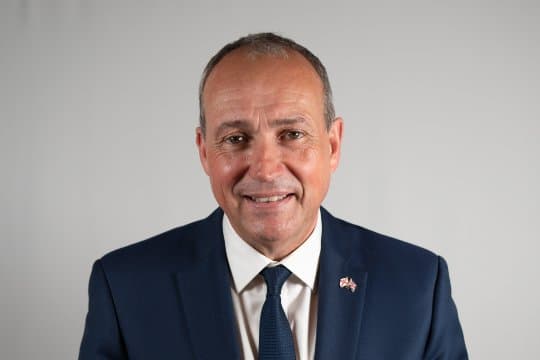
Ironically, the work we could do in part (b) - because we are going to instruct that work begins and work through the purdah period so the next Government has some information early on in their term - might well be that we are in a position, as part (a) requests, by January 2028 that the Deputy and the Assembly are happy with, which protects cash in our society and in our economy. If we take that approach we do achieve the shared objective of inclusion and resilience without creating unnecessary difficulty for the Islanders and the businesses that keep our Island economy moving.

[17:30] In closing, I would like to offer reassurance to Members and of course to the public that the vast majority of businesses in Jersey continue to accept cash today, and there is a clear willingness across our Island to maintain that position. Our aim is to support and to sustain that reality, working with businesses, not against them, and working with Islanders to ensure they can continue to pay by cash, and make sure it remains a practical and widely available choice for all Islanders.

Photo of Robert MacRae
Robert MacRae

The list of speakers I have is as follows: the next speaker will be Deputy Barbara Ward, then Deputy Howell, Deputy Miles, Deputy Morel, Constable of St. Mary, and Deputy Stephenson.

10.1.5Deputy B. Ward of St. Clement:

Photo of Barbara Ward

Just a couple of, I would say, positive notes about using cash, especially our Jersey cash. I do not know whether people are aware that the Treasury does make an income from the use of the Jersey cash that is circulating within our businesses and our banks. The more Jersey cash that we use or handle, it helps to go towards our economy. That can only be a plus. Also tourists find obviously our Jersey cash quite quaint and do buy the cash and take it home as a memento, especially our paper Jersey pound. They love it. Also people like the choice to use cash, especially if one does not have an online facility on their phone, especially the older person. They like to have that control and see what is happening with their money. I will be supporting the principle of this proposition, and I thank the Deputy for bringing this for debate.

10.1.6Deputy A. Howell of St. John, St. Lawrence and Trinity:

Photo of Andy Howell

I too think we should keep cash on the Island. I think it should remain because otherwise we disadvantage the people who are disadvantaged in our society. Not everyone has a bank card. Not everyone has even a bank account. I think we have to really look after the people who have problems with their eyesight, with learning difficulties, dementia and Alzheimer’s. For them, if they have got hard money in their hands, just like Deputy Tadier has shown us, they can go and they know what they have got and what they have to spend. I think it is really important that we send a message out to Jersey Islanders that we welcome cash, and when tourists come, if they go and have a cup of tea at a café they can pay by cash. I was in France very luckily at Christmas, people were at the till with their huge shopping trolleys. The I.T. (information technology) had gone down and it was very, very difficult because it was just a complete gridlock. I implore you to support Deputy Tadier in part (b) definitely.

10.1.7Deputy H.M. Miles of St. Brelade:

Photo of Helen Miles

At the risk of sounding like the late Queen, I do not carry cash at all. I use my phone and I am not sure I even know where my bank cards are. It all lives in here. For me tapping a card or using a phone is just normal. It is easy, and it works for me. But that is certainly not true for everyone. As this Assembly will know, I have a family member who is an adult with severe learning disabilities and autism. For me this debate is not about cash at all, it is about everyday independence and inclusion. For my family member, cash is not old-fashioned; it is not inconvenient. As an analogue man in a digital world, it is how he understands money, how he maintains a modicum of independence, and it is how he manages to take part in everyday life. Really that is what this is all about, inclusion. Inclusion is not just about being present, it is about being able to participate, to make choices and to do everyday things without barriers that other typical people do. We have a little saying in the autism world: “Diversity is being invited to the party; inclusion is being asked to dance.” For many autistic people, routine matters, clarity matters, predictability matters, and I see that every day. Cash gives you that. You can see what you have got, you can separate it, you can plan with it. There is no guessing, there is no waiting, no abstract number on a screen; it is just there in front of you in your wallet, as Deputy Tadier has shown us his. For people with learning disabilities, that physical understanding of money can be absolutely essential. When you have got money in your hand, it makes sense: it is visible, it is tangible and it is real. If the cashier says: “Oh, that will be £10 and a penny” we can say that is a red one and a small brown one. That is the way that independence can be maintained, not having to read the numbers or understand anything else.

We often assume that cards are straightforward, but they are not for everyone, and for some autistic people, even something as simple as entering a P.I.N. (personal identification number) in public can be very stressful: busy places, long queues, unfamiliar machines, small changes. They can all create real anxiety. Again, that is not theoretical. I have seen how quickly something small can become very overwhelming. For others, especially people with learning disabilities, remembering a P.I.N.

simply is not possible, recognising numbers on a screen is not always possible, and navigating a machine or an app can be very confusing and eventually distressing. Then there is the question of risk as well. A lot of people are quite vulnerable, not only people with learning disabilities or autism, more elderly people with dementia and other related conditions. Cards can be misused; people can be pressurised into sharing their P.I.N.s. Cash has a very clear boundary. I agree it can be stolen, but when cash is gone from your wallet, it is gone. From a parent’s perspective, that feels a lot safer.

Some people are not able to manage their bank accounts, some people cannot get bank accounts because they cannot apply for the documents that are required for the K.Y.C. (know your client), and their money is managed for them by families, by carers, and sometimes through formal arrangements with the court to keep them safe. That is something that families, including mine, have to think about very carefully. If somewhere says “card only” that is it, they simply cannot engage with the payment process, cannot access the services that that business might be providing. They are not choosing not to take part, they are being excluded, because inclusion is not just a principle that we talk about, it is something people experience or do not experience every single day. That has real, everyday consequences for a great deal of people. If someone is not able to go swimming, even though it is good for their health; it is groups who have to cancel activities because cash is not accepted. It is support staff stepping in and paying themselves just to avoid an unpleasant situation. Sometimes it is just someone standing at a till feeling overwhelmed or embarrassed because they cannot complete a basic transaction. It is not about policy in that moment. In that moment, it is about dignity. That is not saying cards are bad. They are not. I use mine all the time. Some people prefer them, including some autistic people, and it is the choice that absolutely matters because this proposition I think is about keeping options open. Inclusion depends on choice. If we remove cash, we are not just changing how people pay, we are changing who gets to take part in everyday activities, and that is not something that we should do without thinking very carefully. We should be designing systems that work for everyone, not just systems that work for most people. The people that I have heard from, certainly - and families like mine - we are really clear cash still matters, it works, and for some people it is the only thing that does. I would be very sad if we saw that taken away. I think we need to keep things very flexible and we need to keep things inclusive. We need to make sure that no one is left out of everyday life just because of how they need to pay. I commend Deputy Tadier for bringing this proposition.

10.1.8Deputy K.F. Morel of St. John, St. Lawrence and Trinity:

Photo of Kirsten Morel

I speak really in short to say that I think part (b) is entirely valid and really should be supported. Part (a) though, I would like to warn the Assembly off of leaping on to that today. It was an interesting comment that Deputy Alex Curtis made, where he said 2 very simple propositions, and I found that interesting because part (a) seems to me to be the result of part (b). It is only once you have done part (b) that you should then potentially proceed to part (a). The reasons are plentiful. I, like Deputy Tadier, have been concerned about the withdrawal of cash from our society, and I have been very clear that the Government must and should be under an obligation to ensure that cash still circulates in society and that the public sector, in terms of Government and government-based businesses, should also be required to accept cash. But from the perspective of all businesses that, according to this proposition, sell in-person goods and services, I think there we start to have something of a problem because if you just accept part (a) today, which would effectively be without having seen the research or done any research to understand the full implications, you would be binding all businesses, regardless of who their customer base is, to accepting cash. That puts risks and costs on those businesses. I am trying to think of businesses such as a nightclub. Now, I do remember there was a nightclub in St. Helier where there was an 80, 90 year-old lady who used to go dancing there - it was famously reported in the paper - but I think we can safely say that 99.9 per cent of the customers in the nightclub tend to be younger and they also tend not to want to carry cash. They do not want to carry cash in there because it is an environment in which cash can be lost and cash can be stolen quite easily. Similarly, for the business itself, it does not want a till full of cash because that cash can go missing, it can be stolen, it can be lost and, as banks do charge for every business to deposit cash, it costs them to do that. I was just checking bank charges. They were the U.K. bank charges, but they are about 95 pence per £100 plus another 95 pence just for doing it in the first place for £100, so it is a significant amount. It comes in at just over - once you have combined it all - 1 per cent, so if you are depositing £100, 95 plus 95 leads you to £1.90, which is 1.9 per cent of that. It is more nuanced, but you are looking at about 1 per cent, added to other costs that the business has to carry, so you are enforcing extra costs. I think it is also really important to understand that there are businesses in Jersey ... I was just listening to Deputy Miles, as we all were, talk about the need for balance. There are businesses in Jersey that only accept cash. They are excluding people who want to pay by electronic means. There is a pub in the centre of town just 200 metres from here that only accepts cash, or did until recently only accept cash. Last time I went in, which was in the past year, they only accepted cash, and I think that in itself is entirely their right to only accept cash. They speak to a particular customer base. They do not want to get the kind of electronic paraphernalia around electronic payments, and I think that is entirely up to them, which speaks to the other parts of the danger of going with part (a) today without the research, without understanding its full implications. I fundamentally believe that a thriving economy can only be obtained or attained through the kind of ... by enabling the citizens in our society to freely be entrepreneurial, to see opportunities, to speak to markets, to meet the needs of specific markets in an entrepreneurial manner.

That means in some cases that the business models, especially among younger people, especially among those businesses which are seeking to be technology enabled, it would stop them going down that road in the way that they would want to. I just think that is very dictatorial, from our perspective.

I think, especially without the research, it would be us doing this blindly. Tying the hands of entrepreneurs in our society I think is something that I have been trying to fight against for the past 4 years, this States Assembly constantly tying the hands of private organisations in this Island. It stops them soaring, it stops them achieving greatness, and we constantly do it.

[17:45] So I am very concerned about us putting yet another anti-entrepreneurial pressure on the Island’s economy. All of this said, I think there are massively strong reasons, if I was a business, to accept cash. There are massively strong reasons if I am an individual to want to maintain cash, but whether that should be dictated is something that I think a policy paper needs to come through and tell us about, which is why I wholeheartedly support part (b). I think it is worth us looking at the situation in Sweden. Sweden, many Members may well have read, over the last 20 years has gone a long, long way down the road to becoming a cashless society, but literally in the last few months has started to do something of an about turn. The reasons for the about turn tend to centre around resilience, as has been mentioned in this Assembly today and also - totally understandably - accessibility, particularly for people who find it difficult to engage with the digital world, regardless of their age or whatever the reason. But it is the resilience which has really tripped them over. Obviously Sweden is closer to the eastern front line of aggression than Jersey is, so that has perhaps sharpened its mind, but last week ... well, the report I am reading here is 18th March this year, so in the past week or so the Swedish Government has laid a Bill before the Assembly in Sweden to require shops selling groceries and pharmacies to accept cash. I think that is really interesting, because they are places where you buy essential goods. They are part of the critical national infrastructure - we saw that during the pandemic - and I think therefore there is a very strong ... I can understand why the Swedish Government has very strongly said: “Given all the threats, given all the challenges and the uncertainty that our country faces, we should accept cash, we should force certain places to accept cash.” I think that is a reasonable approach, but again, you would only find out ... those areas of critical importance, providing those essential services, you would only find that out through undertaking the policy paper, which part (b) asks for. I think it is only through part (b) that we can get the balance between the areas where we do not think cash is something that we should force on people or on businesses, other organisations, because remember this will affect charities, this would put costs on to charities if they are forced to accept cash, where previously they did not. It does increase their costs too. It is not just about profit-making businesses. It is only by doing a proper research paper that we then discover those areas where you can maintain a laissez-faire approach and those areas where we feel - such as groceries, such as pharmacies - there should be a mandate from Government saying ... or from the States Assembly saying that: “No, you must accept cash”, but I think that is work which needs to be done before we move down the route of part (a) and tying people’s hands. So I must disagree with Deputy Alex Curtis. There is a lack of logic between part (a) and part (b). Part (b) comes; part (a) would only come after we have seen the results of part (b). If you jumped part (a), I do not understand the point of doing part (b) in any case. Part (a) does it for us. So I strongly urge Members to support part (b). I think it is an absolutely right and appropriate route for us to determine where we need to oblige private sector organisations to accept cash as well as private sector organisations to accept electronic payments. It is like I said, I do not think it should be one way, it should be both ways, but it is only after we have done that work with part (b) that we will know where those lines need to be drawn, and so I urge Members, please support part (b) of this proposition, but please do not support part (a), because I think it is putting the cart before the horse.

Photo of Robert MacRae
Robert MacRae

The next Member to speak is the Constable of St. Mary, followed by Deputy Stephenson, followed by Deputy Ferey, followed by Deputy Kovacs, followed by the Constable of St. Brelade. I have some more speakers as well, but Constable of St. Mary.

10.1.9Connétable R.D. Johnson of St. Mary:

Photo of David Johnson

I shall be relatively brief. First of all, can I congratulate Deputy Tadier on his proposition and the manner of presentation? I suspect there are not many items on the order list which would have kept me awake so far into the night. Relative to his story about his friend, Mary, it is the case she was in the driving seat because she had her coffee before she was asked to pay for it. I had the pleasure of being at the Jersey Airport last Saturday morning and they only take cash ... sorry, they only take cards, so I just question what would happen if she had been there and wanted a coffee. It prompts me to make the point that where Government have an influence in such matters, I suggest that they should bring their weight against their contractors and so on to ensure that cash is available. Leading on from that, the more senior Members in the Assembly may recall some years ago that J.T. (Jersey Telecom) I think introduced a new billing policy whereby those who pay cash were asked to pay a higher amount than on the bill. I simply pose the question as to whether ... in paragraph (a) there is no reference made to a differential, and I wonder whether the Deputy interprets that as meaning that if a business, a coffee business, asked for £4 in cash and £3.50 by card whether they would be complying with that particular part of his proposition. The other point, picking up on Deputy Miles’s point, on my same journey on Saturday morning, yes, I do always take cash, but I could be forgiven for leaving it behind, knowing that all my expenses would be borne by credit card, but in that situation I would not have been able to contribute to the request by British Airways to hand over my cash for some charitable purpose. That might have been ... of course it was Red Nose Day or whatever, but I do submit that charities are missing out by our habit of not taking cash with us. In the interests of balance and on the other side of the coin, if you will pardon the expression, I suspect that Deputy Tadier’s work schedule of late has given him little time to watch any TV. He will therefore have missed an item on “Have I Got News For You” some weeks ago, whereby they announced that there had been a marked decrease in the number of admissions to A. and E. (Accident and Emergency) because children were no longer swallowing coins, and I wonder if the Minister for Health and Social Services could perhaps contribute to the saving in some way. [Laughter]

10.1.10Deputy L.K.F. Stephenson of St. Brelade:

Photo of Lucy Stephenson

On that last point there, it is a good place to continue because I am pleased that we are having this very interesting debate today and there are so many people who want to speak. Because I do recall when my sports facilities debate came up, I had one Minister who stood up and said how boring it was and could we just get on with it. So I am pleased to see some views have changed. Maybe I just needed Deputy Tadier in the room to help me on that occasion. As others have said, I will go over the very many good reasons we are hearing about, and I think there is some wide agreement about the need for cash to continue. If I was in any doubt about my position, I think Deputy Miles’s speech really hit home to me about the real need for this. I just want to make a few small points. First of all, Deputy Morel raised the cost of taking cash and referred to, I think, 1 per cent for every £100 in cash. It is only a quick Google, but there are costs associated with card transactions as well, and when I Googled that, it is telling me 1.5 per cent to 3.5 per cent per transaction for businesses, so we have to consider both sides of that. It is not to say that the other transactions do not cost. On the point that the Constable of St. Mary has just raised, I think LibertyBus already charges people more to use cash as well. That is one of the examples where I think that is our only bus service, that is a public service to people, and that is somewhere where we absolutely should make sure we are still taking cash. The more I think about it, the more I wonder, should people have to pay more to use cash on such a service? I am not sure that they should. My thinking has gone on a bit of a journey with this proposition from Deputy Tadier. I am very comfortable with part (b). Part (a) has taken some more thinking, but the more I have read and the more evidence I have seen from people about the need for cash, the more comfortable I have become with part (a). I want to read you a quote from an email that both myself and Deputy Tadier had received. I do not know if others may as well, but this sentence, I just kept coming back to it. It said: “The burden of continuing to accept cash is relatively small compared with the social exclusion and cost of refusing it.” That is something that, in my mind, I just keep coming back to and I cannot get past that. A quick comment hopefully on children and the use of cash. As somebody with a young family at home, I see this very regularly, children getting used to using the cards that they do have available to them, because of course there are ages when you cannot access all sorts of debit cards and things, and children trying to learn about the value of money as well. We are talking a lot in this Assembly at the moment about children and screen use and devices and when they should have access to phones. Many of us in this Assembly, we have heard, rely on our phones for part of that process, either as cards, but also to know how much money you are spending and how much is in your account. On the one hand we are saying: “Do not give children devices or be careful with them”, on the other we are moving towards a culture where that would be their only way of keeping track of their spending, aside from walking around with a little paper and pencil like maybe used to happen back in the day. I just think that the 2 do not sit entirely comfortably together. Cash still has a place with those young people, and then there are the younger generation, of which I have got one now who is starting to learn about money as well. He is nowhere near needing or wanting or able to have a card or a device to do those things on. We have started talking about pocket money, and I do not really know where to go with it. I struggle to find cash at home. I would have to go to a bank and ask for some change to keep at home to make sure we could give him pocket money, but then where is he going to go and spend it? It is an interesting scenario to be in, so that is just another example to add. My final point: yesterday evening and into this morning we were talking about lobbying and there was much being said about: “Well, there is no point in asking people to just do it. We have to require people to do it. Only those who want to do it will do it if we do not force people to or put in place firm rules about it.” It then reminded me about what Governments have said in this Island about gender pay gap reporting: “Well, we will do some research about it. We will encourage companies to go away, think about it, and if we do not have a certain amount reporting their gender pay gap by this date, then we will look to legislate and then we will talk about it again.” That has been going on for years. What Deputy Tadier is asking today is for this Assembly to take some action. We are often accused of talking lots but not taking too much action. I have to say that I think on this one I am ready to take some action, so I will be supporting Deputy Tadier.

Photo of Robert MacRae
Robert MacRae

Yes. The adjournment is proposed. Are Members content? We adjourn until 9.30 a.m. tomorrow.

ADJOURNMENT [17:58]

ADJOURNMENT

No contributions recorded for this item.